Prambanan snail
Thiara winteri
Also known as Winter's thiarid, Spiny trumpet snail
FreshwaterSnail
Care at a glance
- Temperature
- 73–82°F
- 23–28°C
- pH
- 6.8–8.0
- Adult size
- 1.6 in
- 4 cm
- Minimum tank
- 11 gal
- 40 L
- Temperament
- Peaceful
- Social behavior
- Solitary
- Swim level
- Bottom
- Difficulty
- Easy
- Breeding
- No record
- Rarity
- Common
- Family
- Thiaridae
- Origin
- Rivers of Java and the Indonesian islands
Overview
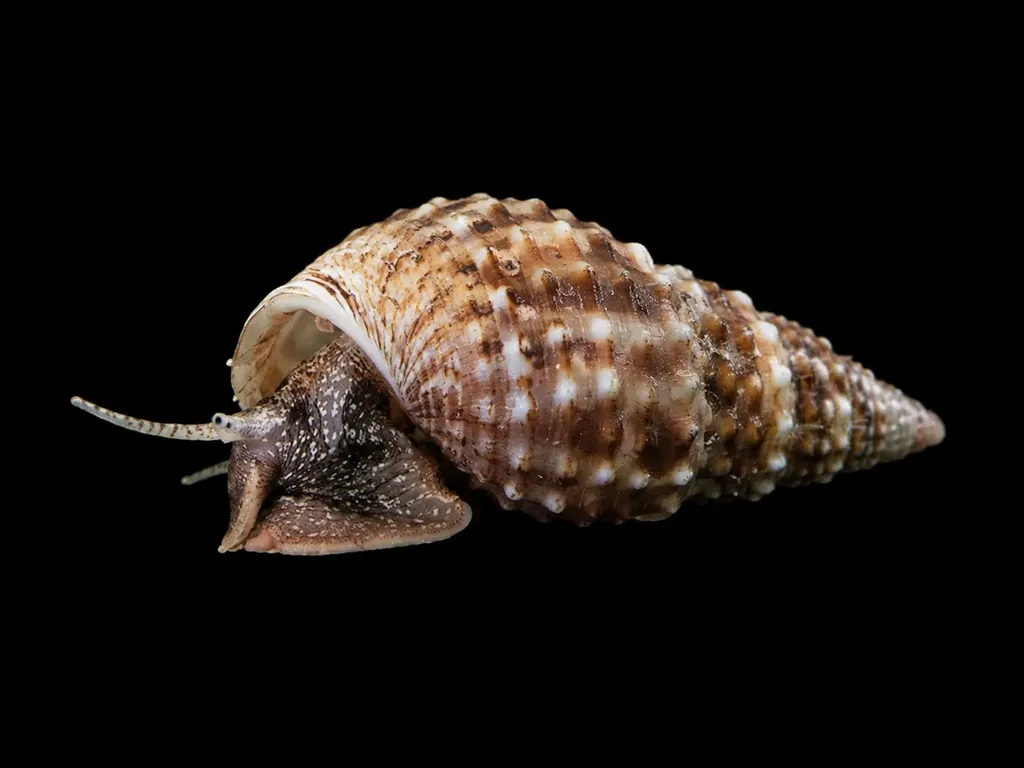
The Prambanan snail is a peaceful grazer and detritus eater for the bottom of a freshwater tank. Its sculptured shell makes it more of a display snail than the usual trumpet snails. It is a good first snail.
Did you know
Aquarists named the Prambanan snail for the Prambanan temple complex. Its spired shell really does match the temple's skyline.
Caring for the Prambanan snail
The Prambanan snail suits a tank of 11 gal (40 L) or more as a cleanup animal. It works the substrate and hardscape and leaves plants alone. It also burrows, which aerates the substrate, and it is largely nocturnal.
Give it harder water at 73 to 82°F (23 to 28°C) and a pH of 6.8 to 8.0 to keep the shell sound. Soft, acidic water erodes the spire from the tip down, the usual sign that hardness is too low.
It grazes and eats detritus, so in an established tank it needs no direct feeding. Supplement with algae wafers if the surfaces run clean. It is peaceful and safe in a community tank. Thiarid snails are livebearers, and many species reproduce parthenogenetically, so a single snail can found a population.
Good to know
The Prambanan snail, Thiara winteri, is a thiarid snail with strong knobbed ridges spiraling up the shell. It is also sold as the spiny trumpet snail or Winter's thiarid.
In the wild
The Prambanan snail lives in rivers across Java and the surrounding Indonesian islands, in warm, mineral-rich fresh water.
Weekly picks
Tank mates
The Prambanan snail is a peaceful, solitary species that keeps to the bottom. These picks share a community profile with it, are safe together in both directions, and overlap on water type, temperature and pH.
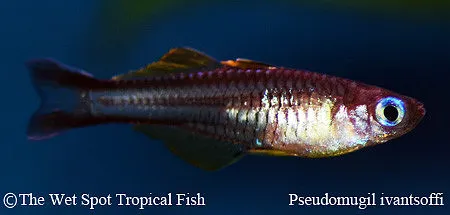
Ivantsoff's blue-eye
Pseudomugil ivantsoffi
Freshwater1.6 in (4 cm) · 11 gal (40 L)75–82°F (24–28°C)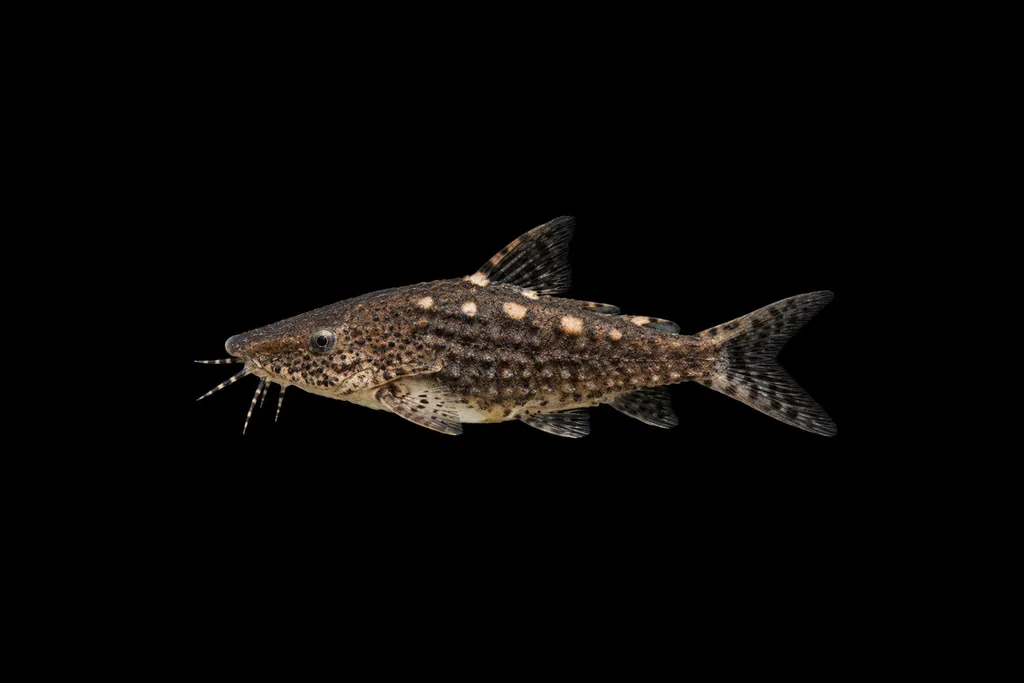
Dwarf warty catfish
Parakysis notialis
Freshwater1 in (2.5 cm) · 11 gal (40 L)73–82°F (23–28°C)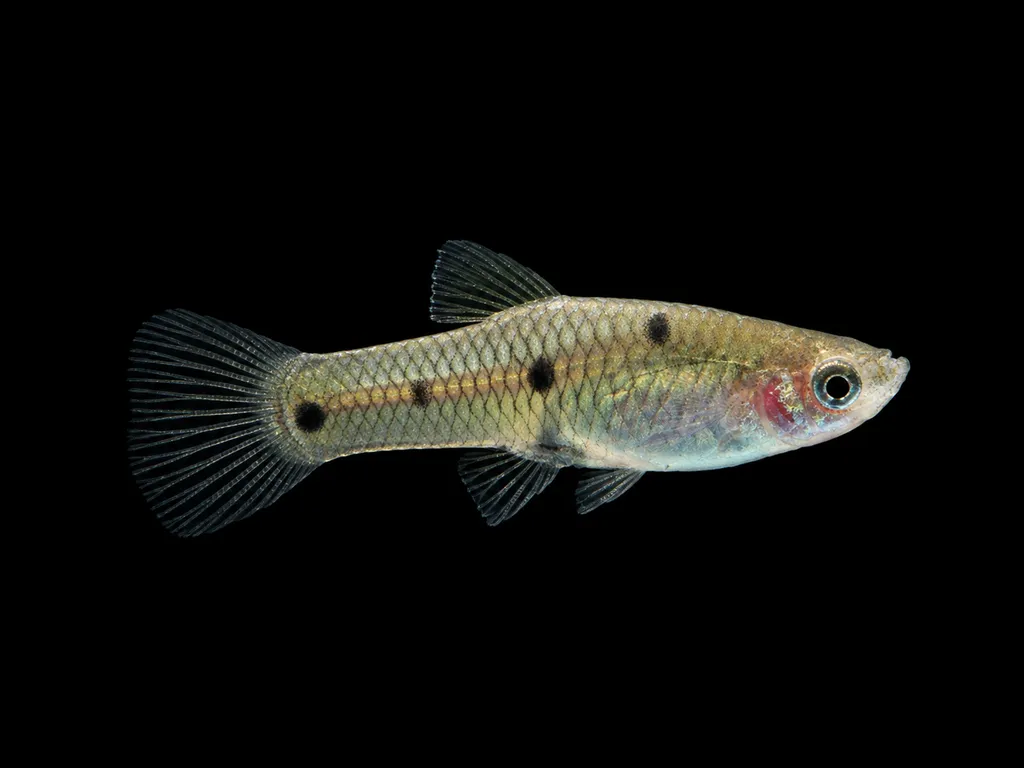
Fourspotted toothcarp
Phallichthys quadripunctatus
Freshwater1.4 in (3.5 cm) · 11 gal (40 L)68–86°F (20–30°C)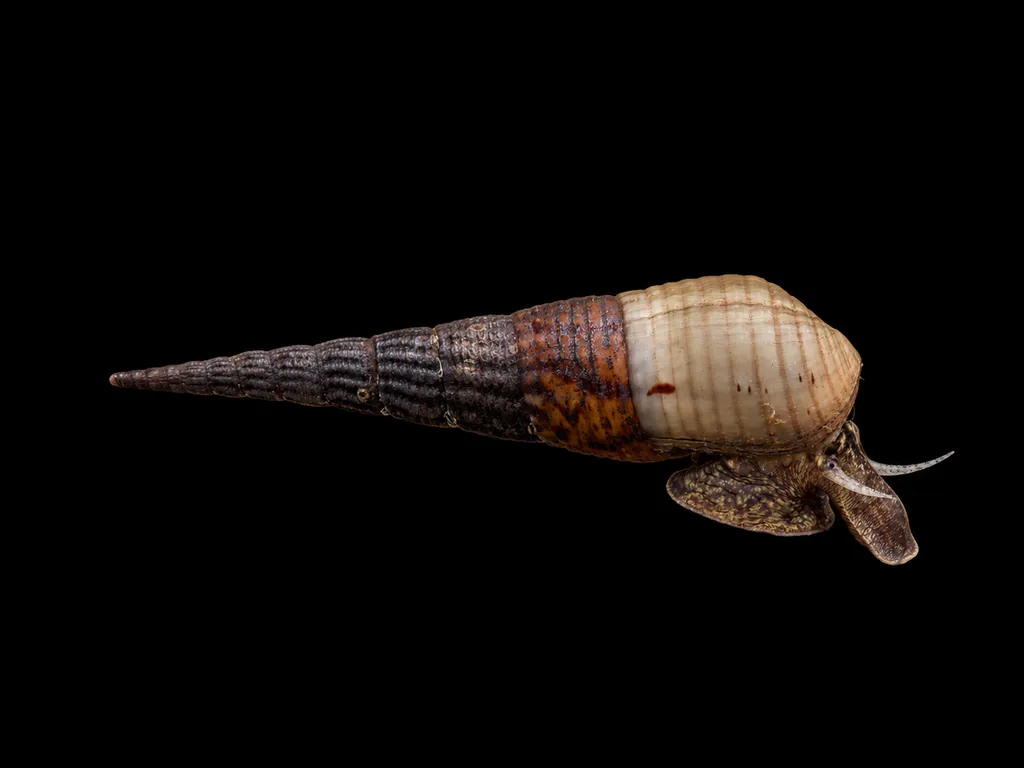
Chopstick snail
Stenomelania torulosa
Freshwater2 in (5 cm) · 11 gal (40 L)73–82°F (23–28°C)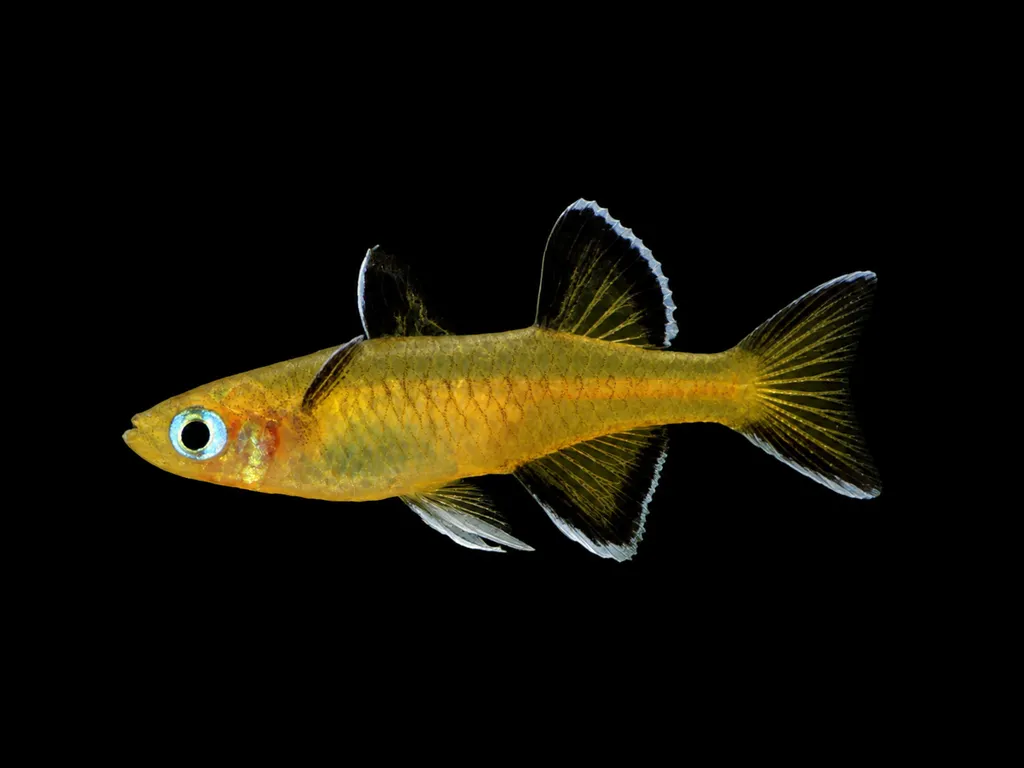
Honey blue-eye
Pseudomugil mellis
Freshwater1.4 in (3.5 cm) · 11 gal (40 L)68–82°F (20–28°C)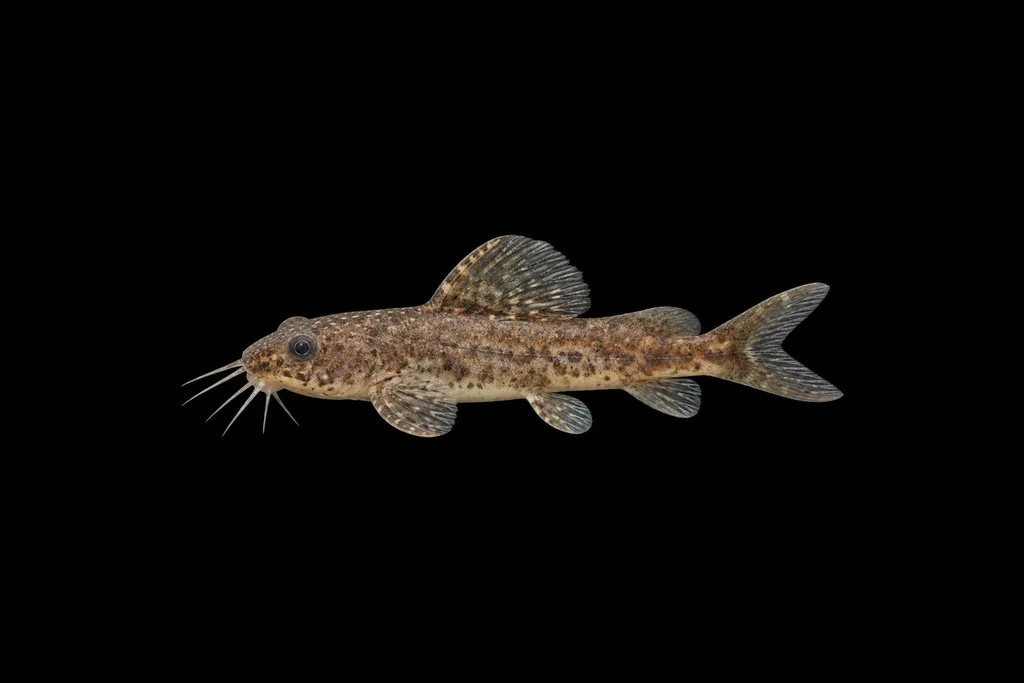
Dwarf broadfin catfish
Nanobagrus immaculatus
Freshwater1.2 in (3 cm) · 11 gal (40 L)73–82°F (23–28°C)
Common questions
What size tank does a Prambanan snail need?
A Prambanan snail needs at least 11 gal (40 L). It spends most of its time in the bottom.
What temperature and pH does a Prambanan snail need?
A Prambanan snail is comfortable at 73–82°F (23–28°C) with a pH of 6.8–8.0.
What does a Prambanan snail eat?
A Prambanan snail grazes and eats detritus on the substrate and hardscape, so an established tank needs no direct feeding. Offer algae wafers if the surfaces run clean.
How big does a Prambanan snail get?
An adult Prambanan snail reaches about 1.6 in (4 cm).
How does a Prambanan snail breed?
Like other thiarid snails, the Prambanan snail is a livebearer. Many thiarids reproduce without a mate, so a single snail can found a population.
Related species
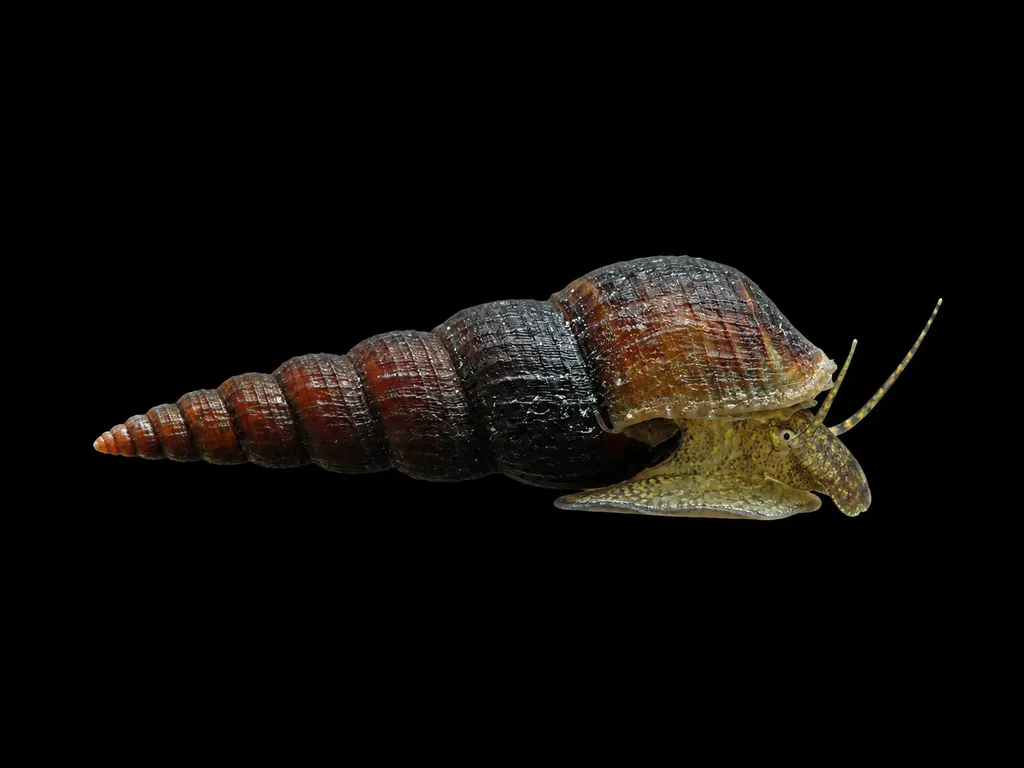 1.6 in (4 cm)5 gal (20 L)72–82°F (22–28°C)
Mahogany trumpet snail
Melanoides maculata
1.6 in (4 cm) · 5 gal (20 L)
- 2 in (5 cm)11 gal (40 L)73–82°F (23–28°C)
Chopstick snail
Stenomelania torulosa
2 in (5 cm) · 11 gal (40 L)
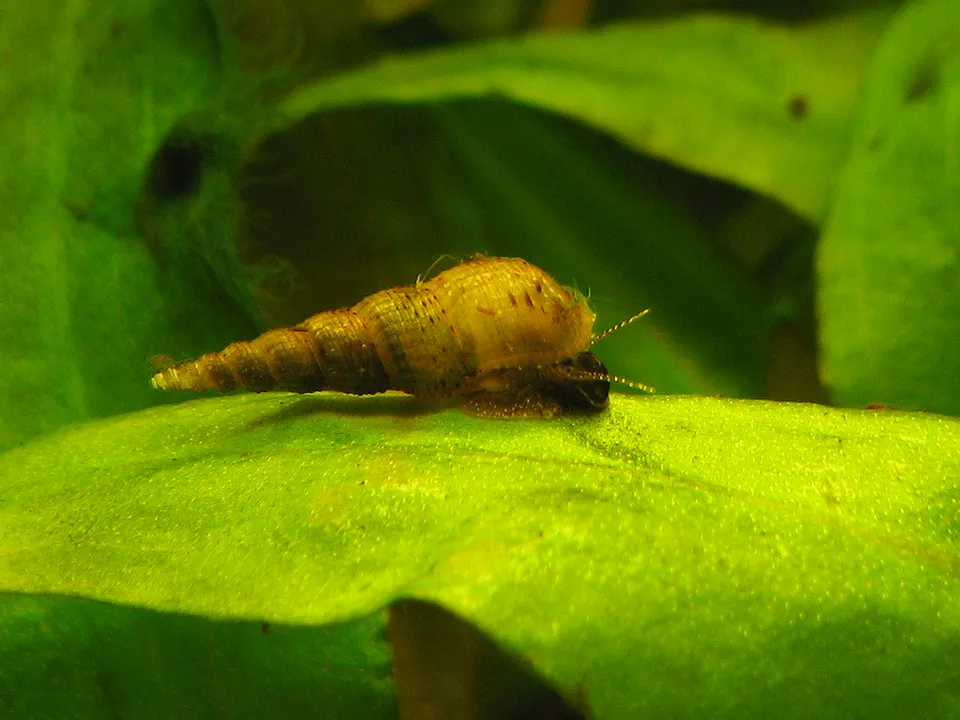 1.2 in (3 cm)5 gal (20 L)70–77°F (21–25°C)
Malaysian trumpet snail
Melanoides tuberculata
1.2 in (3 cm) · 5 gal (20 L)
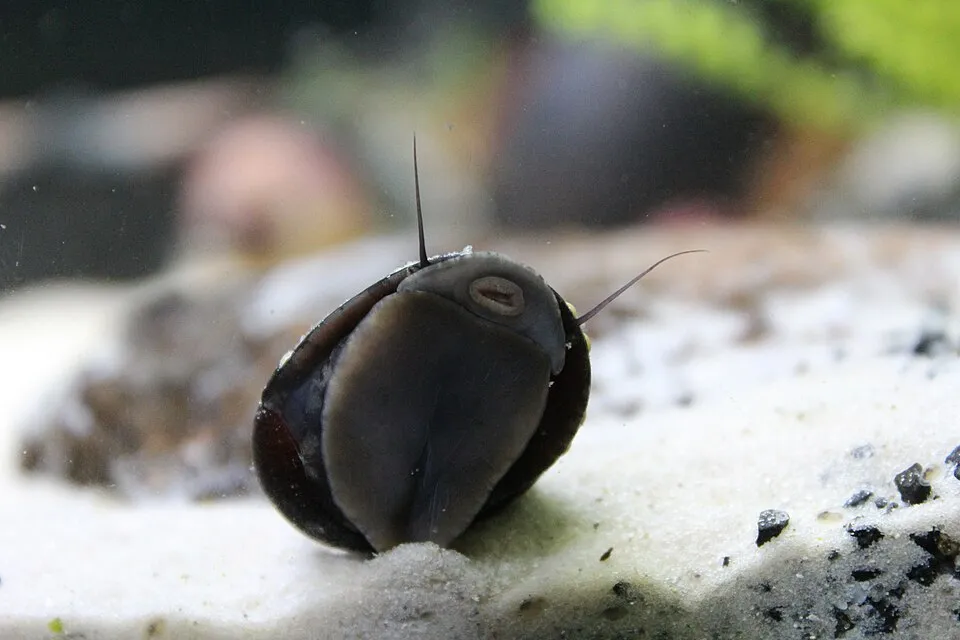 1.6 in (4 cm)5 gal (20 L)72–82°F (22–28°C)
Dusky nerite snail
Neritina pulligera
1.6 in (4 cm) · 5 gal (20 L)
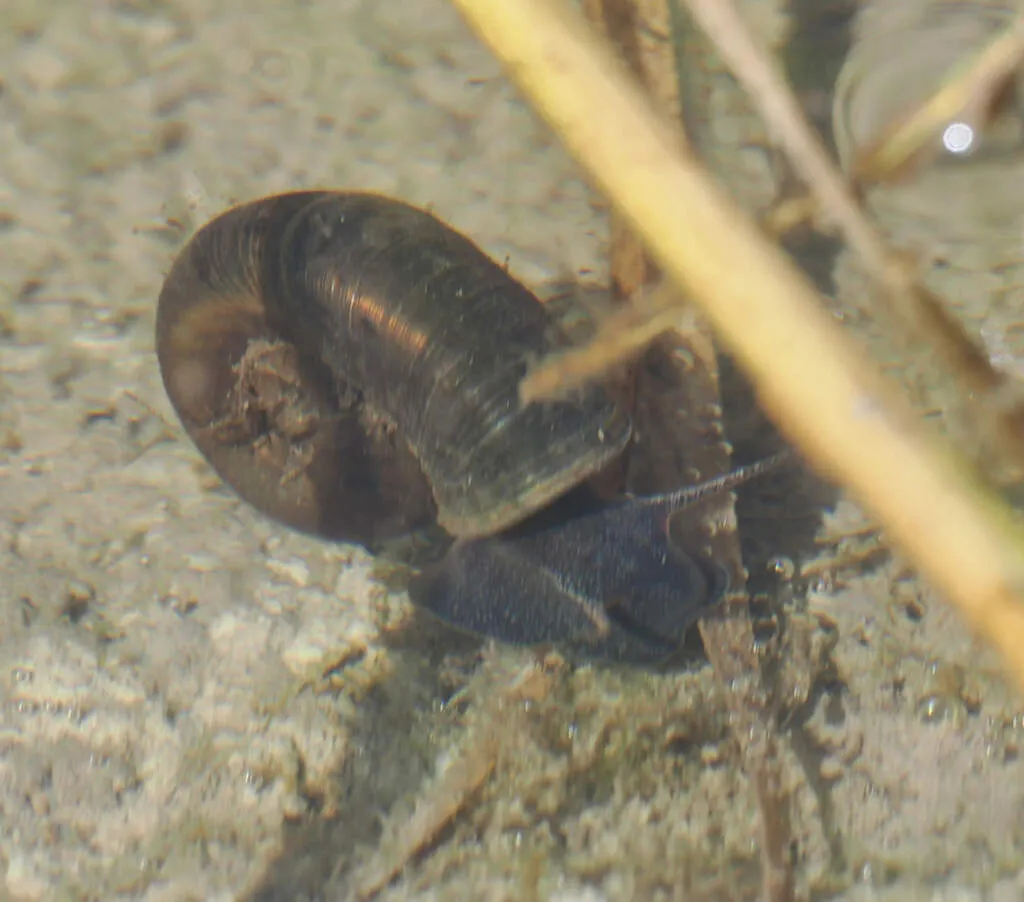 1.6 in (4 cm)5 gal (20 L)64–77°F (18–25°C)
Great ramshorn
Planorbarius corneus
1.6 in (4 cm) · 5 gal (20 L)
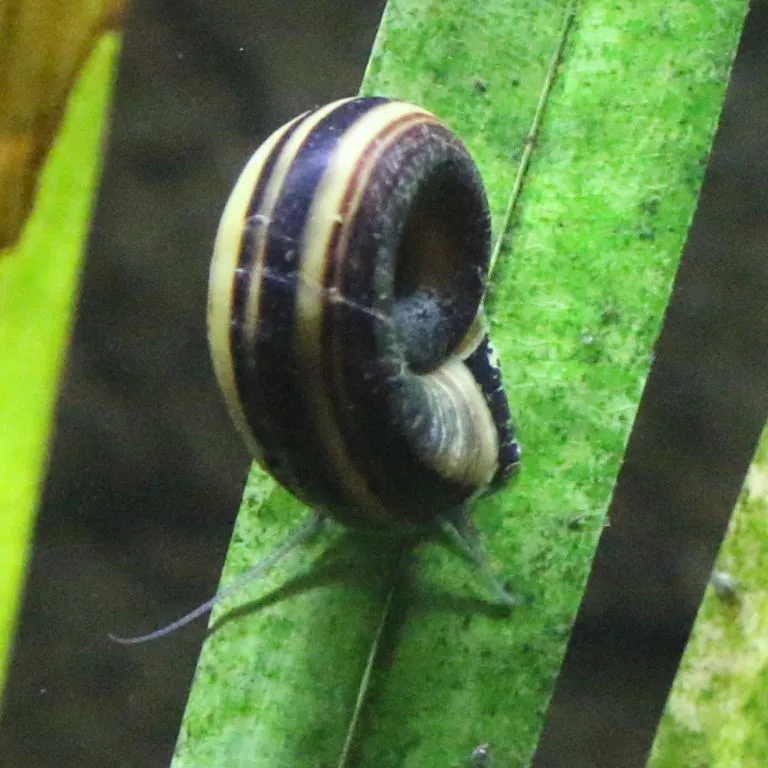 2 in (5 cm)5 gal (20 L)73–81°F (23–27°C)
Giant Colombian ramshorn
Marisa cornuarietis
2 in (5 cm) · 5 gal (20 L)