Cosuatis barb
Oreichthys cosuatis
Also known as High-fin barb, Hi-fin headstander barb
FreshwaterFish
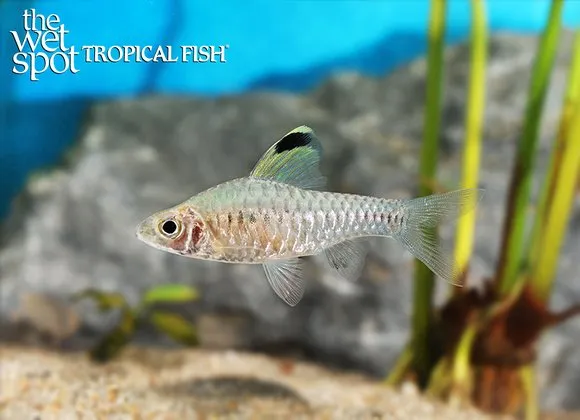
Care at a glance
- Temperature
- 68–79°F
- 20–26°C
- pH
- 6.0–7.5
- Adult size
- 3.1 in
- 8 cm
- Minimum tank
- 20 gal
- 75 L
- Temperament
- Peaceful
- Social behavior
- Schooling
- Swim level
- Middle
- Difficulty
- Medium
- Breeding
- Egg scatterer · Medium
- Rarity
- Rare
- Family
- Cyprinidae
- Origin
- India, Bangladesh and Thailand
Overview
The Cosuatis barb is a peaceful schooling barb for a calm, planted community tank. It suits keepers with a little experience.
Did you know
Male Cosuatis barbs settle their rivalries with pageantry rather than fighting. They circle each other with their tall dorsal sails raised and spread. The silent posturing contest rarely does any harm.
Caring for the Cosuatis barb
Keep Cosuatis barbs in a group of six or more, so the males display instead of hiding. Give the group at least 20 gal (75 L), densely planted and softly lit, over a dark substrate. Gentle filtration and little current suit them.
They prefer the cooler end of the tropical range, at 68 to 79°F (20 to 26°C) and a pH of 6.0 to 7.5. Keep the water clean and stable. Feed small, varied foods such as fine flake and micro pellets. Regular frozen or live daphnia, bloodworm and brine shrimp bring them into condition and draw out the males' sail-fin show.
The Cosuatis barb is slightly shy and swims in the middle of the tank. Keep it in a calm community of other small, gentle fish. Give new fish time to settle in before expecting their best color.
Mature males carry a tall, sail-like dorsal fin edged in dark and gold. They flare it in quiet lateral displays to rivals and females. Spawning them is a middling challenge, and the fish scatter their eggs and give no parental care.
Good to know
The Cosuatis barb, Oreichthys cosuatis, is a barb of the family Cyprinidae that Hamilton described in 1822. It also goes by the names high-fin barb and hi-fin headstander barb. Fish kept in tanks often fall short of the full adult size.
In the wild
The Cosuatis barb lives in quiet, often weedy fresh waters across South and Southeast Asia. Its range runs from India and Bangladesh east to Thailand.
Weekly picks
Tank mates
The Cosuatis barb is a peaceful, schooling species that keeps to the middle. These picks share a community profile with it, are safe together in both directions, and overlap on water type, temperature and pH.
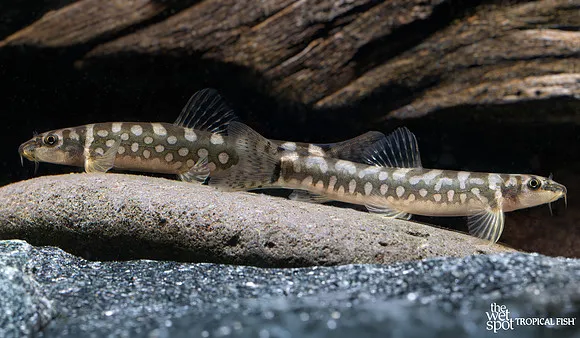
Guenther's zipper loach
Nemacheilus guentheri
Freshwater2.6 in (6.7 cm) · 20 gal (75 L)68–79°F (20–26°C)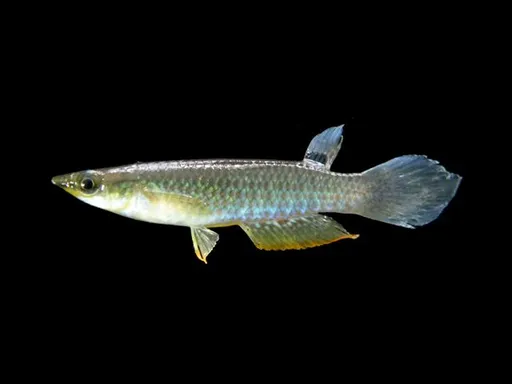
Blue panchax
Aplocheilus panchax
Freshwater3.5 in (9 cm) · 20 gal (75 L)72–82°F (22–28°C)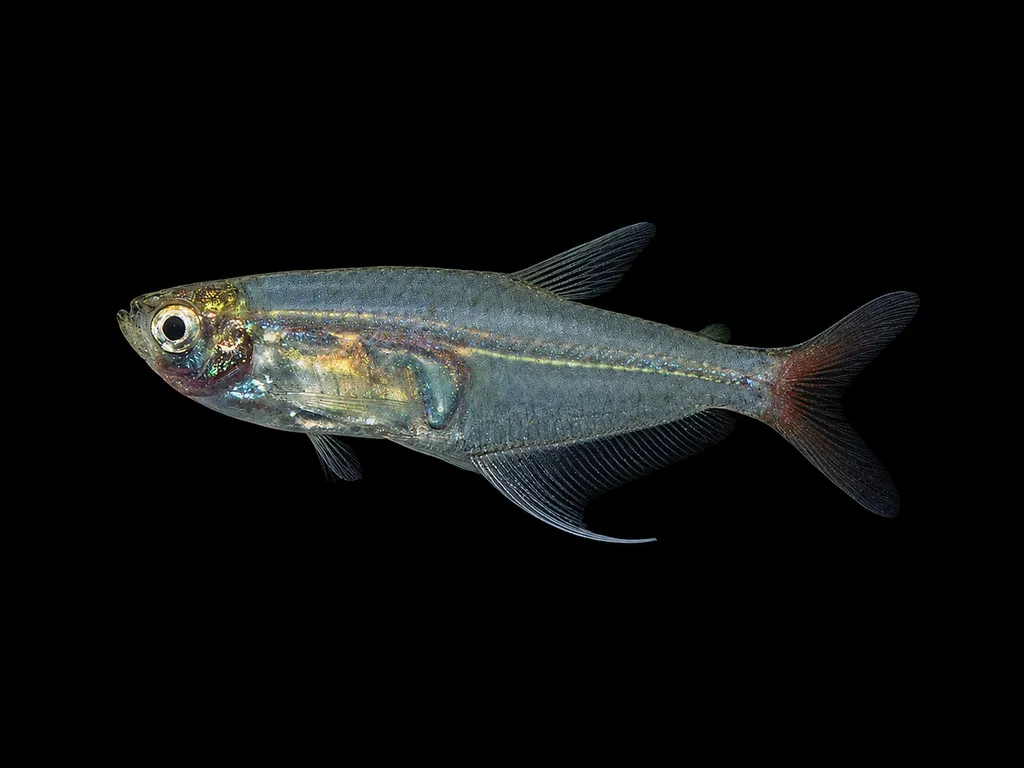
Paraguay glass tetra
Prionobrama paraguayensis
Freshwater2.4 in (6 cm) · 20 gal (75 L)68–81°F (20–27°C)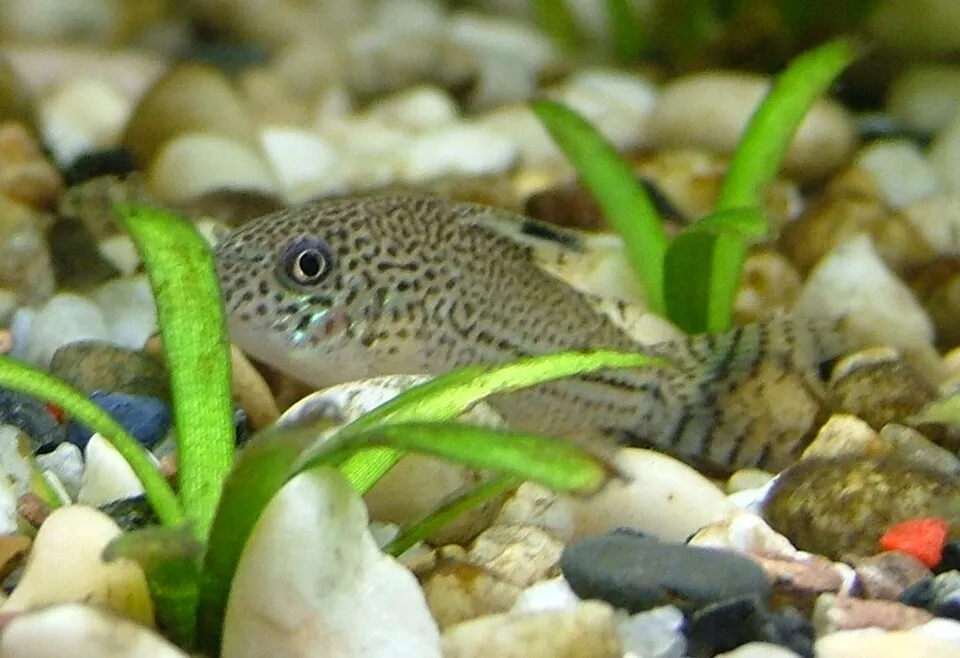
Julii cory
Hoplisoma julii
Freshwater2.2 in (5.5 cm) · 20 gal (75 L)68–79°F (20–26°C)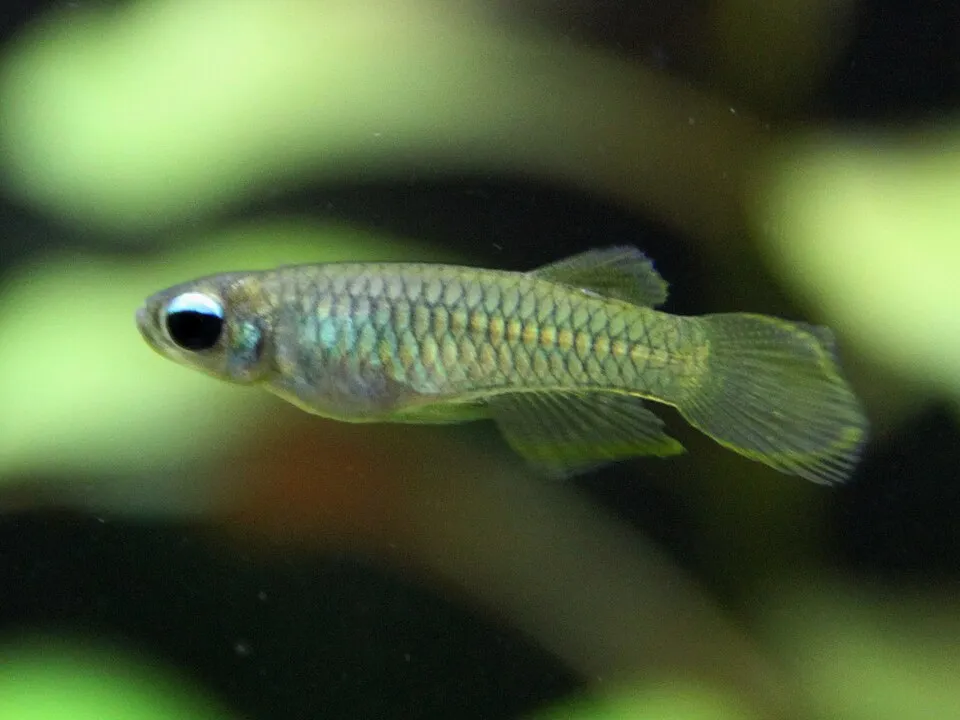
Norman's lampeye
Poropanchax normani
Freshwater1.6 in (4 cm) · 20 gal (75 L)72–79°F (22–26°C)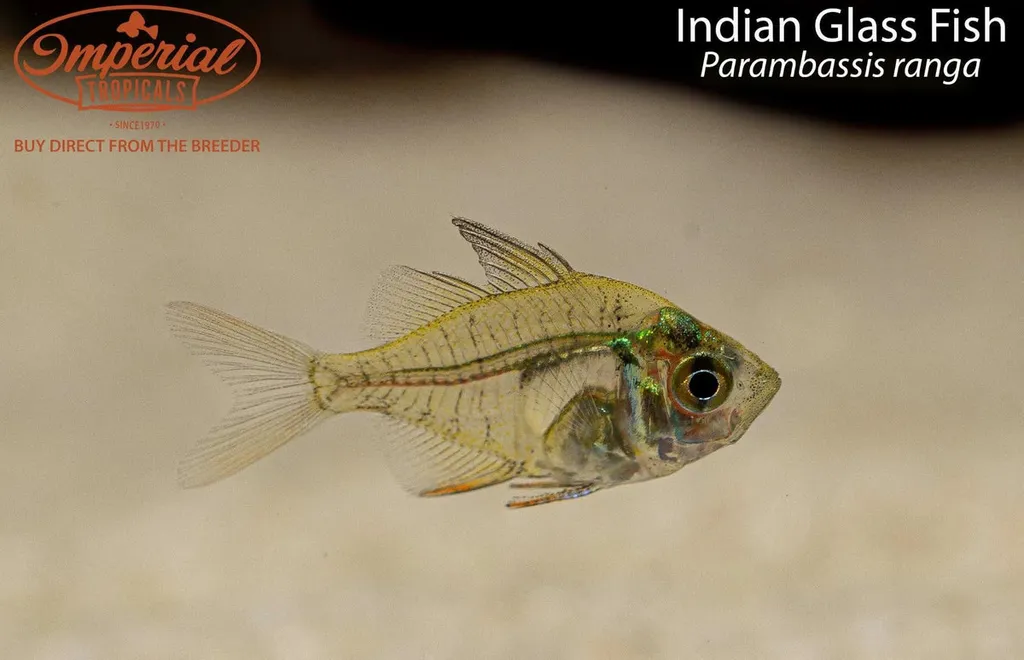
Indian glassy fish
Parambassis ranga
Freshwater3.1 in (8 cm) · 20 gal (75 L)68–86°F (20–30°C)
Common questions
What size tank does a Cosuatis barb need?
A Cosuatis barb needs at least 20 gal (75 L). It spends most of its time in the middle.
What temperature and pH does a Cosuatis barb need?
A Cosuatis barb is comfortable at 68–79°F (20–26°C) with a pH of 6.0–7.5.
What does a Cosuatis barb eat?
A Cosuatis barb eats small, varied foods such as fine flake and micro pellets. Regular frozen or live daphnia, bloodworm and brine shrimp bring it into condition.
How big does a Cosuatis barb get?
An adult Cosuatis barb reaches about 3.1 in (8 cm).
Does a Cosuatis barb need a group?
Yes. A Cosuatis barb is a schooling species and should be kept in a group, not singly.
How can you tell a male Cosuatis barb from a female?
Males carry a tall, sail-like dorsal fin edged in dark and gold once they mature. They flare it in quiet lateral displays to rivals and females.
How does a Cosuatis barb breed?
Cosuatis barbs scatter their eggs and give no parental care. Spawning them is a middling challenge.
Related species
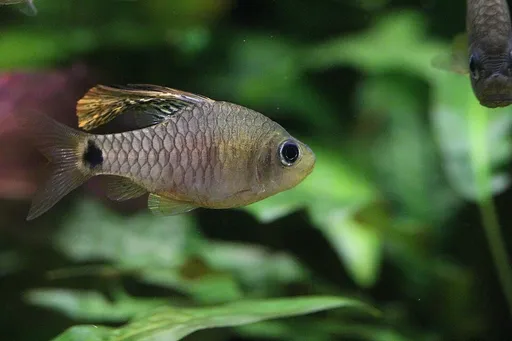 1.6 in (4 cm)14 gal (54 L)73–82°F (23–28°C)
Drape-fin barb
Oreichthys crenuchoides
1.6 in (4 cm) · 14 gal (54 L)
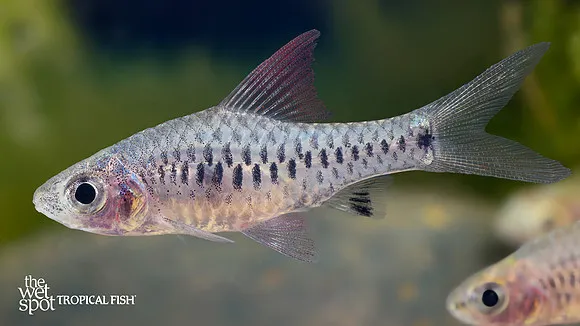 1.4 in (3.6 cm)14 gal (54 L)72–79°F (22–26°C)
Dwarf hi-fin barb
Oreichthys parvus
1.4 in (3.6 cm) · 14 gal (54 L)
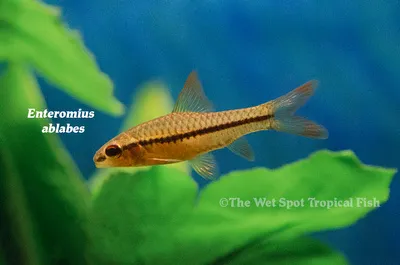 3.1 in (8 cm)24 gal (90 L)72–81°F (22–27°C)
Ablabes barb
Enteromius ablabes
3.1 in (8 cm) · 24 gal (90 L)
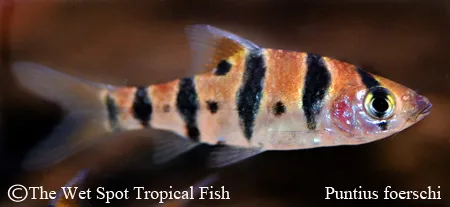 3.1 in (8 cm)29 gal (110 L)73–82°F (23–28°C)
Foersch's barb
Desmopuntius foerschi
3.1 in (8 cm) · 29 gal (110 L)
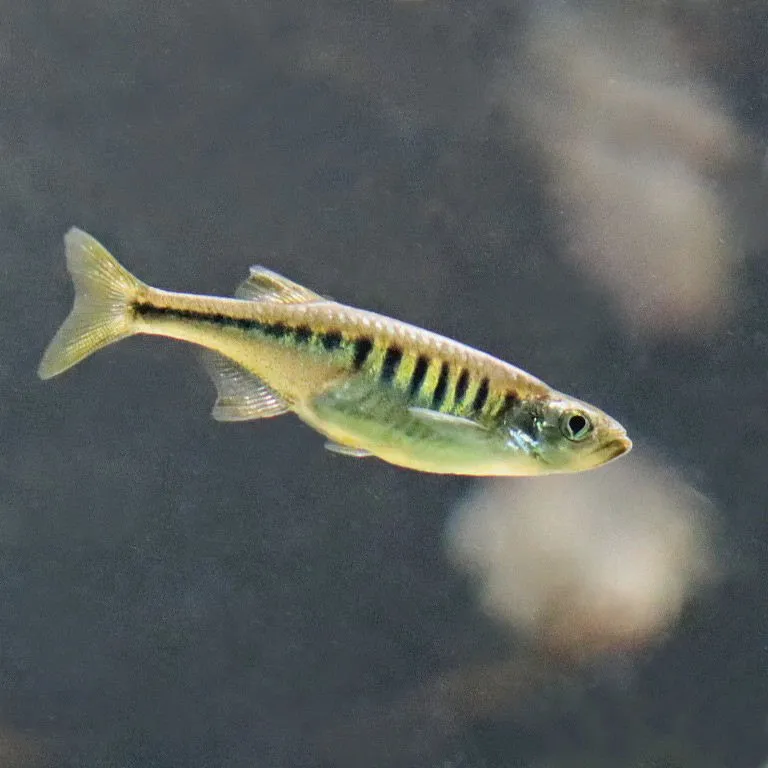 3.1 in (8 cm)24 gal (90 L)64–77°F (18–25°C)
Lake Inle danio
Devario auropurpureus
3.1 in (8 cm) · 24 gal (90 L)
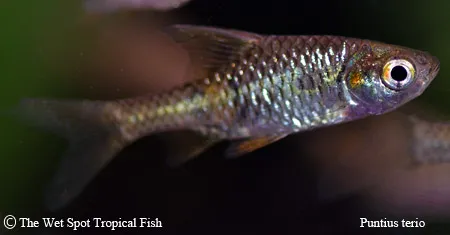 3.1 in (8 cm)20 gal (75 L)68–79°F (20–26°C)
Onespot barb
Puntius terio
3.1 in (8 cm) · 20 gal (75 L)