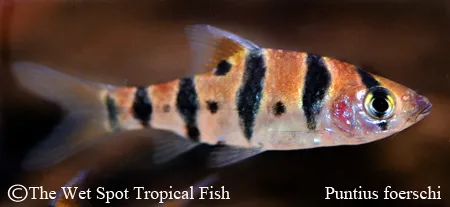
Foersch's barb
Desmopuntius foerschi
Also known as Puntius foerschi
FreshwaterFish
Care at a glance
- Temperature
- 73–82°F
- 23–28°C
- pH
- 5.0–6.8
- Adult size
- 3.1 in
- 8 cm
- Minimum tank
- 29 gal
- 110 L
- Temperament
- Peaceful
- Social behavior
- Schooling
- Swim level
- Middle
- Difficulty
- Medium
- Breeding
- No record
- Rarity
- Rare
- Family
- Cyprinidae
- Origin
- Kapuas and Barito basins, Borneo, Indonesia
Overview
Foersch's barb is a shy, peaceful barb for a shaded blackwater community. It is a step up from the easiest fish.
Did you know
Foersch's barb is named for Walter Foersch, a Munich doctor, noted aquarist and killifish expert. His name is also carried by a Bornean mouthbrooding betta, Betta foerschi, and an African killifish, Nothobranchius foerschi.
Caring for the Foersch's barb
Keep Foersch's barbs in a shoal of at least six, and preferably ten or more. They are somewhat shy, grow bolder in numbers and fade into the shadows when kept in ones and twos. A planted, shaded tank of 29 gal (110 L) houses a group well.
Give them a dark substrate, driftwood and a good layer of leaf litter, and keep the light low. Aim for 73 to 82°F (23 to 28°C) and a distinctly acidic pH of 5.0 to 6.8. Keep the water quality excellent, since they react badly to any decline.
Feed small sinking pellets, flake and frozen foods such as daphnia and bloodworm. Foersch's barbs are entirely peaceful and stay in the middle water. Give them small, gentle tank mates such as rasboras, licorice gouramis or other soft-water species, rather than fast, greedy feeders that outcompete them.
Their breeding is not recorded in aquariums. Like their relatives, they are presumed to be egg scatterers that need soft, acidic water to succeed.
Good to know
Desmopuntius foerschi is a banded barb in the carp family, Cyprinidae, described by Kottelat in 1982. The genus name means banded barb, for the dark vertical bars its members carry.
In the wild
Foersch's barb lives in the soft, acidic blackwater streams of peat-swamp forest in Indonesian Borneo, including the Kapuas and Barito basins. The water there is stained brown with tannins, dimly lit and very low in minerals.
Weekly picks
Tank mates
The Foersch's barb is a peaceful, schooling species that keeps to the middle. These picks share a community profile with it, are safe together in both directions, and overlap on water type, temperature and pH.
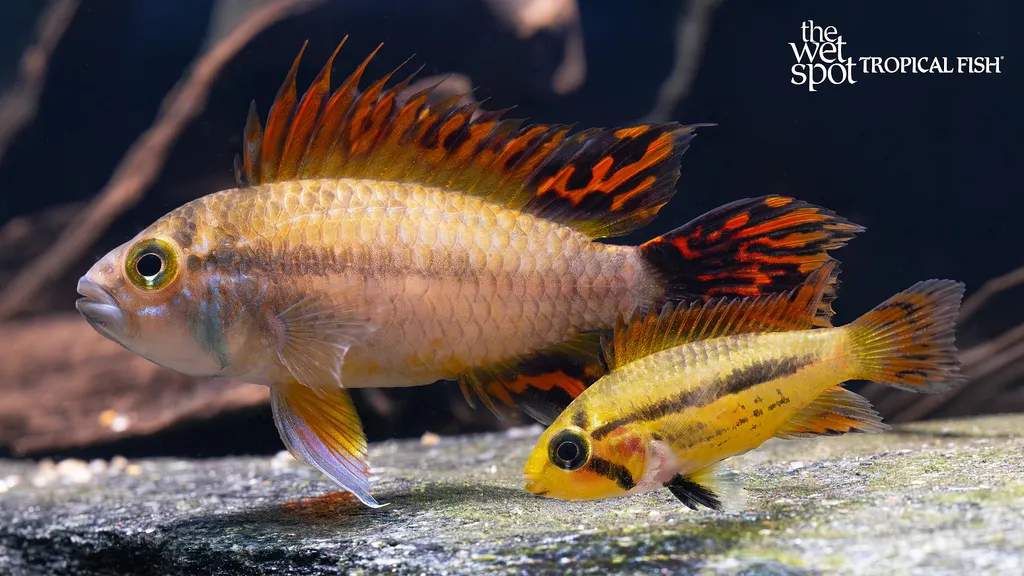
Kullander's dwarf cichlid
Apistogramma kullanderi
Freshwater3.9 in (10 cm) · 29 gal (110 L)72–81°F (22–27°C)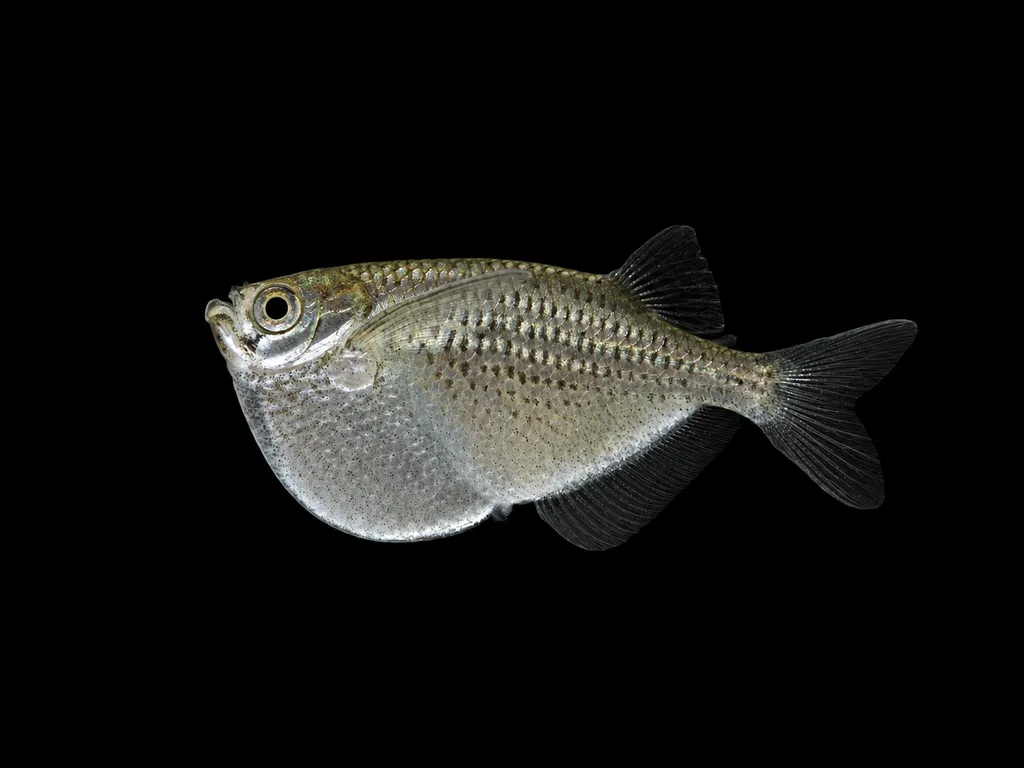
Silver hatchetfish
Gasteropelecus levis
Freshwater1.4 in (3.5 cm) · 30 gal (112 L)73–82°F (23–28°C)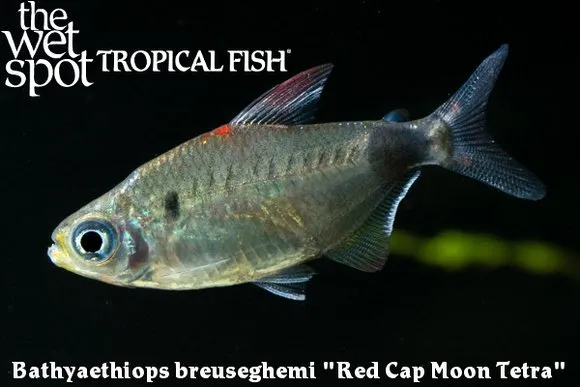
Breuseghem's moon tetra
Bathyaethiops breuseghemi
Freshwater2.8 in (7 cm) · 29 gal (110 L)73–81°F (23–27°C)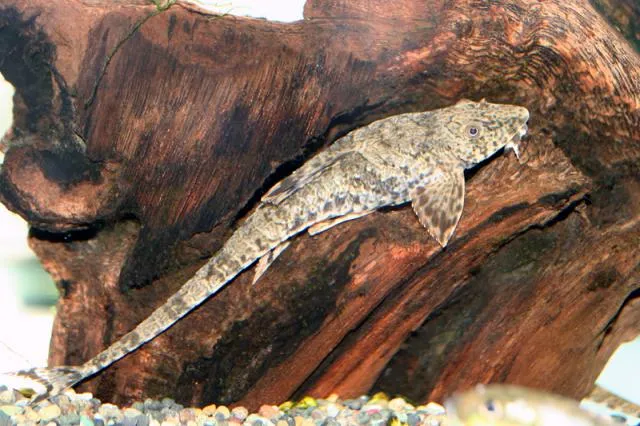
Eigenmann's whiptail
Rineloricaria eigenmanni
Freshwater4.7 in (12 cm) · 29 gal (110 L)75–82°F (24–28°C)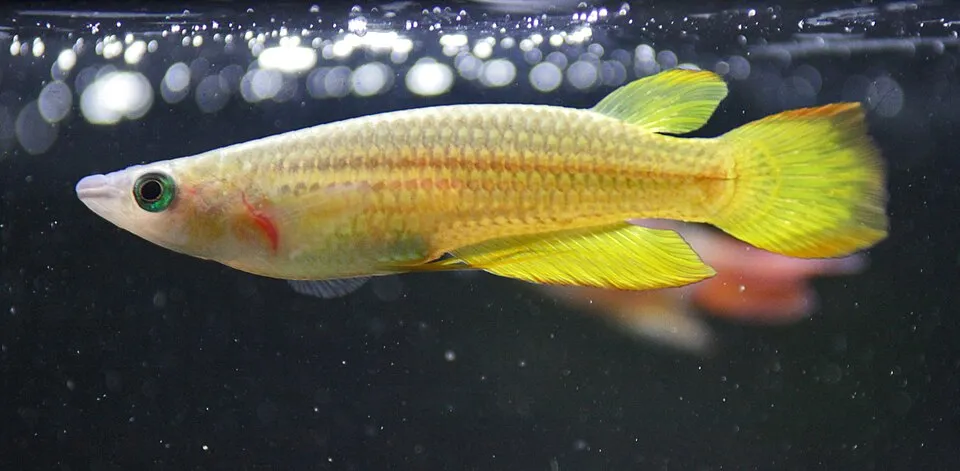
Striped panchax
Aplocheilus lineatus
Freshwater4.3 in (11 cm) · 30 gal (115 L)72–77°F (22–25°C)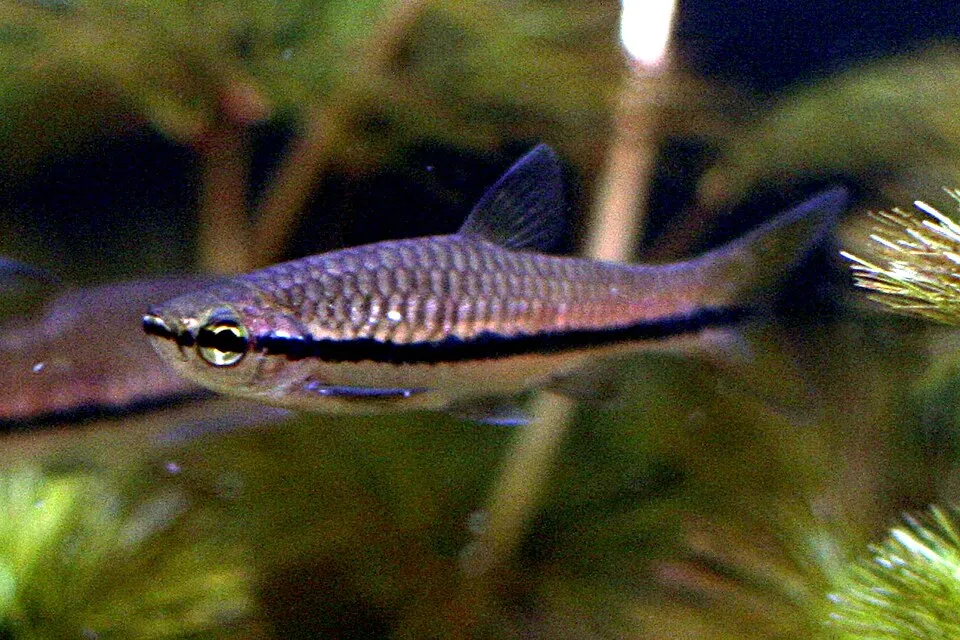
Brilliant rasbora
Rasbora einthovenii
Freshwater3.5 in (9 cm) · 29 gal (110 L)72–82°F (22–28°C)
Common questions
What size tank does a Foersch's barb need?
A Foersch's barb needs at least 29 gal (110 L). It spends most of its time in the middle.
What temperature and pH does a Foersch's barb need?
A Foersch's barb is comfortable at 73–82°F (23–28°C) with a pH of 5.0–6.8.
What does a Foersch's barb eat?
A Foersch's barb eats small sinking pellets, flake and frozen foods such as daphnia and bloodworm.
How big does a Foersch's barb get?
An adult Foersch's barb reaches about 3.1 in (8 cm).
Does a Foersch's barb need a group?
Yes. A Foersch's barb is a schooling species and should be kept in a group, not singly.
Related species
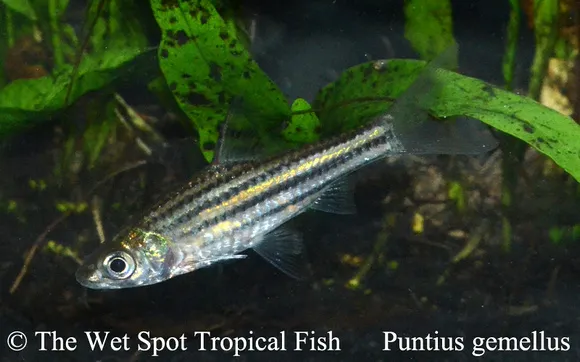 3.5 in (9 cm)29 gal (110 L)73–82°F (23–28°C)
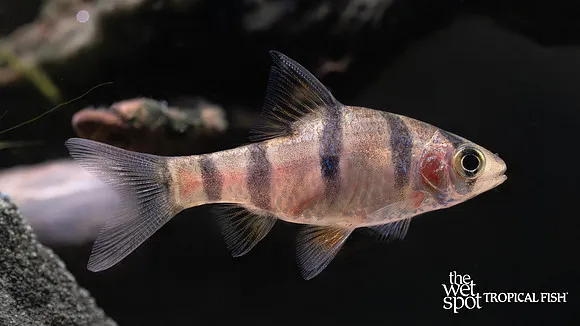
Twin-striped barb
Desmopuntius gemellus
3.5 in (9 cm) · 29 gal (110 L)
 2.4 in (6 cm)24 gal (90 L)73–82°F (23–28°C)
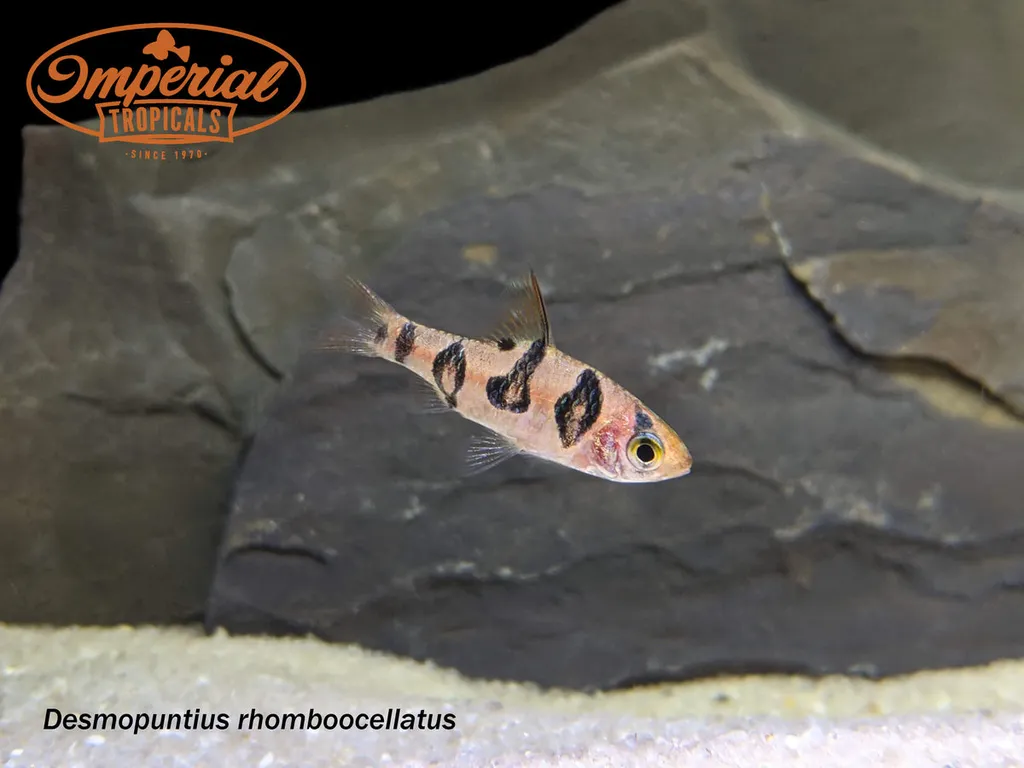
Six-banded barb
Desmopuntius hexazona
2.4 in (6 cm) · 24 gal (90 L)
 2.2 in (5.5 cm)20 gal (75 L)72–82°F (22–28°C)
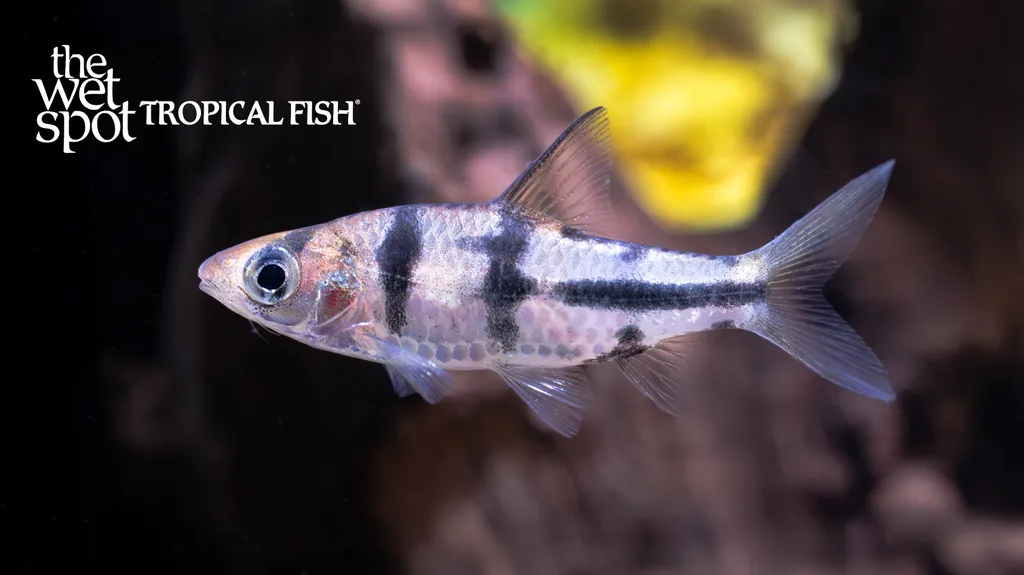
Snakeskin barb
Desmopuntius rhomboocellatus
2.2 in (5.5 cm) · 20 gal (75 L)
 4.7 in (12 cm)40 gal (150 L)73–79°F (23–26°C)
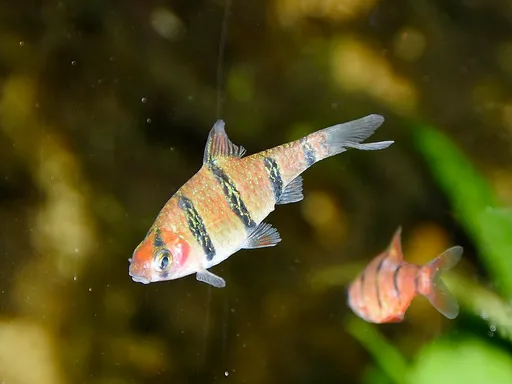
Striped barb
Desmopuntius johorensis
4.7 in (12 cm) · 40 gal (150 L)
 2 in (5 cm)20 gal (75 L)73–81°F (23–27°C)
Five-banded barb
Desmopuntius pentazona
2 in (5 cm) · 20 gal (75 L)
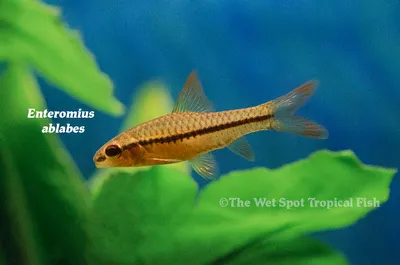 3.1 in (8 cm)24 gal (90 L)72–81°F (22–27°C)
Ablabes barb
Enteromius ablabes
3.1 in (8 cm) · 24 gal (90 L)