Breuseghem's moon tetra
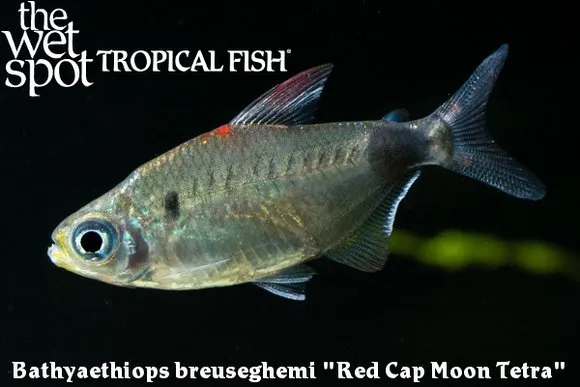
Bathyaethiops breuseghemi
Also known as Moon tetra
FreshwaterFish
Care at a glance
- Temperature
- 73–81°F
- 23–27°C
- pH
- 6.0–7.0
- Adult size
- 2.8 in
- 7 cm
- Minimum tank
- 29 gal
- 110 L
- Temperament
- Peaceful
- Social behavior
- Schooling
- Swim level
- Middle
- Difficulty
- Medium
- Breeding
- No record
- Rarity
- Rare
- Family
- Alestidae
- Origin
- Central Congo basin
Overview
Breuseghem's moon tetra is a peaceful, lively schooling fish for the middle of a community tank. It suits a keeper with a little experience.
Caring for the Breuseghem's moon tetra
Keep Breuseghem's moon tetras in a school of at least six to eight, since they show their best colors in a group. A tank of 29 gal (110 L) gives a small school the space it needs. Use driftwood, a dark substrate and dimmer lighting, with plants around the edges and open swimming space in front of them.
Keep the water soft and gently acidic to neutral, at 73 to 81°F (23 to 27°C) and a pH of 6.0 to 7.0. Give it some gentle flow, and keep conditions clean with steady water changes.
Feed a quality flake or micropellet as the staple. Add frequent frozen or live foods such as brine shrimp, daphnia and bloodworm, which keep the males richly colored.
Breuseghem's moon tetra is peaceful and lively. It mixes well with calm community fish that use different levels of the tank, from small West African species to gentle catfish and quiet cichlids. Displaying males flush with warm orange and red on the head and fins. There is no reliable aquarium breeding record, though it is assumed to scatter eggs among fine plants like its kin.
Good to know
Bathyaethiops breuseghemi is an alestid, one of the African moon tetras. It is a silvery, deep-bodied fish with a dark rectangular marking toward the tail. The male colors are why it also sells as the red cap moon tetra. The species honors the Belgian scientist Raymond Van Breuseghem.
In the wild
Breuseghem's moon tetra lives in soft, slightly acidic tributaries of the central Congo basin, including parts of the Kasai and Bomu systems. These are shaded forest waters with slow to moderate flow over sand, wood and leaf litter.
Weekly picks
Tank mates
The Breuseghem's moon tetra is a peaceful, schooling species that keeps to the middle. These picks share a community profile with it, are safe together in both directions, and overlap on water type, temperature and pH.
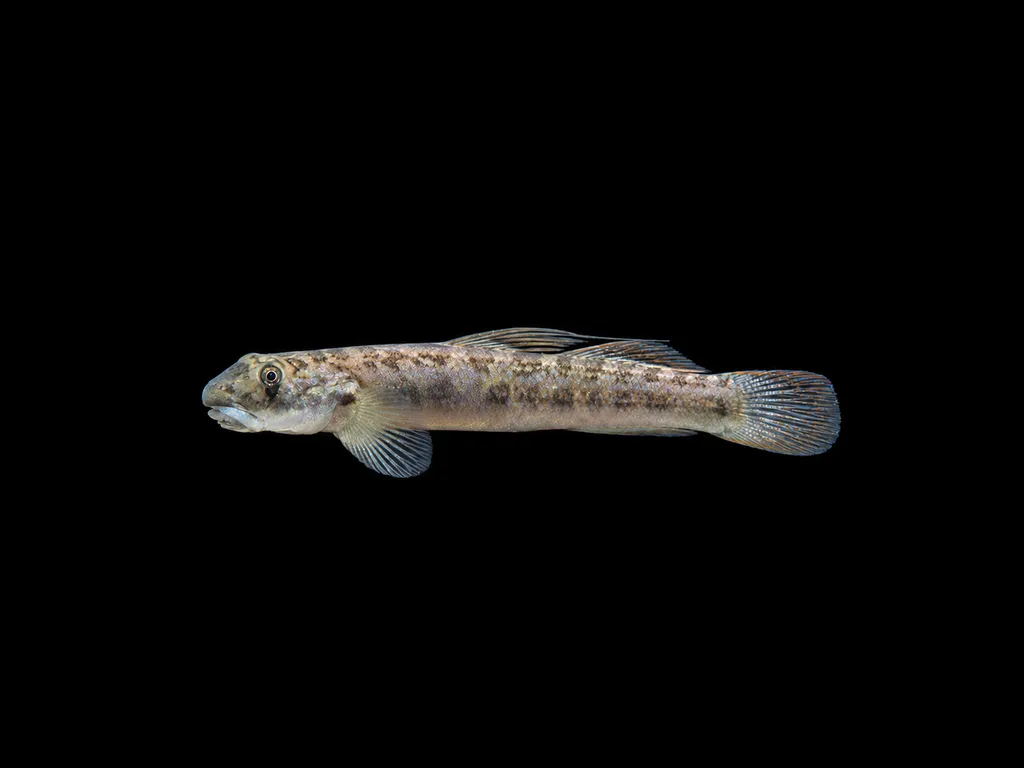
Threadfin sicyopterus
Sicyopterus longifilis
Freshwater3.9 in (10 cm) · 29 gal (110 L)73–81°F (23–27°C)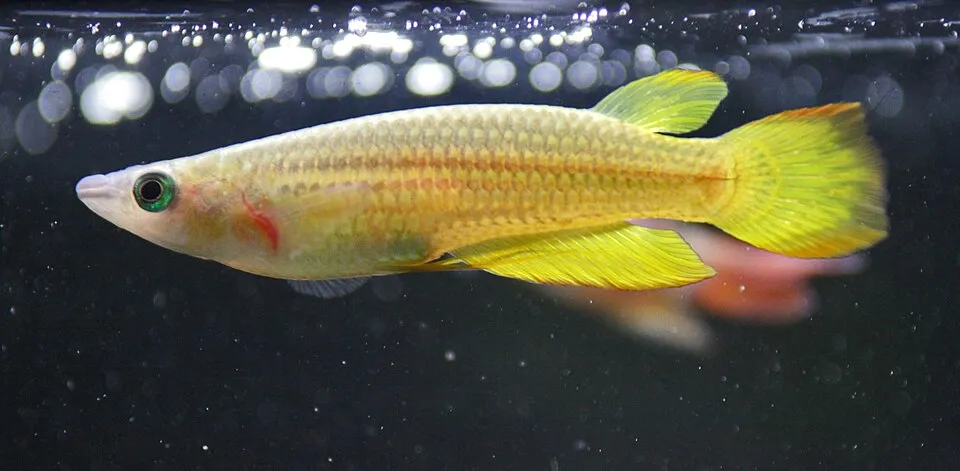
Striped panchax
Aplocheilus lineatus
Freshwater4.3 in (11 cm) · 30 gal (115 L)72–77°F (22–25°C)
Bonita tetra
Moenkhausia bonita
Freshwater3.3 in (8.5 cm) · 29 gal (110 L)72–81°F (22–27°C)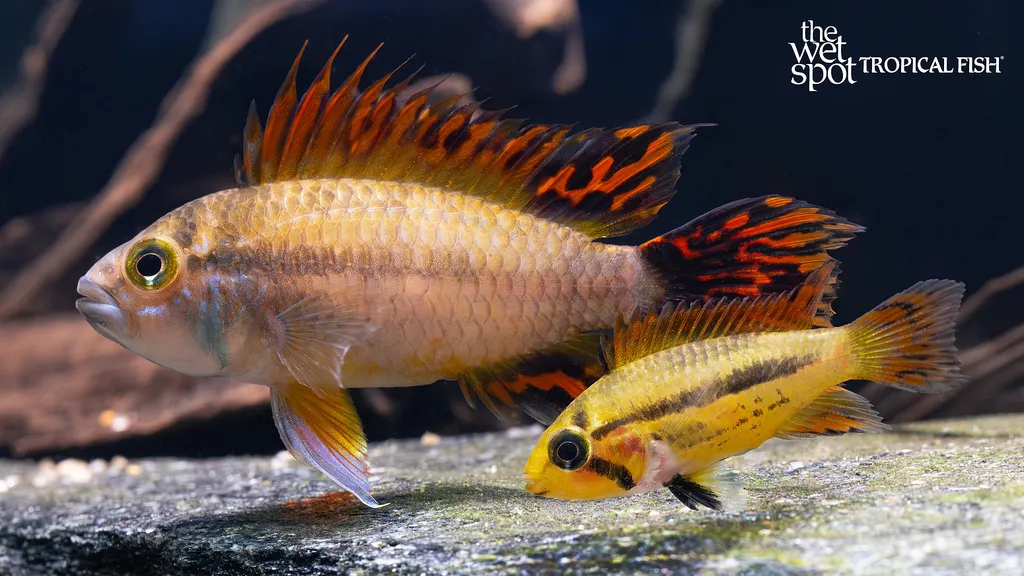
Kullander's dwarf cichlid
Apistogramma kullanderi
Freshwater3.9 in (10 cm) · 29 gal (110 L)72–81°F (22–27°C)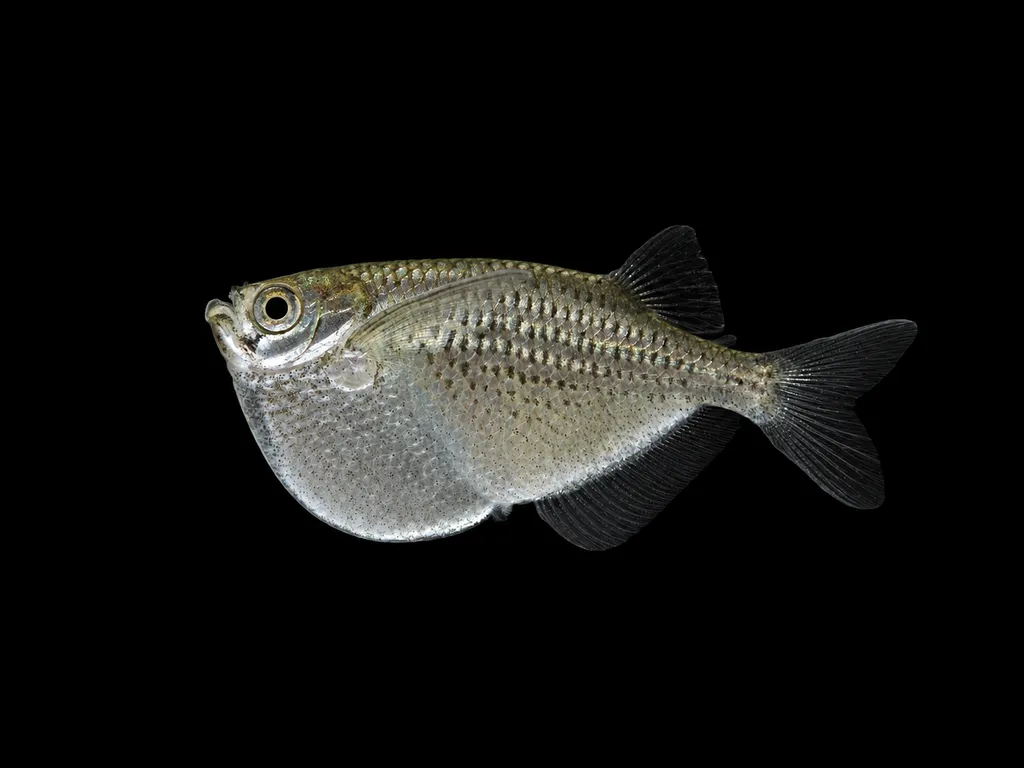
Silver hatchetfish
Gasteropelecus levis
Freshwater1.4 in (3.5 cm) · 30 gal (112 L)73–82°F (23–28°C)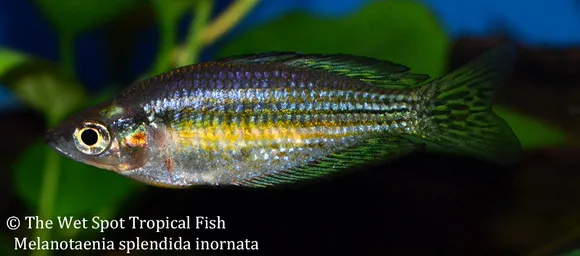
Checkered rainbowfish
Melanotaenia splendida inornata
Freshwater4.7 in (12 cm) · 29 gal (110 L)72–86°F (22–30°C)
Common questions
What size tank does a Breuseghem's moon tetra need?
A Breuseghem's moon tetra needs at least 29 gal (110 L). It spends most of its time in the middle.
What temperature and pH does a Breuseghem's moon tetra need?
A Breuseghem's moon tetra is comfortable at 73–81°F (23–27°C) with a pH of 6.0–7.0.
What does a Breuseghem's moon tetra eat?
A Breuseghem's moon tetra eats a quality flake or micropellet as its staple. Frequent frozen or live foods such as brine shrimp, daphnia and bloodworm keep the males richly colored.
How big does a Breuseghem's moon tetra get?
An adult Breuseghem's moon tetra reaches about 2.8 in (7 cm).
Does a Breuseghem's moon tetra need a group?
Yes. A Breuseghem's moon tetra is a schooling species and should be kept in a group, not singly.
How can you tell a male Breuseghem's moon tetra from a female?
Males flush with warm orange and red on the head and fins when they display.
How does a Breuseghem's moon tetra breed?
Breuseghem's moon tetra has no reliable aquarium breeding record. It is assumed to scatter its eggs among fine plants like its kin.
Related species
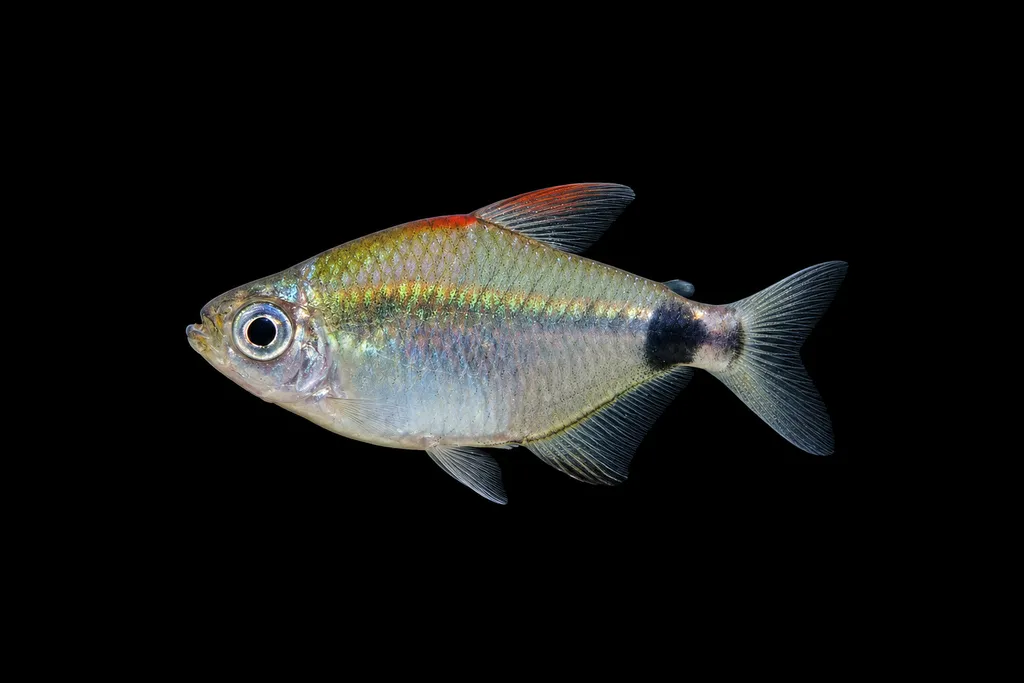 3.1 in (8 cm)22 gal (85 L)72–77°F (22–25°C)
African moon tetra
Bathyaethiops caudomaculatus
3.1 in (8 cm) · 22 gal (85 L)
- 2 in (5 cm)24 gal (90 L)73–81°F (23–27°C)
Red-back moon tetra
Bathyaethiops flammeus
2 in (5 cm) · 24 gal (90 L)
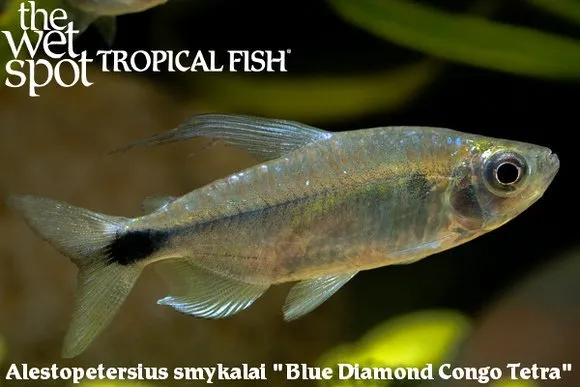 2.8 in (7 cm)29 gal (110 L)73–81°F (23–27°C)
Niger yellow Congo tetra
Alestopetersius smykalai
2.8 in (7 cm) · 29 gal (110 L)
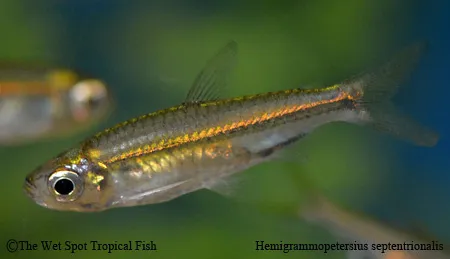 2.8 in (7 cm)21 gal (80 L)73–82°F (23–28°C)
Nigerian yellow line tetra
Rhabdalestes septentrionalis
2.8 in (7 cm) · 21 gal (80 L)
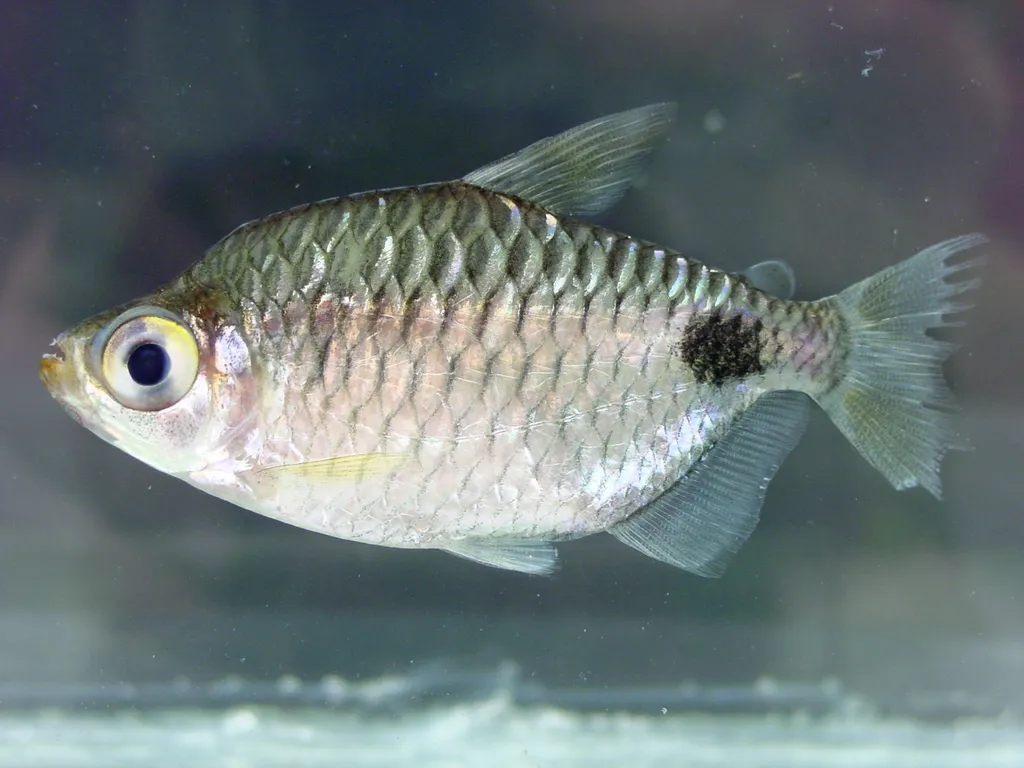 2.6 in (6.5 cm)30 gal (112 L)73–82°F (23–28°C)
Altus tetra
Brachypetersius altus
2.6 in (6.5 cm) · 30 gal (112 L)
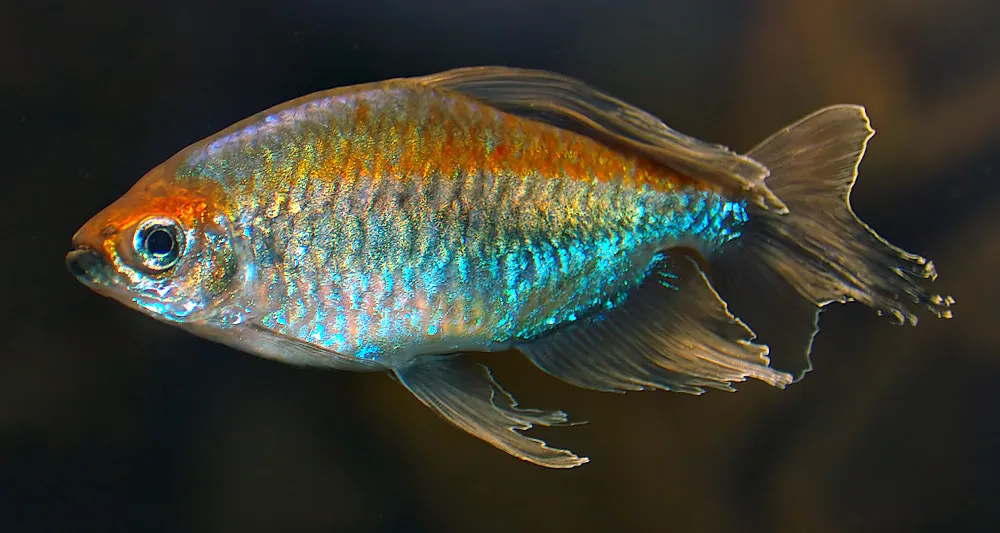 3.1 in (8 cm)24 gal (90 L)73–82°F (23–28°C)
Congo tetra
Phenacogrammus interruptus
3.1 in (8 cm) · 24 gal (90 L)