African moon tetra
Bathyaethiops caudomaculatus
FreshwaterFish
Care at a glance
- Temperature
- 72–77°F
- 22–25°C
- pH
- 6.5–7.5
- Adult size
- 3.1 in
- 8 cm
- Minimum tank
- 22 gal
- 85 L
- Temperament
- Peaceful
- Social behavior
- Schooling
- Swim level
- Middle
- Difficulty
- Medium
- Breeding
- Hard
- Rarity
- Rare
- Family
- Alestidae
- Origin
- Africa
Overview
Keep the African moon tetra in a shoal of at least six, and a larger group of eight to ten helps this shy fish settle and colour up. It is a peaceful mid-water swimmer that mixes well with other calm species of a similar size, such as other tetras, rasboras, or peaceful catfish. Give it gentle flow, some shade from floating plants, and open room to swim between planted edges. Feed a varied menu of good flake and small frozen or live foods like daphnia and bloodworm to bring out the golden sheen. A planted tank of around 85 liters or larger suits a group.
In the wild
This tetra comes from the middle and lower Congo River basin in central Africa, where it lives in slow-flowing, shaded stretches stained soft and slightly acidic by fallen leaves and wood. To echo that, keep the water warm at 22 to 25 C with a pH between 6.5 and 7.5 and only moderate hardness. Dark substrate, driftwood, leaf litter, and dim lighting suit it well and make its gold body and dark tail spot stand out. Steady, well-filtered water with a little current keeps it comfortable.
Good to know
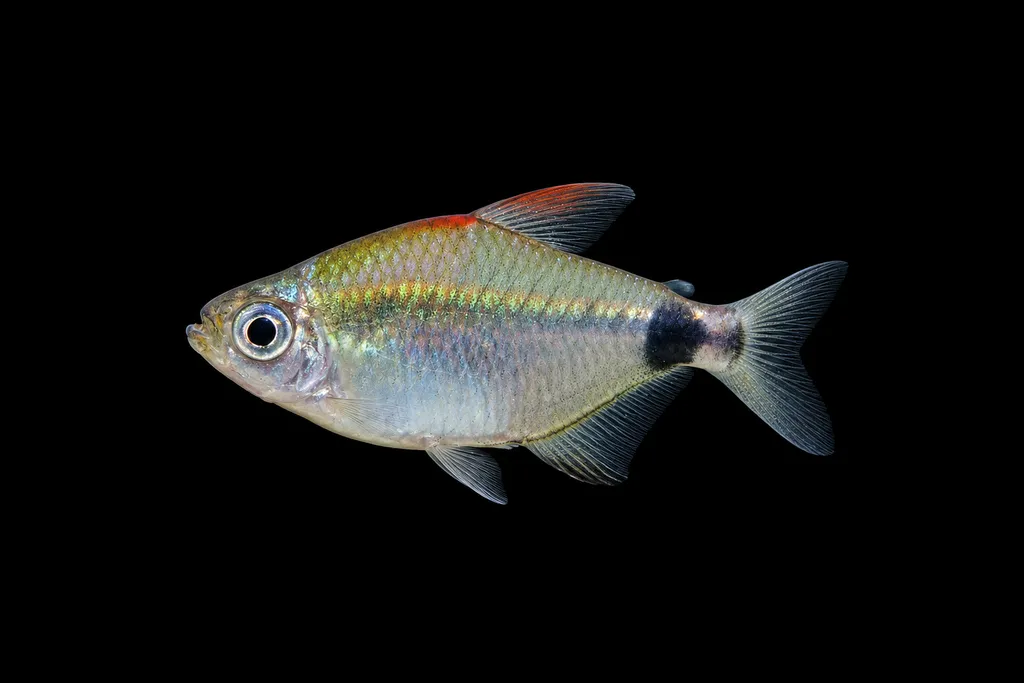
The African moon tetra belongs to Alestidae, the African tetra family, and is a close relative of the better known Congo tetra. It is a deep-bodied, silvery-gold fish that reaches about 8 cm, marked by a single dark blotch at the base of the tail that gives it the moon name. Like most alestids it is an egg-scattering species that gives no parental care, and it is regarded as hard to breed in the aquarium, needing soft acidic water and usually producing small spawns. Wild-caught stock still makes up most of what reaches the trade.
Did you know
The moon in its name refers to the rounded dark spot at the base of the tail, which stands out against a body that catches light in a warm gold sheen. It is one of the quieter African tetras, and its shy nature is a big part of why it stays uncommon in shops despite being handsome in a mature group.
Weekly picks
Tank mates
African moon tetra is a peaceful, schooling species that keeps to the middle. These picks share a community profile with it, are safe together in both directions, and overlap on water type, temperature and pH.
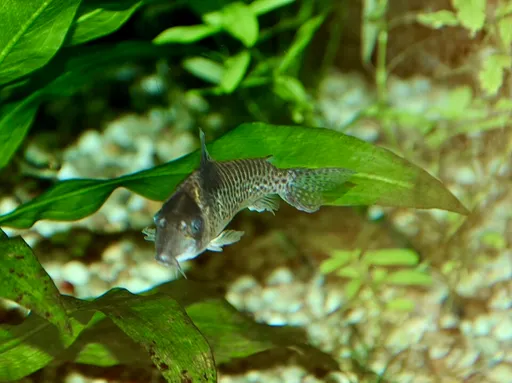
Agassiz's cory
Brochis agassizii
Freshwater2.8 in (7 cm) · 24 gal (90 L)72–79°F (22–26°C)Siamese flying barb
Laubuka siamensis
Freshwater2.6 in (6.5 cm) · 24 gal (90 L)72–81°F (22–27°C)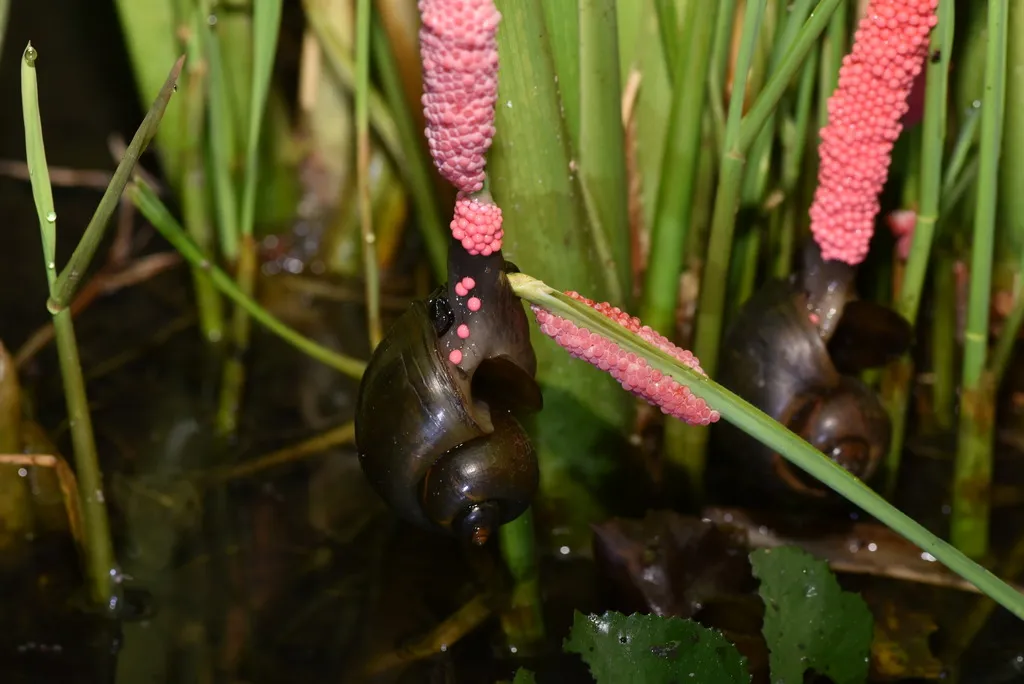
Apple snail
Pomacea canaliculata
Freshwater5.9 in (15 cm) · 21 gal (80 L)64–81°F (18–27°C)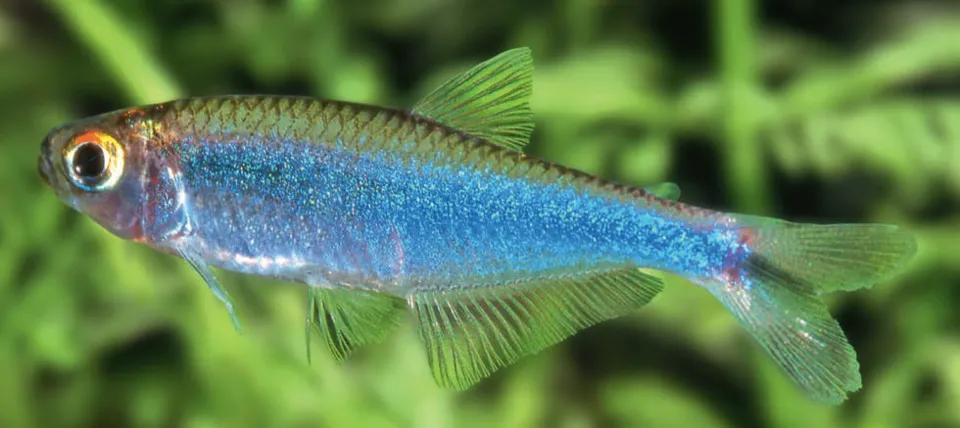
Blue tetra
Knodus borki
Freshwater2 in (5 cm) · 22 gal (85 L)72–79°F (22–26°C)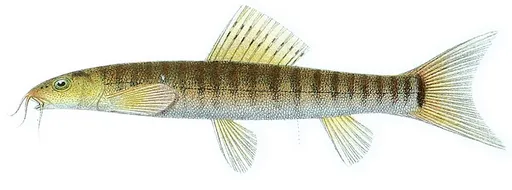
Barred loach
Nemacheilus fasciatus
Freshwater3.1 in (8 cm) · 24 gal (90 L)68–77°F (20–25°C)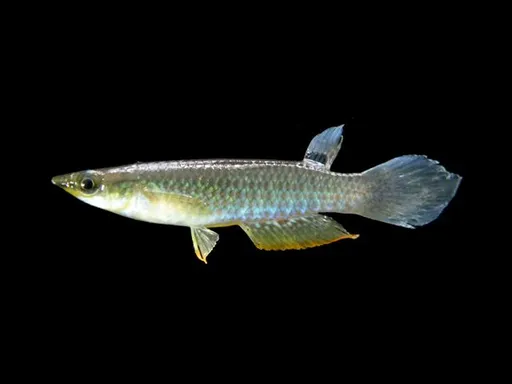
Blue panchax
Aplocheilus panchax
Freshwater3.5 in (9 cm) · 20 gal (75 L)72–82°F (22–28°C)
Common questions
What size tank does an African moon tetra need?
An African moon tetra needs at least 22 gal (85 L). It spends most of its time in the middle.
What temperature and pH does an African moon tetra need?
An African moon tetra is comfortable at 72–77°F (22–25°C) with a pH of 6.5–7.5.
How big does an African moon tetra get?
An adult African moon tetra reaches about 3.1 in (8 cm).
Does an African moon tetra need a group?
Yes. An African moon tetra is a schooling species and should be kept in a group, not singly.
Related species
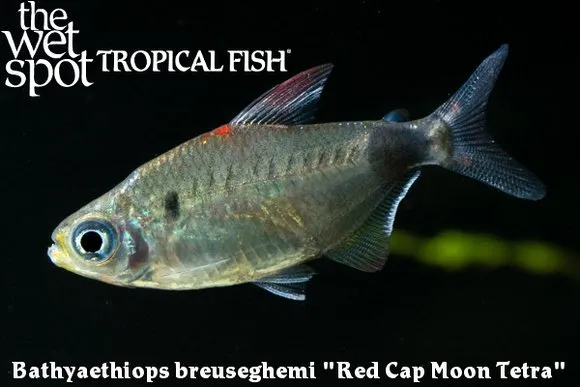 2.8 in (7 cm)29 gal (110 L)73–81°F (23–27°C)
Breuseghem's moon tetra
Bathyaethiops breuseghemi
2.8 in (7 cm) · 29 gal (110 L)
- 2 in (5 cm)24 gal (90 L)73–81°F (23–27°C)
Red-back moon tetra
Bathyaethiops flammeus
2 in (5 cm) · 24 gal (90 L)
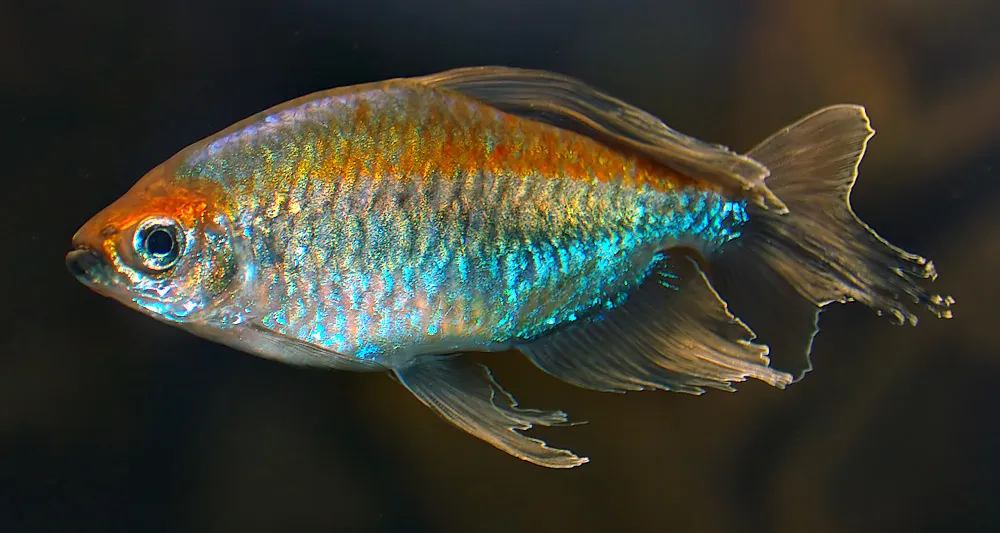 3.1 in (8 cm)24 gal (90 L)73–82°F (23–28°C)
Congo tetra
Phenacogrammus interruptus
3.1 in (8 cm) · 24 gal (90 L)
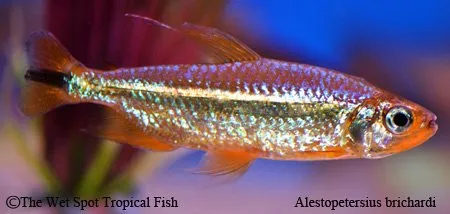 3.5 in (9 cm)29 gal (110 L)73–81°F (23–27°C)
Brichard's Congo tetra
Alestopetersius brichardi
3.5 in (9 cm) · 29 gal (110 L)
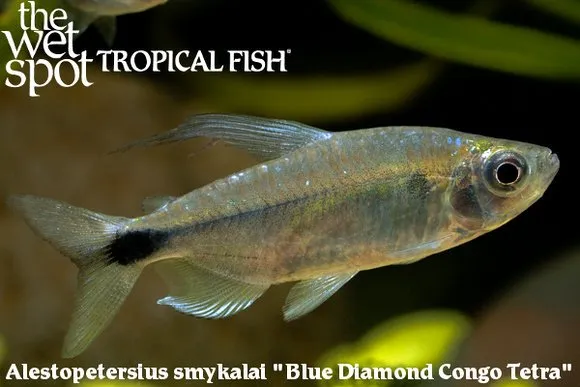 2.8 in (7 cm)29 gal (110 L)73–81°F (23–27°C)
Niger yellow Congo tetra
Alestopetersius smykalai
2.8 in (7 cm) · 29 gal (110 L)
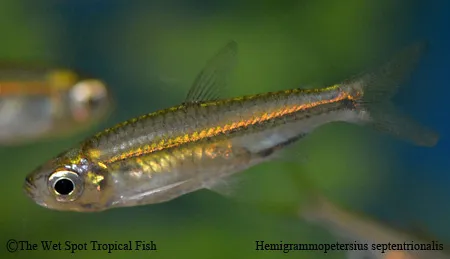 2.8 in (7 cm)21 gal (80 L)73–82°F (23–28°C)
Nigerian yellow line tetra
Rhabdalestes septentrionalis
2.8 in (7 cm) · 21 gal (80 L)