Brichard's Congo tetra
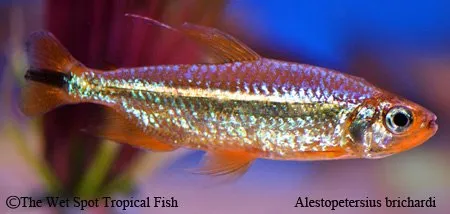
Alestopetersius brichardi
Also known as Brichardi Congo tetra, Red Congo tetra
FreshwaterFish
Care at a glance
- Temperature
- 73–81°F
- 23–27°C
- pH
- 6.0–7.2
- Adult size
- 3.5 in
- 9 cm
- Minimum tank
- 29 gal
- 110 L
- Temperament
- Peaceful
- Social behavior
- Schooling
- Swim level
- Middle
- Difficulty
- Medium
- Breeding
- Egg scatterer
- Rarity
- Rare
- Family
- Alestidae
- Origin
- Lower Congo rapids region
Overview
Brichard's Congo tetra is a peaceful, colorful schooling fish that swims in open midwater. It is a step up from the easiest community fish.
Caring for the Brichard's Congo tetra
Keep Brichard's Congo tetras in a group of at least six. Several males in the group bring out rival displays and richer color. A tank of 29 gal (110 L) or larger gives this active fish the swimming length it wants. Leave open space in the middle, with some driftwood or plants at the sides.
Keep the water at 73 to 81°F (23 to 27°C) and a pH of 6.0 to 7.2. It does best with a steady current, strong filtration and oxygenation, and clean water.
Feed generously and with variety. Use flake and pellets as a base, topped up with frozen and live foods like bloodworm and brine shrimp.
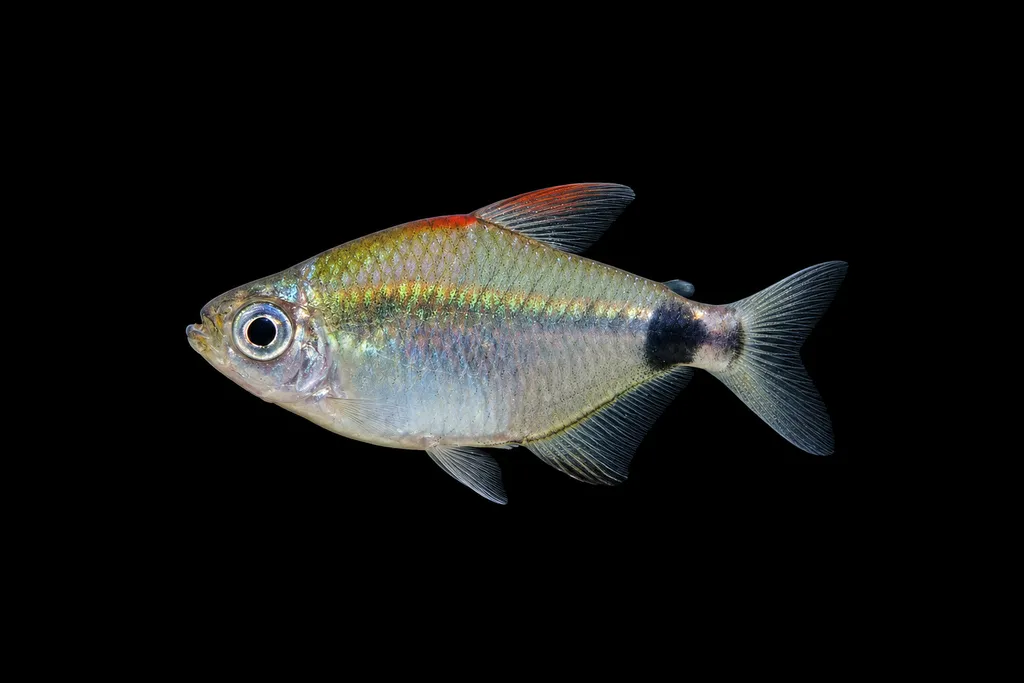
Brichard's Congo tetra is peaceful. Good tank mates are other calm community fish, such as Synodontis catfish, peaceful barbs and larger rasboras or tetras. Males are washed in cherry red and orange with a blue and purple sheen and extended fin tips, while females stay plainer. Reliable aquarium breeding is not documented, though like its relatives it scatters its eggs.
Good to know
Alestopetersius brichardi is an African tetra in the family Alestidae. The bright males are why the trade sells it as the cherry red or red Congo tetra. Brichard himself collected part of the original type material for the species.
In the wild
Brichard's Congo tetra comes from the Congo River in the Democratic Republic of the Congo. It lives in the fast, oxygen-rich stretches around Malebo Pool and the rapids below. The water there is warm, soft and slightly acidic, and it moves over rock and sand.
Weekly picks
Tank mates
The Brichard's Congo tetra is a peaceful, schooling species that keeps to the middle. These picks share a community profile with it, are safe together in both directions, and overlap on water type, temperature and pH.
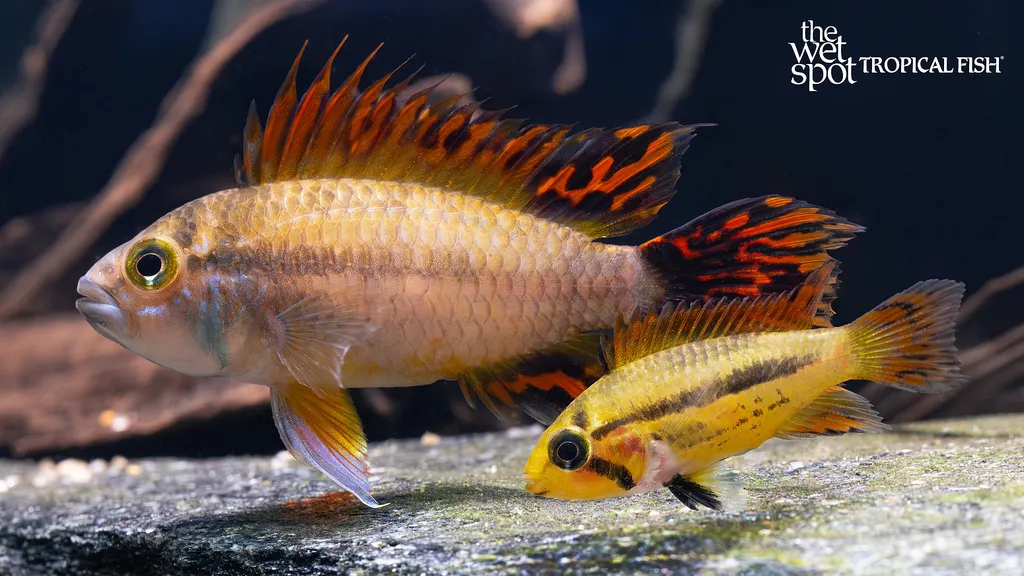
Kullander's dwarf cichlid
Apistogramma kullanderi
Freshwater3.9 in (10 cm) · 29 gal (110 L)72–81°F (22–27°C)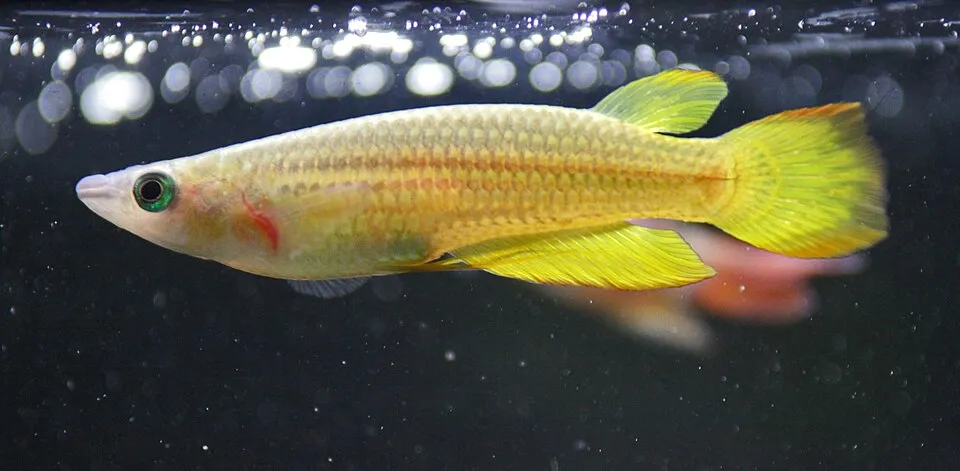
Striped panchax
Aplocheilus lineatus
Freshwater4.3 in (11 cm) · 30 gal (115 L)72–77°F (22–25°C)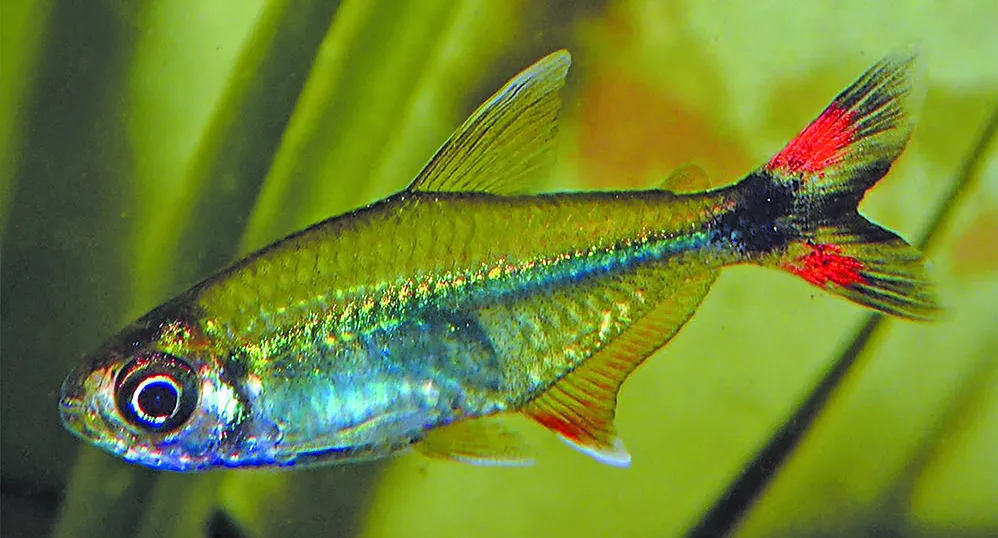
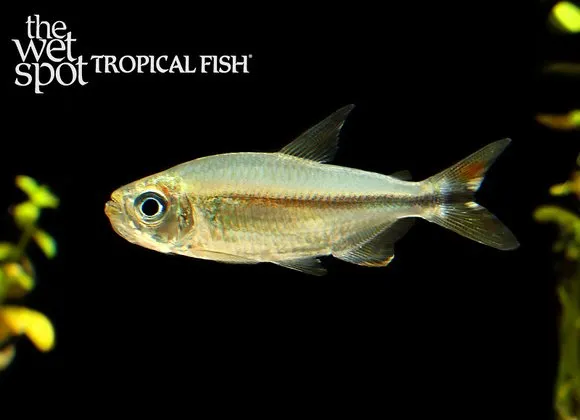
Bonita tetra
Moenkhausia bonita
Freshwater3.3 in (8.5 cm) · 29 gal (110 L)72–81°F (22–27°C)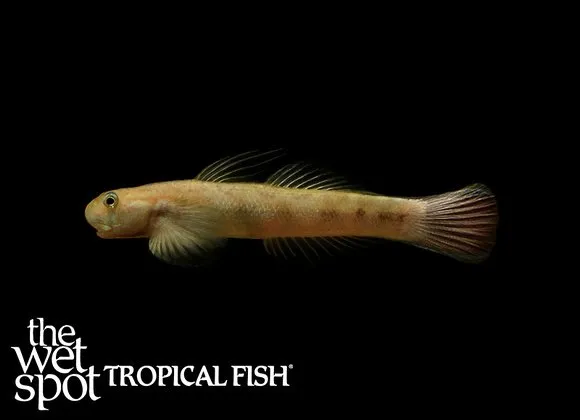
Red tail sicyopterus
Sicyopterus lagocephalus
Freshwater5.1 in (13 cm) · 29 gal (110 L)73–81°F (23–27°C)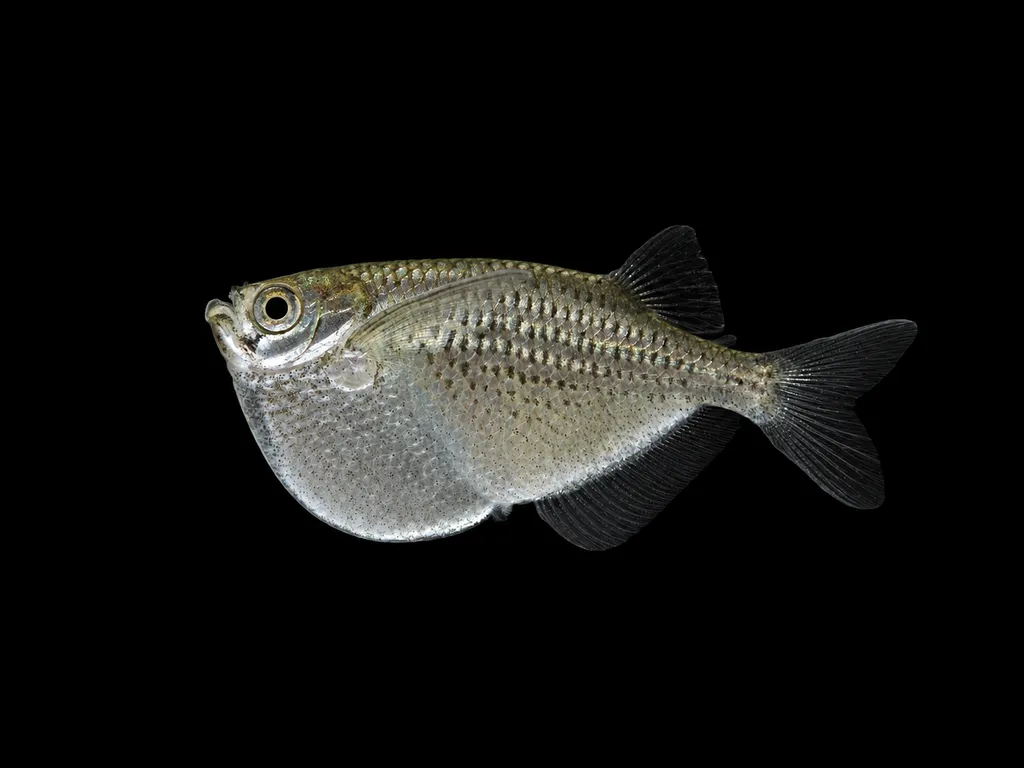
Silver hatchetfish
Gasteropelecus levis
Freshwater1.4 in (3.5 cm) · 30 gal (112 L)73–82°F (23–28°C)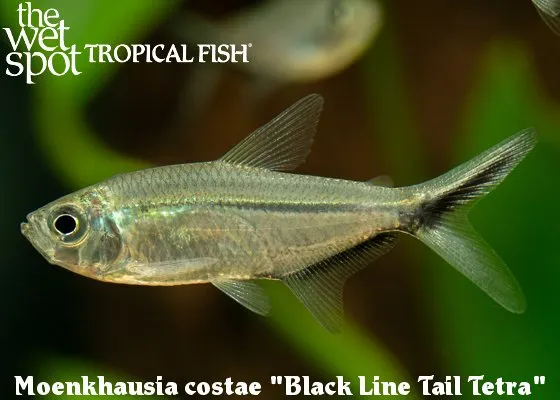
Costae tetra
Moenkhausia costae
Freshwater2.8 in (7 cm) · 29 gal (110 L)72–82°F (22–28°C)
Common questions
What size tank does a Brichard's Congo tetra need?
A Brichard's Congo tetra needs at least 29 gal (110 L). It spends most of its time in the middle.
What temperature and pH does a Brichard's Congo tetra need?
A Brichard's Congo tetra is comfortable at 73–81°F (23–27°C) with a pH of 6.0–7.2.
What does a Brichard's Congo tetra eat?
A Brichard's Congo tetra eats flake and pellets as a base. Top this up with frozen and live foods such as bloodworm and brine shrimp, and feed generously.
How big does a Brichard's Congo tetra get?
An adult Brichard's Congo tetra reaches about 3.5 in (9 cm).
Does a Brichard's Congo tetra need a group?
Yes. A Brichard's Congo tetra is a schooling species and should be kept in a group, not singly.
How can you tell a male Brichard's Congo tetra from a female?
Males are washed in cherry red and orange, with a blue and purple sheen and extended fin tips. Females stay plainer.
How does a Brichard's Congo tetra breed?
Brichard's Congo tetra scatters its eggs like its relatives. Reliable breeding in the aquarium has not been documented.
Related species
 3.9 in (10 cm)42 gal (160 L)73–81°F (23–27°C)
Hilgendorf's Congo tetra
Alestopetersius hilgendorfi
3.9 in (10 cm) · 42 gal (160 L)
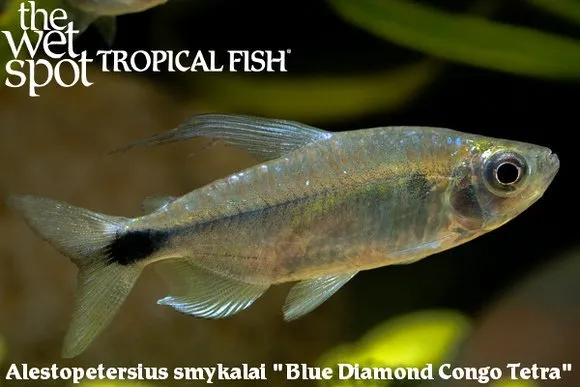 2.8 in (7 cm)29 gal (110 L)73–81°F (23–27°C)
Niger yellow Congo tetra
Alestopetersius smykalai
2.8 in (7 cm) · 29 gal (110 L)
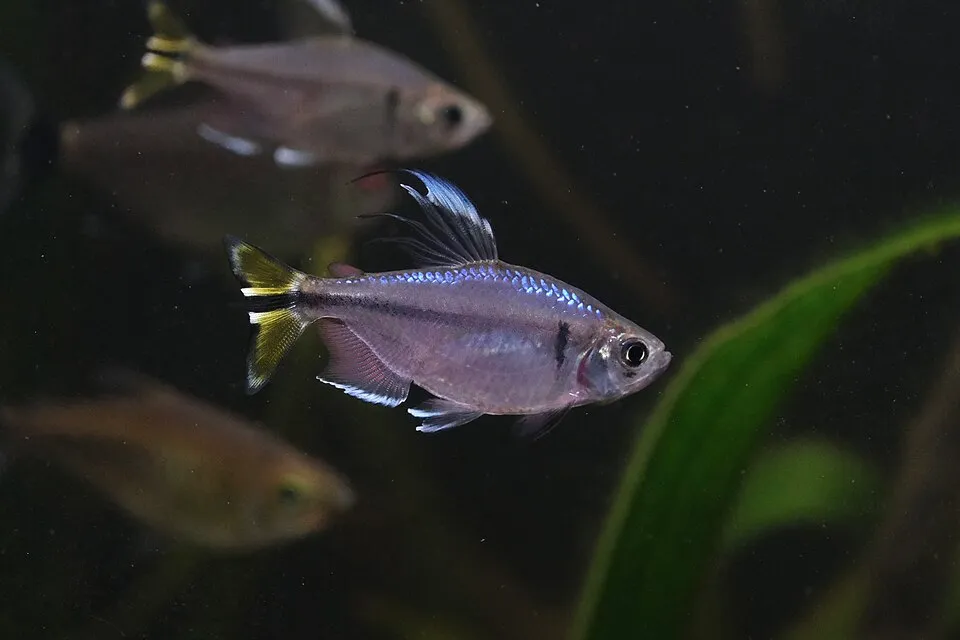 2.4 in (6 cm)20 gal (75 L)72–79°F (22–26°C)
Yellow-tailed Congo tetra
Alestopetersius caudalis
2.4 in (6 cm) · 20 gal (75 L)
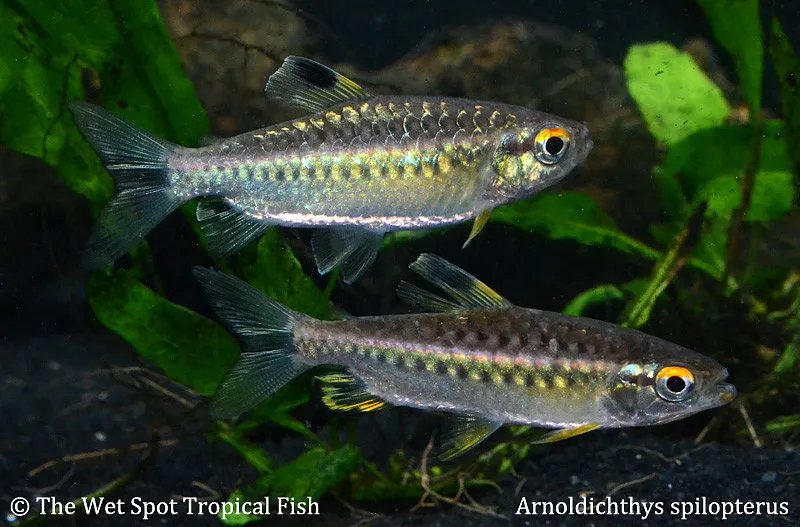 3.9 in (10 cm)50 gal (190 L)75–81°F (24–27°C)
Niger tetra
Arnoldichthys spilopterus
3.9 in (10 cm) · 50 gal (190 L)
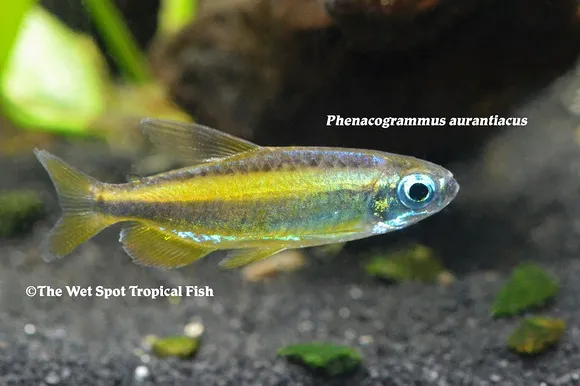 3.9 in (10 cm)42 gal (160 L)73–81°F (23–27°C)
Orange Congo tetra
Phenacogrammus aurantiacus
3.9 in (10 cm) · 42 gal (160 L)
 3.1 in (8 cm)22 gal (85 L)72–77°F (22–25°C)
African moon tetra
Bathyaethiops caudomaculatus
3.1 in (8 cm) · 22 gal (85 L)