Congo tetra
Phenacogrammus interruptus
FreshwaterFish
Care at a glance
- Temperature
- 73–82°F
- 23–28°C
- pH
- 6.0–7.5
- Adult size
- 3.1 in
- 8 cm
- Minimum tank
- 24 gal
- 90 L
- Temperament
- Peaceful
- Social behavior
- Schooling
- Swim level
- Middle
- Difficulty
- Easy
- Breeding
- Egg scatterer
- Rarity
- Common
- Family
- Alestidae
- Origin
- Congo Basin
Overview
The Congo tetra is a peaceful, active schooling fish for the middle of a community tank. It is easy to keep.
Did you know
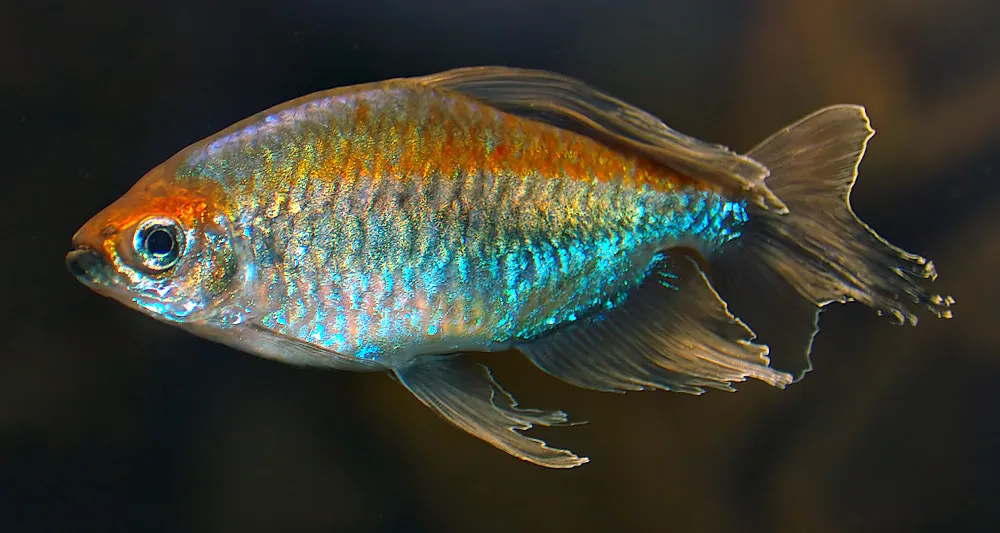
The Congo tetra's scales throw off a shifting gold, blue and violet sheen. That sheen only really develops on well-fed adult males in a settled group. A single fish in a bright, bare tank looks washed out by comparison.
Caring for the Congo tetra
Keep Congo tetras in a school of six or more, ideally with a few males so they display to each other. They need at least 24 gal (90 L) with room to move. A planted tank with dim or filtered lighting and an open lane down the middle for swimming brings out their best color. A darker substrate also helps them feel settled.
Keep the water on the soft side, at 73 to 82°F (23 to 28°C) and a pH of 6.0 to 7.5. Feed a mix of quality flake or pellets plus live and frozen foods to keep their color strong.
Congo tetras are peaceful, active swimmers that hold the middle of the tank. Males grow longer, flowing fin extensions than females, which is the easiest way to tell them apart. They are egg scatterers that give no parental care.
Good to know
Congo tetras belong to the African characin family Alestidae. Their scientific name is Phenacogrammus interruptus.
In the wild
Congo tetras live in the slow, plant-lined waters of the Congo Basin in Central Africa, often under shade with a soft, dark bottom. The water there is soft and a touch acidic to neutral.
Weekly picks
Tank mates
The Congo tetra is a peaceful, schooling species that keeps to the middle. These picks share a community profile with it, are safe together in both directions, and overlap on water type, temperature and pH.
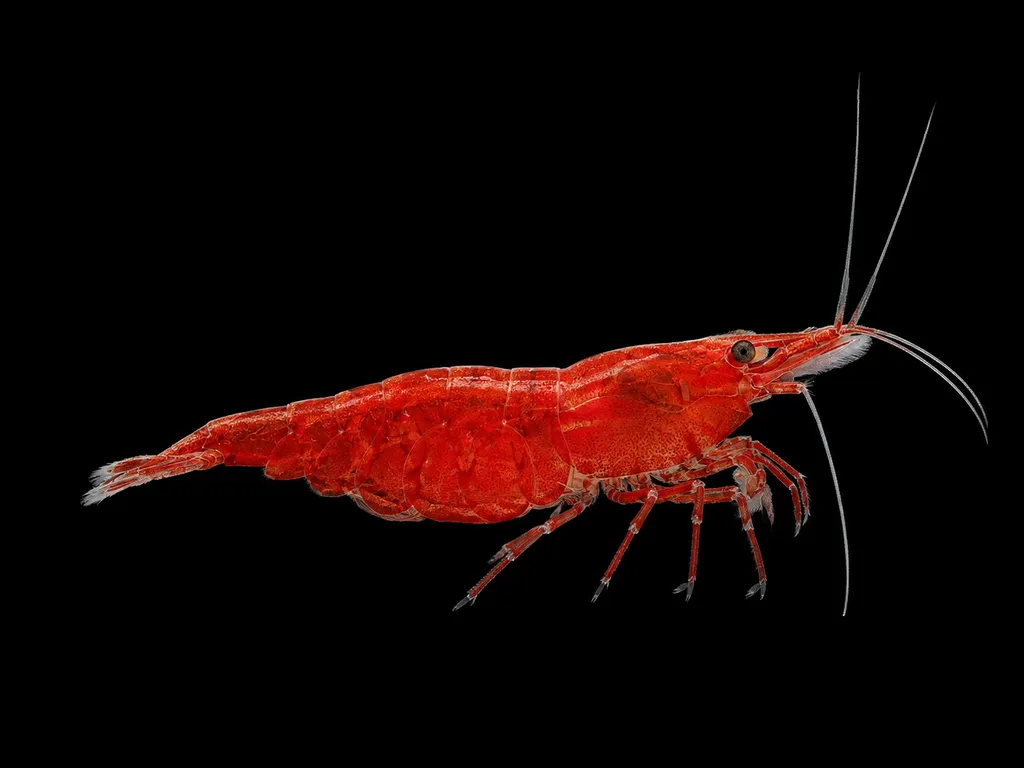
Neocaridina shrimp
Neocaridina davidi
Freshwater1.6 in (4 cm) · 5 gal (19 L)59–84°F (15–29°C)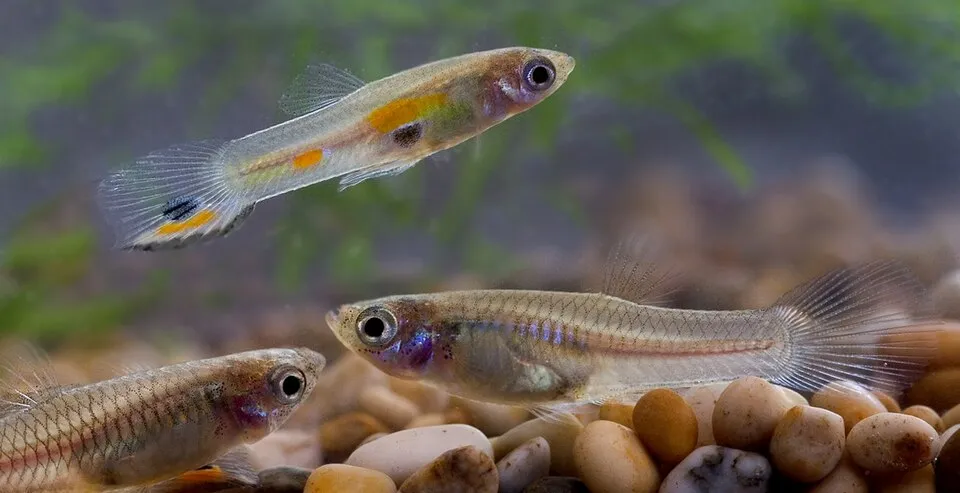
Guppy
Poecilia reticulata
FreshwaterBrackish2.4 in (6 cm) · 10 gal (38 L)64–82°F (18–28°C)
Neon tetra
Paracheirodon innesi
Freshwater1.5 in (3.8 cm) · 11 gal (40 L)70–77°F (21–25°C)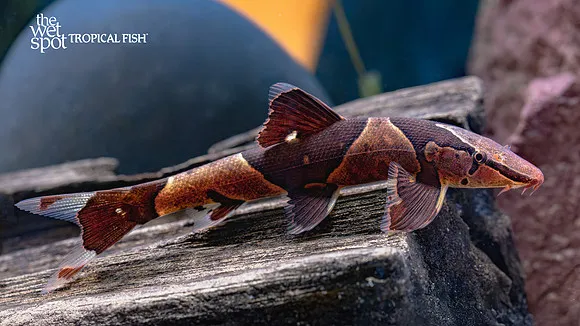
Mekong lizard loach
Homaloptera confuzona
Freshwater3.2 in (8.2 cm) · 24 gal (90 L)70–81°F (21–27°C)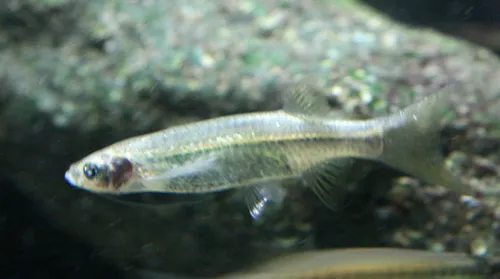
Striped flying barb
Esomus metallicus
Freshwater3 in (7.5 cm) · 24 gal (90 L)72–79°F (22–26°C)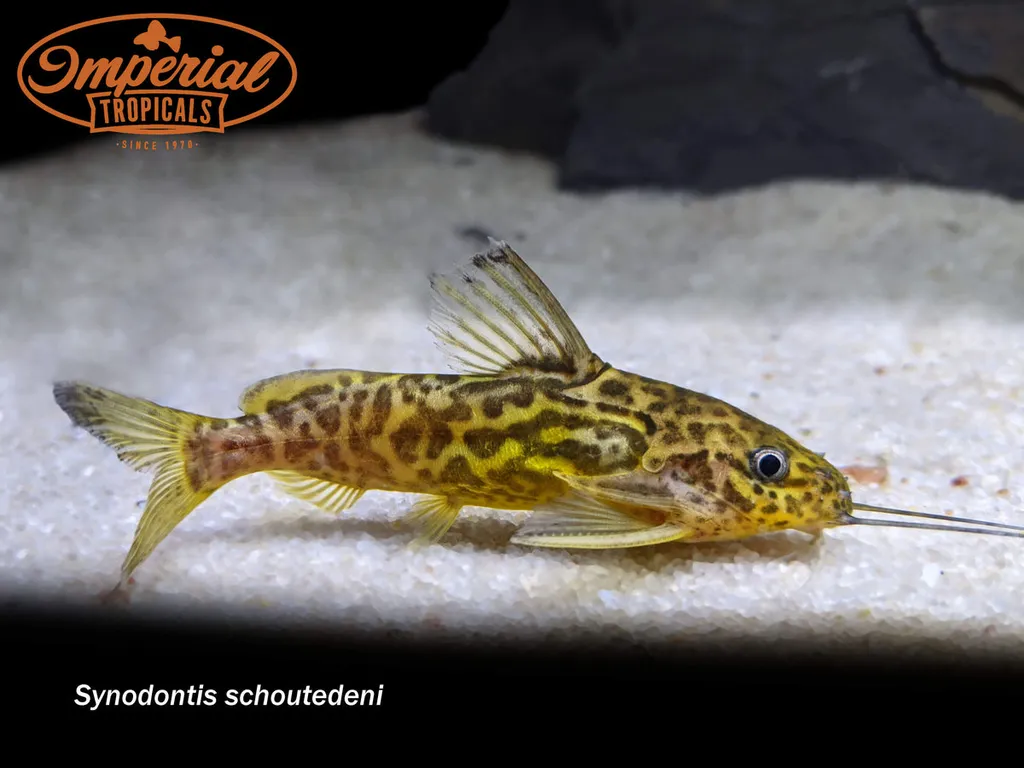
Vermiculated squeaker
Synodontis schoutedeni
Freshwater5.9 in (15 cm) · 24 gal (90 L)72–81°F (22–27°C)
Common questions
What size tank does a Congo tetra need?
A Congo tetra needs at least 24 gal (90 L). It spends most of its time in the middle.
What temperature and pH does a Congo tetra need?
A Congo tetra is comfortable at 73–82°F (23–28°C) with a pH of 6.0–7.5.
What does a Congo tetra eat?
A Congo tetra eats quality flake or pellets along with live and frozen foods. The mix keeps its color strong.
How big does a Congo tetra get?
An adult Congo tetra reaches about 3.1 in (8 cm).
Does a Congo tetra need a group?
Yes. A Congo tetra is a schooling species and should be kept in a group, not singly.
How can you tell a male Congo tetra from a female?
Males grow longer, flowing fin extensions than females. This is the easiest way to tell the sexes apart.
How does a Congo tetra breed?
Congo tetras are egg scatterers and give their eggs no parental care.
Related species
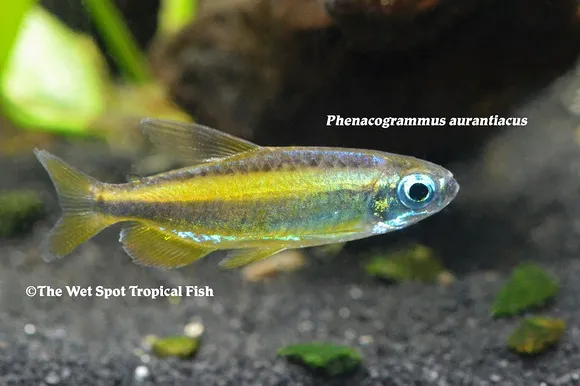 3.9 in (10 cm)42 gal (160 L)73–81°F (23–27°C)
Orange Congo tetra
Phenacogrammus aurantiacus
3.9 in (10 cm) · 42 gal (160 L)
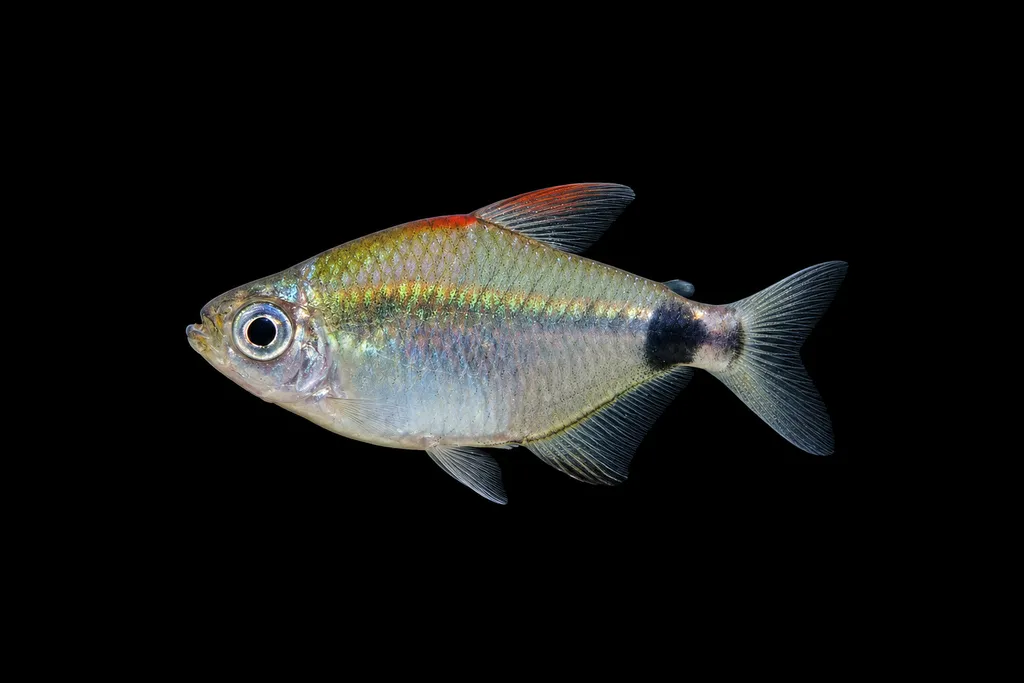 3.1 in (8 cm)22 gal (85 L)72–77°F (22–25°C)
African moon tetra
Bathyaethiops caudomaculatus
3.1 in (8 cm) · 22 gal (85 L)
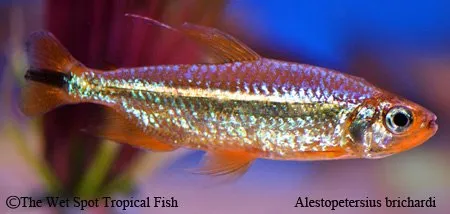 3.5 in (9 cm)29 gal (110 L)73–81°F (23–27°C)
Brichard's Congo tetra
Alestopetersius brichardi
3.5 in (9 cm) · 29 gal (110 L)
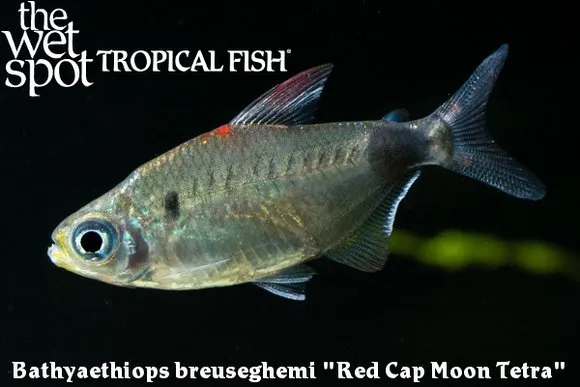 2.8 in (7 cm)29 gal (110 L)73–81°F (23–27°C)
Breuseghem's moon tetra
Bathyaethiops breuseghemi
2.8 in (7 cm) · 29 gal (110 L)
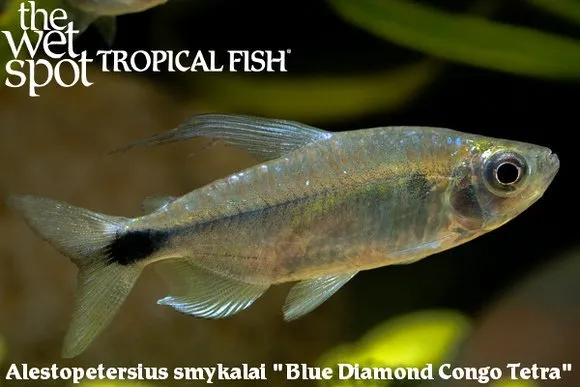 2.8 in (7 cm)29 gal (110 L)73–81°F (23–27°C)
Niger yellow Congo tetra
Alestopetersius smykalai
2.8 in (7 cm) · 29 gal (110 L)
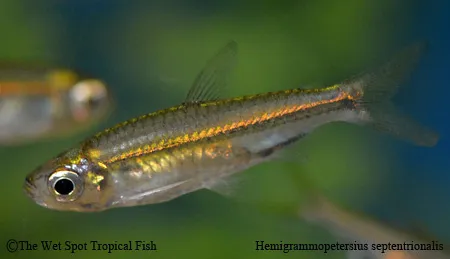 2.8 in (7 cm)21 gal (80 L)73–82°F (23–28°C)
Nigerian yellow line tetra
Rhabdalestes septentrionalis
2.8 in (7 cm) · 21 gal (80 L)