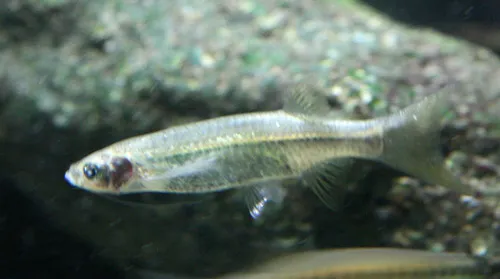
Striped flying barb
Esomus metallicus
Also known as Flying barb, Metallic flying barb
FreshwaterFish
Care at a glance
- Temperature
- 72–79°F
- 22–26°C
- pH
- 6.0–7.5
- Adult size
- 3 in
- 7.5 cm
- Minimum tank
- 24 gal
- 90 L
- Temperament
- Peaceful
- Social behavior
- Schooling
- Swim level
- Top
- Difficulty
- Easy
- Breeding
- Medium
- Rarity
- Common
- Family
- Cyprinidae
- Origin
- Widespread in slow and still waters, including rice paddies, across Thailand, Laos, Cambodia, Vietnam, and Myanmar.
Overview
Keep striped flying barbs in a group of at least six in a long tank of 90 litres or more, and use a very tight lid because they are champion jumpers. They sit at the surface in warm water of 22 to 26 C with a pH of 6.0 to 7.5. Feed floating flakes, small insects, and frozen foods such as mosquito larvae and daphnia, all of which they take from the top. They are peaceful and mix well with calm midwater and bottom fish.
In the wild
The striped flying barb lives in shallow, slow, and standing waters such as rice fields, ditches, and floodplain pools across mainland Southeast Asia. It hangs just under the surface, watching for insects that fall onto the water. Enormously long barbels trail back past the head and give the genus its odd look. It is a hardy, active surface fish for a covered tank.
Good to know
Esomus species are called flying barbs because their enlarged, wing-like pectoral fins let them leap and skim across the surface to escape danger. Esomus metallicus carries a thin dark stripe along a metallic body and a pair of very long maxillary barbels that can reach the pectoral fins. It thrives in the warm, low-oxygen backwaters that many other fish avoid.
Did you know
The wing-like pectoral fins let them jump and glide clear of the water, so an open-topped tank almost guarantees you will find one on the floor.
Weekly picks
Tank mates
Striped flying barb is a peaceful, schooling species that keeps to the top. These picks share a community profile with it, are safe together in both directions, and overlap on water type, temperature and pH.
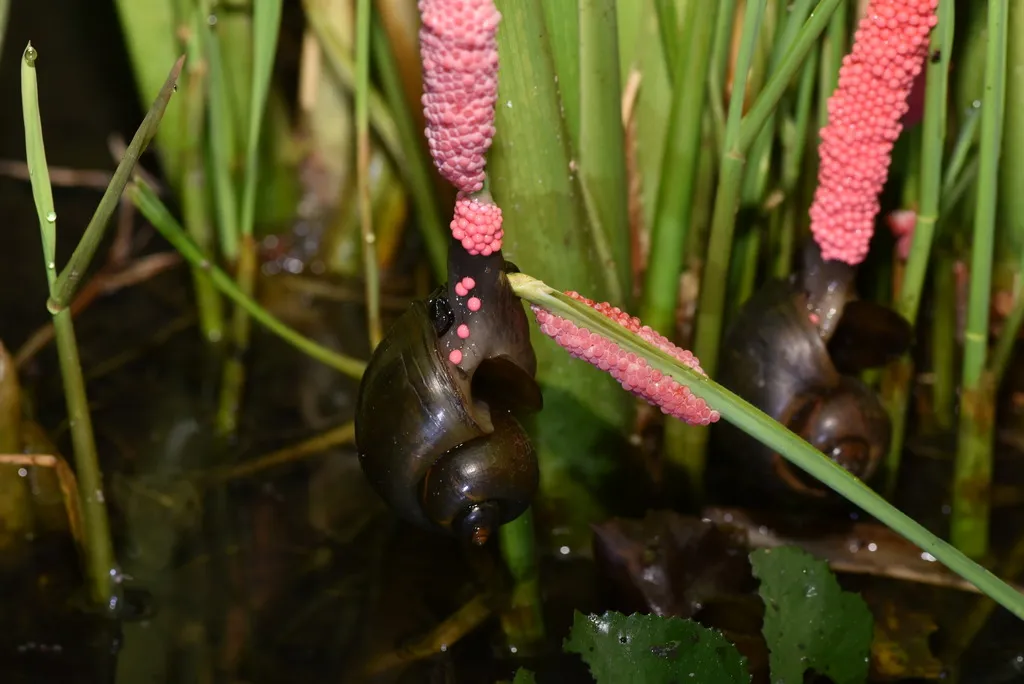
Apple snail
Pomacea canaliculata
Freshwater5.9 in (15 cm) · 21 gal (80 L)64–81°F (18–27°C)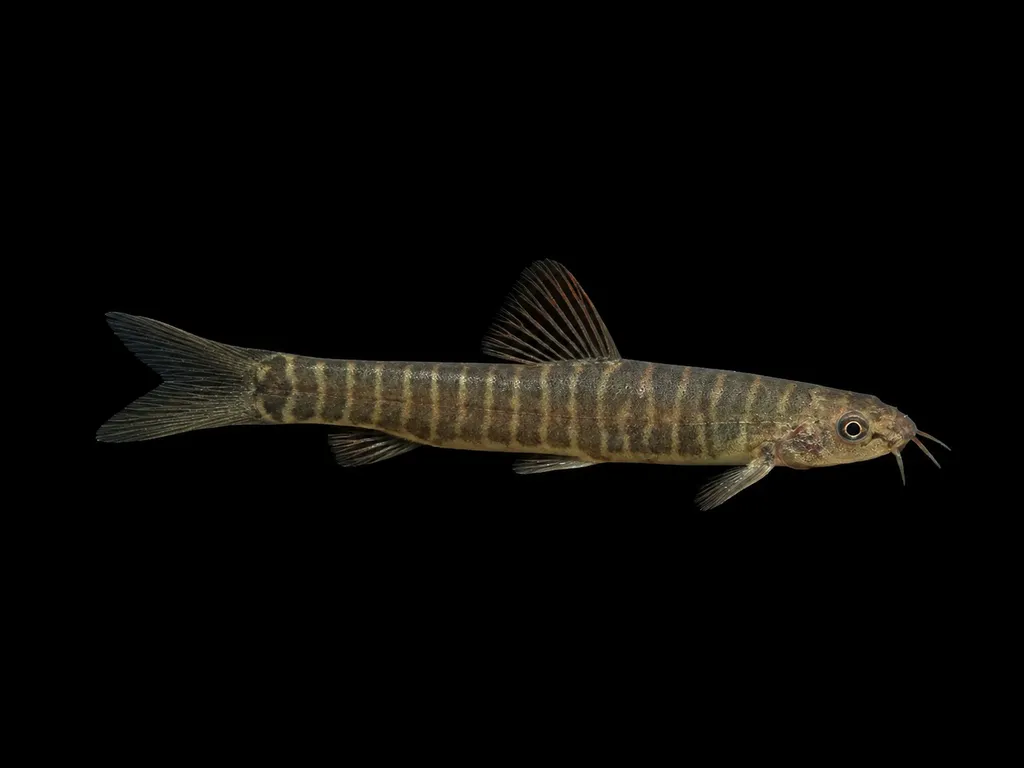
Flathead loach
Nemacheilus platiceps
Freshwater2.9 in (7.3 cm) · 24 gal (90 L)72–81°F (22–27°C)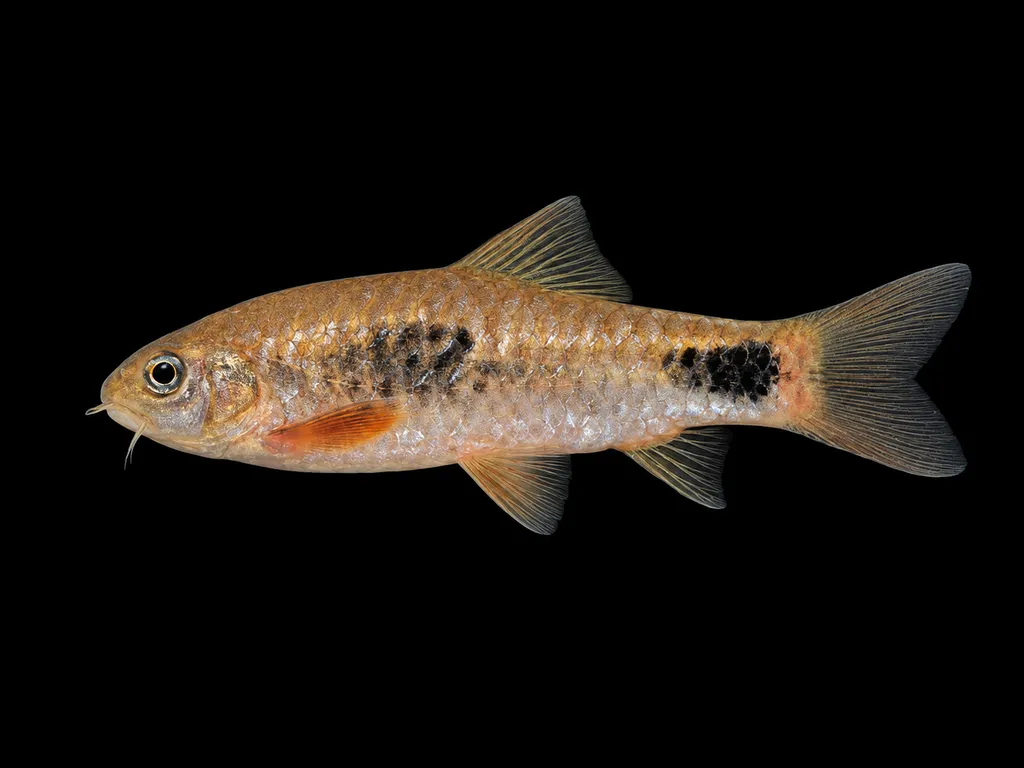
Cameroon barb
Enteromius camptacanthus
Freshwater3.9 in (10 cm) · 24 gal (90 L)72–81°F (22–27°C)Siamese flying barb
Laubuka siamensis
Freshwater2.6 in (6.5 cm) · 24 gal (90 L)72–81°F (22–27°C)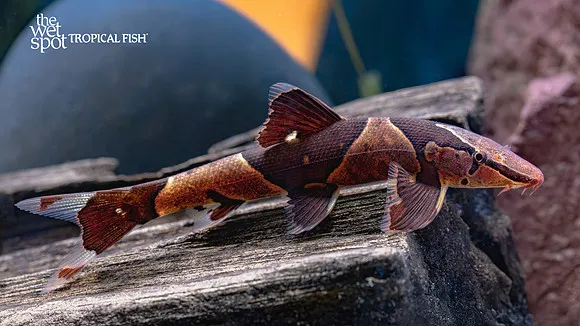
Mekong lizard loach
Homaloptera confuzona
Freshwater3.2 in (8.2 cm) · 24 gal (90 L)70–81°F (21–27°C)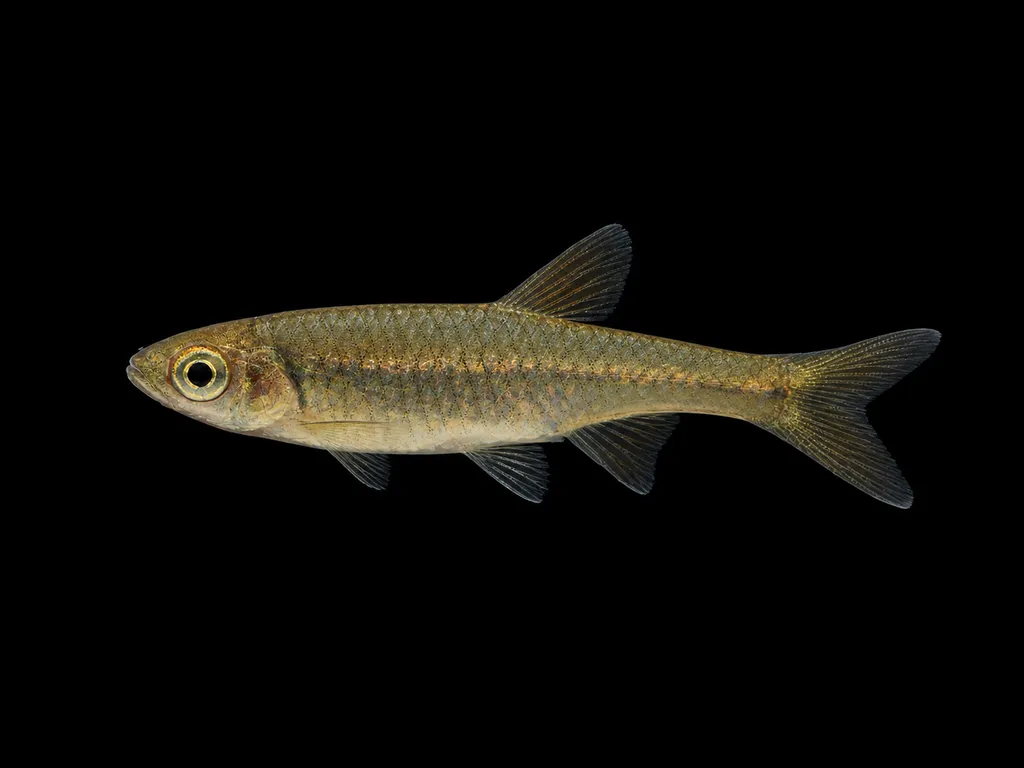
Bangka rasbora
Rasbora bankanensis
Freshwater2.8 in (7 cm) · 24 gal (90 L)72–81°F (22–27°C)
Common questions
What size tank does a Striped flying barb need?
A Striped flying barb needs at least 24 gal (90 L). It spends most of its time in the top.
What temperature and pH does a Striped flying barb need?
A Striped flying barb is comfortable at 72–79°F (22–26°C) with a pH of 6.0–7.5.
How big does a Striped flying barb get?
An adult Striped flying barb reaches about 3 in (7.5 cm).
Does a Striped flying barb need a group?
Yes. A Striped flying barb is a schooling species and should be kept in a group, not singly.
Related species
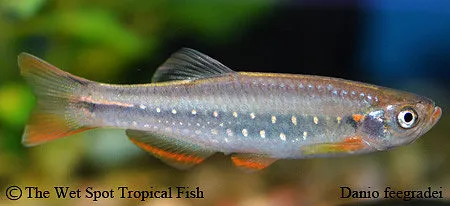 2 in (5 cm)20 gal (75 L)72–79°F (22–26°C)
Yoma danio
Danio feegradei
2 in (5 cm) · 20 gal (75 L)
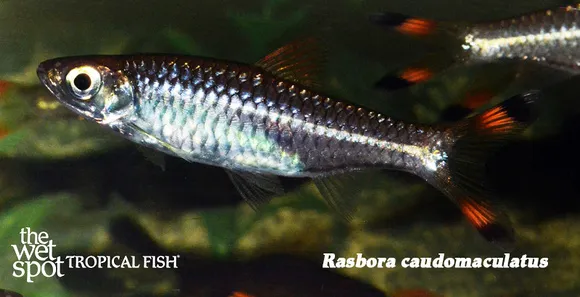 5.1 in (13 cm)53 gal (200 L)68–79°F (20–26°C)
Greater scissortail
Rasbora caudimaculata
5.1 in (13 cm) · 53 gal (200 L)
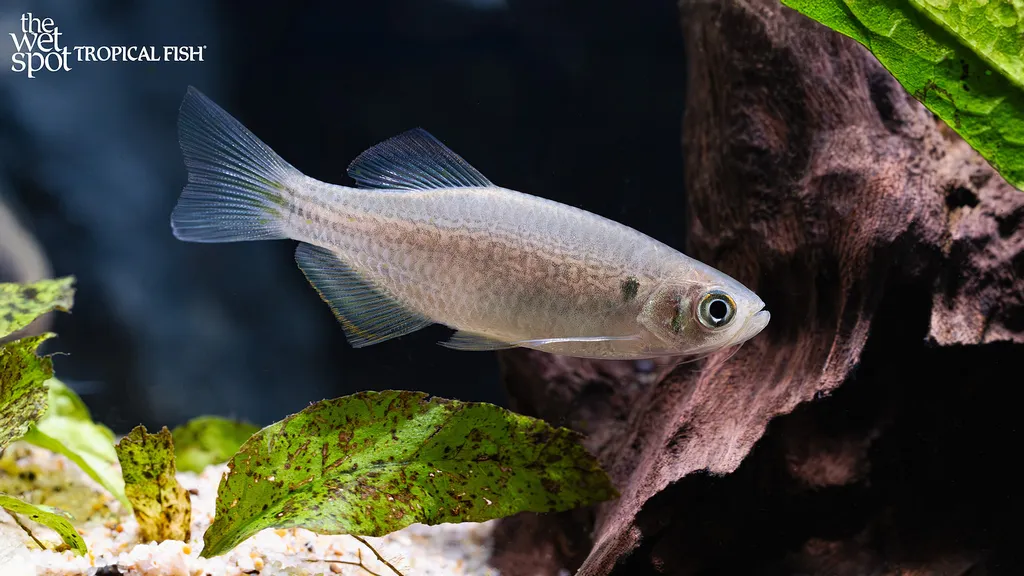 5.1 in (13 cm)32 gal (120 L)68–79°F (20–26°C)
Moustached danio
Danio dangila
5.1 in (13 cm) · 32 gal (120 L)
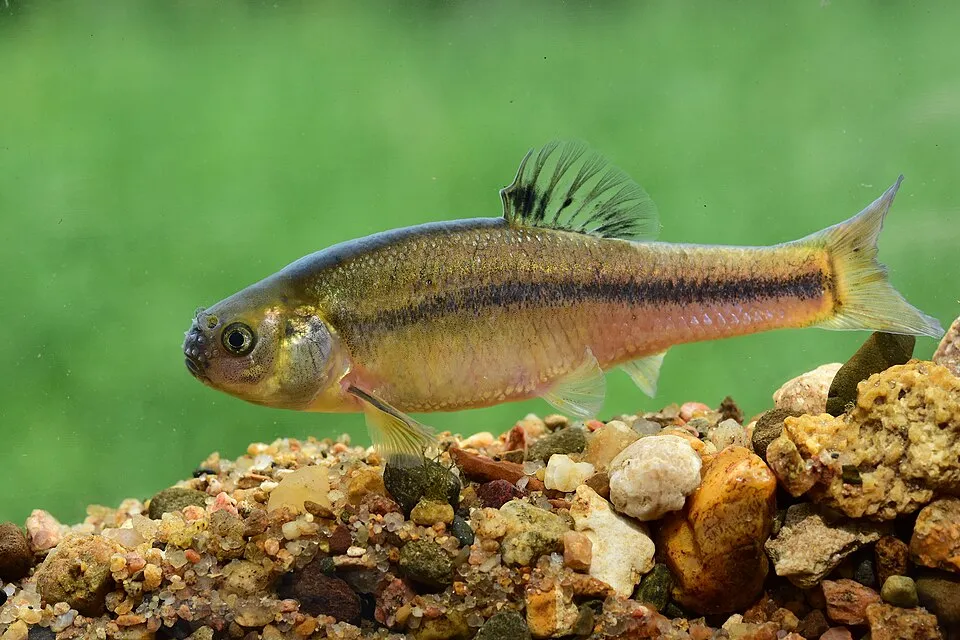 3 in (7.5 cm)20 gal (75 L)50–72°F (10–22°C)
Fathead minnow
Pimephales promelas
3 in (7.5 cm) · 20 gal (75 L)
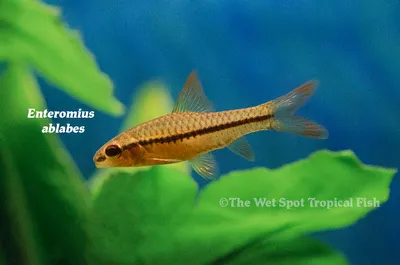 3.1 in (8 cm)24 gal (90 L)72–81°F (22–27°C)
Ablabes barb
Enteromius ablabes
3.1 in (8 cm) · 24 gal (90 L)
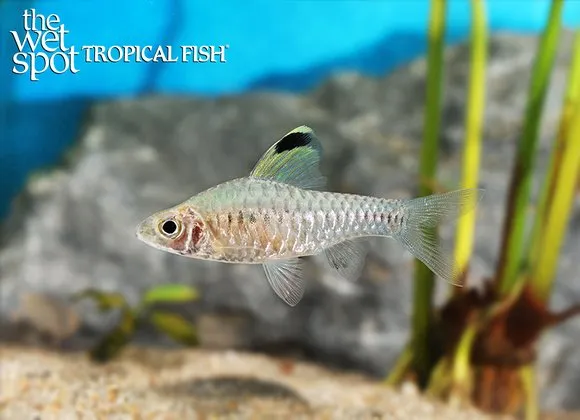 3.1 in (8 cm)20 gal (75 L)68–79°F (20–26°C)
Cosuatis barb
Oreichthys cosuatis
3.1 in (8 cm) · 20 gal (75 L)