Clipper barb
Enteromius callipterus
Also known as Barbus callipterus
FreshwaterFish
Care at a glance
- Temperature
- 72–81°F
- 22–27°C
- pH
- 6.0–7.5
- Adult size
- 3.5 in
- 9 cm
- Minimum tank
- 24 gal
- 90 L
- Temperament
- Peaceful
- Social behavior
- Schooling
- Swim level
- Middle
- Difficulty
- Easy
- Breeding
- Egg scatterer · Medium
- Rarity
- Rare
- Family
- Cyprinidae
- Origin
- Cote d'Ivoire to the Chad basin, West and Central Africa
Overview
The clipper barb is an easygoing African schooling barb for the middle of a community tank. It is an easy fish for a beginner.
Did you know
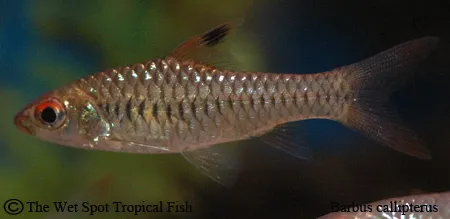
The clipper barb's species name, callipterus, means beautiful fin. It refers to the single black flag on the dorsal fin, which stands out sharply against an otherwise plain silvery body.
Caring for the clipper barb
Keep clipper barbs in a group of six or more, in at least 24 gal (90 L). Give them open swimming room, some planted cover and wood, and a gentle to moderate flow.
Keep conditions stable, at 72 to 81°F (22 to 27°C), across a forgiving pH band of 6.0 to 7.5. They are undemanding at feeding and take flake, pellets and frozen or live foods.
Clipper barbs are peaceful, hardy and active, and they swim in the middle water. They make a fine centerpiece for a West and Central African community, with Congo tetras, dwarf African characins and small catfish. They scatter their eggs, and breeding them is of moderate difficulty.
Good to know
Enteromius callipterus is an African barb of the family Cyprinidae. Its black dorsal blotch is the main feature that separates it from similar small African barbs.
In the wild
The clipper barb lives in streams and small rivers across West and Central Africa, from Cote d'Ivoire to the Chad basin. Its home water is warm, gently flowing and fresh.
Weekly picks
Tank mates
The clipper barb is a peaceful, schooling species that keeps to the middle. These picks share a community profile with it, are safe together in both directions, and overlap on water type, temperature and pH.
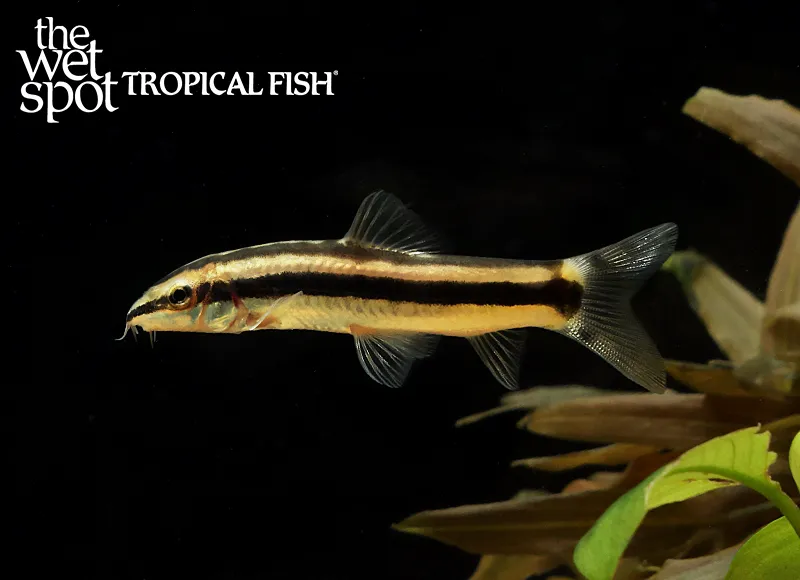
Black-lined loach
Ambastaia nigrolineata
Freshwater3.1 in (8 cm) · 24 gal (90 L)72–81°F (22–27°C)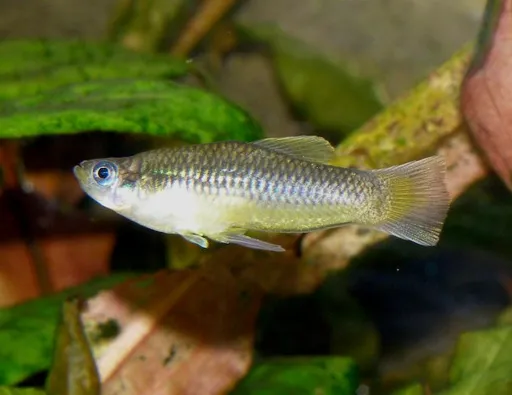
Blue-eyed livebearer
Priapella intermedia
Freshwater2.8 in (7 cm) · 24 gal (90 L)72–82°F (22–28°C)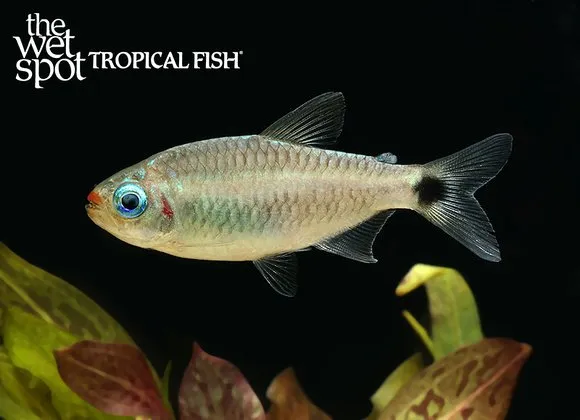
Cosmops tetra
Bario cosmops
Freshwater2.6 in (6.5 cm) · 24 gal (90 L)73–82°F (23–28°C)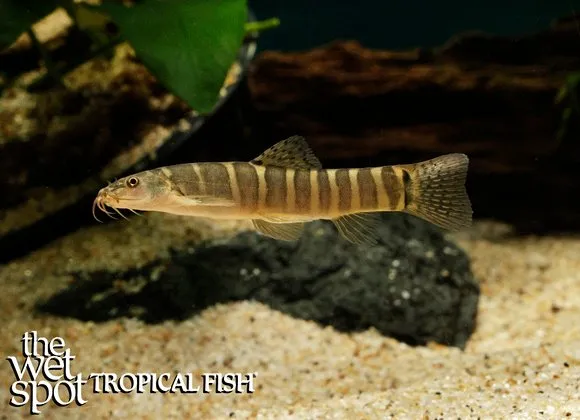
Koh Chang loach
Schistura kohchangensis
Freshwater3.5 in (9 cm) · 24 gal (90 L)72–81°F (22–27°C)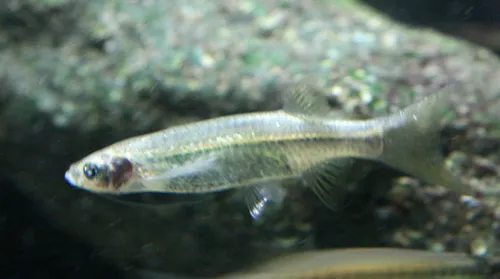
Striped flying barb
Esomus metallicus
Freshwater3 in (7.5 cm) · 24 gal (90 L)72–79°F (22–26°C)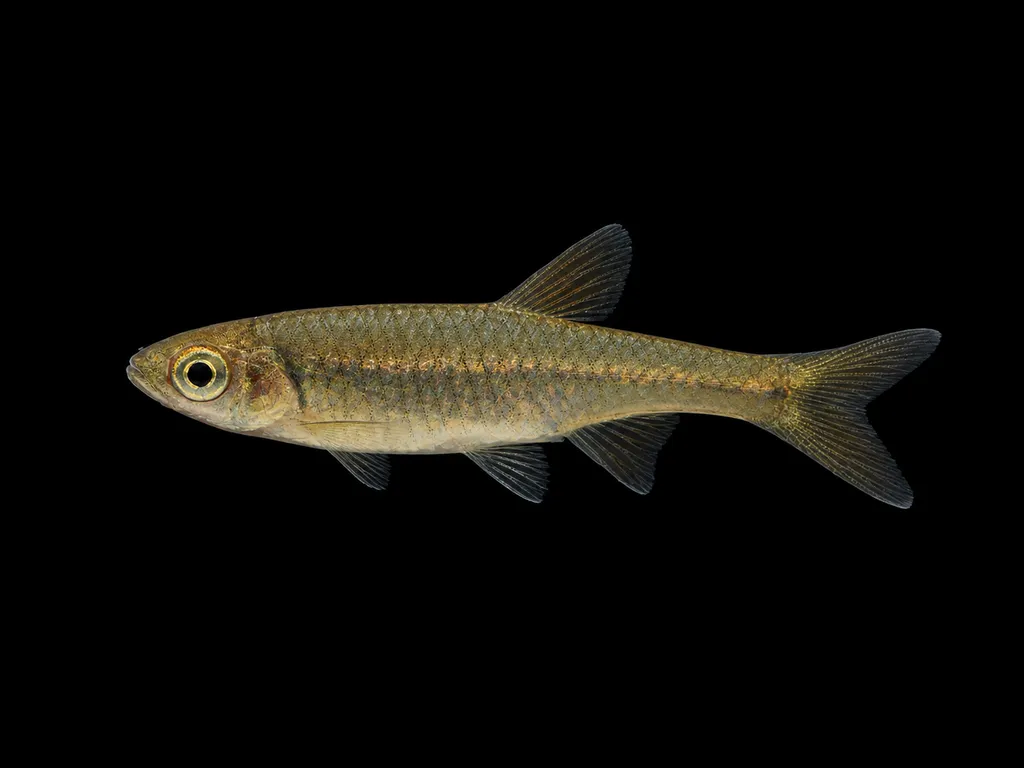
Bangka rasbora
Rasbora bankanensis
Freshwater2.8 in (7 cm) · 24 gal (90 L)72–81°F (22–27°C)
Common questions
What size tank does a clipper barb need?
A clipper barb needs at least 24 gal (90 L). It spends most of its time in the middle.
What temperature and pH does a clipper barb need?
A clipper barb is comfortable at 72–81°F (22–27°C) with a pH of 6.0–7.5.
What does a clipper barb eat?
A clipper barb is undemanding at feeding and takes flake, pellets and frozen or live foods.
How big does a clipper barb get?
An adult clipper barb reaches about 3.5 in (9 cm).
Does a clipper barb need a group?
Yes. A clipper barb is a schooling species and should be kept in a group, not singly.
How does a clipper barb breed?
The clipper barb scatters its eggs, and breeding it is of moderate difficulty.
Related species
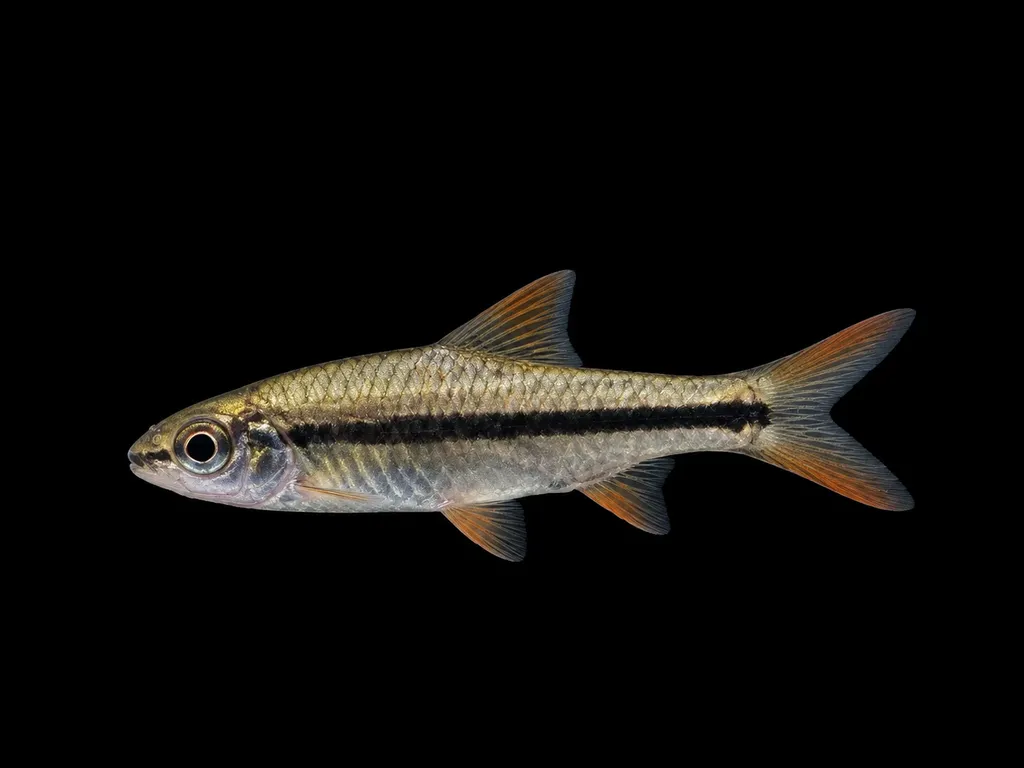 3.5 in (9 cm)24 gal (90 L)72–81°F (22–27°C)
Martorell's barb
Enteromius martorelli
3.5 in (9 cm) · 24 gal (90 L)
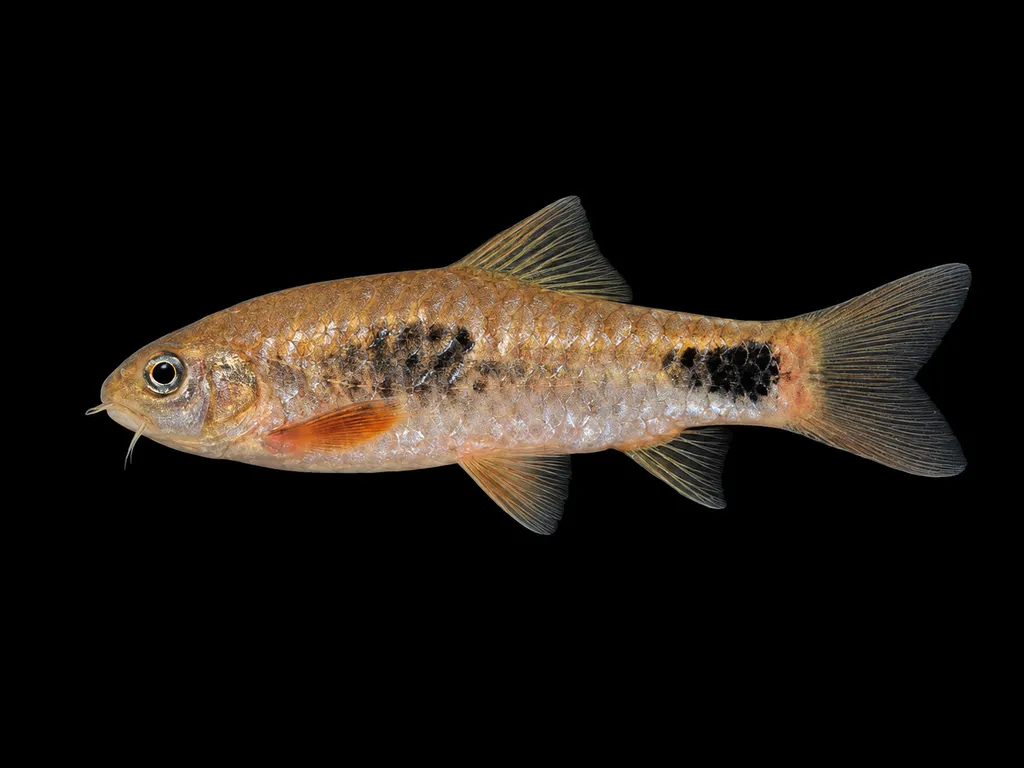 3.9 in (10 cm)24 gal (90 L)72–81°F (22–27°C)
Cameroon barb
Enteromius camptacanthus
3.9 in (10 cm) · 24 gal (90 L)
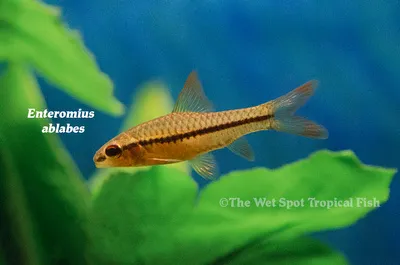 3.1 in (8 cm)24 gal (90 L)72–81°F (22–27°C)
Ablabes barb
Enteromius ablabes
3.1 in (8 cm) · 24 gal (90 L)
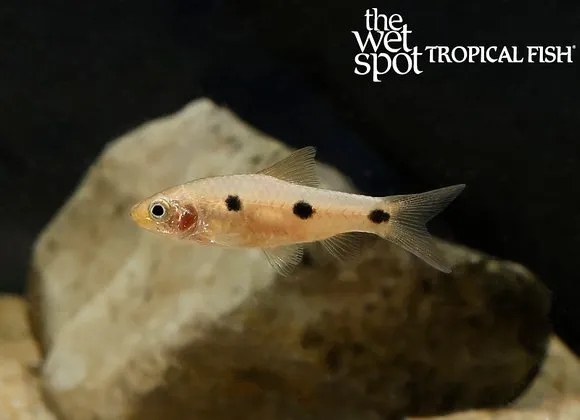 2.8 in (7 cm)24 gal (90 L)72–81°F (22–27°C)
Threespot barb
Enteromius trispilos
2.8 in (7 cm) · 24 gal (90 L)
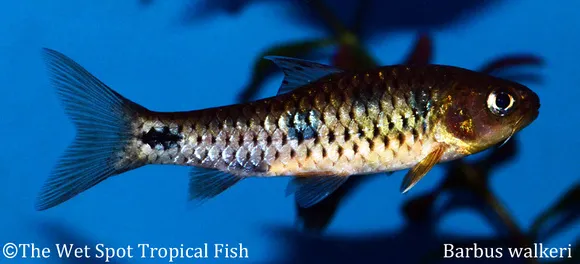 4.7 in (12 cm)29 gal (110 L)72–81°F (22–27°C)
Walker's barb
Enteromius walkeri
4.7 in (12 cm) · 29 gal (110 L)
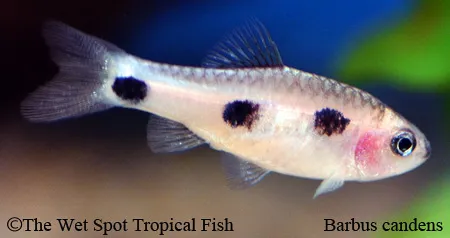 1.6 in (4 cm)14 gal (54 L)72–81°F (22–27°C)
Glowing ember barb
Enteromius candens
1.6 in (4 cm) · 14 gal (54 L)