Walker's barb
Enteromius walkeri
Also known as Barbus walkeri
FreshwaterFish
Care at a glance
- Temperature
- 72–81°F
- 22–27°C
- pH
- 6.0–7.5
- Adult size
- 4.7 in
- 12 cm
- Minimum tank
- 29 gal
- 110 L
- Temperament
- Peaceful
- Social behavior
- Schooling
- Swim level
- Middle
- Diet
- Omnivore
- Difficulty
- Easy
- Breeding
- No record
- Rarity
- Rare
- Family
- Cyprinidae
- Origin
- Ghana and Ivory Coast
Overview
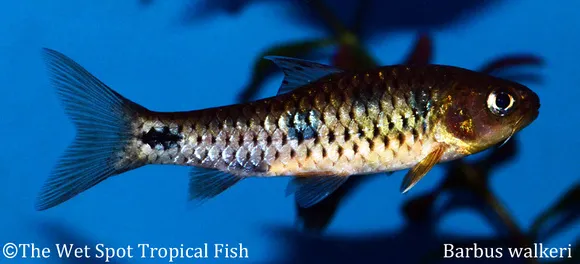
Walker's barb is a peaceful, big-for-a-barb African schooling fish for the middle water of a long tank. It is easy to care for.
Caring for the Walker's barb
Keep Walker's barbs in a group of at least six, with no upper limit on numbers. This larger barb has real swimming needs, so give it a long tank of 29 gal (110 L) or more. A river-style layout suits it, with open swimming space, a sand or fine gravel bed, driftwood, rounded stones and some current.
Walker's barb is adaptable and does well in soft to moderately hard water. Keep it at 72 to 81°F (22 to 27°C) with a pH of 6.0 to 7.5. Steady flow, good oxygen and clean water suit this shoaling fish.
It is an active mid-water swimmer that is always looking for food. Feed a varied omnivore diet of flakes, sinking pellets, and frozen foods like bloodworm and daphnia.
Walker's barb is peaceful and mixes well with other robust but peaceful fish, such as Congo tetras, larger rasboras and medium African species. It is a little fast and busy for very timid tank mates, but it is not aggressive. Its breeding behavior is not well recorded, and it is seldom if ever bred in the aquarium.
Good to know
Walker's barb, Enteromius walkeri, is a cyprinid in the family Cyprinidae and large for the African small-barb group. It is gold-toned, with a dark band along the side that darkens toward the tail.
In the wild
Walker's barb comes from rivers and streams of Ghana and the Ivory Coast in West Africa. It ranges through flowing coastal drainages there.
Weekly picks
Tank mates
The Walker's barb is a peaceful, schooling species that keeps to the middle. These picks share a community profile with it, are safe together in both directions, and overlap on water type, temperature and pH.
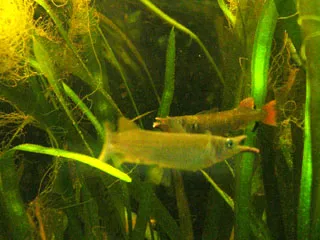
Redfin halfbeak
Nomorhamphus ebrardtii
Freshwater3.5 in (9 cm) · 29 gal (110 L)75–81°F (24–27°C)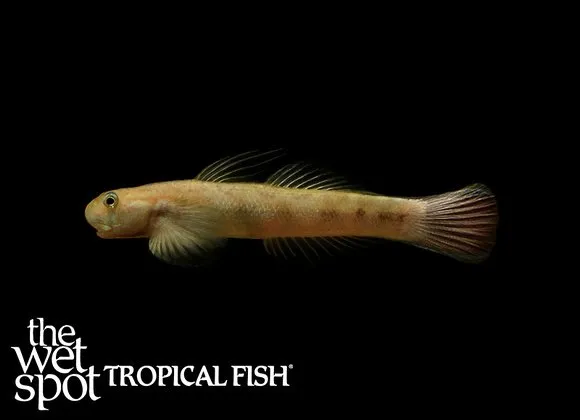
Red tail sicyopterus
Sicyopterus lagocephalus
Freshwater5.1 in (13 cm) · 29 gal (110 L)73–81°F (23–27°C)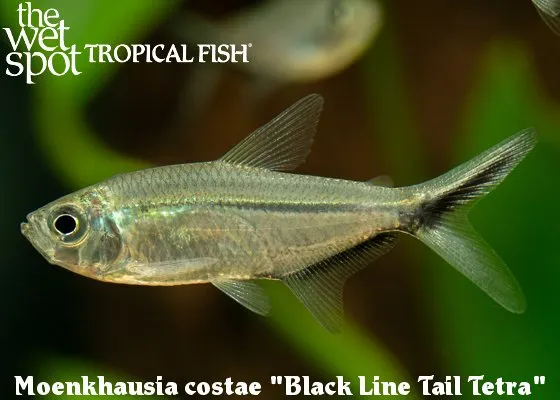
Costae tetra
Moenkhausia costae
Freshwater2.8 in (7 cm) · 29 gal (110 L)72–82°F (22–28°C)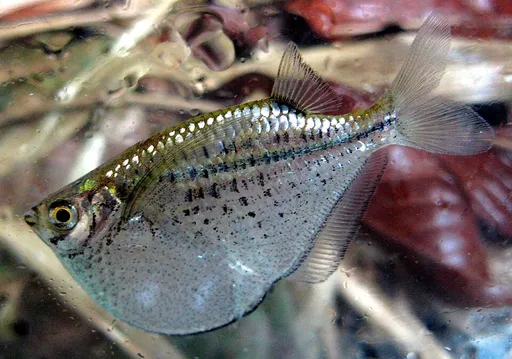
Spotted hatchetfish
Gasteropelecus maculatus
Freshwater3.5 in (9 cm) · 26 gal (100 L)73–82°F (23–28°C)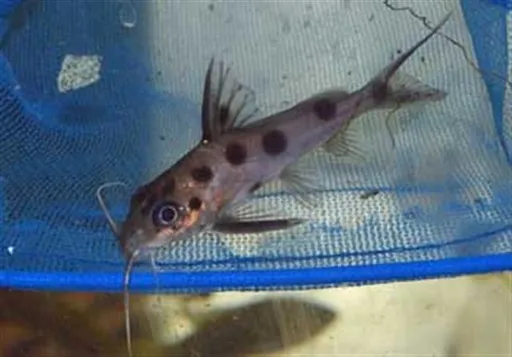
One-spot synodontis
Synodontis notatus
Freshwater9.8 in (25 cm) · 29 gal (110 L)72–81°F (22–27°C)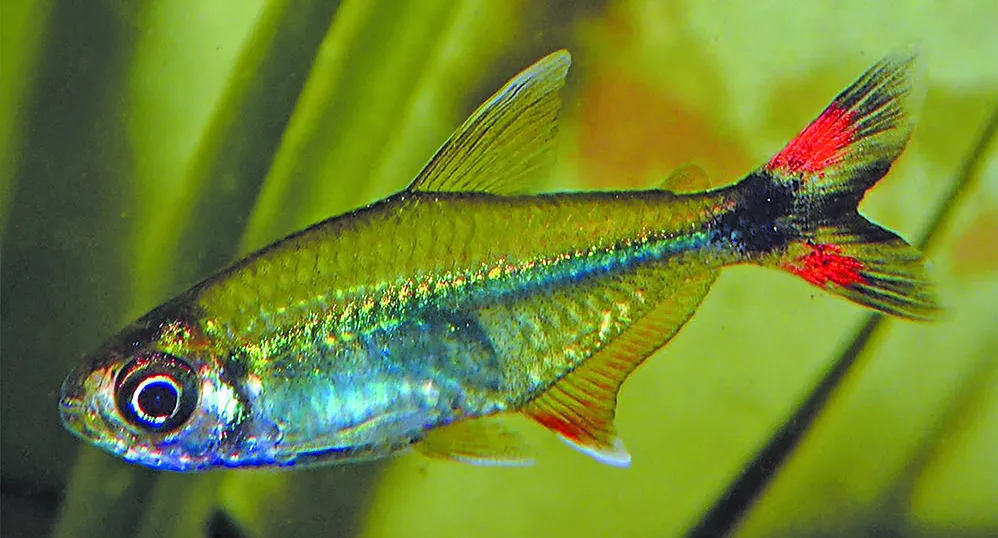
Bonita tetra
Moenkhausia bonita
Freshwater3.3 in (8.5 cm) · 29 gal (110 L)72–81°F (22–27°C)
Common questions
What size tank does a Walker's barb need?
A Walker's barb needs at least 29 gal (110 L). It spends most of its time in the middle.
What temperature and pH does a Walker's barb need?
A Walker's barb is comfortable at 72–81°F (22–27°C) with a pH of 6.0–7.5.
What does a Walker's barb eat?
A Walker's barb eats a varied omnivore diet of flakes, sinking pellets, and frozen foods like bloodworm and daphnia. It is always looking for food.
How big does a Walker's barb get?
An adult Walker's barb reaches about 4.7 in (12 cm).
Does a Walker's barb need a group?
Yes. A Walker's barb is a schooling species and should be kept in a group, not singly.
Related species
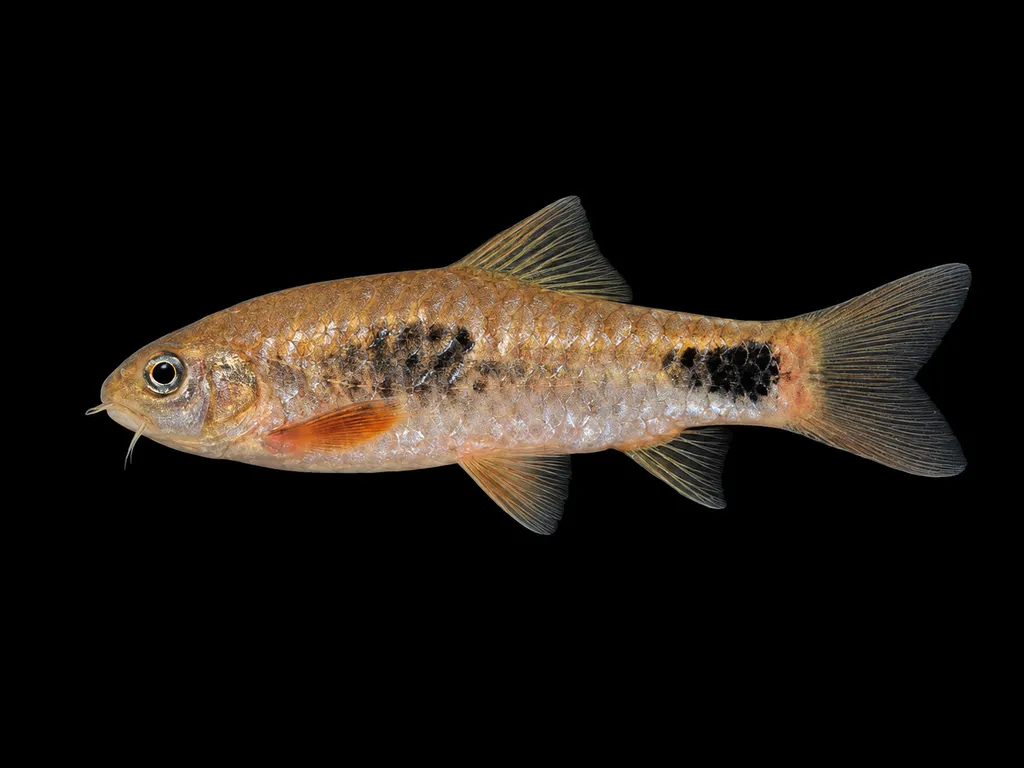 3.9 in (10 cm)24 gal (90 L)72–81°F (22–27°C)
Cameroon barb
Enteromius camptacanthus
3.9 in (10 cm) · 24 gal (90 L)
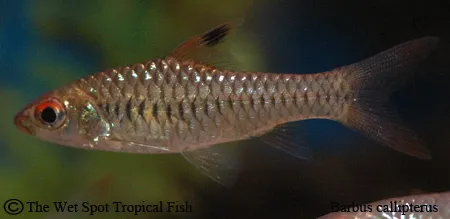 3.5 in (9 cm)24 gal (90 L)72–81°F (22–27°C)
Clipper barb
Enteromius callipterus
3.5 in (9 cm) · 24 gal (90 L)
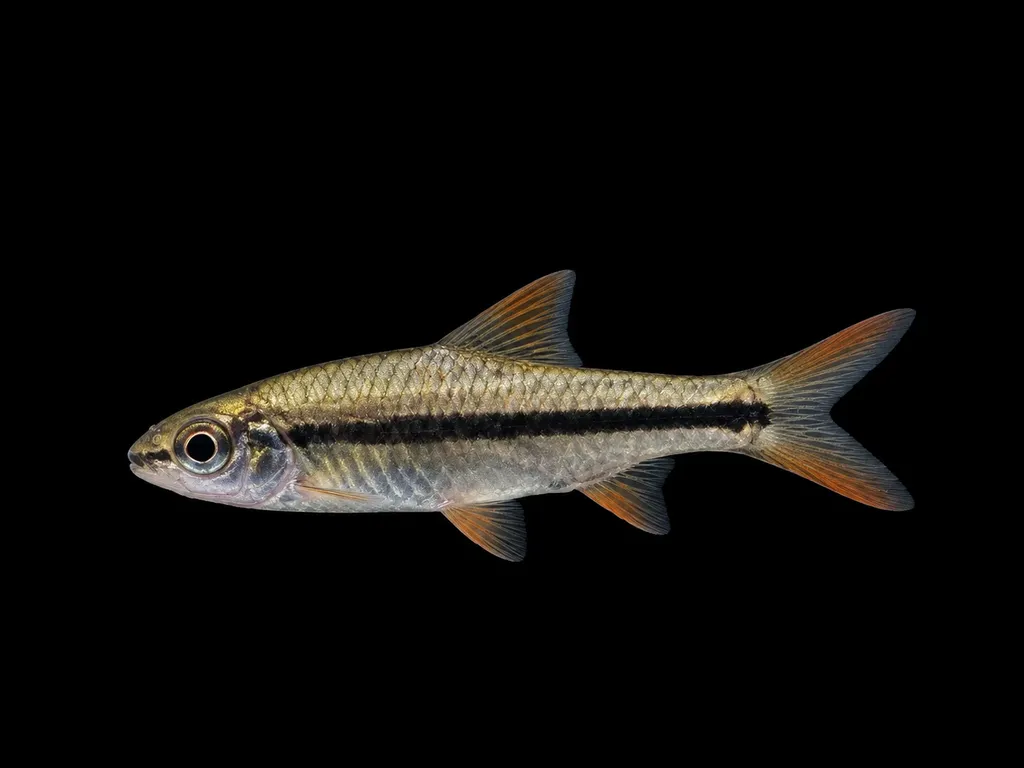 3.5 in (9 cm)24 gal (90 L)72–81°F (22–27°C)
Martorell's barb
Enteromius martorelli
3.5 in (9 cm) · 24 gal (90 L)
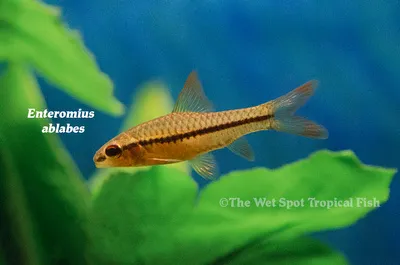 3.1 in (8 cm)24 gal (90 L)72–81°F (22–27°C)
Ablabes barb
Enteromius ablabes
3.1 in (8 cm) · 24 gal (90 L)
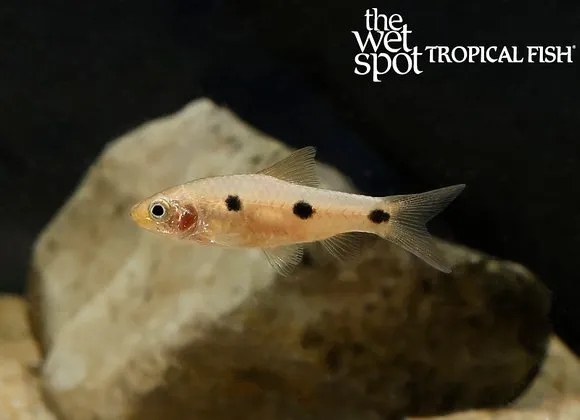 2.8 in (7 cm)24 gal (90 L)72–81°F (22–27°C)
Threespot barb
Enteromius trispilos
2.8 in (7 cm) · 24 gal (90 L)
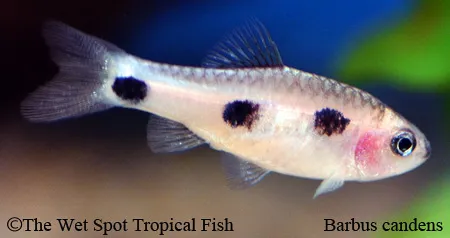 1.6 in (4 cm)14 gal (54 L)72–81°F (22–27°C)
Glowing ember barb
Enteromius candens
1.6 in (4 cm) · 14 gal (54 L)