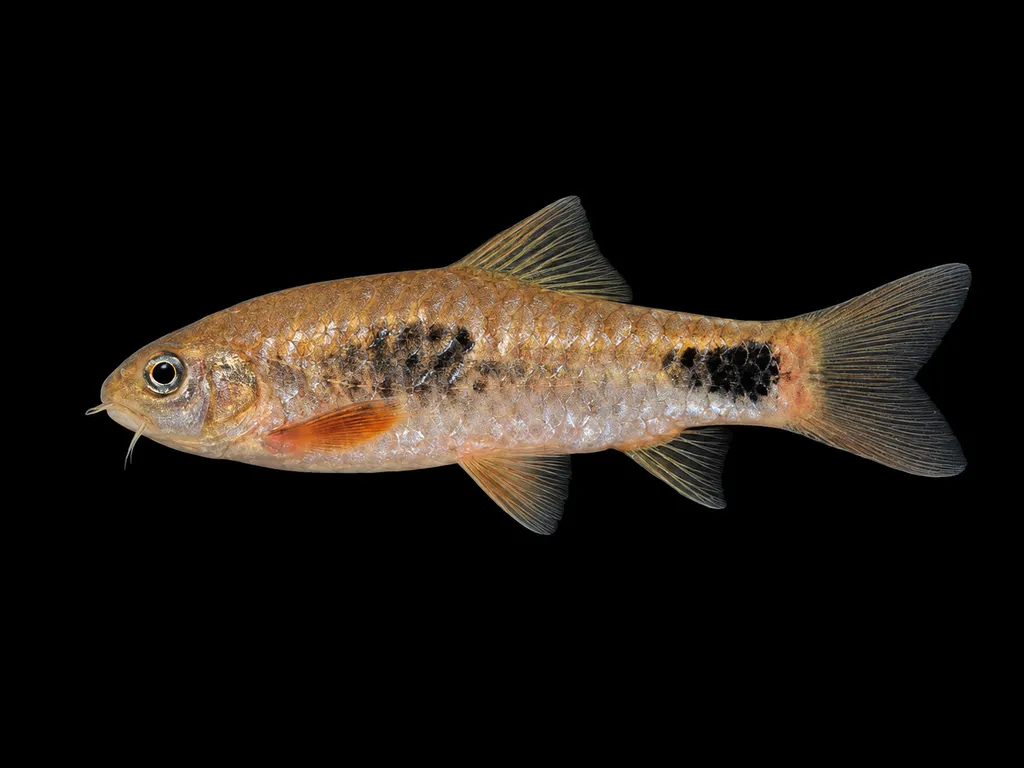
Cameroon barb
Enteromius camptacanthus
Also known as Barbus camptacanthus, African redfinned barb, African red finned barb
FreshwaterFish
Care at a glance
- Temperature
- 72–81°F
- 22–27°C
- pH
- 6.0–7.5
- Adult size
- 3.9 in
- 10 cm
- Minimum tank
- 24 gal
- 90 L
- Temperament
- Peaceful
- Social behavior
- Schooling
- Swim level
- Middle
- Difficulty
- Easy
- Breeding
- No record
- Rarity
- Rare
- Family
- Cyprinidae
- Origin
- Cameroon and Equatorial Guinea
Overview
The Cameroon barb is a hardy African barb for the middle of a planted community tank. It is easy to keep and a good choice for a beginner.
Did you know
The Cameroon barb's red fins work as a mood and condition signal. The red deepens in soft, tannin-stained water and in displaying males. Keepers can read a fish's comfort partly from how strongly its fins glow.
Caring for the Cameroon barb
Keep Cameroon barbs in a group of six or more, in at least 24 gal (90 L). Give them open swimming space, some planted cover and wood, and subdued lighting. A dark substrate deepens the males' color.
Keep the water clean and stable, at 72 to 81°F (22 to 27°C), with moderate flow. A slightly acidic to neutral pH of 6.0 to 7.5 suits them. They are easy to feed and take flake, pellets and frozen or live foods without fuss.
Cameroon barbs are peaceful and active, and they look their best as a shoal in the middle water. They suit a lively community of other rainforest Africans, such as Congo tetras and small synodontis catfish.
Males flush a rusty red, and their dark stripe sharpens when they breed. The Cameroon barb's aquarium spawning is poorly documented, though its relatives are egg scatterers.
Good to know
Enteromius camptacanthus, also called the African redfin barb, is a member of the family Cyprinidae. It is one of many small African barbs moved from the old genus Barbus into Enteromius.
In the wild
The Cameroon barb lives in forest streams and small rivers of West and Central Africa, in Cameroon and Equatorial Guinea. Its home waters are shaded, soft and gently flowing.
Weekly picks
Tank mates
The Cameroon barb is a peaceful, schooling species that keeps to the middle. These picks share a community profile with it, are safe together in both directions, and overlap on water type, temperature and pH.
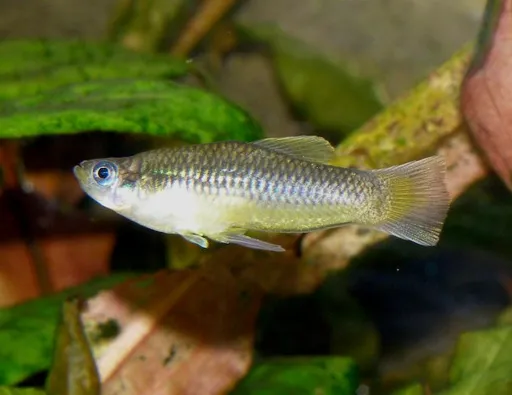
Blue-eyed livebearer
Priapella intermedia
Freshwater2.8 in (7 cm) · 24 gal (90 L)72–82°F (22–28°C)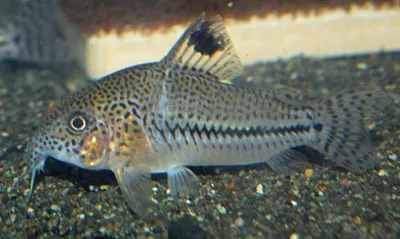
Leopard cory
Brochis leopardus
Freshwater2.8 in (7 cm) · 24 gal (90 L)72–79°F (22–26°C)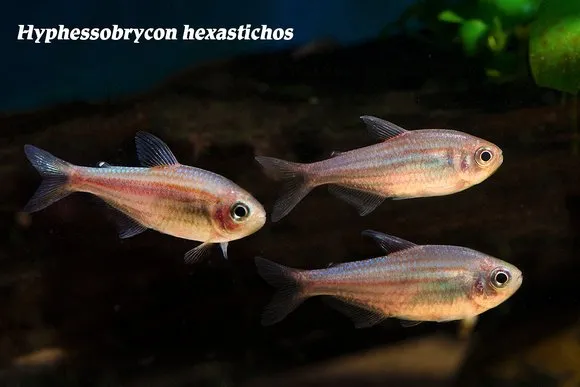
Hexastichos tetra
Hyphessobrycon hexastichos
Freshwater2.6 in (6.5 cm) · 24 gal (90 L)72–81°F (22–27°C)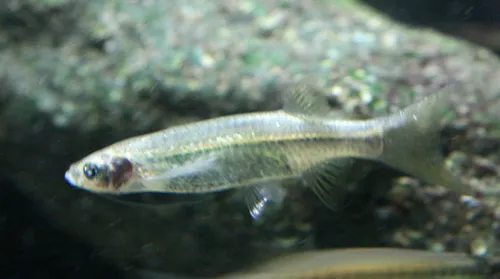
Striped flying barb
Esomus metallicus
Freshwater3 in (7.5 cm) · 24 gal (90 L)72–79°F (22–26°C)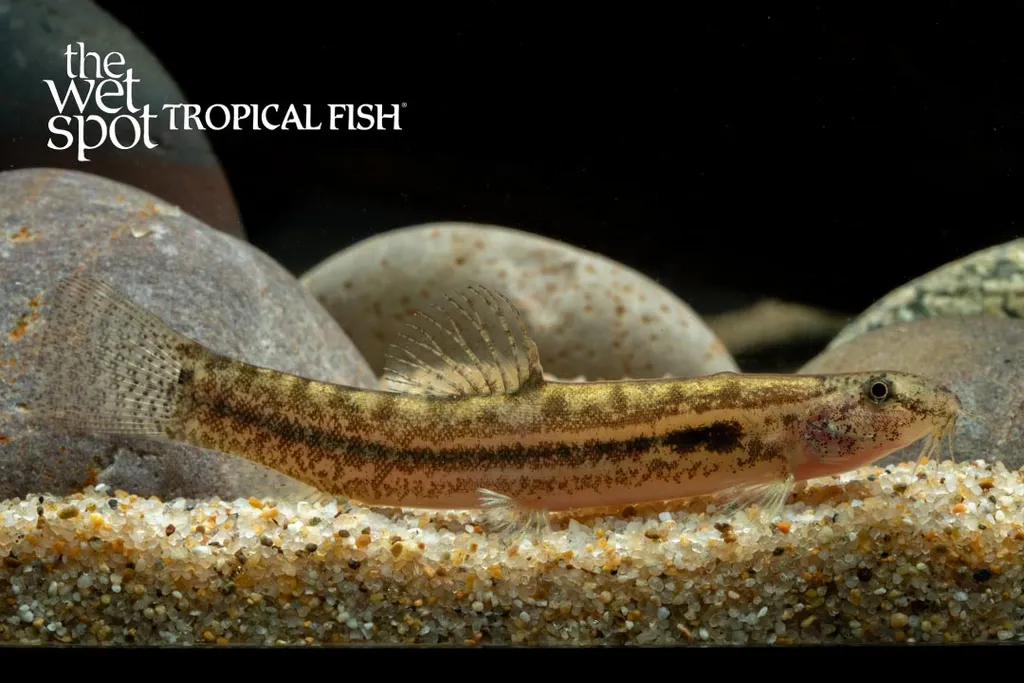
Guntea loach
Lepidocephalichthys guntea
Freshwater4.7 in (12 cm) · 24 gal (90 L)64–82°F (18–28°C)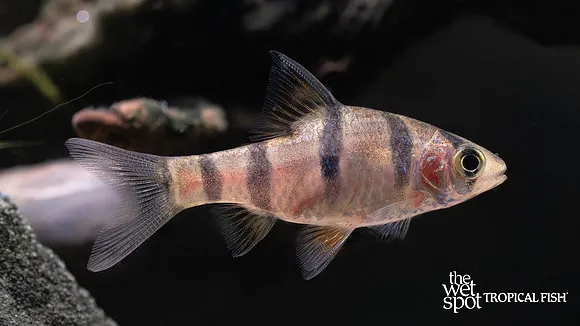
Six-banded barb
Desmopuntius hexazona
Freshwater2.4 in (6 cm) · 24 gal (90 L)73–82°F (23–28°C)
Common questions
What size tank does a Cameroon barb need?
A Cameroon barb needs at least 24 gal (90 L). It spends most of its time in the middle.
What temperature and pH does a Cameroon barb need?
A Cameroon barb is comfortable at 72–81°F (22–27°C) with a pH of 6.0–7.5.
What does a Cameroon barb eat?
A Cameroon barb is easy to feed and takes flake, pellets and frozen or live foods without fuss.
How big does a Cameroon barb get?
An adult Cameroon barb reaches about 3.9 in (10 cm).
Does a Cameroon barb need a group?
Yes. A Cameroon barb is a schooling species and should be kept in a group, not singly.
How can you tell a male Cameroon barb from a female?
Males flush a rusty red, and their dark stripe sharpens when they breed.
How does a Cameroon barb breed?
The Cameroon barb's aquarium spawning is poorly documented. Its relatives are egg scatterers.
Related species
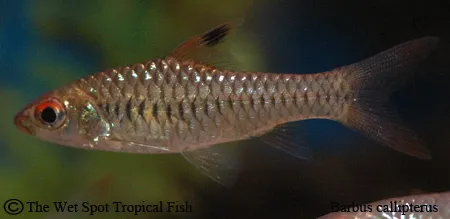 3.5 in (9 cm)24 gal (90 L)72–81°F (22–27°C)
Clipper barb
Enteromius callipterus
3.5 in (9 cm) · 24 gal (90 L)
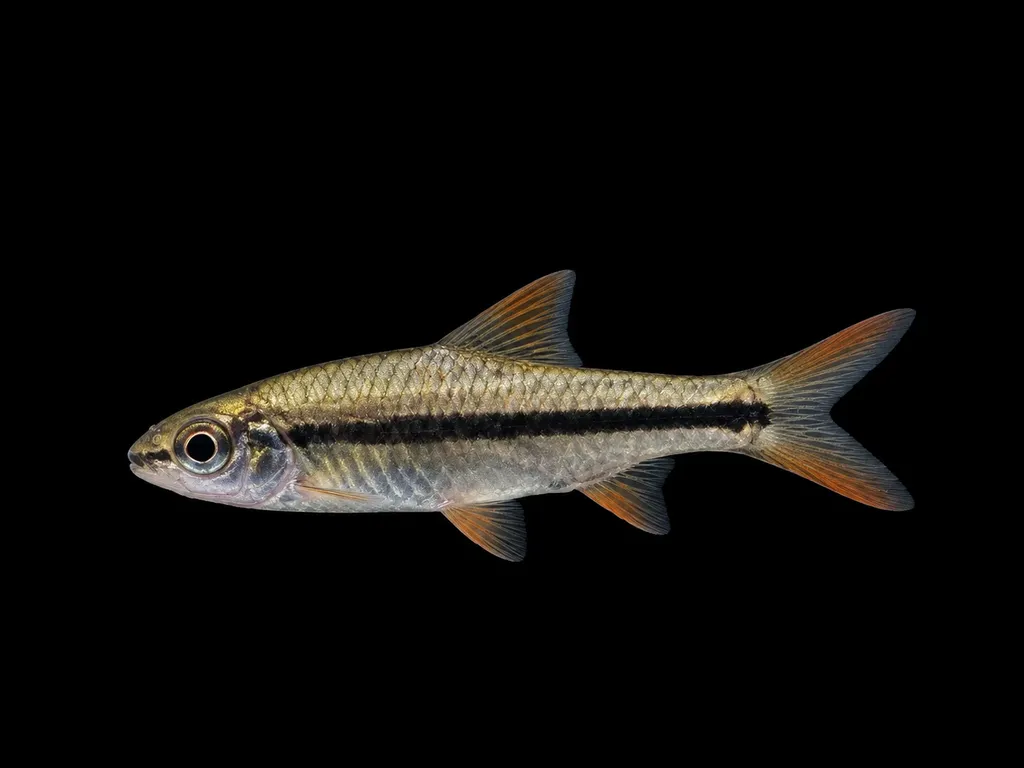 3.5 in (9 cm)24 gal (90 L)72–81°F (22–27°C)
Martorell's barb
Enteromius martorelli
3.5 in (9 cm) · 24 gal (90 L)
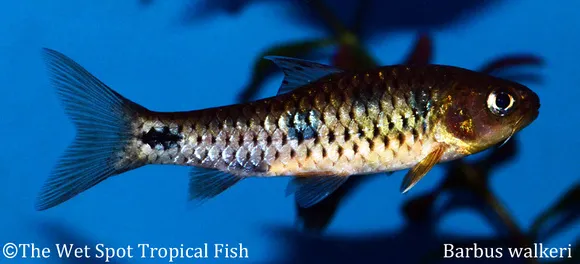 4.7 in (12 cm)29 gal (110 L)72–81°F (22–27°C)
Walker's barb
Enteromius walkeri
4.7 in (12 cm) · 29 gal (110 L)
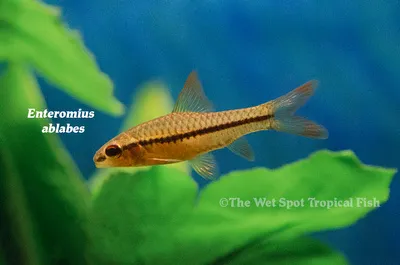 3.1 in (8 cm)24 gal (90 L)72–81°F (22–27°C)
Ablabes barb
Enteromius ablabes
3.1 in (8 cm) · 24 gal (90 L)
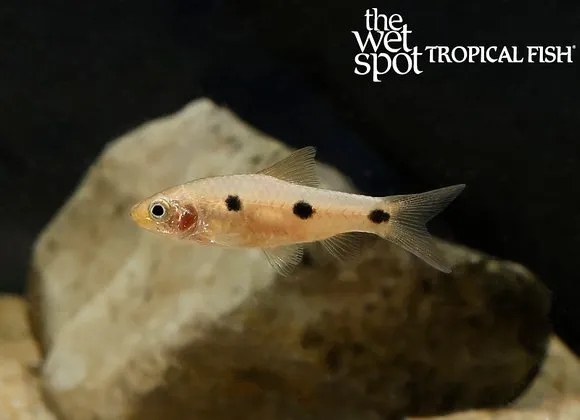 2.8 in (7 cm)24 gal (90 L)72–81°F (22–27°C)
Threespot barb
Enteromius trispilos
2.8 in (7 cm) · 24 gal (90 L)
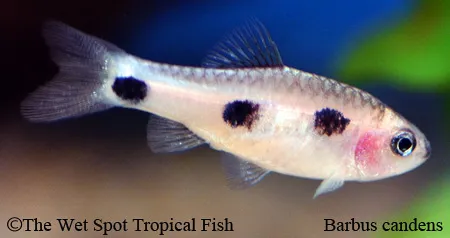 1.6 in (4 cm)14 gal (54 L)72–81°F (22–27°C)
Glowing ember barb
Enteromius candens
1.6 in (4 cm) · 14 gal (54 L)