Threespot barb
Enteromius trispilos
Also known as Barbus trispilos
FreshwaterFish
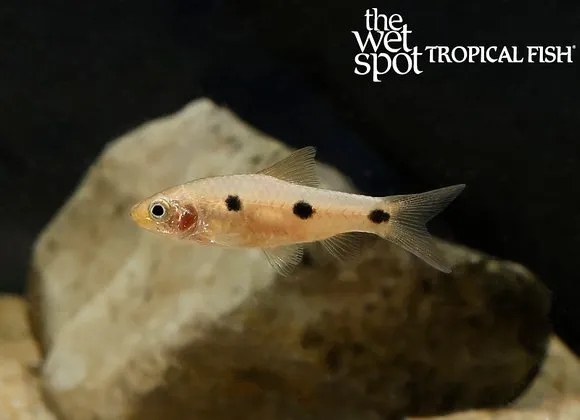
Care at a glance
- Temperature
- 72–81°F
- 22–27°C
- pH
- 6.0–7.5
- Adult size
- 2.8 in
- 7 cm
- Minimum tank
- 24 gal
- 90 L
- Temperament
- Peaceful
- Social behavior
- Schooling
- Swim level
- Middle
- Difficulty
- Easy
- Breeding
- No record
- Rarity
- Rare
- Family
- Cyprinidae
- Origin
- West Africa from Ivory Coast to Ghana
Overview
The threespot barb is a peaceful schooling barb from West Africa for the middle water of a planted tank. It is an easy fish to keep.
Did you know
The threespot barb's name is a built-in field mark. Every fish carries three evenly spaced dark dots down the side. Counting the spots is the simplest way to put a name to this small West African barb.
Caring for the threespot barb
Keep threespot barbs in a group of six or more, so they stay confident and active in the open. A tank of 24 gal (90 L) or more gives a group of these lively barbs plenty of room. Plant the sides and keep a clear channel for swimming through the middle water. Soft substrate, wood, leaf litter and gentle to moderate flow show the fish off well.
Keep the water at 72 to 81°F (22 to 27°C) and a pH of 6.0 to 7.5. The threespot barb is hardy and adaptable, but clean, softly acidic water suits it best. It takes all the standard foods without complaint, such as flake, micro pellets, and small frozen or live foods like daphnia and bloodworm.
The threespot barb is peaceful and unfussy. It makes an undemanding centerpiece for a West African community of other small, gentle fish. Aquarium breeding is not documented for it.
Good to know
The threespot barb, Enteromius trispilos, is a dwarf member of the carp family, Cyprinidae. Its species name, trispilos, means three spots. Bleeker described it in 1863, and it is one of the small African barbs moved from Barbus into the genus Enteromius.
In the wild
The threespot barb lives in forest and savanna streams of West Africa, in the Ivory Coast to Ghana region. The water there is clear to lightly stained and flowing.
Weekly picks
Tank mates
The threespot barb is a peaceful, schooling species that keeps to the middle. These picks share a community profile with it, are safe together in both directions, and overlap on water type, temperature and pH.
Siamese flying barb
Laubuka siamensis
Freshwater2.6 in (6.5 cm) · 24 gal (90 L)72–81°F (22–27°C)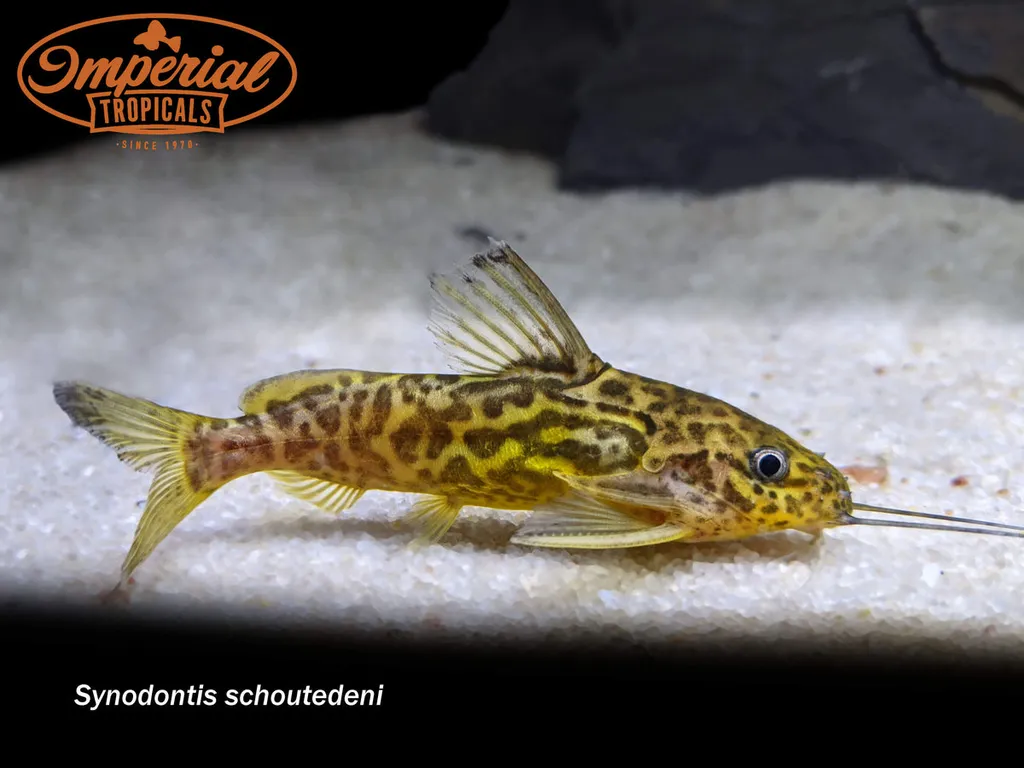
Vermiculated squeaker
Synodontis schoutedeni
Freshwater5.9 in (15 cm) · 24 gal (90 L)72–81°F (22–27°C)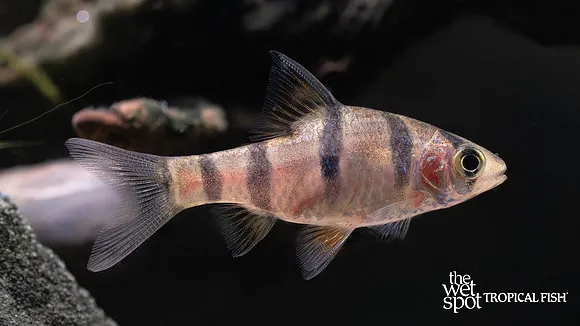
Six-banded barb
Desmopuntius hexazona
Freshwater2.4 in (6 cm) · 24 gal (90 L)73–82°F (23–28°C)
Wrestling halfbeak
Dermogenys pusilla
FreshwaterBrackish2.8 in (7 cm) · 25 gal (95 L)75–82°F (24–28°C)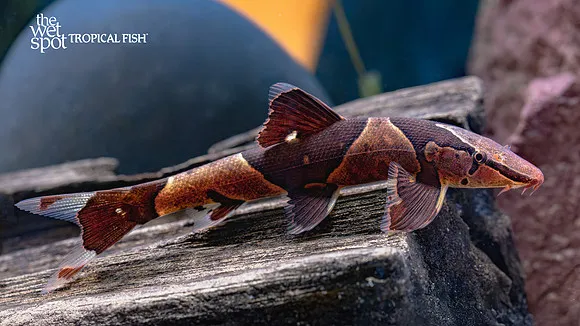
Mekong lizard loach
Homaloptera confuzona
Freshwater3.2 in (8.2 cm) · 24 gal (90 L)70–81°F (21–27°C)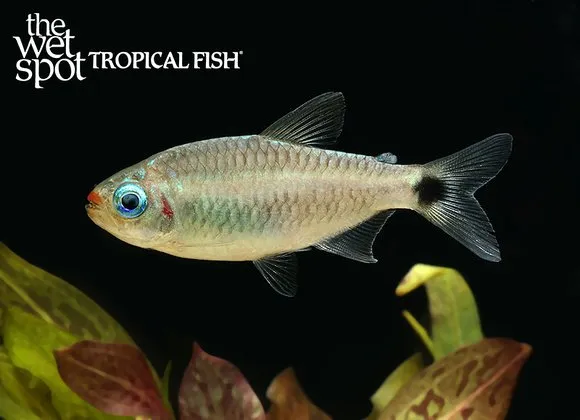
Cosmops tetra
Bario cosmops
Freshwater2.6 in (6.5 cm) · 24 gal (90 L)73–82°F (23–28°C)
Common questions
What size tank does a threespot barb need?
A threespot barb needs at least 24 gal (90 L). It spends most of its time in the middle.
What temperature and pH does a threespot barb need?
A threespot barb is comfortable at 72–81°F (22–27°C) with a pH of 6.0–7.5.
What does a threespot barb eat?
A threespot barb takes all the standard foods without complaint. Offer flake, micro pellets, and small frozen or live foods such as daphnia and bloodworm.
How big does a threespot barb get?
An adult threespot barb reaches about 2.8 in (7 cm).
Does a threespot barb need a group?
Yes. A threespot barb is a schooling species and should be kept in a group, not singly.
Related species
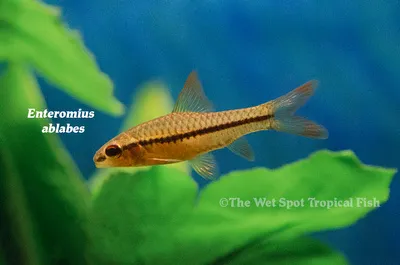 3.1 in (8 cm)24 gal (90 L)72–81°F (22–27°C)
Ablabes barb
Enteromius ablabes
3.1 in (8 cm) · 24 gal (90 L)
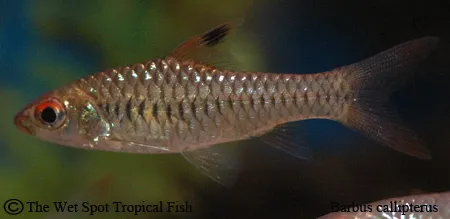 3.5 in (9 cm)24 gal (90 L)72–81°F (22–27°C)
Clipper barb
Enteromius callipterus
3.5 in (9 cm) · 24 gal (90 L)
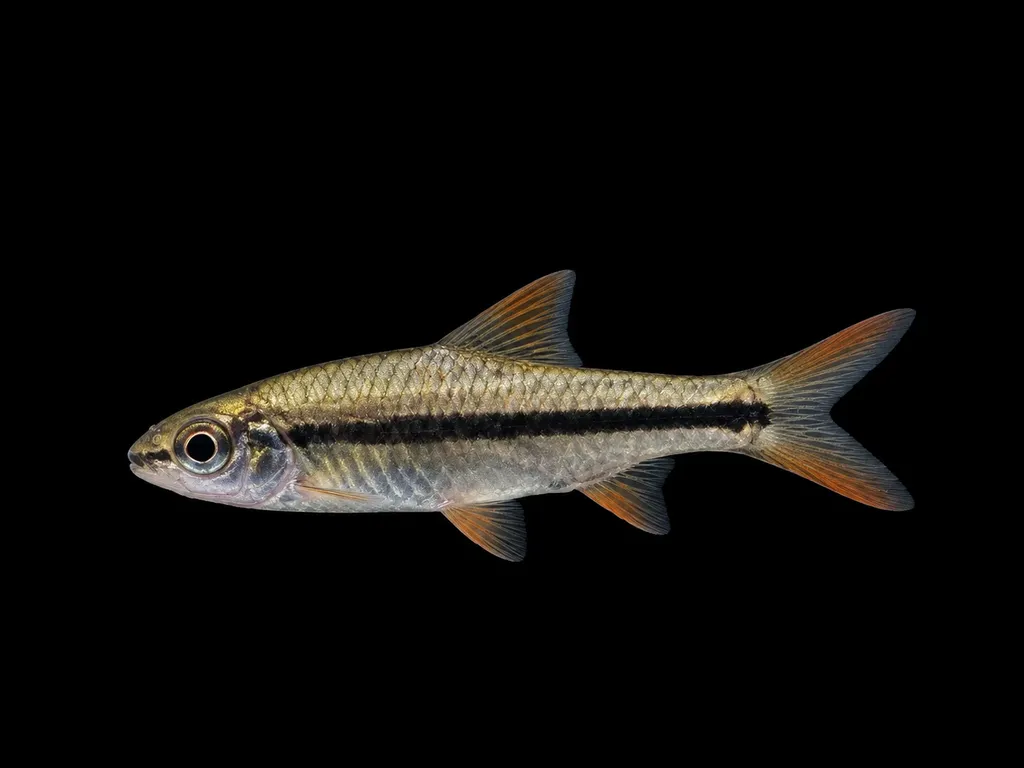 3.5 in (9 cm)24 gal (90 L)72–81°F (22–27°C)
Martorell's barb
Enteromius martorelli
3.5 in (9 cm) · 24 gal (90 L)
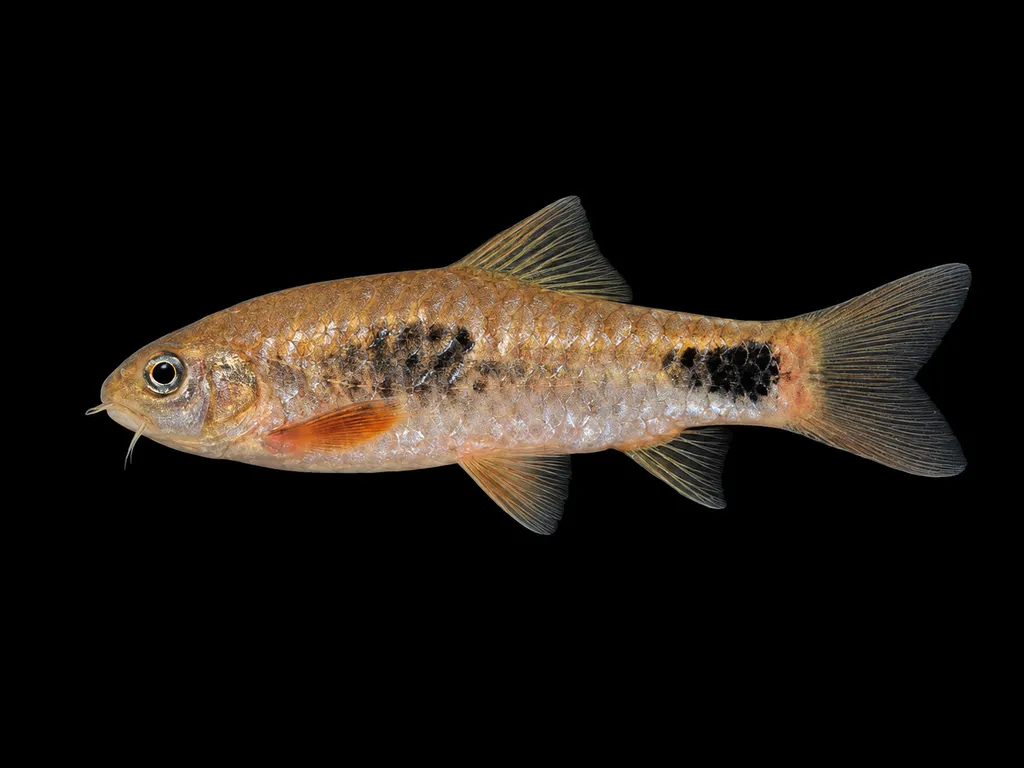 3.9 in (10 cm)24 gal (90 L)72–81°F (22–27°C)
Cameroon barb
Enteromius camptacanthus
3.9 in (10 cm) · 24 gal (90 L)
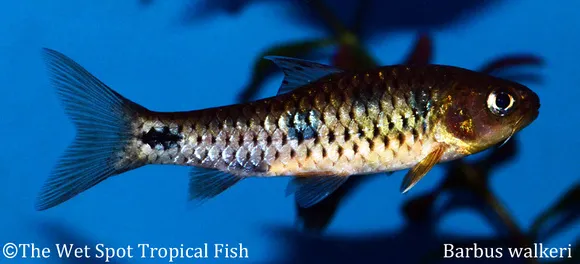 4.7 in (12 cm)29 gal (110 L)72–81°F (22–27°C)
Walker's barb
Enteromius walkeri
4.7 in (12 cm) · 29 gal (110 L)
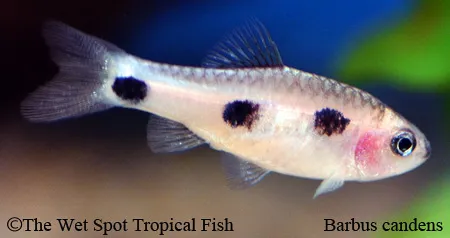 1.6 in (4 cm)14 gal (54 L)72–81°F (22–27°C)
Glowing ember barb
Enteromius candens
1.6 in (4 cm) · 14 gal (54 L)