Snakeskin barb
Desmopuntius rhomboocellatus
FreshwaterFish
Care at a glance
- Temperature
- 72–82°F
- 22–28°C
- pH
- 6.0–7.5
- Adult size
- 2.2 in
- 5.5 cm
- Minimum tank
- 20 gal
- 75 L
- Temperament
- Peaceful
- Social behavior
- Schooling
- Swim level
- Middle
- Difficulty
- Easy
- Breeding
- Hard
- Rarity
- Rare
- Family
- Cyprinidae
- Origin
- Borneo
Overview
Snakeskin barbs are peaceful, shoaling fish that should be kept in a group of at least eight, since a good shoal keeps them settled and brings the males into their richest color. They swim in the middle water and suit a quiet, planted community or a soft blackwater tank with other small, gentle species. A larger group also keeps their attention on each other rather than on any smaller or long finned tankmates. Feed a varied diet of small flake, micro pellets, and frozen or live foods such as daphnia and bloodworm. A tank around 75 liters or larger will comfortably house a shoal.
In the wild
This barb comes from the blackwater streams and peat swamp forests of Borneo, where the water is soft, acidic, and stained dark brown with tannins beneath dense forest. It shows its best in warm water of about 22–28 C and a pH of 6.0–7.5, ideally toward the softer, more acidic end. Recreate that with a dark substrate, plenty of driftwood and leaf litter, and gentle, tannin stained water under subdued light. Generous planting broken by open swimming space completes the setting.
Good to know
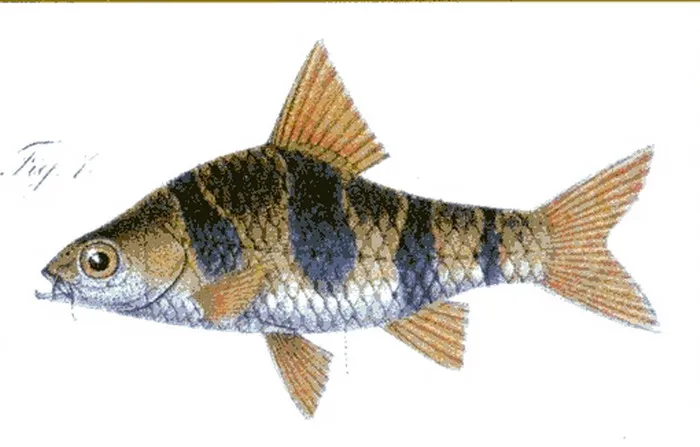
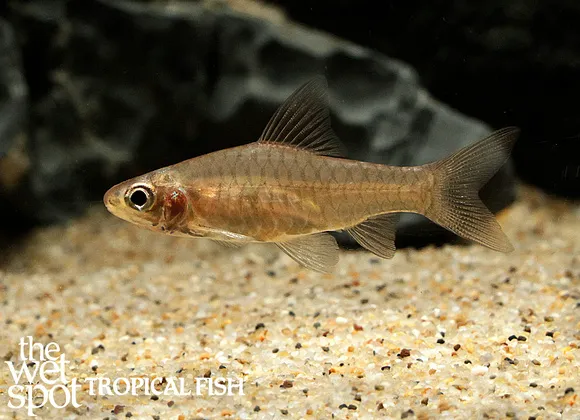
Desmopuntius rhomboocellatus is a small member of the family Cyprinidae that reaches around 5.5 cm. It is a warm orange to red fish crossed by a series of dark, diamond shaped bars and blotches that link into a chain like pattern down the flanks, which gives it the snakeskin name. It was formerly placed in the genus Puntius. It is an egg scattering, non guarding spawner, and breeding it is considered difficult and is seldom achieved in the home aquarium.
Did you know
The species name rhomboocellatus points to the row of rhombus, or diamond, shaped markings along the body, each edged so that it reads almost like an eye spot. Linked together down a coppery orange flank, they create the chain mail or snakeskin look that gives the fish both its scientific and common names.
Weekly picks
Tank mates
Snakeskin barb is a peaceful, schooling species that keeps to the middle. These picks share a community profile with it, are safe together in both directions, and overlap on water type, temperature and pH.
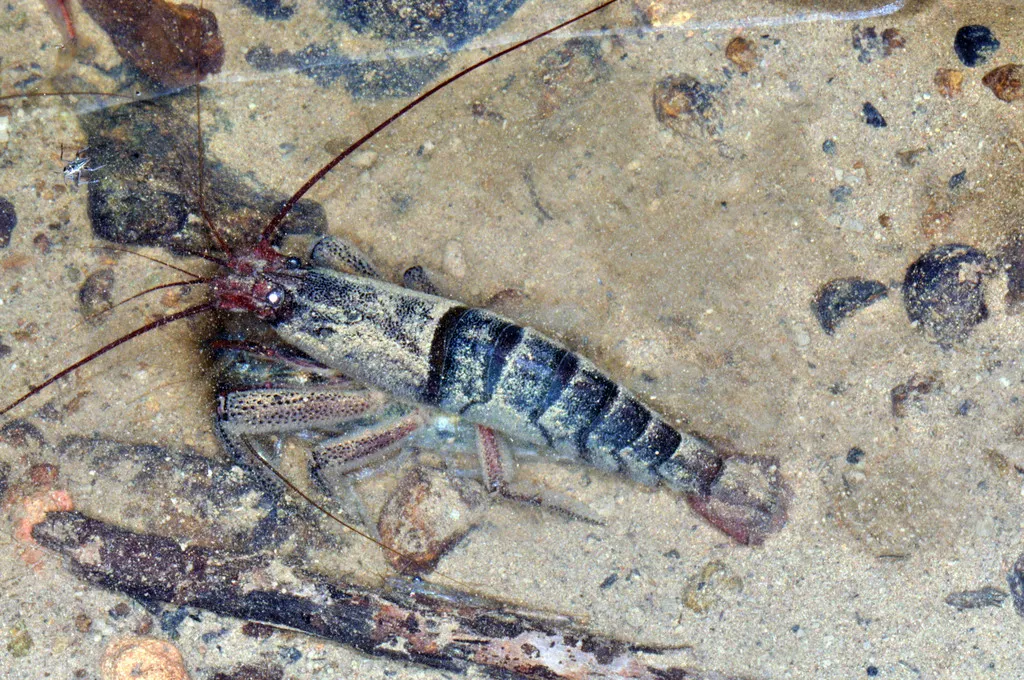
Marble wood shrimp
Atya scabra
Freshwater3.9 in (10 cm) · 20 gal (75 L)73–82°F (23–28°C)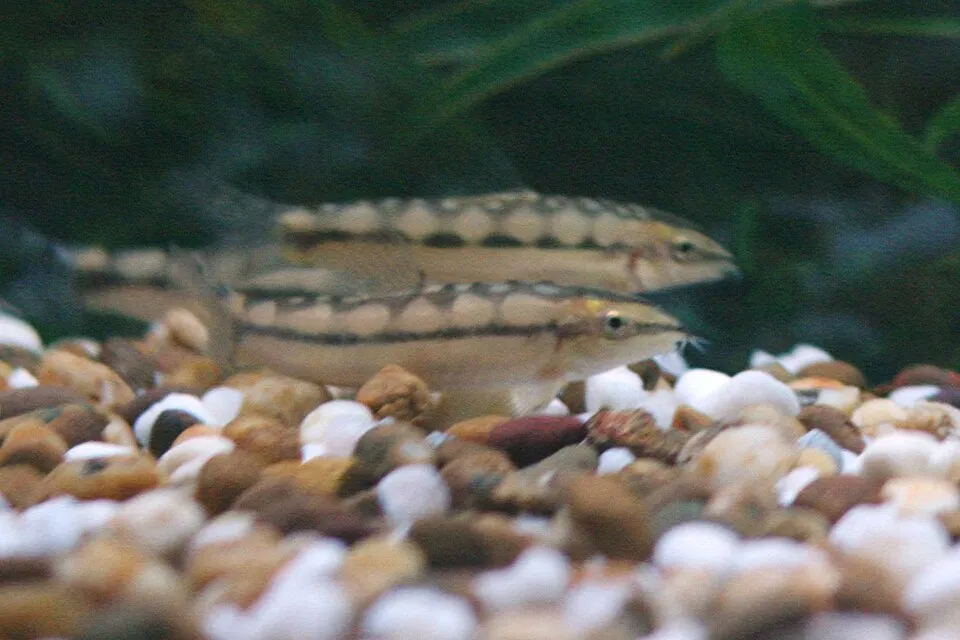
Dwarf botia
Ambastaia sidthimunki
Freshwater2.4 in (6 cm) · 20 gal (75 L)68–86°F (20–30°C)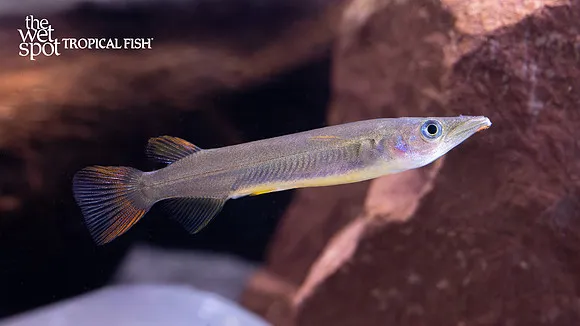
Rex halfbeak
Nomorhamphus rex
Freshwater2.2 in (5.5 cm) · 20 gal (75 L)72–79°F (22–26°C)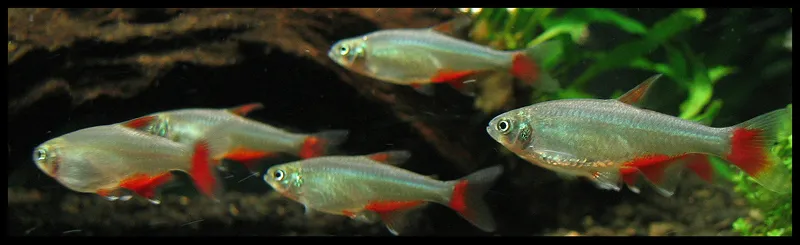
Bloodfin tetra
Aphyocharax anisitsi
Freshwater2.2 in (5.5 cm) · 20 gal (75 L)72–82°F (22–28°C)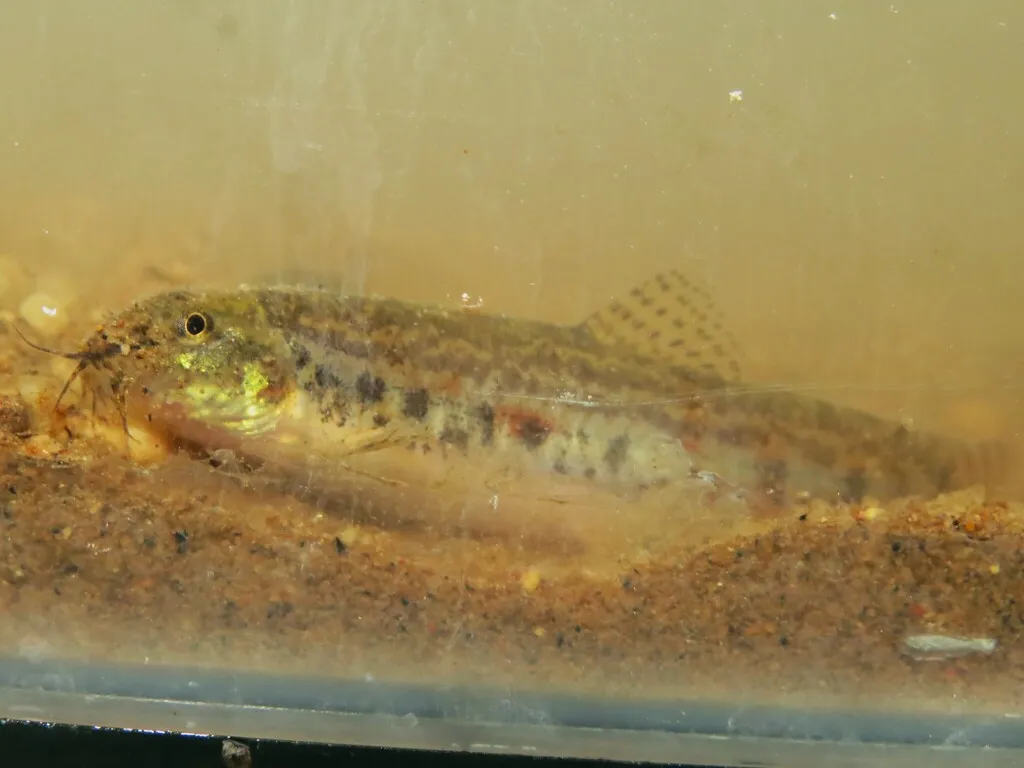
Common spiny loach
Lepidocephalichthys thermalis
Freshwater3.1 in (8 cm) · 20 gal (75 L)72–82°F (22–28°C)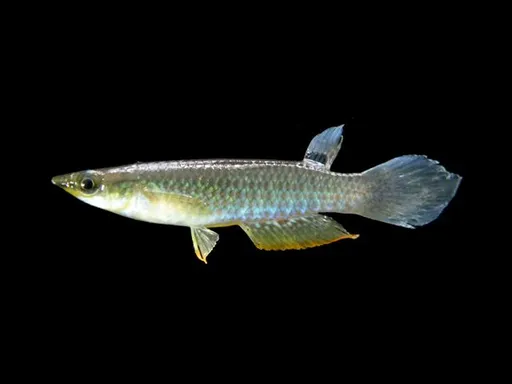
Blue panchax
Aplocheilus panchax
Freshwater3.5 in (9 cm) · 20 gal (75 L)72–82°F (22–28°C)
Common questions
What size tank does a Snakeskin barb need?
A Snakeskin barb needs at least 20 gal (75 L). It spends most of its time in the middle.
What temperature and pH does a Snakeskin barb need?
A Snakeskin barb is comfortable at 72–82°F (22–28°C) with a pH of 6.0–7.5.
How big does a Snakeskin barb get?
An adult Snakeskin barb reaches about 2.2 in (5.5 cm).
Does a Snakeskin barb need a group?
Yes. A Snakeskin barb is a schooling species and should be kept in a group, not singly.
Related species
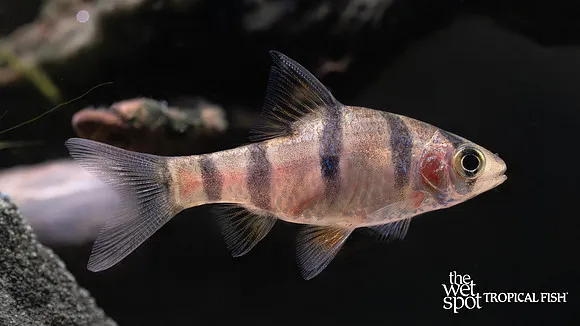 2.4 in (6 cm)24 gal (90 L)73–82°F (23–28°C)
Six-banded barb
Desmopuntius hexazona
2.4 in (6 cm) · 24 gal (90 L)
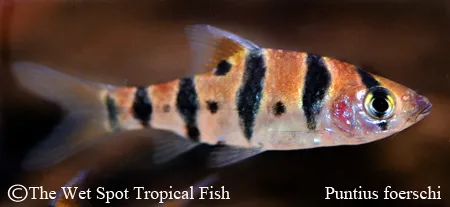
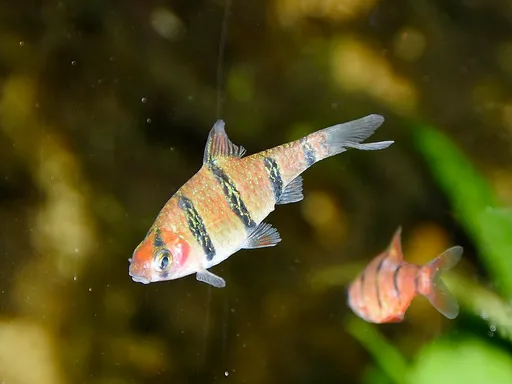 2 in (5 cm)20 gal (75 L)73–81°F (23–27°C)
Five-banded barb
Desmopuntius pentazona
2 in (5 cm) · 20 gal (75 L)
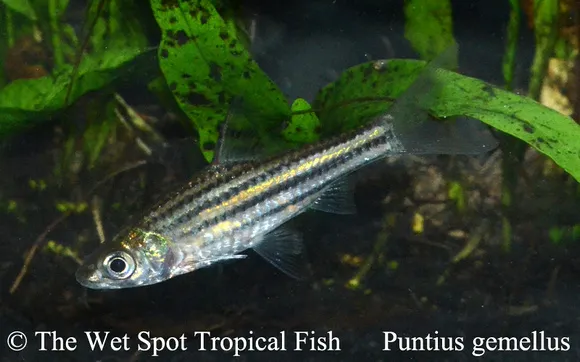
 3.1 in (8 cm)29 gal (110 L)73–82°F (23–28°C)
Foersch's barb
Desmopuntius foerschi
3.1 in (8 cm) · 29 gal (110 L)
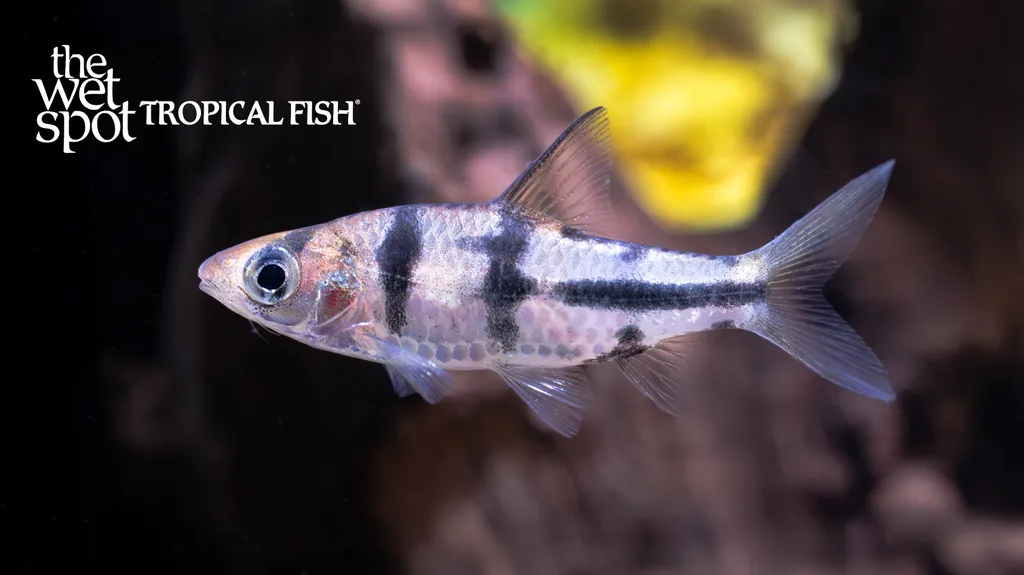
 3.5 in (9 cm)29 gal (110 L)73–82°F (23–28°C)
Twin-striped barb
Desmopuntius gemellus
3.5 in (9 cm) · 29 gal (110 L)
 4.7 in (12 cm)40 gal (150 L)73–79°F (23–26°C)
Striped barb
Desmopuntius johorensis
4.7 in (12 cm) · 40 gal (150 L)
 2.2 in (5.5 cm)14 gal (54 L)73–81°F (23–27°C)
Congo clipper barb
Clypeobarbus congicus
2.2 in (5.5 cm) · 14 gal (54 L)