Agassiz's dwarf cichlid
Apistogramma agassizii
FreshwaterFish
Care at a glance
- Temperature
- 72–84°F
- 22–29°C
- pH
- 5.5–7.0
- Adult size
- 3.5 in
- 9 cm
- Minimum tank
- 20 gal
- 75 L
- Temperament
- Mostly peaceful
- Social behavior
- Social
- Swim level
- Bottom
- Difficulty
- Medium
- Breeding
- Hard
- Rarity
- Rare
- Family
- Cichlidae
- Origin
- Brazil
Overview
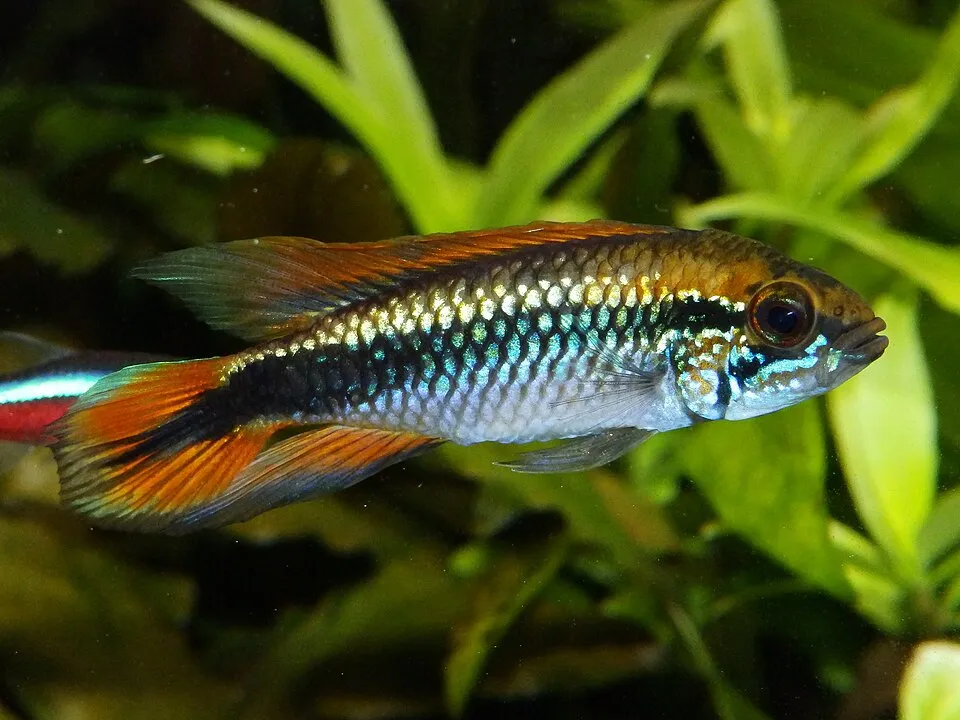
A male with one or two females in a tank around 75 liters works well, with plenty of broken sightlines from plants and wood. They spend most of their time low in the tank, picking through the substrate. They are mostly peaceful but get protective around a spawn, so give the females their own caves. Feed small live and frozen foods like brine shrimp and daphnia, with micro pellets as backup.
In the wild
Agassiz's dwarf cichlid comes from the Amazon basin in Brazil, living in slow streams, river edges, and floodplain pools. The bottom is covered in leaf litter and the water is warm, soft, and acidic. Give them a planted tank with sand, leaf litter, and caves or coconut shells to use as territories. Soft, acidic water from the low 20s up toward the high 20s C keeps them in good shape.
Good to know
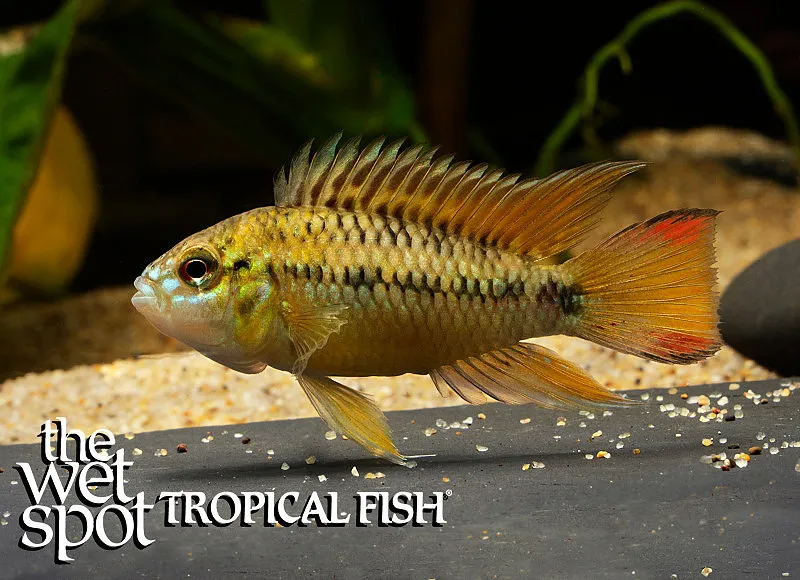
This is an Apistogramma in the family Cichlidae, reaching around 9 cm including the long tail, with males larger and more colorful than females. It is a cave-spawning species and often polygamous, with one male tending the territories of several females. The female guards the eggs and fry. They are not considered threatened, but breeding them at home is difficult.
Did you know
Agassiz's dwarf cichlid comes in several color forms tied to where it was collected, with red, blue, and yellow tail variants showing up in the trade. Two fish that look quite different can still be the same species, just from different river systems.
Weekly picks
Tank mates
Agassiz's dwarf cichlid is a mostly peaceful, social species that keeps to the bottom. These picks share a community profile with it, are safe together in both directions, and overlap on water type, temperature and pH.
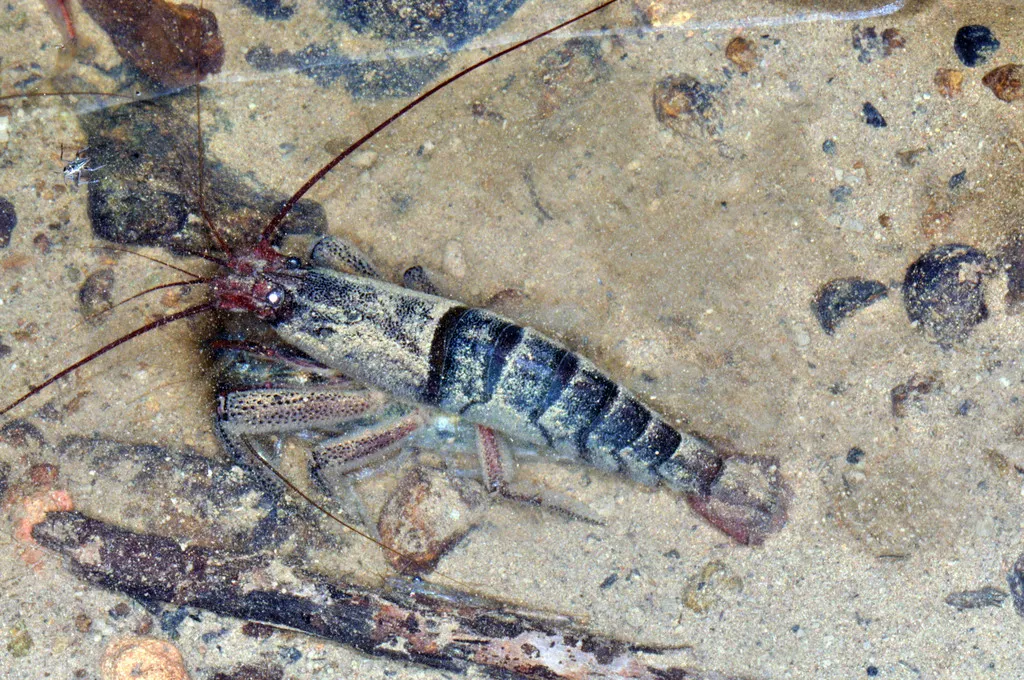
Marble wood shrimp
Atya scabra
Freshwater3.9 in (10 cm) · 20 gal (75 L)73–82°F (23–28°C)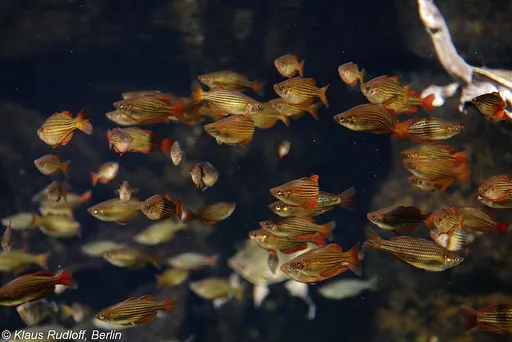
Dwarf rainbowfish
Melanotaenia maccullochi
Freshwater2.8 in (7 cm) · 20 gal (75 L)72–82°F (22–28°C)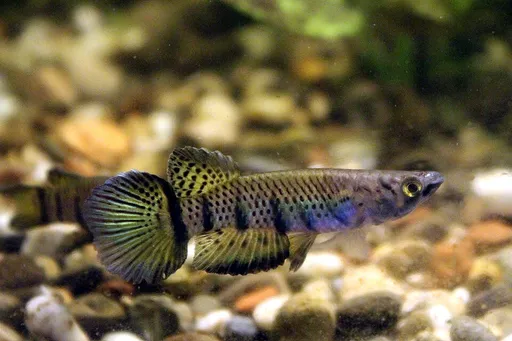
Six-barred panchax
Epiplatys sexfasciatus
Freshwater3.9 in (10 cm) · 20 gal (75 L)72–81°F (22–27°C)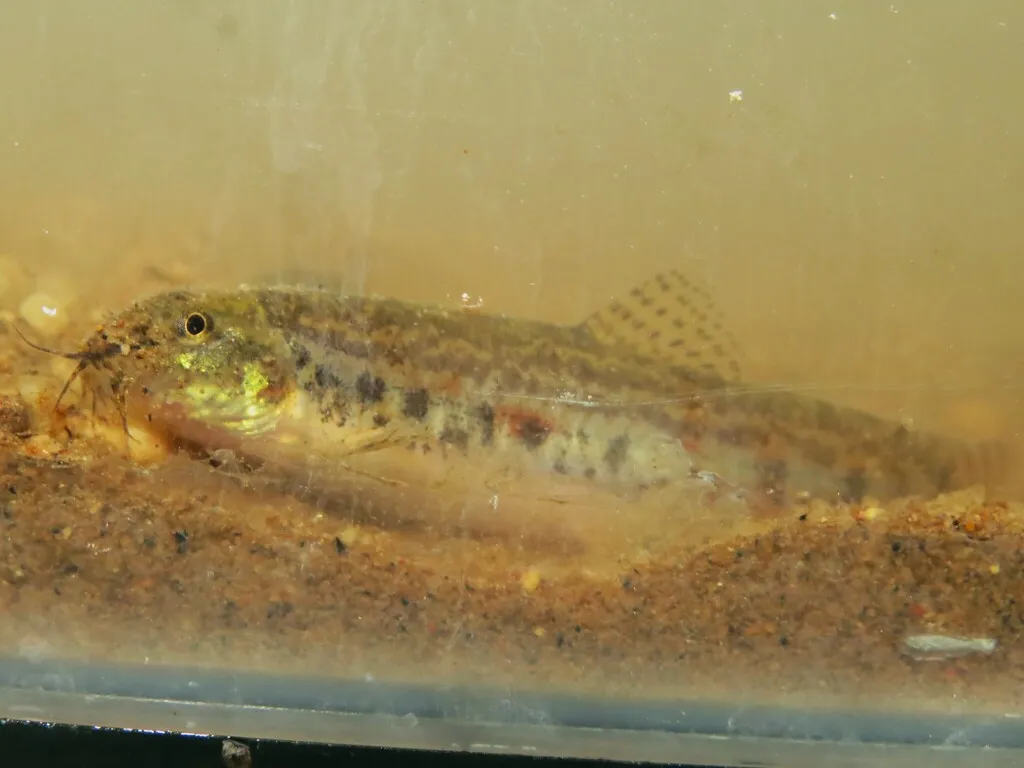
Common spiny loach
Lepidocephalichthys thermalis
Freshwater3.1 in (8 cm) · 20 gal (75 L)72–82°F (22–28°C)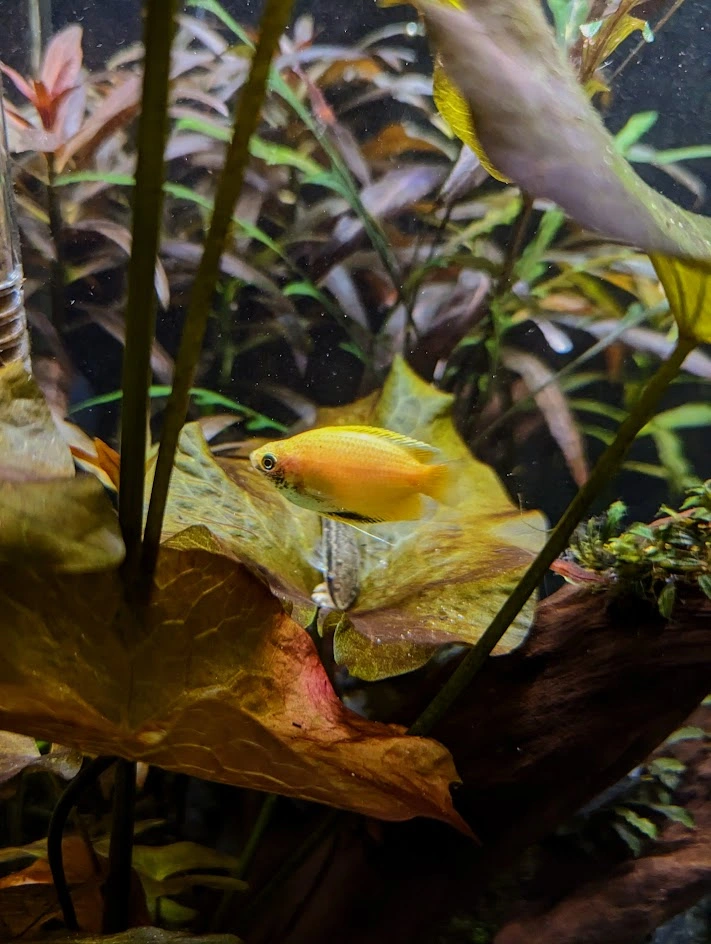
Honey gourami
Trichogaster chuna
Freshwater2 in (5 cm) · 20 gal (75 L)72–82°F (22–28°C)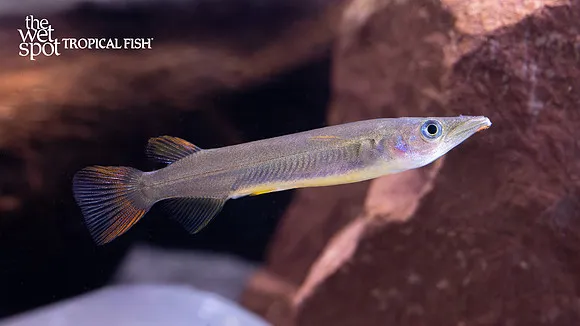
Rex halfbeak
Nomorhamphus rex
Freshwater2.2 in (5.5 cm) · 20 gal (75 L)72–79°F (22–26°C)
Common questions
What size tank does an Agassiz's dwarf cichlid need?
An Agassiz's dwarf cichlid needs at least 20 gal (75 L). It spends most of its time in the bottom.
What temperature and pH does an Agassiz's dwarf cichlid need?
An Agassiz's dwarf cichlid is comfortable at 72–84°F (22–29°C) with a pH of 5.5–7.0.
How big does an Agassiz's dwarf cichlid get?
An adult Agassiz's dwarf cichlid reaches about 3.5 in (9 cm).
Related species
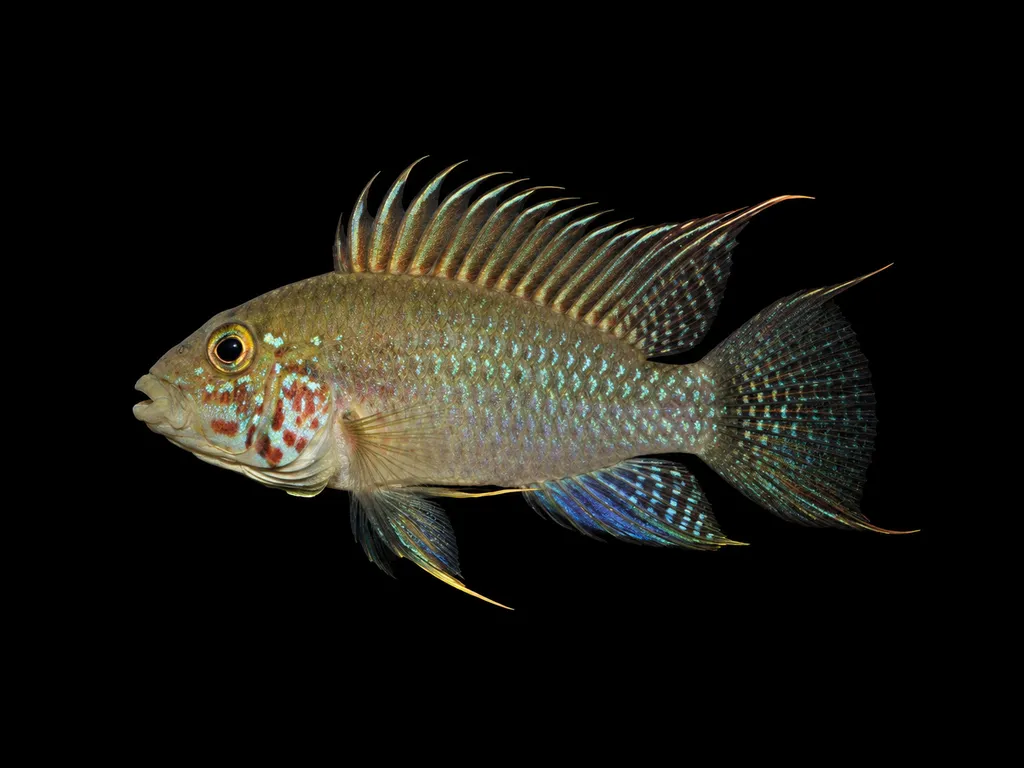 3.7 in (9.5 cm)26 gal (100 L)75–82°F (24–28°C)
Bigmouth dwarf cichlid
Apistogramma megastoma
3.7 in (9.5 cm) · 26 gal (100 L)
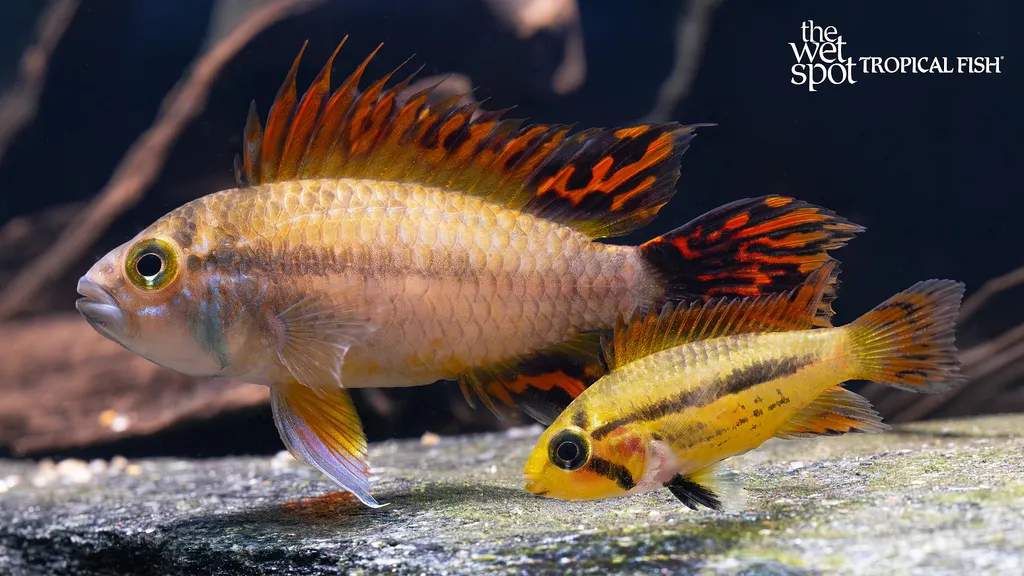 3.9 in (10 cm)29 gal (110 L)72–81°F (22–27°C)
Kullander's dwarf cichlid
Apistogramma kullanderi
3.9 in (10 cm) · 29 gal (110 L)
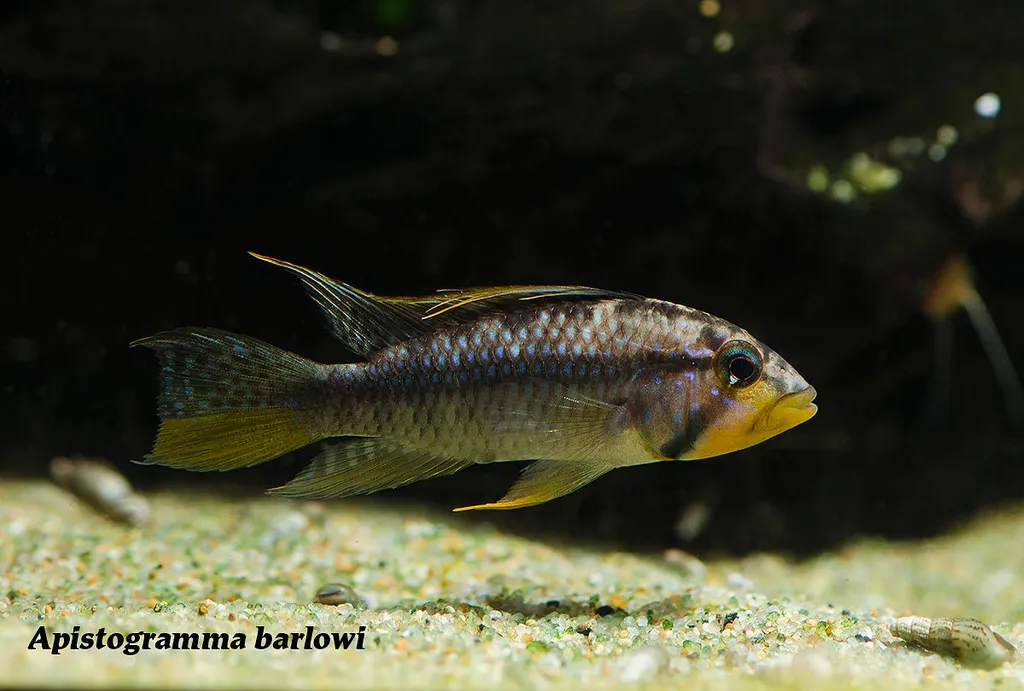 3.1 in (8 cm)20 gal (75 L)73–82°F (23–28°C)
Barlow's dwarf cichlid
Apistogramma barlowi
3.1 in (8 cm) · 20 gal (75 L)
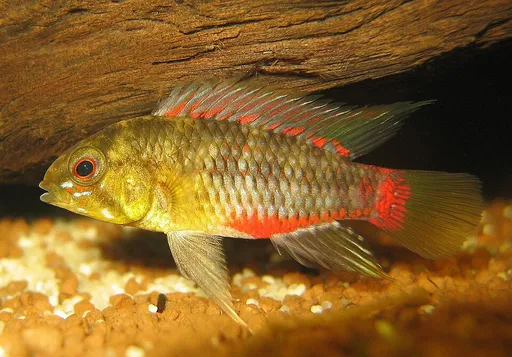 3.1 in (8 cm)20 gal (75 L)73–84°F (23–29°C)
Hongsloi dwarf cichlid
Apistogramma hongsloi
3.1 in (8 cm) · 20 gal (75 L)
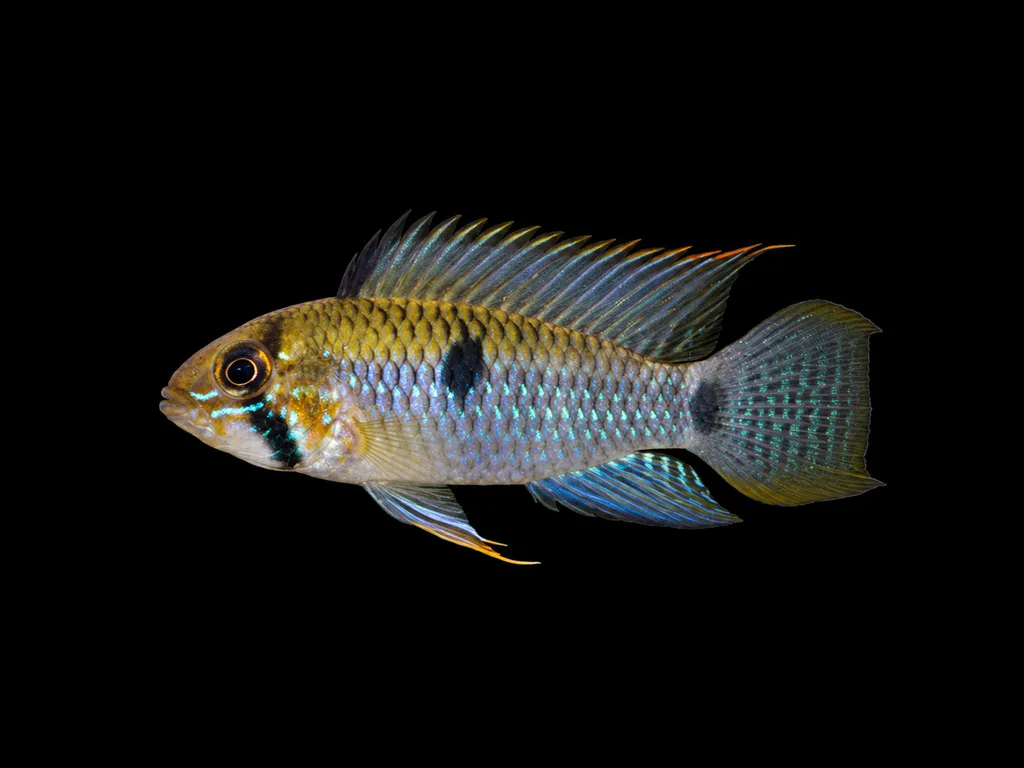 3.1 in (8 cm)20 gal (75 L)73–82°F (23–28°C)
Steindachner's dwarf cichlid
Apistogramma steindachneri
3.1 in (8 cm) · 20 gal (75 L)
 3 in (7.5 cm)20 gal (75 L)75–84°F (24–29°C)
Hoigne's dwarf cichlid
Apistogramma hoignei
3 in (7.5 cm) · 20 gal (75 L)