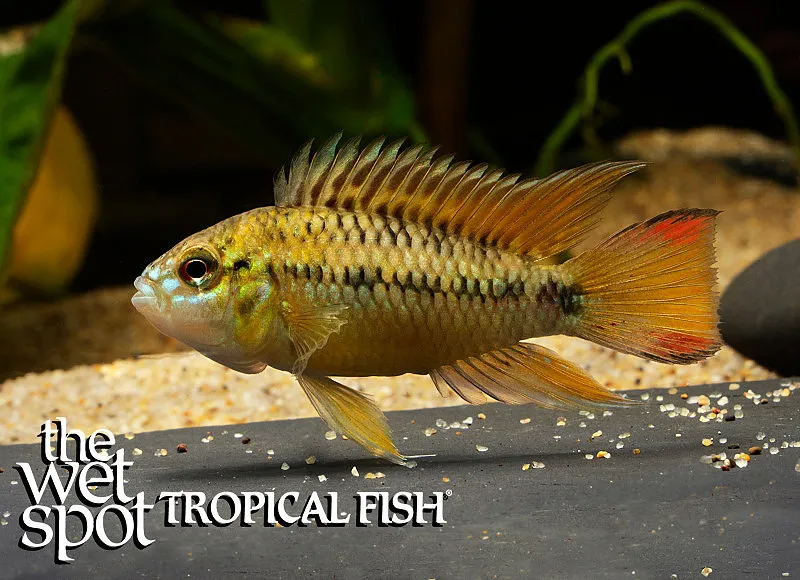
Bigmouth dwarf cichlid
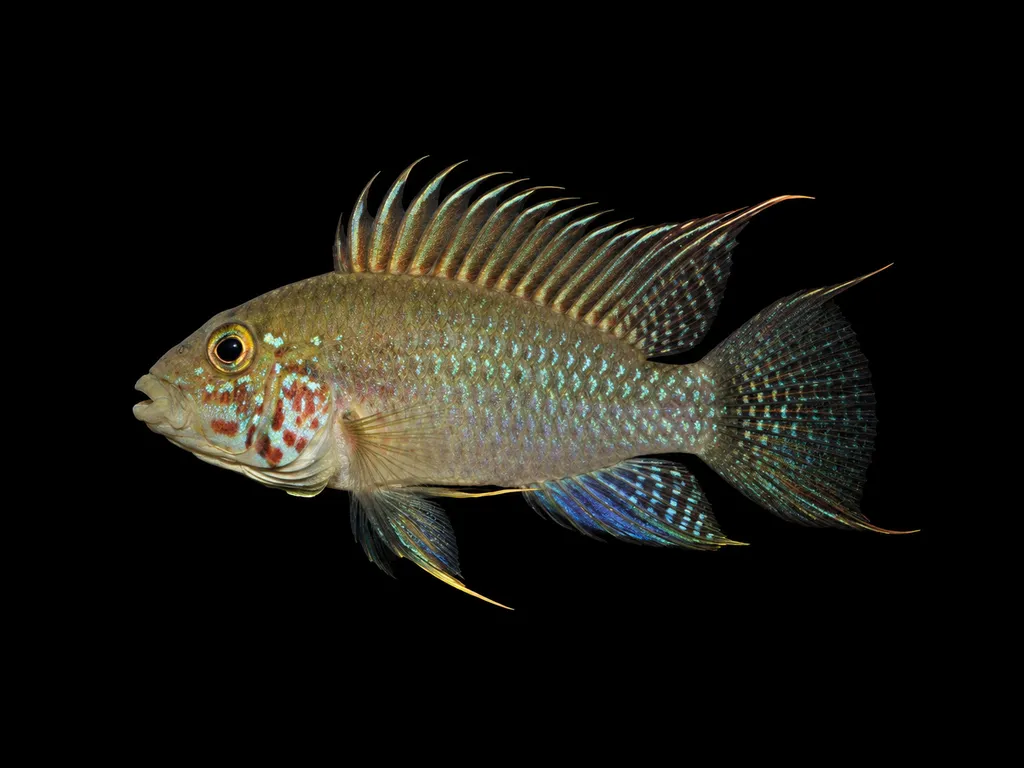
Apistogramma megastoma
Also known as Bigmouth apisto
FreshwaterFish
Care at a glance
- Temperature
- 75–82°F
- 24–28°C
- pH
- 4.8–6.5
- Adult size
- 3.7 in
- 9.5 cm
- Minimum tank
- 26 gal
- 100 L
- Temperament
- Mostly peaceful
- Social behavior
- Social
- Swim level
- Bottom
- Diet
- Carnivore
- Difficulty
- Medium
- Breeding
- Cave spawner · Hard
- Rarity
- Rare
- Family
- Cichlidae
- Origin
- Blackwater streams of the Rio Nanay and nearby drainages, Loreto, Peru
Overview
The bigmouth dwarf cichlid is a big, boisterous apisto for a roomy tank. It takes some experience to keep well.
Did you know
Field observations caught female bigmouth dwarf cichlids doing something almost no cichlid does. They switched between guarding eggs in a cave and scooping the brood into the mouth to move house.
Caring for the bigmouth dwarf cichlid
Give a pair of bigmouth dwarf cichlids 26 gal (100 L) or more. This is a large, predatory apisto that needs room to patrol, and its males spar hard. Set the tank up with sand, leaf litter, caves and shade.
Keep the water at 75 to 82°F (24 to 28°C) with a pH of 4.8 to 6.5. It happily eats meaty frozen foods, earthworm pieces and pellets. It will also eat any fish that fits its namesake mouth, so choose tank mates too large to swallow.
Soft, acidic water conditions it for breeding, which is hard. Breeding combines cave spawning with the partial mouthbrooding of its lineage. Some females carry the eggs or larvae in the mouth.
Good to know
Römer and colleagues described the bigmouth dwarf cichlid in 2017. Its name, megastoma, means big mouth, and the fish uses it to take prey other dwarf cichlids cannot. It is one of the largest apistos, and it belongs to the barlowi lineage.
In the wild
The bigmouth dwarf cichlid comes from blackwater forest streams in the Nanay region of northern Peru. It hunts along the litter banks in warm, very soft water.
Weekly picks
Tank mates
The bigmouth dwarf cichlid is a mostly peaceful, social species that keeps to the bottom. These picks share a community profile with it, are safe together in both directions, and overlap on water type, temperature and pH.
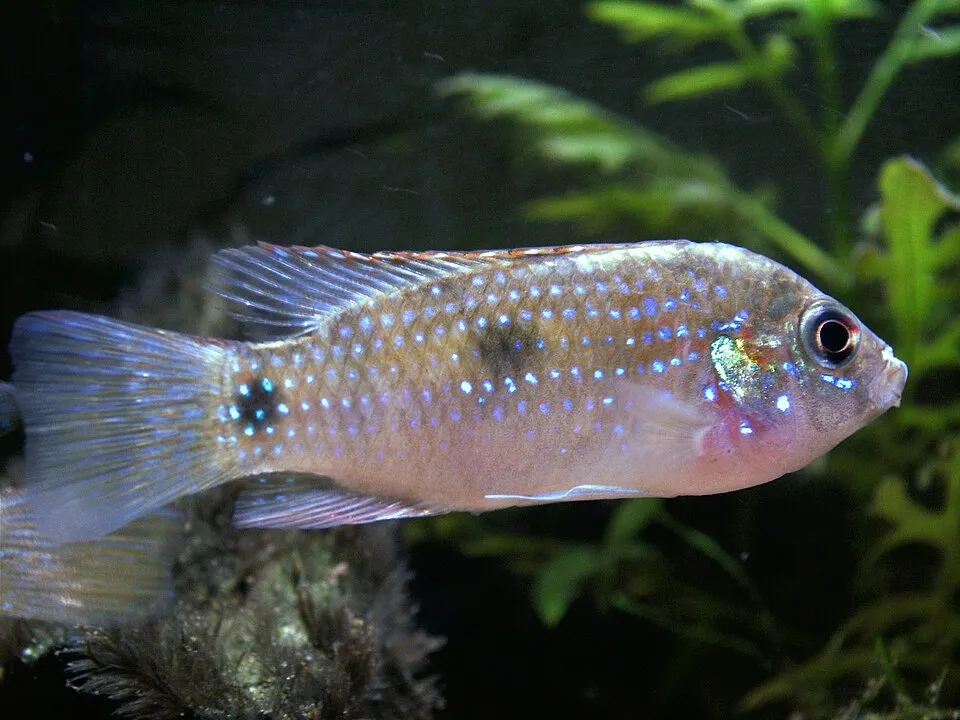
African butterfly cichlid
Anomalochromis thomasi
Freshwater3.1 in (8 cm) · 25 gal (95 L)73–81°F (23–27°C)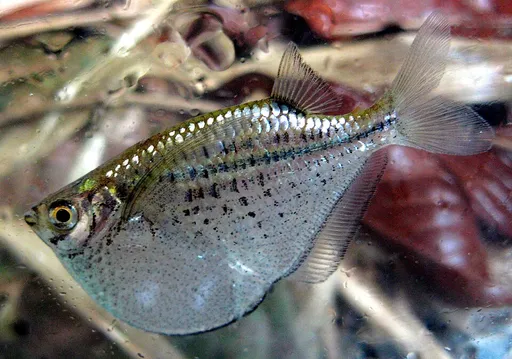
Spotted hatchetfish
Gasteropelecus maculatus
Freshwater3.5 in (9 cm) · 26 gal (100 L)73–82°F (23–28°C)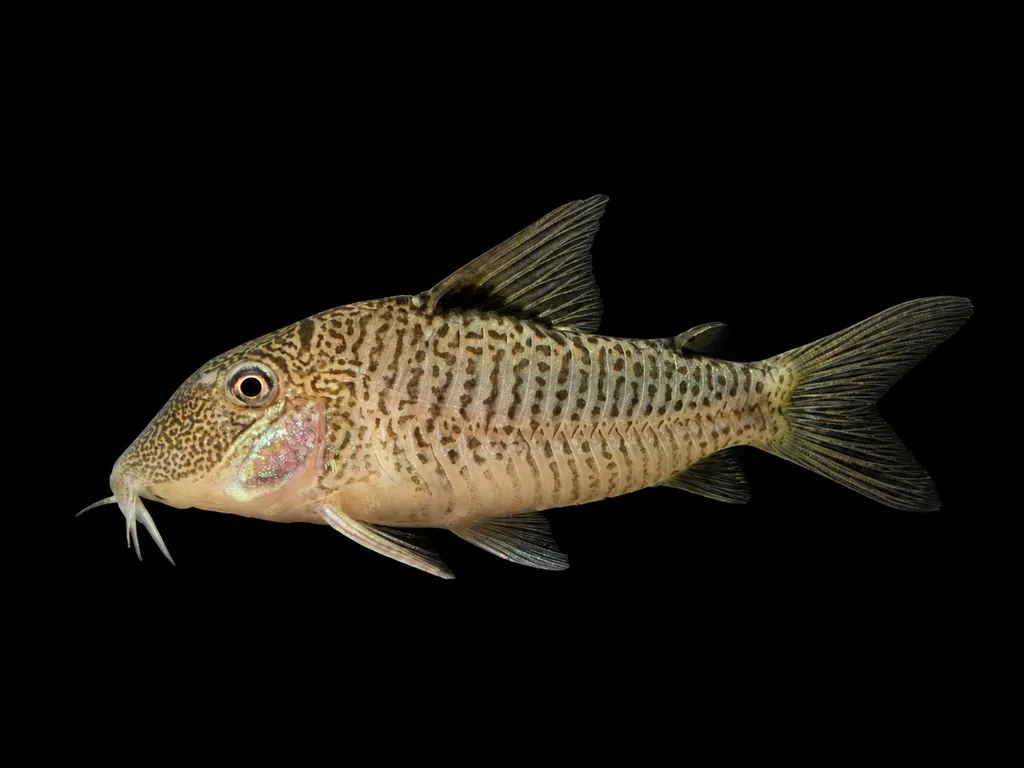
Geoffroy's cory
Corydoras geoffroy
Freshwater3 in (7.5 cm) · 26 gal (100 L)73–81°F (23–27°C)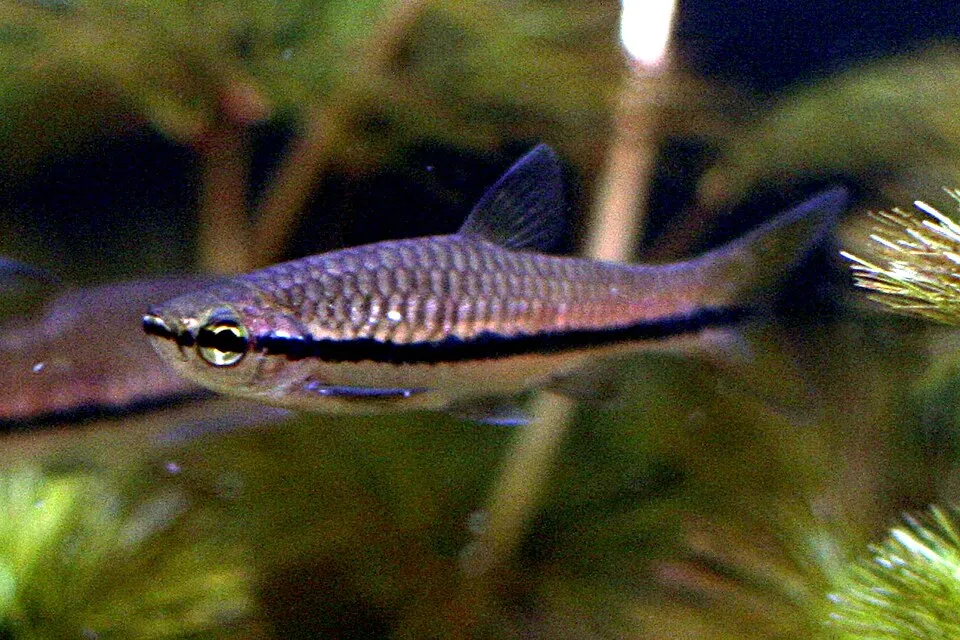
Brilliant rasbora
Rasbora einthovenii
Freshwater3.5 in (9 cm) · 29 gal (110 L)72–82°F (22–28°C)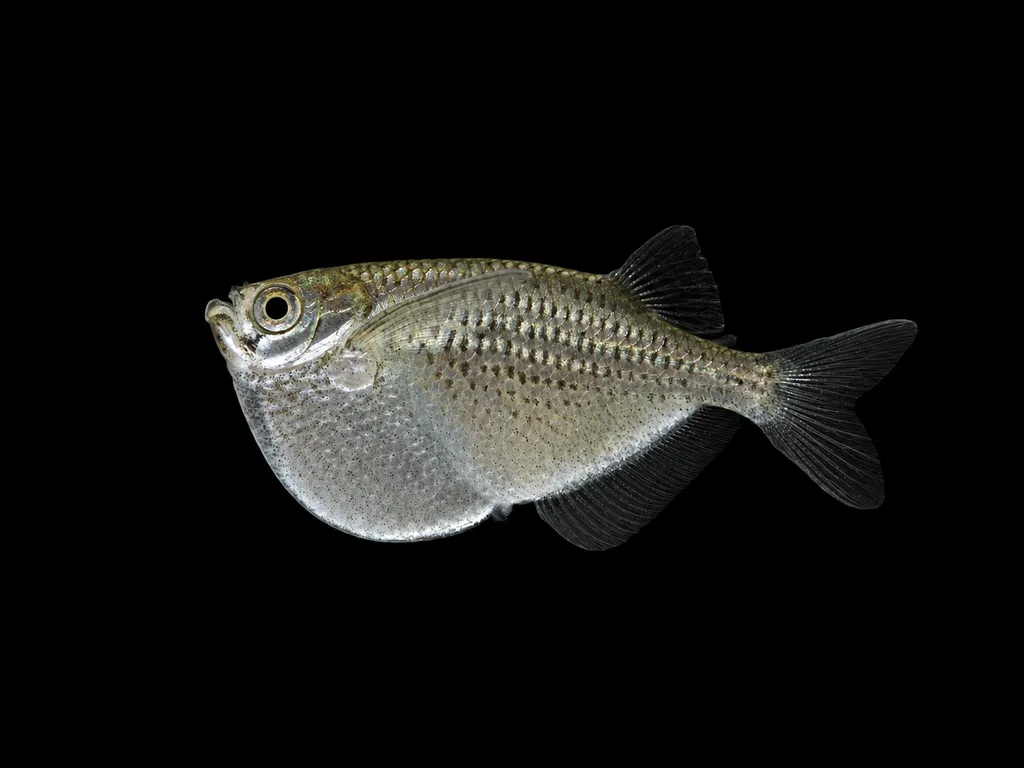
Silver hatchetfish
Gasteropelecus levis
Freshwater1.4 in (3.5 cm) · 30 gal (112 L)73–82°F (23–28°C)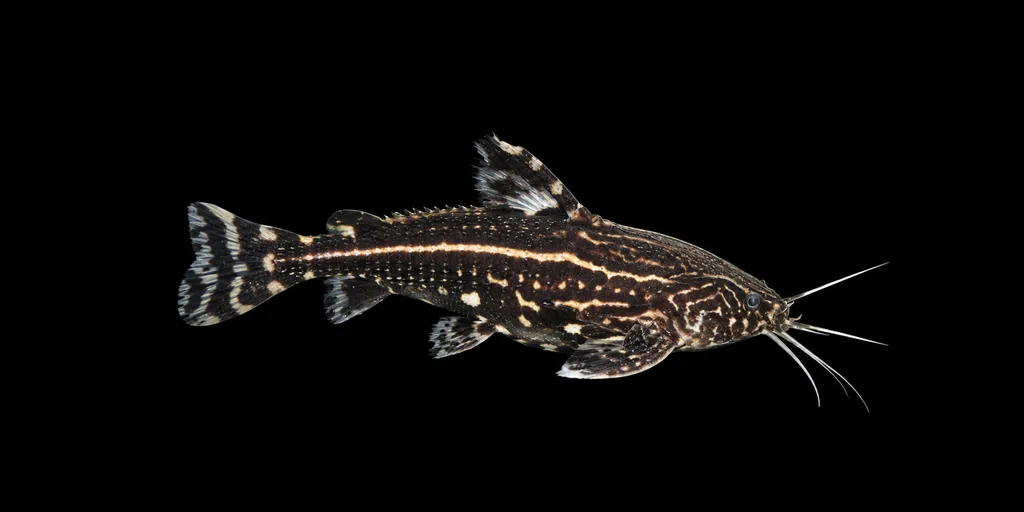
Talking catfish
Acanthodoras spinosissimus
Freshwater5.9 in (15 cm) · 26 gal (100 L)72–82°F (22–28°C)
Common questions
What size tank does a bigmouth dwarf cichlid need?
A bigmouth dwarf cichlid needs at least 26 gal (100 L). It spends most of its time in the bottom.
What temperature and pH does a bigmouth dwarf cichlid need?
A bigmouth dwarf cichlid is comfortable at 75–82°F (24–28°C) with a pH of 4.8–6.5.
What does a bigmouth dwarf cichlid eat?
A bigmouth dwarf cichlid happily eats meaty frozen foods, earthworm pieces and pellets. It will also eat any fish that fits in its mouth.
How big does a bigmouth dwarf cichlid get?
An adult bigmouth dwarf cichlid reaches about 3.7 in (9.5 cm).
Related species
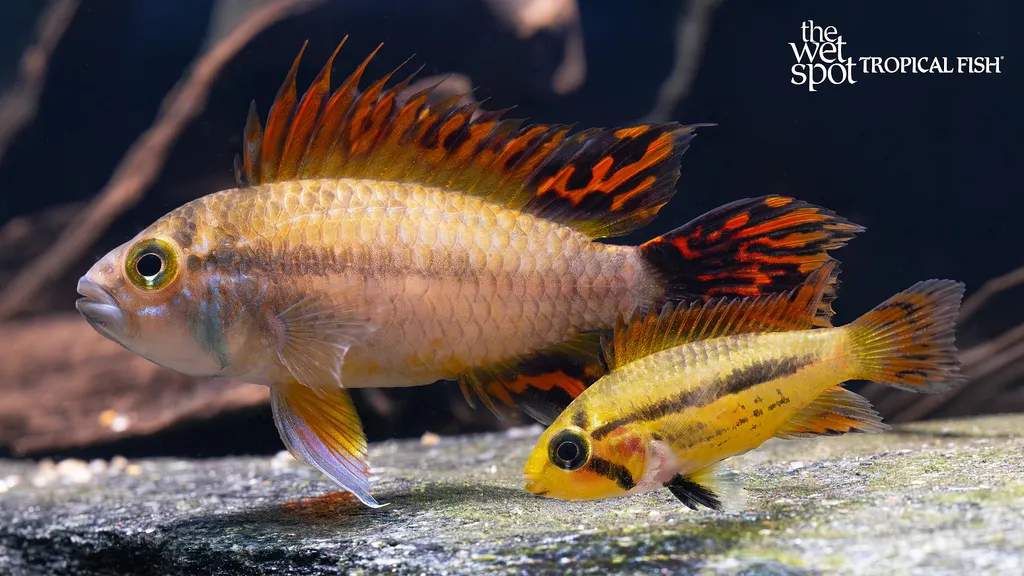 3.9 in (10 cm)29 gal (110 L)72–81°F (22–27°C)
Kullander's dwarf cichlid
Apistogramma kullanderi
3.9 in (10 cm) · 29 gal (110 L)
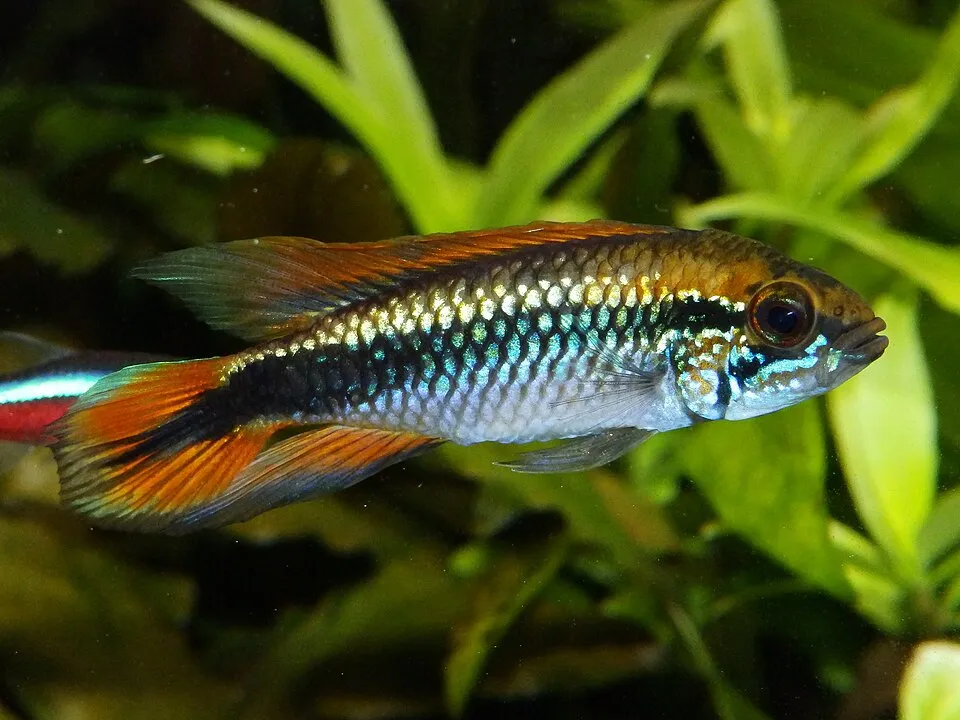 3.5 in (9 cm)20 gal (75 L)72–84°F (22–29°C)
Agassiz's dwarf cichlid
Apistogramma agassizii
3.5 in (9 cm) · 20 gal (75 L)
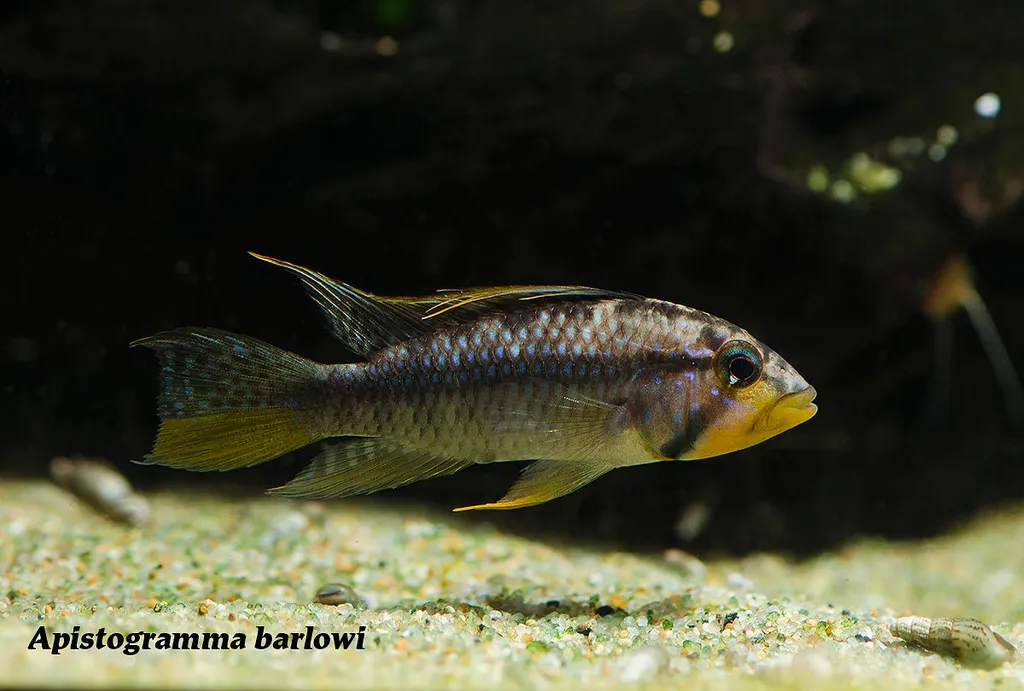 3.1 in (8 cm)20 gal (75 L)73–82°F (23–28°C)
Barlow's dwarf cichlid
Apistogramma barlowi
3.1 in (8 cm) · 20 gal (75 L)
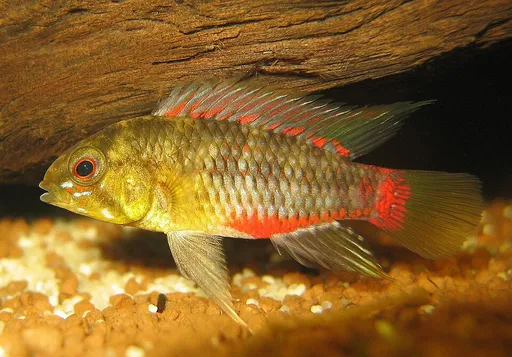 3.1 in (8 cm)20 gal (75 L)73–84°F (23–29°C)
Hongsloi dwarf cichlid
Apistogramma hongsloi
3.1 in (8 cm) · 20 gal (75 L)
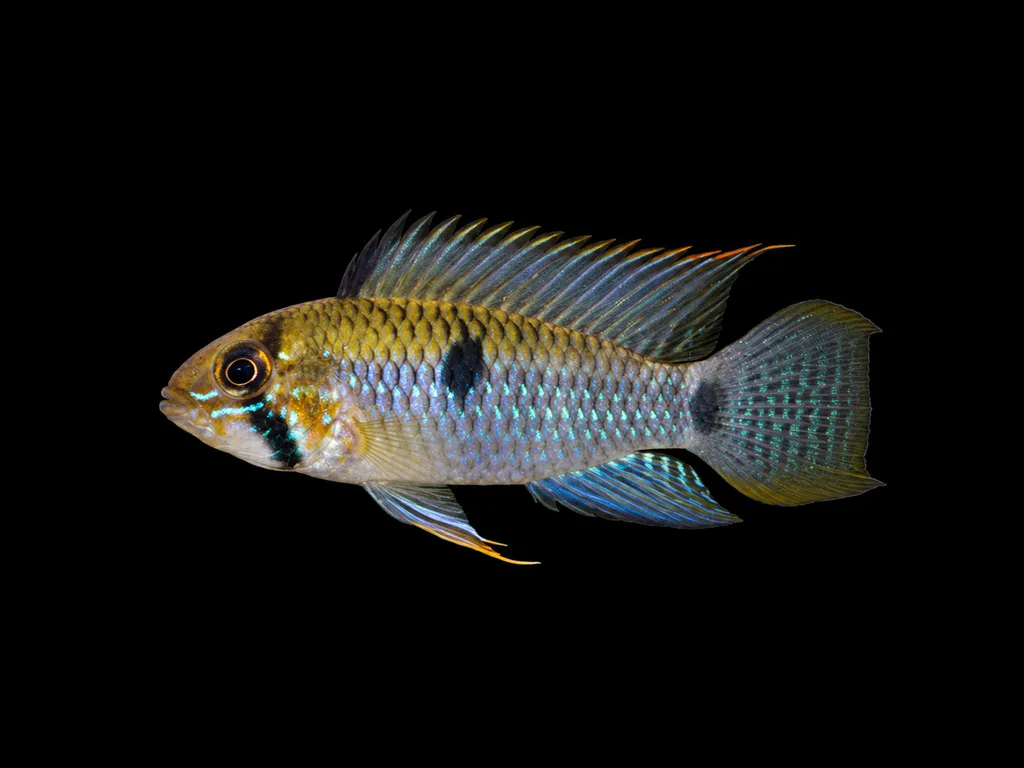 3.1 in (8 cm)20 gal (75 L)73–82°F (23–28°C)
Steindachner's dwarf cichlid
Apistogramma steindachneri
3.1 in (8 cm) · 20 gal (75 L)
 3 in (7.5 cm)20 gal (75 L)75–84°F (24–29°C)
Hoigne's dwarf cichlid
Apistogramma hoignei
3 in (7.5 cm) · 20 gal (75 L)