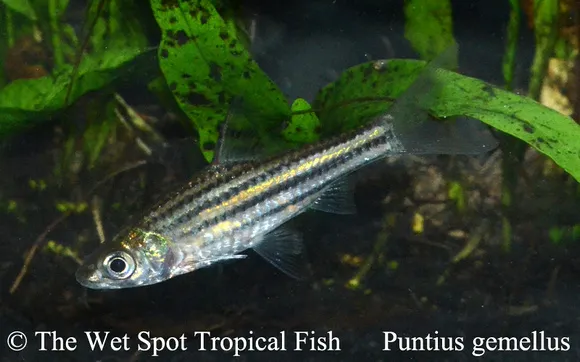
Twin-striped barb
Desmopuntius gemellus
Also known as Gemellus barb, Twin-banded barb
FreshwaterFish
Care at a glance
- Temperature
- 73–82°F
- 23–28°C
- pH
- 5.0–6.8
- Adult size
- 3.5 in
- 9 cm
- Minimum tank
- 29 gal
- 110 L
- Temperament
- Peaceful
- Social behavior
- Schooling
- Swim level
- Middle
- Difficulty
- Medium
- Breeding
- No record
- Rarity
- Rare
- Family
- Cyprinidae
- Origin
- Jambi and Riau blackwaters, Sumatra, Indonesia
Overview
The twin-striped barb is a peaceful blackwater schooling fish for the middle water of a soft, shaded tank. It needs a keeper with a little experience.
Did you know
The twin-striped barb's scientific name says it plainly, since gemellus is Latin for twin. It is so hard to tell apart from the other pinstriped blackwater barbs it lives among that even trained eyes need a close look.
Caring for the twin-striped barb
Keep twin-striped barbs in a group of six or more. A tank of 29 gal (110 L) or more suits a good group of these pinstriped fish. Give them a soft, shaded, tannin-stained setup with plants, leaf litter, wood and a dark substrate. Keep the light low and the flow gentle.
Keep the water warm and very soft, at 73 to 82°F (23 to 28°C) and a low pH of 5.0 to 6.8. Stable, clean blackwater brings out their fine stripes. They take small foods readily, including fine flake, micro pellets, and frozen or live cyclops, daphnia and grindal worm.
The twin-striped barb swims in the middle water and, like the other striped barbs of the peat swamps, is gentle. It suits calm soft-water tank mates such as gouramis, small rasboras and other blackwater species. There is no record of it breeding in aquariums.
Good to know
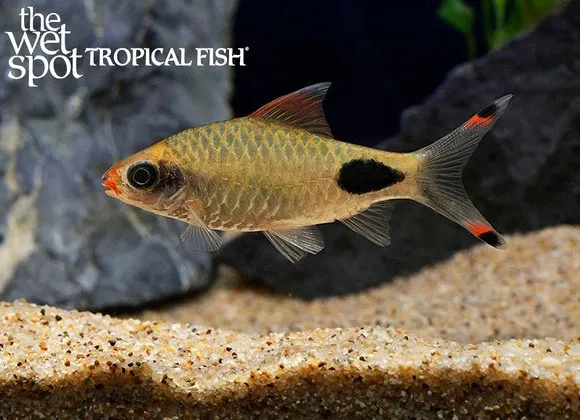
The twin-striped barb, Desmopuntius gemellus, is a small member of the carp family, Cyprinidae. Fine dark pinstripes run from its nose to its tail. Kottelat described it in 1996, and it is one of the striped blackwater barbs of the johorensis group.
In the wild
The twin-striped barb comes from Sumatra, in the Jambi and Riau lowlands of Indonesia. It lives in soft, acidic, tannin-stained forest streams and swamps.
Weekly picks
Tank mates
The twin-striped barb is a peaceful, schooling species that keeps to the middle. These picks share a community profile with it, are safe together in both directions, and overlap on water type, temperature and pH.
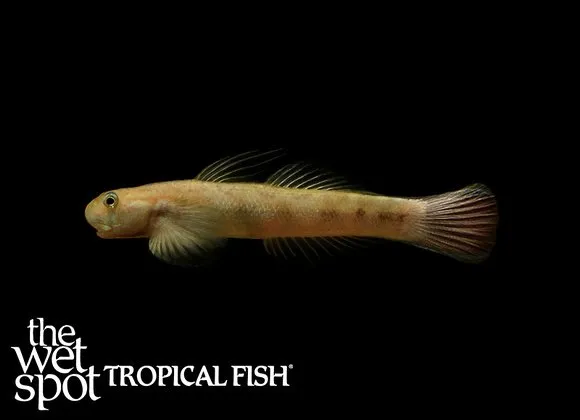
Red tail sicyopterus
Sicyopterus lagocephalus
Freshwater5.1 in (13 cm) · 29 gal (110 L)73–81°F (23–27°C)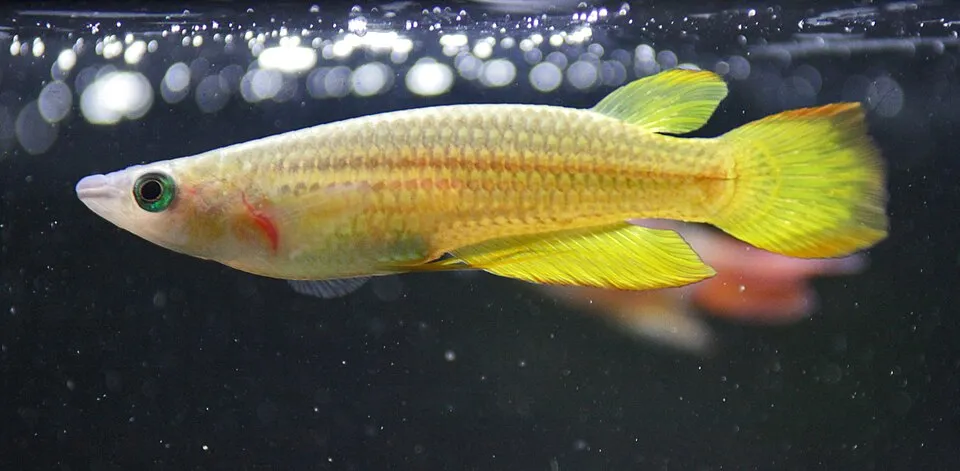
Striped panchax
Aplocheilus lineatus
Freshwater4.3 in (11 cm) · 30 gal (115 L)72–77°F (22–25°C)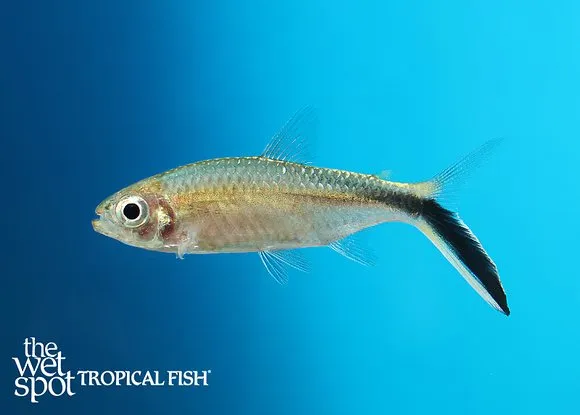
True penguin tetra
Thayeria obliqua
Freshwater3 in (7.6 cm) · 29 gal (110 L)73–82°F (23–28°C)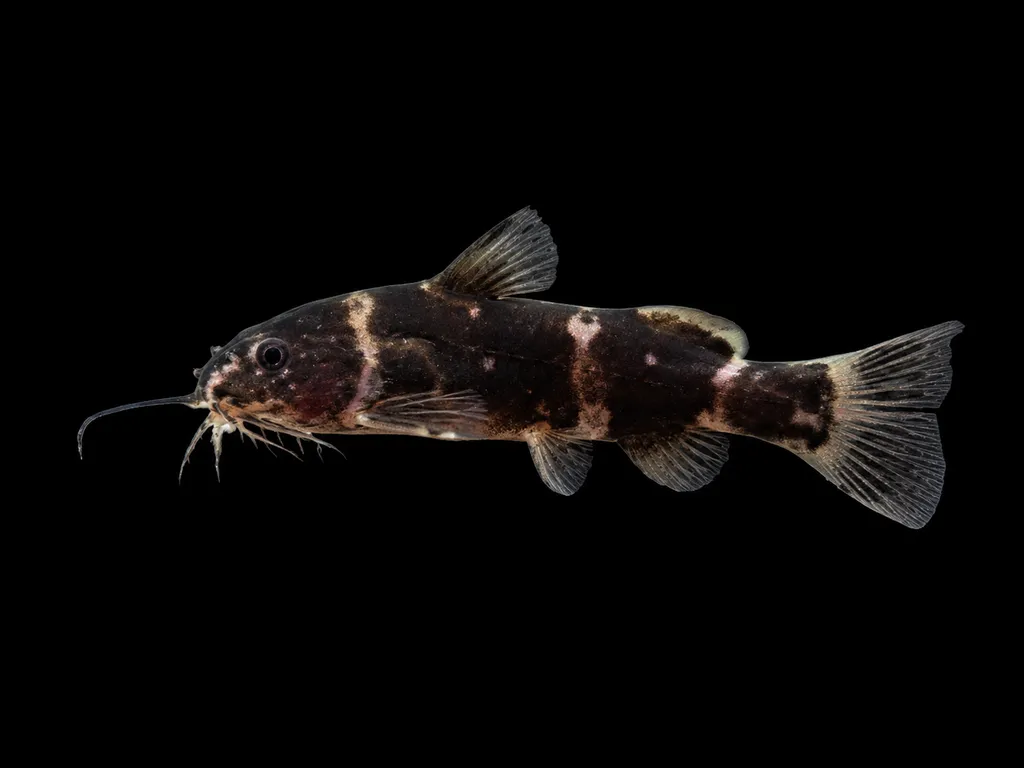
Dwarf synodontis
Microsynodontis batesii
Freshwater3.3 in (8.5 cm) · 29 gal (110 L)73–81°F (23–27°C)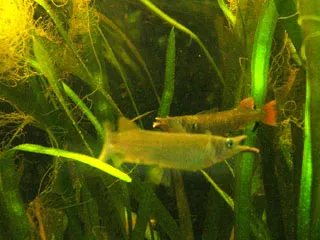
Redfin halfbeak
Nomorhamphus ebrardtii
Freshwater3.5 in (9 cm) · 29 gal (110 L)75–81°F (24–27°C)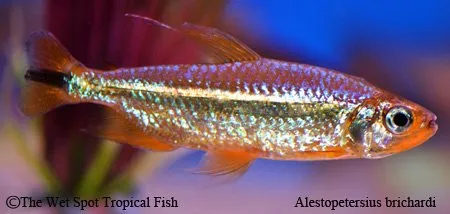
Brichard's Congo tetra
Alestopetersius brichardi
Freshwater3.5 in (9 cm) · 29 gal (110 L)73–81°F (23–27°C)
Common questions
What size tank does a twin-striped barb need?
A twin-striped barb needs at least 29 gal (110 L). It spends most of its time in the middle.
What temperature and pH does a twin-striped barb need?
A twin-striped barb is comfortable at 73–82°F (23–28°C) with a pH of 5.0–6.8.
What does a twin-striped barb eat?
A twin-striped barb takes small foods readily. Offer fine flake, micro pellets, and frozen or live cyclops, daphnia and grindal worm.
How big does a twin-striped barb get?
An adult twin-striped barb reaches about 3.5 in (9 cm).
Does a twin-striped barb need a group?
Yes. A twin-striped barb is a schooling species and should be kept in a group, not singly.
Related species
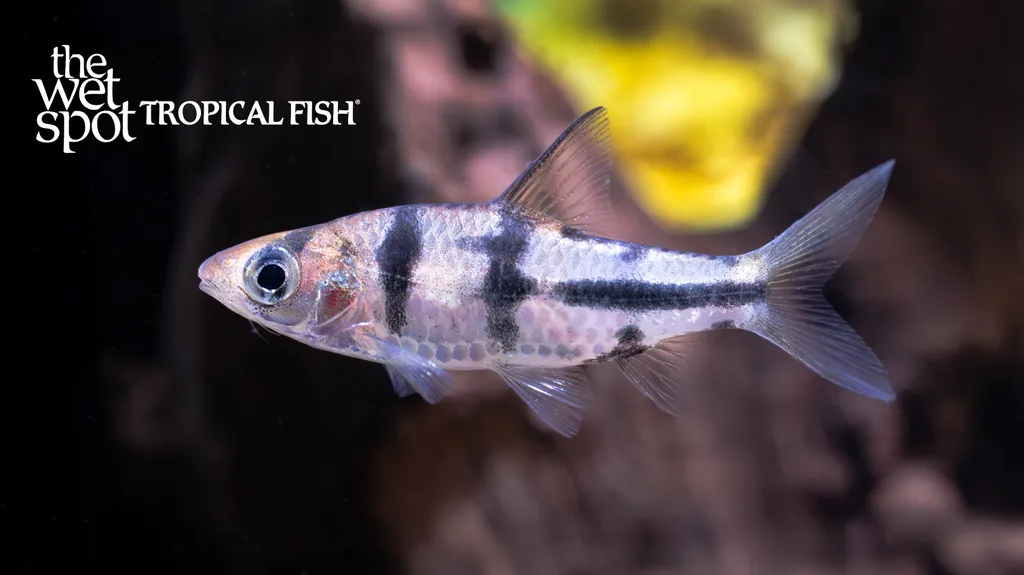
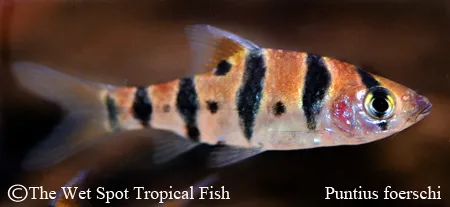 3.1 in (8 cm)29 gal (110 L)73–82°F (23–28°C)
Foersch's barb
Desmopuntius foerschi
3.1 in (8 cm) · 29 gal (110 L)
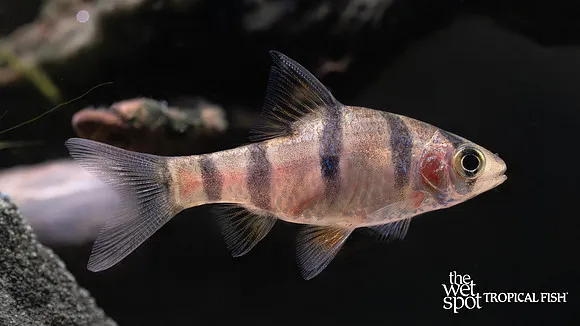
 4.7 in (12 cm)40 gal (150 L)73–79°F (23–26°C)
Striped barb
Desmopuntius johorensis
4.7 in (12 cm) · 40 gal (150 L)
 2.4 in (6 cm)24 gal (90 L)73–82°F (23–28°C)
Six-banded barb
Desmopuntius hexazona
2.4 in (6 cm) · 24 gal (90 L)
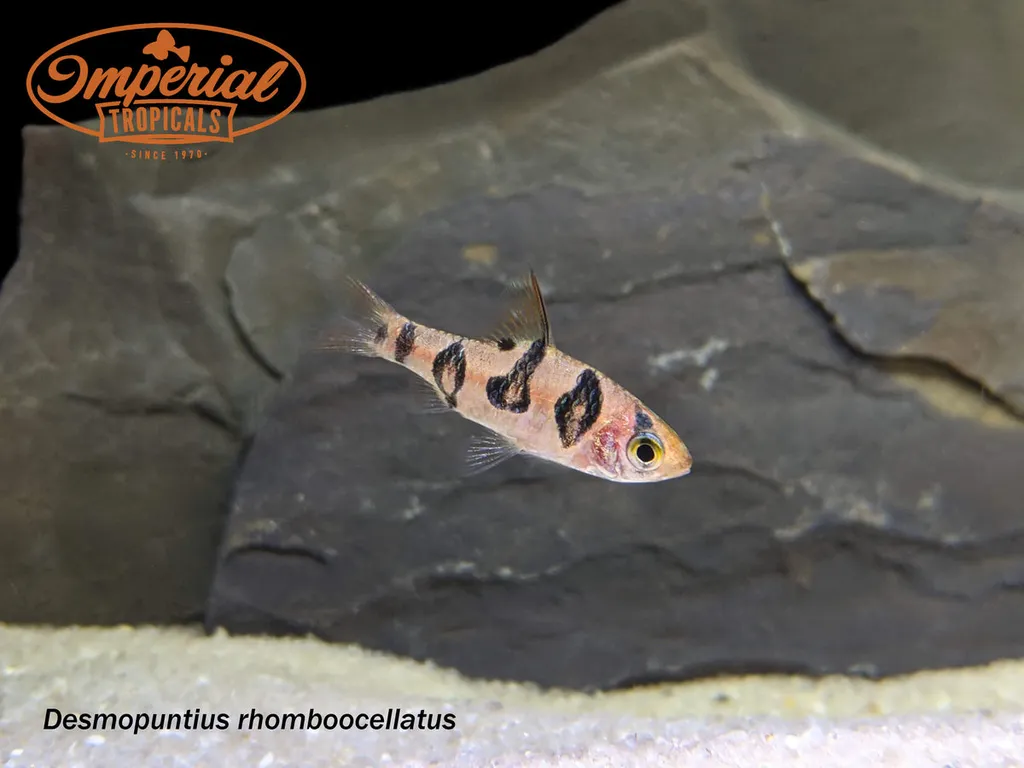 2.2 in (5.5 cm)20 gal (75 L)72–82°F (22–28°C)
Snakeskin barb
Desmopuntius rhomboocellatus
2.2 in (5.5 cm) · 20 gal (75 L)
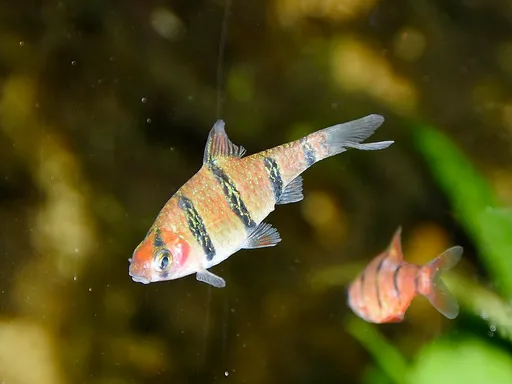 2 in (5 cm)20 gal (75 L)73–81°F (23–27°C)
Five-banded barb
Desmopuntius pentazona
2 in (5 cm) · 20 gal (75 L)
 3.5 in (9 cm)42 gal (160 L)70–79°F (21–26°C)
Apsara barb
Dawkinsia apsara
3.5 in (9 cm) · 42 gal (160 L)