Five-banded barb
Desmopuntius pentazona
Also known as Pentazona barb
FreshwaterFish
Care at a glance
- Temperature
- 73–81°F
- 23–27°C
- pH
- 5.5–7.0
- Adult size
- 2 in
- 5 cm
- Minimum tank
- 20 gal
- 75 L
- Temperament
- Peaceful
- Social behavior
- Schooling
- Swim level
- Middle
- Difficulty
- Easy
- Breeding
- Egg scatterer · Medium
- Rarity
- Common
- Family
- Cyprinidae
- Origin
- Borneo (Baram River drainage, Sarawak)
Overview
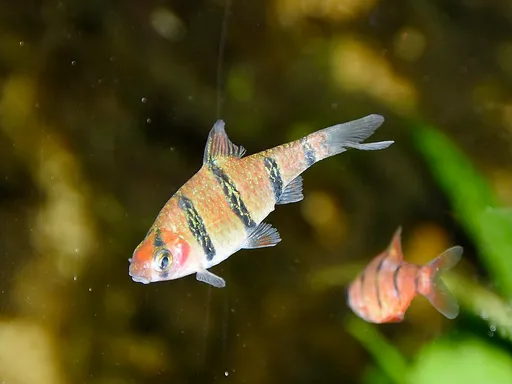
The five-banded barb is a small, peaceful schooling barb with the tiger barb look but without the fin nipping. It is easy to keep in a soft, acidic blackwater tank.
Did you know
The five-banded barb's dark vertical bars are camouflage for life among leaf litter and roots. Broken light and shadow there help the fish disappear against the bottom. In the soft, tannin-stained water where it evolved, the bands and warm body color read far stronger than under bright tank lighting.
Caring for the five-banded barb
Keep five-banded barbs in a group of 8 to 10, in a tank of 20 gal (75 L) or larger. They swim in the middle of the tank, school peacefully and settle better in numbers.
Give them a dark substrate, a layer of dried leaves, some driftwood and gentle flow. Dim light and the dark bottom show them off best. Add botanicals or peat to keep the water stained with tannins.
Keep the water warm and soft, at 73 to 81°F (23 to 27°C), with a pH of 5.5 to 7.0. Feed small flakes, micro pellets and frozen or live foods such as daphnia and bloodworms. Pair them with other small, calm fish that suit the same soft, acidic, dimly lit setup.
Five-banded barbs are egg scatterers that give no parental care. Breeding them is moderately tricky, since they need a separate dim, soft-water tank to spawn.
Good to know
The five-banded barb is a small cyprinid in the family Cyprinidae. Most kept fish are wild caught or trade stock rather than mass bred. A healthy adult lives several years.
In the wild
Five-banded barbs come from blackwater peat swamps and slow forest streams in the Baram River drainage of Sarawak, on Borneo. The water there is soft, acidic and stained brown with tannins, and it runs shaded over leaf litter and dark, decaying substrate.
Weekly picks
Tank mates
The five-banded barb is a peaceful, schooling species that keeps to the middle. These picks share a community profile with it, are safe together in both directions, and overlap on water type, temperature and pH.
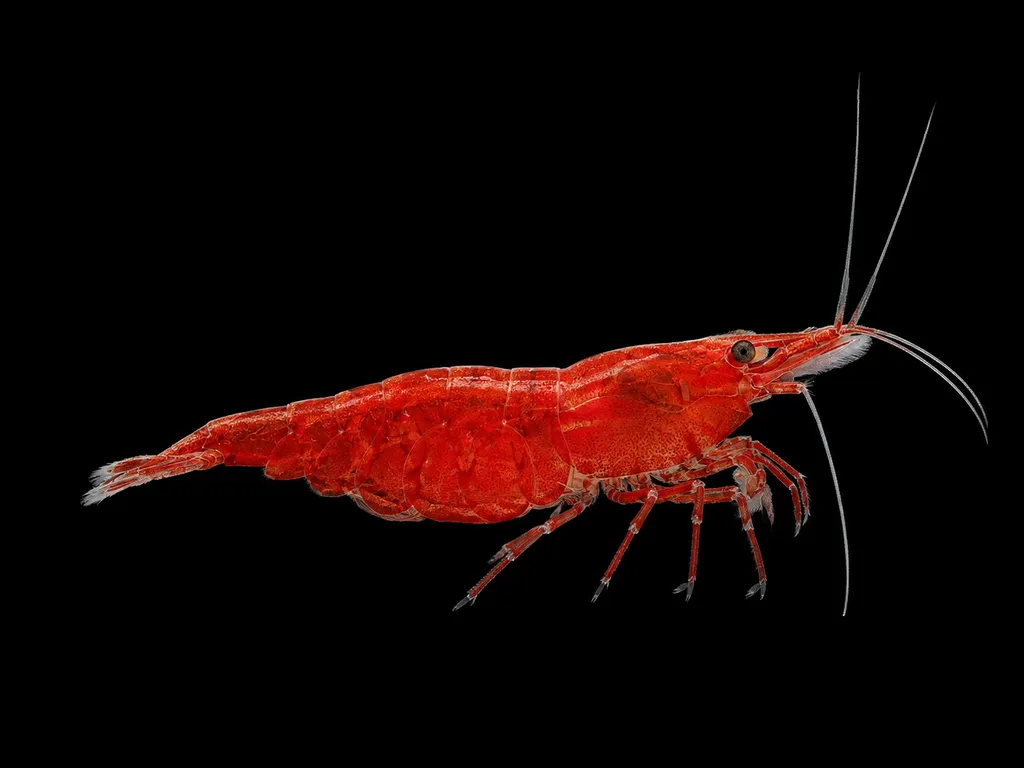
Neocaridina shrimp
Neocaridina davidi
Freshwater1.6 in (4 cm) · 5 gal (19 L)59–84°F (15–29°C)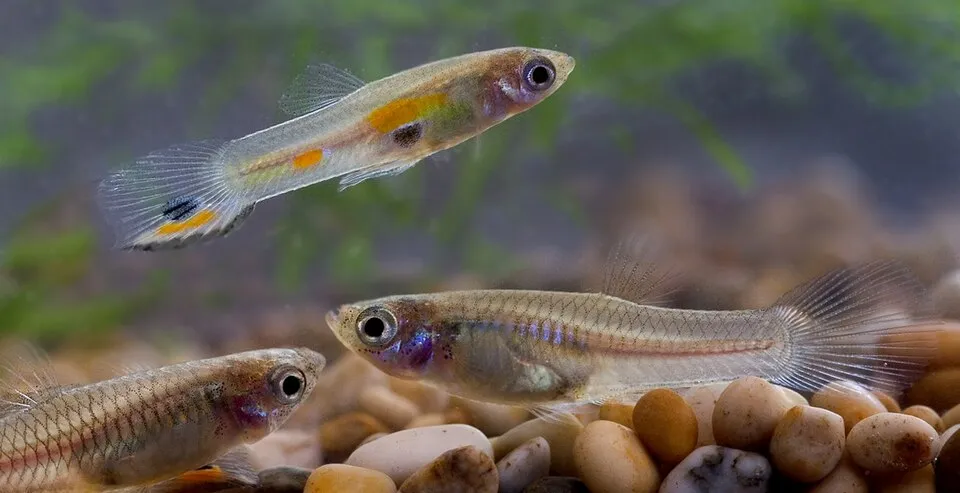
Guppy
Poecilia reticulata
FreshwaterBrackish2.4 in (6 cm) · 10 gal (38 L)64–82°F (18–28°C)
Neon tetra
Paracheirodon innesi
Freshwater1.5 in (3.8 cm) · 11 gal (40 L)70–77°F (21–25°C)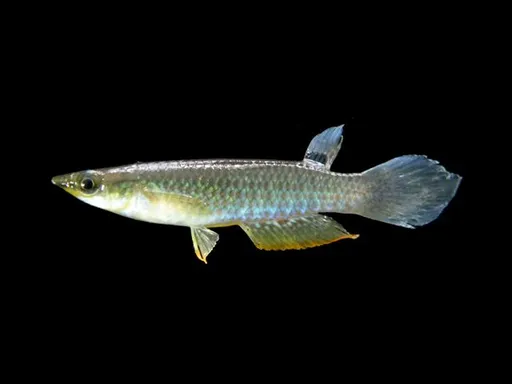
Blue panchax
Aplocheilus panchax
Freshwater3.5 in (9 cm) · 20 gal (75 L)72–82°F (22–28°C)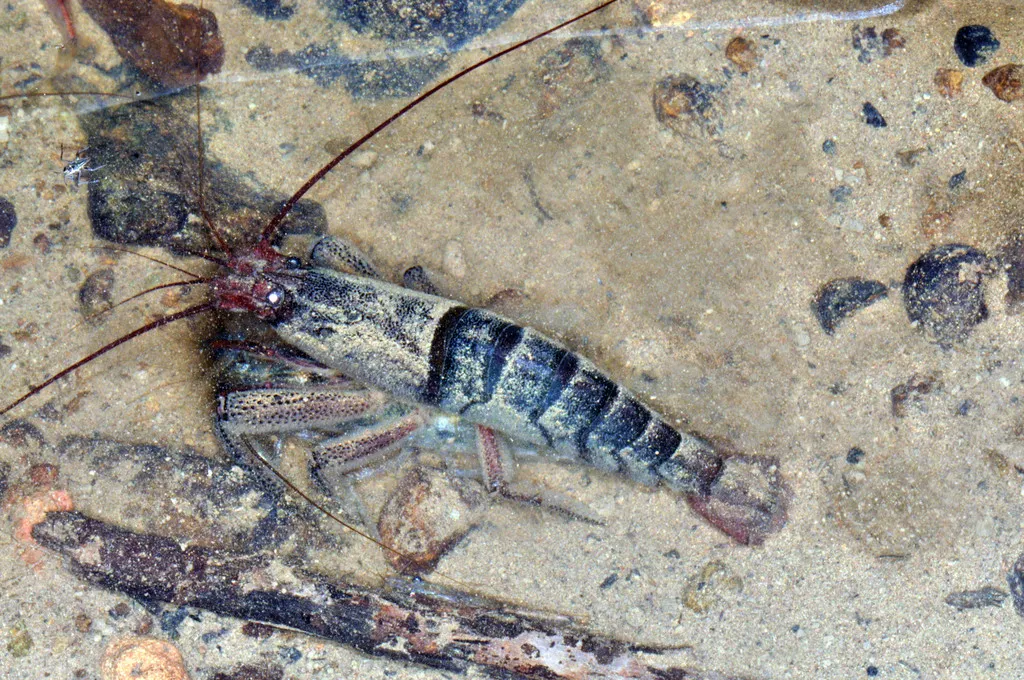
Marble wood shrimp
Atya scabra
Freshwater3.9 in (10 cm) · 20 gal (75 L)73–82°F (23–28°C)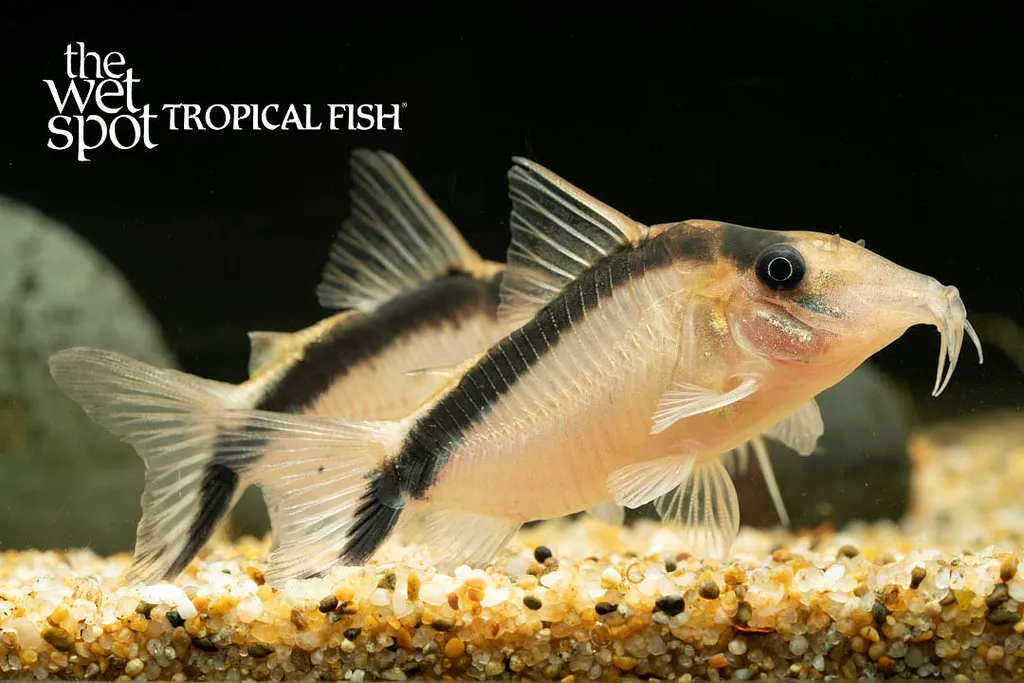
Bethan's cory
Brochis bethanae
Freshwater2.6 in (6.5 cm) · 20 gal (75 L)73–81°F (23–27°C)
Common questions
What size tank does a five-banded barb need?
A five-banded barb needs at least 20 gal (75 L). It spends most of its time in the middle.
What temperature and pH does a five-banded barb need?
A five-banded barb is comfortable at 73–81°F (23–27°C) with a pH of 5.5–7.0.
What does a five-banded barb eat?
A five-banded barb eats small flakes and micro pellets, along with frozen or live foods such as daphnia and bloodworms.
How big does a five-banded barb get?
An adult five-banded barb reaches about 2 in (5 cm).
Does a five-banded barb need a group?
Yes. A five-banded barb is a schooling species and should be kept in a group, not singly.
How does a five-banded barb breed?
Five-banded barbs are egg scatterers and give no parental care. Breeding them is moderately tricky, since they need a separate dim, soft-water tank.
Related species
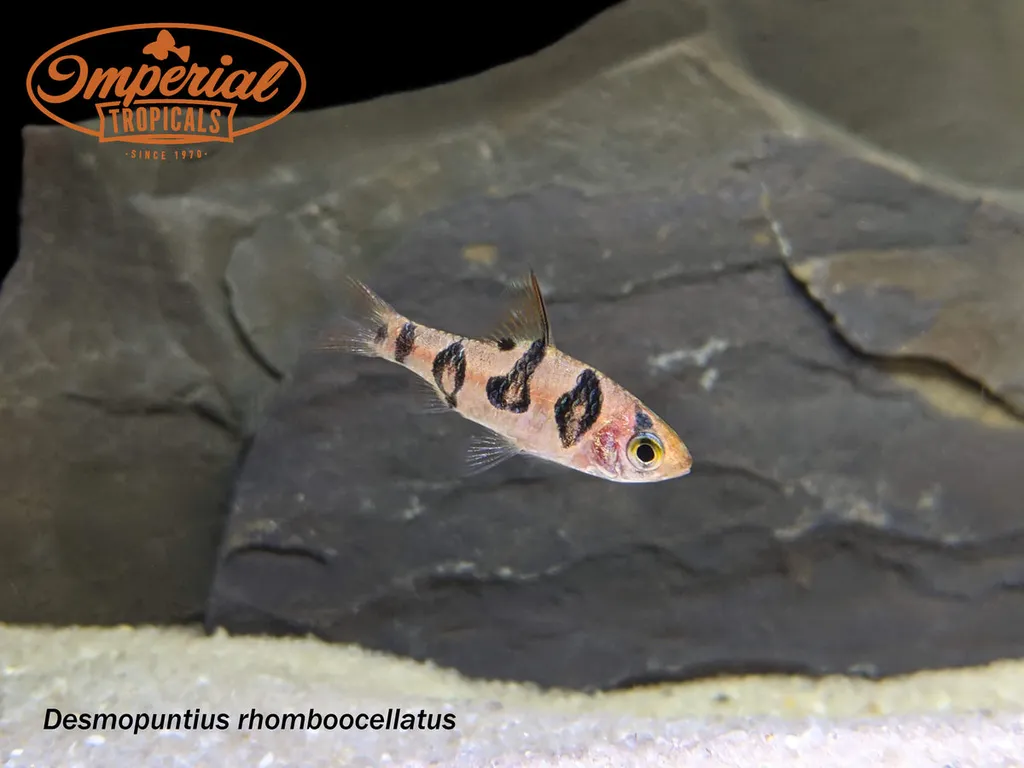 2.2 in (5.5 cm)20 gal (75 L)72–82°F (22–28°C)
Snakeskin barb
Desmopuntius rhomboocellatus
2.2 in (5.5 cm) · 20 gal (75 L)
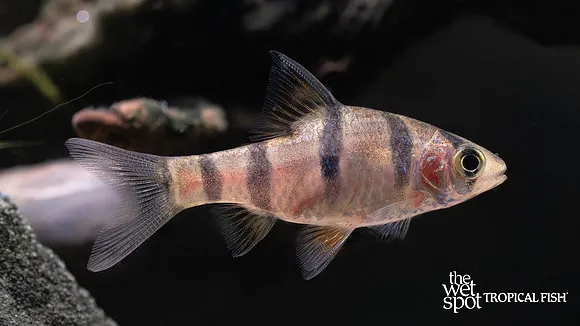 2.4 in (6 cm)24 gal (90 L)73–82°F (23–28°C)
Six-banded barb
Desmopuntius hexazona
2.4 in (6 cm) · 24 gal (90 L)
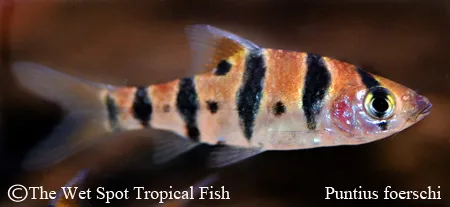 3.1 in (8 cm)29 gal (110 L)73–82°F (23–28°C)
Foersch's barb
Desmopuntius foerschi
3.1 in (8 cm) · 29 gal (110 L)
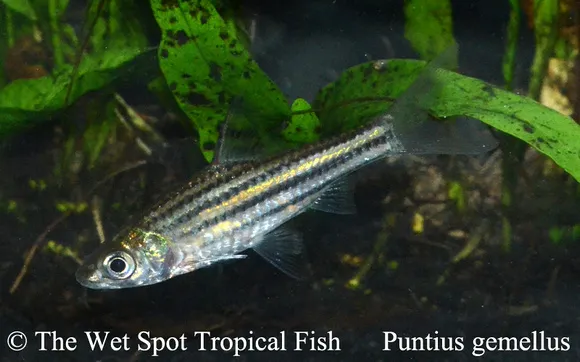 3.5 in (9 cm)29 gal (110 L)73–82°F (23–28°C)
Twin-striped barb
Desmopuntius gemellus
3.5 in (9 cm) · 29 gal (110 L)
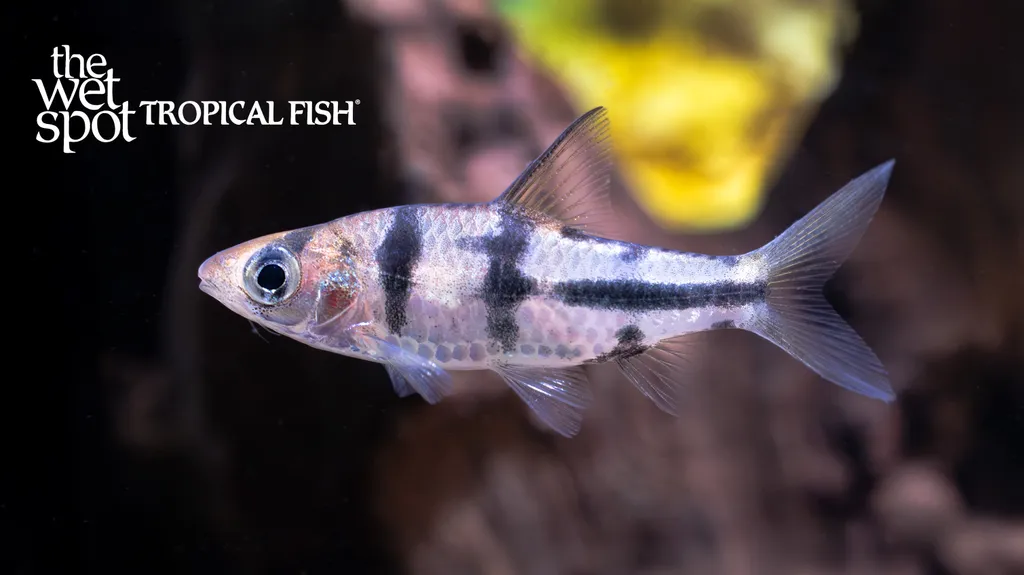 4.7 in (12 cm)40 gal (150 L)73–79°F (23–26°C)
Striped barb
Desmopuntius johorensis
4.7 in (12 cm) · 40 gal (150 L)
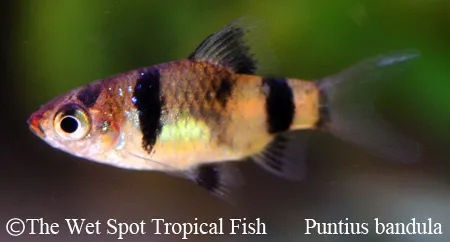 2 in (5 cm)20 gal (75 L)73–81°F (23–27°C)
Bandula barb
Pethia bandula
2 in (5 cm) · 20 gal (75 L)