One species · 2 varieties
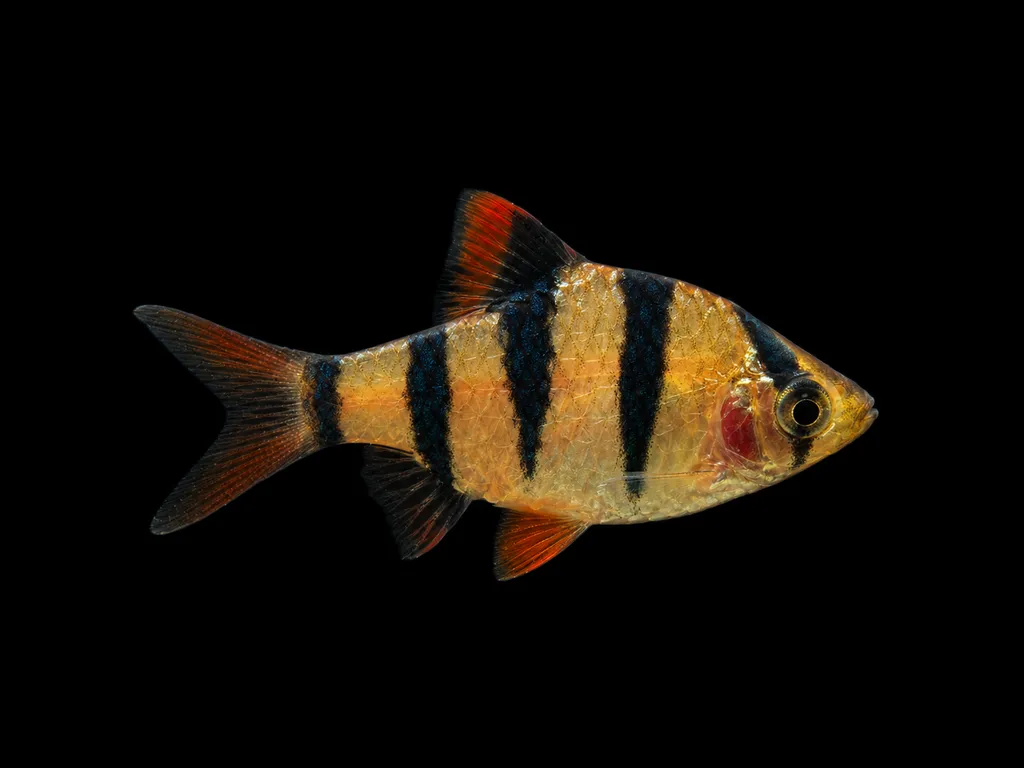
Tiger barb
Puntigrus tetrazona
Also known as Sumatra barb
FreshwaterFish
Care at a glance
- Temperature
- 68–79°F
- 20–26°C
- pH
- 6.0–8.0
- Adult size
- 2.8 in
- 7 cm
- Minimum tank
- 20 gal
- 75 L
- Temperament
- Aggressive
- Social behavior
- Schooling
- Tankmates
- With caution
- Swim level
- Middle
- Difficulty
- Beginner
- Breeding
- Hard
- Rarity
- Very common
- Family
- Cyprinidae
- Origin
- Sumatra
Pick a variety
One setup covers every line on this page: care is the species' care.
Overview
This fish is nippy, so the key is numbers: keep at least six, and more is better, in a tank around 75 liters so it focuses its energy on its own group. It is an active mid-water swimmer. Water can run soft to fairly hard, pH 6 to 8, at 20 to 26 C. It is an easy eater, taking flake, micro-pellets, and frozen foods like bloodworms and brine shrimp. Avoid long-finned or slow tankmates like bettas and angelfish; it will shred trailing fins.
In the wild
The tiger barb comes from Sumatra and nearby parts of Southeast Asia, living in clear, moderately moving streams with lots of plants, wood, and leaf litter. The water is usually soft and slightly acidic to neutral. A planted tank with some open swimming room and gentle current suits it well. It does fine across a fairly wide range, from around 20 up to the mid 20s C.
Good to know
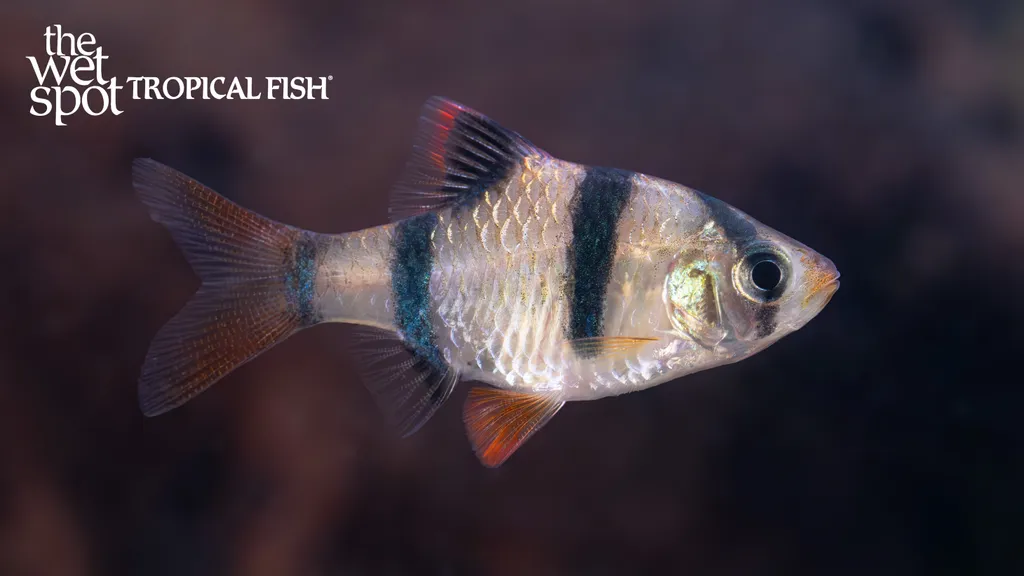
This is a cyprinid, family Cyprinidae, reaching about 7 cm, with the bold black bars on a gold-orange body that give it its name. It is an egg-scattering species with no parental care; the parents will eat the eggs if left in the tank, and the eggs hatch in roughly a day or two. It is widespread and not considered at risk in the wild.
Did you know
Most of the fin-nipping problem comes from keeping too few. In a small group they pester other fish, but in a large school they spend their time chasing and sorting out rank among themselves, which keeps them off their tankmates. Bumping the group size up is usually the fix, not removing the barb.
Other named lines
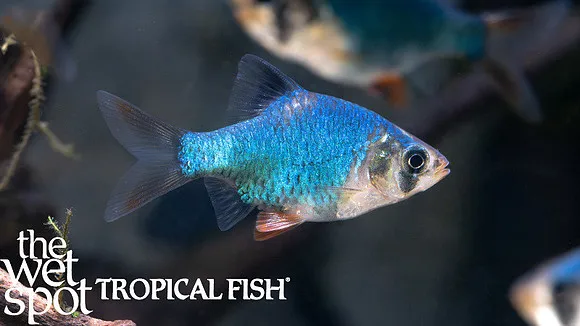
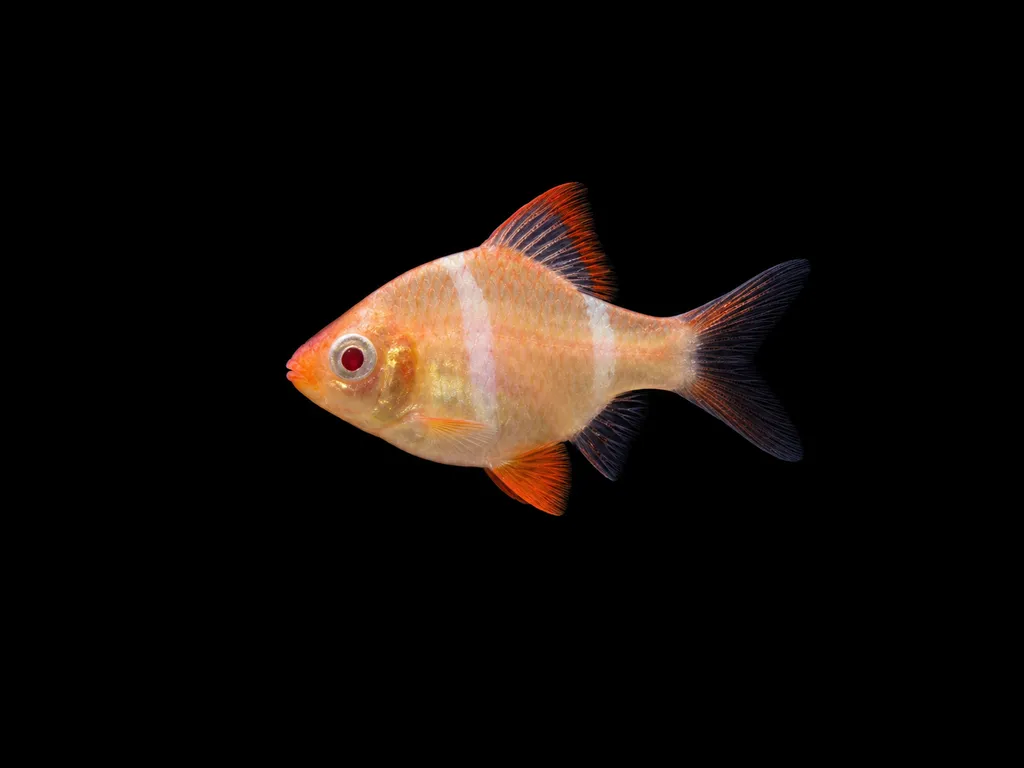
The green, albino and platinum barbs in shops are all this species.
- Platinum
- silver-white, bars nearly hidden
Common questions
What size tank does a Tiger barb need?
A Tiger barb needs at least 20 gal (75 L). It spends most of its time in the middle.
What temperature and pH does a Tiger barb need?
A Tiger barb is comfortable at 68–79°F (20–26°C) with a pH of 6.0–8.0.
How big does a Tiger barb get?
An adult Tiger barb reaches about 2.8 in (7 cm).
Does a Tiger barb need a group?
Yes. A Tiger barb is a schooling species and should be kept in a group, not singly.
Related species
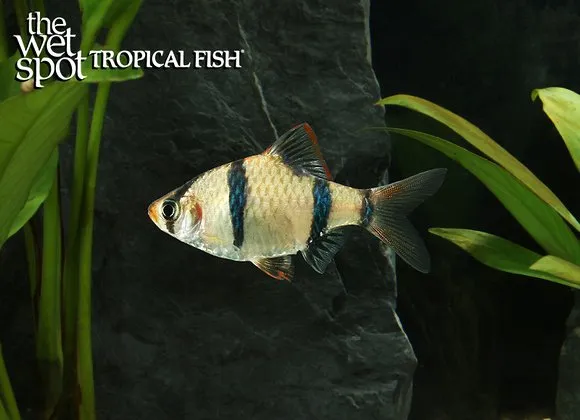 2.8 in (7 cm)29 gal (110 L)73–81°F (23–27°C)
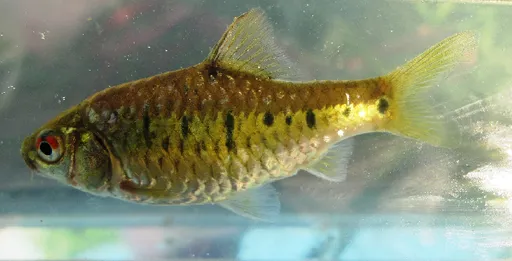
Borneo tiger barb
Puntigrus anchisporus
2.8 in (7 cm) · 29 gal (110 L)
 2.2 in (5.5 cm)29 gal (110 L)73–81°F (23–27°C)
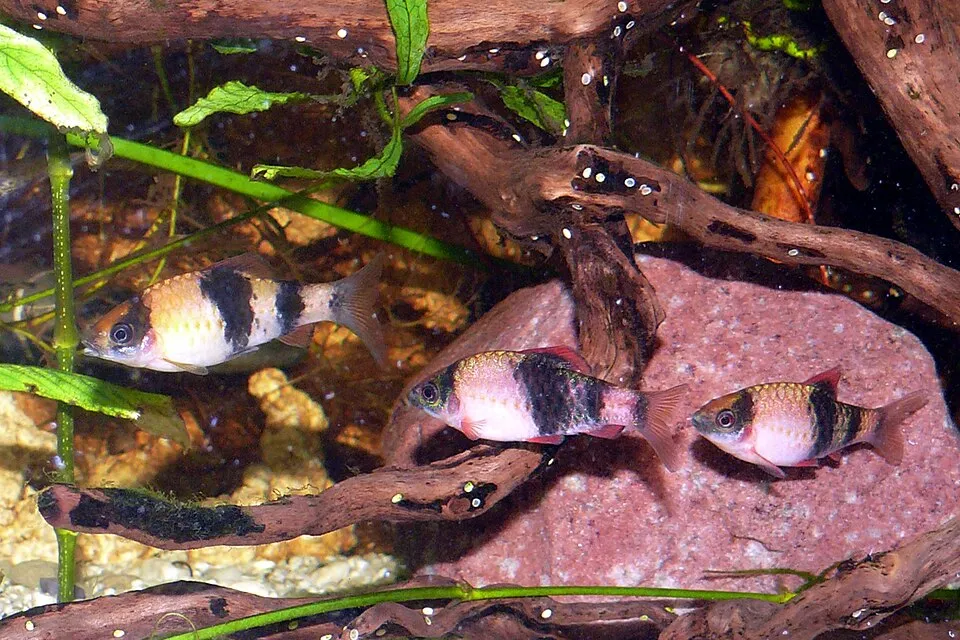
Fiveband tiger barb
Puntigrus partipentazona
2.2 in (5.5 cm) · 29 gal (110 L)
 2.8 in (7 cm)20 gal (75 L)64–75°F (18–24°C)
Gold barb
Barbodes semifasciolatus
2.8 in (7 cm) · 20 gal (75 L)
 2.8 in (7 cm)20 gal (75 L)72–81°F (22–27°C)
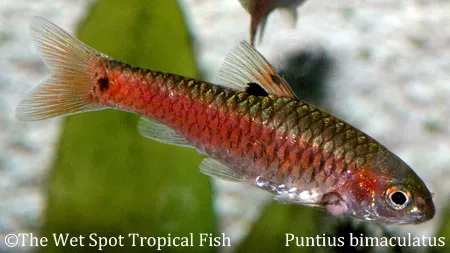
Java spotted barb
Puntius bimaculatus
2.8 in (7 cm) · 20 gal (75 L)
 2.8 in (7 cm)40 gal (150 L)72–79°F (22–26°C)
Melon barb
Haludaria fasciata
2.8 in (7 cm) · 40 gal (150 L)
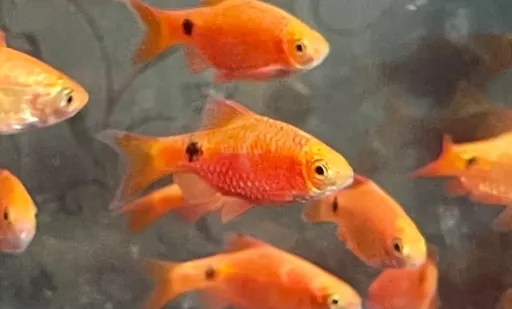 2.8 in (7 cm)24 gal (90 L)61–75°F (16–24°C)
Rosy barb
Pethia conchonius
2.8 in (7 cm) · 24 gal (90 L)