Java spotted barb
Puntius bimaculatus
Also known as Two-spot Ceylon barb
FreshwaterFish
Care at a glance
- Temperature
- 72–81°F
- 22–27°C
- pH
- 6.0–7.5
- Adult size
- 2.8 in
- 7 cm
- Minimum tank
- 20 gal
- 75 L
- Temperament
- Peaceful
- Social behavior
- Schooling
- Swim level
- Middle
- Diet
- Omnivore
- Difficulty
- Easy
- Breeding
- Egg scatterer · Medium
- Rarity
- Rare
- Family
- Cyprinidae
- Origin
- Sri Lanka and southern India
Overview
The Java spotted barb is a peaceful island barb that shoals in a planted community tank. It is easy to keep.
Did you know
The Java spotted barb climbs high into the hills of Sri Lanka, to streams well above a thousand meters near the tea country. That is an unusually broad spread of altitude for such a small fish.
Caring for the Java spotted barb
Keep Java spotted barbs in a group of six or more. A tank of 20 gal (75 L) holds a lively group, and the same setup will do for spawning them. Give them a planted tank with a soft, dark substrate, some wood and gentle flow, plus clear swimming space.
Keep the water at 72 to 81°F (22 to 27°C) and a pH of 6.0 to 7.5. Java spotted barbs are adaptable, but soft, clean water and subdued light suit them and any breeding attempt.
Java spotted barbs eat almost anything offered, from flake and micro pellets to frozen daphnia, bloodworm and brine shrimp. They graze soft algae too. They are peaceful and get along with other small, gentle fish such as cherry barbs, rasboras and peaceful catfish.
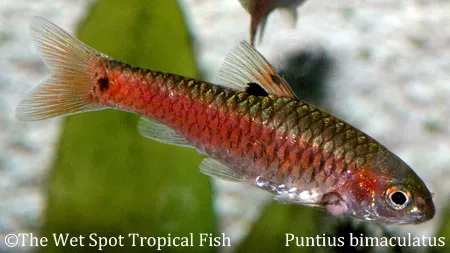
Courting males carry a bright red lengthwise stripe, and they show it best in a group. Breeding is moderately achievable. Pairs scatter a couple of hundred adhesive eggs among fine plants or spawning mops, and the adults eat the eggs if not removed. The eggs hatch in around a day and a half.
Good to know
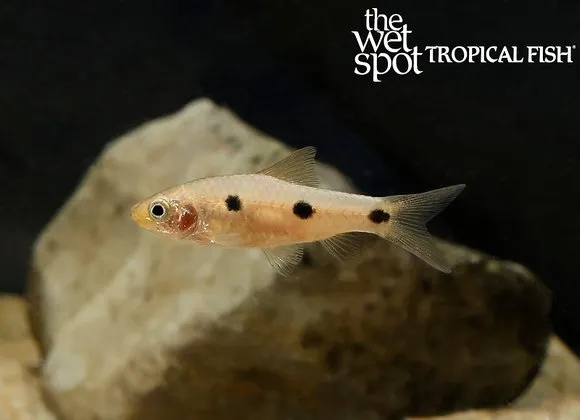
Puntius bimaculatus is a small carp-family fish in the Cyprinidae, also known as the two-spot Ceylon barb. It is silver, with a spot on the shoulder and another on the tail.
In the wild
The Java spotted barb lives in streams across Sri Lanka and southern India, from warm lowland brooks to cooler uplands.
Weekly picks
Tank mates
The Java spotted barb is a peaceful, schooling species that keeps to the middle. These picks share a community profile with it, are safe together in both directions, and overlap on water type, temperature and pH.
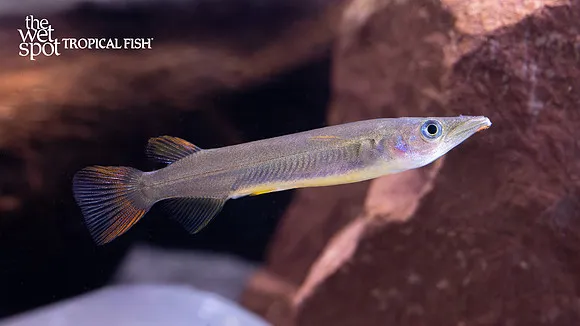
Rex halfbeak
Nomorhamphus rex
Freshwater2.2 in (5.5 cm) · 20 gal (75 L)72–79°F (22–26°C)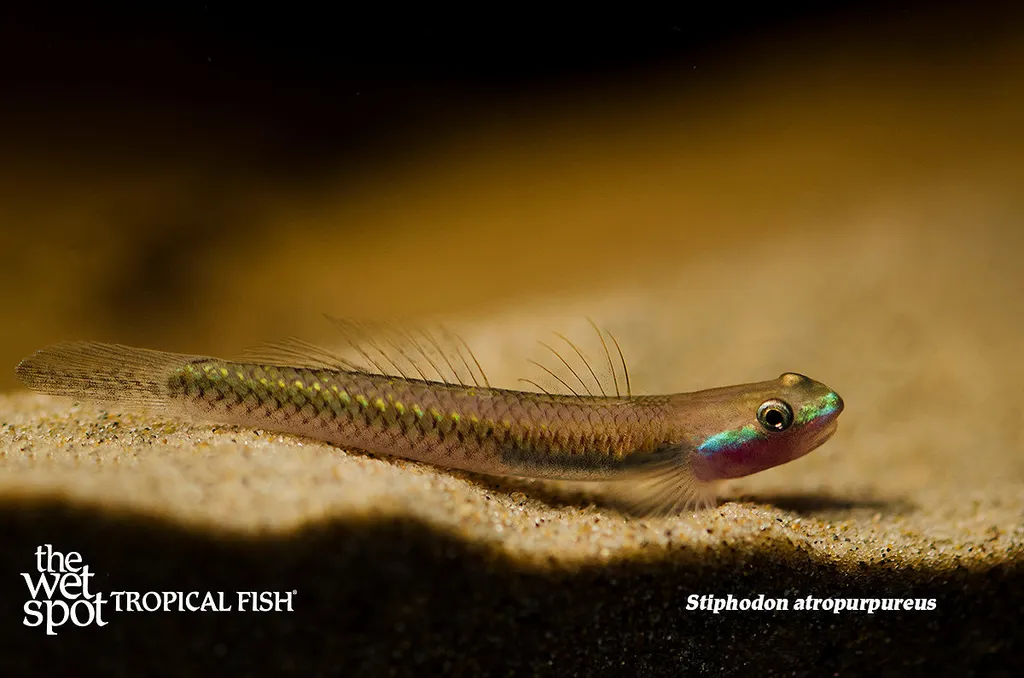
Blue neon dwarf goby
Stiphodon atropurpureus
Freshwater2 in (5 cm) · 20 gal (75 L)72–81°F (22–27°C)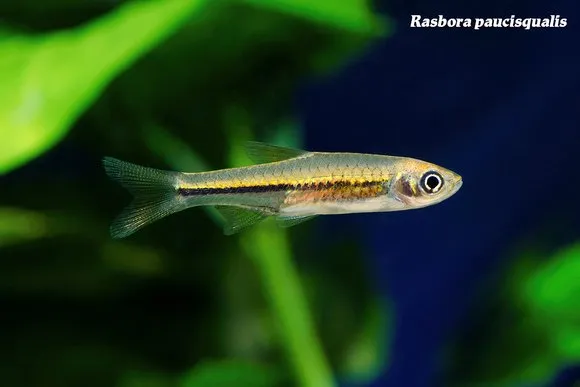
Largescale rasbora
Rasbora paucisqualis
Freshwater2 in (5 cm) · 20 gal (75 L)72–81°F (22–27°C)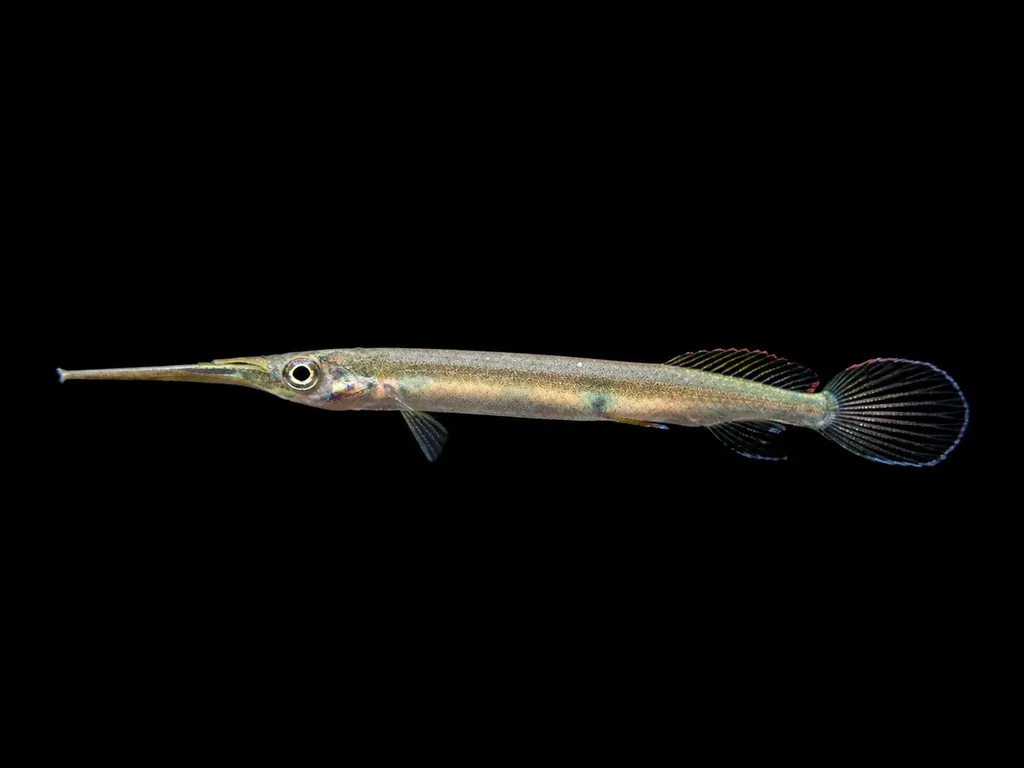
Kuekenthal's halfbeak
Hemirhamphodon kuekenthali
Freshwater3.3 in (8.5 cm) · 20 gal (75 L)73–81°F (23–27°C)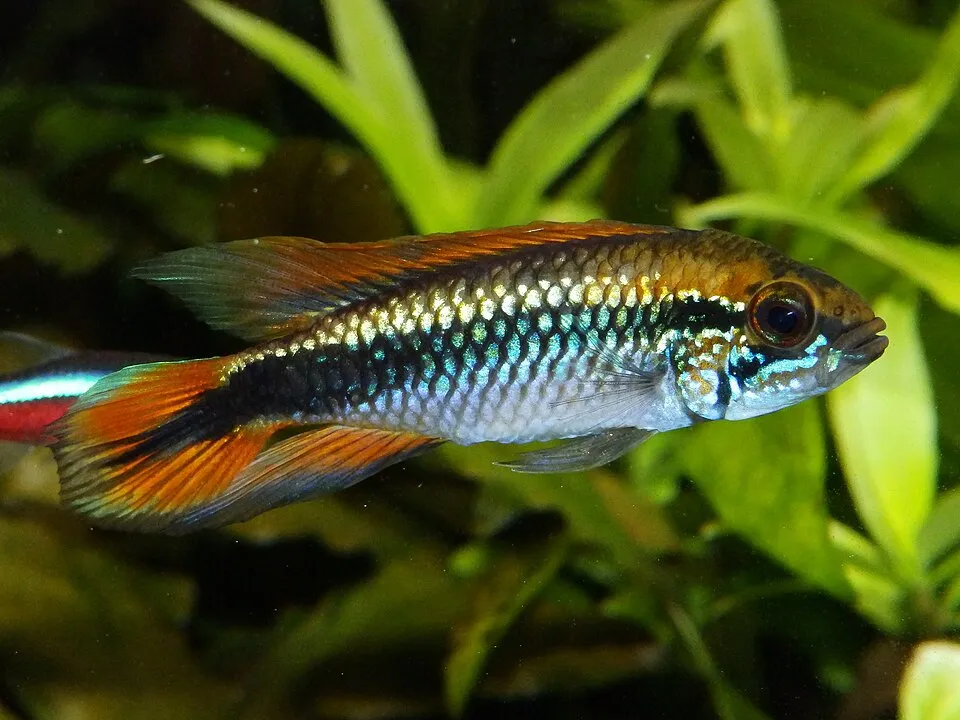
Agassiz's dwarf cichlid
Apistogramma agassizii
Freshwater3.5 in (9 cm) · 20 gal (75 L)72–84°F (22–29°C)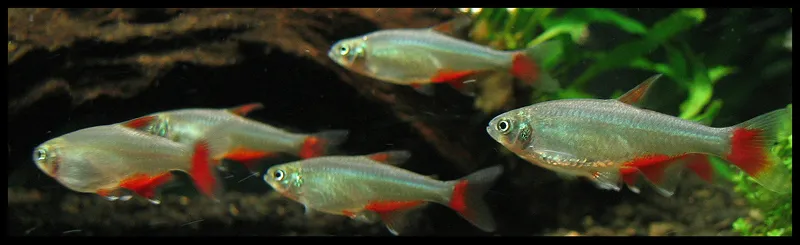
Bloodfin tetra
Aphyocharax anisitsi
Freshwater2.2 in (5.5 cm) · 20 gal (75 L)72–82°F (22–28°C)
Common questions
What size tank does a Java spotted barb need?
A Java spotted barb needs at least 20 gal (75 L). It spends most of its time in the middle.
What temperature and pH does a Java spotted barb need?
A Java spotted barb is comfortable at 72–81°F (22–27°C) with a pH of 6.0–7.5.
What does a Java spotted barb eat?
A Java spotted barb eats almost anything offered, from flake and micro pellets to frozen daphnia, bloodworm and brine shrimp. It grazes soft algae too.
How big does a Java spotted barb get?
An adult Java spotted barb reaches about 2.8 in (7 cm).
Does a Java spotted barb need a group?
Yes. A Java spotted barb is a schooling species and should be kept in a group, not singly.
How can you tell a male Java spotted barb from a female?
Males carry a bright red lengthwise stripe when courting.
How does a Java spotted barb breed?
Java spotted barbs scatter a couple of hundred adhesive eggs among fine plants or spawning mops. The adults eat the eggs if they are not removed, and the eggs hatch in around a day and a half. Breeding them is moderately achievable.
Related species
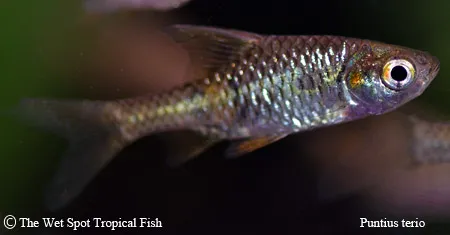 3.1 in (8 cm)20 gal (75 L)68–79°F (20–26°C)
Onespot barb
Puntius terio
3.1 in (8 cm) · 20 gal (75 L)
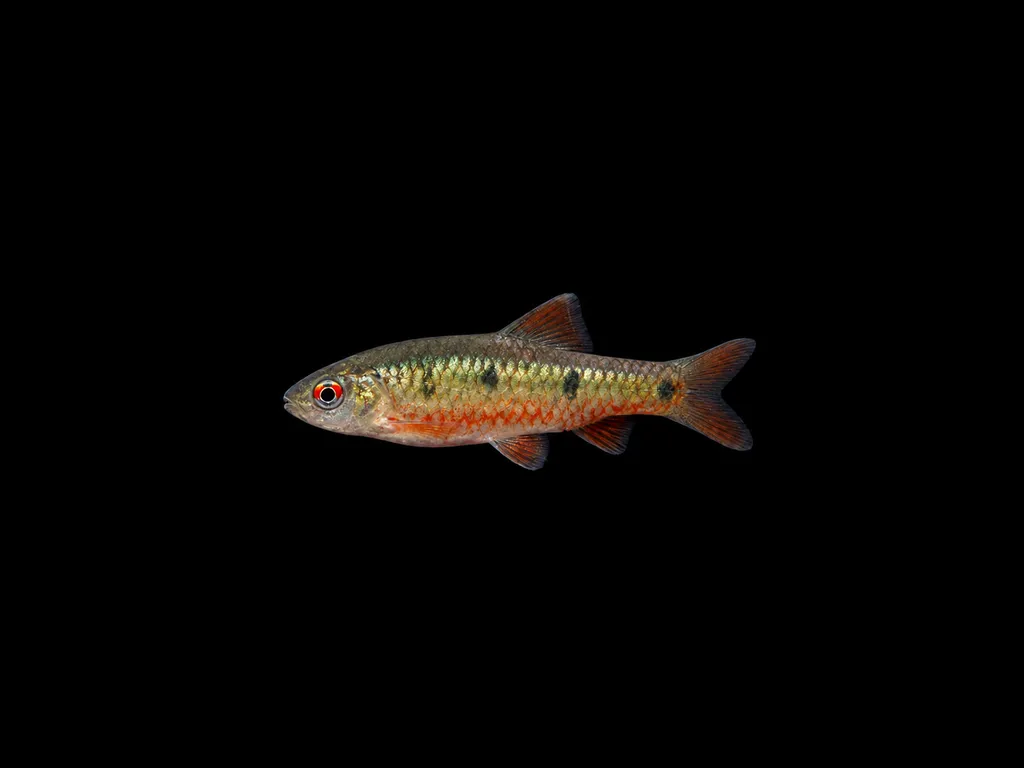 3.1 in (8 cm)24 gal (90 L)61–77°F (16–25°C)
Taiwan barb
Puntius snyderi
3.1 in (8 cm) · 24 gal (90 L)
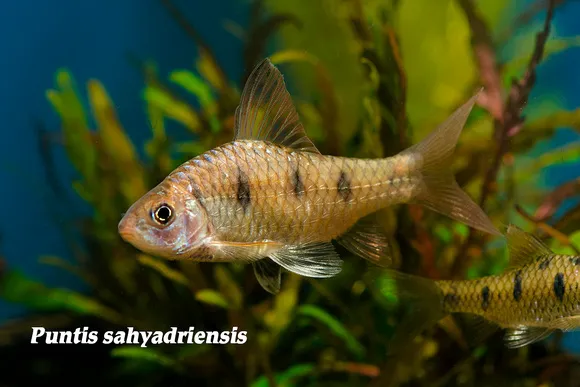 3.5 in (9 cm)29 gal (110 L)68–79°F (20–26°C)
Maharaja barb
Puntius sahyadriensis
3.5 in (9 cm) · 29 gal (110 L)
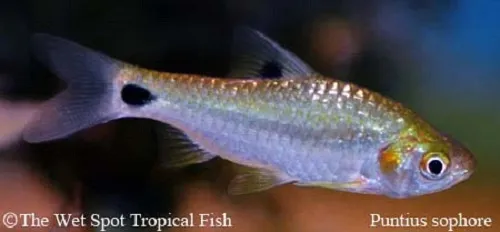 3.9 in (10 cm)29 gal (110 L)68–81°F (20–27°C)
Pool barb
Puntius sophore
3.9 in (10 cm) · 29 gal (110 L)
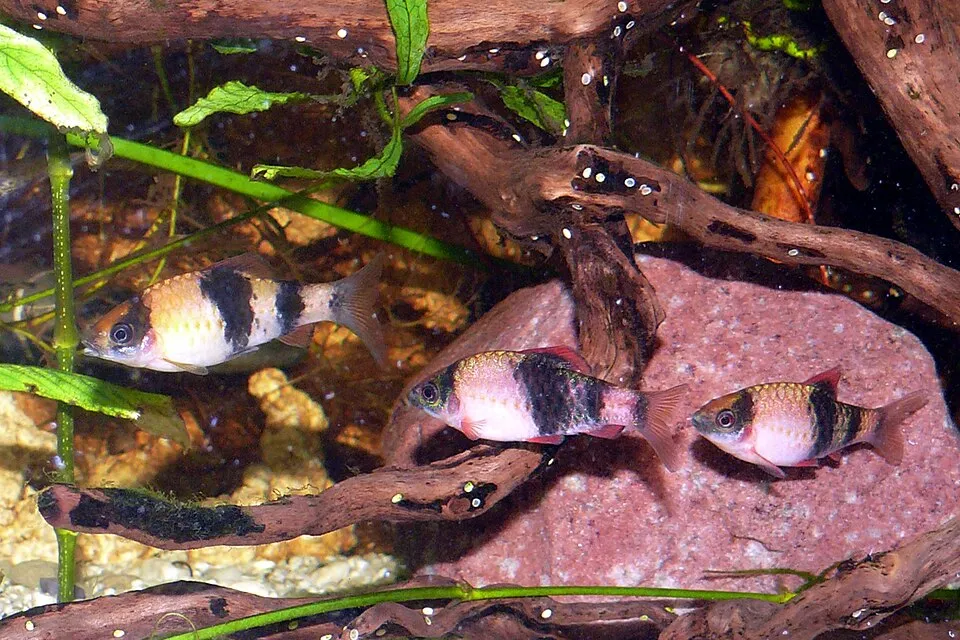 2.8 in (7 cm)40 gal (150 L)72–79°F (22–26°C)
Melon barb
Haludaria fasciata
2.8 in (7 cm) · 40 gal (150 L)
 2.8 in (7 cm)24 gal (90 L)72–81°F (22–27°C)
Threespot barb
Enteromius trispilos
2.8 in (7 cm) · 24 gal (90 L)