Maharaja barb
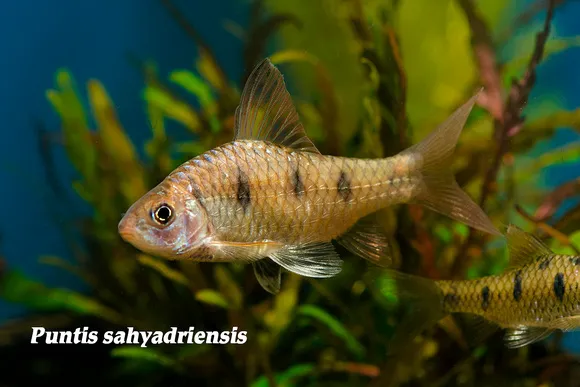
Puntius sahyadriensis
Also known as Khavli barb
FreshwaterFish
Care at a glance
- Temperature
- 68–79°F
- 20–26°C
- pH
- 6.0–7.5
- Adult size
- 3.5 in
- 9 cm
- Minimum tank
- 29 gal
- 110 L
- Temperament
- Peaceful
- Social behavior
- Schooling
- Swim level
- Middle
- Difficulty
- Easy
- Breeding
- Egg scatterer · Medium
- Rarity
- Rare
- Family
- Cyprinidae
- Origin
- Northern Western Ghats, Maharashtra, India
Overview
The maharaja barb is a hardy, peaceful schooling barb for the middle of a cooler community tank. It is a good first fish.
Did you know
Hobbyists call it the maharaja barb for its confident, almost regal bearing. The scientific name is humbler, since sahyadriensis simply means it comes from the Sahyadri hills.
Caring for the maharaja barb
Keep maharaja barbs in a group of at least six, in a tank of 29 gal (110 L) or more. Give them some current, open swimming space, a sand and gravel bed, and smooth stones and driftwood. Some planting suits them, and a well-planted layout shows off the gold body and dark bars.
They prefer cooler water than tropical lowland fish, at 68 to 79°F (20 to 26°C) and a pH of 6.0 to 7.5. They are adaptable and forgiving of a range of conditions, which makes them easy to settle in. They are undemanding about food and take flake, small pellets and frozen foods with equal appetite.
Maharaja barbs are hardy, peaceful and personable, and quick to learn feeding time. A group settles well into a cooler community with other subtropical hill-stream fish.
They are egg scatterers, and breeding them is a moderate challenge. Conditioned pairs or groups scatter eggs among fine-leaved plants, and the adults will eat the eggs if given the chance.
Good to know
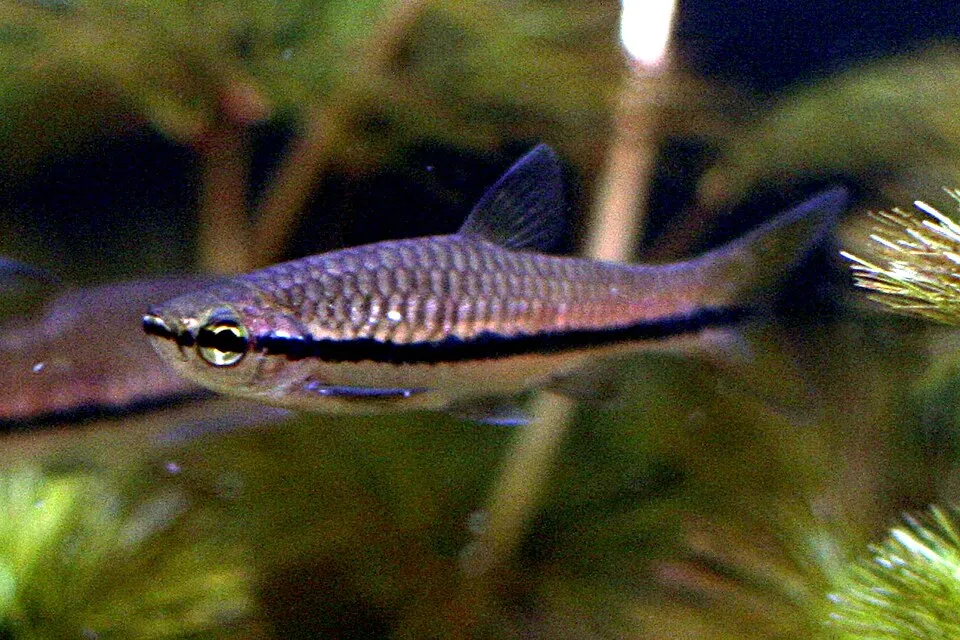
Puntius sahyadriensis is a member of the carp family, Cyprinidae. It is gold, with a row of bold, irregular dark bars along the flank.
In the wild
The maharaja barb lives in the hill streams of the northern Western Ghats in Maharashtra, the range locally called the Sahyadri.
Weekly picks
Tank mates
The maharaja barb is a peaceful, schooling species that keeps to the middle. These picks share a community profile with it, are safe together in both directions, and overlap on water type, temperature and pH.
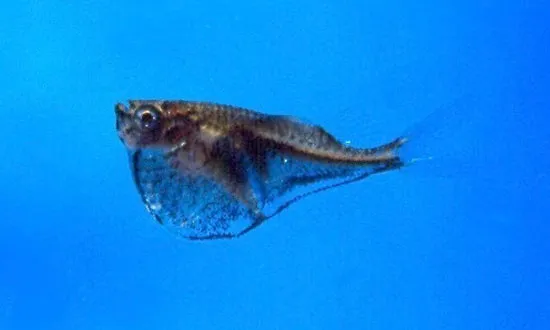
Blackwing hatchetfish
Carnegiella marthae
Freshwater1.4 in (3.5 cm) · 30 gal (115 L)68–82°F (20–28°C)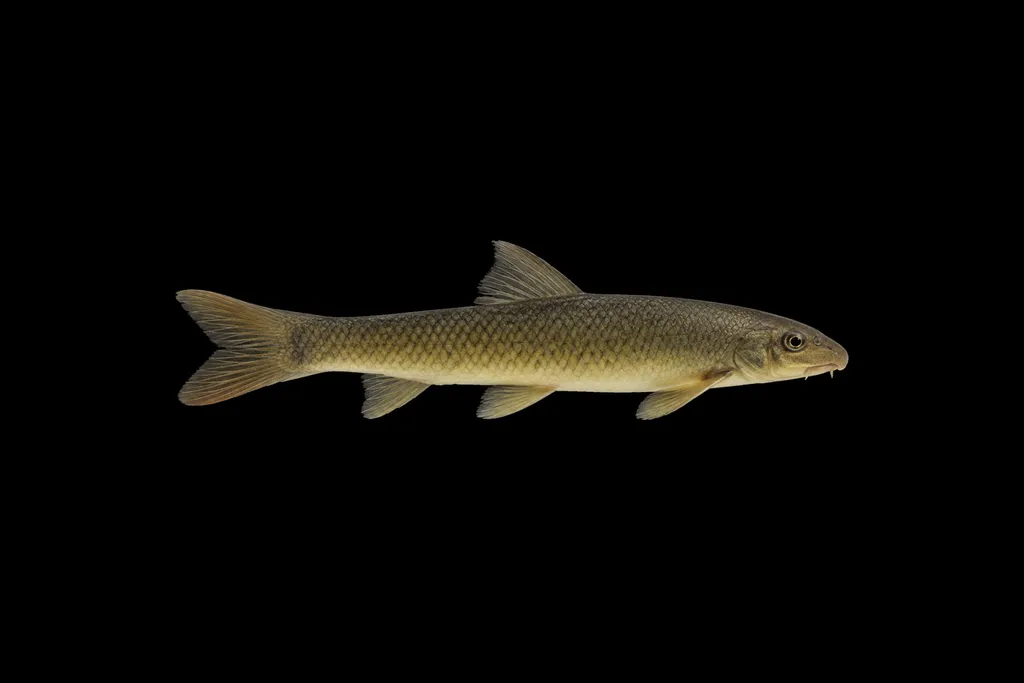
Lamta garra
Garra lamta
Freshwater4.7 in (12 cm) · 29 gal (110 L)64–77°F (18–25°C)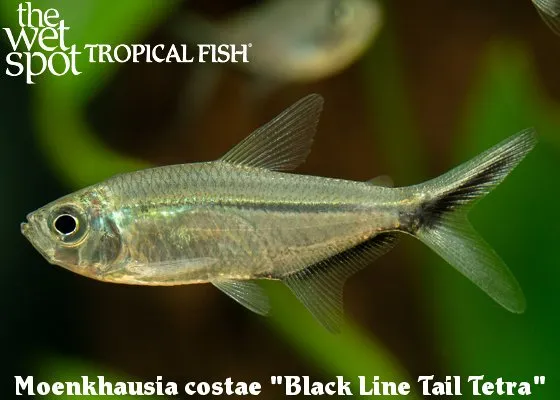
Costae tetra
Moenkhausia costae
Freshwater2.8 in (7 cm) · 29 gal (110 L)72–82°F (22–28°C)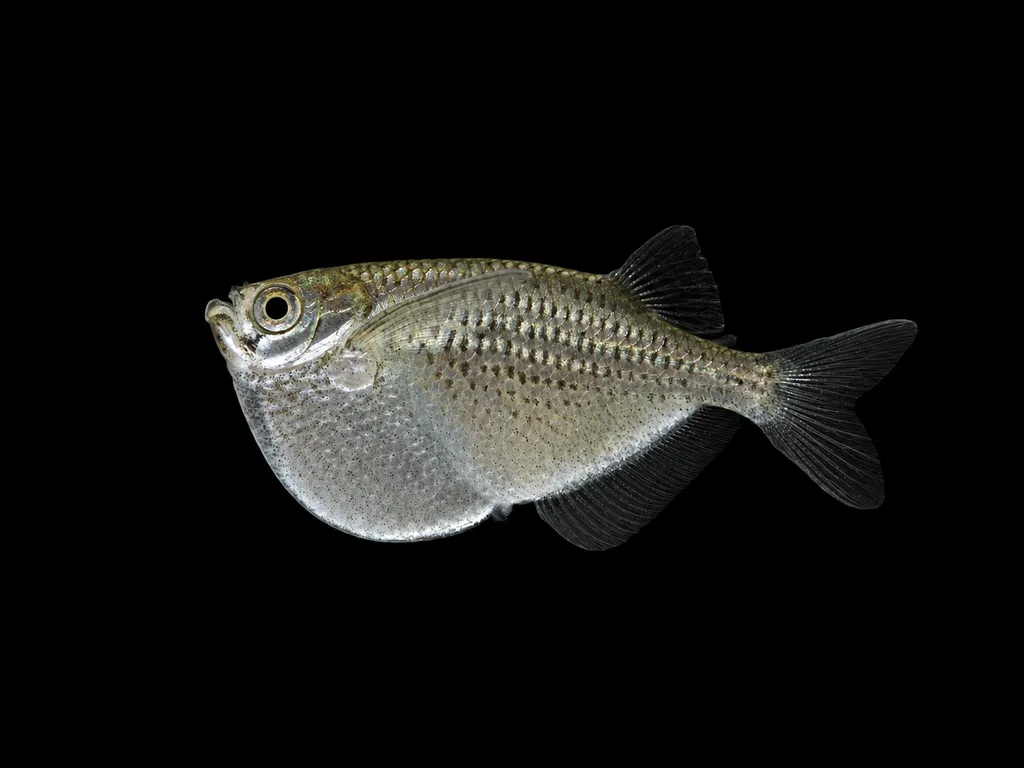
Silver hatchetfish
Gasteropelecus levis
Freshwater1.4 in (3.5 cm) · 30 gal (112 L)73–82°F (23–28°C)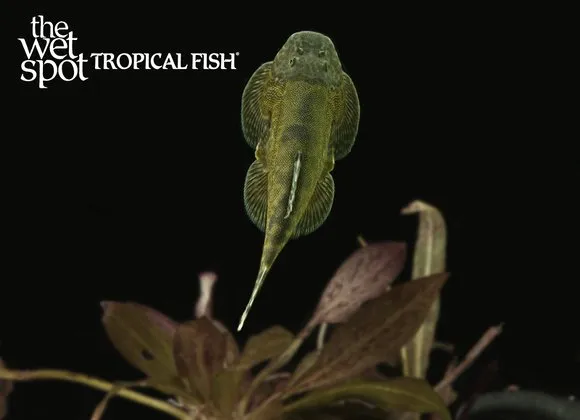
Green Borneo sucker
Gastromyzon lepidogaster
Freshwater4.7 in (12 cm) · 29 gal (110 L)68–77°F (20–25°C)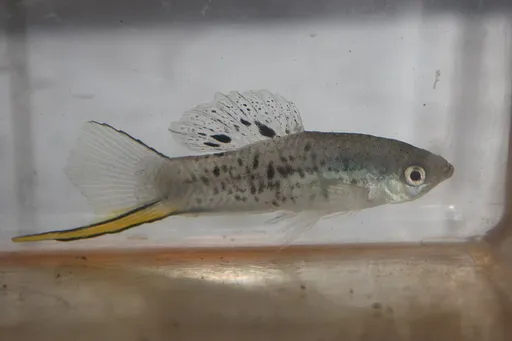
Northern mountain swordtail
Xiphophorus nezahualcoyotl
Freshwater3.5 in (9 cm) · 29 gal (110 L)68–79°F (20–26°C)
Common questions
What size tank does a maharaja barb need?
A maharaja barb needs at least 29 gal (110 L). It spends most of its time in the middle.
What temperature and pH does a maharaja barb need?
A maharaja barb is comfortable at 68–79°F (20–26°C) with a pH of 6.0–7.5.
What does a maharaja barb eat?
A maharaja barb is undemanding about food and takes flake, small pellets and frozen foods with equal appetite.
How big does a maharaja barb get?
An adult maharaja barb reaches about 3.5 in (9 cm).
Does a maharaja barb need a group?
Yes. A maharaja barb is a schooling species and should be kept in a group, not singly.
How does a maharaja barb breed?
Maharaja barbs scatter their eggs among fine-leaved plants, in conditioned pairs or groups. The adults eat the eggs if given the chance, and breeding them is a moderate challenge.
Related species
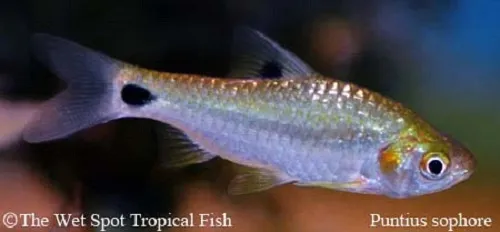 3.9 in (10 cm)29 gal (110 L)68–81°F (20–27°C)
Pool barb
Puntius sophore
3.9 in (10 cm) · 29 gal (110 L)
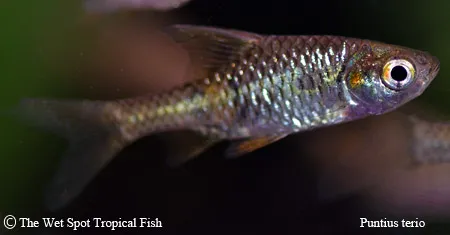 3.1 in (8 cm)20 gal (75 L)68–79°F (20–26°C)
Onespot barb
Puntius terio
3.1 in (8 cm) · 20 gal (75 L)
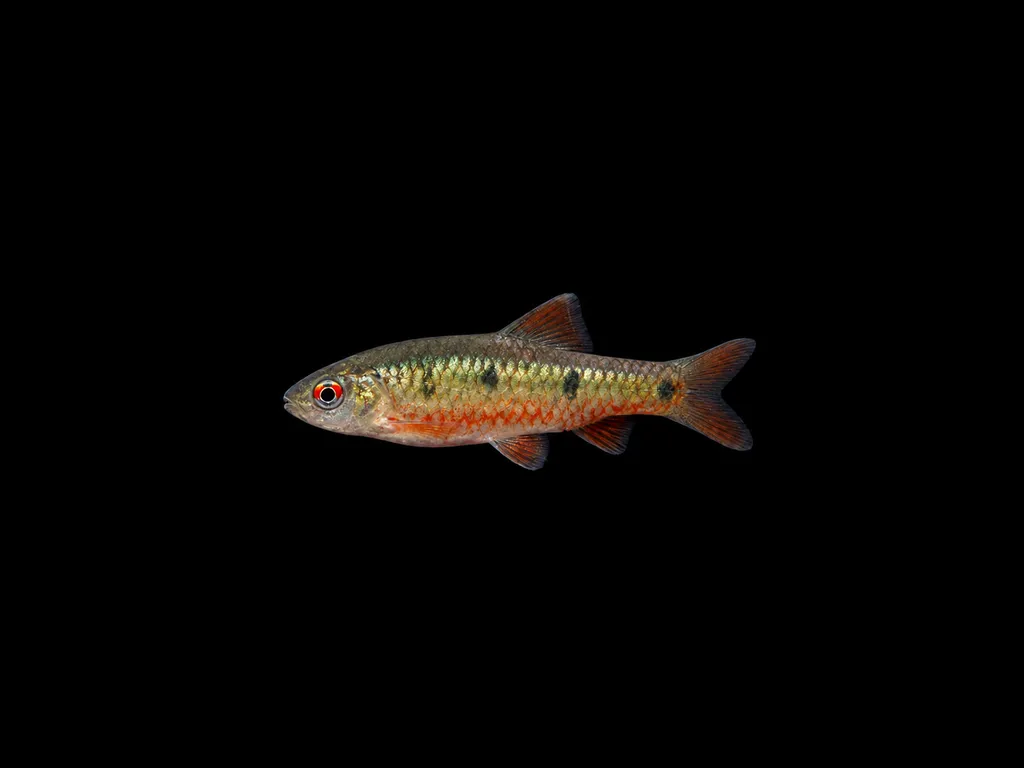 3.1 in (8 cm)24 gal (90 L)61–77°F (16–25°C)
Taiwan barb
Puntius snyderi
3.1 in (8 cm) · 24 gal (90 L)
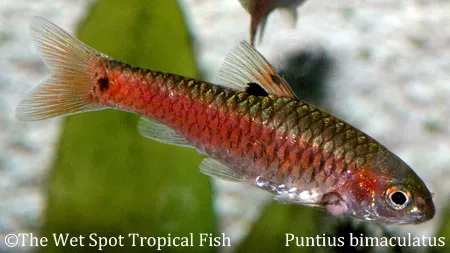 2.8 in (7 cm)20 gal (75 L)72–81°F (22–27°C)
Java spotted barb
Puntius bimaculatus
2.8 in (7 cm) · 20 gal (75 L)
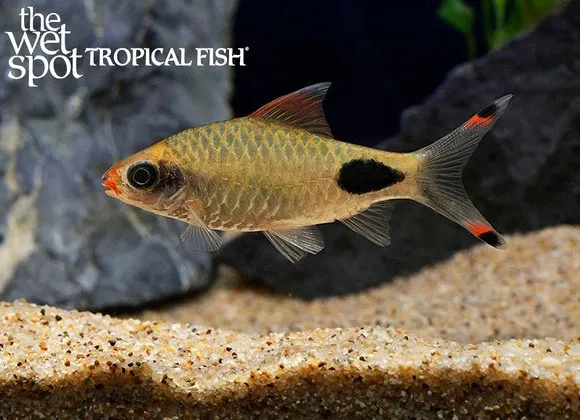 3.5 in (9 cm)42 gal (160 L)70–79°F (21–26°C)
Apsara barb
Dawkinsia apsara
3.5 in (9 cm) · 42 gal (160 L)
 3.5 in (9 cm)29 gal (110 L)72–82°F (22–28°C)
Brilliant rasbora
Rasbora einthovenii
3.5 in (9 cm) · 29 gal (110 L)