Taiwan barb
Puntius snyderi
Also known as Barbodes snyderi, Snyder's barb
FreshwaterFish
Care at a glance
- Temperature
- 61–77°F
- 16–25°C
- pH
- 6.5–7.5
- Adult size
- 3.1 in
- 8 cm
- Minimum tank
- 24 gal
- 90 L
- Temperament
- Peaceful
- Social behavior
- Schooling
- Swim level
- Middle
- Diet
- Omnivore
- Difficulty
- Easy
- Breeding
- No record
- Rarity
- Rare
- Family
- Cyprinidae
- Origin
- Taiwan lowland streams
Overview
The Taiwan barb is a hardy, peaceful coolwater shoaler for the middle of an unheated or barely heated tank. It is easy to keep.
Did you know
The Taiwan barb shares the island's farm ponds and slow ditches with the paradise fish, another coolwater classic.
Caring for the Taiwan barb
Keep Taiwan barbs in a group of six or more, so they look and behave their best. A tank of 24 gal (90 L) or more suits a group with room to spare. Give them open swimming space in the middle of the tank, with some plants, a little wood and gentle flow.
An unheated tank in a normal room usually suits this coolwater barb. Keep the water at 61 to 77°F (16 to 25°C) and a pH of 6.5 to 7.5. It is adaptable and undemanding as long as the water stays clean. It is also an easy, willing eater, taking flake, pellets, and small frozen or live foods, and it grazes soft algae too.
Taiwan barbs are peaceful. They mix well with other subtropical fish that share their taste for cooler water, such as white cloud mountain minnows and paradise fish. Aquarium breeding is not documented, though the Taiwan barb is a subtropical, seasonal spawner like its relatives.
Good to know
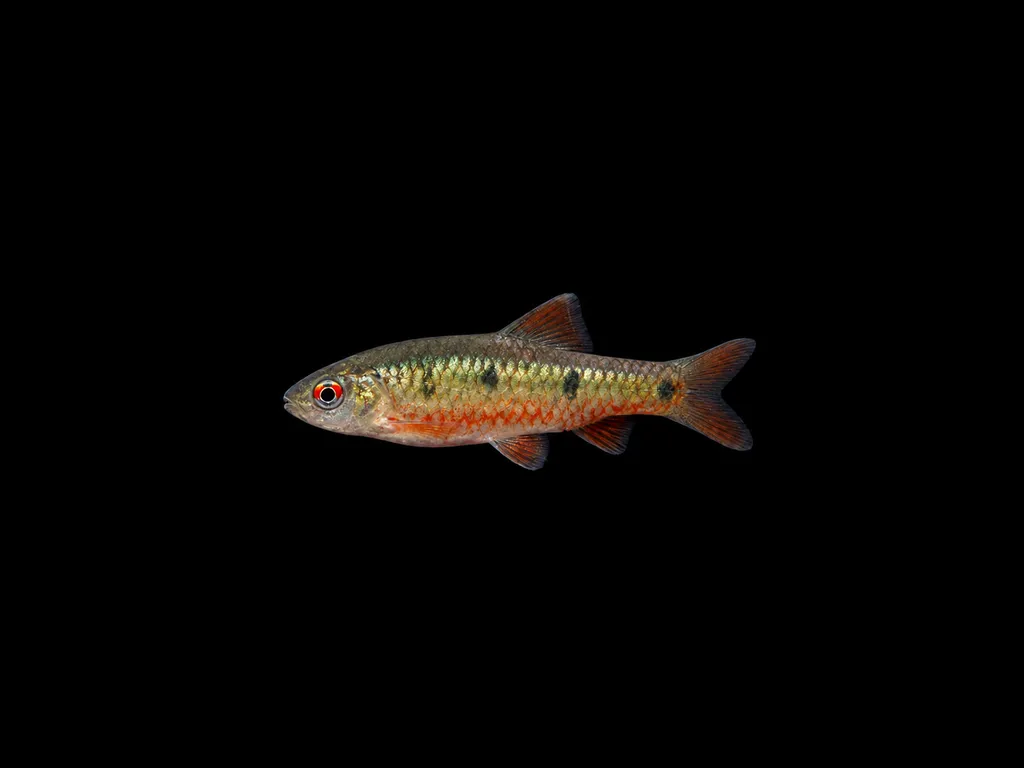
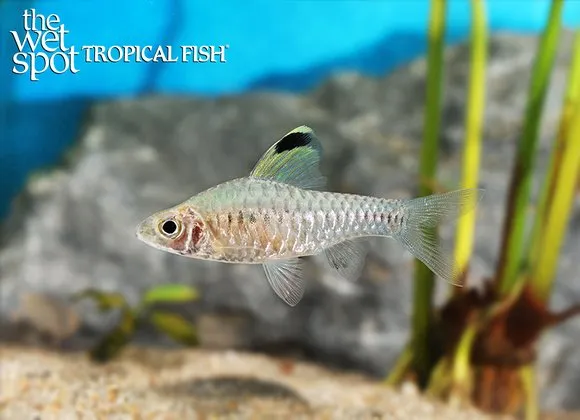
The Taiwan barb, Puntius snyderi, is a small fish of the carp family, Cyprinidae. It is gold-bodied, with a pair of dark blotches on the flank. It is one of the few barbs native to Taiwan, and it is still often sold and listed under the genus name Barbodes.
In the wild
The Taiwan barb comes from the subtropical lowland streams, ponds and ditches of Taiwan. The water there swings from mild to cool through the year.
Weekly picks
Tank mates
The Taiwan barb is a peaceful, schooling species that keeps to the middle. These picks share a community profile with it, are safe together in both directions, and overlap on water type, temperature and pH.
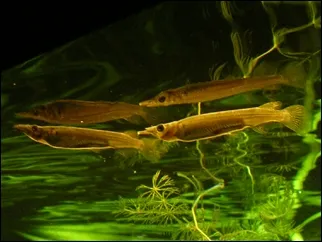
Wrestling halfbeak
Dermogenys pusilla
FreshwaterBrackish2.8 in (7 cm) · 25 gal (95 L)75–82°F (24–28°C)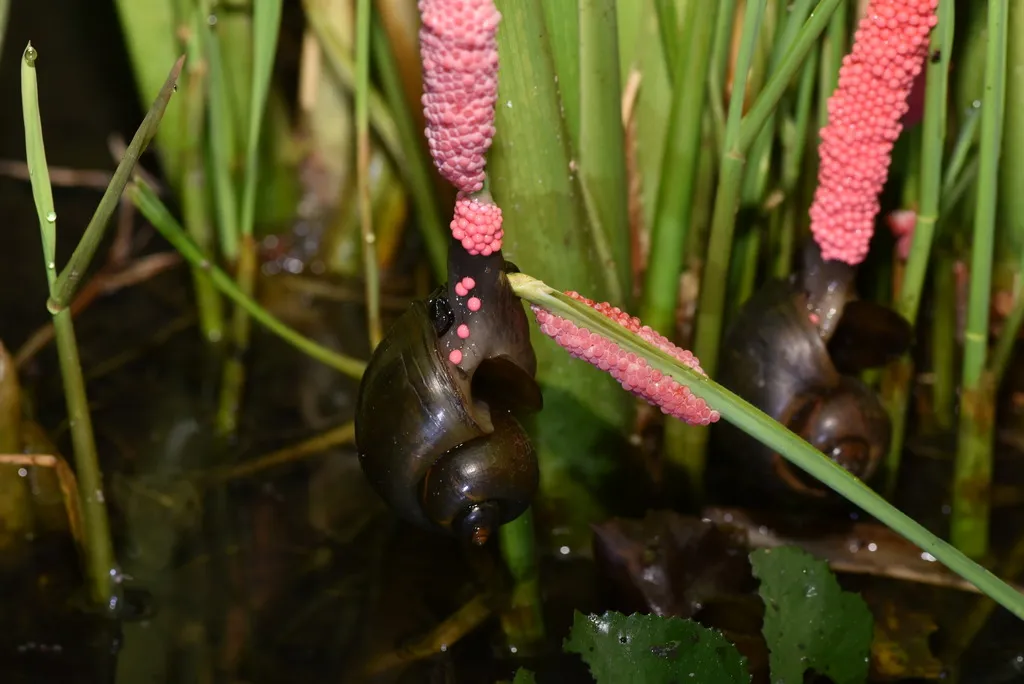
Apple snail
Pomacea canaliculata
Freshwater5.9 in (15 cm) · 21 gal (80 L)64–81°F (18–27°C)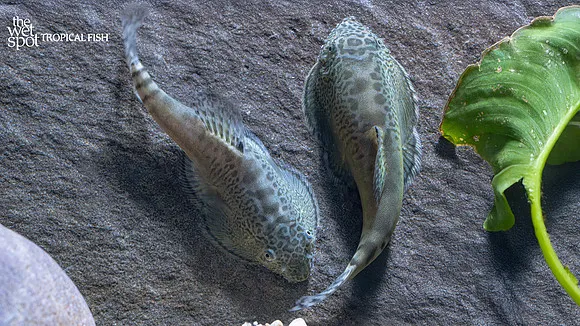
Pearl River hillstream loach
Beaufortia granulopinna
Freshwater3.1 in (8 cm) · 24 gal (90 L)61–75°F (16–24°C)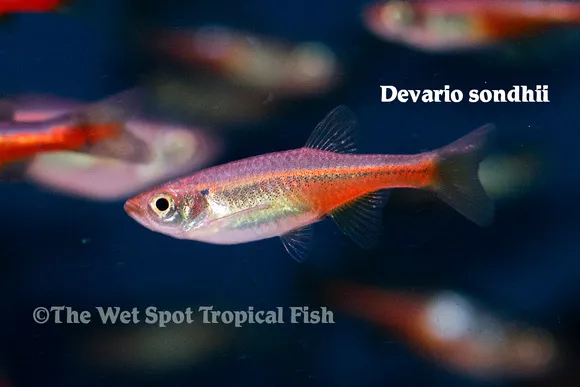
Sondhi danio
Devario sondhii
Freshwater3.1 in (8 cm) · 24 gal (90 L)68–79°F (20–26°C)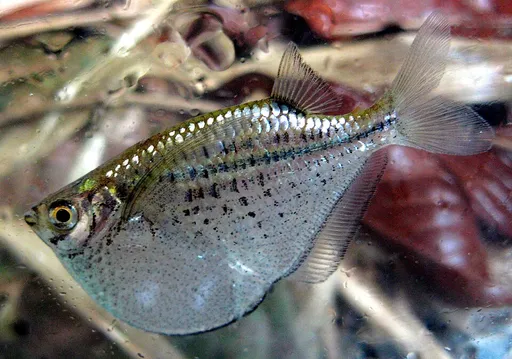
Spotted hatchetfish
Gasteropelecus maculatus
Freshwater3.5 in (9 cm) · 26 gal (100 L)73–82°F (23–28°C)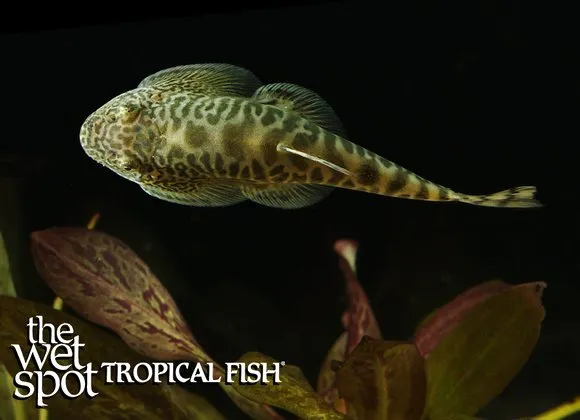
Ping's hillstream loach
Beaufortia pingi
Freshwater3.5 in (8.9 cm) · 24 gal (90 L)61–75°F (16–24°C)
Common questions
What size tank does a Taiwan barb need?
A Taiwan barb needs at least 24 gal (90 L). It spends most of its time in the middle.
What temperature and pH does a Taiwan barb need?
A Taiwan barb is comfortable at 61–77°F (16–25°C) with a pH of 6.5–7.5.
What does a Taiwan barb eat?
A Taiwan barb is an easy, willing eater. It takes flake, pellets, and small frozen or live foods, and it grazes soft algae too.
How big does a Taiwan barb get?
An adult Taiwan barb reaches about 3.1 in (8 cm).
Does a Taiwan barb need a group?
Yes. A Taiwan barb is a schooling species and should be kept in a group, not singly.
Related species
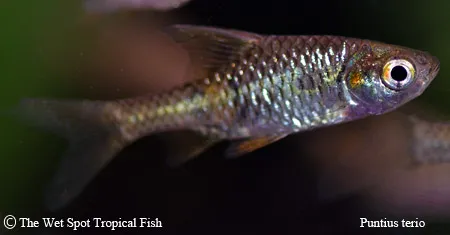 3.1 in (8 cm)20 gal (75 L)68–79°F (20–26°C)
Onespot barb
Puntius terio
3.1 in (8 cm) · 20 gal (75 L)
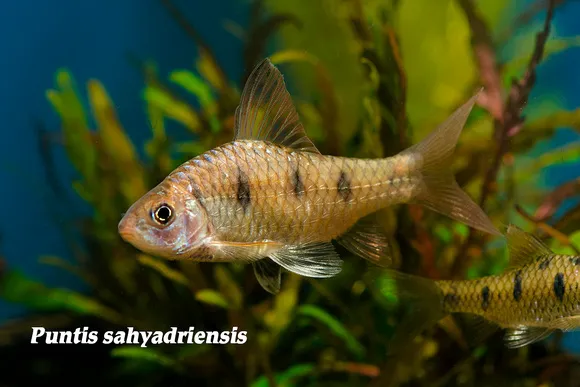 3.5 in (9 cm)29 gal (110 L)68–79°F (20–26°C)
Maharaja barb
Puntius sahyadriensis
3.5 in (9 cm) · 29 gal (110 L)
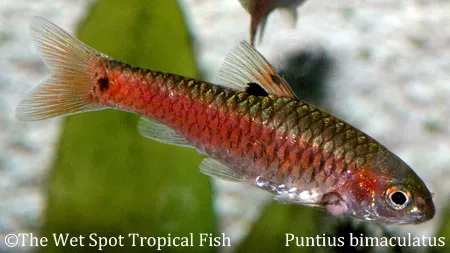 2.8 in (7 cm)20 gal (75 L)72–81°F (22–27°C)
Java spotted barb
Puntius bimaculatus
2.8 in (7 cm) · 20 gal (75 L)
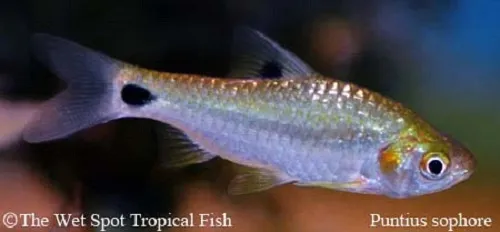 3.9 in (10 cm)29 gal (110 L)68–81°F (20–27°C)
Pool barb
Puntius sophore
3.9 in (10 cm) · 29 gal (110 L)
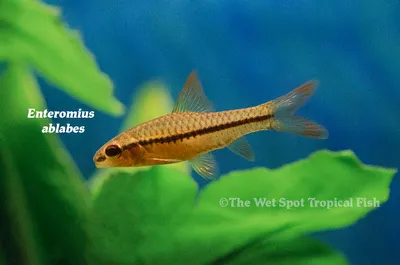 3.1 in (8 cm)24 gal (90 L)72–81°F (22–27°C)
Ablabes barb
Enteromius ablabes
3.1 in (8 cm) · 24 gal (90 L)
 3.1 in (8 cm)20 gal (75 L)68–79°F (20–26°C)
Cosuatis barb
Oreichthys cosuatis
3.1 in (8 cm) · 20 gal (75 L)