Onespot barb
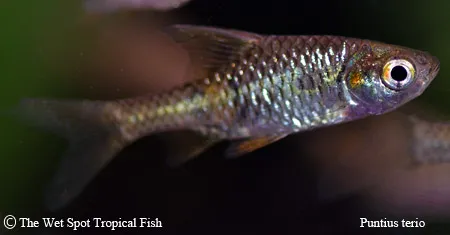
Puntius terio
Also known as Teri barb, Terry barb
FreshwaterFish
Care at a glance
- Temperature
- 68–79°F
- 20–26°C
- pH
- 6.0–7.5
- Adult size
- 3.1 in
- 8 cm
- Minimum tank
- 20 gal
- 75 L
- Temperament
- Peaceful
- Social behavior
- Schooling
- Swim level
- Middle
- Diet
- Omnivore
- Difficulty
- Easy
- Breeding
- No record
- Rarity
- Rare
- Family
- Cyprinidae
- Origin
- Ganges and Brahmaputra lowlands, South Asia
Overview
The onespot barb is a hardy schooling barb that fits a peaceful community tank. It is easy to keep and makes a good first fish.
Did you know
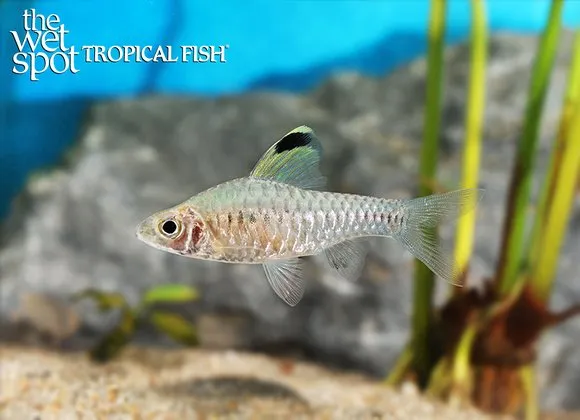
The onespot barb's common name points to its one clear field mark, a single dark spot near the tail base. Many of its barb relatives carry a busier scatter of bars and blotches.
Caring for the onespot barb
Keep onespot barbs in a group of at least six, in a planted tank of 20 gal (75 L) or more. Leave open swimming space, and add gentle current and a soft substrate. A darker substrate brings out their color.
Keep the water at 68 to 79°F (20 to 26°C), with a pH of 6.0 to 7.5. The onespot barb tolerates a wide range of conditions, which makes it undemanding to house. It is an omnivore that takes flake, pellets and frozen foods without fuss.
Onespot barbs are easygoing and peaceful, and they swim in the middle of the tank. They settle in with other calm community fish, from the Indian lowlands and beyond. Their aquarium breeding is not documented, though barbs of this type are egg scatterers that spread their eggs among plants and gravel.
Good to know
Puntius terio is one of the many barbs Francis Hamilton described in his 1822 survey of the Ganges fishes. It is a gold-bodied member of the carp family, Cyprinidae.
In the wild
The onespot barb lives in the slow, still and gently flowing waters of the Ganges and Brahmaputra lowlands. Its range runs across northern India, Bangladesh and neighboring countries, in ponds, ditches and river margins.
Weekly picks
Tank mates
The onespot barb is a peaceful, schooling species that keeps to the middle. These picks share a community profile with it, are safe together in both directions, and overlap on water type, temperature and pH.
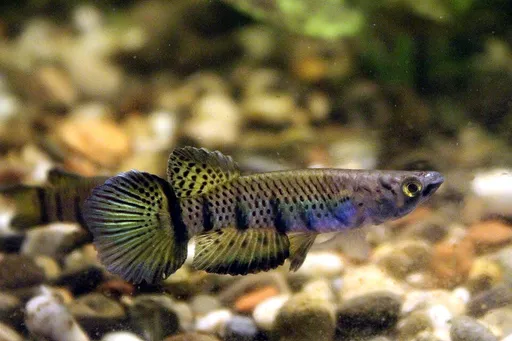
Six-barred panchax
Epiplatys sexfasciatus
Freshwater3.9 in (10 cm) · 20 gal (75 L)72–81°F (22–27°C)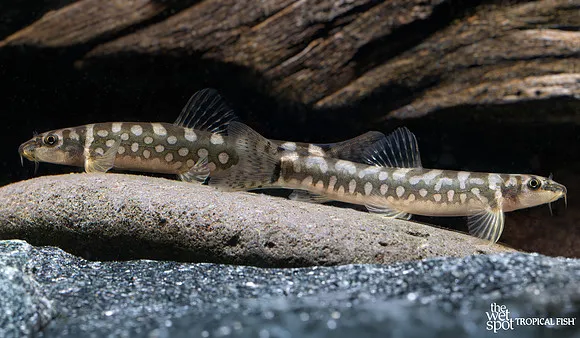
Guenther's zipper loach
Nemacheilus guentheri
Freshwater2.6 in (6.7 cm) · 20 gal (75 L)68–79°F (20–26°C)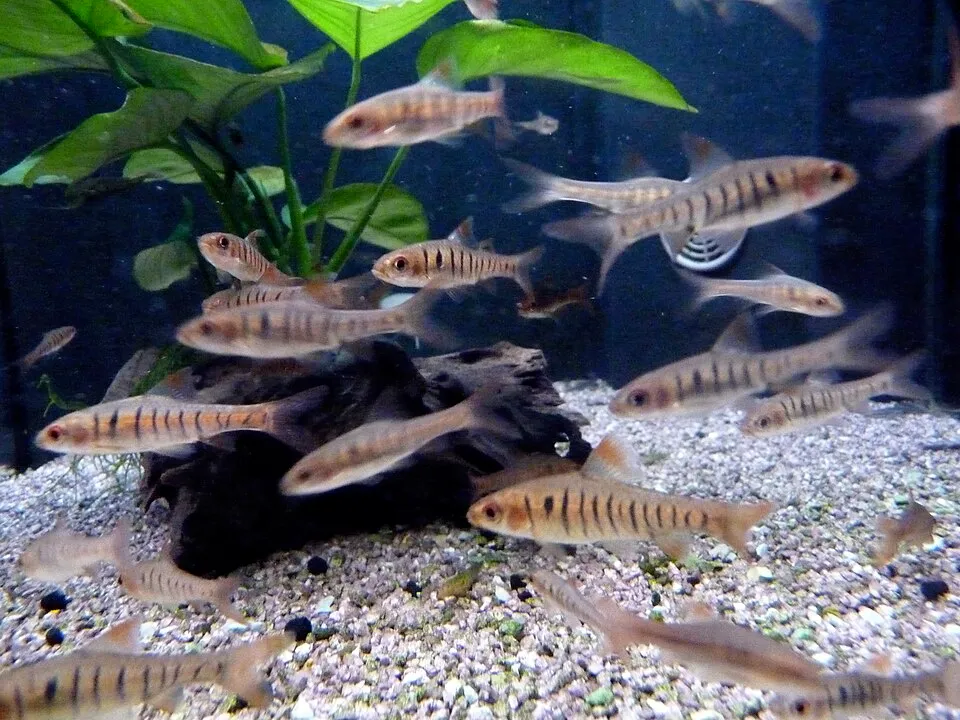
African banded barb
Barbus fasciolatus
Freshwater2.4 in (6 cm) · 20 gal (75 L)68–79°F (20–26°C)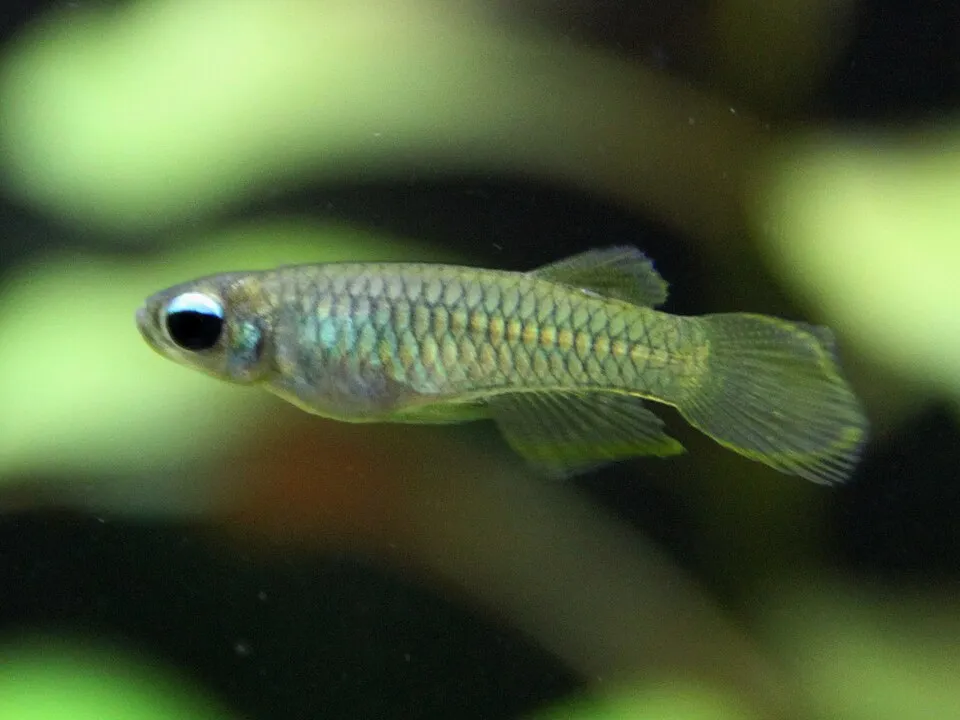
Norman's lampeye
Poropanchax normani
Freshwater1.6 in (4 cm) · 20 gal (75 L)72–79°F (22–26°C)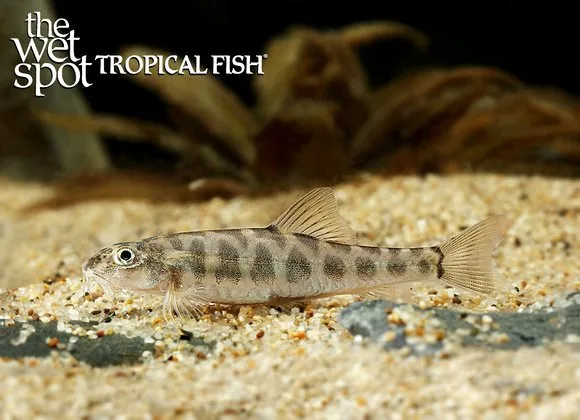
Corica loach
Nemacheilus corica
Freshwater2 in (5 cm) · 20 gal (75 L)68–79°F (20–26°C)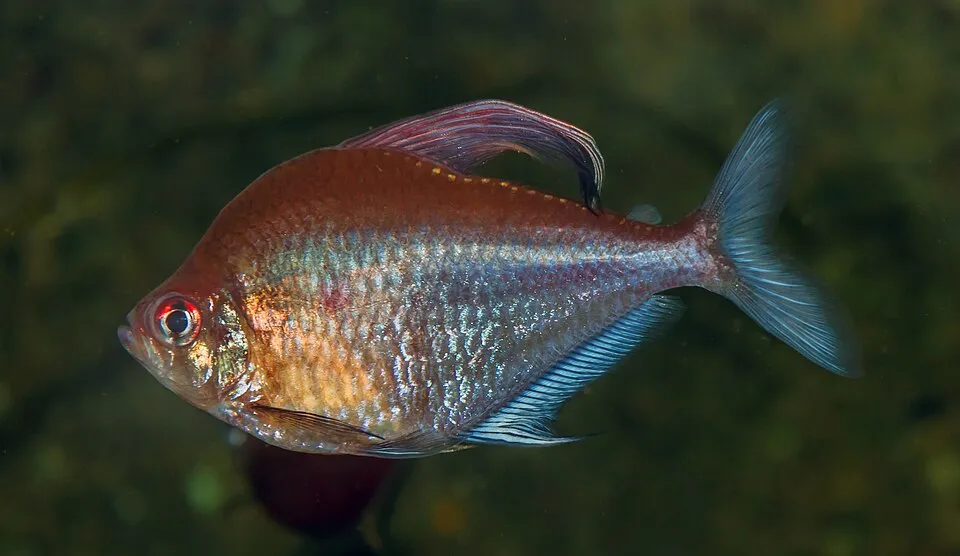
Bleeding heart tetra
Hyphessobrycon erythrostigma
Freshwater2.4 in (6 cm) · 20 gal (75 L)70–81°F (21–27°C)
Common questions
What size tank does a onespot barb need?
A onespot barb needs at least 20 gal (75 L). It spends most of its time in the middle.
What temperature and pH does a onespot barb need?
A onespot barb is comfortable at 68–79°F (20–26°C) with a pH of 6.0–7.5.
What does a onespot barb eat?
A onespot barb is an undemanding omnivore. It takes flake, pellets and frozen foods readily.
How big does a onespot barb get?
An adult onespot barb reaches about 3.1 in (8 cm).
Does a onespot barb need a group?
Yes. A onespot barb is a schooling species and should be kept in a group, not singly.
How does a onespot barb breed?
The onespot barb has no documented aquarium breeding. Barbs of its type are egg scatterers that spread their eggs among plants and gravel.
Related species
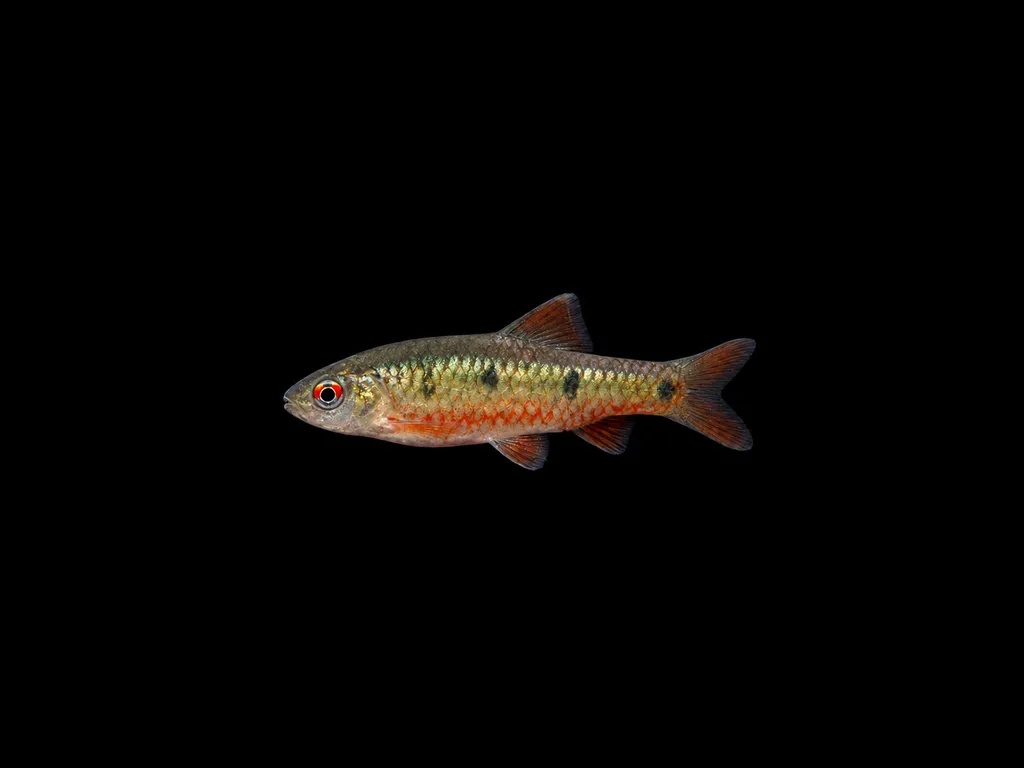 3.1 in (8 cm)24 gal (90 L)61–77°F (16–25°C)
Taiwan barb
Puntius snyderi
3.1 in (8 cm) · 24 gal (90 L)
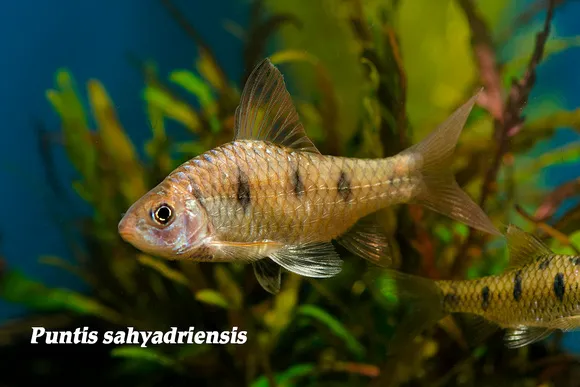 3.5 in (9 cm)29 gal (110 L)68–79°F (20–26°C)
Maharaja barb
Puntius sahyadriensis
3.5 in (9 cm) · 29 gal (110 L)
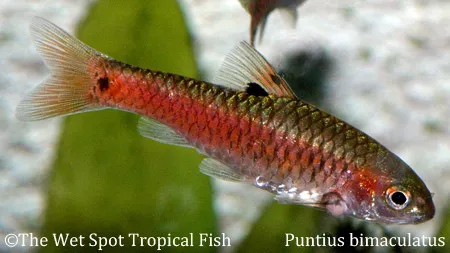 2.8 in (7 cm)20 gal (75 L)72–81°F (22–27°C)
Java spotted barb
Puntius bimaculatus
2.8 in (7 cm) · 20 gal (75 L)
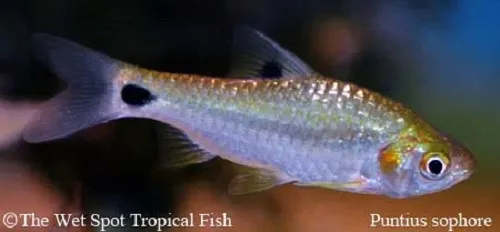 3.9 in (10 cm)29 gal (110 L)68–81°F (20–27°C)
Pool barb
Puntius sophore
3.9 in (10 cm) · 29 gal (110 L)
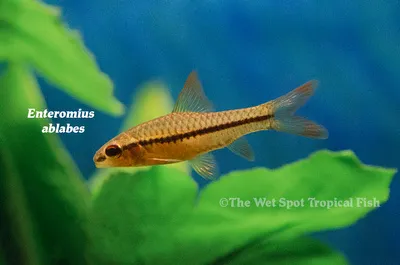 3.1 in (8 cm)24 gal (90 L)72–81°F (22–27°C)
Ablabes barb
Enteromius ablabes
3.1 in (8 cm) · 24 gal (90 L)
 3.1 in (8 cm)20 gal (75 L)68–79°F (20–26°C)
Cosuatis barb
Oreichthys cosuatis
3.1 in (8 cm) · 20 gal (75 L)