Pool barb
Puntius sophore
Also known as Spotfin swamp barb, Stigma barb, Pyramid barb
FreshwaterFish
Care at a glance
- Temperature
- 68–81°F
- 20–27°C
- pH
- 6.0–7.8
- Adult size
- 3.9 in
- 10 cm
- Minimum tank
- 29 gal
- 110 L
- Temperament
- Peaceful
- Social behavior
- Schooling
- Swim level
- Middle
- Diet
- Omnivore
- Difficulty
- Easy
- Breeding
- No record
- Rarity
- Rare
- Family
- Cyprinidae
- Origin
- South and Southeast Asia from Pakistan to Yunnan
Overview
The pool barb is one of the most undemanding of all barbs, a hardy and peaceful schooling fish for a community tank. It makes a good first fish.
Did you know
The pool barb may be the most successful barb of all. From Afghanistan to southern China, a village pond or roadside ditch has a fair chance of holding one.
Caring for the pool barb
Give a group of pool barbs a planted tank of at least 29 gal (110 L), with open swimming space and gentle current. They swim in the middle of the tank.
Keep the water at 68 to 81°F (20 to 27°C) and a pH of 6.0 to 7.8. The pool barb tolerates a wide range of conditions and does well where fussier fish struggle. It is a true omnivore and takes flake, pellets, vegetable matter and frozen foods with equal appetite.
Keep a group of at least six. Pool barbs are community-safe and settle into almost any peaceful community without special treatment. Their aquarium breeding is not formally documented, though barbs of this kind are egg scatterers.
Good to know
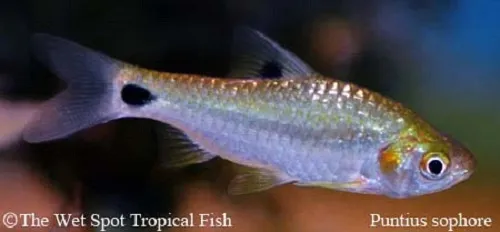
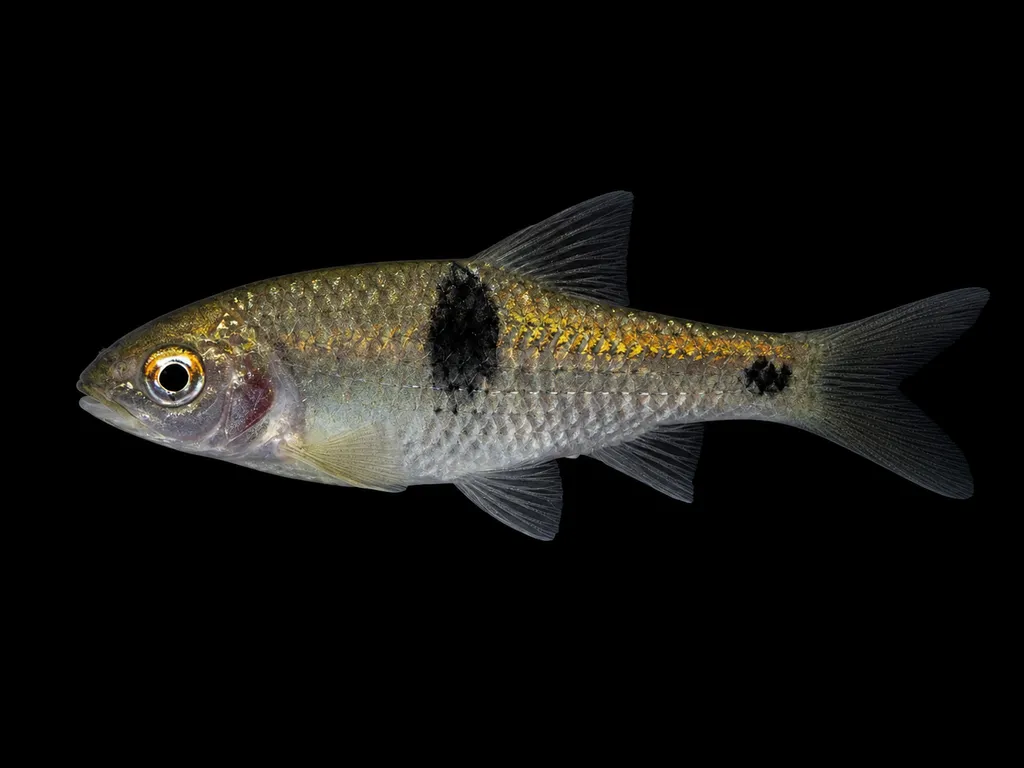
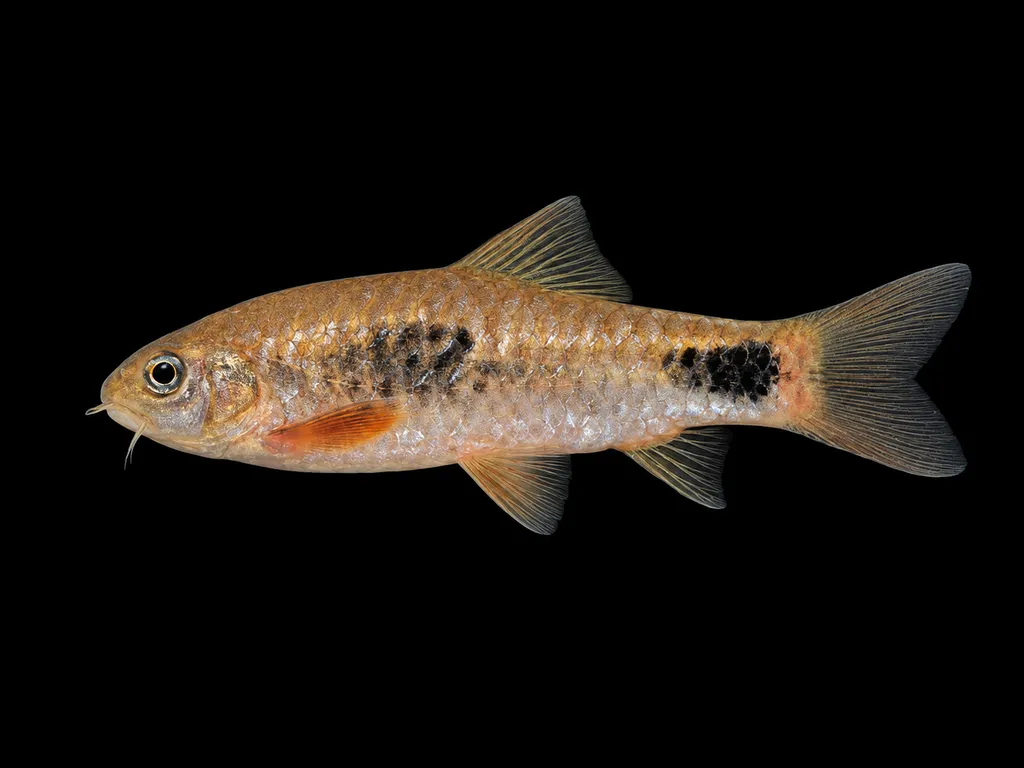
Puntius sophore is one of Francis Hamilton's 1822 barbs, and a member of the carp family, Cyprinidae. It is gold, with a dark blotch on the dorsal fin and a spot at the tail base. It is one of Asia's most widespread and abundant freshwater fish, and it is important locally as food.
In the wild
The pool barb fills ponds, ditches, canals and rivers across an enormous swathe of South and Southeast Asia. Its range runs from Pakistan and Afghanistan through India and Nepal to Myanmar and Yunnan in China. It lives in still and flowing water alike.
Weekly picks
Tank mates
The pool barb is a peaceful, schooling species that keeps to the middle. These picks share a community profile with it, are safe together in both directions, and overlap on water type, temperature and pH.
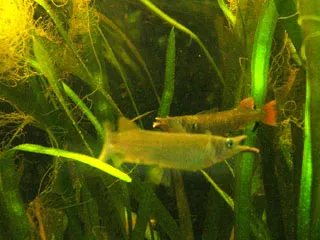
Redfin halfbeak
Nomorhamphus ebrardtii
Freshwater3.5 in (9 cm) · 29 gal (110 L)75–81°F (24–27°C)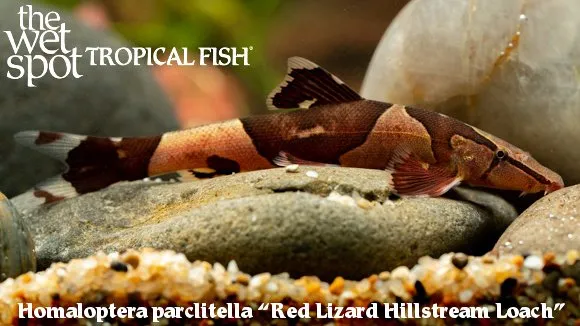
Malayan lizard loach
Homaloptera parclitella
Freshwater3.9 in (10 cm) · 29 gal (110 L)70–79°F (21–26°C)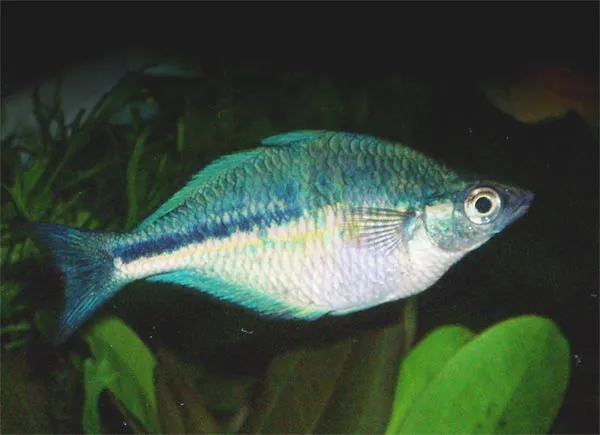
Lake Kutubu rainbowfish
Melanotaenia lacustris
Freshwater4.3 in (11 cm) · 29 gal (110 L)68–77°F (20–25°C)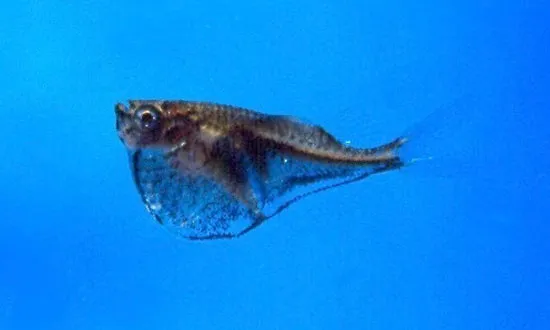
Blackwing hatchetfish
Carnegiella marthae
Freshwater1.4 in (3.5 cm) · 30 gal (115 L)68–82°F (20–28°C)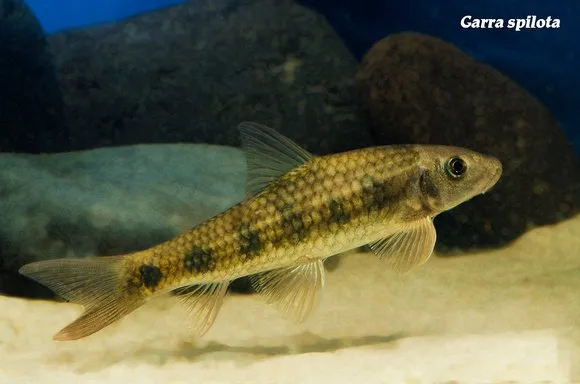
Spotted garra
Garra spilota
Freshwater3.5 in (9 cm) · 29 gal (110 L)68–79°F (20–26°C)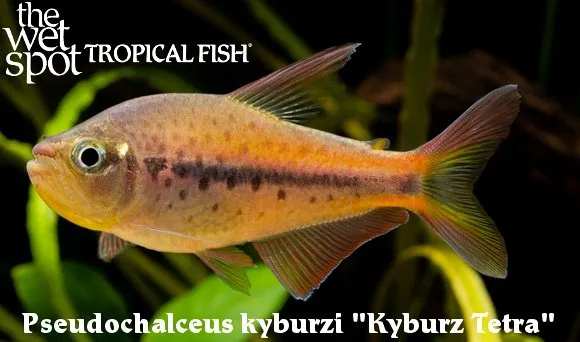
Kyburz tetra
Pseudochalceus kyburzi
Freshwater3.1 in (7.8 cm) · 29 gal (110 L)72–81°F (22–27°C)
Common questions
What size tank does a pool barb need?
A pool barb needs at least 29 gal (110 L). It spends most of its time in the middle.
What temperature and pH does a pool barb need?
A pool barb is comfortable at 68–81°F (20–27°C) with a pH of 6.0–7.8.
What does a pool barb eat?
A pool barb is a true omnivore. It takes flake, pellets, vegetable matter and frozen foods, all with the same appetite.
How big does a pool barb get?
An adult pool barb reaches about 3.9 in (10 cm).
Does a pool barb need a group?
Yes. A pool barb is a schooling species and should be kept in a group, not singly.
How does a pool barb breed?
The pool barb's aquarium breeding is not formally documented. Barbs of its kind are egg scatterers.
Related species
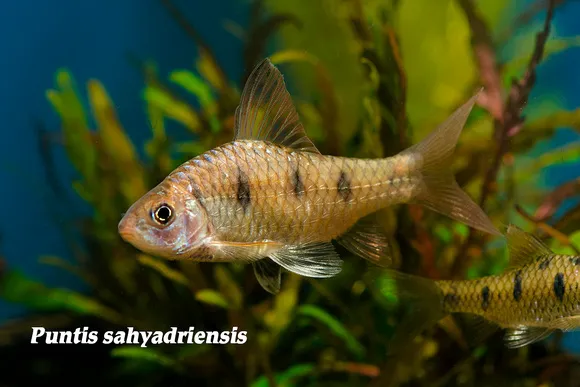 3.5 in (9 cm)29 gal (110 L)68–79°F (20–26°C)
Maharaja barb
Puntius sahyadriensis
3.5 in (9 cm) · 29 gal (110 L)
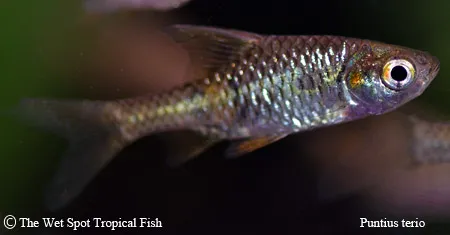 3.1 in (8 cm)20 gal (75 L)68–79°F (20–26°C)
Onespot barb
Puntius terio
3.1 in (8 cm) · 20 gal (75 L)
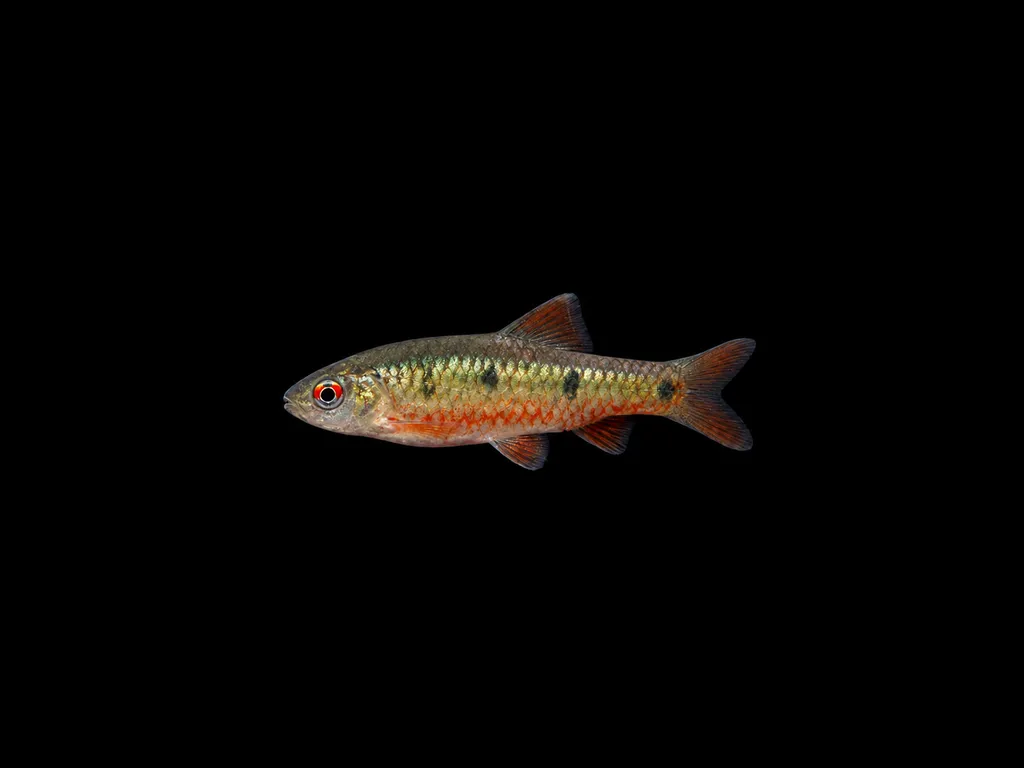 3.1 in (8 cm)24 gal (90 L)61–77°F (16–25°C)
Taiwan barb
Puntius snyderi
3.1 in (8 cm) · 24 gal (90 L)
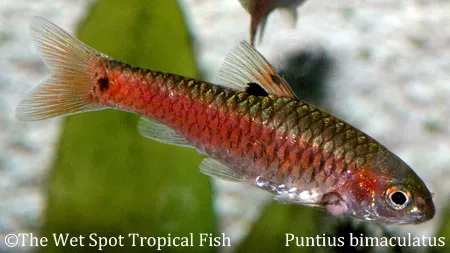 2.8 in (7 cm)20 gal (75 L)72–81°F (22–27°C)
Java spotted barb
Puntius bimaculatus
2.8 in (7 cm) · 20 gal (75 L)
 3.9 in (10 cm)29 gal (110 L)72–81°F (22–27°C)
Binduchitra barb
Systomus binduchitra
3.9 in (10 cm) · 29 gal (110 L)
 3.9 in (10 cm)24 gal (90 L)72–81°F (22–27°C)
Cameroon barb
Enteromius camptacanthus
3.9 in (10 cm) · 24 gal (90 L)