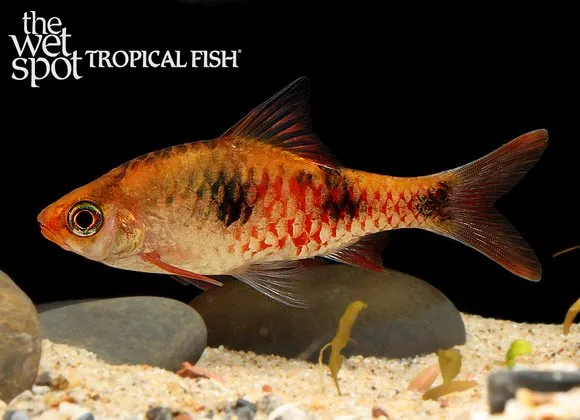
Binduchitra barb
Systomus binduchitra
Also known as Dotted-line systomus
FreshwaterFish
Care at a glance
- Temperature
- 72–81°F
- 22–27°C
- pH
- 6.0–7.5
- Adult size
- 3.9 in
- 10 cm
- Minimum tank
- 29 gal
- 110 L
- Temperament
- Peaceful
- Social behavior
- Schooling
- Swim level
- Middle
- Difficulty
- Medium
- Breeding
- No record
- Rarity
- Rare
- Family
- Cyprinidae
- Origin
- Chindwin basin, Myanmar
Overview
The Binduchitra barb is a lively, peaceful schooling barb for a spacious community tank. It is within reach of any keeper with a little experience.
Did you know
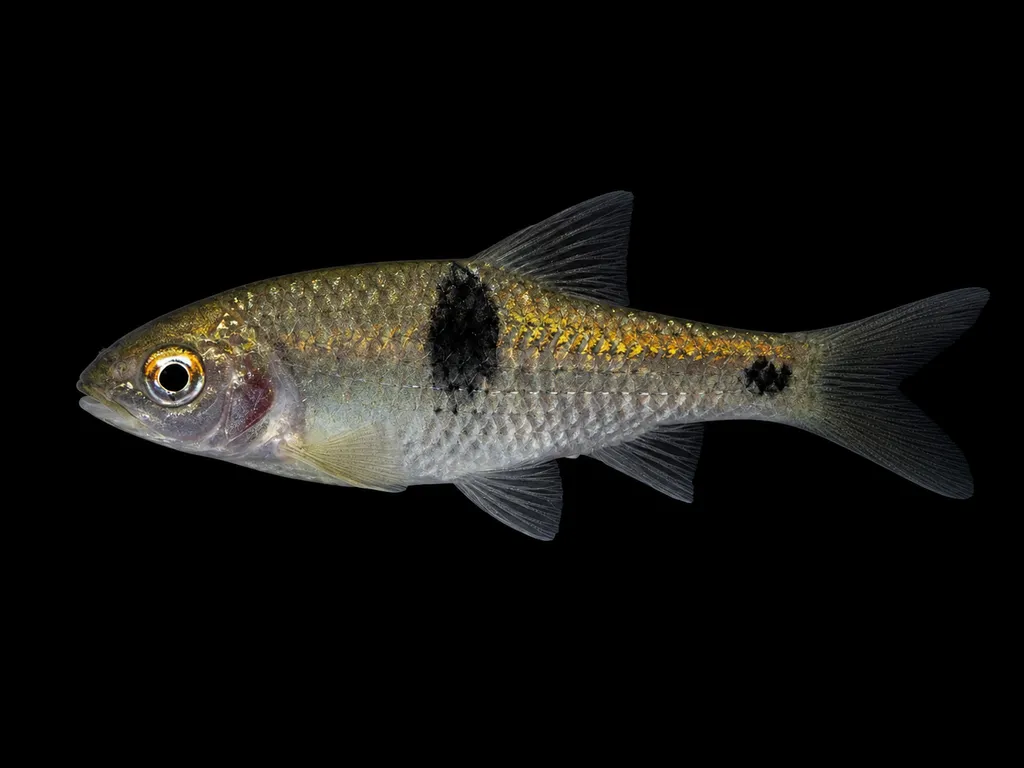
The Binduchitra barb's name is Sanskrit for something close to dot-pictured, after the spots and marks on the fish. Traders sometimes sell it as the saddled red-cheek barb, for the red flush across its gill plate.
Caring for the Binduchitra barb
Give Binduchitra barbs at least 29 gal (110 L), and expect them to want more room as they grow toward full size. A planted tank with open swimming lanes, a bed of sand or gravel, wood and rock suits them.
They are comfortable across a broad tropical range, at 72 to 81°F (22 to 27°C) and a pH of 6.0 to 7.5. Give them some water movement. Feed a varied diet of flake and pellets, with regular frozen and live foods.
Keep a school of six or more, since this very social barb turns nervous and drab in ones and twos. Binduchitra barbs are peaceful and suit other active, similarly sized fish, such as danios, larger rasboras and loaches. Their captive spawning has not been recorded.
Good to know
Systomus binduchitra is a barb of the family Cyprinidae and a close relative of the olive barb, Systomus sarana. In large tanks it probably grows a little past its usual adult size. It has a dark bar at the dorsal base and a spot on the tail base.
In the wild
The Binduchitra barb comes from the Chindwin basin of Myanmar, part of the wider Irrawaddy system. It lives there in flowing fresh water.
Weekly picks
Tank mates
The Binduchitra barb is a peaceful, schooling species that keeps to the middle. These picks share a community profile with it, are safe together in both directions, and overlap on water type, temperature and pH.
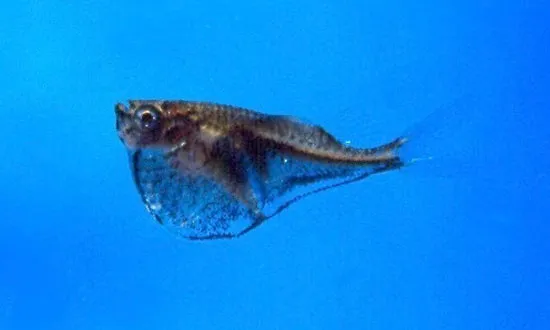
Blackwing hatchetfish
Carnegiella marthae
Freshwater1.4 in (3.5 cm) · 30 gal (115 L)68–82°F (20–28°C)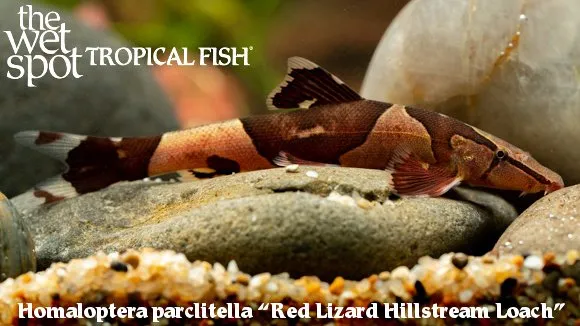
Malayan lizard loach
Homaloptera parclitella
Freshwater3.9 in (10 cm) · 29 gal (110 L)70–79°F (21–26°C)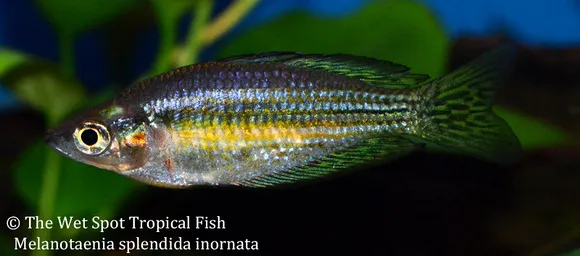
Checkered rainbowfish
Melanotaenia splendida inornata
Freshwater4.7 in (12 cm) · 29 gal (110 L)72–86°F (22–30°C)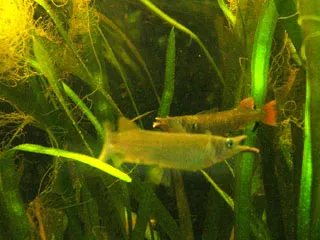
Redfin halfbeak
Nomorhamphus ebrardtii
Freshwater3.5 in (9 cm) · 29 gal (110 L)75–81°F (24–27°C)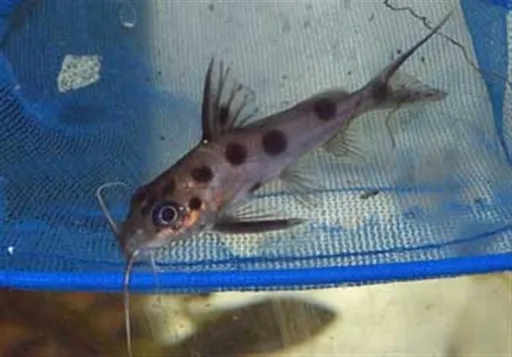
One-spot synodontis
Synodontis notatus
Freshwater9.8 in (25 cm) · 29 gal (110 L)72–81°F (22–27°C)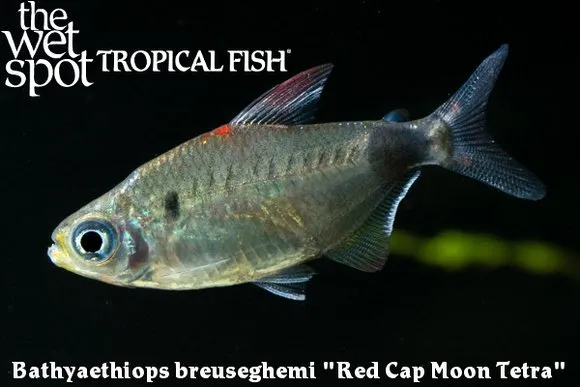
Breuseghem's moon tetra
Bathyaethiops breuseghemi
Freshwater2.8 in (7 cm) · 29 gal (110 L)73–81°F (23–27°C)
Common questions
What size tank does a Binduchitra barb need?
A Binduchitra barb needs at least 29 gal (110 L). It spends most of its time in the middle.
What temperature and pH does a Binduchitra barb need?
A Binduchitra barb is comfortable at 72–81°F (22–27°C) with a pH of 6.0–7.5.
What does a Binduchitra barb eat?
A Binduchitra barb eats a varied diet of flake and pellets, with regular frozen and live foods.
How big does a Binduchitra barb get?
An adult Binduchitra barb reaches about 3.9 in (10 cm).
Does a Binduchitra barb need a group?
Yes. A Binduchitra barb is a schooling species and should be kept in a group, not singly.
Related species
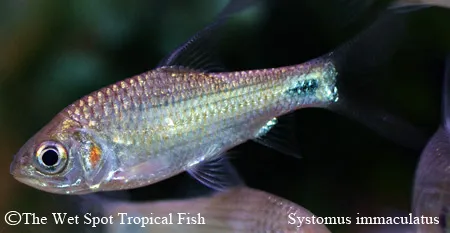 7.5 in (19 cm)66 gal (250 L)72–81°F (22–27°C)
Immaculate barb
Systomus immaculatus
7.5 in (19 cm) · 66 gal (250 L)
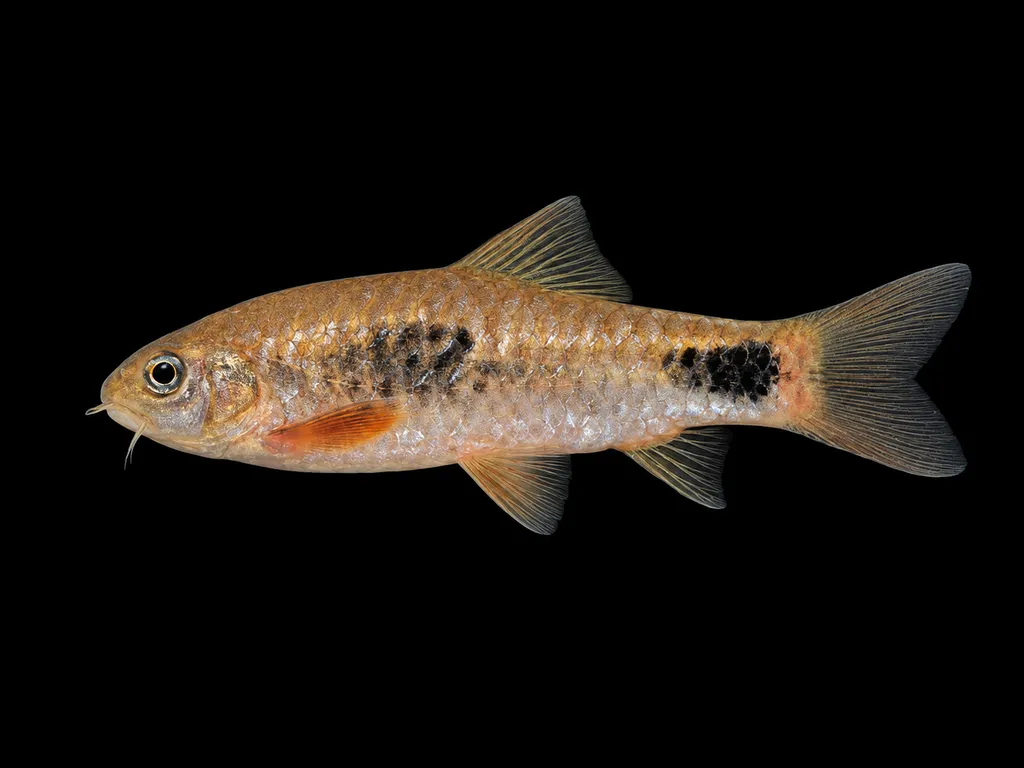 3.9 in (10 cm)24 gal (90 L)72–81°F (22–27°C)
Cameroon barb
Enteromius camptacanthus
3.9 in (10 cm) · 24 gal (90 L)
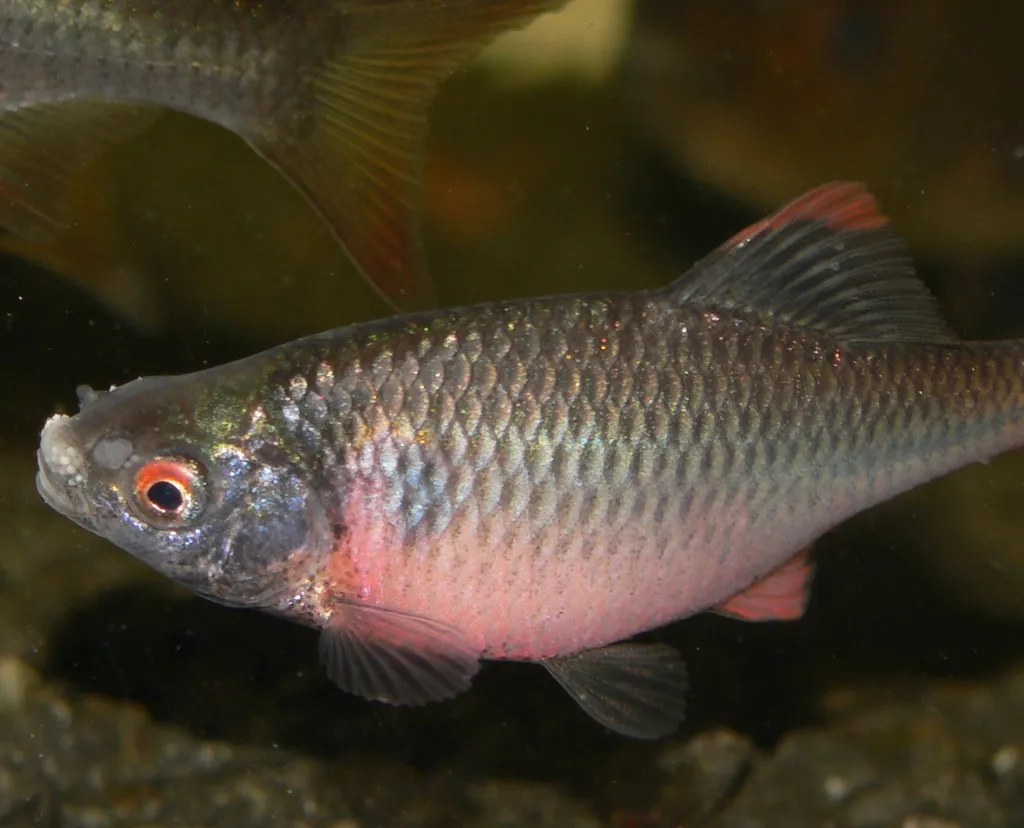 3.9 in (10 cm)34 gal (130 L)55–72°F (13–22°C)
European bitterling
Rhodeus amarus
3.9 in (10 cm) · 34 gal (130 L)
 3.9 in (10 cm)29 gal (110 L)68–81°F (20–27°C)
Pool barb
Puntius sophore
3.9 in (10 cm) · 29 gal (110 L)
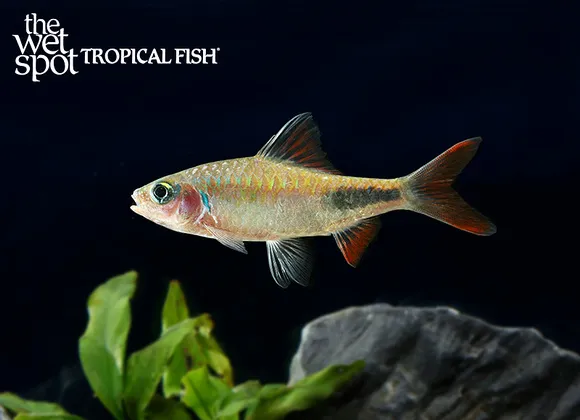 3.9 in (10 cm)42 gal (160 L)70–79°F (21–26°C)
Rohan's barb
Dawkinsia rohani
3.9 in (10 cm) · 42 gal (160 L)
 3.9 in (10 cm)42 gal (160 L)70–79°F (21–26°C)
Ruby-tinted barb
Dawkinsia rubrotincta
3.9 in (10 cm) · 42 gal (160 L)