Rohan's barb
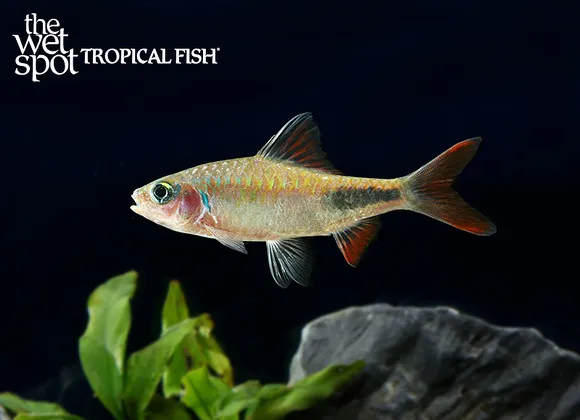
Dawkinsia rohani
Also known as Rohan's filament barb, Rohan's tear-spot barb
FreshwaterFish
Care at a glance
- Temperature
- 70–79°F
- 21–26°C
- pH
- 6.0–7.5
- Adult size
- 3.9 in
- 10 cm
- Minimum tank
- 42 gal
- 160 L
- Temperament
- Peaceful
- Social behavior
- Schooling
- Swim level
- Middle
- Difficulty
- Medium
- Breeding
- Egg scatterer
- Rarity
- Common
- Family
- Cyprinidae
- Origin
- Tamiraparani basin, Tamil Nadu, India
Overview
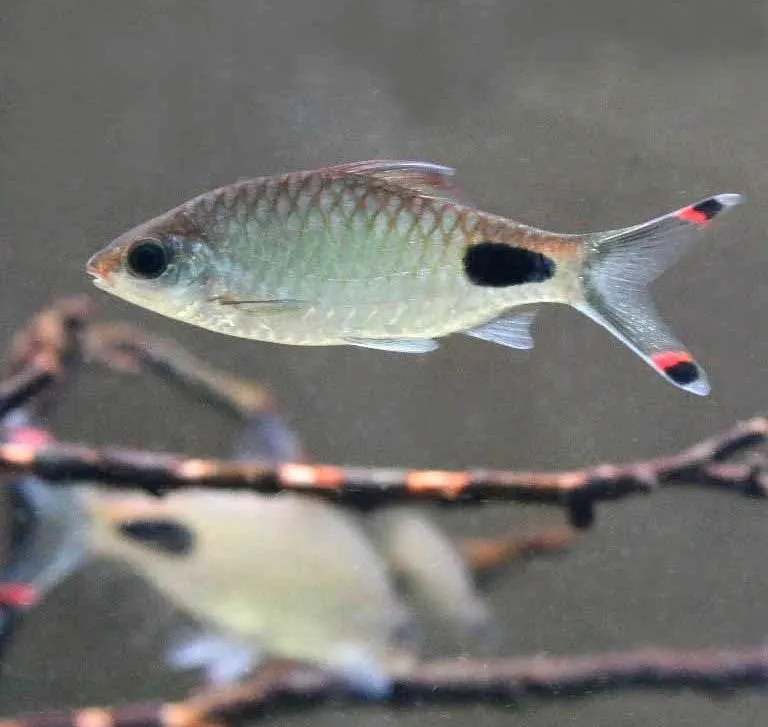
Rohan's barb is a large, peaceful barb, and one of the better big schooling fish for a community tank. It is best for keepers with a little experience.
Did you know
The namesake of Rohan's barb, Pethiyagoda, also has the genus Pethia named for him.
Caring for the Rohan's barb
Keep Rohan's barbs in a group of six or more, in a tank of 42 gal (160 L) or larger with open swimming length. Give them moderate current and open water.
Cooler-leaning water suits Rohan's barb better than tropical warmth. Keep the water at 70 to 79°F (21 to 26°C) and a pH of 6.0 to 7.5. Rohan's barb is hearty and eats anything, so feed flake, granules and frozen foods generously.
It is safe with other community fish. Mature males develop extended dorsal fin rays, which they raise at each other when they duel. They settle these duels without damage. Rohan's barb is an egg scatterer that does not guard its eggs.
Good to know
Rohan's barb is a member of the family Cyprinidae, in the genus Dawkinsia, named for Richard Dawkins. The genus holds the filament barbs of southern India and Sri Lanka. It is also known as Rohan's filament barb and Rohan's tear-spot barb.
In the wild
Rohan's barb comes from the Tamiraparani basin in Tamil Nadu, southern India. It lives in clear, flowing streams.
Weekly picks
Tank mates
The Rohan's barb is a peaceful, schooling species that keeps to the middle. These picks share a community profile with it, are safe together in both directions, and overlap on water type, temperature and pH.
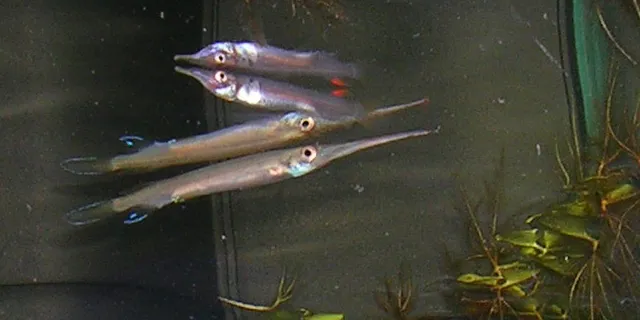
Forest halfbeak
Hemirhamphodon pogonognathus
Freshwater3.5 in (9 cm) · 34 gal (130 L)75–82°F (24–28°C)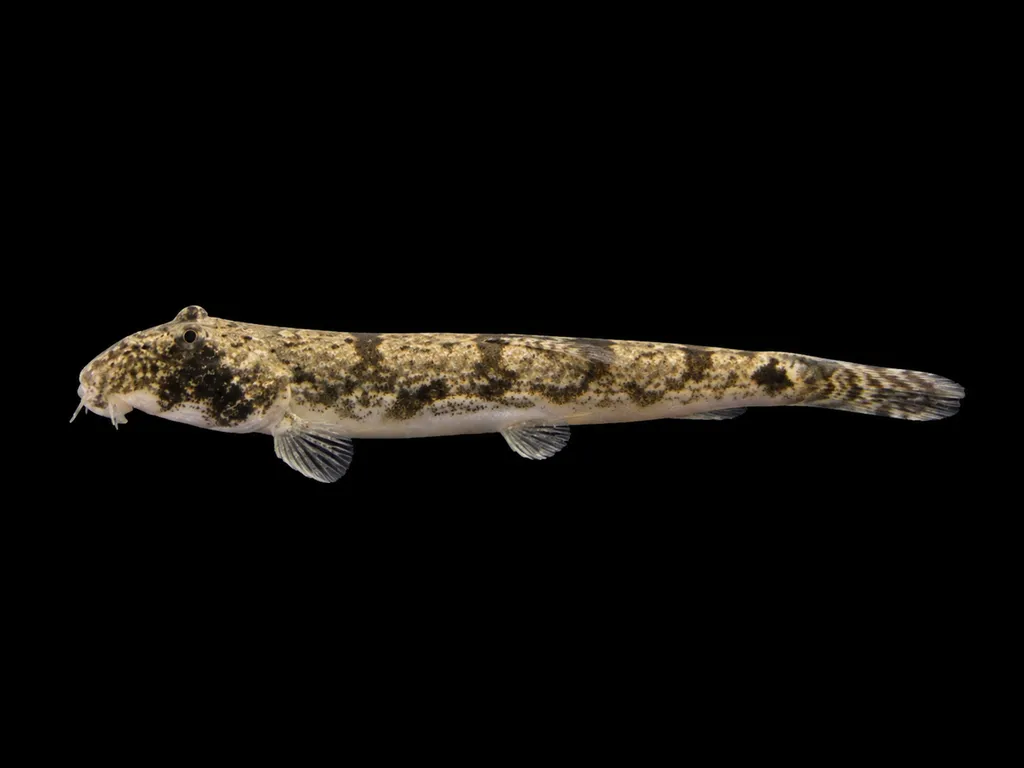
Gongota loach
Canthophrys gongota
Freshwater5.1 in (13 cm) · 42 gal (160 L)70–81°F (21–27°C)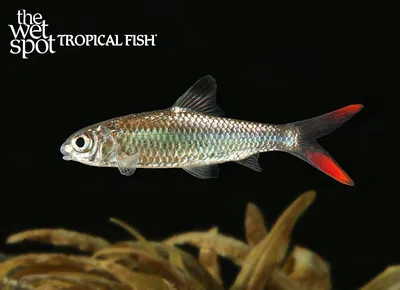
Redcheek barb
Discherodontus ashmeadi
Freshwater5.4 in (13.6 cm) · 42 gal (160 L)72–81°F (22–27°C)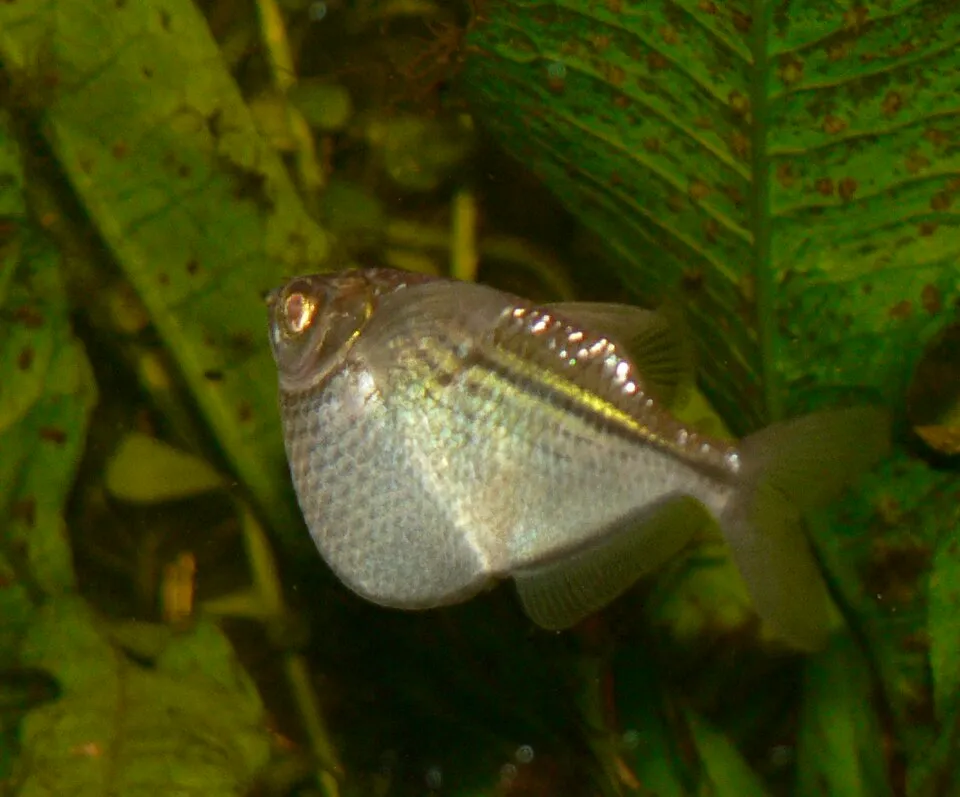
Common hatchetfish
Gasteropelecus sternicla
Freshwater1.6 in (4 cm) · 33 gal (125 L)68–82°F (20–28°C)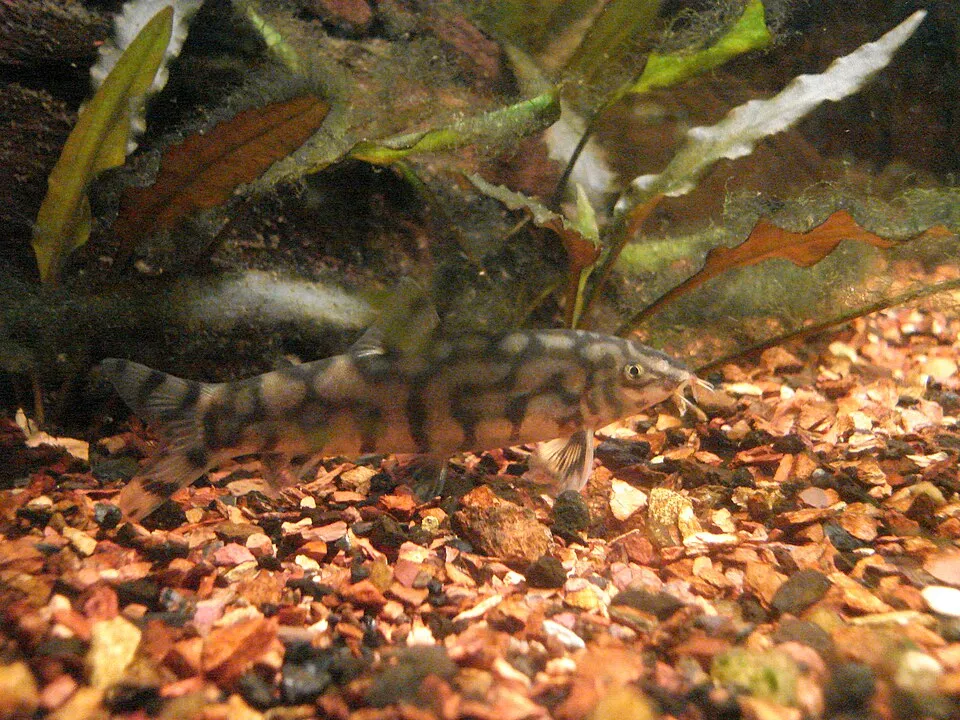
Yoyo loach
Botia almorhae
Freshwater6.3 in (16 cm) · 42 gal (160 L)66–81°F (19–27°C)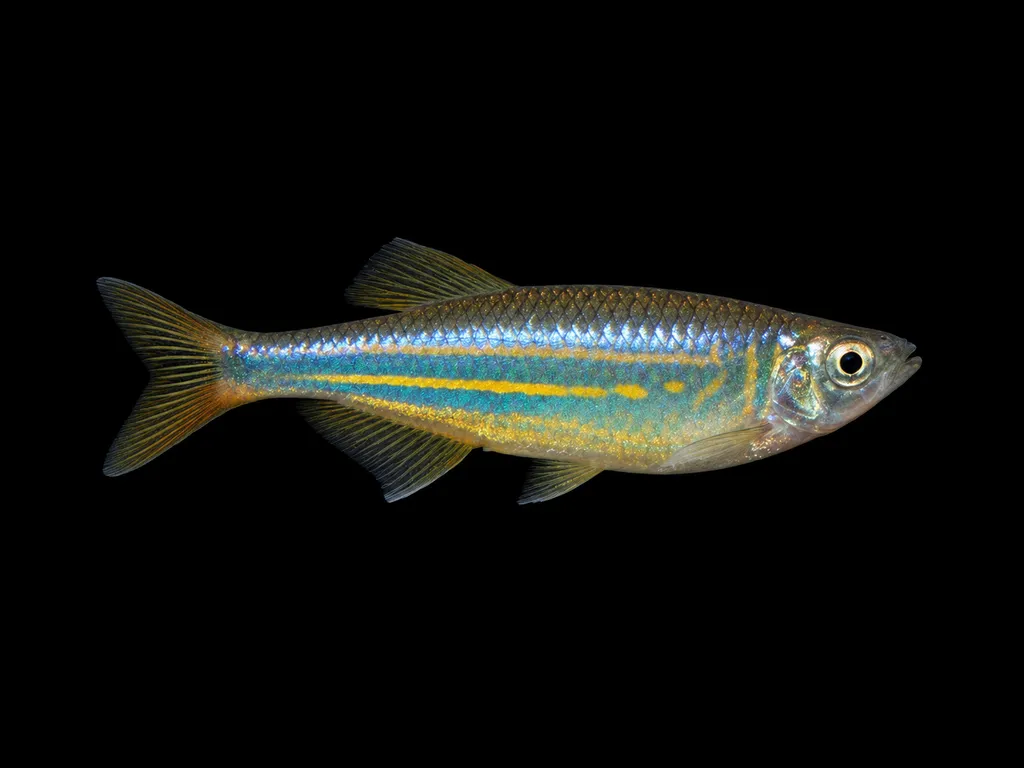
Annandale danio
Devario annandalei
Freshwater4.3 in (11 cm) · 42 gal (160 L)68–79°F (20–26°C)
Common questions
What size tank does a Rohan's barb need?
A Rohan's barb needs at least 42 gal (160 L). It spends most of its time in the middle.
What temperature and pH does a Rohan's barb need?
A Rohan's barb is comfortable at 70–79°F (21–26°C) with a pH of 6.0–7.5.
What does a Rohan's barb eat?
Rohan's barb is hearty and eats anything. Feed it flake, granules and frozen foods generously.
How big does a Rohan's barb get?
An adult Rohan's barb reaches about 3.9 in (10 cm).
Does a Rohan's barb need a group?
Yes. A Rohan's barb is a schooling species and should be kept in a group, not singly.
How can you tell a male Rohan's barb from a female?
Mature males develop extended dorsal fin rays. Males raise these filaments at each other when they duel.
How does a Rohan's barb breed?
Rohan's barb is an egg scatterer and does not guard its eggs.
Related species
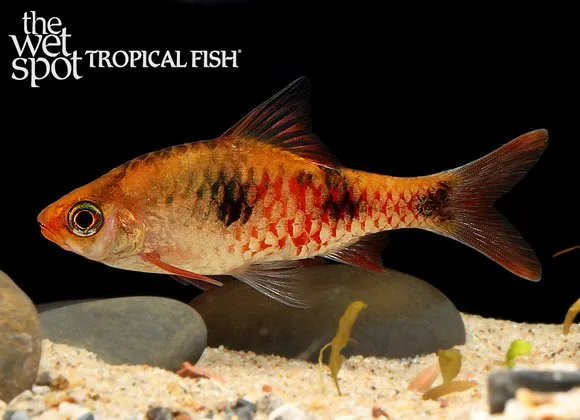 3.9 in (10 cm)42 gal (160 L)70–79°F (21–26°C)
Ruby-tinted barb
Dawkinsia rubrotincta
3.9 in (10 cm) · 42 gal (160 L)
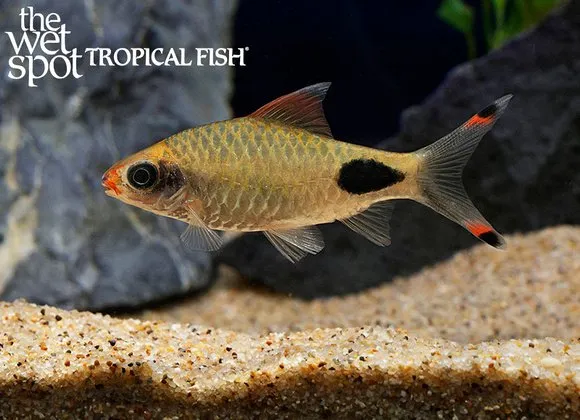 3.5 in (9 cm)42 gal (160 L)70–79°F (21–26°C)
Apsara barb
Dawkinsia apsara
3.5 in (9 cm) · 42 gal (160 L)
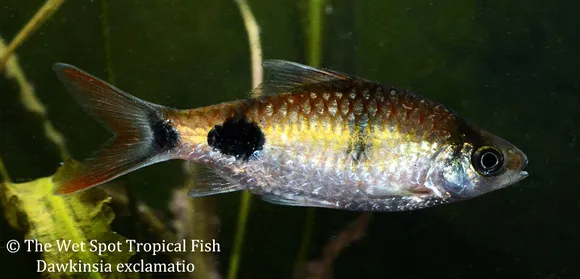 3.5 in (9 cm)42 gal (160 L)70–79°F (21–26°C)
Exclamation barb
Dawkinsia exclamatio
3.5 in (9 cm) · 42 gal (160 L)
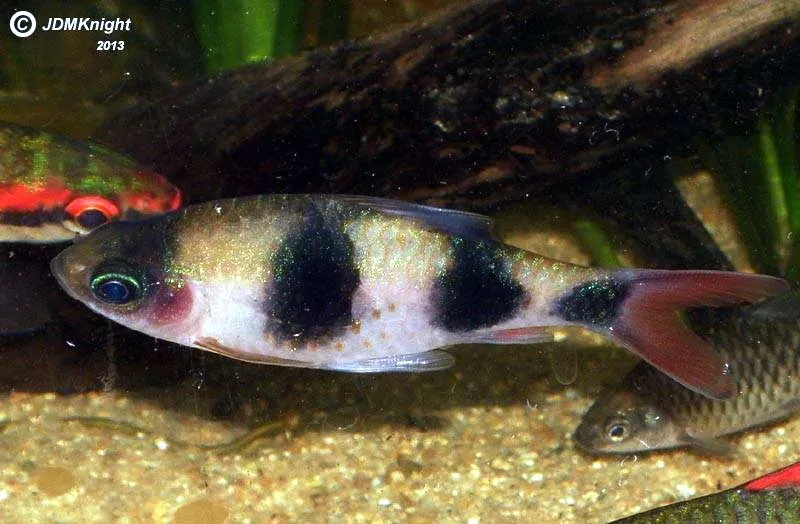 4.7 in (12 cm)37 gal (140 L)66–77°F (19–25°C)
Arulius barb
Dawkinsia arulius
4.7 in (12 cm) · 37 gal (140 L)
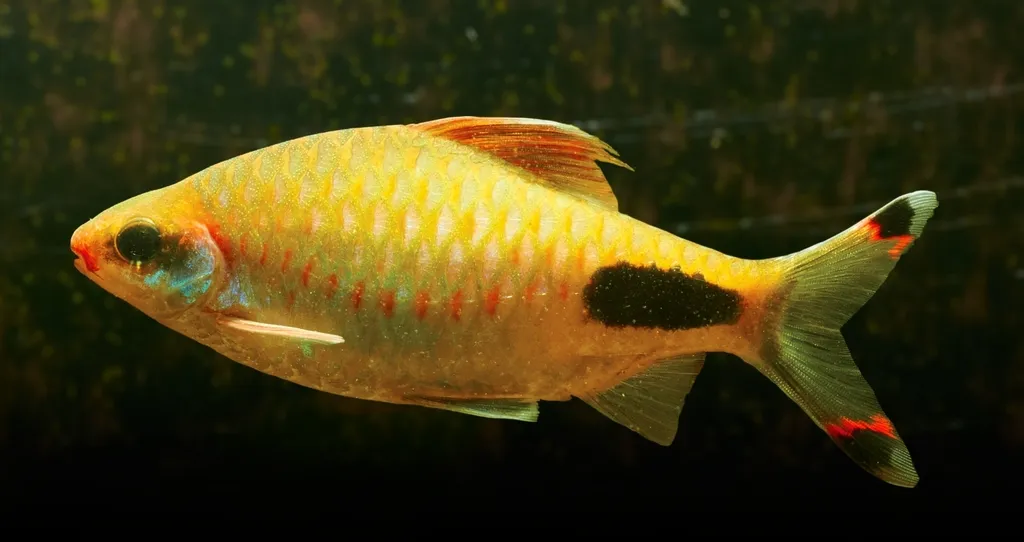 4.7 in (12 cm)53 gal (200 L)66–77°F (19–25°C)
Mascara barb
Dawkinsia assimilis
4.7 in (12 cm) · 53 gal (200 L)
 5.1 in (13 cm)53 gal (200 L)68–77°F (20–25°C)
Filament barb
Dawkinsia filamentosa
5.1 in (13 cm) · 53 gal (200 L)