Arulius barb
Dawkinsia arulius
FreshwaterFish
Care at a glance
- Temperature
- 66–77°F
- 19–25°C
- pH
- 6.0–7.5
- Adult size
- 4.7 in
- 12 cm
- Minimum tank
- 37 gal
- 140 L
- Temperament
- Peaceful
- Social behavior
- Schooling
- Swim level
- Middle
- Difficulty
- Medium
- Breeding
- Medium
- Rarity
- Rare
- Family
- Cyprinidae
- Origin
- Kaveri basin, Karnataka, India
Overview
The true arulius barb is rarely offered, and the fish sold under the name is nearly always the Tambraparni barb; the care is the same either way. Keep them in a school of at least six, since they are happiest and calmest in numbers. They are active, peaceful swimmers that use the middle of the tank and like room to move. Their size and energy mean they suit other active fish rather than slow or delicate ones. Feed a varied diet of flakes, pellets, and regular live or frozen food to keep their color and condition up.
In the wild
Dawkinsia arulius was described from the Kaveri (Cauvery) River at Srirangapatna in Karnataka, southern India, a stretch it seems to have vanished from since the Krishna Raja Sagara dam went in upstream; today it holds on in the upper Kaveri around Coorg and in the headwaters of the Tungabhadra. It lives in clear, flowing water over rock and sand, cooler than many tropical fish prefer. Give a group a roomy tank with some current, open swimming space, and a few plants along the edges. Keep the temperature on the cool side, from around 19 to 25 C, with a pH from 6 to 7.5.
Good to know
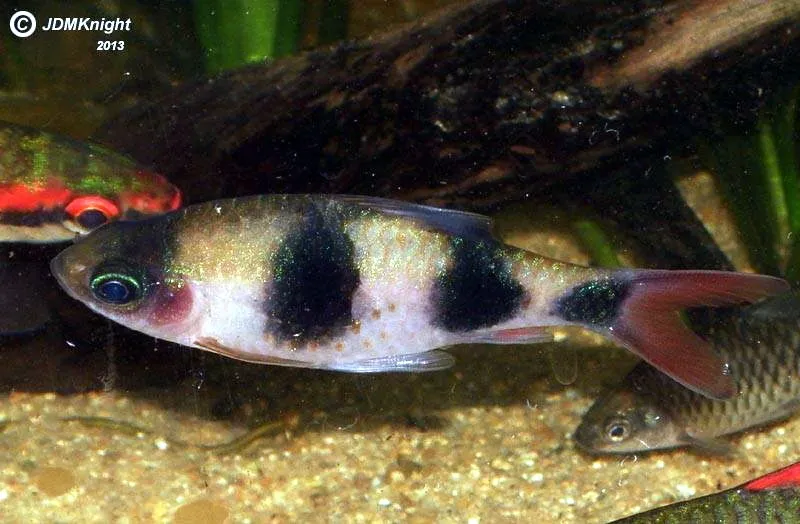
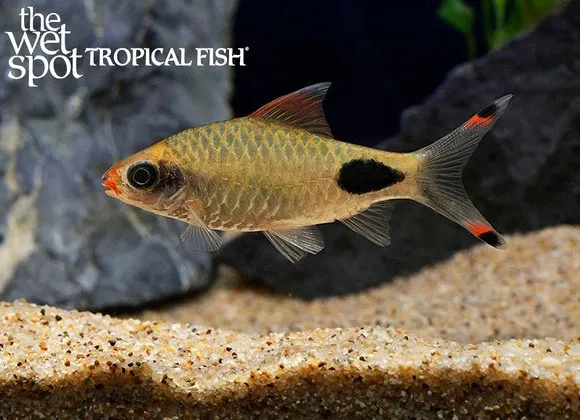
Dawkinsia arulius is a cyprinid described by Jerdon in 1849, reaching about 12 cm, and it is listed as Endangered. Adults carry three black blotches along the flank, and, unusually for the genus, the males never grow dorsal filaments: the dorsal fin stays plain, and the maxillary barbels are so short they are easy to miss, under a quarter of the eye. The near-identical Dawkinsia tambraparniei has trailing dorsal filaments in adult males and barbels longer than half the eye, and that is the fish behind almost every arulius barb in the trade. It is an egg scatterer, and breeding it is moderate in difficulty.
Did you know
Almost every fish sold as an arulius barb is Dawkinsia tambraparniei, so most of what the hobby has written under this name, the famous dorsal streamers included, describes the other fish. The genus name Dawkinsia honors the biologist Richard Dawkins, given in recognition of his work explaining evolution to the public.
Weekly picks
Tank mates
Arulius barb is a peaceful, schooling species that keeps to the middle. These picks share a community profile with it, are safe together in both directions, and overlap on water type, temperature and pH.
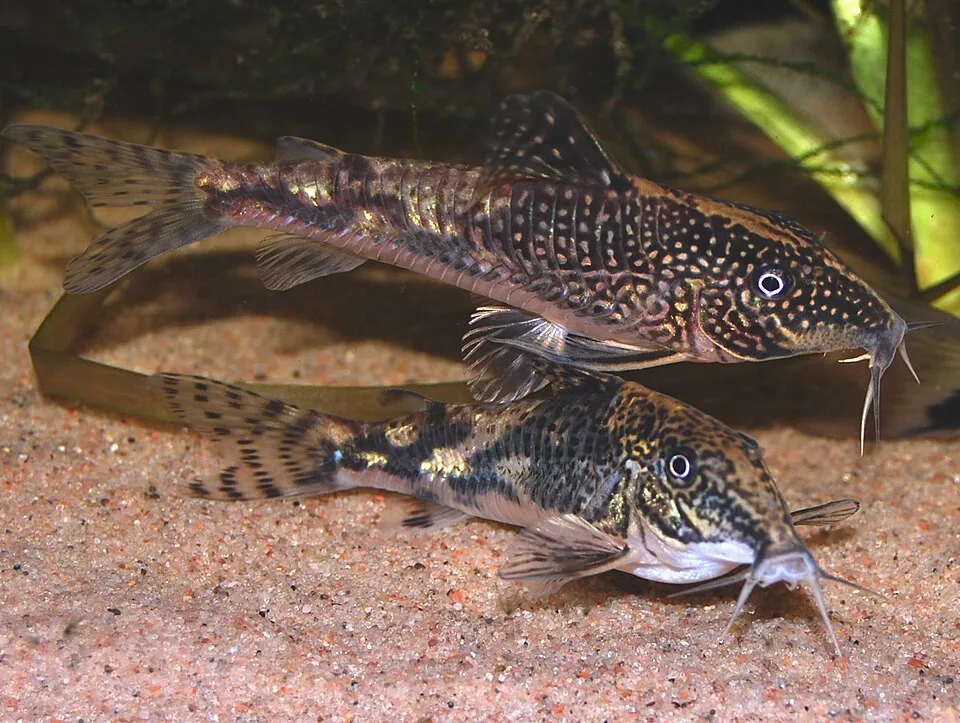
Banded cory
Scleromystax barbatus
Freshwater3.9 in (10 cm) · 40 gal (150 L)66–75°F (19–24°C)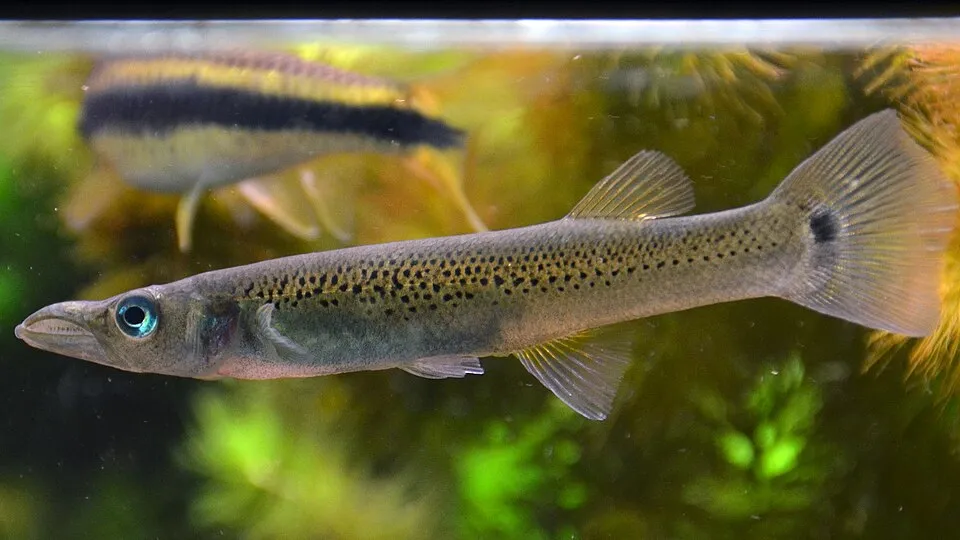
Pike topminnow
Belonesox belizanus
Freshwater7.9 in (20 cm) · 44 gal (165 L)73–82°F (23–28°C)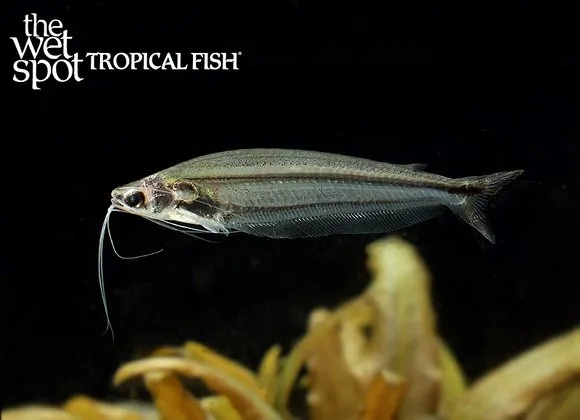
African glass cat
Parailia pellucida
Freshwater4.7 in (12 cm) · 40 gal (150 L)73–82°F (23–28°C)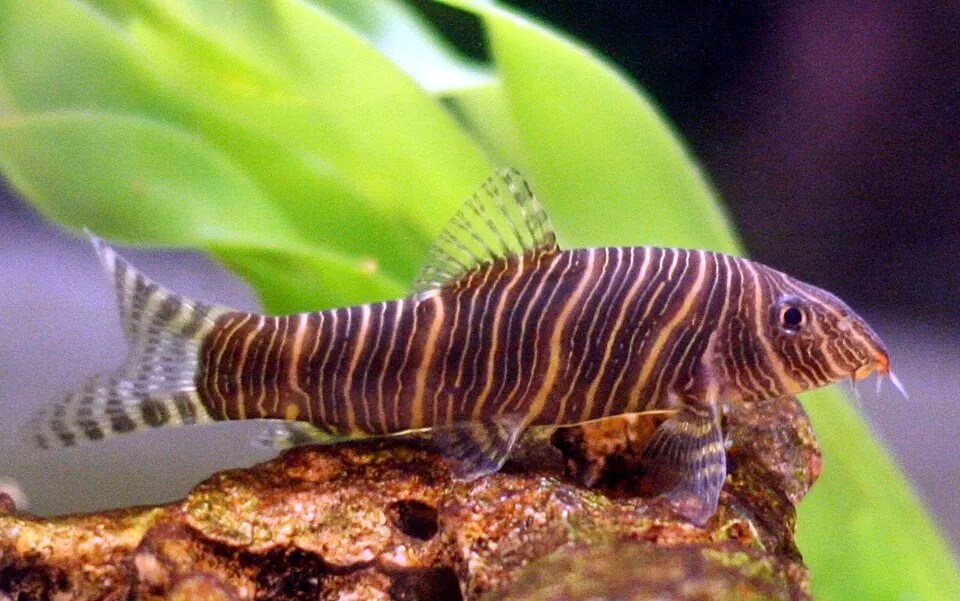
Zebra loach
Botia striata
Freshwater3.5 in (9 cm) · 37 gal (140 L)70–79°F (21–26°C)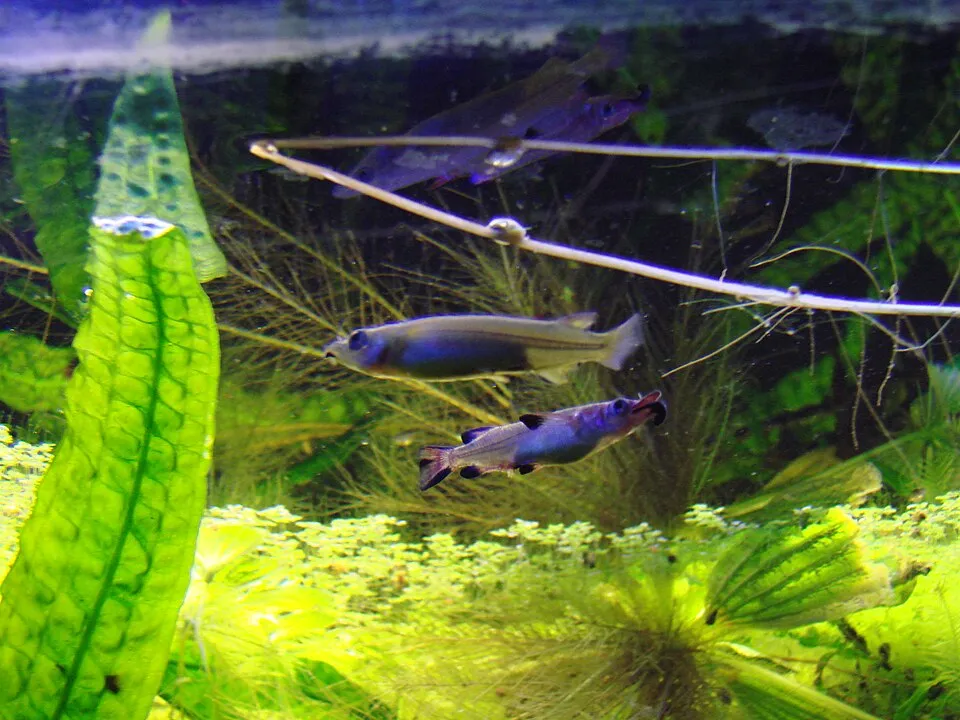
Celebes halfbeak
Nomorhamphus liemi
Freshwater3.5 in (9 cm) · 40 gal (150 L)68–77°F (20–25°C)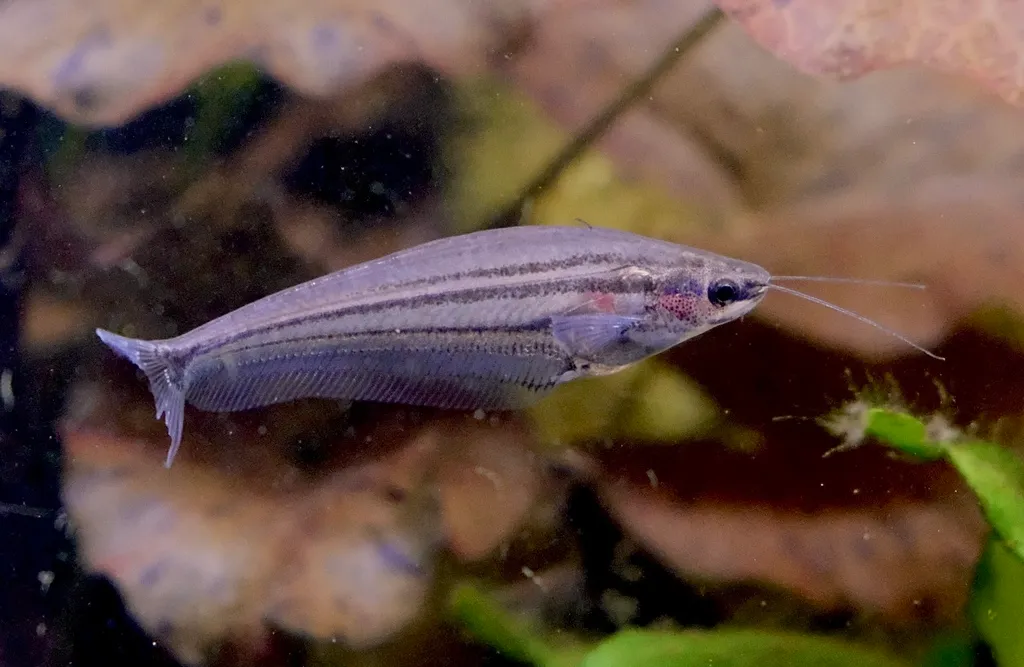
Striped glass catfish
Kryptopterus macrocephalus
Freshwater3.5 in (9 cm) · 36 gal (135 L)70–79°F (21–26°C)
Common questions
What size tank does an Arulius barb need?
An Arulius barb needs at least 37 gal (140 L). It spends most of its time in the middle.
What temperature and pH does an Arulius barb need?
An Arulius barb is comfortable at 66–77°F (19–25°C) with a pH of 6.0–7.5.
How big does an Arulius barb get?
An adult Arulius barb reaches about 4.7 in (12 cm).
Does an Arulius barb need a group?
Yes. An Arulius barb is a schooling species and should be kept in a group, not singly.
Related species
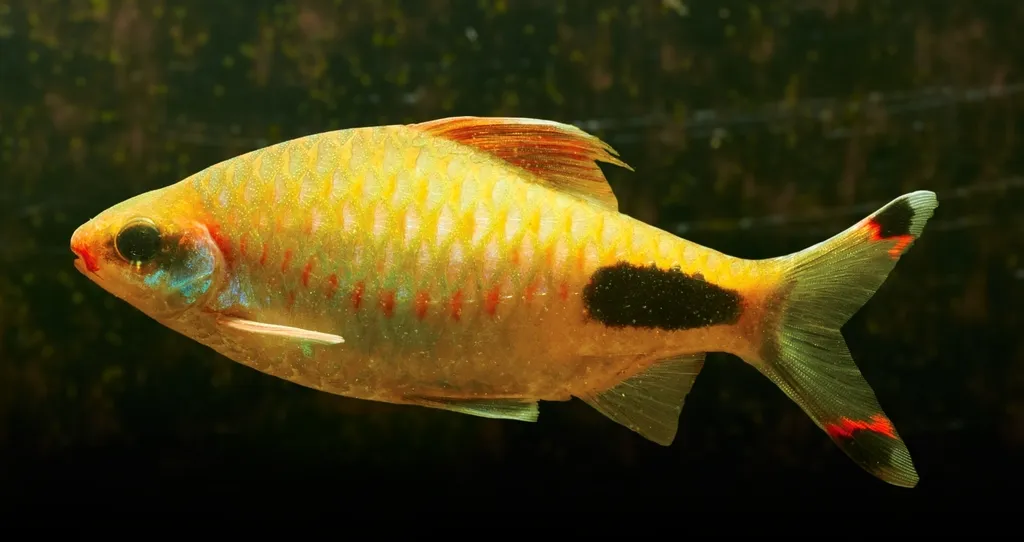 4.7 in (12 cm)53 gal (200 L)66–77°F (19–25°C)
Mascara barb
Dawkinsia assimilis
4.7 in (12 cm) · 53 gal (200 L)
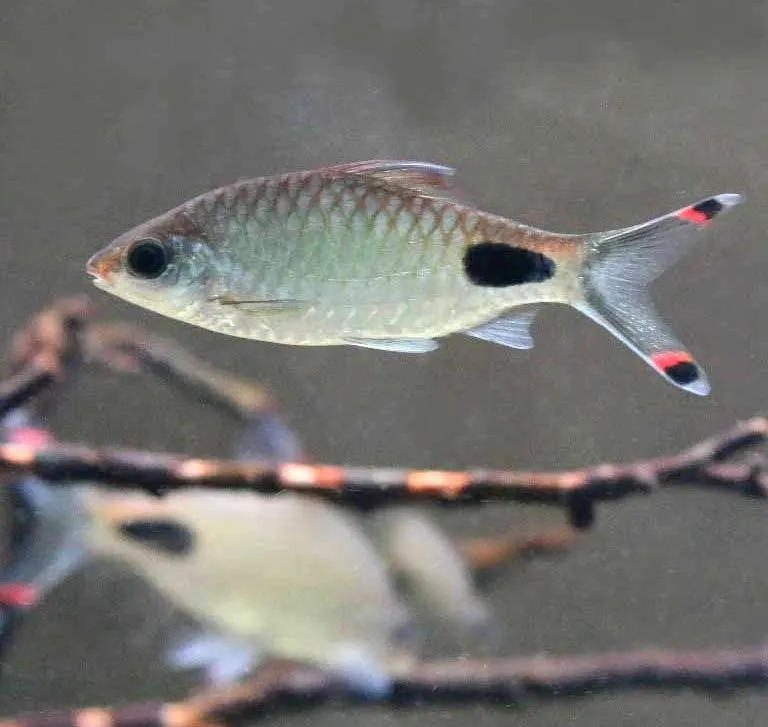 5.1 in (13 cm)53 gal (200 L)68–77°F (20–25°C)
Filament barb
Dawkinsia filamentosa
5.1 in (13 cm) · 53 gal (200 L)
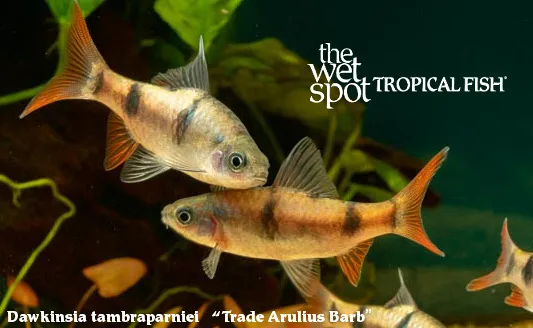 5.1 in (13 cm)42 gal (160 L)70–79°F (21–26°C)
Tambraparni barb
Dawkinsia tambraparniei
5.1 in (13 cm) · 42 gal (160 L)
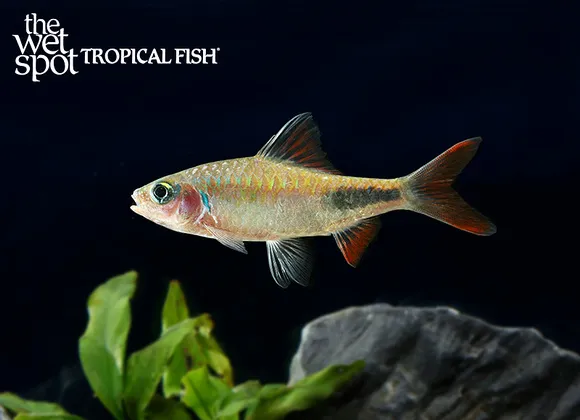 3.9 in (10 cm)42 gal (160 L)70–79°F (21–26°C)
Rohan's barb
Dawkinsia rohani
3.9 in (10 cm) · 42 gal (160 L)
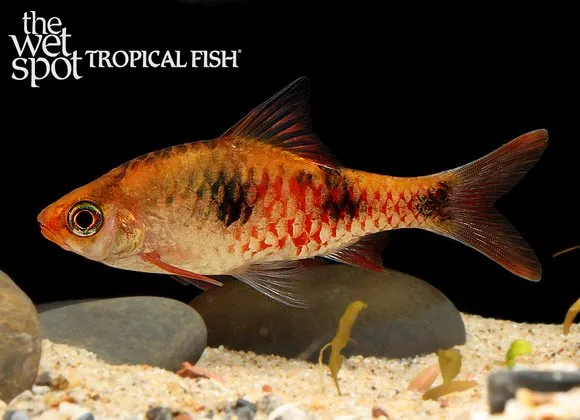 3.9 in (10 cm)42 gal (160 L)70–79°F (21–26°C)
Ruby-tinted barb
Dawkinsia rubrotincta
3.9 in (10 cm) · 42 gal (160 L)
 3.5 in (9 cm)42 gal (160 L)70–79°F (21–26°C)
Apsara barb
Dawkinsia apsara
3.5 in (9 cm) · 42 gal (160 L)