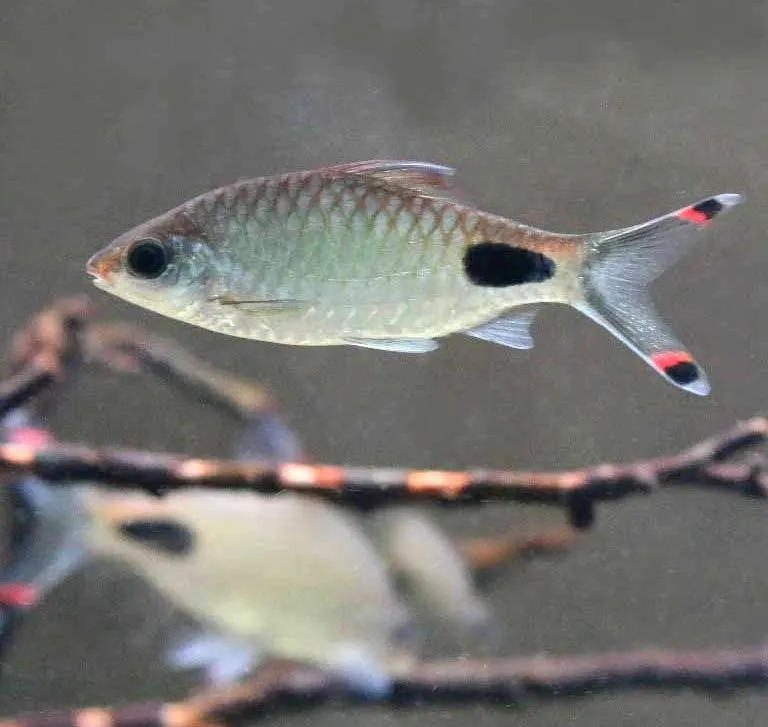
Filament barb
Dawkinsia filamentosa
FreshwaterFish
Care at a glance
- Temperature
- 68–77°F
- 20–25°C
- pH
- 6.0–7.5
- Adult size
- 5.1 in
- 13 cm
- Minimum tank
- 53 gal
- 200 L
- Temperament
- Peaceful
- Social behavior
- Schooling
- Swim level
- Middle
- Difficulty
- Easy
- Breeding
- Medium
- Rarity
- Rare
- Family
- Cyprinidae
- Origin
- India
Overview
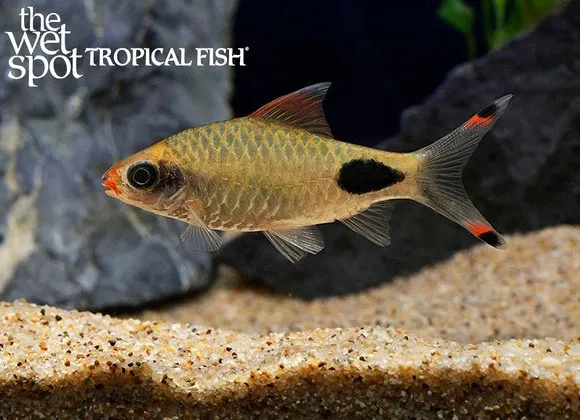
Filament barbs are peaceful, active shoaling fish that should be kept in a group of at least six, and ideally more, so they display their best colors and channel their energy into the shoal. They are strong swimmers that use the full length of the middle water, so they need open space to cruise. Their calm temperament suits a spacious community with other medium sized, active fish, though small timid species may find them a little boisterous. Feed a varied diet of flake, pellets, and frozen foods, with some vegetable matter and green algae. A tank around 200 liters or larger gives this energetic barb the swimming room it needs.
In the wild
This barb comes from the rivers and coastal floodplains of southern India, especially the states of Kerala, Tamil Nadu, and Karnataka, where it lives in flowing, well oxygenated water. It does well across a moderate range of about 20–25 C and a pH of 6.0–7.5. Set up a roomy tank with a gravel and sand base, water worn rock and driftwood, and some current from the filter. Leave a long, open swimming lane down the middle and keep any planting to the sides and background so the shoal has room to move.
Good to know
Dawkinsia filamentosa is a member of the family Cyprinidae and reaches around 13 cm. Its name comes from the long, thread like extensions that mature males grow from the rays of the dorsal fin, which trail behind them as they swim. The genus Dawkinsia was split from the old catch all genus Puntius in 2012. It is an egg scattering, non guarding spawner that deposits eggs among fine plants, and it can be bred in a dedicated tank with moderate effort.
Did you know
The genus Dawkinsia was named in 2012 in honor of the evolutionary biologist Richard Dawkins, for his work in explaining science to the public. Dawkins said he was delighted, noting that an aquarium he helps look after already kept a pair of this very fish.
Weekly picks
Tank mates
Filament barb is a peaceful, schooling species that keeps to the middle. These picks share a community profile with it, are safe together in both directions, and overlap on water type, temperature and pH.
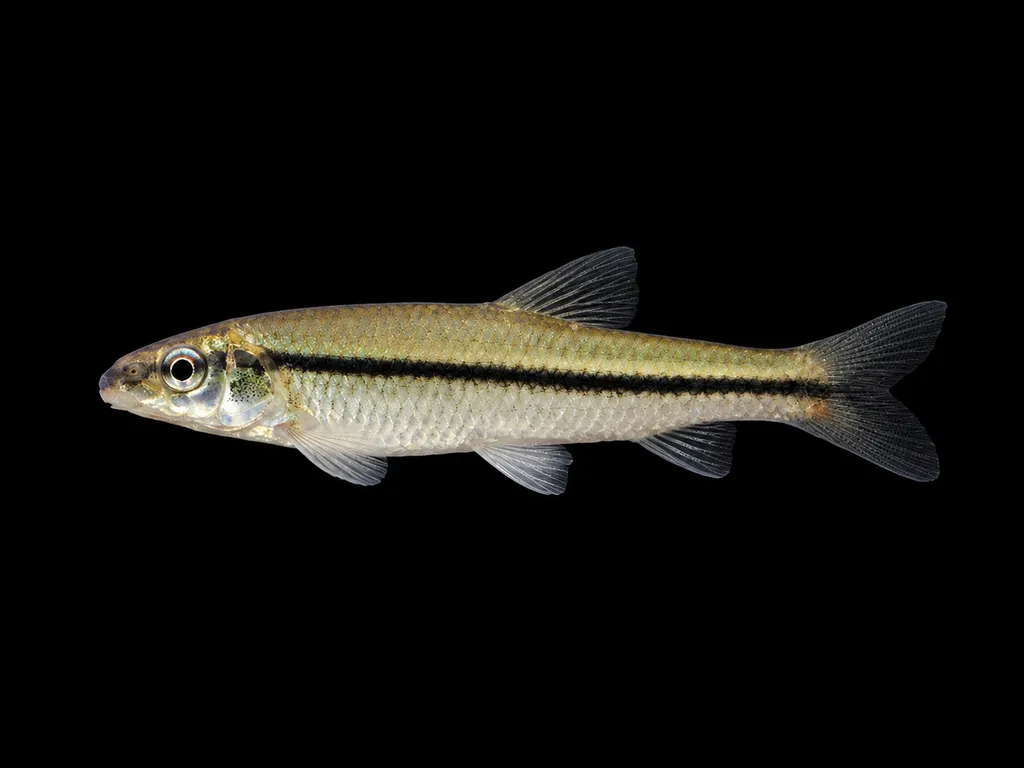
Darter characin
Apareiodon affinis
Freshwater7.1 in (18 cm) · 53 gal (200 L)64–77°F (18–25°C)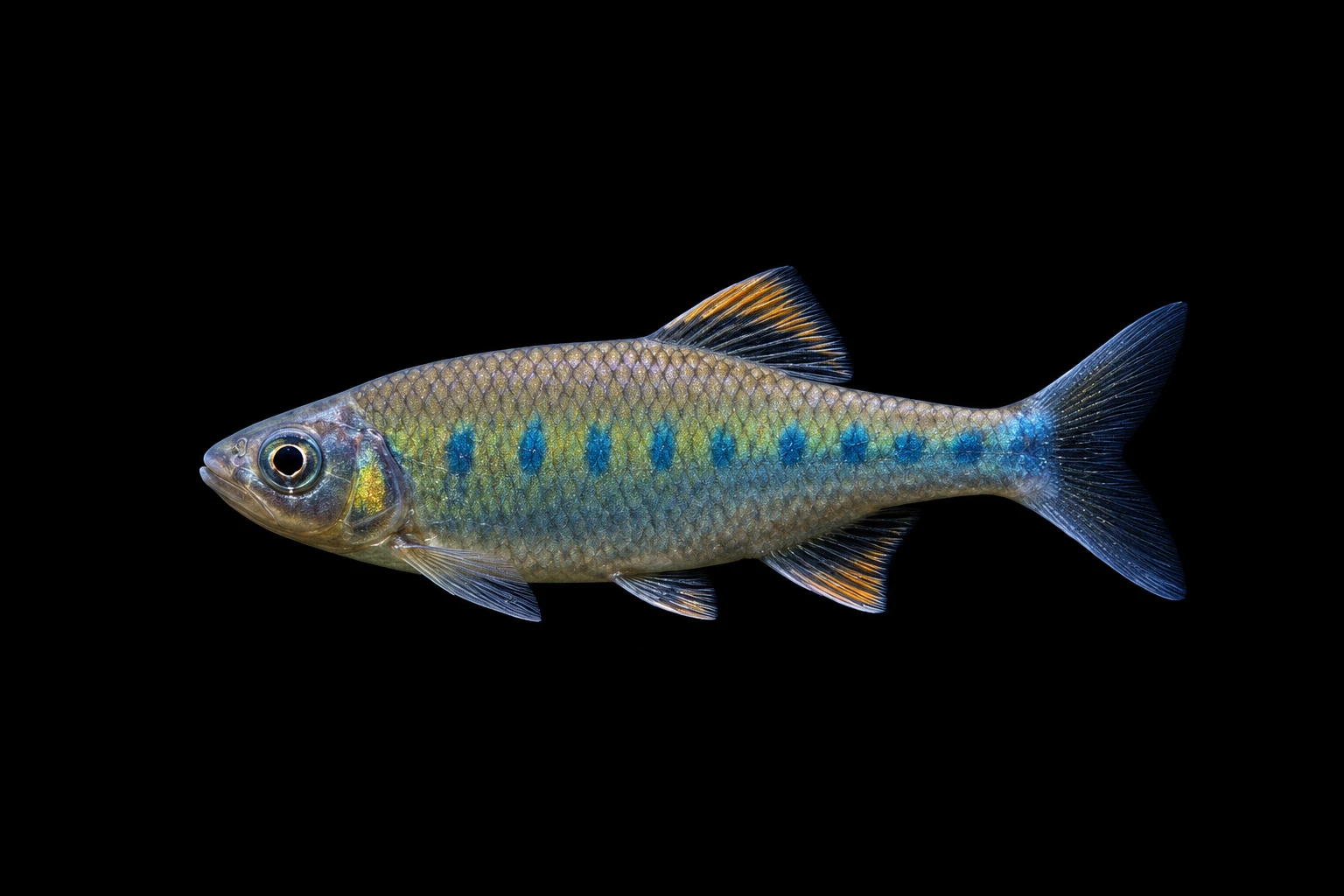
Blue spotted hill trout
Barilius bakeri
Freshwater5.1 in (13 cm) · 53 gal (200 L)64–79°F (18–26°C)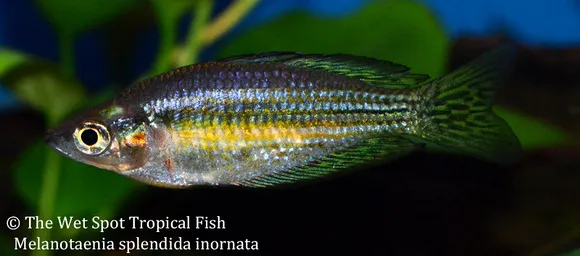
Checkered rainbowfish
Melanotaenia splendida inornata
Freshwater4.7 in (12 cm) · 53 gal (200 L)72–86°F (22–30°C)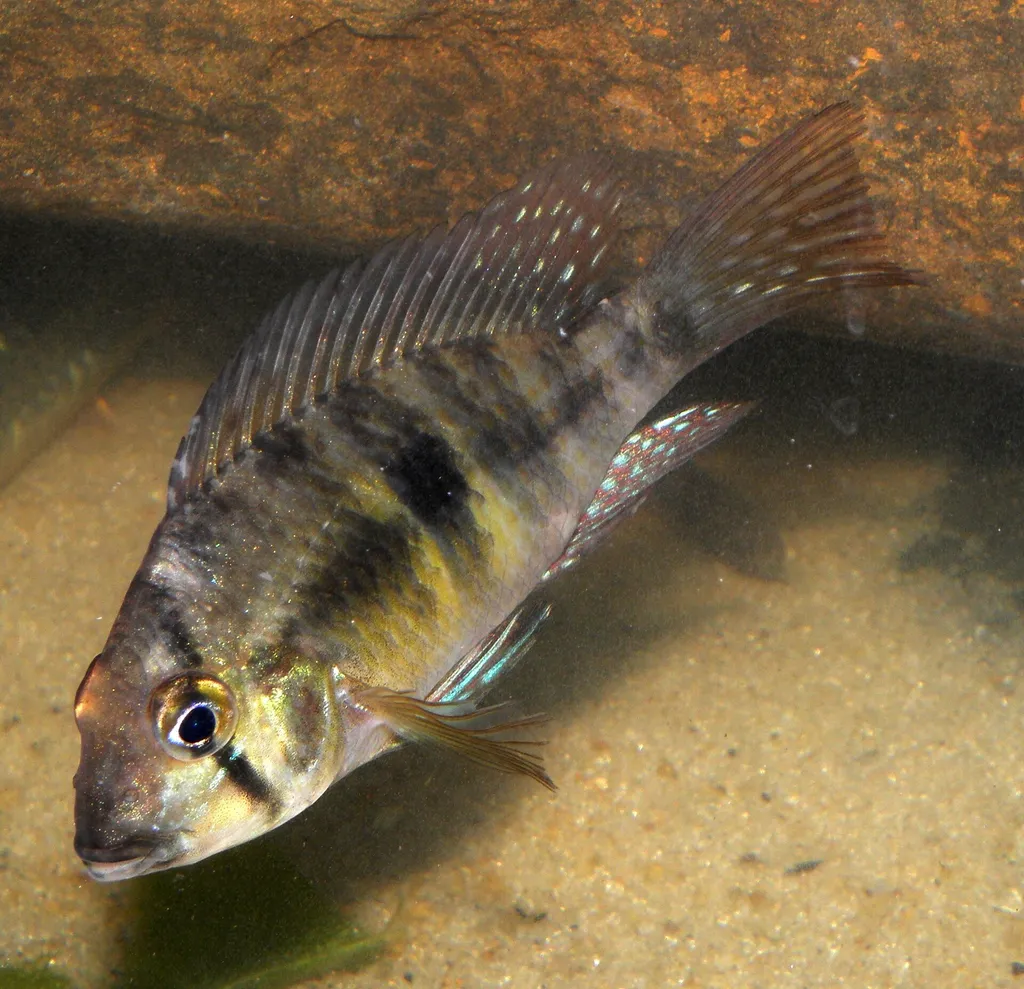
Meridionalis eartheater
Gymnogeophagus meridionalis
Freshwater4.3 in (11 cm) · 53 gal (200 L)61–79°F (16–26°C)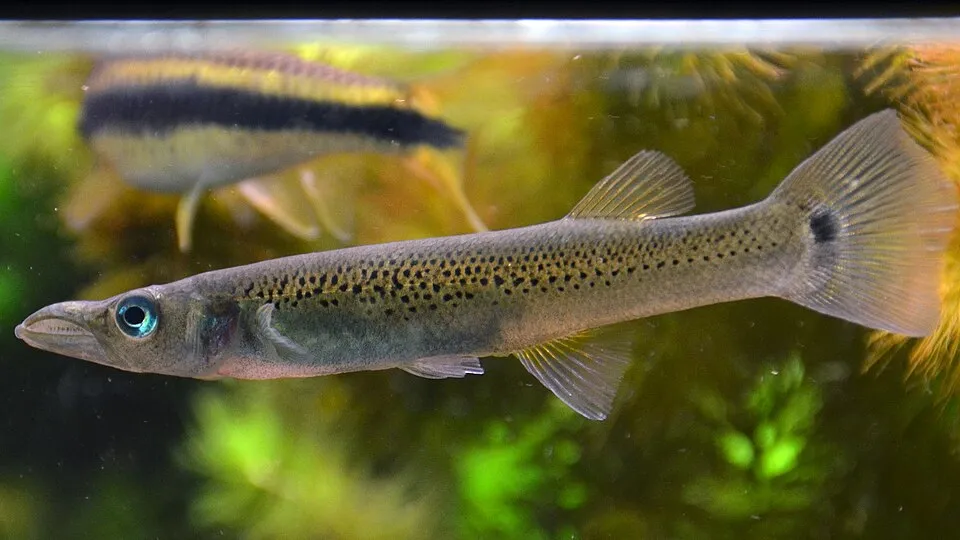
Pike topminnow
Belonesox belizanus
Freshwater7.9 in (20 cm) · 44 gal (165 L)73–82°F (23–28°C)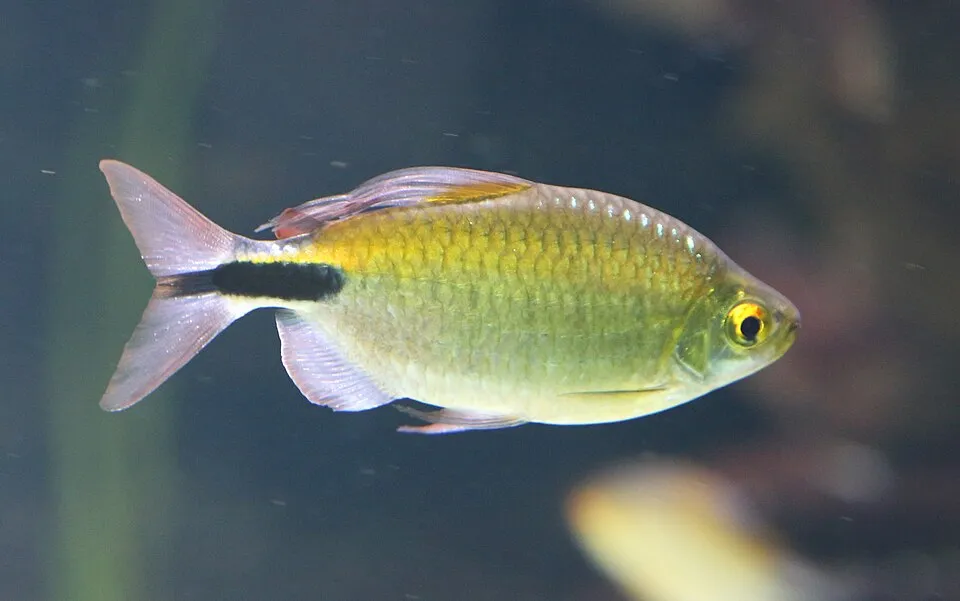
Long-fin tetra
Brycinus longipinnis
Freshwater4.9 in (12.5 cm) · 50 gal (190 L)72–79°F (22–26°C)
Common questions
What size tank does a Filament barb need?
A Filament barb needs at least 53 gal (200 L). It spends most of its time in the middle.
What temperature and pH does a Filament barb need?
A Filament barb is comfortable at 68–77°F (20–25°C) with a pH of 6.0–7.5.
How big does a Filament barb get?
An adult Filament barb reaches about 5.1 in (13 cm).
Does a Filament barb need a group?
Yes. A Filament barb is a schooling species and should be kept in a group, not singly.
Related species
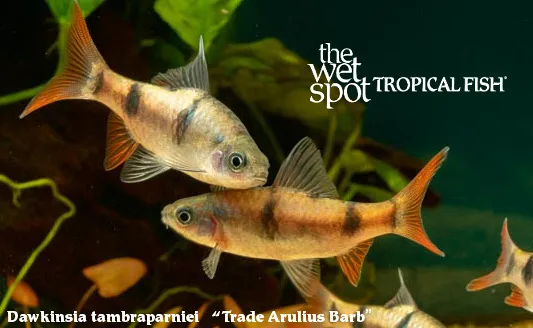 5.1 in (13 cm)42 gal (160 L)70–79°F (21–26°C)
Tambraparni barb
Dawkinsia tambraparniei
5.1 in (13 cm) · 42 gal (160 L)
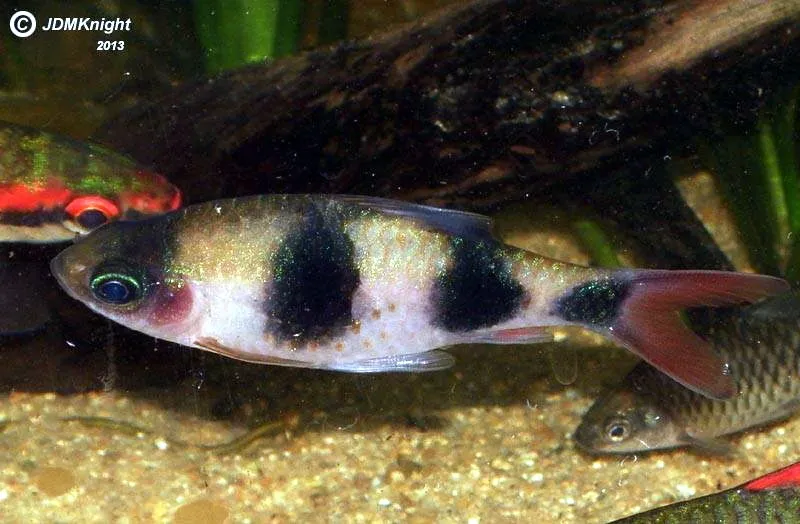 4.7 in (12 cm)37 gal (140 L)66–77°F (19–25°C)
Arulius barb
Dawkinsia arulius
4.7 in (12 cm) · 37 gal (140 L)
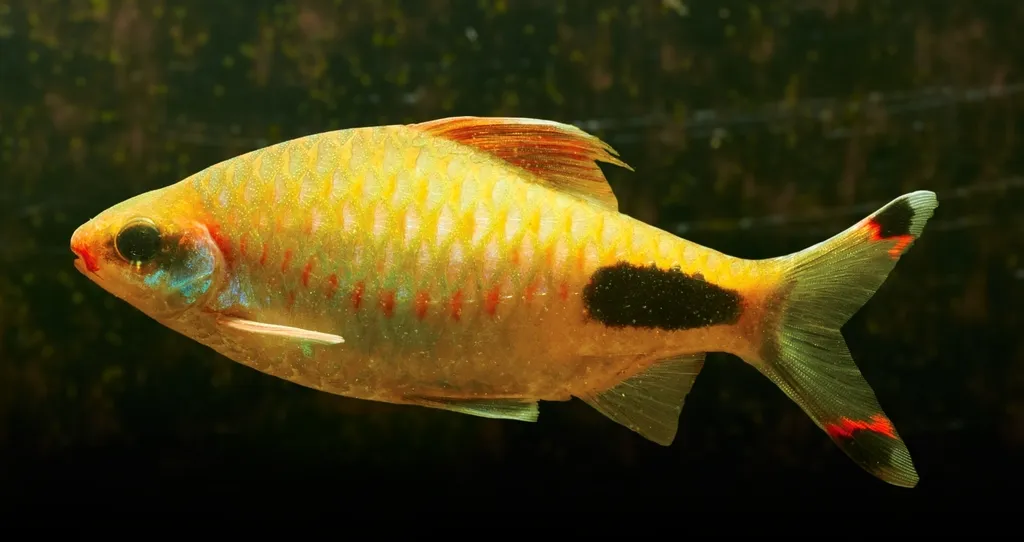 4.7 in (12 cm)53 gal (200 L)66–77°F (19–25°C)
Mascara barb
Dawkinsia assimilis
4.7 in (12 cm) · 53 gal (200 L)
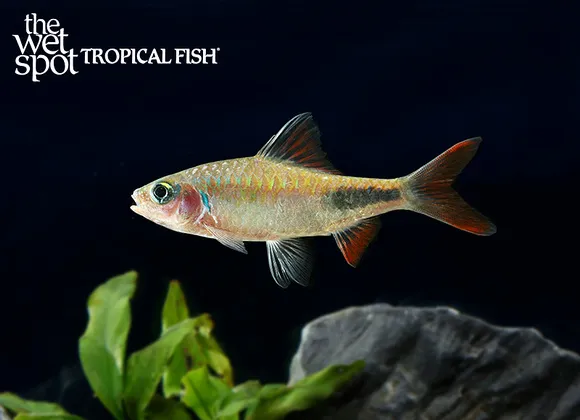 3.9 in (10 cm)42 gal (160 L)70–79°F (21–26°C)
Rohan's barb
Dawkinsia rohani
3.9 in (10 cm) · 42 gal (160 L)
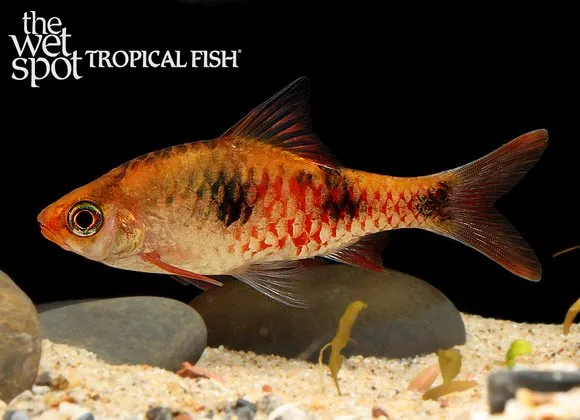 3.9 in (10 cm)42 gal (160 L)70–79°F (21–26°C)
Ruby-tinted barb
Dawkinsia rubrotincta
3.9 in (10 cm) · 42 gal (160 L)
 3.5 in (9 cm)42 gal (160 L)70–79°F (21–26°C)
Apsara barb
Dawkinsia apsara
3.5 in (9 cm) · 42 gal (160 L)