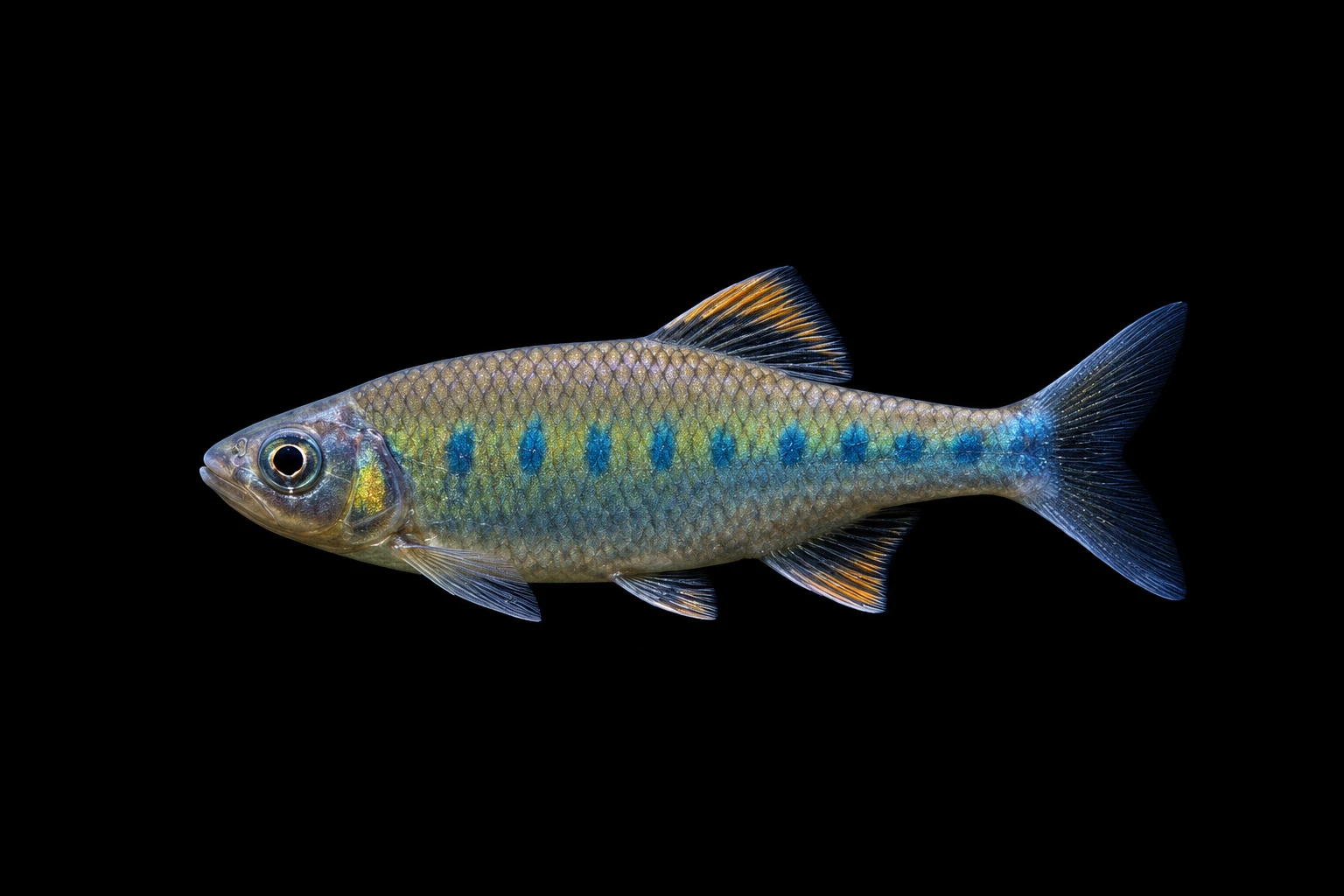
Blue spotted hill trout
Barilius bakeri
Also known as Opsarius bakeri, Blue dot barilius, Royal Trout Danio
FreshwaterFish
Care at a glance
- Temperature
- 64–79°F
- 18–26°C
- pH
- 6.5–7.5
- Adult size
- 5.1 in
- 13 cm
- Minimum tank
- 53 gal
- 200 L
- Temperament
- Mostly peaceful
- Social behavior
- Schooling
- Swim level
- Top
- Difficulty
- Medium
- Breeding
- Hard
- Rarity
- Rare
- Family
- Cyprinidae
- Origin
- Endemic to fast, hilly streams of the Western Ghats in southwestern India.
Overview
Give blue spotted hill trout a long tank of at least 200 litres with strong flow, high oxygen, and a tight lid, since they are fast jumpers. Keep cool, clean water at 18 to 26 C with a pH of 6.5 to 7.5 and do generous weekly water changes. Keep a group of at least five to spread out their energy, and feed insects, frozen bloodworm and mysis, and sinking pellets. They will eat small fish, so choose tankmates too large to swallow.
In the wild
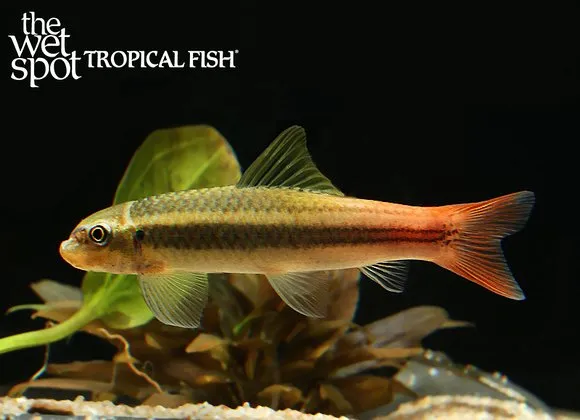
The blue spotted hill trout lives in fast, clear, well oxygenated streams and rapids of the Western Ghats in southwestern India. It holds in the current in the upper water and darts after insects that hit the surface. Rows of blue-green spots and bars mark a streamlined, trout-like body built for fast water. It needs cool, clean, moving water to thrive.
Good to know
Barilius bakeri is sometimes listed under the genus Opsarius, and the whole group is built for life in swift hill streams. It reaches about 13 cm and is a fast, predatory surface hunter rather than a placid community fish. It comes from the mid and higher reaches of rivers across Kerala, Tamil Nadu, and Karnataka.
Did you know
They behave like miniature trout, hanging in the current and rising to snatch insects from the surface, which is where the hill trout name comes from.
Weekly picks
Tank mates
Blue spotted hill trout is a mostly peaceful, schooling species that keeps to the top. These picks share a community profile with it, are safe together in both directions, and overlap on water type, temperature and pH.
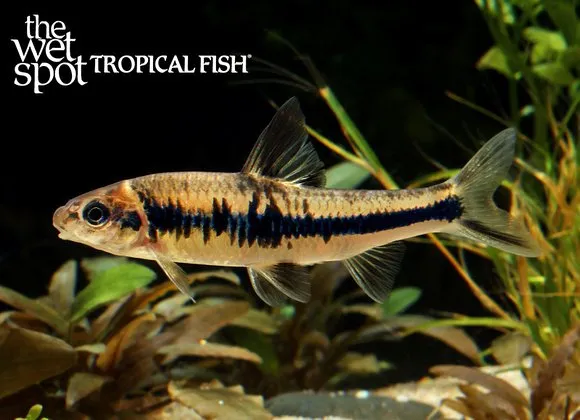
Rainbow gudgeon
Sarcocheilichthys nigripinnis
Freshwater6.3 in (16 cm) · 53 gal (200 L)57–75°F (14–24°C)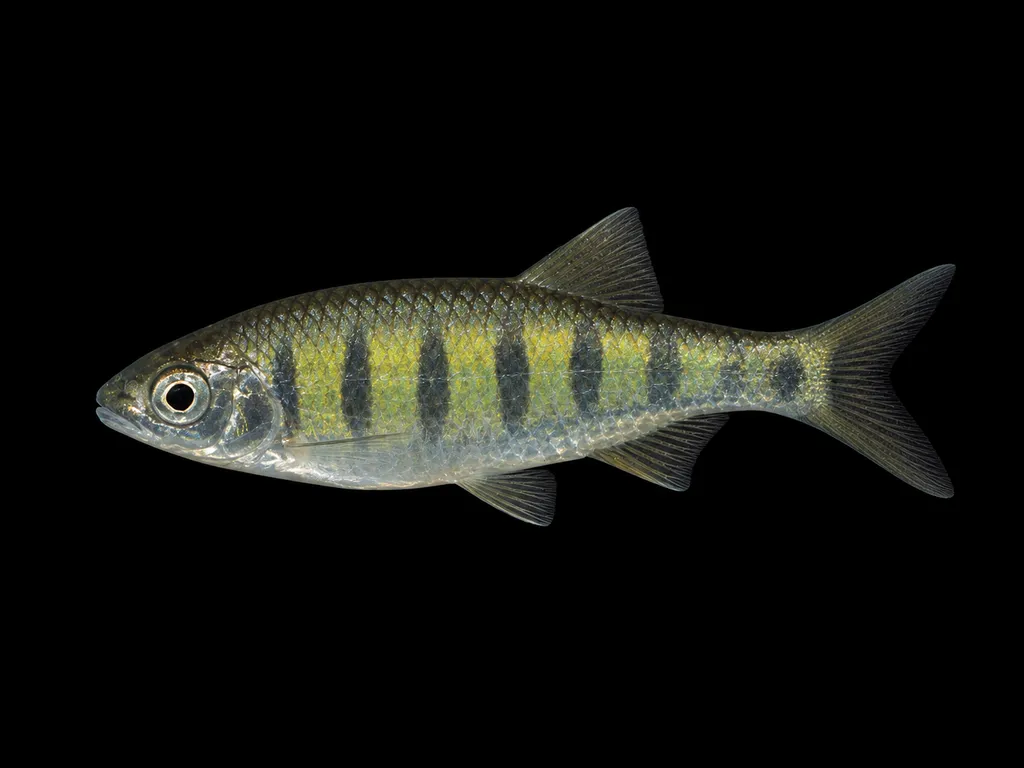
Barna baril
Opsarius barna
Freshwater5.9 in (15 cm) · 53 gal (200 L)64–79°F (18–26°C)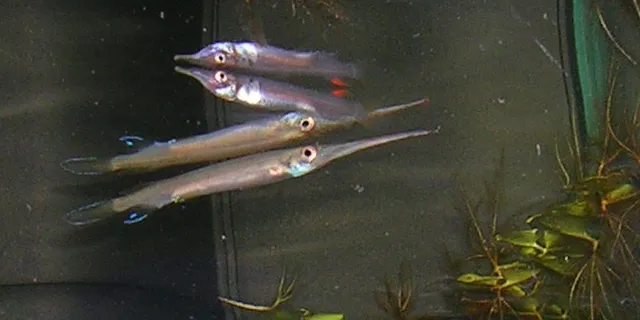
Forest halfbeak
Hemirhamphodon pogonognathus
Freshwater3.5 in (9 cm) · 34 gal (130 L)75–82°F (24–28°C)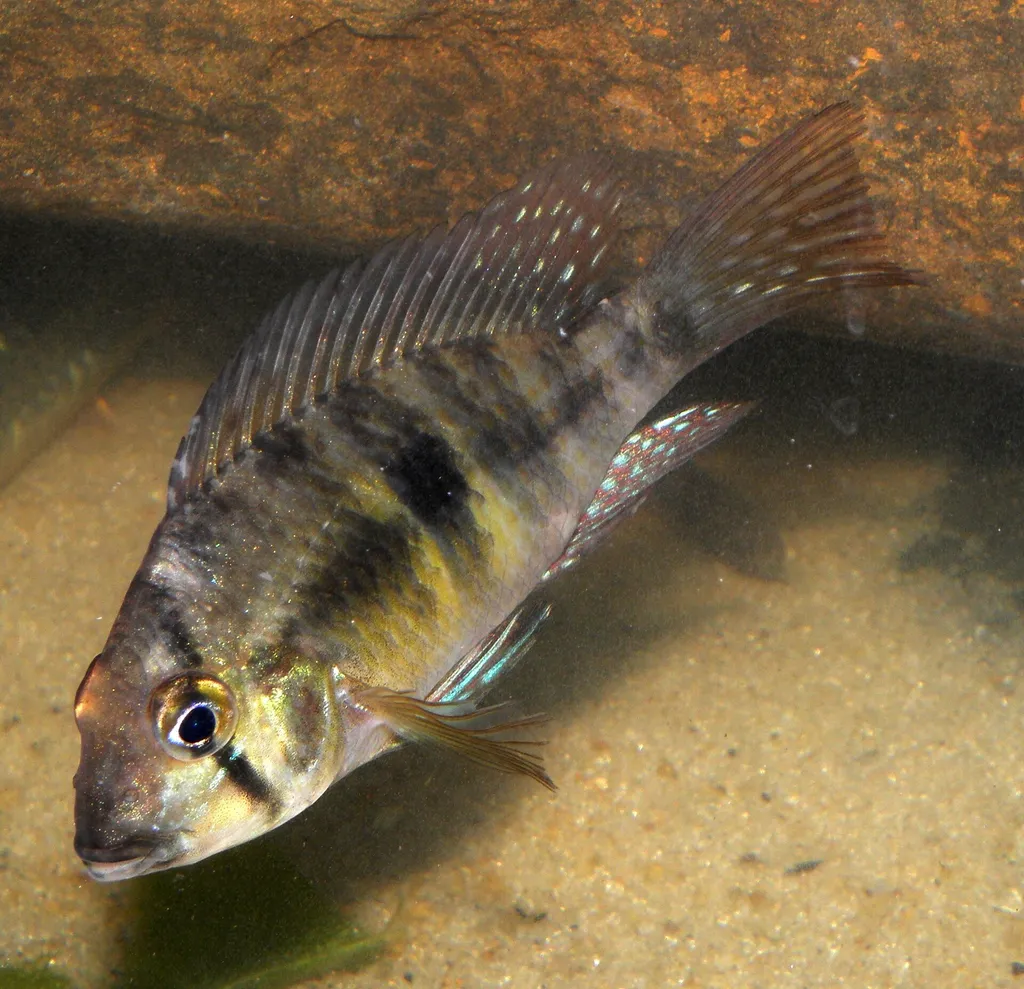
Meridionalis eartheater
Gymnogeophagus meridionalis
Freshwater4.3 in (11 cm) · 53 gal (200 L)61–79°F (16–26°C)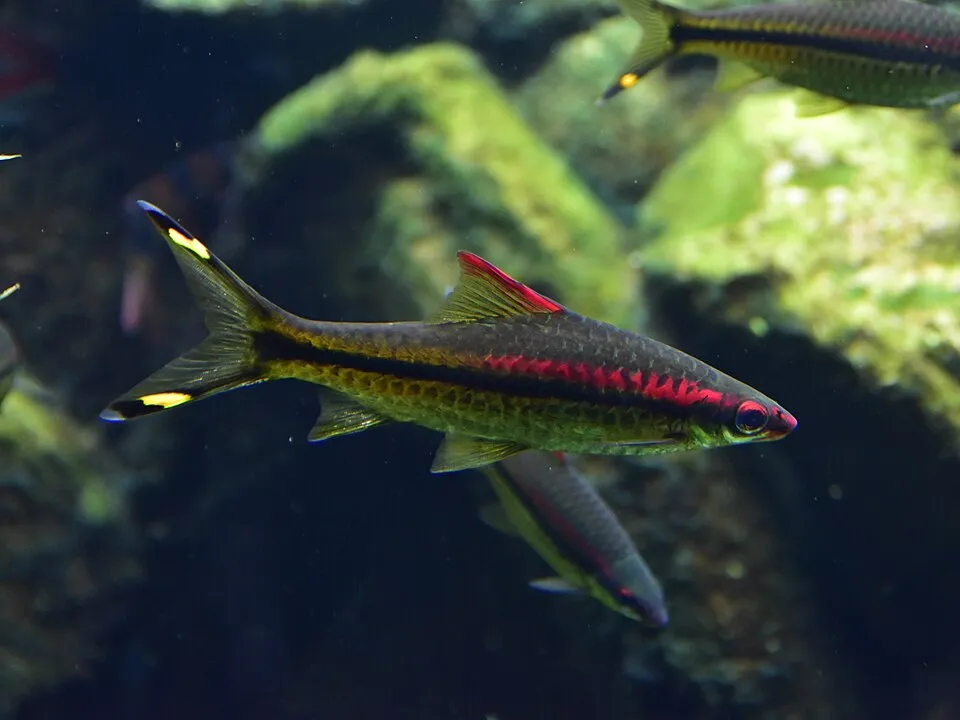
Redline torpedo barb
Sahyadria denisonii
Freshwater4.3 in (11 cm) · 53 gal (200 L)59–77°F (15–25°C)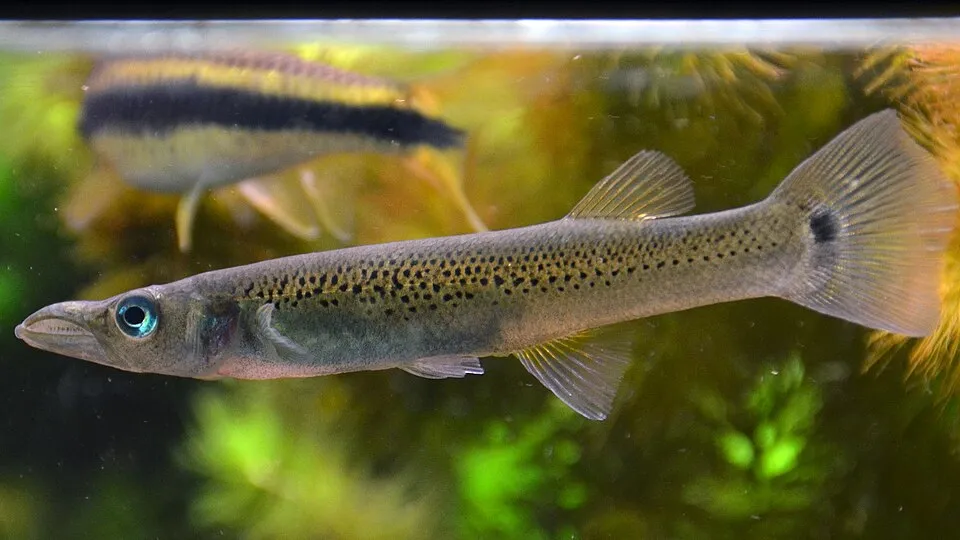
Pike topminnow
Belonesox belizanus
Freshwater7.9 in (20 cm) · 44 gal (165 L)73–82°F (23–28°C)
Common questions
What size tank does a Blue spotted hill trout need?
A Blue spotted hill trout needs at least 53 gal (200 L). It spends most of its time in the top.
What temperature and pH does a Blue spotted hill trout need?
A Blue spotted hill trout is comfortable at 64–79°F (18–26°C) with a pH of 6.5–7.5.
How big does a Blue spotted hill trout get?
An adult Blue spotted hill trout reaches about 5.1 in (13 cm).
Does a Blue spotted hill trout need a group?
Yes. A Blue spotted hill trout is a schooling species and should be kept in a group, not singly.
Related species
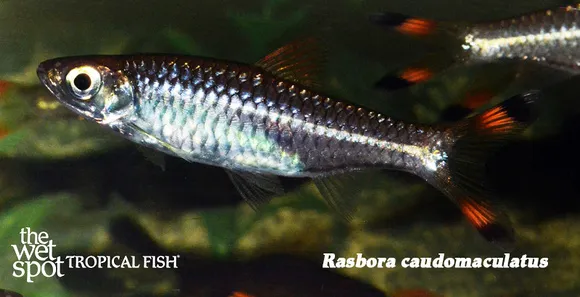 5.1 in (13 cm)53 gal (200 L)68–79°F (20–26°C)
Greater scissortail
Rasbora caudimaculata
5.1 in (13 cm) · 53 gal (200 L)
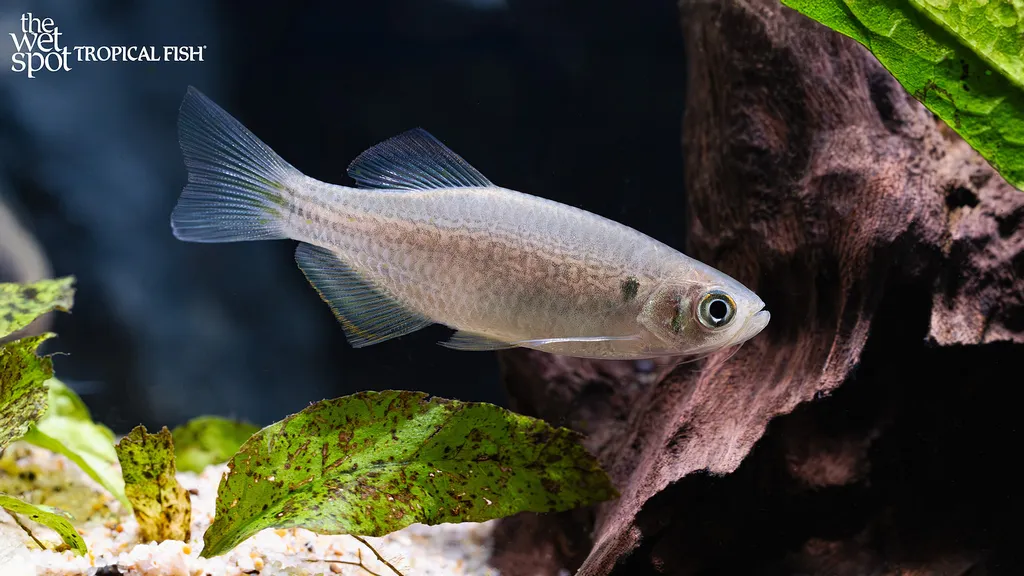 5.1 in (13 cm)32 gal (120 L)68–79°F (20–26°C)
Moustached danio
Danio dangila
5.1 in (13 cm) · 32 gal (120 L)
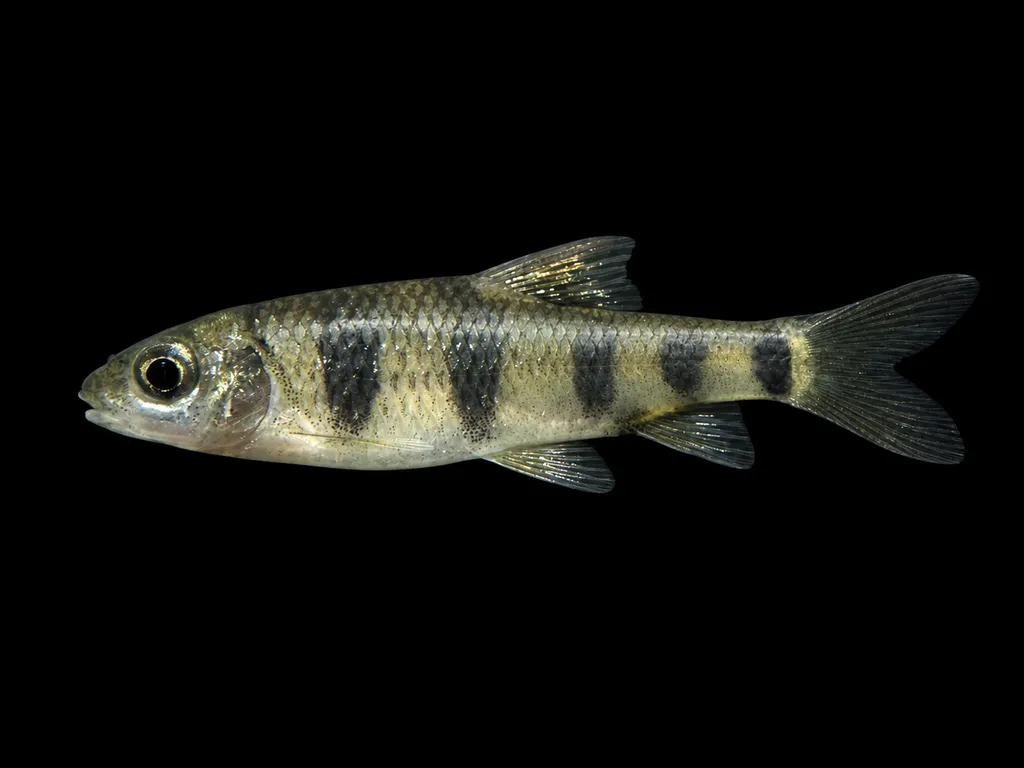 5.1 in (13 cm)53 gal (200 L)64–79°F (18–26°C)
Beijiang barb
Acrossocheilus beijiangensis
5.1 in (13 cm) · 53 gal (200 L)
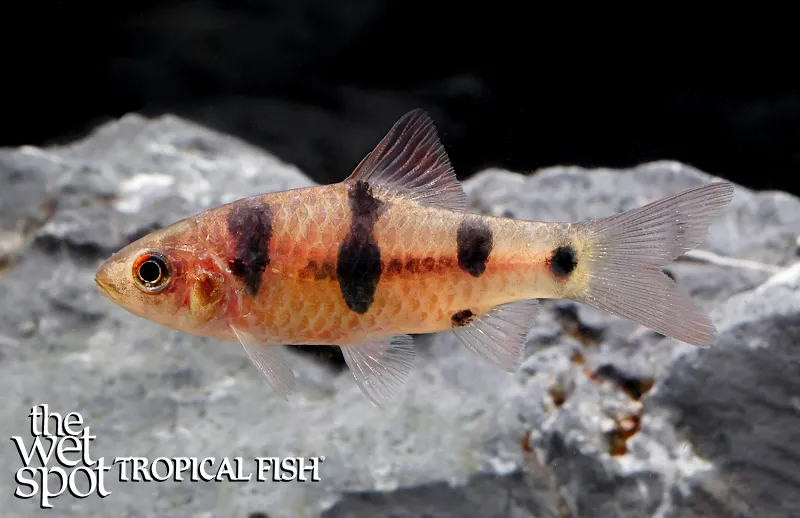 5.1 in (13 cm)53 gal (200 L)75–82°F (24–28°C)
Clown barb
Barbodes dunckeri
5.1 in (13 cm) · 53 gal (200 L)
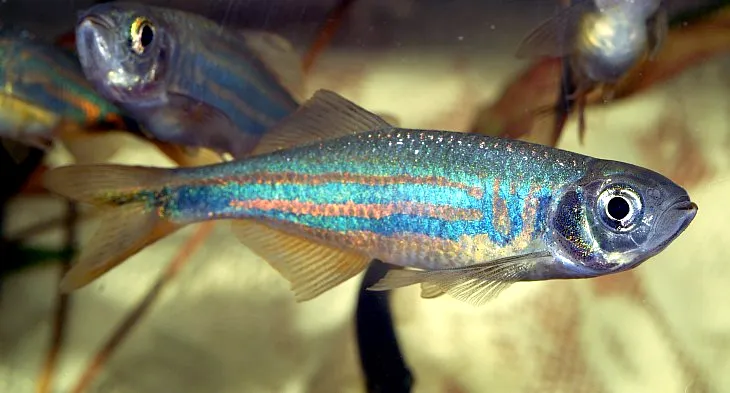 5.1 in (13 cm)48 gal (180 L)64–77°F (18–25°C)
Malabar danio
Devario malabaricus
5.1 in (13 cm) · 48 gal (180 L)
 5.1 in (13 cm)42 gal (160 L)72–81°F (22–27°C)
Redtail garra
Garra panitvongi
5.1 in (13 cm) · 42 gal (160 L)