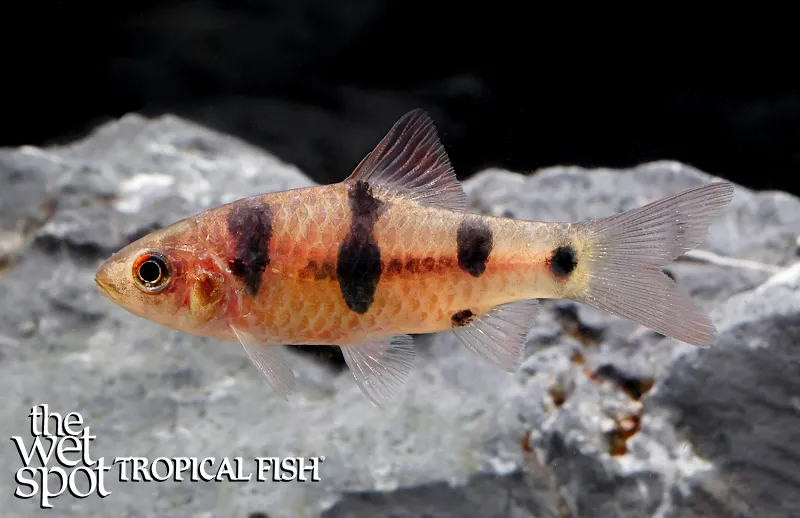
Clown barb
Barbodes dunckeri
Also known as Bigspot barb, Big spot barb, Duncker's barb, Puntius dunckeri, Barbus dunckeri
FreshwaterFish
Care at a glance
- Temperature
- 75–82°F
- 24–28°C
- pH
- 6.0–7.0
- Adult size
- 5.1 in
- 13 cm
- Minimum tank
- 53 gal
- 200 L
- Temperament
- Mostly peaceful
- Social behavior
- Schooling
- Swim level
- Middle
- Difficulty
- Easy
- Breeding
- Hard
- Rarity
- Rare
- Family
- Cyprinidae
- Origin
- Endemic to clear streams and acidic swamps of the Malay Peninsula.
Overview
Keep bigspot barbs in a group of at least six in a tank of 200 litres or more, since they reach around 13 cm and are active swimmers. Warm, soft, slightly acidic water at 24 to 28 C with a pH of 6.0 to 7.0 suits them best. Feed flakes, pellets, vegetables, and frozen foods, and expect them to nibble soft plants. They can be pushy, so keep them with other robust, similarly sized peaceful fish rather than small nano species.
In the wild
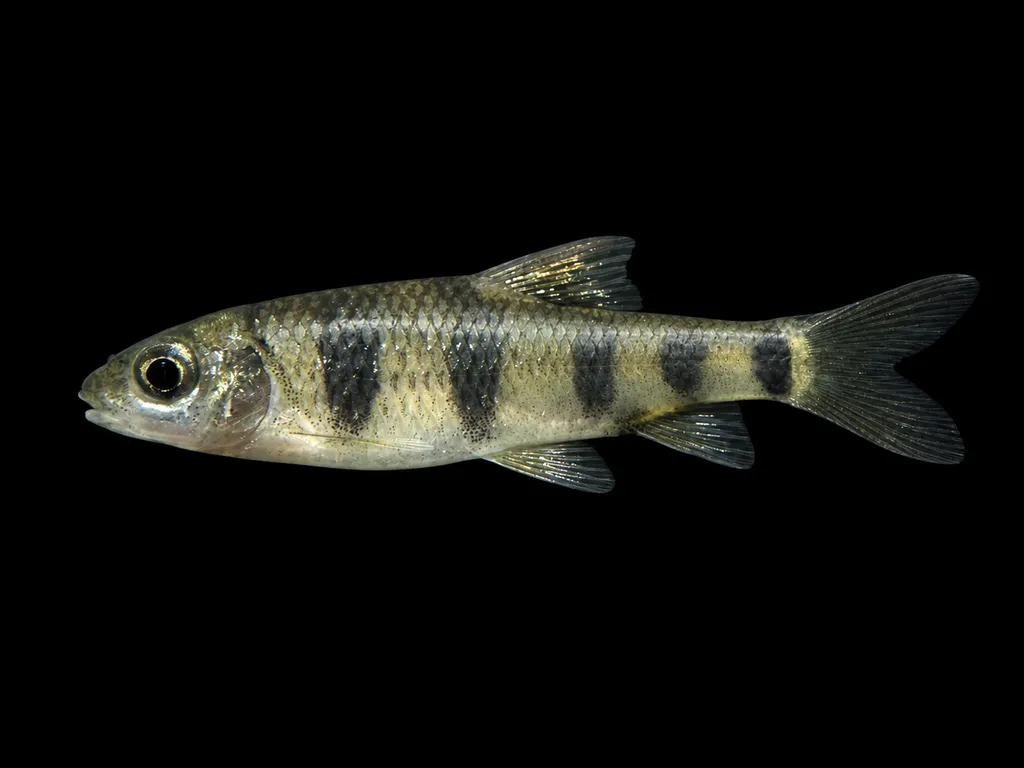
The bigspot barb comes from clear jungle streams and soft, acidic swamps of the Malay Peninsula. It shoals in the middle and lower water in warm, soft blackwater. Adults show bold dark blotches and a rosy flush, brightest in mature males. It is a colorful, larger barb for a warm soft-water community.
Good to know
This is the fish most often sold in shops as the clown barb, though it has long been misidentified as its rarer relative Barbodes everetti from Borneo. It was moved from Puntius into the genus Barbodes and reaches about 13 cm. The bold blotches on the flank give it the name bigspot barb.
Did you know
Almost every clown barb sold in shops is really this species, while the true Barbodes everetti it is named for is rarely seen in the trade at all.
Weekly picks
Tank mates
Clown barb is a mostly peaceful, schooling species that keeps to the middle. These picks share a community profile with it, are safe together in both directions, and overlap on water type, temperature and pH.
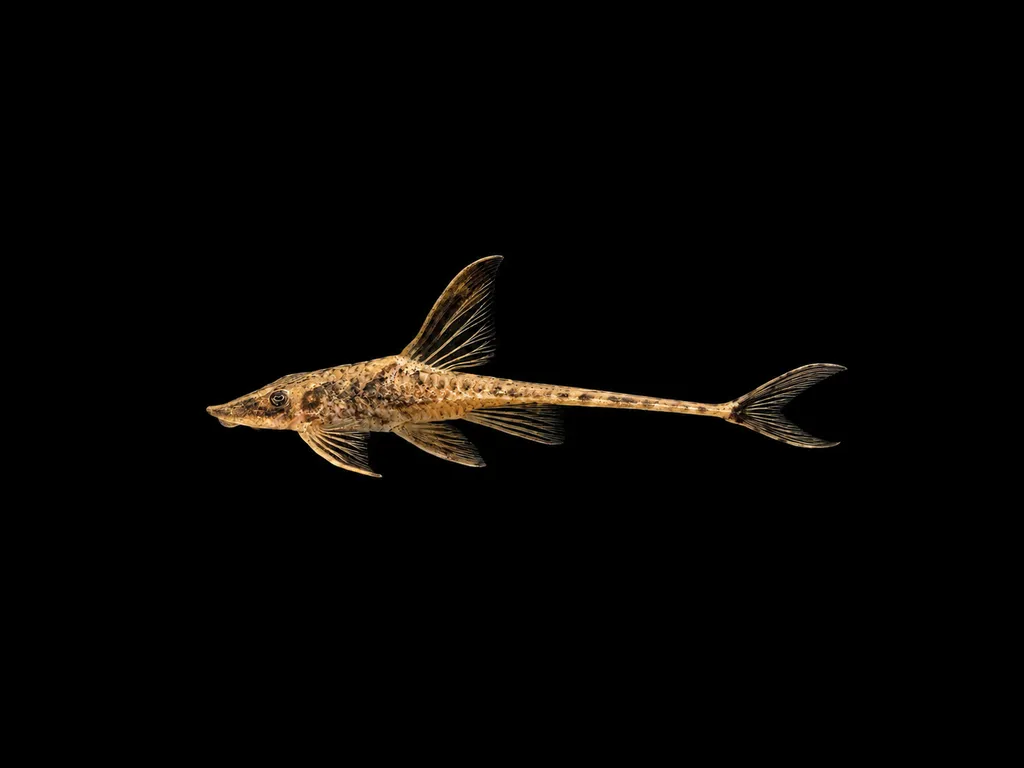
Tamana royal farlowella
Sturisomatichthys tamanae
Freshwater8.7 in (22 cm) · 53 gal (200 L)75–82°F (24–28°C)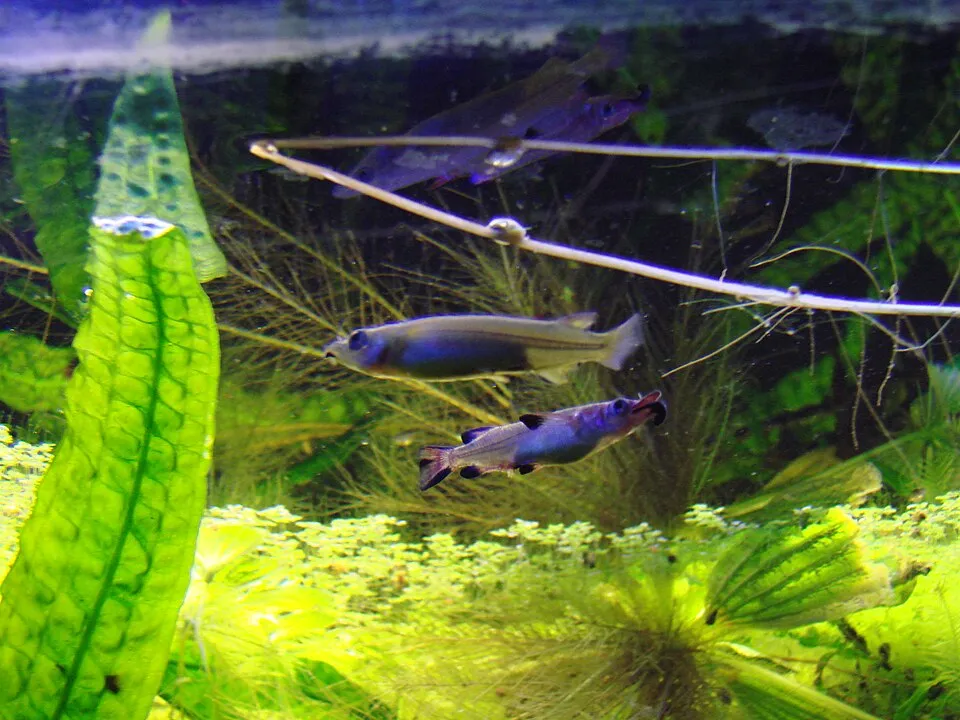
Celebes halfbeak
Nomorhamphus liemi
Freshwater3.5 in (9 cm) · 40 gal (150 L)68–77°F (20–25°C)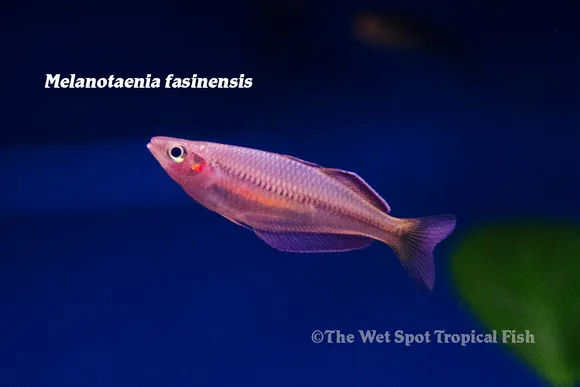
Fasin rainbowfish
Melanotaenia fasinensis
Freshwater5.4 in (13.8 cm) · 53 gal (200 L)75–84°F (24–29°C)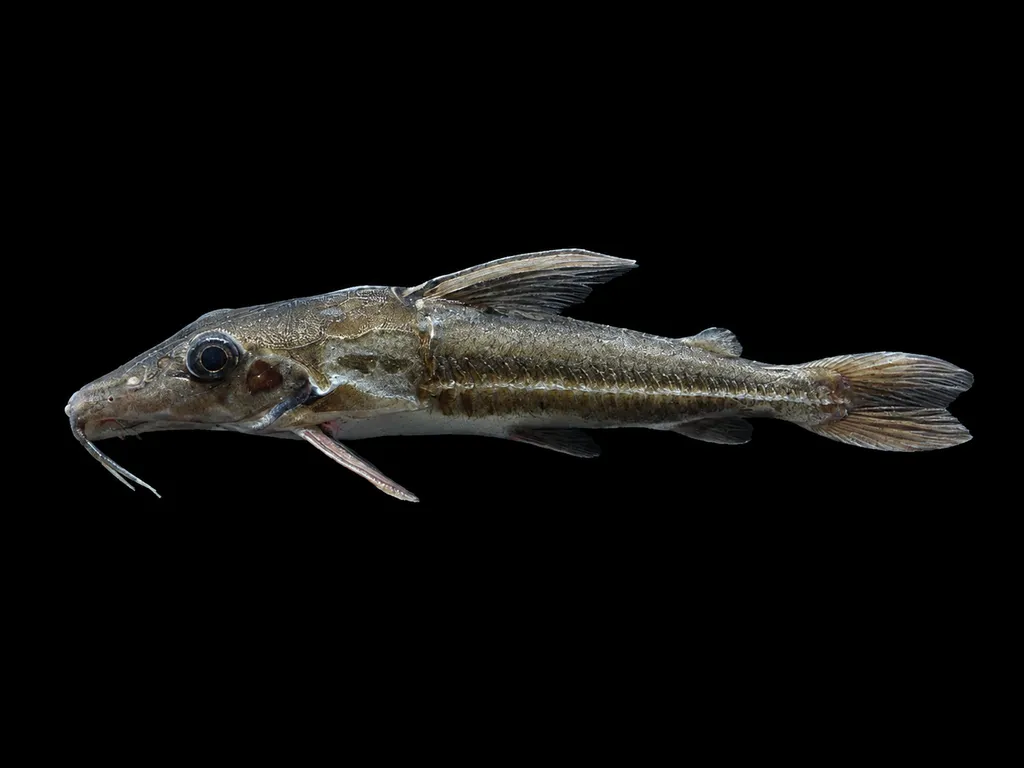
Green turushuki catfish
Hemidoras morrisi
Freshwater6.3 in (16 cm) · 53 gal (200 L)73–82°F (23–28°C)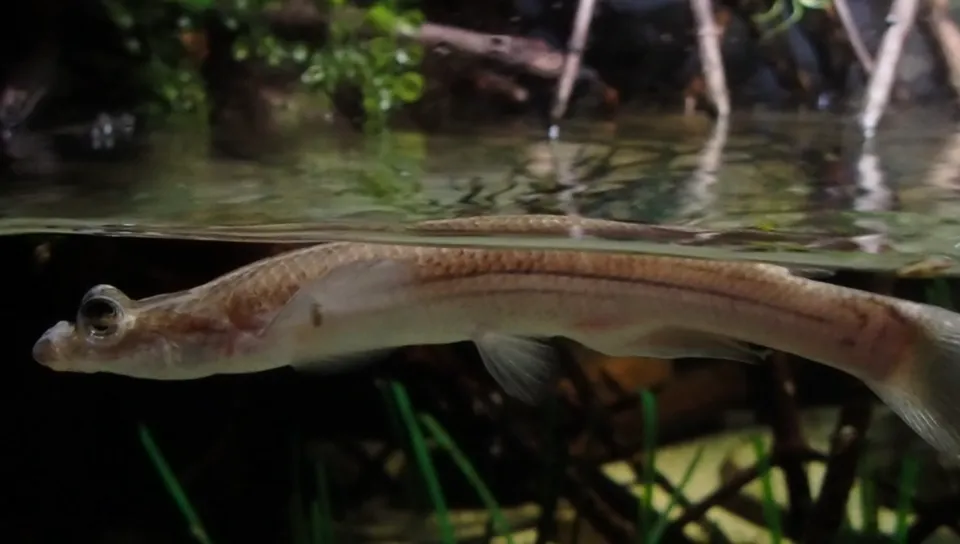
Largescale four-eyed fish
Anableps anableps
FreshwaterBrackish11.8 in (30 cm) · 70 gal (265 L)77–88°F (25–31°C)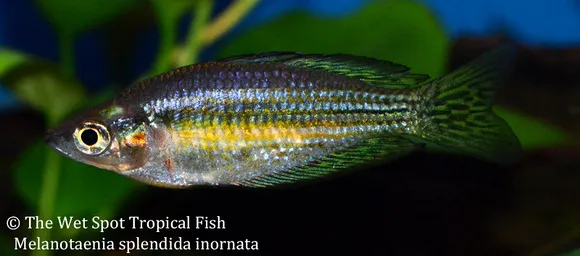
Checkered rainbowfish
Melanotaenia splendida inornata
Freshwater4.7 in (12 cm) · 53 gal (200 L)72–86°F (22–30°C)
Common questions
What size tank does a Clown barb need?
A Clown barb needs at least 53 gal (200 L). It spends most of its time in the middle.
What temperature and pH does a Clown barb need?
A Clown barb is comfortable at 75–82°F (24–28°C) with a pH of 6.0–7.0.
How big does a Clown barb get?
An adult Clown barb reaches about 5.1 in (13 cm).
Does a Clown barb need a group?
Yes. A Clown barb is a schooling species and should be kept in a group, not singly.
Related species
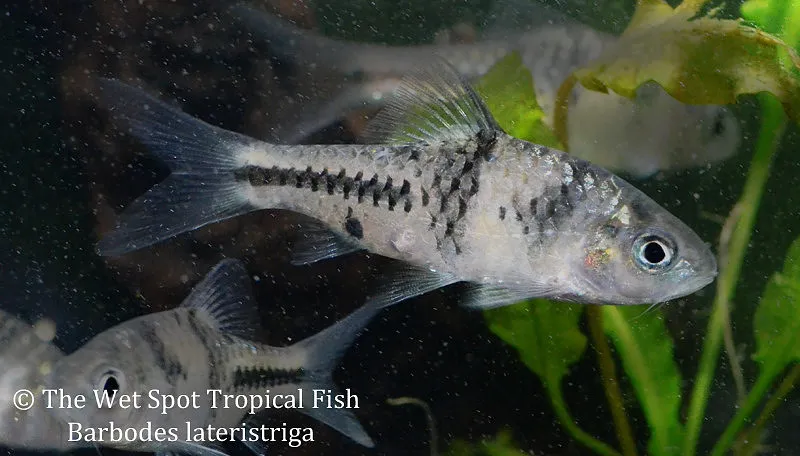 5.9 in (15 cm)74 gal (280 L)72–79°F (22–26°C)
Spanner barb
Barbodes lateristriga
5.9 in (15 cm) · 74 gal (280 L)
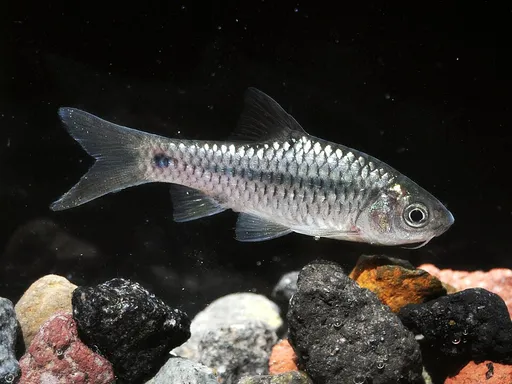 5.9 in (15 cm)40 gal (150 L)72–79°F (22–26°C)
Spotted barb
Barbodes binotatus
5.9 in (15 cm) · 40 gal (150 L)
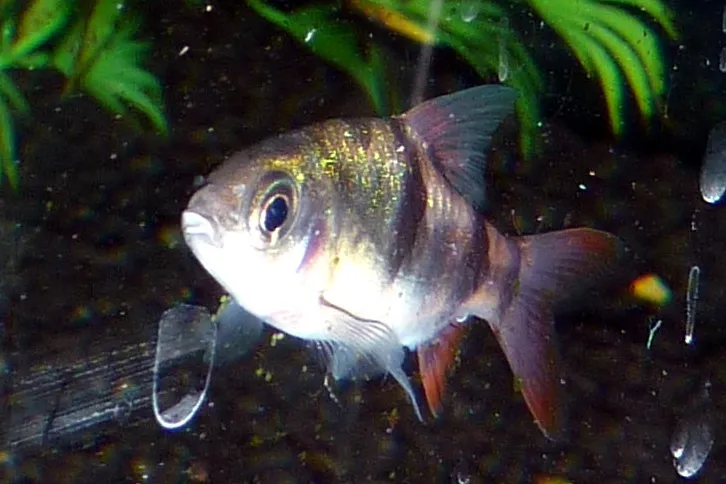 4.7 in (12 cm)40 gal (150 L)64–82°F (18–28°C)
Everett's barb
Barbodes everetti
4.7 in (12 cm) · 40 gal (150 L)
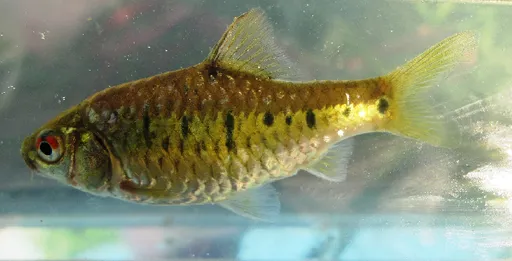 2.8 in (7 cm)20 gal (75 L)64–75°F (18–24°C)
Gold barb
Barbodes semifasciolatus
2.8 in (7 cm) · 20 gal (75 L)
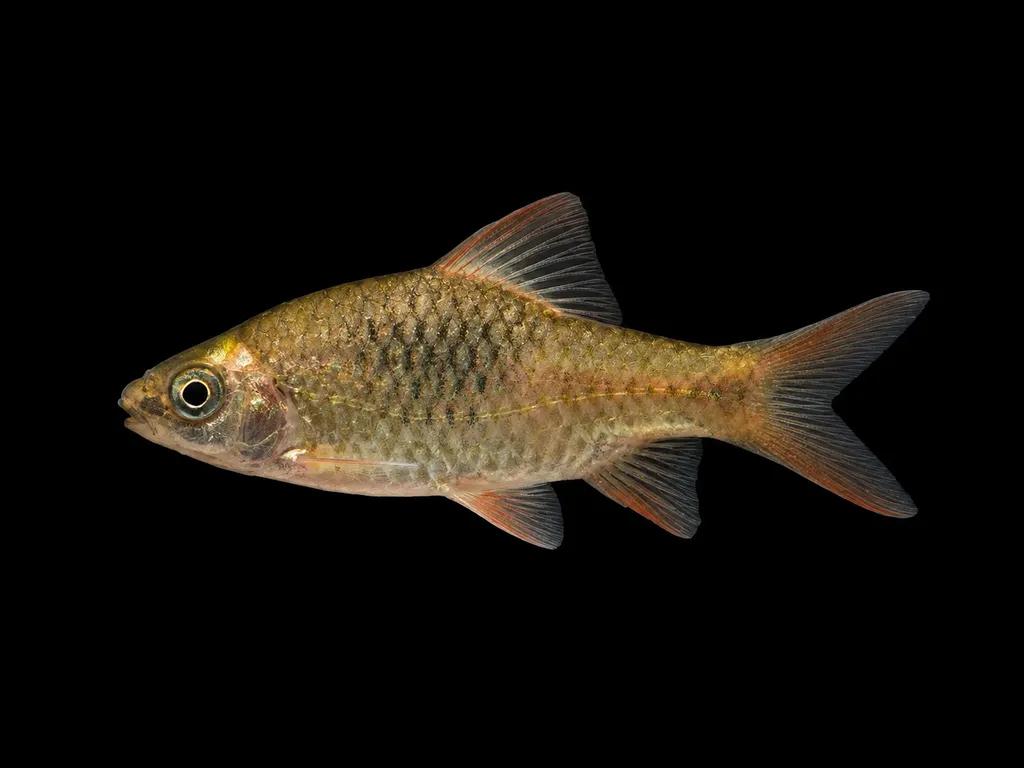 3.5 in (9 cm)29 gal (110 L)72–81°F (22–27°C)
Bunau barb
Barbodes bunau
3.5 in (9 cm) · 29 gal (110 L)
 5.1 in (13 cm)53 gal (200 L)64–79°F (18–26°C)
Beijiang barb
Acrossocheilus beijiangensis
5.1 in (13 cm) · 53 gal (200 L)