Spanner barb
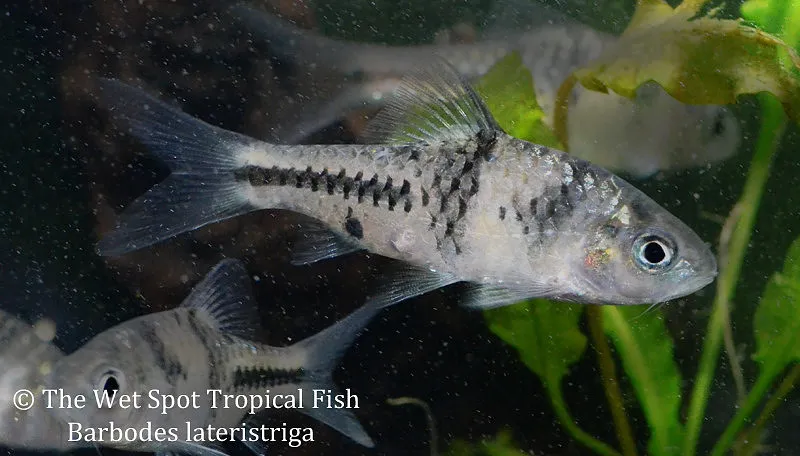
Barbodes lateristriga
Also known as Spanner T-Barb
FreshwaterFish
Care at a glance
- Temperature
- 72–79°F
- 22–26°C
- pH
- 6.0–7.5
- Adult size
- 5.9 in
- 15 cm
- Minimum tank
- 74 gal
- 280 L
- Temperament
- Mostly peaceful
- Social behavior
- Social
- Swim level
- Middle
- Difficulty
- Medium
- Breeding
- Medium
- Rarity
- Common
- Family
- Cyprinidae
- Origin
- Southeast Asia: Malay Peninsula, southern Thailand, Sumatra, Java, and Borneo
Overview
Buy juveniles in a group of six or more, since young fish shoal, though adults grow more solitary and males can get pushy in tight space, so a big footprint matters more than a strict headcount. They are mostly peaceful but boisterous, swimming through the middle of the tank and competing hard at feeding, so only keep them with similarly sized, robust, active fish and skip anything shy or long-finned. Keep them at 22 to 26 C with a pH from 6 to 7.5 in well-oxygenated water with moderate flow, and run weekly 30 to 50 percent water changes to keep it pristine. Feed them as unfussy omnivores on quality pellets or flake with frozen and live treats. They get large and hardy, so never release unwanted fish into local waters, and check your local rules before buying.
In the wild
Spanner barbs come from clear, slightly acidic mountain streams across the Malay Peninsula, southern Thailand, Sumatra, Java, and Borneo, where wild fish sit in water around pH 6.0 to 6.5 with steady flow and good oxygen. To match that, give them a long, open stream-style tank of at least 280 liters with a footprint near 150x45 cm, some current, and plenty of swimming room. Hold the water at 22 to 26 C and a pH of 6 to 7.5, and stay on top of cleaning since they do not tolerate organic pollution.
Good to know
This is a large, robust barb in the family Cyprinidae, commonly kept at about 15 cm and recorded up to roughly 18.6 cm in length. It is an egg scatterer with no parental care, and breeding is moderately tricky in the home tank. These are active, long-lived cyprinids built for moving water rather than still tanks.
Did you know
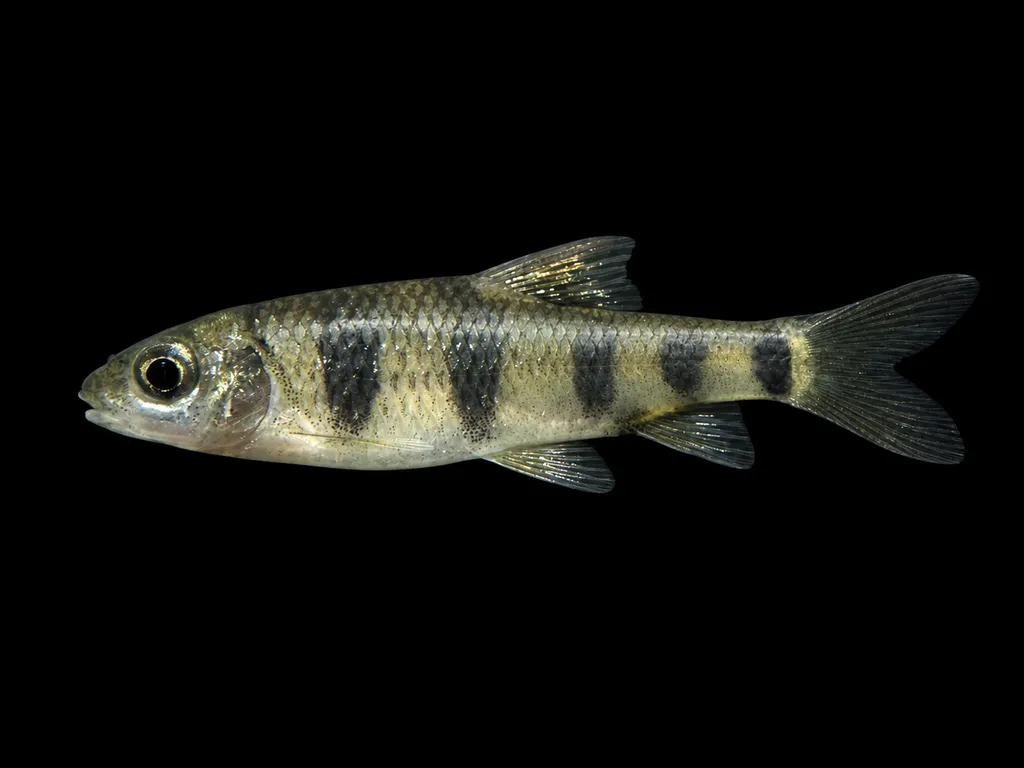
The common name comes from the markings on juveniles, where dark bars on the body can look like the open jaws of a spanner or wrench. As the fish grows the pattern shifts, so the bold young markings fade and break up in older adults.
Weekly picks
Tank mates
Spanner barb is a mostly peaceful, social species that keeps to the middle. These picks share a community profile with it, are safe together in both directions, and overlap on water type, temperature and pH.
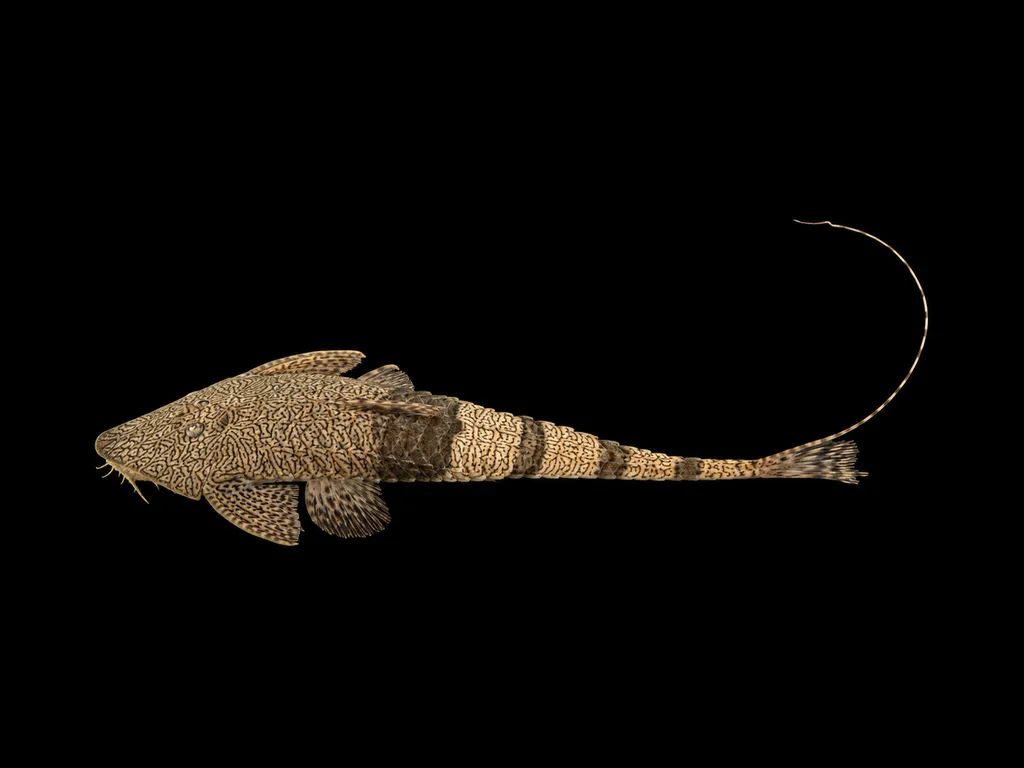
Chameleon whiptail
Pseudohemiodon apithanos
Freshwater6.7 in (17 cm) · 79 gal (300 L)75–82°F (24–28°C)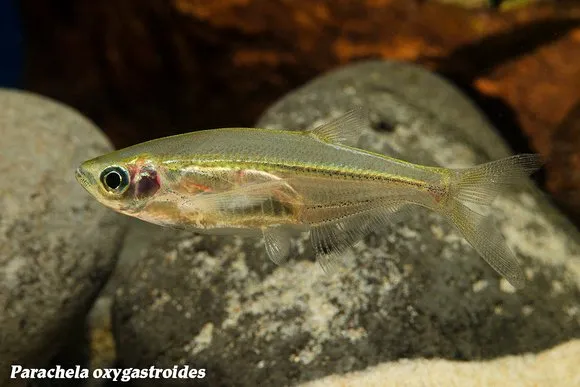
Asian glass hatchetfish
Parachela oxygastroides
Freshwater7.9 in (20 cm) · 79 gal (300 L)73–82°F (23–28°C)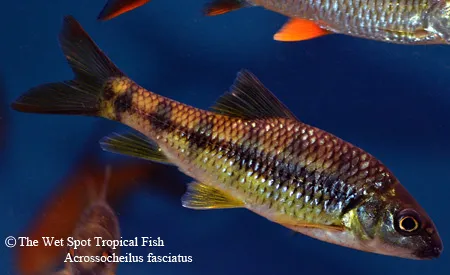
Railway barb
Acrossocheilus fasciatus
Freshwater7.5 in (19 cm) · 79 gal (300 L)61–75°F (16–24°C)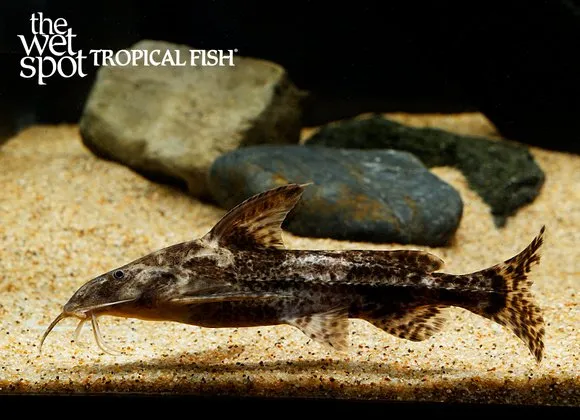
Gallagher's catfish
Rhinodoras gallagheri
Freshwater5.9 in (15 cm) · 70 gal (265 L)73–82°F (23–28°C)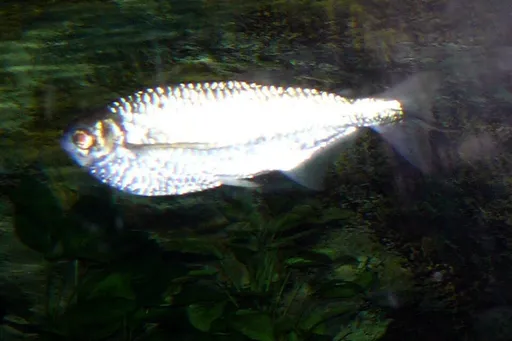
Narrow hatchetfish
Triportheus angulatus
Freshwater9.8 in (25 cm) · 79 gal (300 L)73–82°F (23–28°C)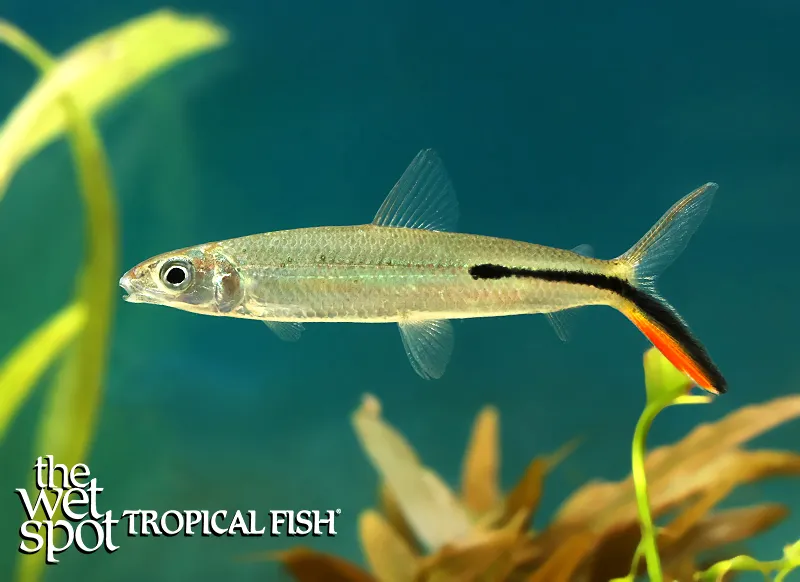
Slender hemiodus
Hemiodus gracilis
Freshwater7.1 in (18 cm) · 66 gal (250 L)73–82°F (23–28°C)
Common questions
What size tank does a Spanner barb need?
A Spanner barb needs at least 74 gal (280 L). It spends most of its time in the middle.
What temperature and pH does a Spanner barb need?
A Spanner barb is comfortable at 72–79°F (22–26°C) with a pH of 6.0–7.5.
How big does a Spanner barb get?
An adult Spanner barb reaches about 5.9 in (15 cm).
Related species
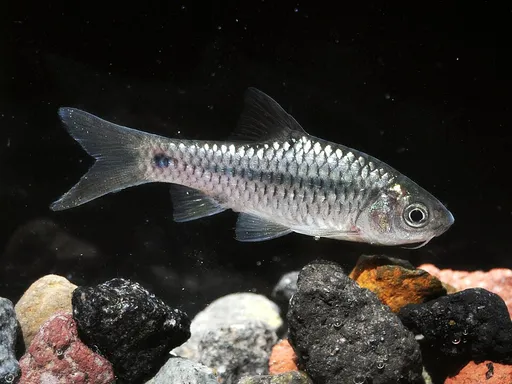 5.9 in (15 cm)40 gal (150 L)72–79°F (22–26°C)
Spotted barb
Barbodes binotatus
5.9 in (15 cm) · 40 gal (150 L)
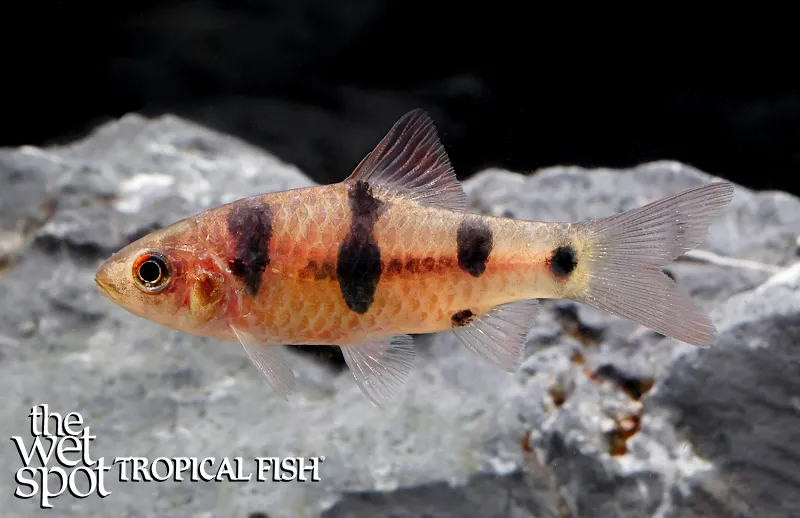 5.1 in (13 cm)53 gal (200 L)75–82°F (24–28°C)
Clown barb
Barbodes dunckeri
5.1 in (13 cm) · 53 gal (200 L)
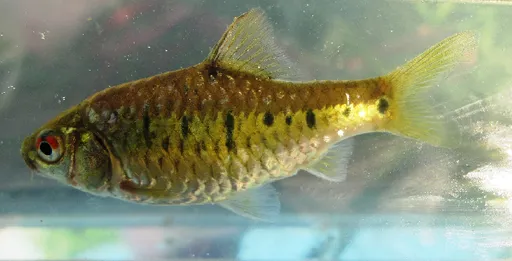 2.8 in (7 cm)20 gal (75 L)64–75°F (18–24°C)
Gold barb
Barbodes semifasciolatus
2.8 in (7 cm) · 20 gal (75 L)
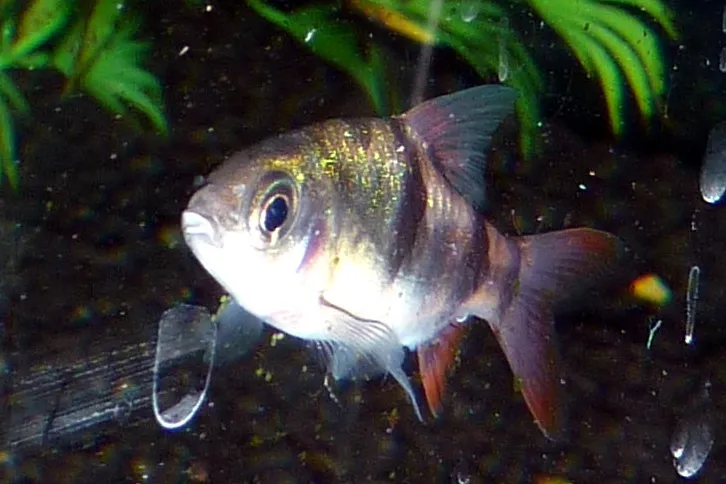 4.7 in (12 cm)40 gal (150 L)64–82°F (18–28°C)
Everett's barb
Barbodes everetti
4.7 in (12 cm) · 40 gal (150 L)
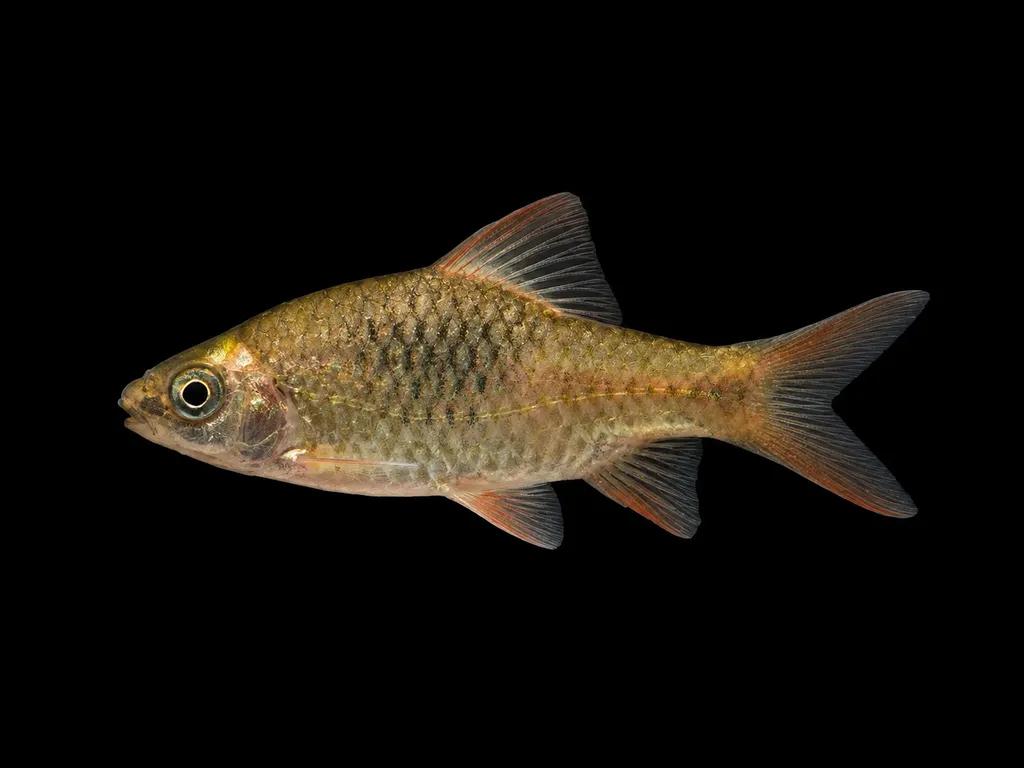 3.5 in (9 cm)29 gal (110 L)72–81°F (22–27°C)
Bunau barb
Barbodes bunau
3.5 in (9 cm) · 29 gal (110 L)
 5.1 in (13 cm)53 gal (200 L)64–79°F (18–26°C)
Beijiang barb
Acrossocheilus beijiangensis
5.1 in (13 cm) · 53 gal (200 L)