Spotted barb
Barbodes binotatus
Also known as Common barb, Puntius binotatus, Systomus binotatus
FreshwaterFish
Care at a glance
- Temperature
- 72–79°F
- 22–26°C
- pH
- 6.0–7.0
- Adult size
- 5.9 in
- 15 cm
- Minimum tank
- 40 gal
- 150 L
- Temperament
- Mostly peaceful
- Social behavior
- Schooling
- Swim level
- Middle
- Difficulty
- Easy
- Breeding
- Medium
- Rarity
- Common
- Family
- Cyprinidae
- Origin
- Widespread across Southeast Asia, from Thailand and the Malay Peninsula through Indonesia and the Philippines.
Overview
Keep spotted barbs in a group of at least six in a tank of 150 litres or more, since they are active and commonly reach 12 to 15 cm. Water at 22 to 26 C with a pH of 6.0 to 7.0 and clean, moving conditions suits them. Feed flakes, pellets, vegetables, and frozen foods, as they are hearty omnivores. They are peaceful toward fish too large to eat but will bully small or slow tankmates, so choose robust company.
In the wild
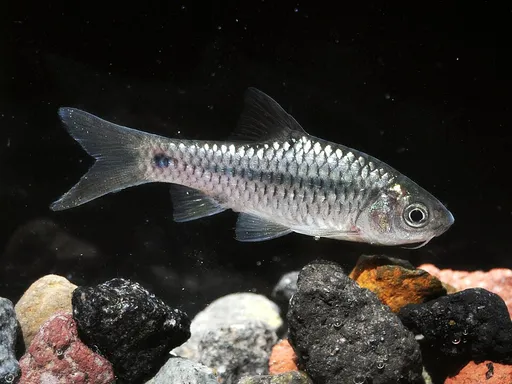
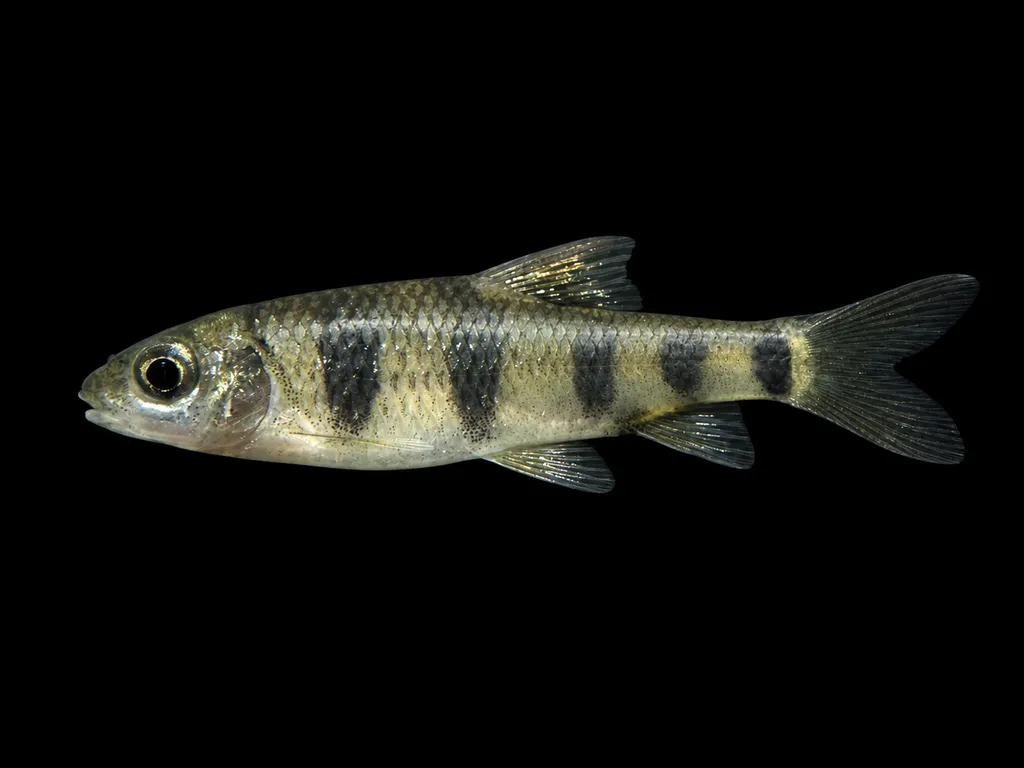
The spotted barb is a widespread, adaptable fish found in streams, rivers, canals, and ponds across much of Southeast Asia. It forages actively over the bottom and in midwater in a range of conditions. Adults carry scattered dark spots and a blotch at the tail base on a stout silver body. It is a hardy, boisterous barb that grows larger than most community barbs.
Good to know
Formerly Puntius binotatus or Systomus binotatus, the species now sits in the genus Barbodes among the larger Southeast Asian barbs. It is so widespread and variable that it is treated as a species complex, with local forms differing in size and pattern. Wild fish can reach nearly 20 cm, though tank fish usually stay smaller.
Did you know
It is one of the most common wild fish across much of Southeast Asia and turns up in ricefield ditches and drains, which is part of why it is so hardy in the tank.
Weekly picks
Tank mates
Spotted barb is a mostly peaceful, schooling species that keeps to the middle. These picks share a community profile with it, are safe together in both directions, and overlap on water type, temperature and pH.
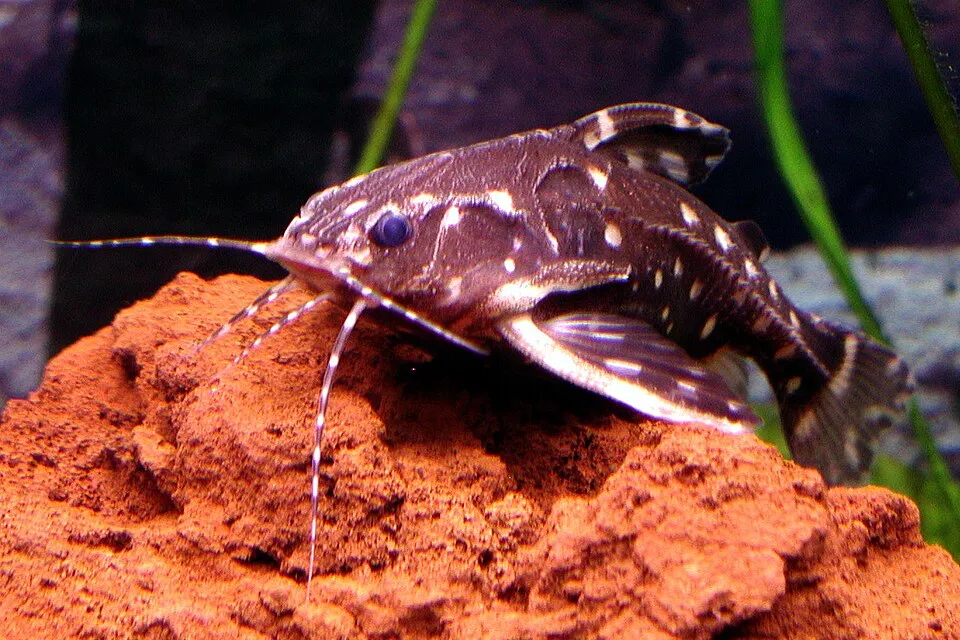
Spotted raphael catfish
Agamyxis pectinifrons
Freshwater5.9 in (15 cm) · 40 gal (150 L)72–79°F (22–26°C)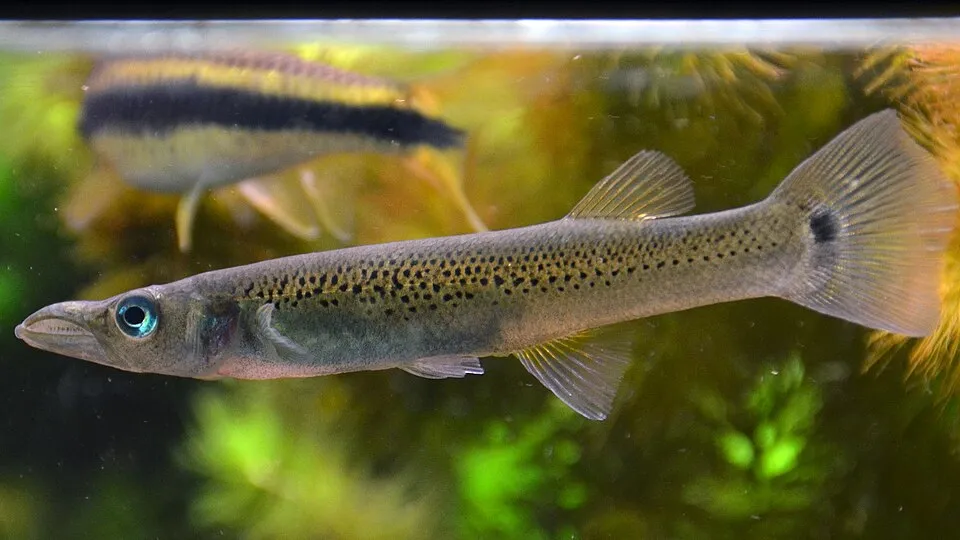
Pike topminnow
Belonesox belizanus
Freshwater7.9 in (20 cm) · 44 gal (165 L)73–82°F (23–28°C)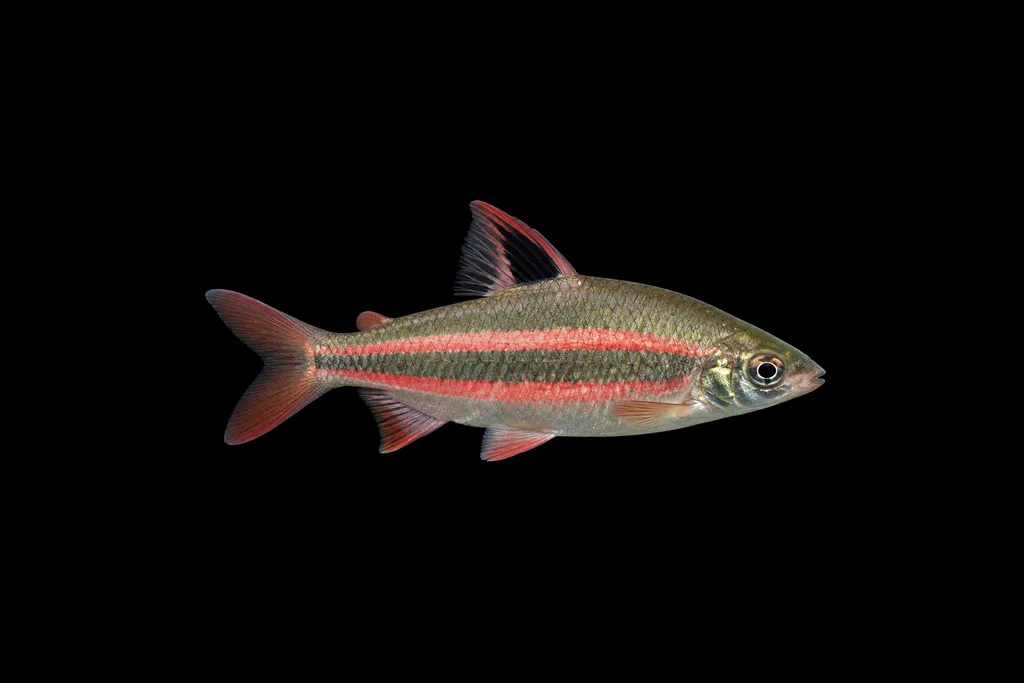
Noboli distichodus
Distichodus noboli
Freshwater7.5 in (19 cm) · 40 gal (150 L)73–82°F (23–28°C)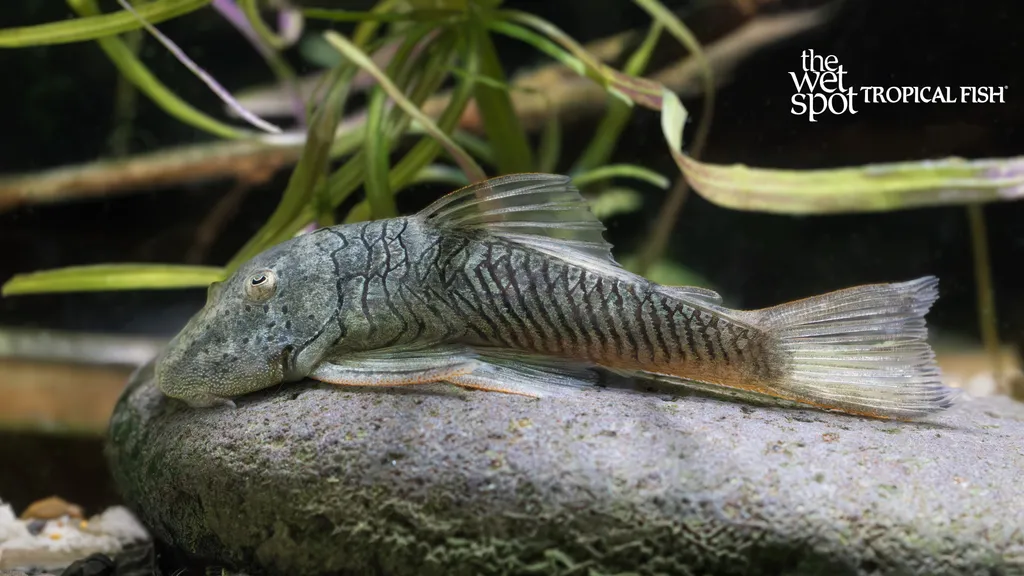
Bulldog pleco
Chaetostoma formosae
Freshwater4.3 in (11 cm) · 40 gal (150 L)68–77°F (20–25°C)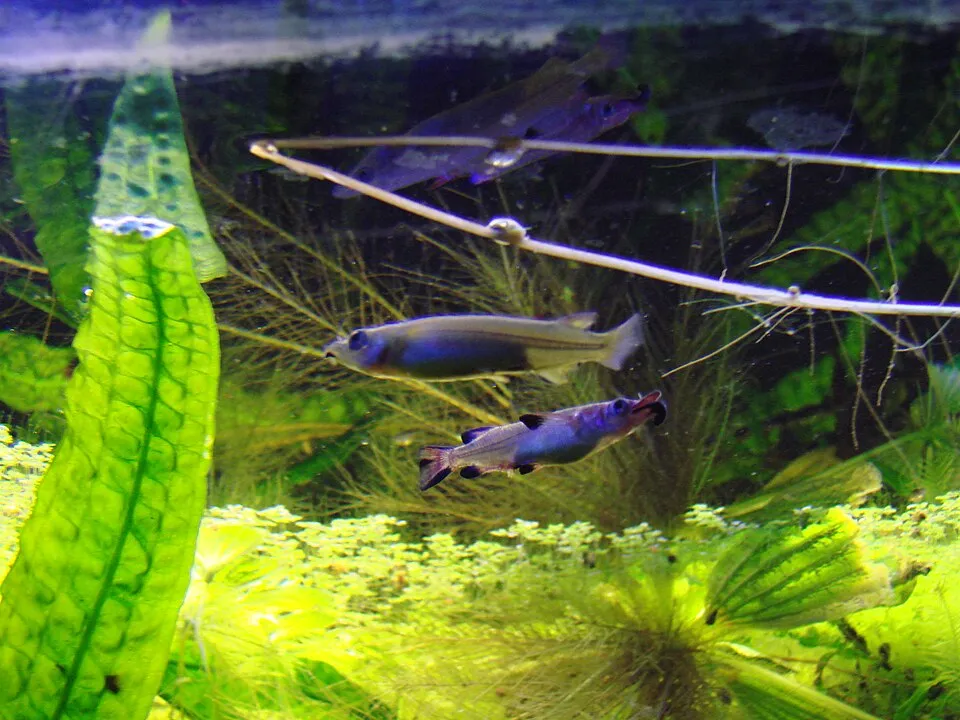
Celebes halfbeak
Nomorhamphus liemi
Freshwater3.5 in (9 cm) · 40 gal (150 L)68–77°F (20–25°C)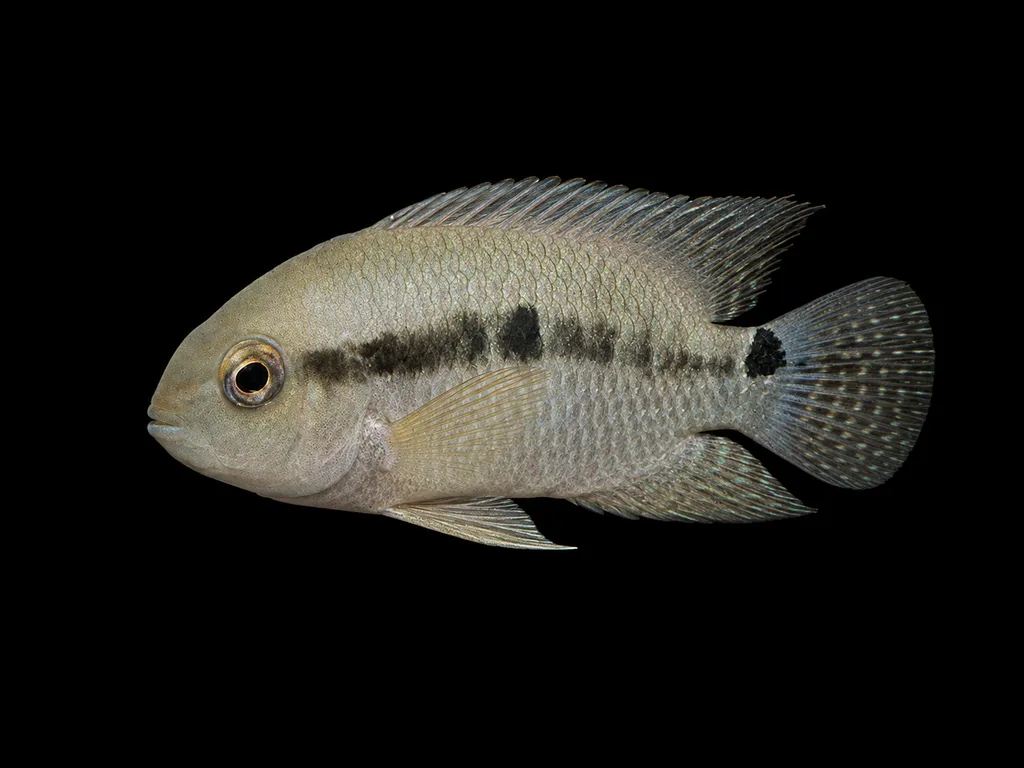
Black acara
Cichlasoma bimaculatum
Freshwater7.1 in (18 cm) · 40 gal (150 L)68–82°F (20–28°C)
Common questions
What size tank does a Spotted barb need?
A Spotted barb needs at least 40 gal (150 L). It spends most of its time in the middle.
What temperature and pH does a Spotted barb need?
A Spotted barb is comfortable at 72–79°F (22–26°C) with a pH of 6.0–7.0.
How big does a Spotted barb get?
An adult Spotted barb reaches about 5.9 in (15 cm).
Does a Spotted barb need a group?
Yes. A Spotted barb is a schooling species and should be kept in a group, not singly.
Related species
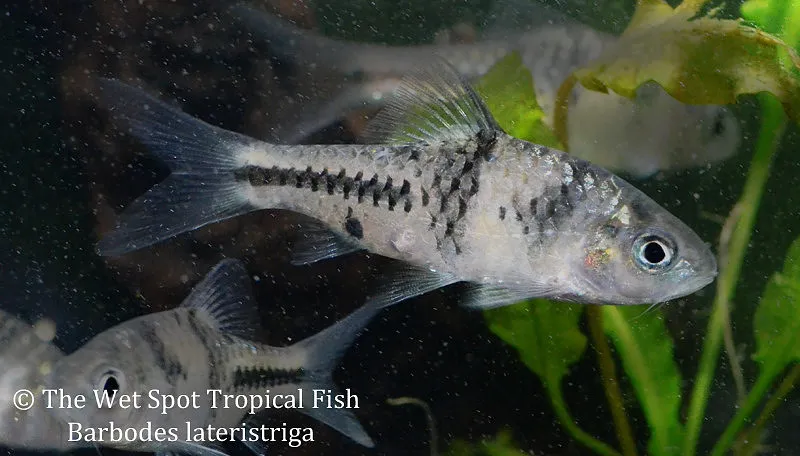 5.9 in (15 cm)74 gal (280 L)72–79°F (22–26°C)
Spanner barb
Barbodes lateristriga
5.9 in (15 cm) · 74 gal (280 L)
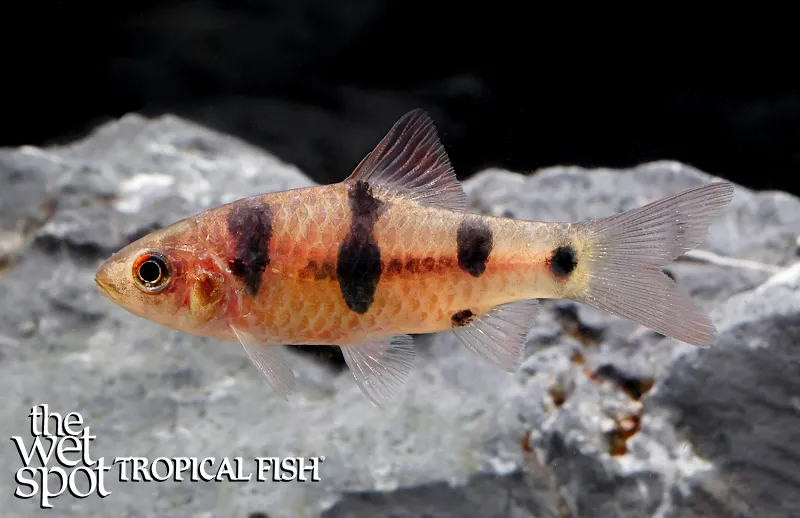 5.1 in (13 cm)53 gal (200 L)75–82°F (24–28°C)
Clown barb
Barbodes dunckeri
5.1 in (13 cm) · 53 gal (200 L)
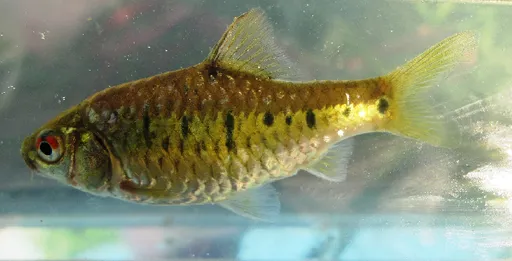 2.8 in (7 cm)20 gal (75 L)64–75°F (18–24°C)
Gold barb
Barbodes semifasciolatus
2.8 in (7 cm) · 20 gal (75 L)
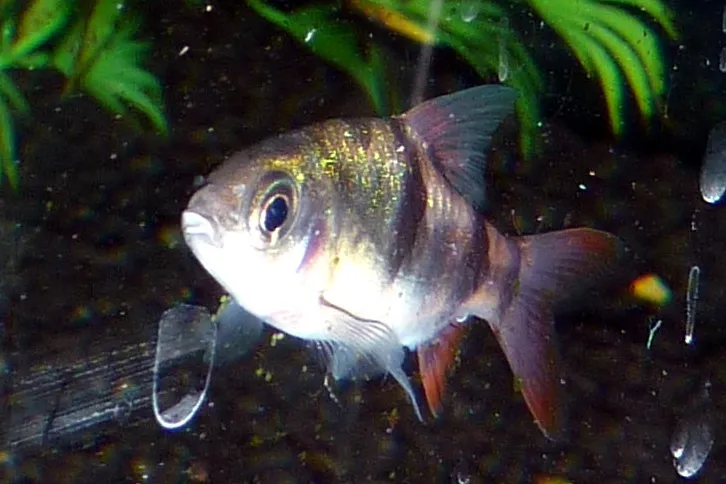 4.7 in (12 cm)40 gal (150 L)64–82°F (18–28°C)
Everett's barb
Barbodes everetti
4.7 in (12 cm) · 40 gal (150 L)
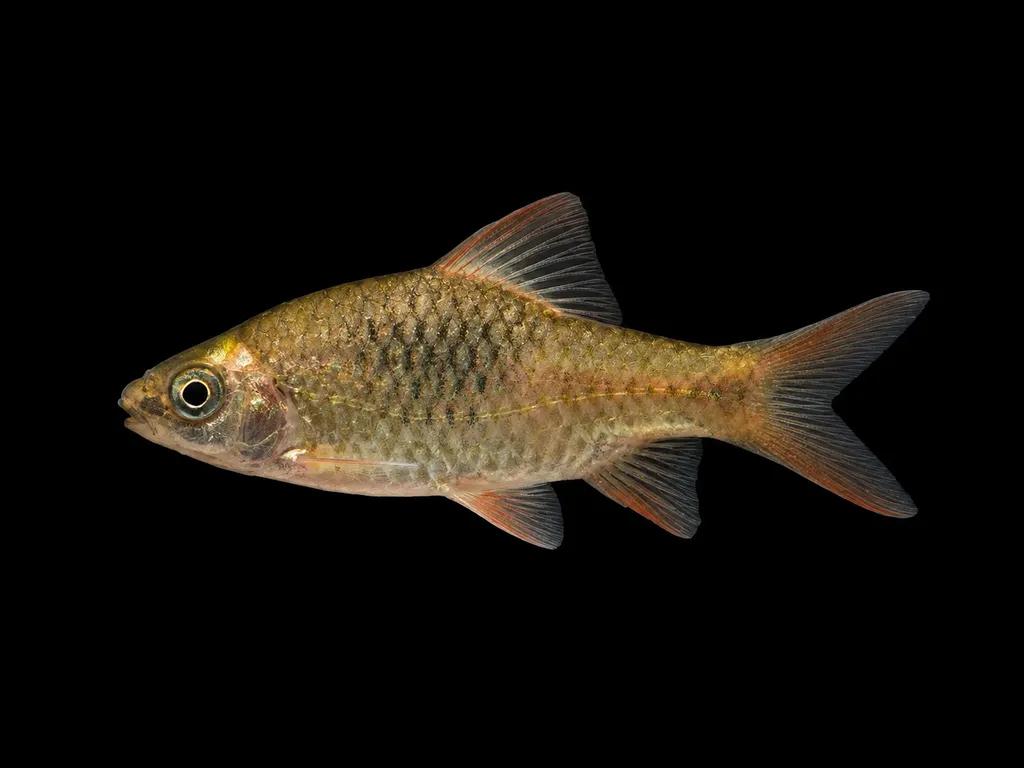 3.5 in (9 cm)29 gal (110 L)72–81°F (22–27°C)
Bunau barb
Barbodes bunau
3.5 in (9 cm) · 29 gal (110 L)
 5.1 in (13 cm)53 gal (200 L)64–79°F (18–26°C)
Beijiang barb
Acrossocheilus beijiangensis
5.1 in (13 cm) · 53 gal (200 L)