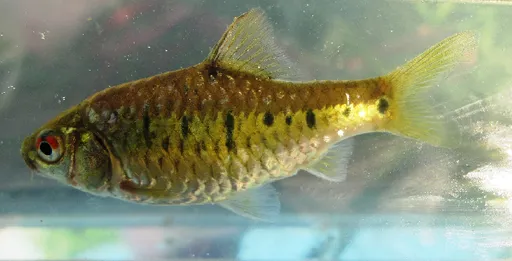
Gold barb
Barbodes semifasciolatus
Also known as Schubert barb, Puntius sachsii, Schuberti barb
FreshwaterFish
Care at a glance
- Temperature
- 64–75°F
- 18–24°C
- pH
- 6.0–8.0
- Adult size
- 2.8 in
- 7 cm
- Minimum tank
- 20 gal
- 75 L
- Temperament
- Mostly peaceful
- Social behavior
- Schooling
- Swim level
- Middle
- Difficulty
- Beginner
- Breeding
- Medium
- Rarity
- Very common
- Family
- Cyprinidae
- Origin
- Vietnam, Taiwan, southwestern China, northern Laos
Overview
Keep them in a group of 6 to 10 in a tank of at least 75 liters, since a bigger group spreads out their mild fin-nipping and settles them down. They are mostly peaceful, active swimmers that hold the middle of the water column. Water can run cool to room temperature, 18 to 24 C, with a pH from 6 to 8. Feed flakes, small pellets, and frozen foods like daphnia or bloodworm, and offer some plant matter since they may nibble soft-leaved plants. Avoid long-finned or slow tankmates that cannot keep up or that invite nipping.
In the wild
Gold barbs trace back to subtropical streams and ditches across Vietnam, Taiwan, southwestern China, and northern Laos, where the water runs cool for much of the year. Because they handle cooler temperatures, they do fine in an unheated tank held between 18 and 24 C. Give them an open swimming lane down the middle of the tank with some planted edges, a pH anywhere from 6 to 8, and dark substrate to bring out their best color. They are not fussy about water as long as it stays clean and stable.
Good to know
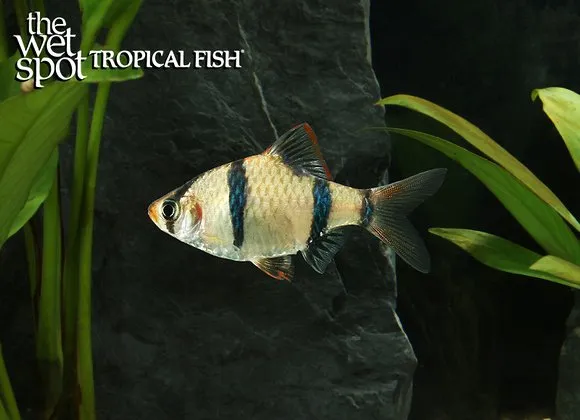
This is Barbodes semifasciolatus, a barb in the family Cyprinidae that grows to about 7 cm. The gold form sold in shops is a selectively bred color morph of the wild half-banded barb, not a separate species. They are egg scatterers with no parental care, and breeding takes some effort to get right. A healthy adult can live several years.
Did you know
The gold color is the work of breeders, not nature. The wild fish is a greenish barb marked with dark vertical bars across its sides, which is where the name half-banded barb comes from. Generations of selecting for the brightest yellow-gold fish produced the metallic look you see in the trade today.
Weekly picks
Tank mates
Gold barb is a mostly peaceful, schooling species that keeps to the middle. These picks share a community profile with it, are safe together in both directions, and overlap on water type, temperature and pH.
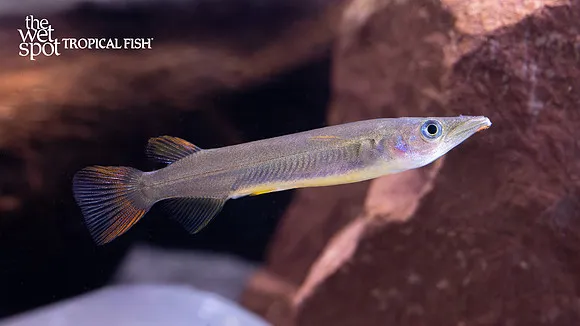
Rex halfbeak
Nomorhamphus rex
Freshwater2.2 in (5.5 cm) · 20 gal (75 L)72–79°F (22–26°C)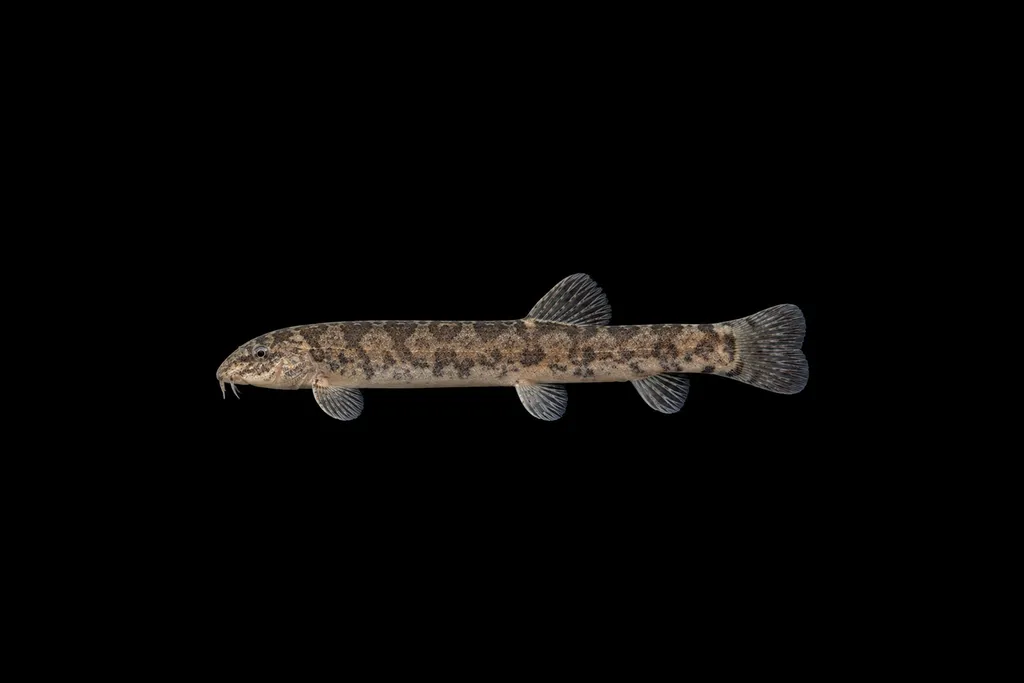
Cloud loach
Schistura nubigena
Freshwater2 in (5 cm) · 20 gal (75 L)64–75°F (18–24°C)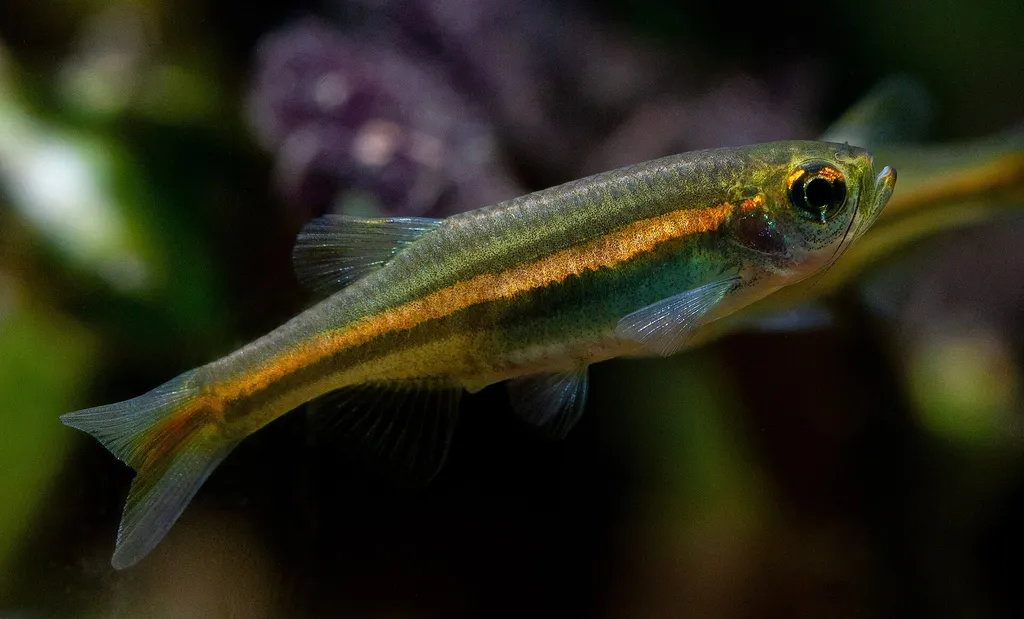
Jaintia danio
Danio jaintianensis
Freshwater2 in (5 cm) · 20 gal (75 L)64–75°F (18–24°C)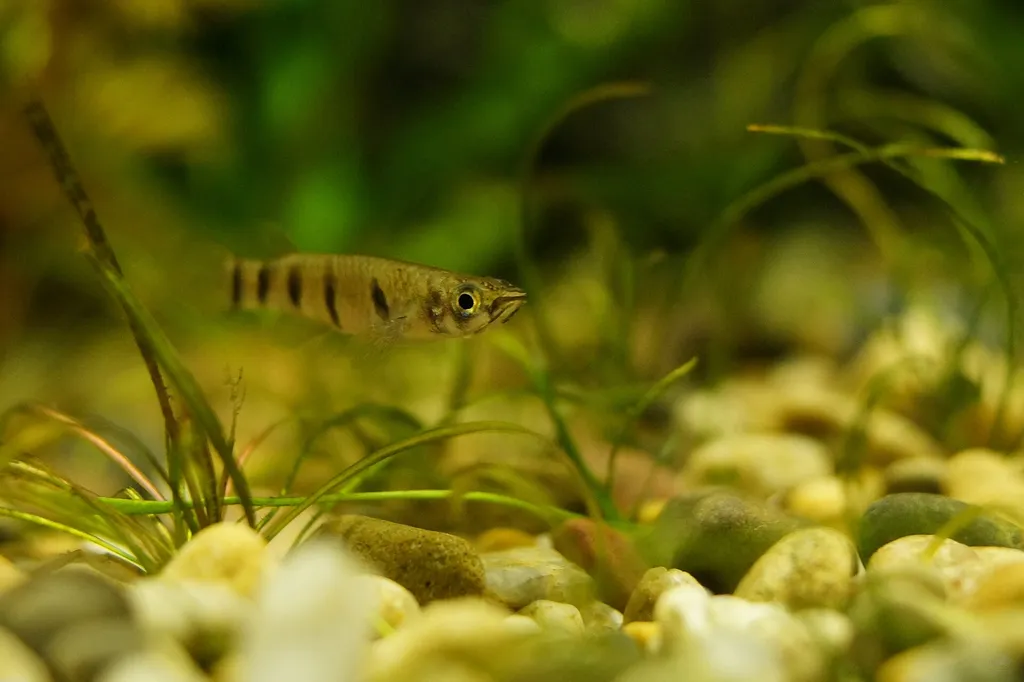
Red-chinned panchax
Epiplatys dageti
Freshwater1.8 in (4.5 cm) · 20 gal (75 L)70–75°F (21–24°C)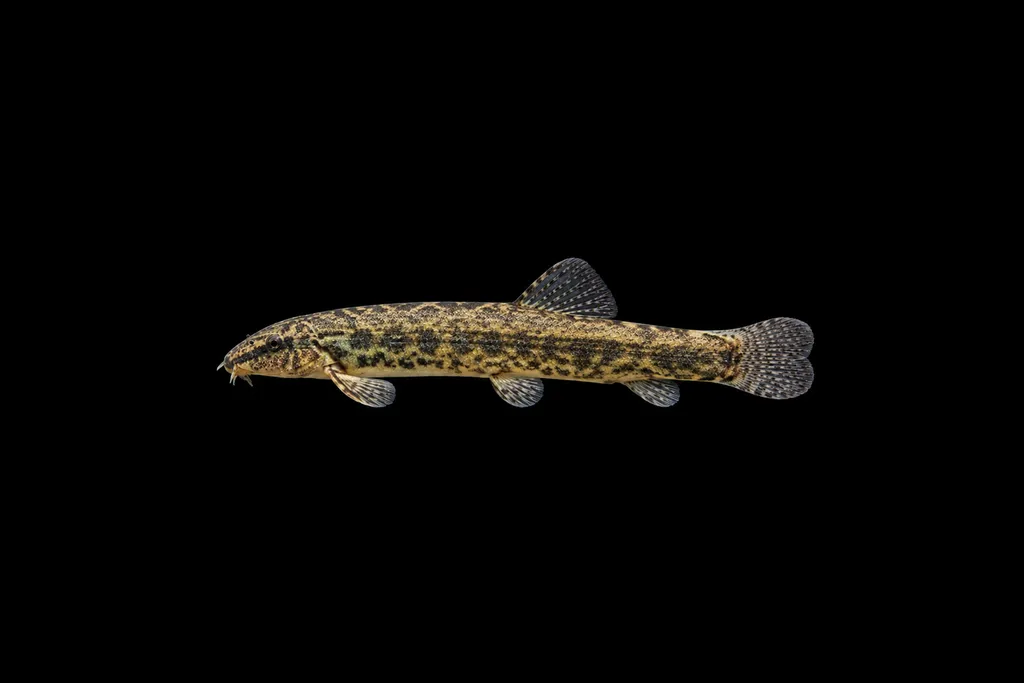
Nilgiri loach
Schistura nilgiriensis
Freshwater2.4 in (6 cm) · 20 gal (75 L)64–75°F (18–24°C)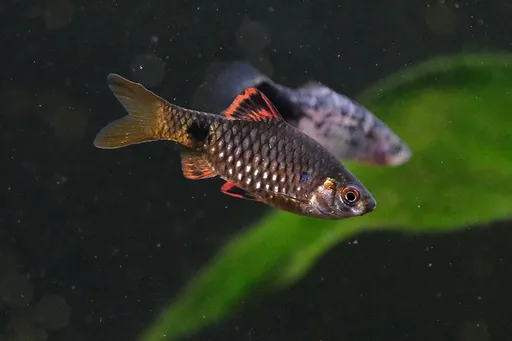
Stoliczka's barb
Pethia stoliczkana
Freshwater2 in (5 cm) · 20 gal (75 L)64–79°F (18–26°C)
Common questions
What size tank does a Gold barb need?
A Gold barb needs at least 20 gal (75 L). It spends most of its time in the middle.
What temperature and pH does a Gold barb need?
A Gold barb is comfortable at 64–75°F (18–24°C) with a pH of 6.0–8.0.
How big does a Gold barb get?
An adult Gold barb reaches about 2.8 in (7 cm).
Does a Gold barb need a group?
Yes. A Gold barb is a schooling species and should be kept in a group, not singly.
Related species
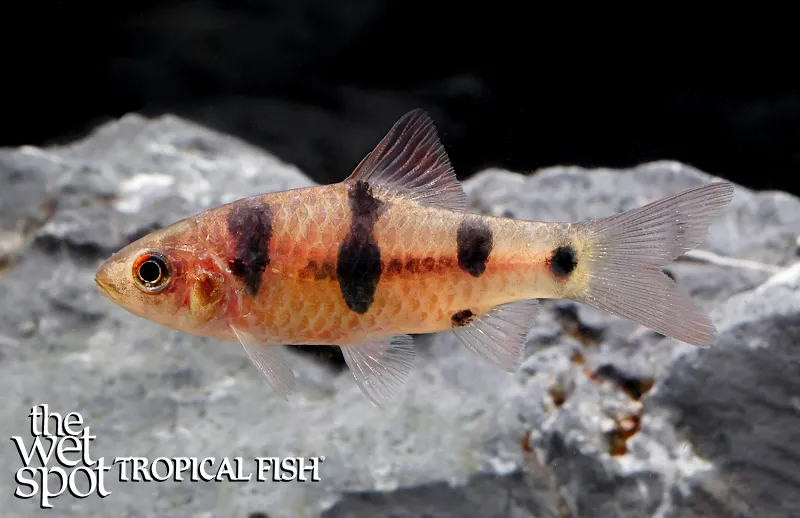 5.1 in (13 cm)53 gal (200 L)75–82°F (24–28°C)
Clown barb
Barbodes dunckeri
5.1 in (13 cm) · 53 gal (200 L)
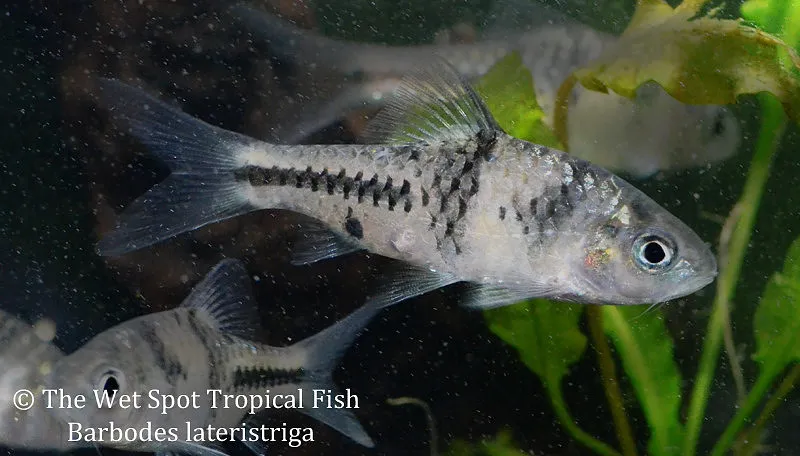 5.9 in (15 cm)74 gal (280 L)72–79°F (22–26°C)
Spanner barb
Barbodes lateristriga
5.9 in (15 cm) · 74 gal (280 L)
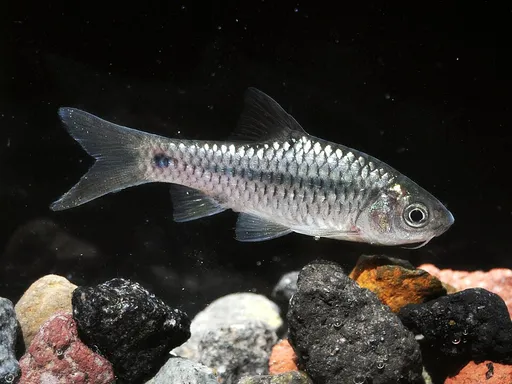 5.9 in (15 cm)40 gal (150 L)72–79°F (22–26°C)
Spotted barb
Barbodes binotatus
5.9 in (15 cm) · 40 gal (150 L)
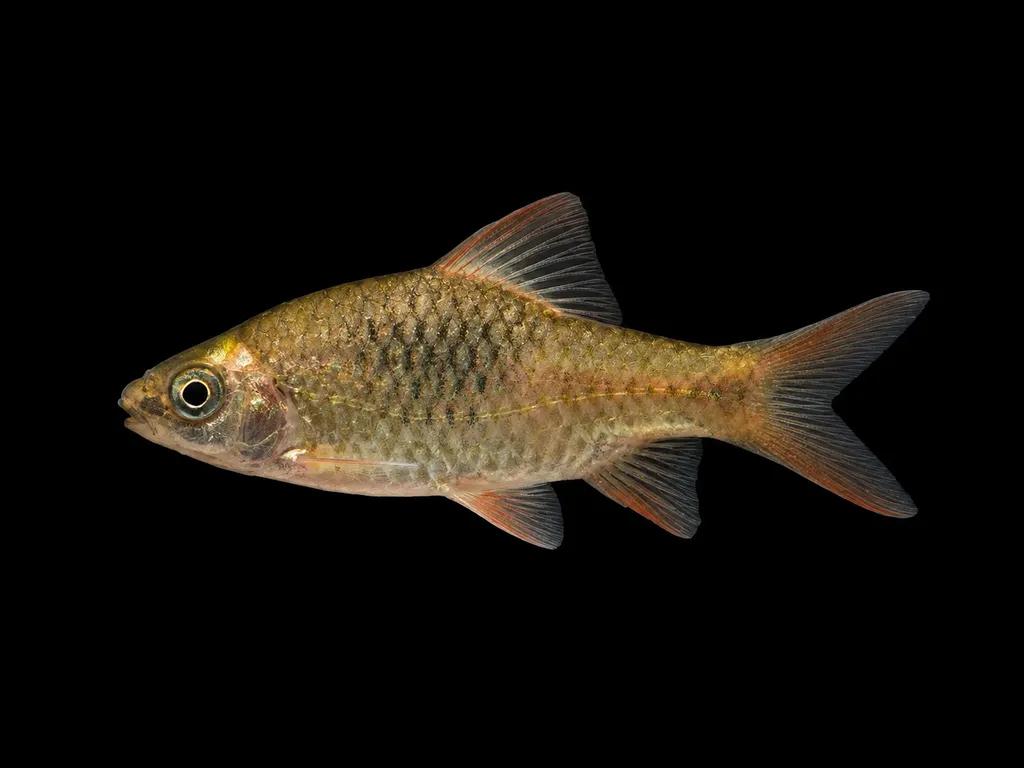 3.5 in (9 cm)29 gal (110 L)72–81°F (22–27°C)
Bunau barb
Barbodes bunau
3.5 in (9 cm) · 29 gal (110 L)
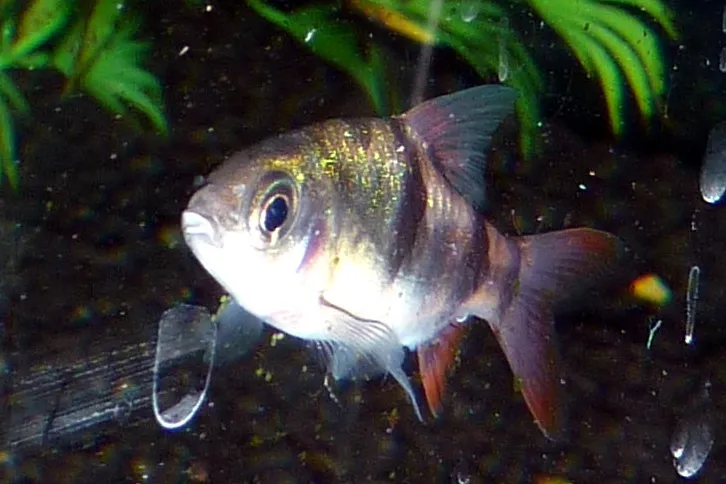 4.7 in (12 cm)40 gal (150 L)64–82°F (18–28°C)
Everett's barb
Barbodes everetti
4.7 in (12 cm) · 40 gal (150 L)
 2.8 in (7 cm)29 gal (110 L)73–81°F (23–27°C)
Borneo tiger barb
Puntigrus anchisporus
2.8 in (7 cm) · 29 gal (110 L)