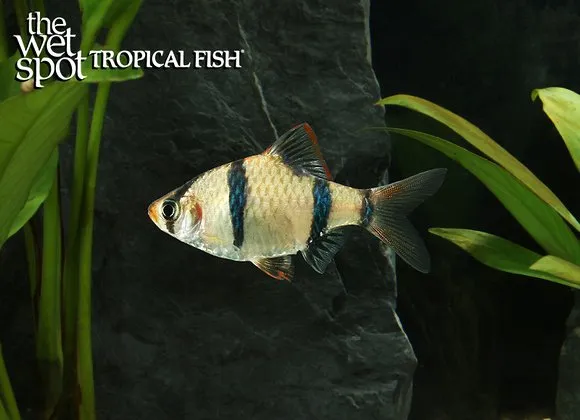
Borneo tiger barb
Puntigrus anchisporus
Also known as Anchisporus tiger barb
FreshwaterFish
Care at a glance
- Temperature
- 73–81°F
- 23–27°C
- pH
- 6.0–7.5
- Adult size
- 2.8 in
- 7 cm
- Minimum tank
- 29 gal
- 110 L
- Temperament
- Mostly peaceful
- Social behavior
- Schooling
- Swim level
- Middle
- Difficulty
- Easy
- Breeding
- Egg scatterer · Medium
- Rarity
- Rare
- Family
- Cyprinidae
- Origin
- Kapuas basin, Borneo, Indonesia
Overview
The Borneo tiger barb is a nippy schooling barb for the middle of a community tank. It is easy to keep.
Did you know
Most pet-shop tiger barbs were sold as the Sumatran species for over a century. The fish in home tanks, though, is usually this Bornean barb.
Caring for the Borneo tiger barb
Treat the Borneo tiger barb exactly like the familiar tiger barb. Keep a school of at least ten in 29 gal (110 L) or more. A planted tank with open central swimming room, a bed of sand or gravel and some wood suits it well.
Keep the water clean, warm and gently flowing, at 73 to 81°F (23 to 27°C) and a pH of 6.0 to 7.5. It is easy to feed and takes flake, pellets and frozen or live foods eagerly.
A big school spreads out its natural fin-nipping. When numbers are low, the nipping turns on slow, long-finned tank mates. It swims in the busy middle water and matches best with other fast, unfussy fish, rather than anything with trailing fins. It spawns by scattering eggs among plants, and breeding it is a moderate challenge.
Good to know
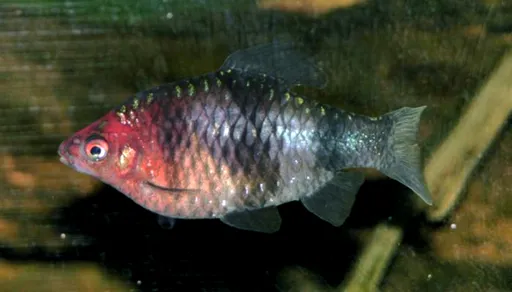
Puntigrus anchisporus is a barb of the family Cyprinidae. It carries the classic four black bars, but its dorsal and pelvic fins are marked with red. The true Sumatran tiger barb, Puntigrus tetrazona, has black there instead.
In the wild
The Borneo tiger barb comes from the Kapuas basin of West Kalimantan on Borneo, where it lives in forest streams and rivers.
Weekly picks
Tank mates
The Borneo tiger barb is a mostly peaceful, schooling species that keeps to the middle. These picks share a community profile with it, are safe together in both directions, and overlap on water type, temperature and pH.
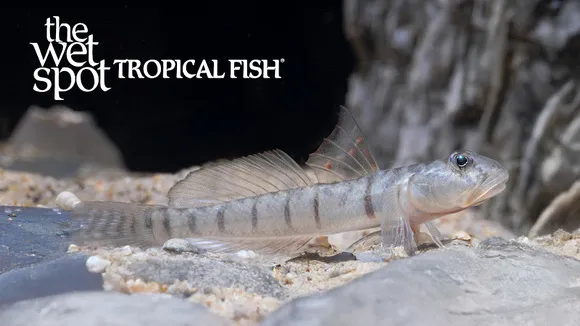
Candy stripe goby
Awaous flavus
Freshwater3.9 in (10 cm) · 29 gal (110 L)75–82°F (24–28°C)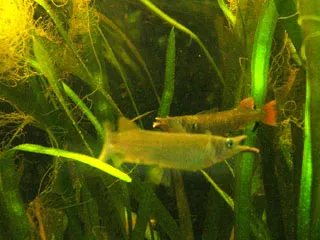
Redfin halfbeak
Nomorhamphus ebrardtii
Freshwater3.5 in (9 cm) · 29 gal (110 L)75–81°F (24–27°C)
Bonita tetra
Moenkhausia bonita
Freshwater3.3 in (8.5 cm) · 29 gal (110 L)72–81°F (22–27°C)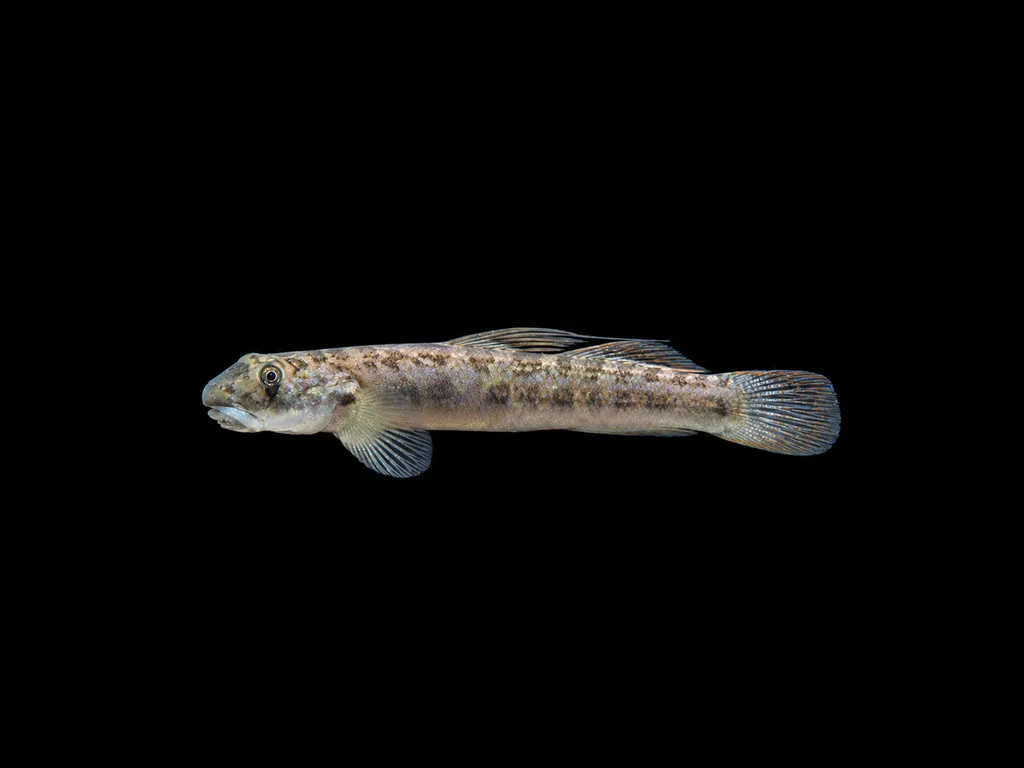
Threadfin sicyopterus
Sicyopterus longifilis
Freshwater3.9 in (10 cm) · 29 gal (110 L)73–81°F (23–27°C)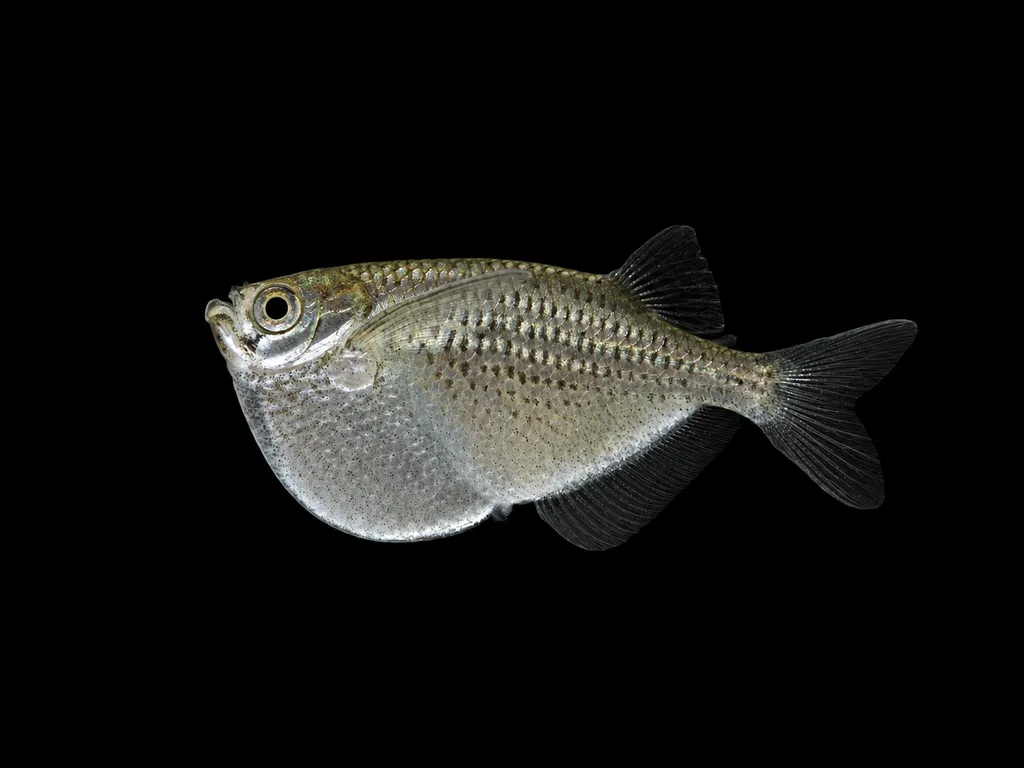
Silver hatchetfish
Gasteropelecus levis
Freshwater1.4 in (3.5 cm) · 30 gal (112 L)73–82°F (23–28°C)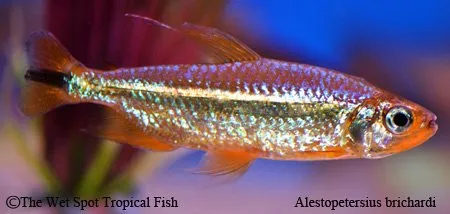
Brichard's Congo tetra
Alestopetersius brichardi
Freshwater3.5 in (9 cm) · 29 gal (110 L)73–81°F (23–27°C)
Common questions
What size tank does a Borneo tiger barb need?
A Borneo tiger barb needs at least 29 gal (110 L). It spends most of its time in the middle.
What temperature and pH does a Borneo tiger barb need?
A Borneo tiger barb is comfortable at 73–81°F (23–27°C) with a pH of 6.0–7.5.
What does a Borneo tiger barb eat?
A Borneo tiger barb is easy to feed and takes flake, pellets and frozen or live foods eagerly.
How big does a Borneo tiger barb get?
An adult Borneo tiger barb reaches about 2.8 in (7 cm).
Does a Borneo tiger barb need a group?
Yes. A Borneo tiger barb is a schooling species and should be kept in a group, not singly.
How does a Borneo tiger barb breed?
The Borneo tiger barb scatters its eggs among plants. Breeding it is a moderate challenge.
Related species
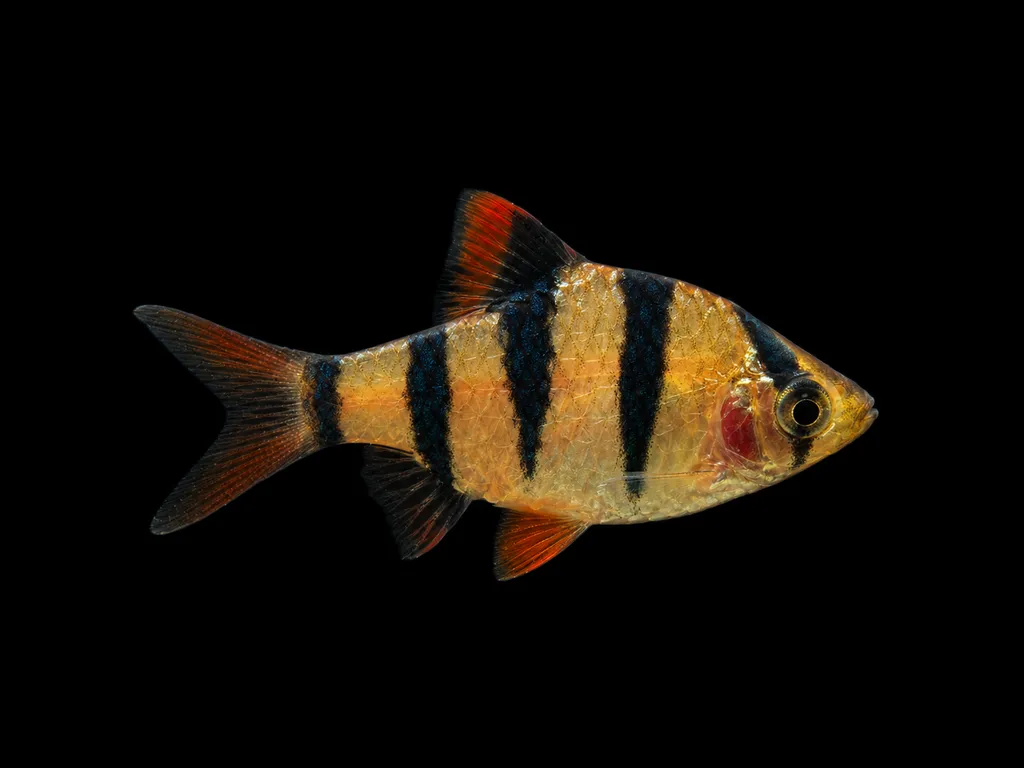 2.2 in (5.5 cm)29 gal (110 L)73–81°F (23–27°C)
Fiveband tiger barb
Puntigrus partipentazona
2.2 in (5.5 cm) · 29 gal (110 L)
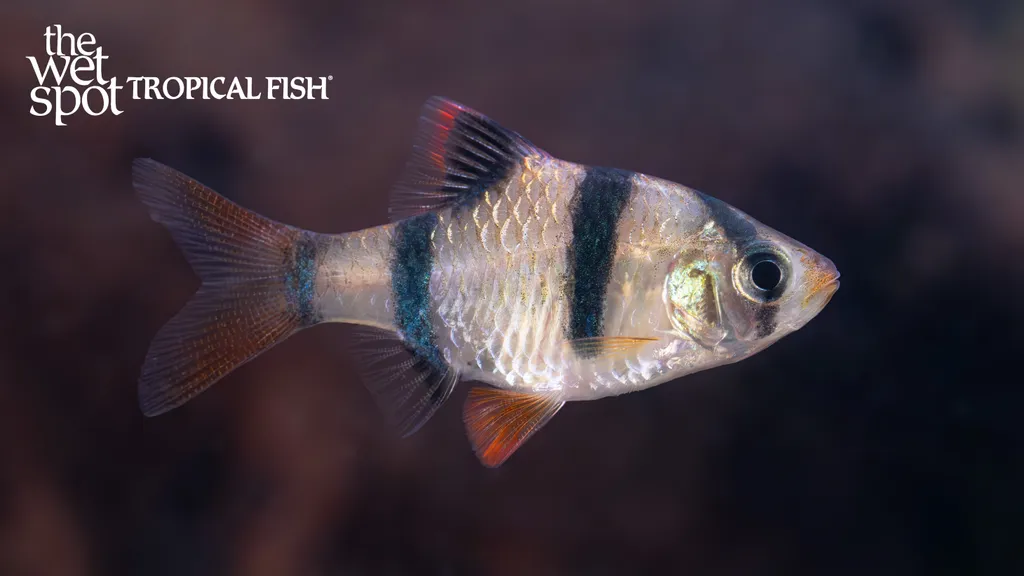 2.8 in (7 cm)20 gal (75 L)68–79°F (20–26°C)
Tiger barb
Puntigrus tetrazona
2.8 in (7 cm) · 20 gal (75 L)
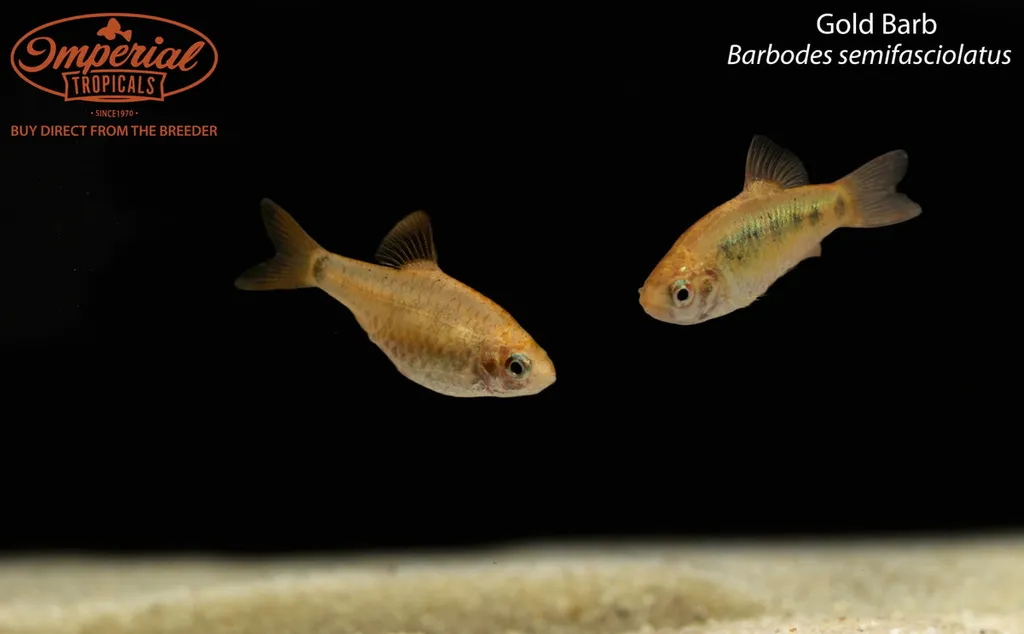 2.8 in (7 cm)20 gal (75 L)64–75°F (18–24°C)
Gold barb
Barbodes semifasciolatus
2.8 in (7 cm) · 20 gal (75 L)
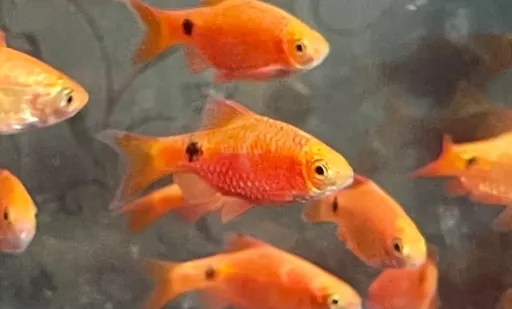 2.8 in (7 cm)24 gal (90 L)61–75°F (16–24°C)
Rosy barb
Pethia conchonius
2.8 in (7 cm) · 24 gal (90 L)
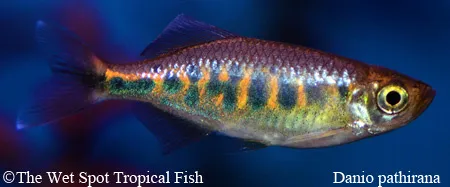 2.4 in (6 cm)24 gal (90 L)70–79°F (21–26°C)
Barred danio
Devario pathirana
2.4 in (6 cm) · 24 gal (90 L)
 2.4 in (6 cm)20 gal (75 L)72–79°F (22–26°C)
Black ruby barb
Pethia nigrofasciata
2.4 in (6 cm) · 20 gal (75 L)