Black ruby barb
Pethia nigrofasciata
Also known as Ruby barb
FreshwaterFish
Care at a glance
- Temperature
- 72–79°F
- 22–26°C
- pH
- 6.0–7.5
- Adult size
- 2.4 in
- 6 cm
- Minimum tank
- 20 gal
- 75 L
- Temperament
- Mostly peaceful
- Social behavior
- Schooling
- Swim level
- Middle
- Difficulty
- Easy
- Breeding
- Medium
- Rarity
- Common
- Family
- Cyprinidae
- Origin
- Southwestern Sri Lanka (Kelani and Nilwala river basins)
Overview
Keep them in a school of 8 to 10 with more females than males, in a tank of 75 liters or larger. They're mostly peaceful and sit in the middle of the water column, but a small or under-grouped group will nip fins, so keep the numbers up and skip slow, long-finned tankmates. Water should run from 22 to 26 C with a pH between 6 and 7.5. Feed a mix of small flakes, micro pellets, and frozen foods like daphnia or bloodworm, and pair them with other active, similarly sized fish.
In the wild
Black ruby barbs come from shaded forest streams in southwestern Sri Lanka, in the Kelani and Nilwala river basins, where they live over leaf litter and gravel in cool, soft, slightly acidic water. To match that, give them a heavily planted tank with dark substrate and subdued light, since that setting brings out the males' color. Keep the water on the cooler side, between 22 and 26 C, with a pH from 6 to 7.5.
Good to know
This is a barb in the family Cyprinidae, reaching about 6 cm as an adult. It's an egg scatterer with no parental care, and the adults will eat their own eggs the moment they're laid. Breeding is doable but takes some setup, and nearly every fish in the trade today is captive-bred.
Did you know
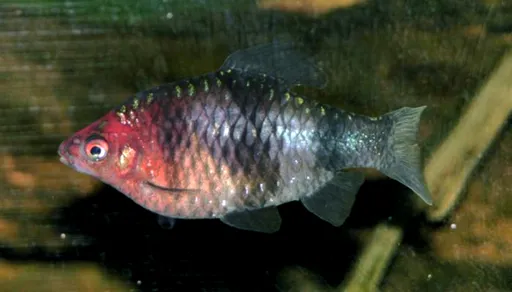
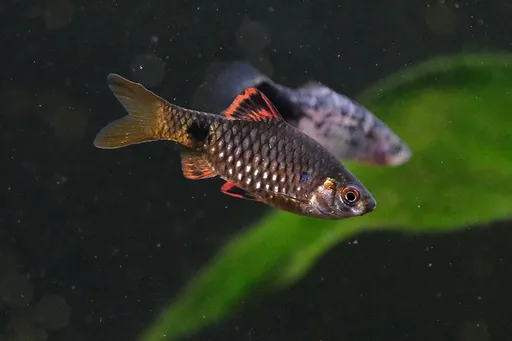
Males don't show their best color most of the time, sitting fairly plain until they're ready to spawn. When a male is in breeding mood he flushes a deep ruby-black across the front half of his body, and the effect is strongest over dark substrate under low light. Drop the lights and plant the tank heavily if you want to see it.
Weekly picks
Tank mates
Black ruby barb is a mostly peaceful, schooling species that keeps to the middle. These picks share a community profile with it, are safe together in both directions, and overlap on water type, temperature and pH.
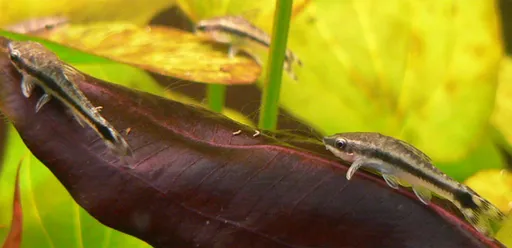
Common otocinclus
Otocinclus vittatus
Freshwater2 in (5 cm) · 20 gal (75 L)72–79°F (22–26°C)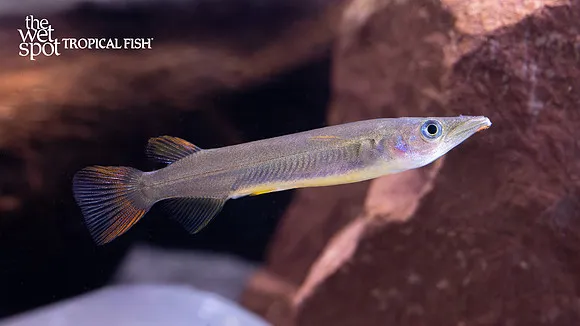
Rex halfbeak
Nomorhamphus rex
Freshwater2.2 in (5.5 cm) · 20 gal (75 L)72–79°F (22–26°C)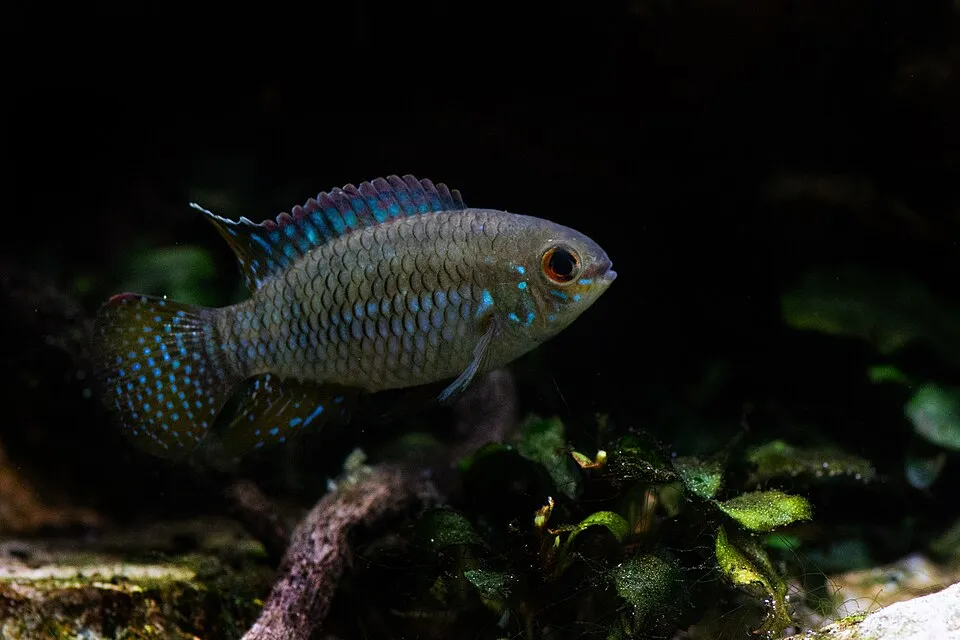
Dwarf flag cichlid
Laetacara curviceps
Freshwater2.2 in (5.5 cm) · 20 gal (75 L)68–82°F (20–28°C)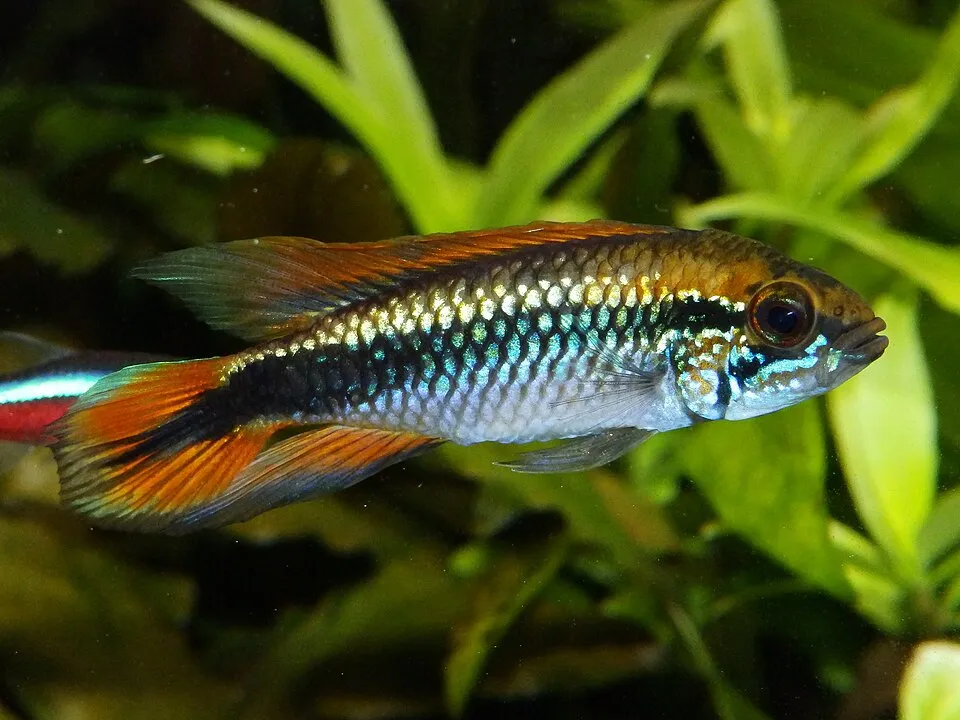
Agassiz's dwarf cichlid
Apistogramma agassizii
Freshwater3.5 in (9 cm) · 20 gal (75 L)72–84°F (22–29°C)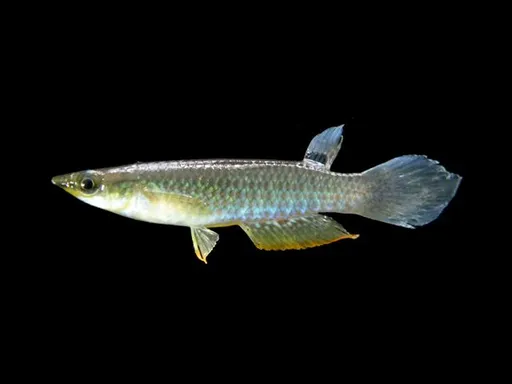
Blue panchax
Aplocheilus panchax
Freshwater3.5 in (9 cm) · 20 gal (75 L)72–82°F (22–28°C)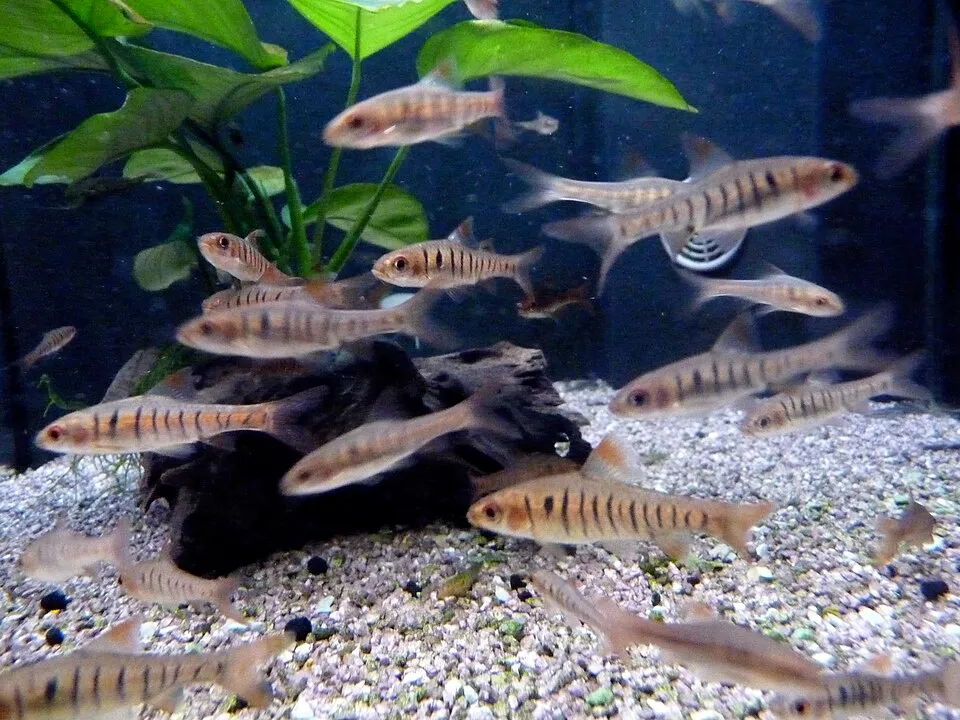
African banded barb
Barbus fasciolatus
Freshwater2.4 in (6 cm) · 20 gal (75 L)68–79°F (20–26°C)
Common questions
What size tank does a Black ruby barb need?
A Black ruby barb needs at least 20 gal (75 L). It spends most of its time in the middle.
What temperature and pH does a Black ruby barb need?
A Black ruby barb is comfortable at 72–79°F (22–26°C) with a pH of 6.0–7.5.
How big does a Black ruby barb get?
An adult Black ruby barb reaches about 2.4 in (6 cm).
Does a Black ruby barb need a group?
Yes. A Black ruby barb is a schooling species and should be kept in a group, not singly.
Related species
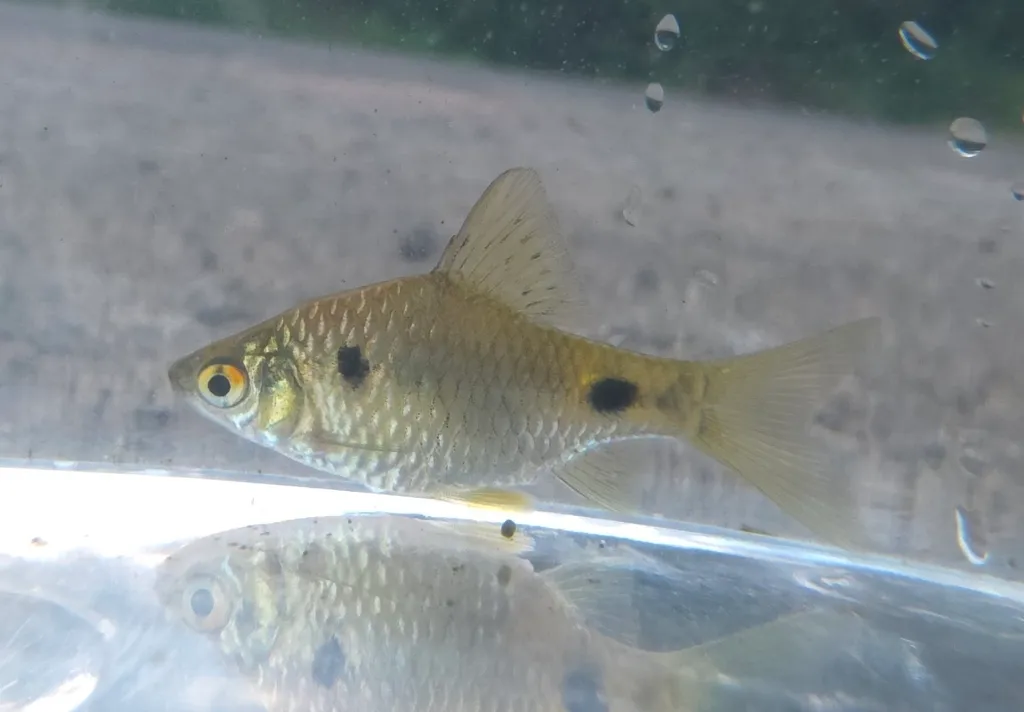 2.4 in (6 cm)20 gal (75 L)64–75°F (18–24°C)
Ticto barb
Pethia ticto
2.4 in (6 cm) · 20 gal (75 L)
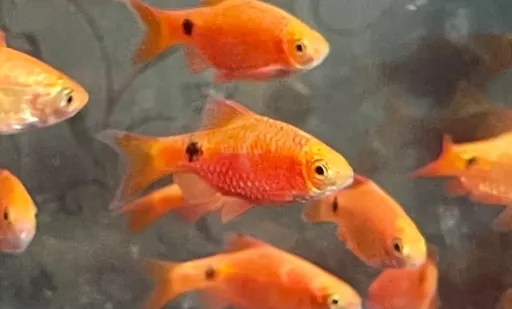 2.8 in (7 cm)24 gal (90 L)61–75°F (16–24°C)
Rosy barb
Pethia conchonius
2.8 in (7 cm) · 24 gal (90 L)
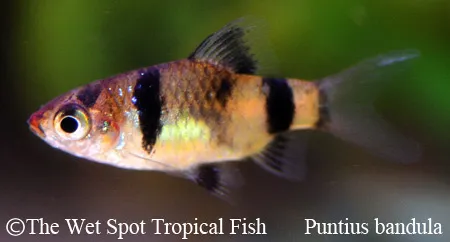 2 in (5 cm)20 gal (75 L)73–81°F (23–27°C)
Bandula barb
Pethia bandula
2 in (5 cm) · 20 gal (75 L)
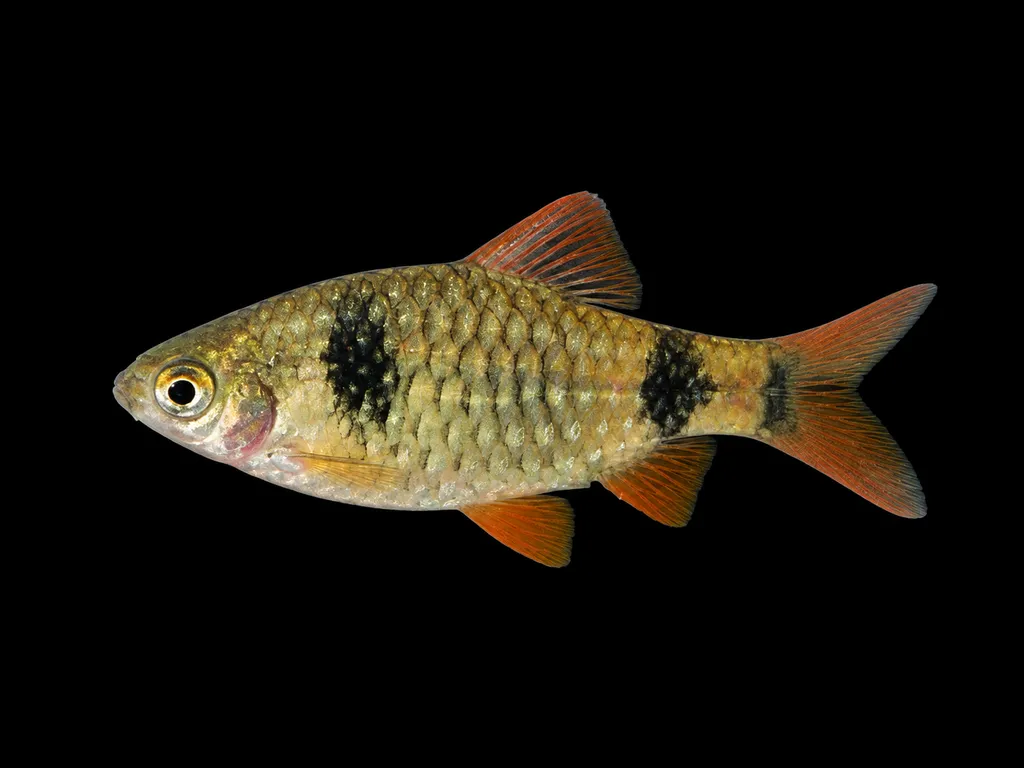 2 in (5 cm)16 gal (60 L)72–81°F (22–27°C)
Cuming's barb
Pethia cumingii
2 in (5 cm) · 16 gal (60 L)
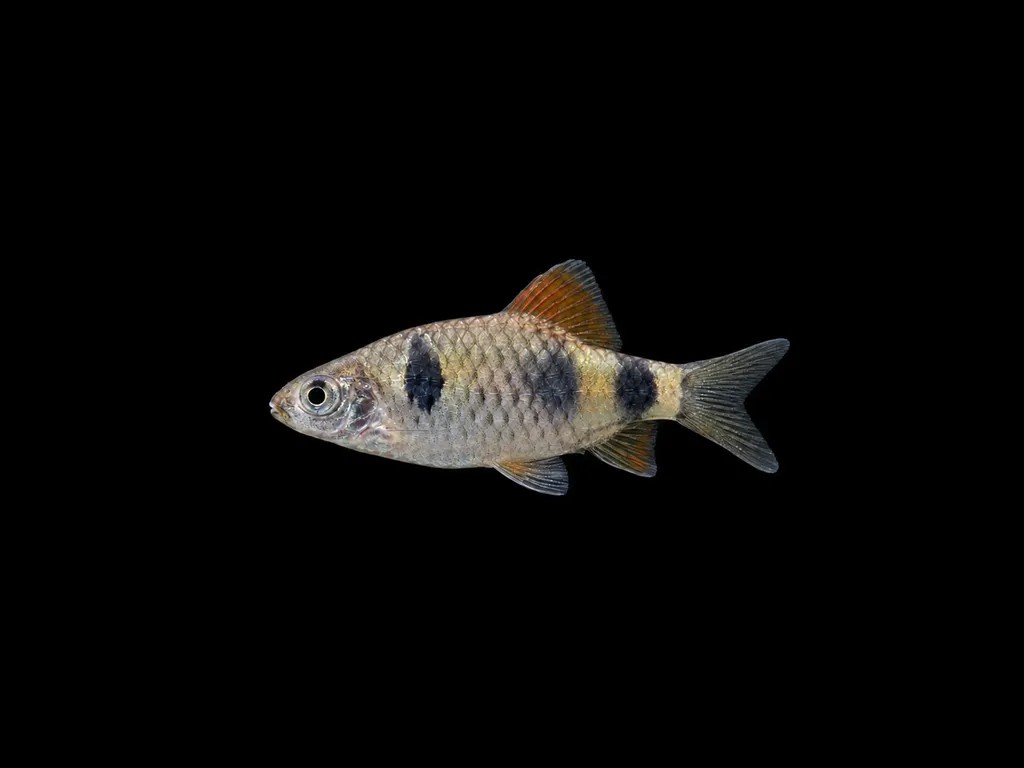 2 in (5 cm)20 gal (75 L)72–81°F (22–27°C)
Setna barb
Pethia setnai
2 in (5 cm) · 20 gal (75 L)
 2 in (5 cm)20 gal (75 L)64–79°F (18–26°C)
Stoliczka's barb
Pethia stoliczkana
2 in (5 cm) · 20 gal (75 L)