Fiveband tiger barb
Puntigrus partipentazona
Also known as Partipentazona barb, Siam tiger barb
FreshwaterFish
Care at a glance
- Temperature
- 73–81°F
- 23–27°C
- pH
- 6.0–7.5
- Adult size
- 2.2 in
- 5.5 cm
- Minimum tank
- 29 gal
- 110 L
- Temperament
- Mostly peaceful
- Social behavior
- Schooling
- Swim level
- Middle
- Difficulty
- Easy
- Breeding
- Egg scatterer · Medium
- Rarity
- Rare
- Family
- Cyprinidae
- Origin
- Southeast Thailand, Cambodia and Malaya
Overview
The fiveband tiger barb is a lively, mostly peaceful schooling barb for an active community tank. It is simple to keep.
Did you know
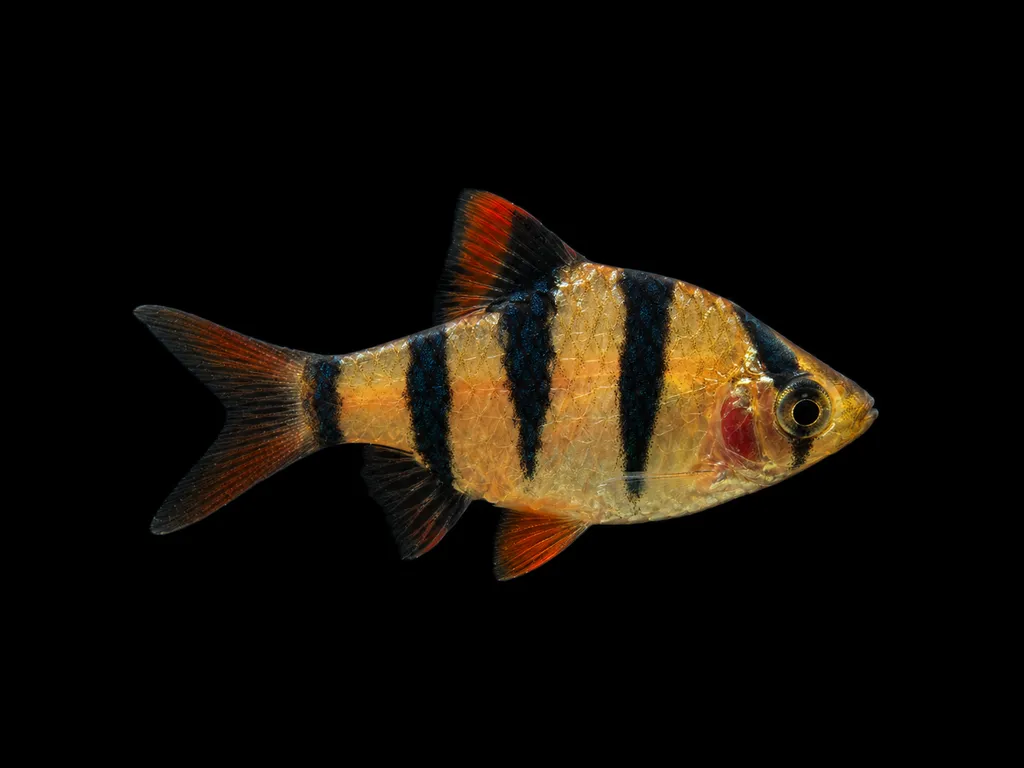
The fiveband tiger barb was long confused with the common tiger barb, until it was recognized as its own mainland species. One of its dark bars breaks up, where the tiger barb wears a complete one.
Caring for the fiveband tiger barb
Keep fiveband tiger barbs in a group of at least eight to ten. A tank of 29 gal (110 L) gives a school the swimming room it needs to settle. A good-sized school spreads out their natural fin nipping, so it stays play among themselves rather than harassment of neighbors.
Give them a well-planted tank with driftwood, roots and some leaf litter, and a gentle current. A darker substrate shows off their stripes. Keep the water warm, at 73 to 81°F (23 to 27°C), with a pH of 6.0 to 7.5.
Feed a varied diet of flake, small pellets and frozen foods, with the odd bit of vegetable matter. Fiveband tiger barbs are lively middle-water swimmers, too boisterous for slow, long-finned tank mates such as bettas or angelfish. Pair them with other quick, sturdy community fish.
Fiveband tiger barbs scatter their eggs, and breeding them is of moderate difficulty. Condition them in a group and give them fine-leaved plants or a spawning mop. Remove the adults after spawning, since they eat their own eggs.
Good to know
Puntigrus partipentazona belongs to the carp family, Cyprinidae, and is the mainland's smaller counterpart to the common tiger barb. Its species name means partial five-bands.
In the wild
The fiveband tiger barb lives in forest streams and flooded pools from southeast Thailand through Cambodia and into Malaya. These waters run slightly soft and lightly stained with tannins.
Weekly picks
Tank mates
The fiveband tiger barb is a mostly peaceful, schooling species that keeps to the middle. These picks share a community profile with it, are safe together in both directions, and overlap on water type, temperature and pH.
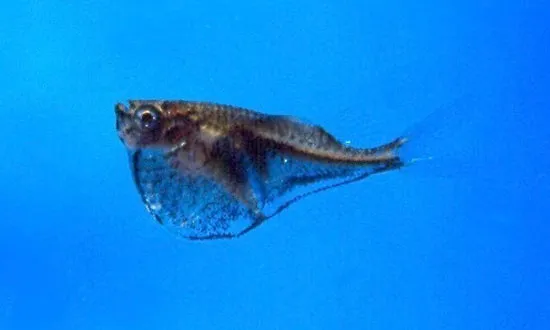
Blackwing hatchetfish
Carnegiella marthae
Freshwater1.4 in (3.5 cm) · 30 gal (115 L)68–82°F (20–28°C)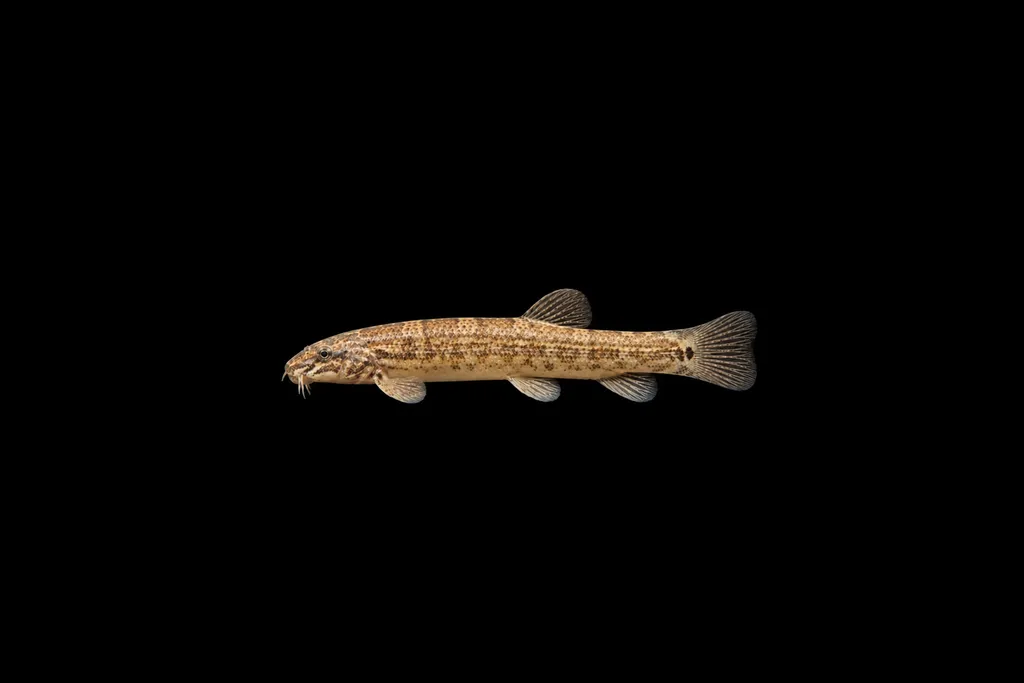
Schultz's stone loach
Schistura schultzi
Freshwater4.3 in (11 cm) · 29 gal (110 L)72–81°F (22–27°C)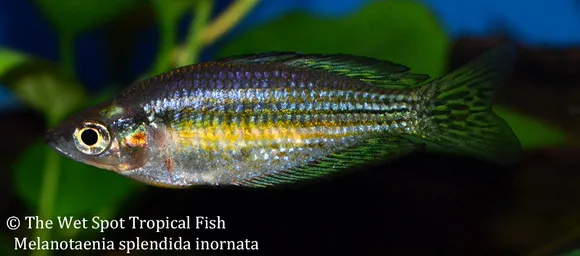
Checkered rainbowfish
Melanotaenia splendida inornata
Freshwater4.7 in (12 cm) · 29 gal (110 L)72–86°F (22–30°C)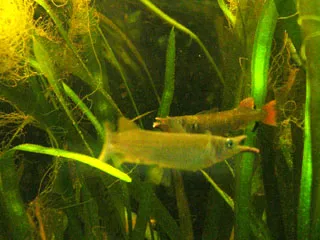
Redfin halfbeak
Nomorhamphus ebrardtii
Freshwater3.5 in (9 cm) · 29 gal (110 L)75–81°F (24–27°C)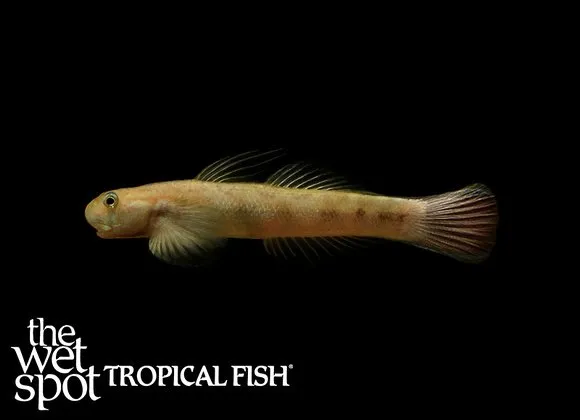
Red tail sicyopterus
Sicyopterus lagocephalus
Freshwater5.1 in (13 cm) · 29 gal (110 L)73–81°F (23–27°C)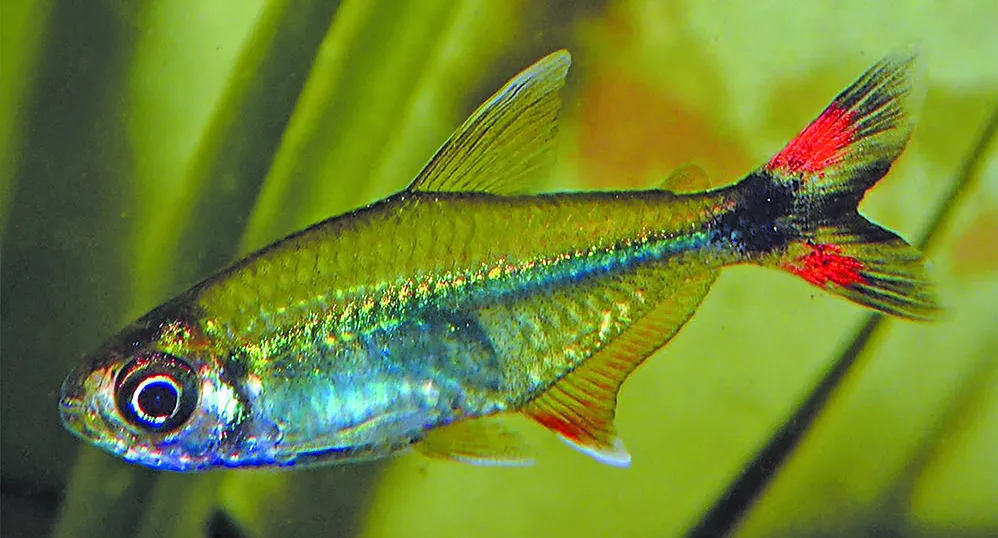
Bonita tetra
Moenkhausia bonita
Freshwater3.3 in (8.5 cm) · 29 gal (110 L)72–81°F (22–27°C)
Common questions
What size tank does a fiveband tiger barb need?
A fiveband tiger barb needs at least 29 gal (110 L). It spends most of its time in the middle.
What temperature and pH does a fiveband tiger barb need?
A fiveband tiger barb is comfortable at 73–81°F (23–27°C) with a pH of 6.0–7.5.
What does a fiveband tiger barb eat?
A fiveband tiger barb eats a varied diet of flake, small pellets and frozen foods. Give it the odd bit of vegetable matter too.
How big does a fiveband tiger barb get?
An adult fiveband tiger barb reaches about 2.2 in (5.5 cm).
Does a fiveband tiger barb need a group?
Yes. A fiveband tiger barb is a schooling species and should be kept in a group, not singly.
How does a fiveband tiger barb breed?
Fiveband tiger barbs scatter their eggs, and breeding them is of moderate difficulty. Condition a group, offer fine-leaved plants or a spawning mop, and remove the adults after spawning, since they eat their eggs.
Related species
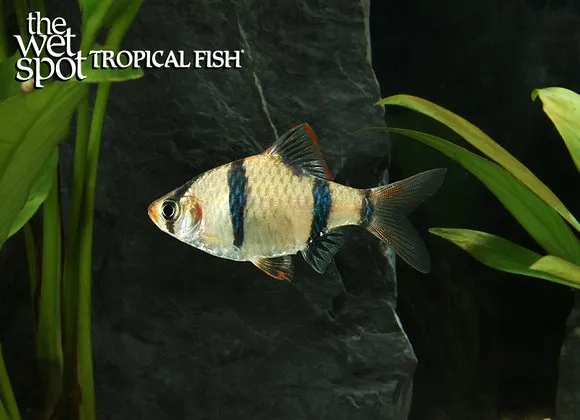 2.8 in (7 cm)29 gal (110 L)73–81°F (23–27°C)
Borneo tiger barb
Puntigrus anchisporus
2.8 in (7 cm) · 29 gal (110 L)
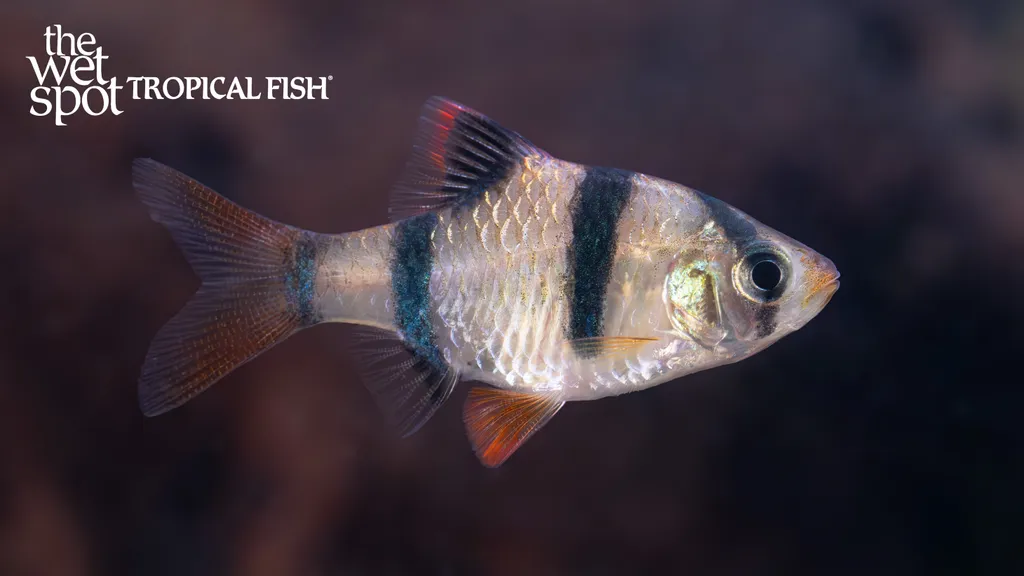 2.8 in (7 cm)20 gal (75 L)68–79°F (20–26°C)
Tiger barb
Puntigrus tetrazona
2.8 in (7 cm) · 20 gal (75 L)
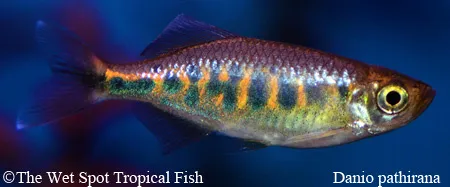 2.4 in (6 cm)24 gal (90 L)70–79°F (21–26°C)
Barred danio
Devario pathirana
2.4 in (6 cm) · 24 gal (90 L)
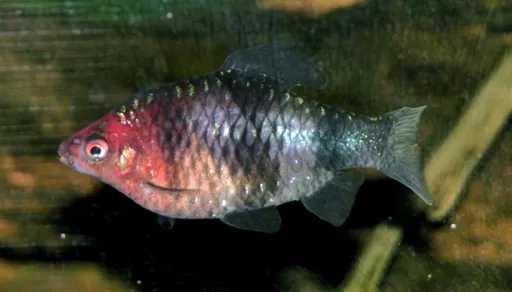 2.4 in (6 cm)20 gal (75 L)72–79°F (22–26°C)
Black ruby barb
Pethia nigrofasciata
2.4 in (6 cm) · 20 gal (75 L)
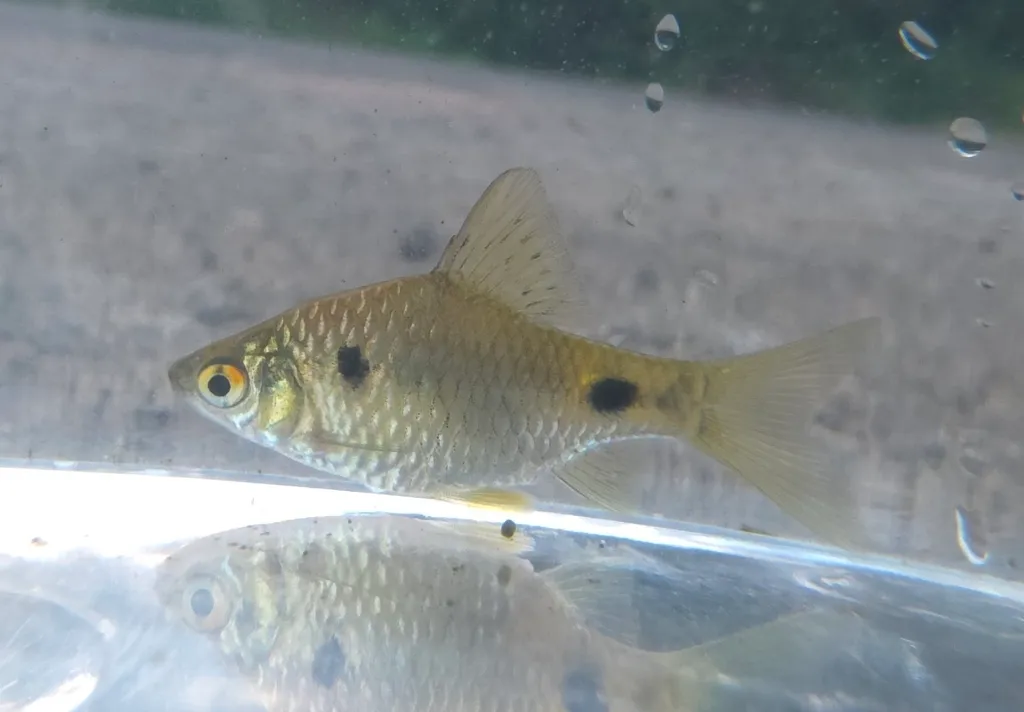 2.4 in (6 cm)20 gal (75 L)64–75°F (18–24°C)
Ticto barb
Pethia ticto
2.4 in (6 cm) · 20 gal (75 L)
 2 in (5 cm)15 gal (55 L)64–75°F (18–24°C)
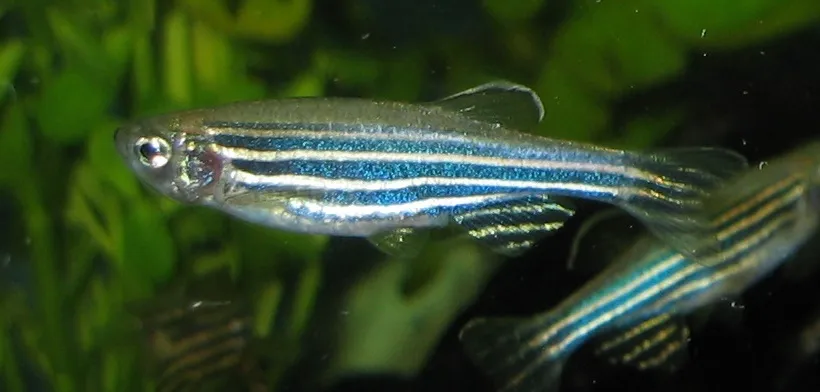
Zebra danio
Danio rerio
2 in (5 cm) · 15 gal (55 L)