Bolivian ram
Mikrogeophagus altispinosus
FreshwaterFish
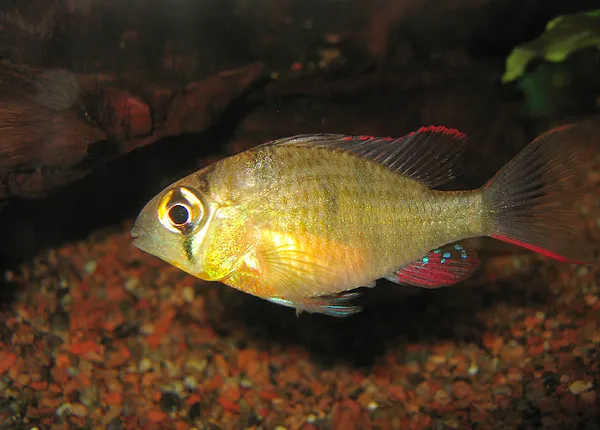
Care at a glance
- Temperature
- 75–82°F
- 24–28°C
- pH
- 6.0–7.5
- Adult size
- 3.1 in
- 8 cm
- Minimum tank
- 45 gal
- 170 L
- Temperament
- Peaceful
- Social behavior
- Social
- Swim level
- Middle
- Difficulty
- Medium
- Breeding
- Hard
- Rarity
- Rare
- Family
- Cichlidae
- Origin
- Bolivia, Brazil
Overview
The Bolivian ram is a peaceful dwarf cichlid that suits a quiet community and is happiest kept as a bonded pair or a small group with space to spread out. It stays near the bottom and middle of the tank, sifting sand and picking at food, and only turns territorial around a chosen flat rock when a pair is spawning. It is hardier and more forgiving than the common ram, which makes it a good first cichlid. Keep it with calm, similarly sized tankmates such as tetras, rasboras and peaceful catfish, and avoid boisterous fish that will outcompete it at feeding time. Offer a varied diet of sinking pellets, frozen bloodworm, brine shrimp and daphnia. A tank of at least 170 liters gives a pair or small group room to set up territories without constant squabbling.
In the wild
Bolivian rams come from the warm, gently flowing waters of the upper Madeira basin in Bolivia and Brazil, where they live over sand and leaf litter along river margins and in quiet backwaters. The water there is soft to moderately hard and close to neutral. They are adaptable, so a pH of 6.0 to 7.5 and a temperature of 24 to 28 C will keep them comfortable. Give them a soft sandy floor they can sift, some smooth rocks and driftwood for cover, and a few hardy plants, with open swimming space left in the middle of the tank.
Good to know
Mikrogeophagus altispinosa is a dwarf member of the cichlid family, Cichlidae, reaching only about 8 cm. The genus name means small eartheater, a reference to the way it sifts mouthfuls of sand for tiny invertebrates. It is an open substrate spawner that lays eggs on a cleaned rock or firm surface, with both parents sharing guard duty and moving the fry around pits dug in the sand. Breeding can be tricky because pairs may eat their first few clutches before they settle into reliable parents, and stable, clean water is needed to raise the fry.
Did you know
Unlike its cousin the common ram, the Bolivian ram tolerates cooler and harder water, which is one reason it is often recommended as a hardier introduction to keeping dwarf cichlids.
Weekly picks
Tank mates
Bolivian ram is a peaceful, social species that keeps to the middle. These picks share a community profile with it, are safe together in both directions, and overlap on water type, temperature and pH.
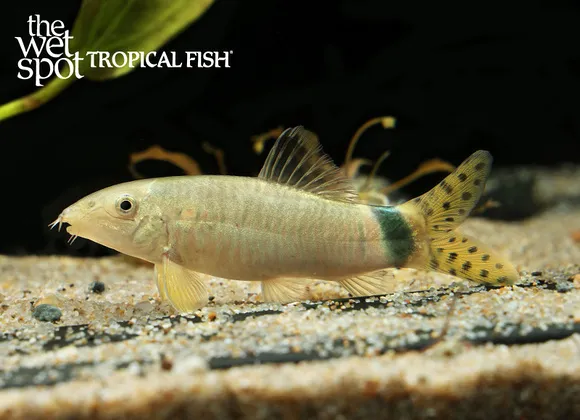
Splendid loach
Yasuhikotakia splendida
Freshwater4.7 in (12 cm) · 42 gal (160 L)73–82°F (23–28°C)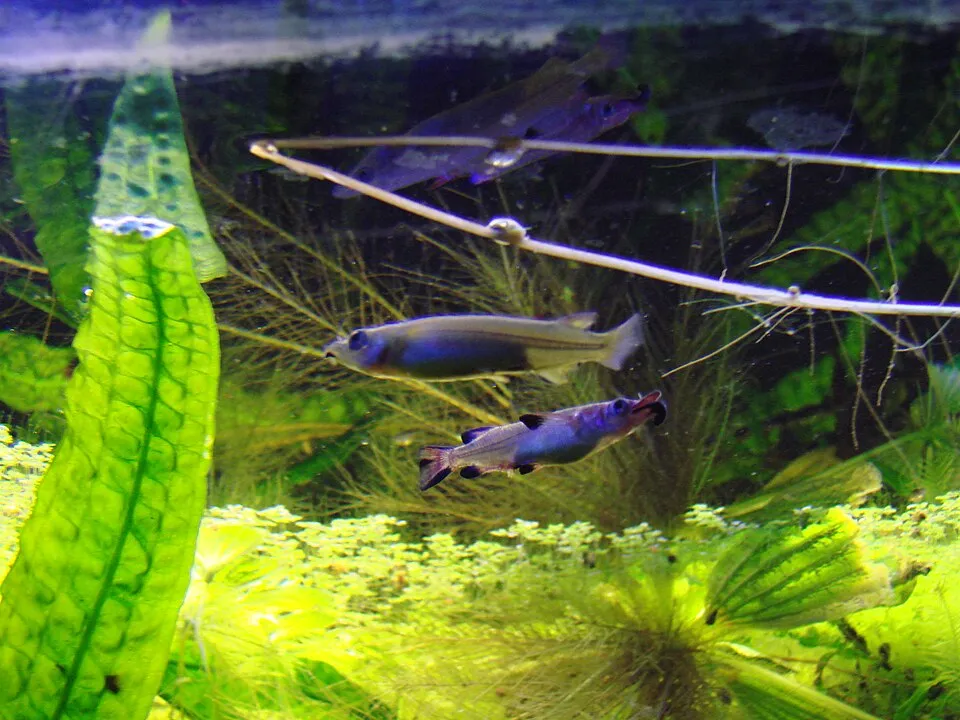
Celebes halfbeak
Nomorhamphus liemi
Freshwater3.5 in (9 cm) · 40 gal (150 L)68–77°F (20–25°C)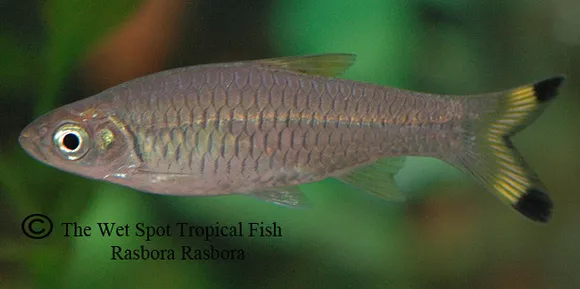
Gangetic scissortail rasbora
Rasbora rasbora
Freshwater5.1 in (13 cm) · 42 gal (160 L)72–81°F (22–27°C)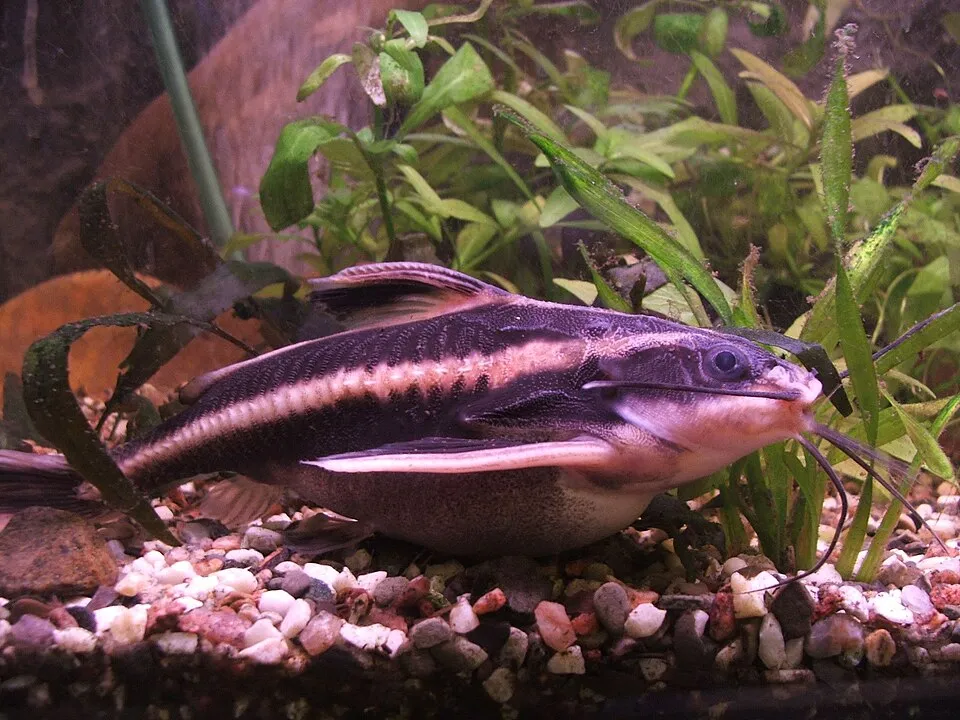
Striped raphael catfish
Platydoras armatulus
Freshwater8.7 in (22 cm) · 45 gal (170 L)75–86°F (24–30°C)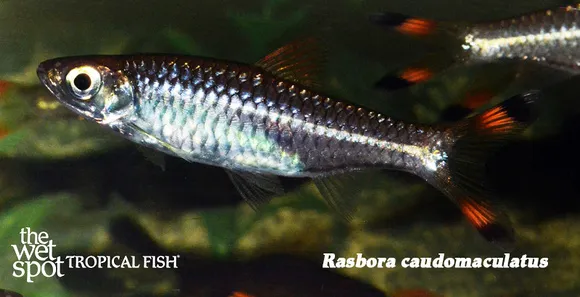
Greater scissortail
Rasbora caudimaculata
Freshwater5.1 in (13 cm) · 53 gal (200 L)68–79°F (20–26°C)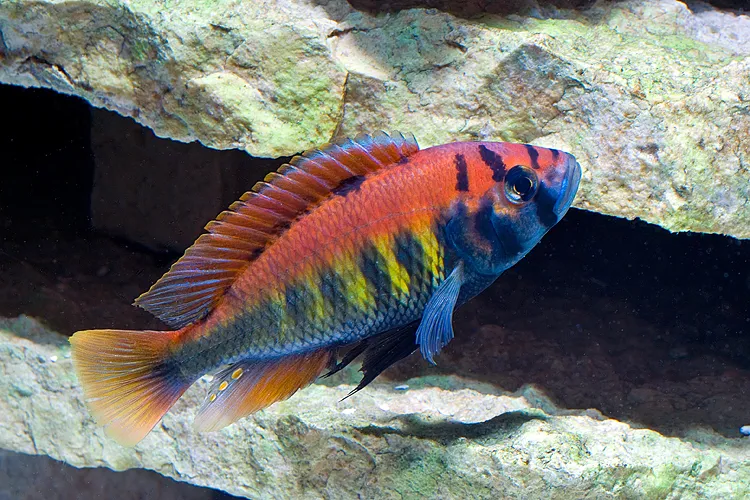
Flameback cichlid
Pundamilia nyererei
Freshwater3.5 in (9 cm) · 42 gal (160 L)73–81°F (23–27°C)
Common questions
What size tank does a Bolivian ram need?
A Bolivian ram needs at least 45 gal (170 L). It spends most of its time in the middle.
What temperature and pH does a Bolivian ram need?
A Bolivian ram is comfortable at 75–82°F (24–28°C) with a pH of 6.0–7.5.
How big does a Bolivian ram get?
An adult Bolivian ram reaches about 3.1 in (8 cm).
Related species
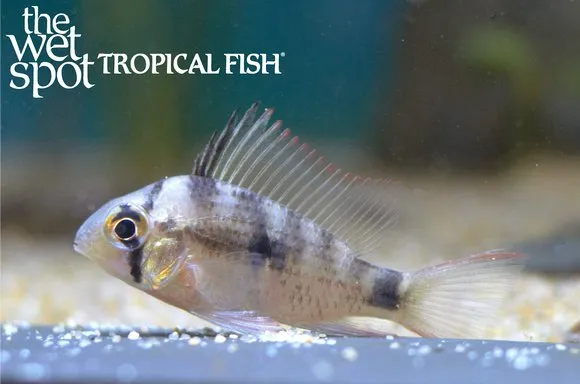
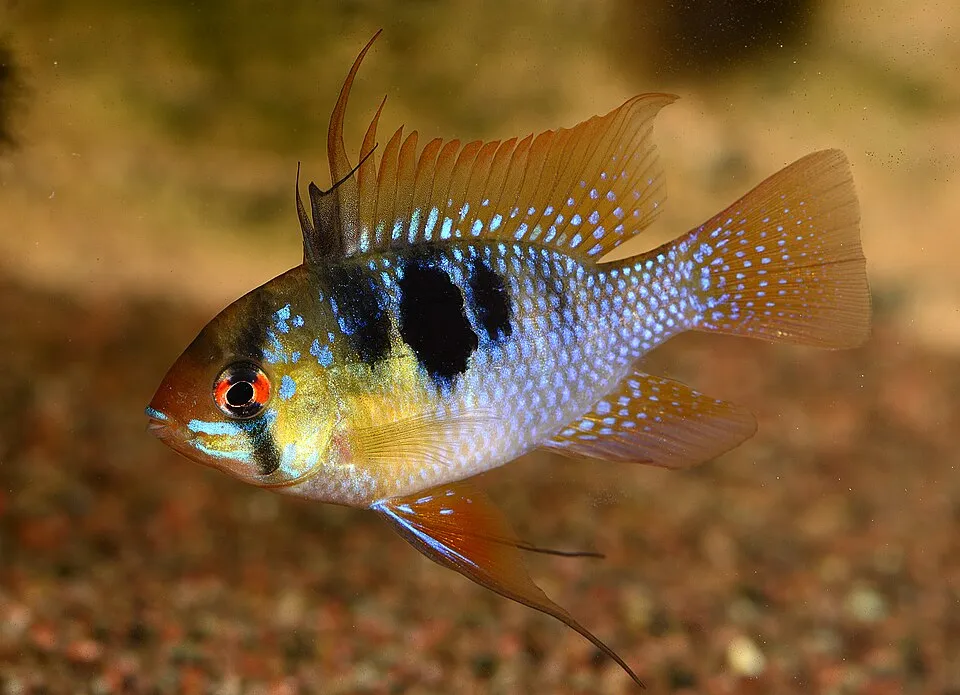 2.4 in (6 cm)18 gal (70 L)81–86°F (27–30°C)
Blue ram
Mikrogeophagus ramirezi
2.4 in (6 cm) · 18 gal (70 L)
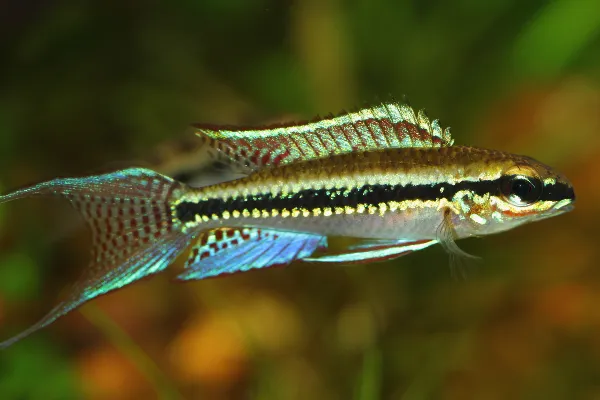
 2.4 in (6 cm)14 gal (54 L)77–86°F (25–30°C)
Brazilian ram
Mikrogeophagus maculicauda
2.4 in (6 cm) · 14 gal (54 L)
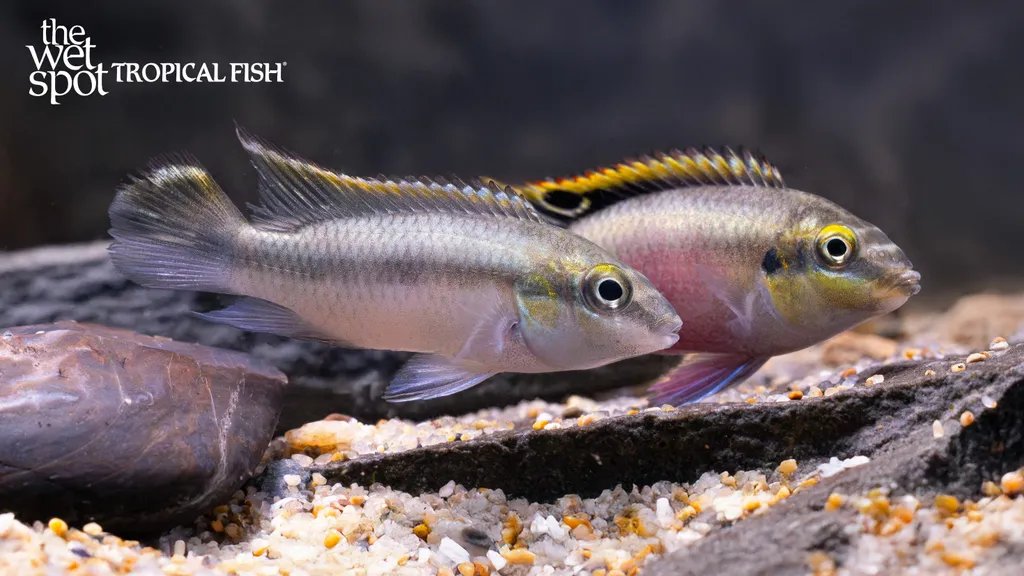
 3.5 in (9 cm)20 gal (75 L)79–86°F (26–30°C)
Checkerboard cichlid
Dicrossus filamentosus
3.5 in (9 cm) · 20 gal (75 L)
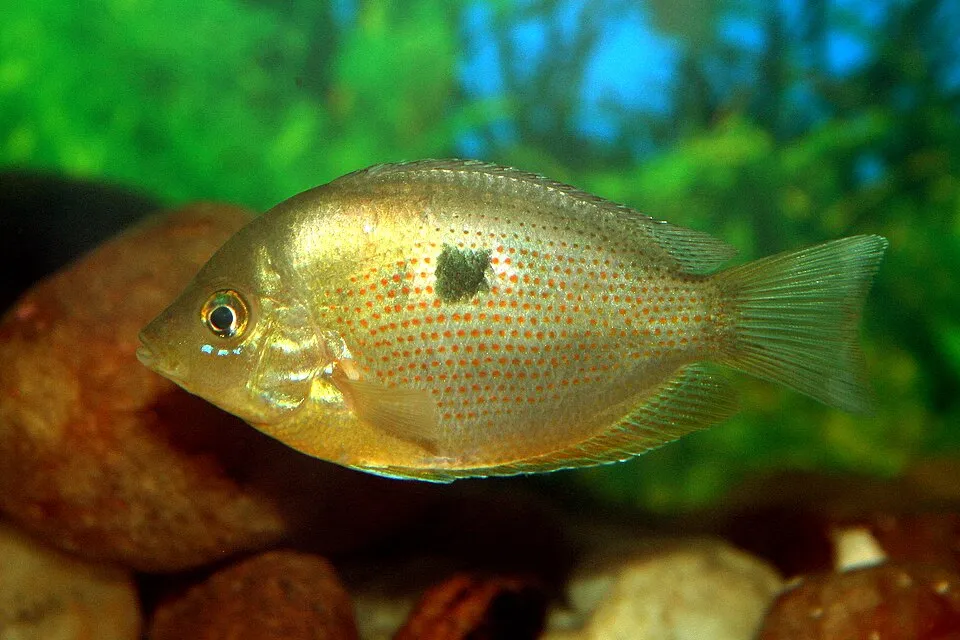
 3.9 in (10 cm)20 gal (75 L)75–81°F (24–27°C)
Kribensis
Pelvicachromis pulcher
3.9 in (10 cm) · 20 gal (75 L)
 3.9 in (10 cm)55 gal (210 L)68–82°F (20–28°C)
Orange chromide
Etroplus maculatus
3.9 in (10 cm) · 55 gal (210 L)
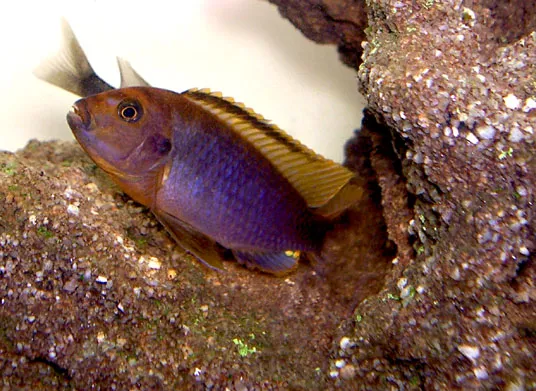 3.9 in (10 cm)24 gal (90 L)77–84°F (25–29°C)
Rusty cichlid
Iodotropheus sprengerae
3.9 in (10 cm) · 24 gal (90 L)