One species · 3 varieties
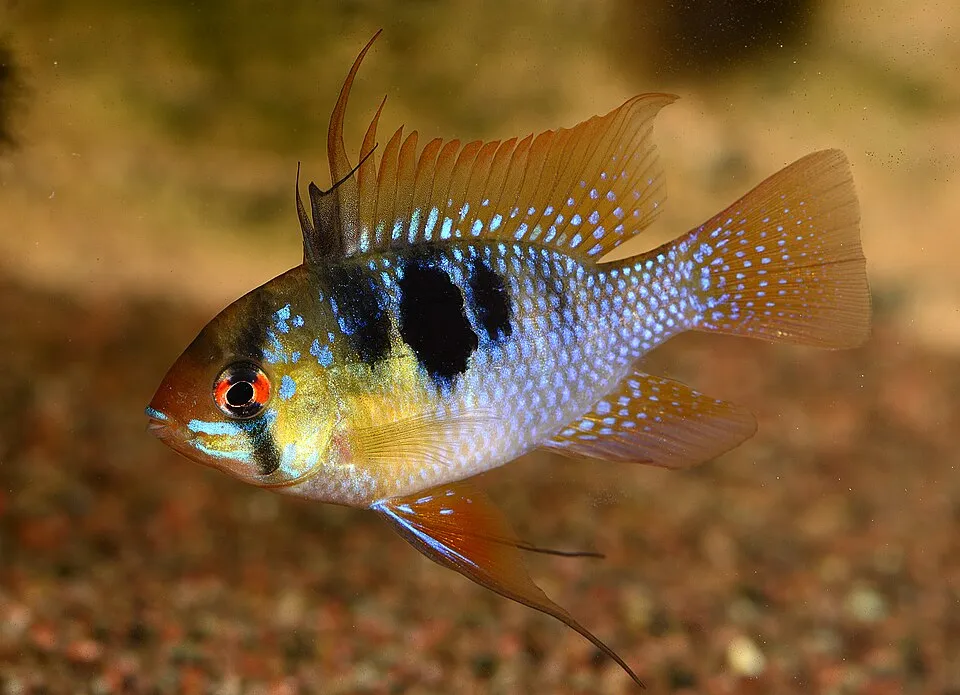
Blue ram
Mikrogeophagus ramirezi
Also known as German ram
FreshwaterFish
Care at a glance
- Temperature
- 81–86°F
- 27–30°C
- pH
- 5.5–7.0
- Adult size
- 2.4 in
- 6 cm
- Minimum tank
- 18 gal
- 70 L
- Temperament
- Peaceful
- Social behavior
- Social
- Swim level
- Middle
- Difficulty
- Medium
- Breeding
- Hard
- Rarity
- Common
- Family
- Cichlidae
- Origin
- Colombia, Venezuela
Pick a variety
One setup covers every line on this page: care is the species' care.
Overview
Rams are peaceful and spend most of their time in the lower and middle parts of the tank. A pair does well in around 70 liters, with pH from 5.5 to 7 and warm water in the upper 20s. They get along with calm tankmates that like the same warmth. Feed micro-pellets and quality flake plus frozen bloodworms and brine shrimp. They do best in mature, stable tanks rather than freshly set up ones.
In the wild
Blue rams come from warm, slow waters in the Orinoco basin across Colombia and Venezuela, around plants, leaf litter, and submerged roots over fine sand. The water is warm and soft to slightly acidic. To keep them well you really do need that warmth, around 27 to 30 C, plus soft acidic water, fine substrate, and cover. They're sensitive to nitrates and unstable conditions, so steady water quality matters.
Good to know
Mikrogeophagus ramirezi is a dwarf cichlid in the family Cichlidae, reaching about 5 to 6 cm. It's a substrate spawner that forms monogamous pairs and guards eggs and fry. Lifespan is short for a cichlid, often only two to three years. The IUCN lists it as Least Concern.
Did you know
Both parents share the work once eggs are laid, fanning them to keep oxygen flowing and picking off any that fungus over. Pairs will also move fry around the tank, herding them from one spot to another as they grow.
Other named lines
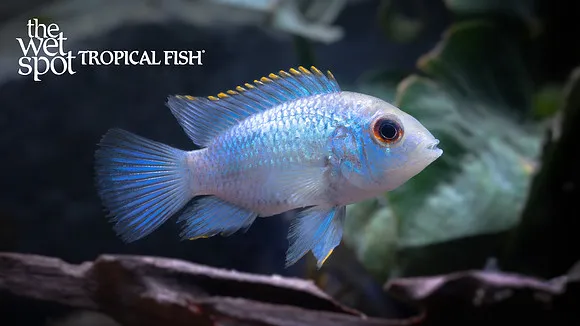
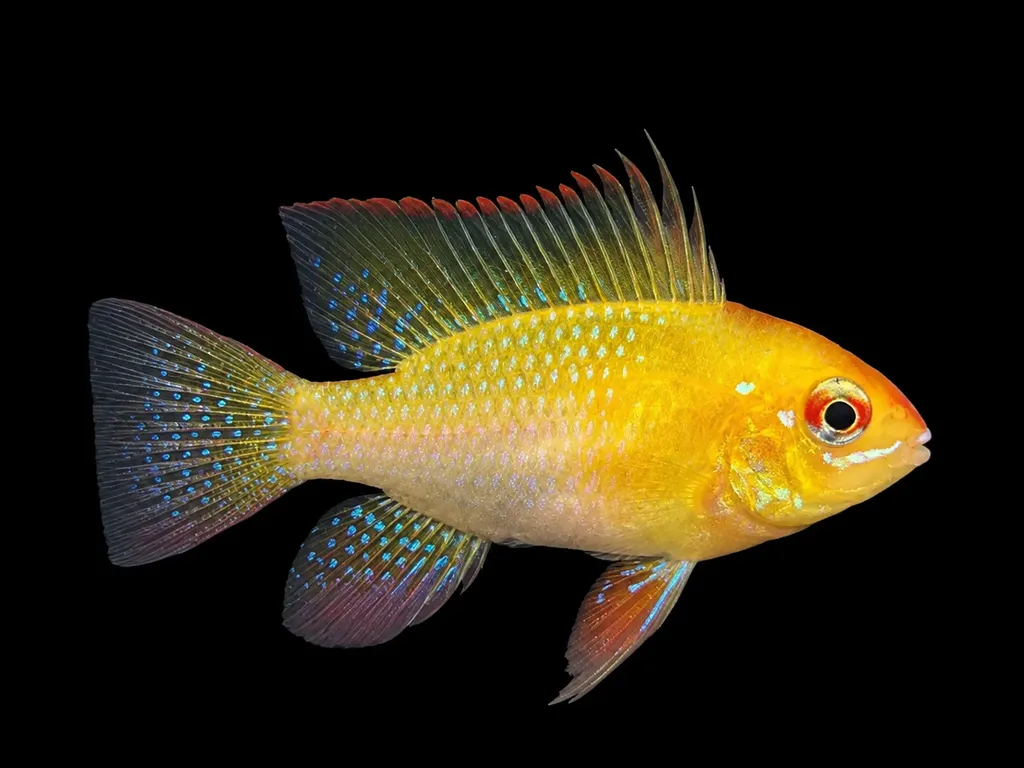
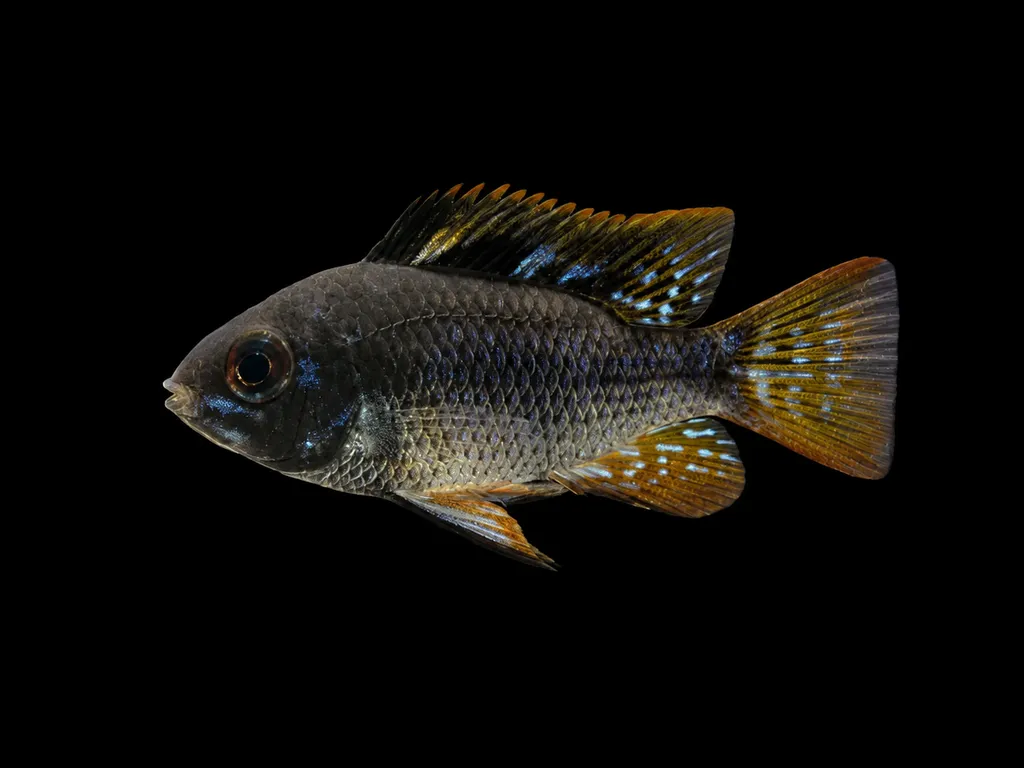
Every ram variety is the same dwarf cichlid; color and body forms are line-bred and the care does not change.
- German blue
- the standard high-color form
- Longfin
- extended fins on any color
- Balloon
- bred for a shortened, rounded body; a more delicate fish
Weekly picks
Tank mates
Every variety on this page wants the same water, so one set of picks fits them all. These picks match on water type, temperature, pH, size and temperament.
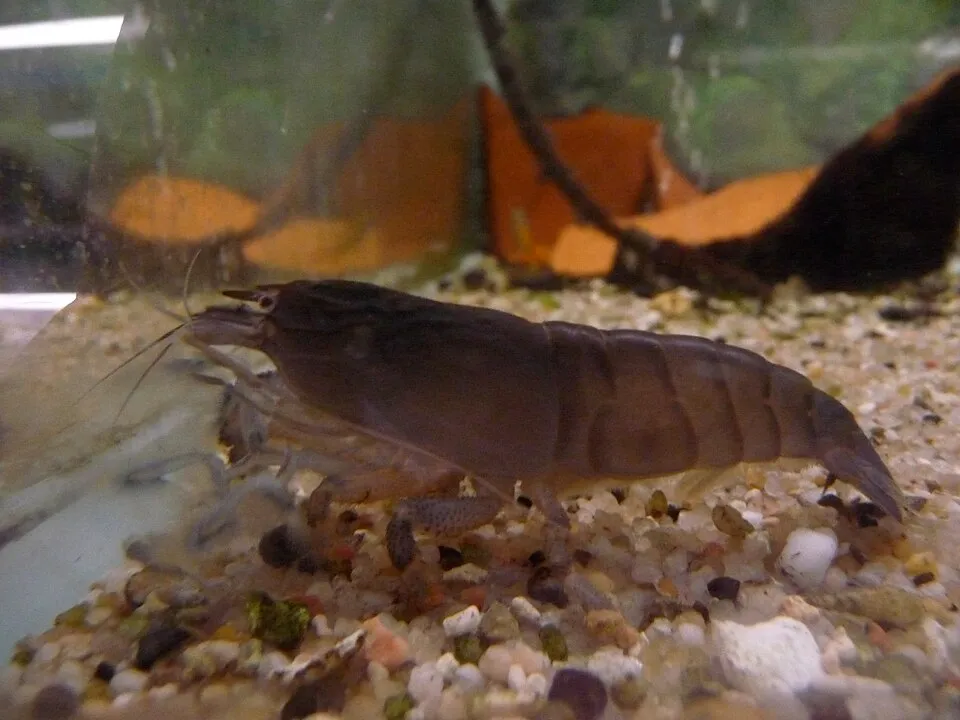
Vampire shrimp
Atya gabonensis
Freshwater5.1 in (13 cm) · 20 gal (75 L)75–82°F (24–28°C)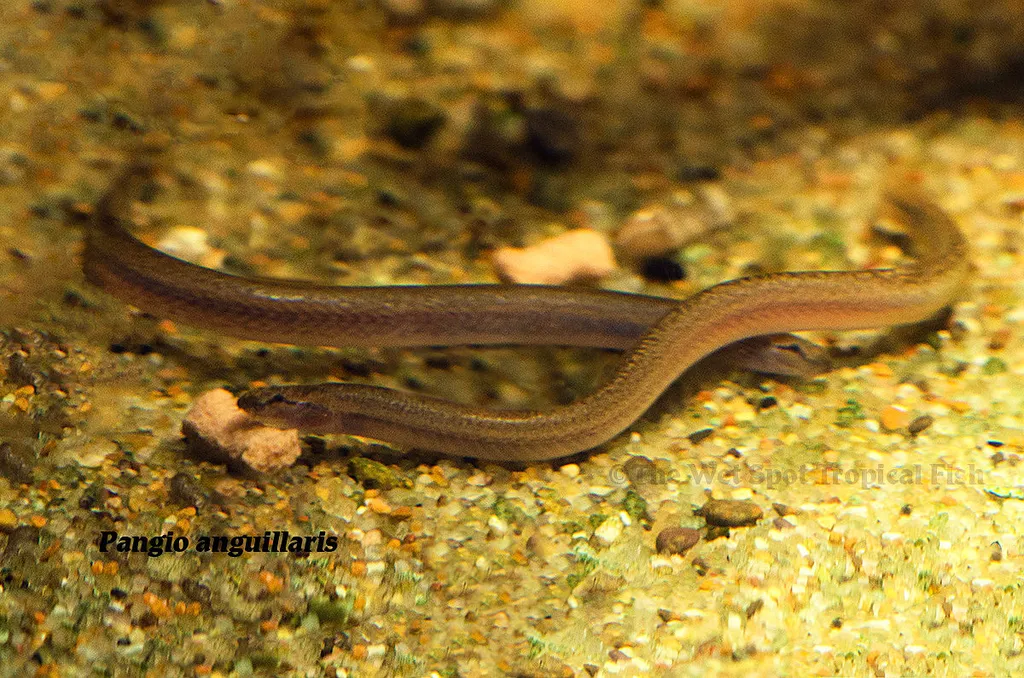
Eel kuhli loach
Pangio anguillaris
Freshwater4.7 in (12 cm) · 20 gal (75 L)72–82°F (22–28°C)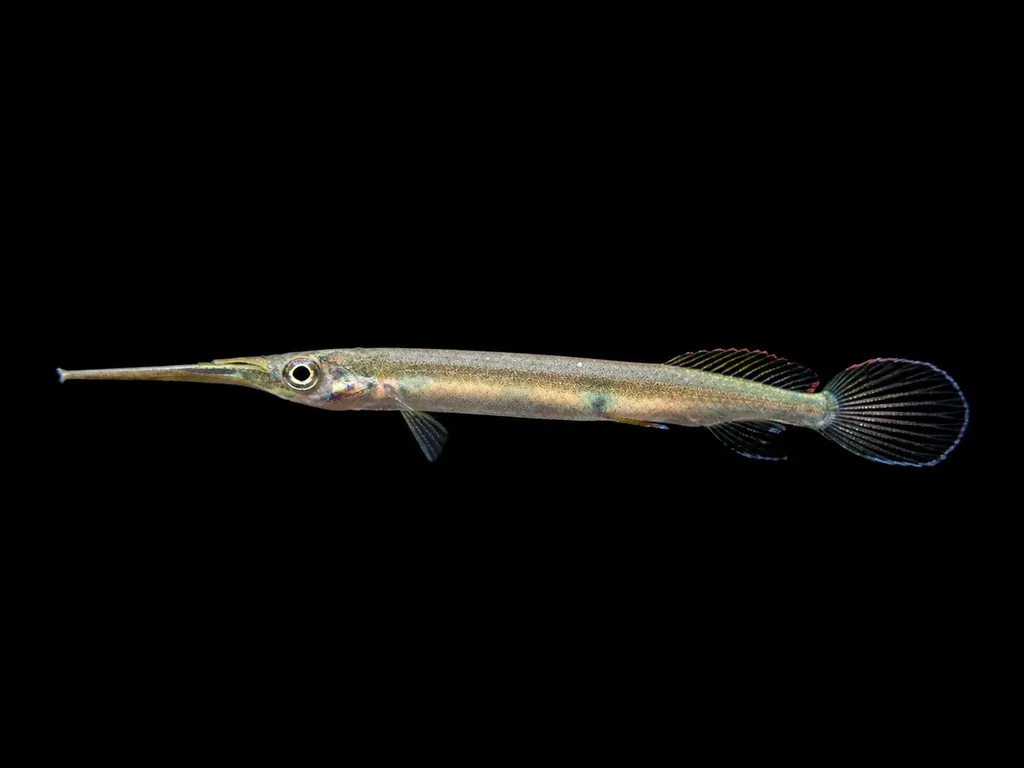
Kuekenthal's halfbeak
Hemirhamphodon kuekenthali
Freshwater3.3 in (8.5 cm) · 20 gal (75 L)73–81°F (23–27°C)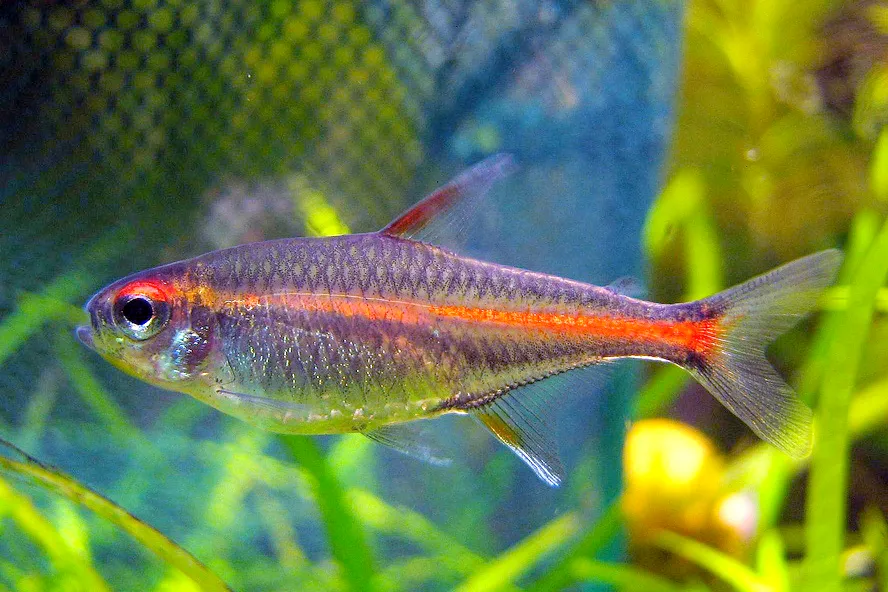
Glowlight tetra
Hemigrammus erythrozonus
Freshwater1.6 in (4 cm) · 18 gal (70 L)75–82°F (24–28°C)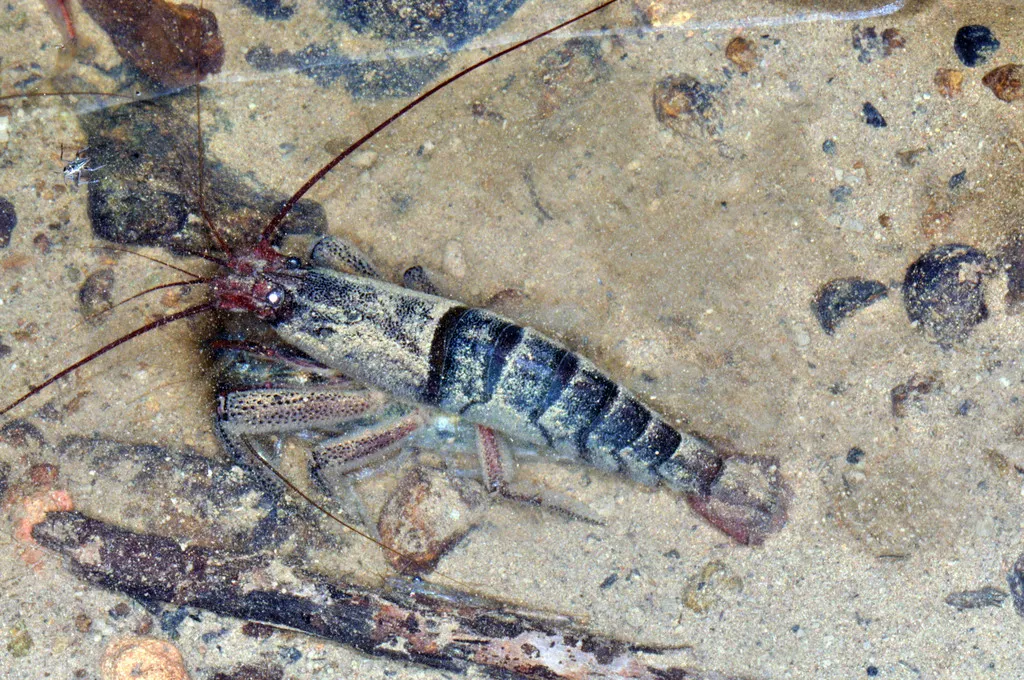
Marble wood shrimp
Atya scabra
Freshwater3.9 in (10 cm) · 20 gal (75 L)73–82°F (23–28°C)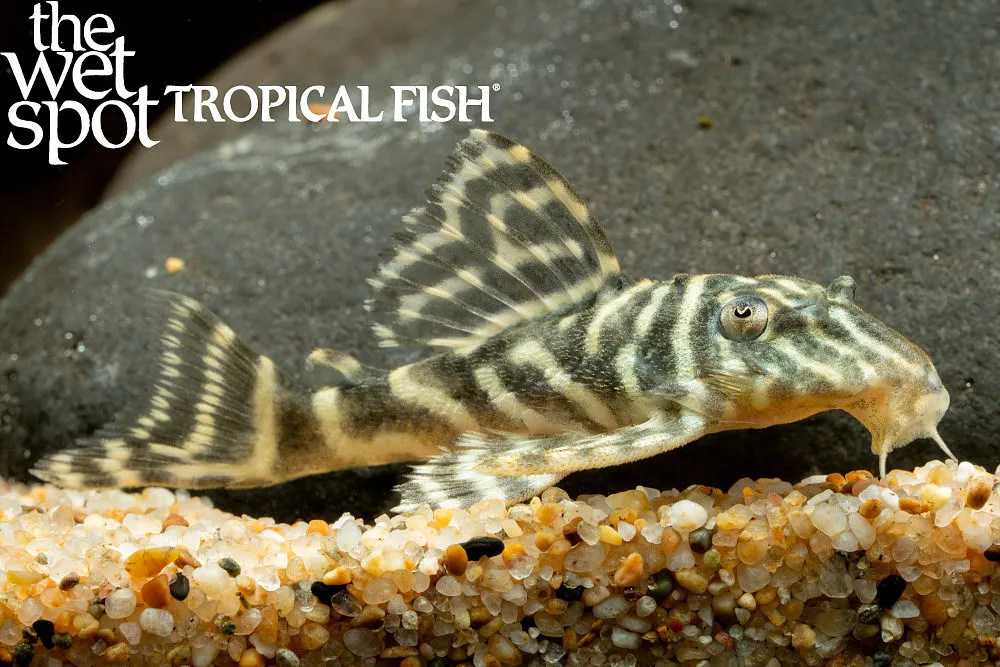
Colombian zebra pleco (L129)
Hypancistrus debilittera
Freshwater3.5 in (9 cm) · 20 gal (75 L)79–86°F (26–30°C)
Common questions
What size tank does a Blue ram need?
A Blue ram needs at least 18 gal (70 L). It spends most of its time in the middle.
What temperature and pH does a Blue ram need?
A Blue ram is comfortable at 81–86°F (27–30°C) with a pH of 5.5–7.0.
How big does a Blue ram get?
An adult Blue ram reaches about 2.4 in (6 cm).
Related species
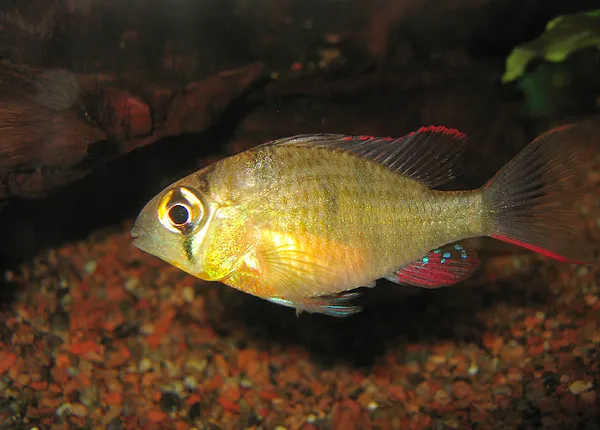 3.1 in (8 cm)45 gal (170 L)75–82°F (24–28°C)
Bolivian ram
Mikrogeophagus altispinosus
3.1 in (8 cm) · 45 gal (170 L)
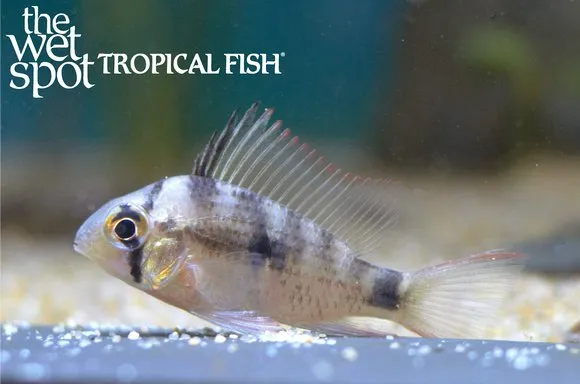 2.4 in (6 cm)14 gal (54 L)77–86°F (25–30°C)
Brazilian ram
Mikrogeophagus maculicauda
2.4 in (6 cm) · 14 gal (54 L)
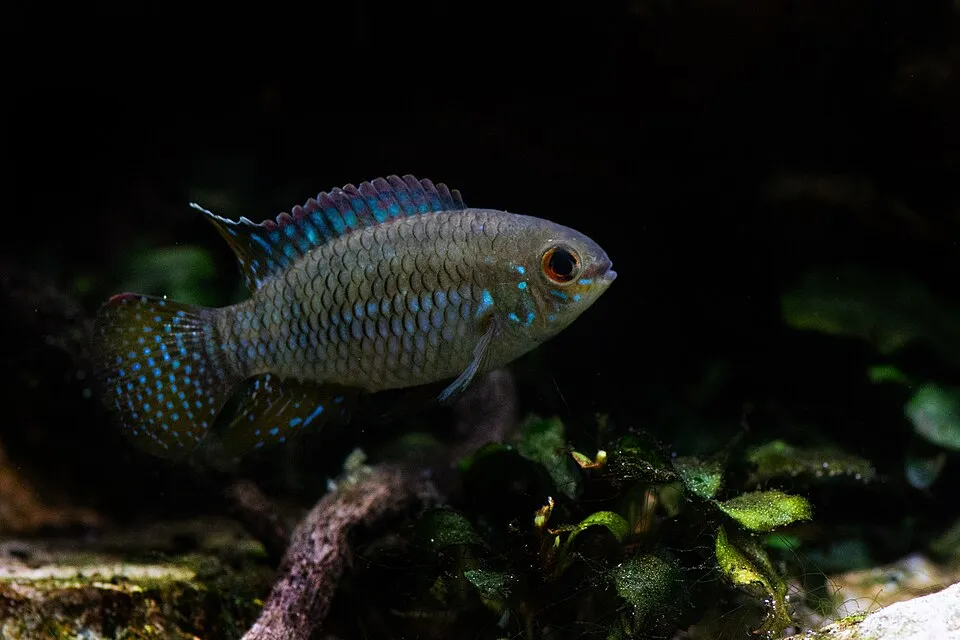 2.2 in (5.5 cm)20 gal (75 L)68–82°F (20–28°C)
Dwarf flag cichlid
Laetacara curviceps
2.2 in (5.5 cm) · 20 gal (75 L)
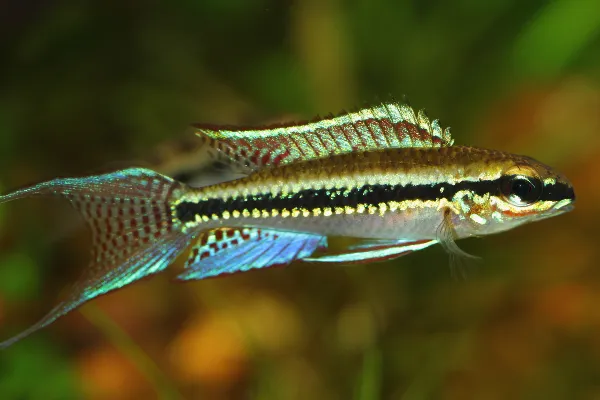 3.5 in (9 cm)20 gal (75 L)79–86°F (26–30°C)
Checkerboard cichlid
Dicrossus filamentosus
3.5 in (9 cm) · 20 gal (75 L)
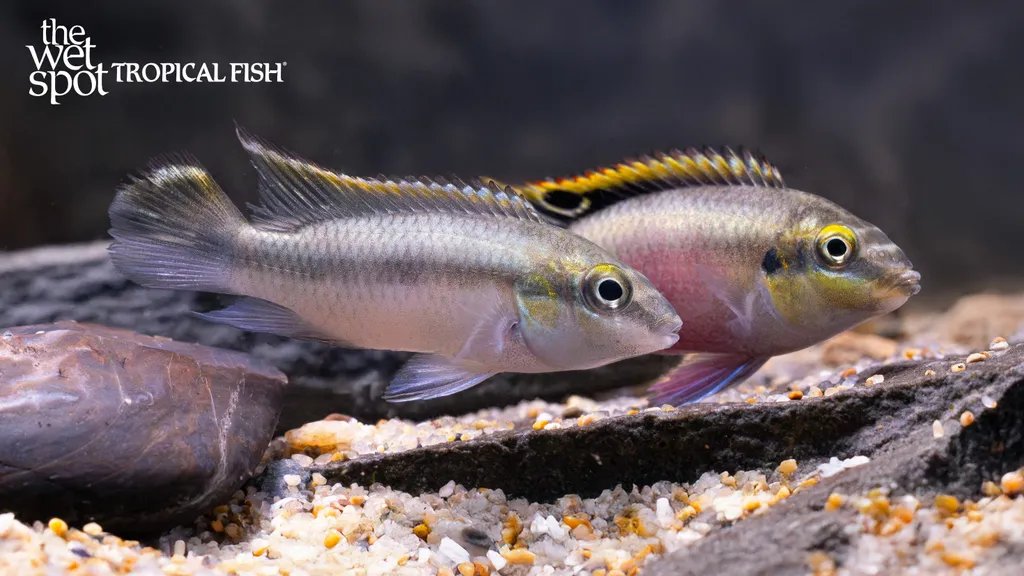 3.9 in (10 cm)20 gal (75 L)75–81°F (24–27°C)
Kribensis
Pelvicachromis pulcher
3.9 in (10 cm) · 20 gal (75 L)
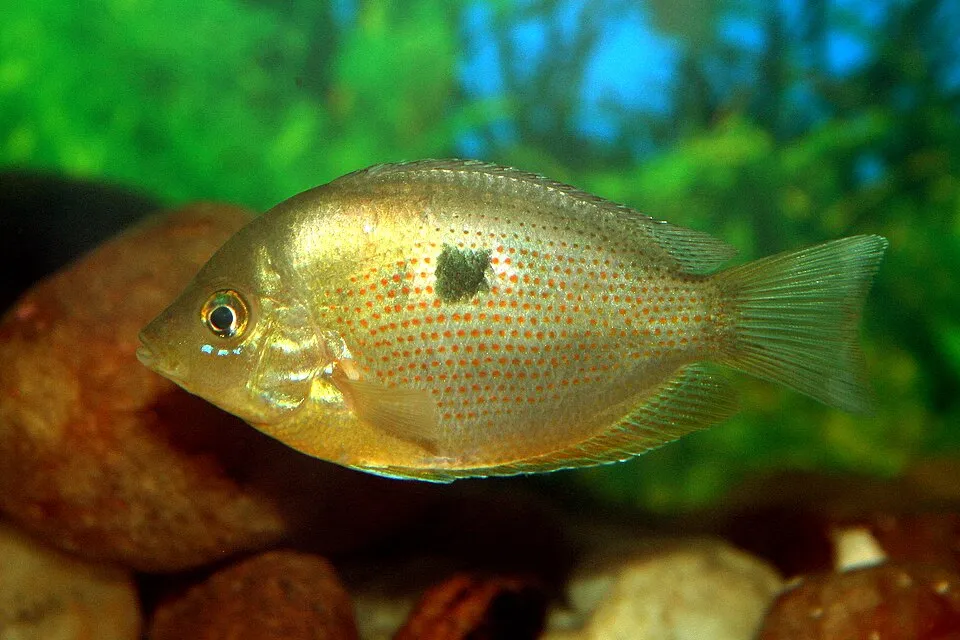 3.9 in (10 cm)55 gal (210 L)68–82°F (20–28°C)
Orange chromide
Etroplus maculatus
3.9 in (10 cm) · 55 gal (210 L)