Variety of Blue ram
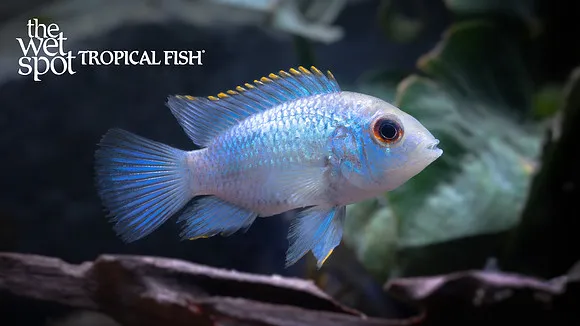
Electric blue ram
Mikrogeophagus ramirezi
One of 3 varieties of Mikrogeophagus ramirezi · See all varieties →
Also known as Electric Blue Ram Dwarf Cichlid
FreshwaterFish
Varieties · Mikrogeophagus ramirezi
See all 3 →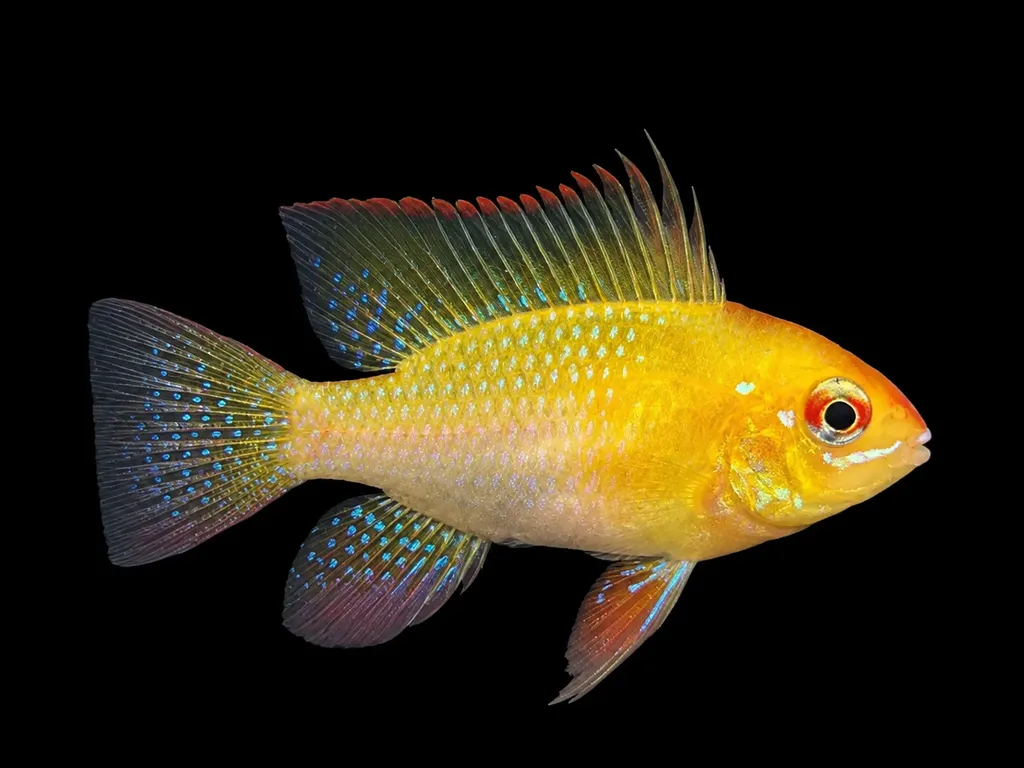
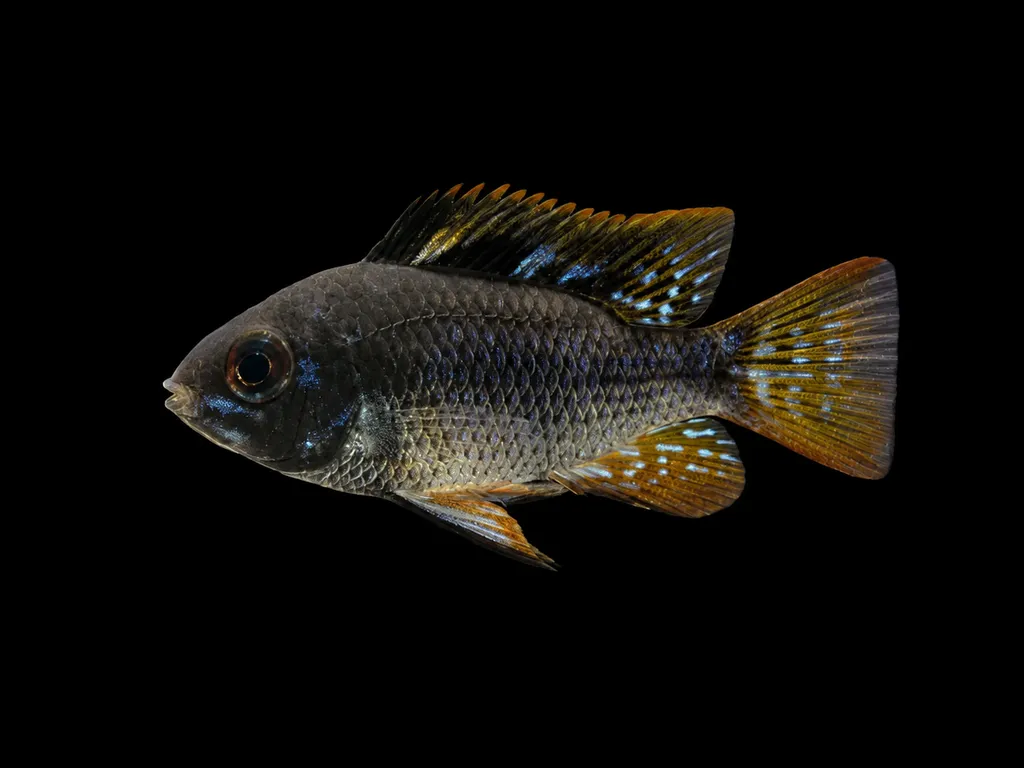
Care at a glance
- Temperature
- 81–86°F
- 27–30°C
- pH
- 5.5–7.0
- Adult size
- 2.4 in
- 6 cm
- Minimum tank
- 18 gal
- 70 L
- Temperament
- Peaceful
- Social behavior
- Social
- Swim level
- Middle
- Difficulty
- Medium
- Breeding
- Hard
- Rarity
- Common
- Family
- Cichlidae
Overview
Sold as a solid metallic blue fish with none of the yellow, red or black markings of a standard ram. A faint eye stripe often survives, and suppliers vary in intensity and in how much dark speckling shows. The color also masks the pink belly that sexes standard rams, so picking a pair out of a shop tank is harder. Retailers often flag it as expert only, and it costs more than a plain blue ram.
In the wild
The blue form reached the hobby in 2009 and its exact origin is not recorded. The usual account is that an odd fish turned up in a spawn of standard rams and was bred on, mostly in Asian farms. It is a captive line rather than a location variant, so there is no wild population of electric blues.
Good to know
Breeders treat the color as recessive. Two electric blues give electric blue fry, while a cross to a standard ram gives normal looking carriers. The blue is the sheen a standard ram already carries, left exposed once the yellow and the dark markings are bred away. Selection has narrowed the gene pool, and low fertility and weak brood care are reported more often here than in wild type rams.
Did you know
Nothing was added to make the fish blue. Standard rams already carry that blue sheen, and the line only removes the yellow and the dark markings sitting over it.
Weekly picks
Tank mates
Electric blue ram is a peaceful, social species that keeps to the middle. These picks share a community profile with it, are safe together in both directions, and overlap on water type, temperature and pH.
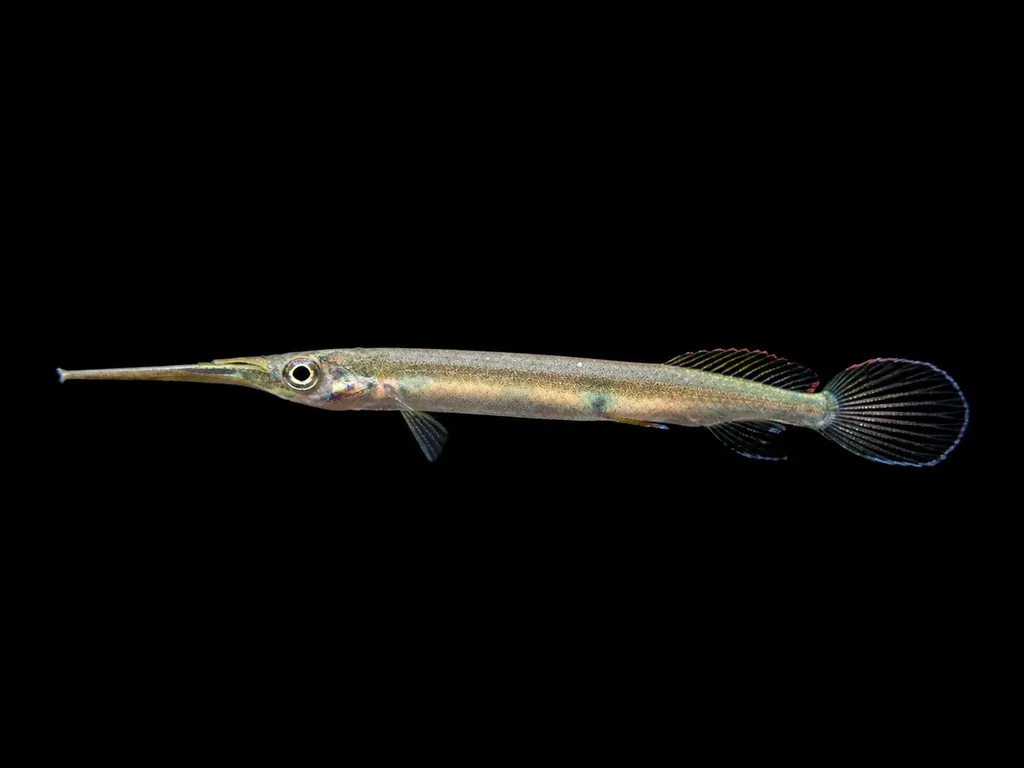
Kuekenthal's halfbeak
Hemirhamphodon kuekenthali
Freshwater3.3 in (8.5 cm) · 20 gal (75 L)73–81°F (23–27°C)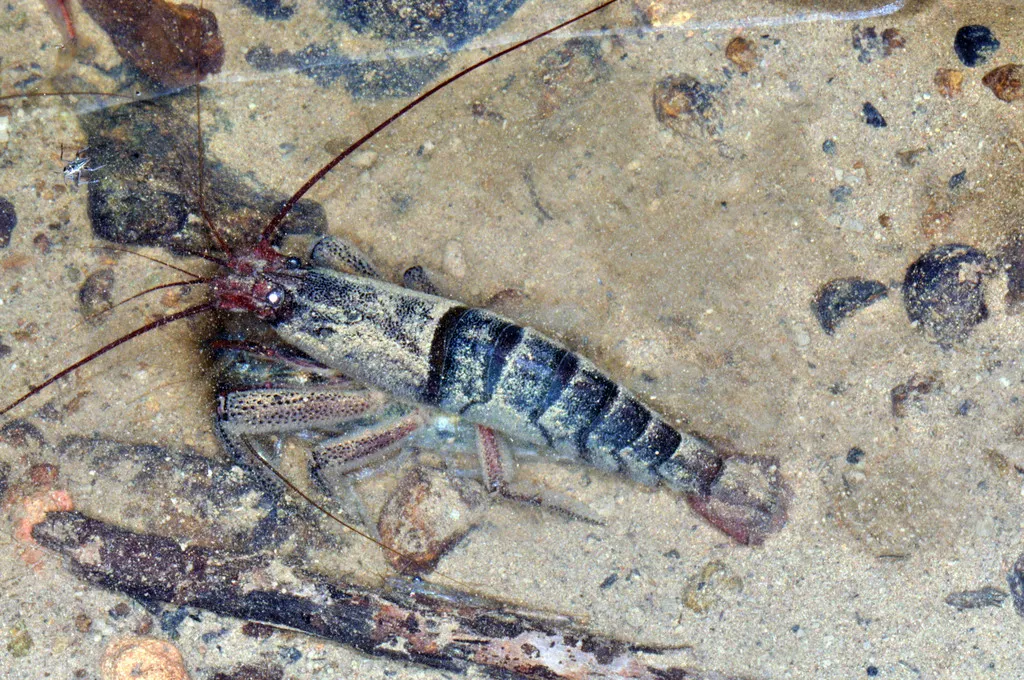
Marble wood shrimp
Atya scabra
Freshwater3.9 in (10 cm) · 20 gal (75 L)73–82°F (23–28°C)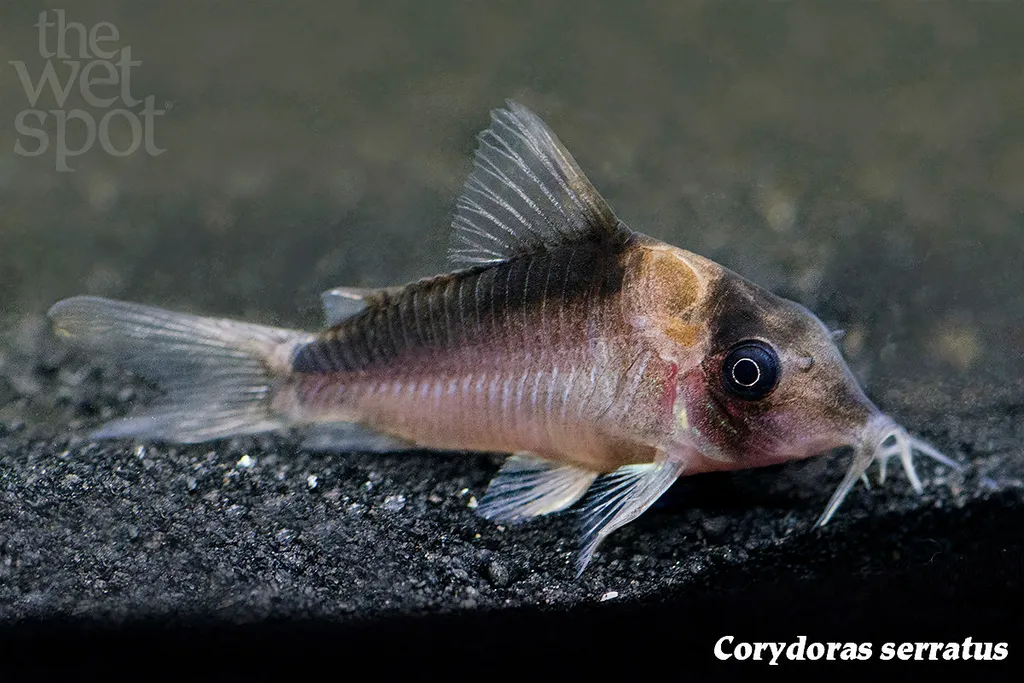
Serratus cory
Corydoras serratus
Freshwater2.4 in (6 cm) · 20 gal (75 L)77–84°F (25–29°C)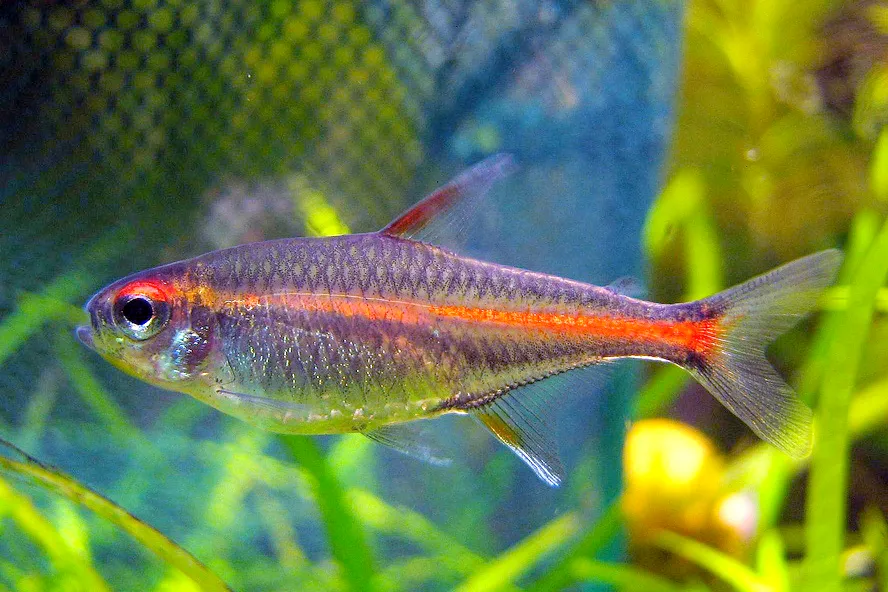
Glowlight tetra
Hemigrammus erythrozonus
Freshwater1.6 in (4 cm) · 18 gal (70 L)75–82°F (24–28°C)
Blue panchax
Aplocheilus panchax
Freshwater3.5 in (9 cm) · 20 gal (75 L)72–82°F (22–28°C)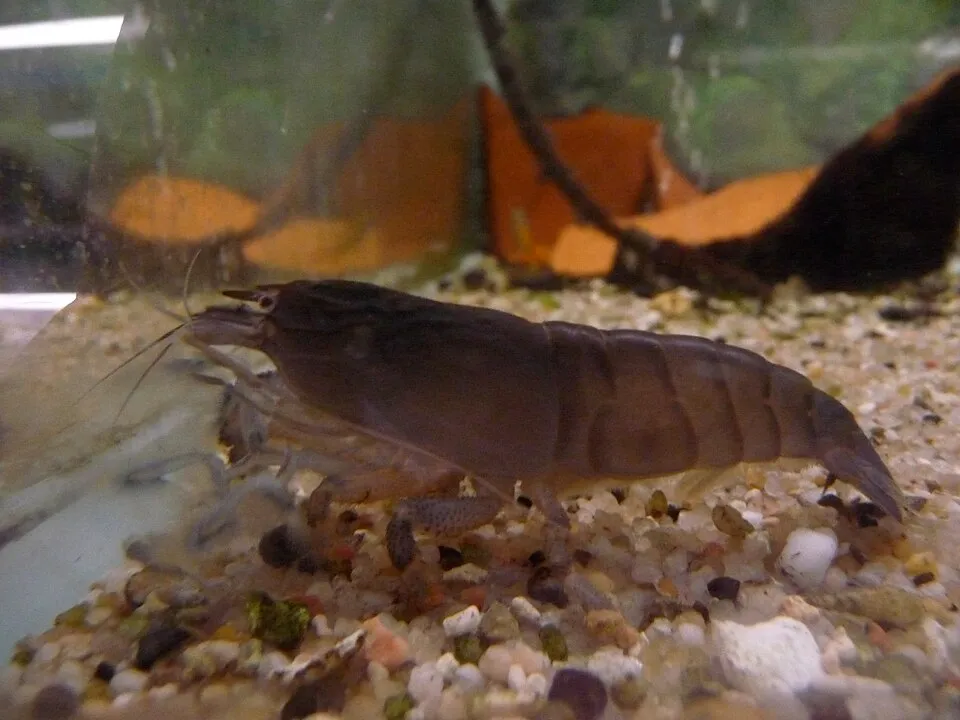
Vampire shrimp
Atya gabonensis
Freshwater5.1 in (13 cm) · 20 gal (75 L)75–82°F (24–28°C)
Common questions
Is an Electric blue ram a different species from the Blue ram?
No. An Electric blue ram is a variety of the Blue ram, Mikrogeophagus ramirezi, and it wants the same tank, water and food as the species.
What size tank does an Electric blue ram need?
An Electric blue ram needs at least 18 gal (70 L). It spends most of its time in the middle.
How big does an Electric blue ram get?
An adult Electric blue ram reaches about 2.4 in (6 cm).
Related species
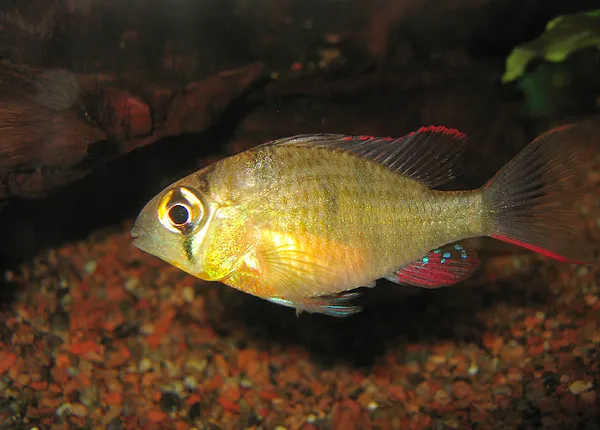 3.1 in (8 cm)45 gal (170 L)75–82°F (24–28°C)
Bolivian ram
Mikrogeophagus altispinosus
3.1 in (8 cm) · 45 gal (170 L)
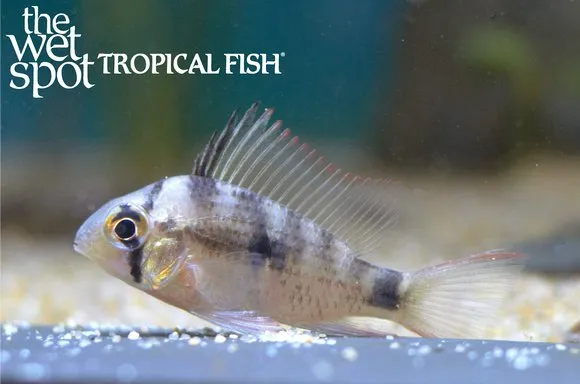 2.4 in (6 cm)14 gal (54 L)77–86°F (25–30°C)
Brazilian ram
Mikrogeophagus maculicauda
2.4 in (6 cm) · 14 gal (54 L)
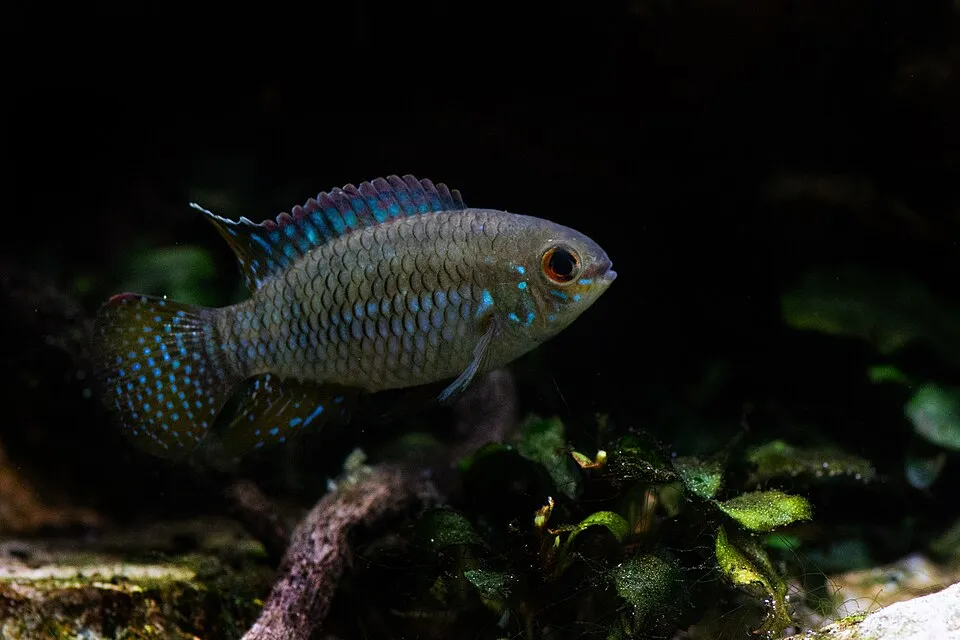 2.2 in (5.5 cm)20 gal (75 L)68–82°F (20–28°C)
Dwarf flag cichlid
Laetacara curviceps
2.2 in (5.5 cm) · 20 gal (75 L)
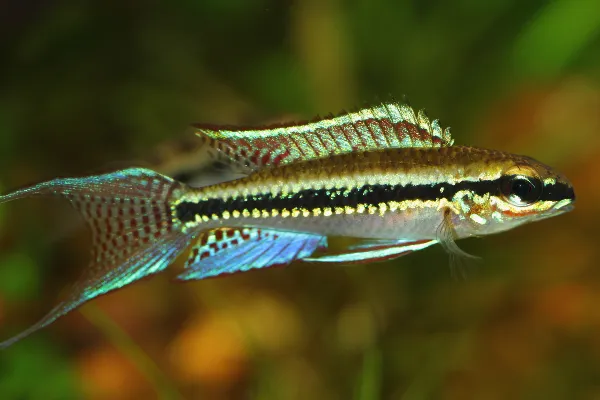 3.5 in (9 cm)20 gal (75 L)79–86°F (26–30°C)
Checkerboard cichlid
Dicrossus filamentosus
3.5 in (9 cm) · 20 gal (75 L)
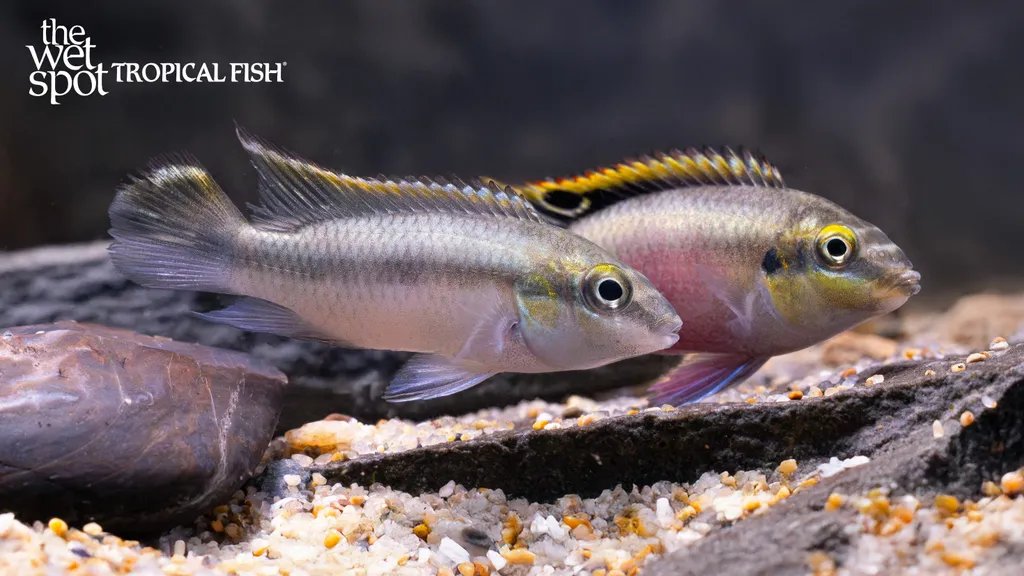 3.9 in (10 cm)20 gal (75 L)75–81°F (24–27°C)
Kribensis
Pelvicachromis pulcher
3.9 in (10 cm) · 20 gal (75 L)
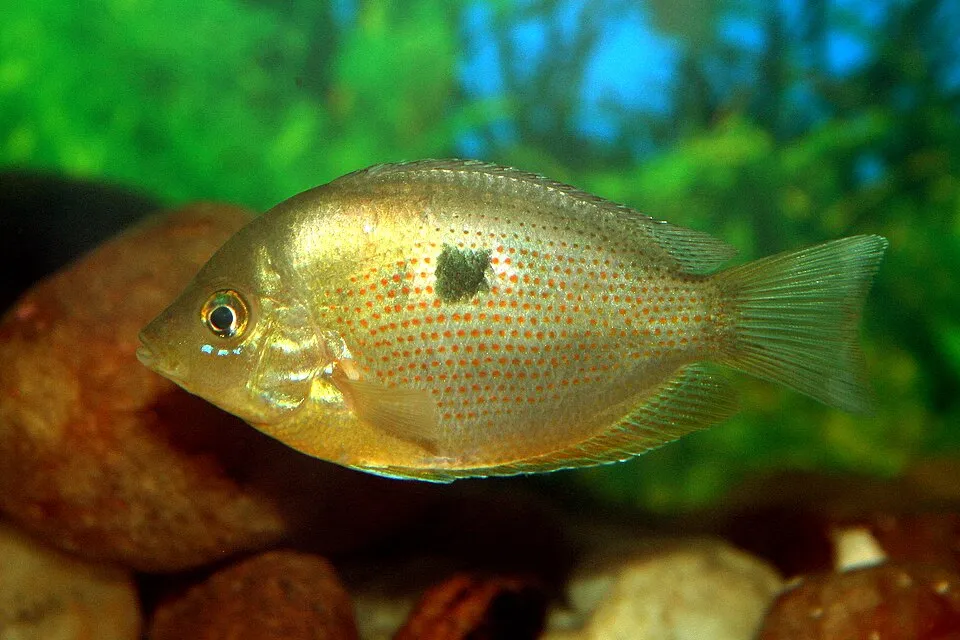 3.9 in (10 cm)55 gal (210 L)68–82°F (20–28°C)
Orange chromide
Etroplus maculatus
3.9 in (10 cm) · 55 gal (210 L)