Largescale four-eyed fish
Anableps anableps
FreshwaterBrackishFish
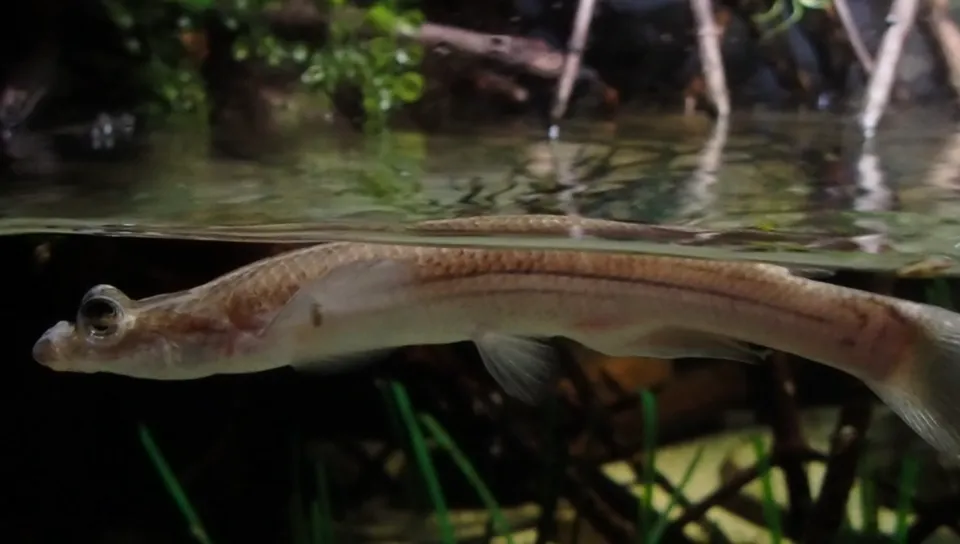
Care at a glance
- Temperature
- 77–88°F
- 25–31°C
- pH
- 7.0–8.0
- Adult size
- 11.8 in
- 30 cm
- Minimum tank
- 70 gal
- 265 L
- Temperament
- Mostly peaceful
- Social behavior
- Shoaling
- Swim level
- Top
- Difficulty
- Difficult
- Breeding
- No record
- Rarity
- Very rare
- Family
- Anablepidae
- Origin
- Brazil, Venezuela, The Guianas
Overview
This is a surface-living, schooling fish that is best kept in a group of its own kind. It can be aggressive and is tricky to keep, so it is not a beginner fish. Keep brackish water, warm temps in the high 20s C, and a tight lid, since it spends its life at the top. Feed floating and surface foods like live or frozen insects, bloodworms, and mosquito larvae.
In the wild
The largescale four-eyed fish lives at the surface of brackish and fresh waters in Brazil, Venezuela, and the Guianas, especially estuaries, mangroves, and muddy coastal rivers. It cruises the very top, eyes poking above the waterline. That means a wide, shallow tank matters far more than a deep one, with brackish water and open surface space. Adults hit 30 cm, so plan on a large footprint, around 265 liters or more.
Good to know
Anableps anableps is in the family Anablepidae and reaches about 30 cm. Its eyes are split horizontally into upper and lower halves, each with its own pupil, so it sees above and below water at the same time. It is a livebearer with an unusual one-sided mating arrangement. The species is widespread and listed as Least Concern.
Did you know
Because it rides right at the waterline, its eyes can dry out, so it dips its head under every so often to wet them. The upper half of each eye is tuned for air vision and the lower half for water, which effectively gives it two different focal setups in one eyeball.
Weekly picks
Tank mates
Largescale four-eyed fish is a mostly peaceful, shoaling species that keeps to the top. These picks share a community profile with it, are safe together in both directions, and overlap on water type, temperature and pH.
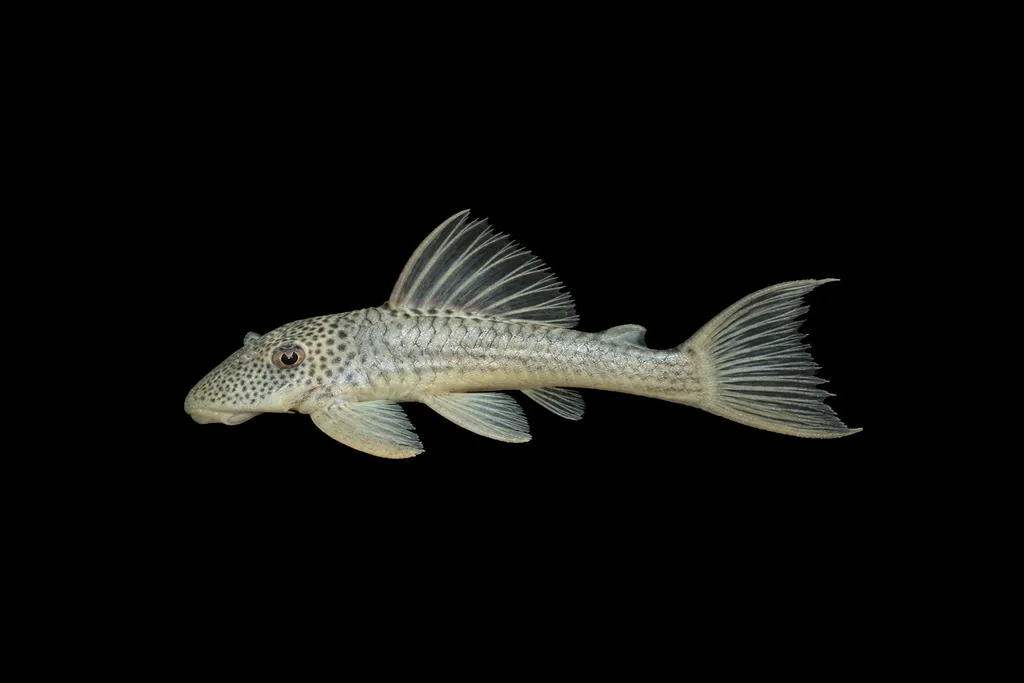
Ghost pleco
Ancistomus snethlageae
Freshwater8.7 in (22 cm) · 66 gal (250 L)77–84°F (25–29°C)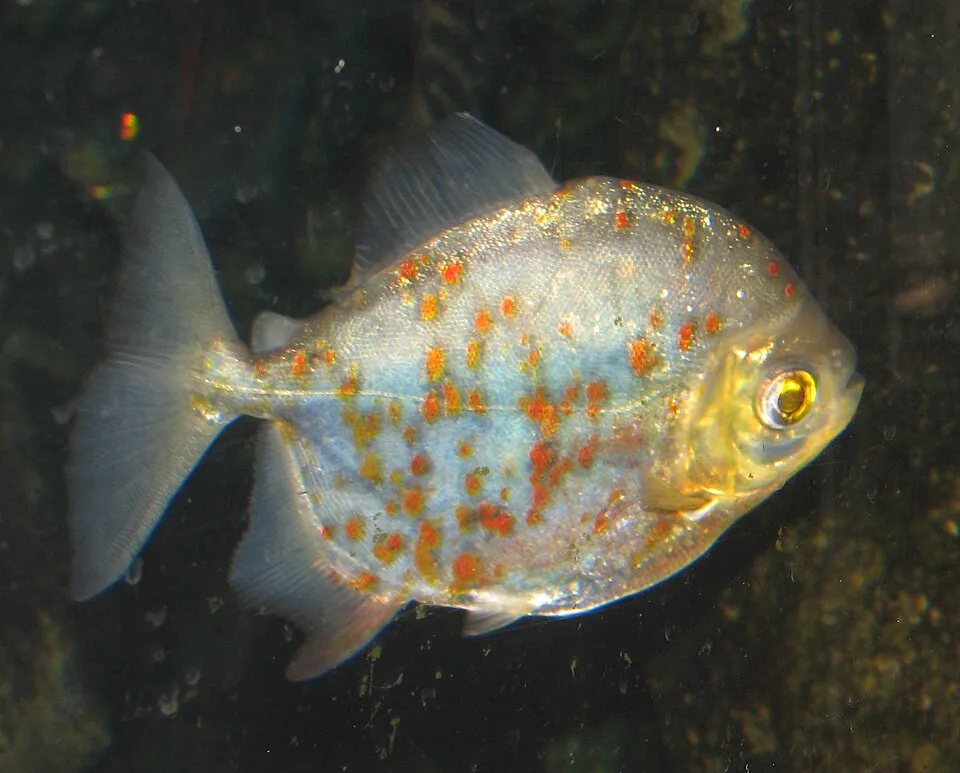
Redhook
Myloplus rubripinnis
Freshwater9.8 in (25 cm) · 70 gal (265 L)73–81°F (23–27°C)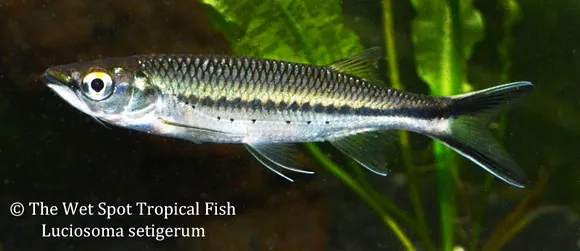
Apollo shark minnow
Luciosoma setigerum
Freshwater11.8 in (30 cm) · 106 gal (400 L)72–81°F (22–27°C)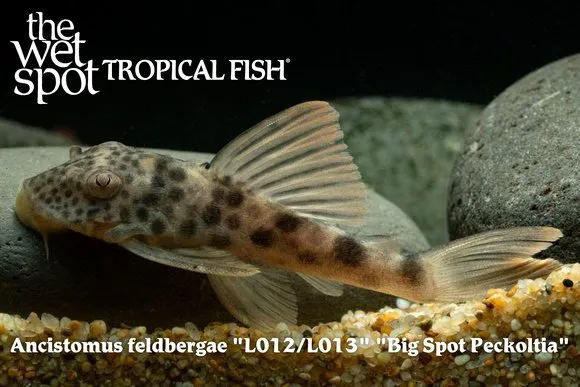
Big spot pleco
Ancistomus feldbergae
Freshwater7.9 in (20 cm) · 66 gal (250 L)79–86°F (26–30°C)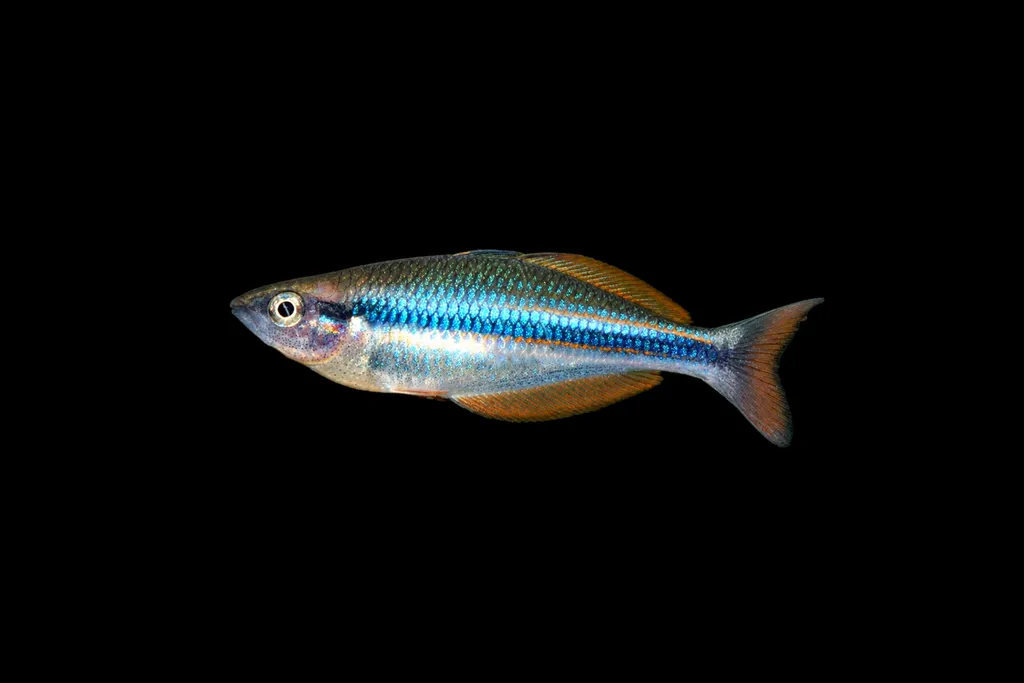
Van Heurn's rainbowfish
Melanotaenia vanheurni
Freshwater7.3 in (18.5 cm) · 66 gal (250 L)73–82°F (23–28°C)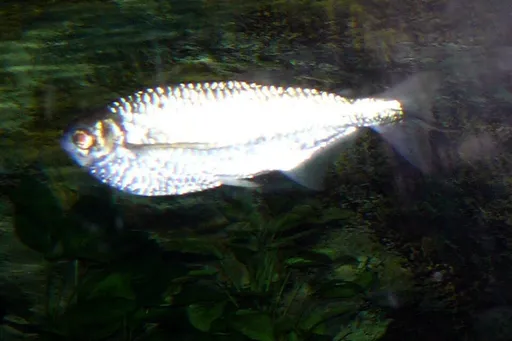
Narrow hatchetfish
Triportheus angulatus
Freshwater9.8 in (25 cm) · 79 gal (300 L)73–82°F (23–28°C)
Common questions
What size tank does a Largescale four-eyed fish need?
A Largescale four-eyed fish needs at least 70 gal (265 L). It spends most of its time in the top.
What temperature and pH does a Largescale four-eyed fish need?
A Largescale four-eyed fish is comfortable at 77–88°F (25–31°C) with a pH of 7.0–8.0.
How big does a Largescale four-eyed fish get?
An adult Largescale four-eyed fish reaches about 11.8 in (30 cm).
Does a Largescale four-eyed fish need a group?
Yes. A Largescale four-eyed fish is a shoaling species and should be kept in a group, not singly.
Related species
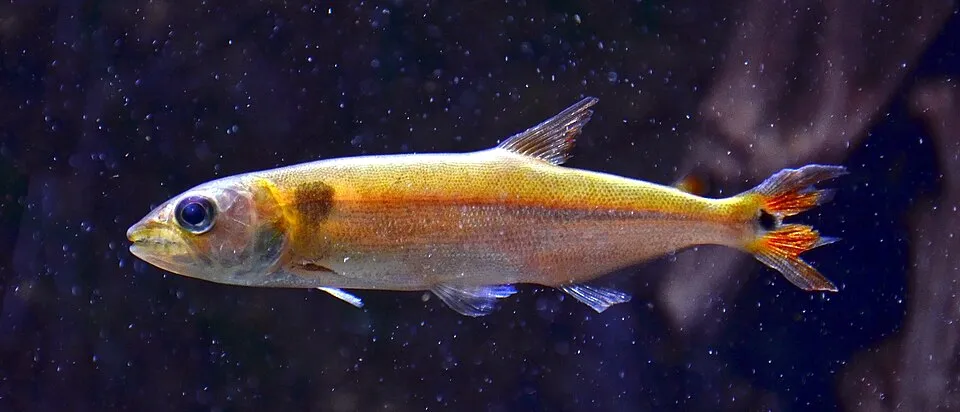 11.8 in (30 cm)100 gal (380 L)72–82°F (22–28°C)
Red tail barracuda
Acestrorhynchus falcatus
11.8 in (30 cm) · 100 gal (380 L)
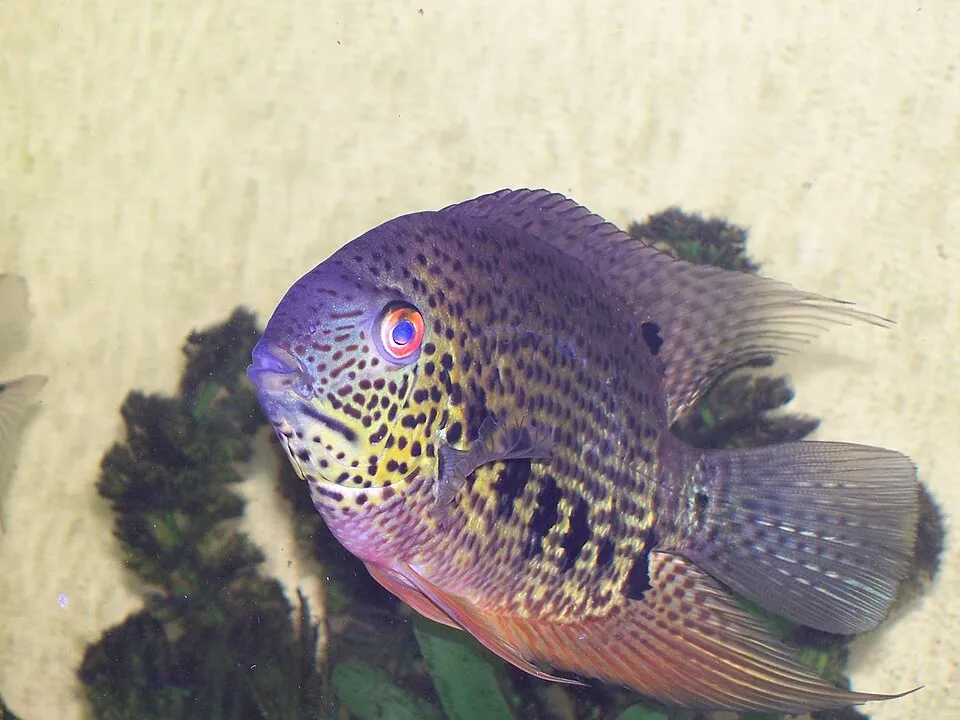 11.8 in (30 cm)58 gal (220 L)72–84°F (22–29°C)
Spotted severum
Heros notatus
11.8 in (30 cm) · 58 gal (220 L)
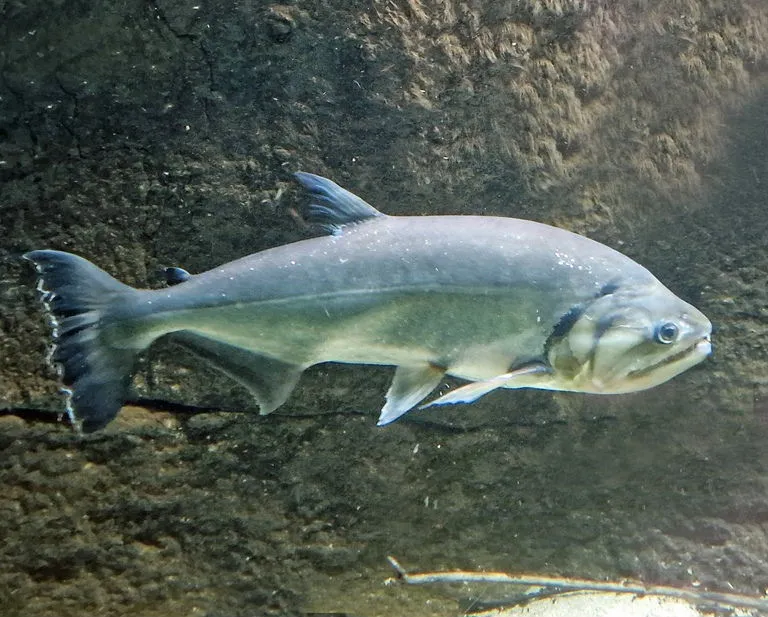 11.8 in (30 cm)185 gal (700 L)75–82°F (24–28°C)
Vampire tetra
Hydrolycus scomberoides
11.8 in (30 cm) · 185 gal (700 L)
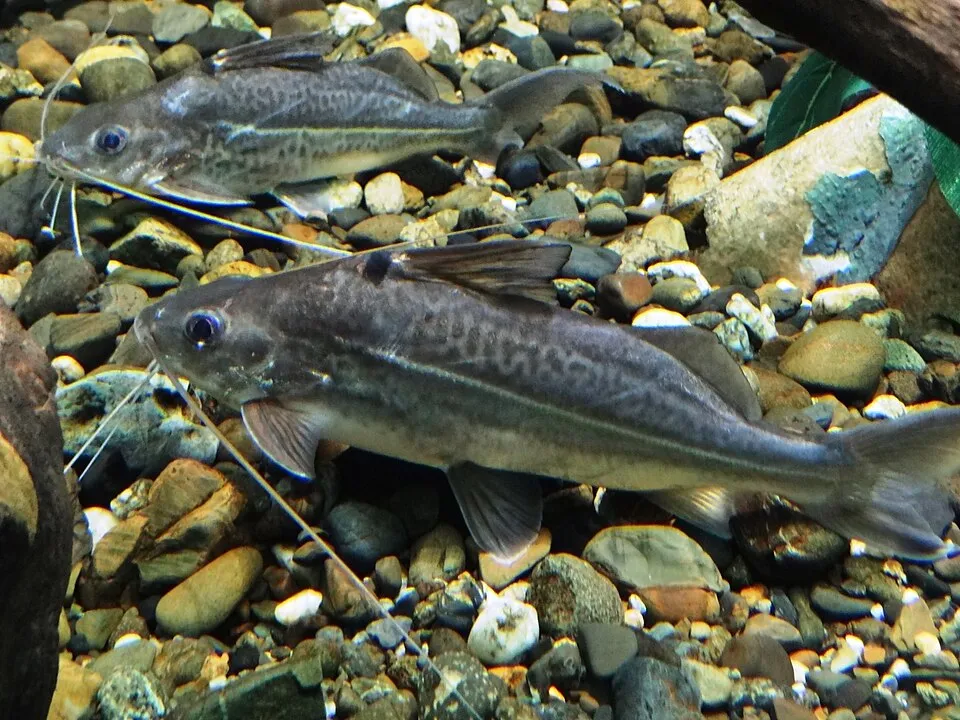 12.2 in (31 cm)65 gal (245 L)75–82°F (24–28°C)
Ornate pimelodus
Pimelodus ornatus
12.2 in (31 cm) · 65 gal (245 L)
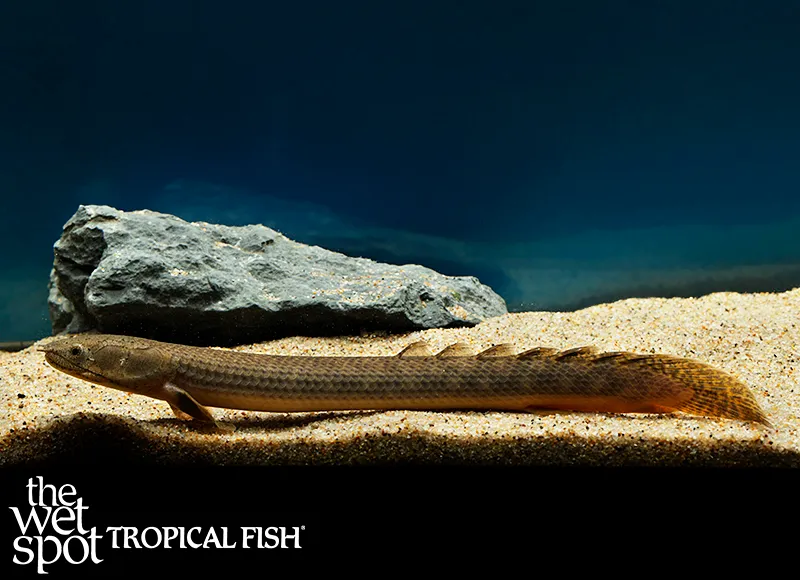 13.8 in (35 cm)53 gal (200 L)77–82°F (25–28°C)
West African bichir
Polypterus retropinnis
13.8 in (35 cm) · 53 gal (200 L)
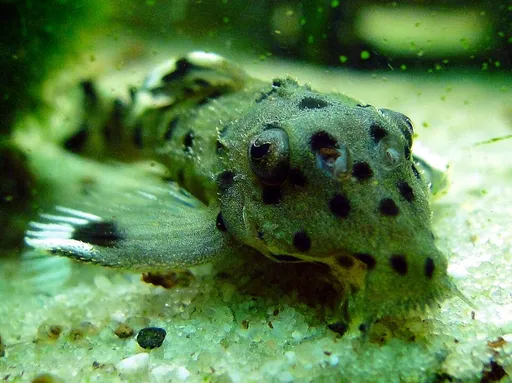 8.7 in (22 cm)66 gal (250 L)79–86°F (26–30°C)
Sultan pleco (L264)
Leporacanthicus joselimai
8.7 in (22 cm) · 66 gal (250 L)