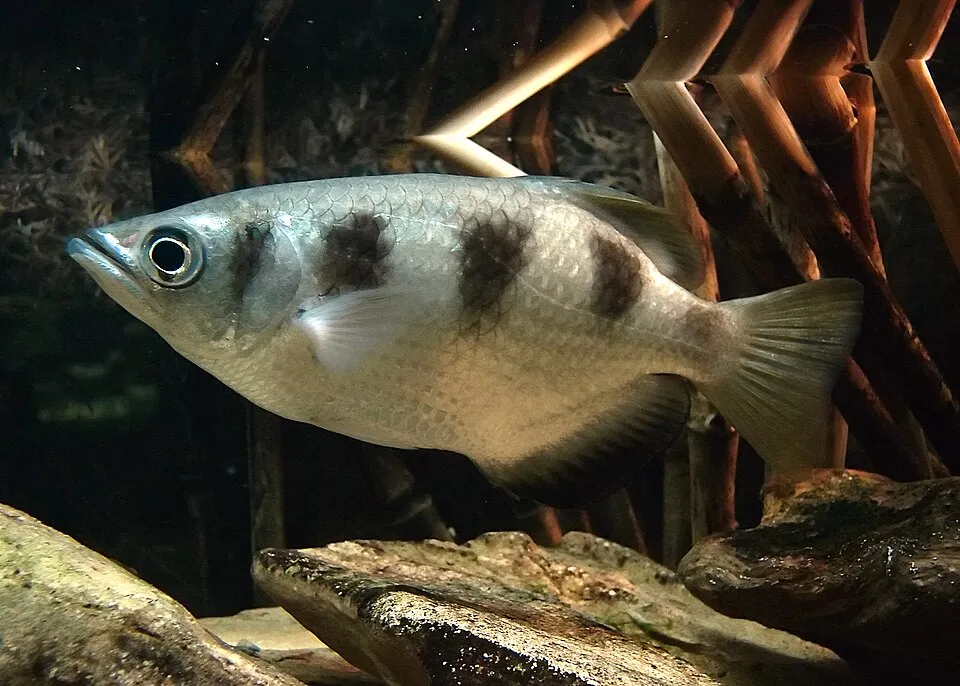
Banded archerfish
Toxotes jaculatrix
BrackishFish
Care at a glance
- Temperature
- 77–86°F
- 25–30°C
- pH
- 7.0–8.0
- Adult size
- 11.8 in
- 30 cm
- Minimum tank
- 119 gal
- 450 L
- Temperament
- Mostly peaceful
- Social behavior
- Social
- Tankmates
- With caution
- Swim level
- Top
- Difficulty
- Difficult
- Breeding
- No record
- Rarity
- Very rare
- Family
- Toxotidae
- Origin
- South Asia, Southeast Asia, Australia
Overview
The banded archerfish is a large, social surface fish best kept in a small group, since lone fish can be jumpy. It is mostly peaceful toward tankmates too big to eat but will take smaller fish, so pair it with similarly sized, salt-tolerant companions. It hunts at the top, so leave open surface space and, ideally, some overhanging structure it can spit at. Feed floating foods, live and frozen insects such as crickets and mealworms, plus meaty foods like prawn. It grows large and needs strongly brackish water, so plan a big tank, around 450 liters or more, with a tight lid to stop jumps.
In the wild
Archerfish live in coastal mangrove swamps, estuaries, and tidal river mouths from South and Southeast Asia to northern Australia, hanging just below the surface among overhanging branches and roots. This is brackish territory, so add marine salt to reach a specific gravity around 1.005 to 1.010 rather than keeping them in plain freshwater. Use hard, alkaline water with a pH between 7 and 8 and a temperature from 25 to 30 C. Give them a deep tank with open surface, some roots or branches near the top, and steady, clean filtration.
Good to know
The banded archerfish belongs to the family Toxotidae, the archerfishes. Adults can reach about 30 cm, with a silver body marked by several bold dark bars and an upturned mouth set for surface feeding. The eyes are large and set high for spotting prey above the water. Its most famous trait is a specialized groove in the roof of the mouth that lets it fire a jet of water. Breeding is essentially undocumented in aquariums, and the species is thought to move toward the sea to spawn.
Did you know
The banded archerfish hunts by spitting a jet of water at insects resting on leaves above the surface, knocking them down to eat. Big fish can hit targets two to three meters away, and the fish learns to correct for the way light bends at the water surface so its aim stays true.
Common questions
What size tank does a Banded archerfish need?
A Banded archerfish needs at least 119 gal (450 L). It spends most of its time in the top.
What temperature and pH does a Banded archerfish need?
A Banded archerfish is comfortable at 77–86°F (25–30°C) with a pH of 7.0–8.0.
How big does a Banded archerfish get?
An adult Banded archerfish reaches about 11.8 in (30 cm).
Related species
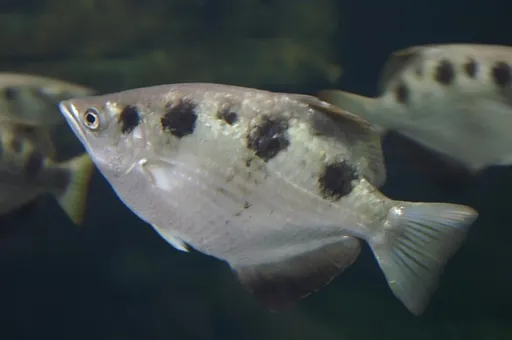 15.7 in (40 cm)106 gal (400 L)77–86°F (25–30°C)
Seven-spot archerfish
Toxotes chatareus
15.7 in (40 cm) · 106 gal (400 L)
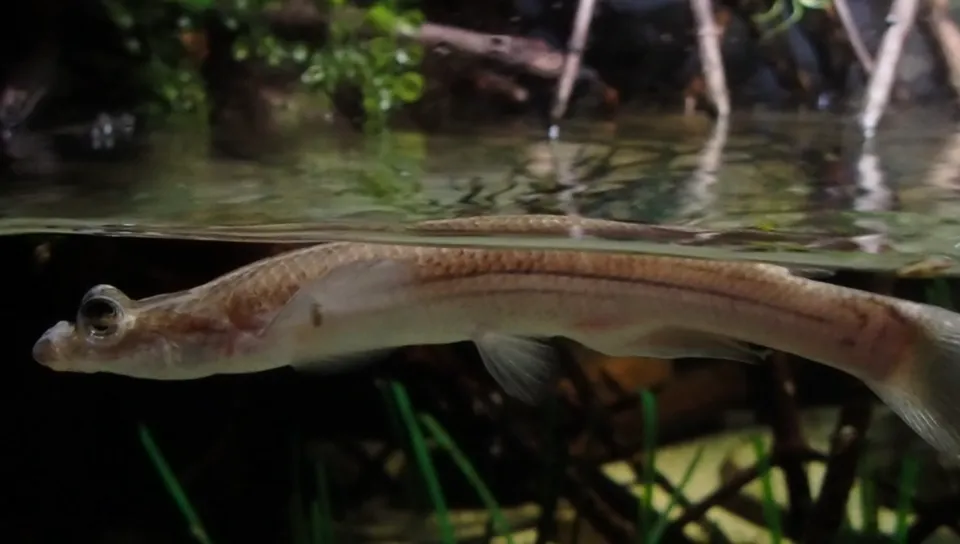 11.8 in (30 cm)70 gal (265 L)77–88°F (25–31°C)
Largescale four-eyed fish
Anableps anableps
11.8 in (30 cm) · 70 gal (265 L)
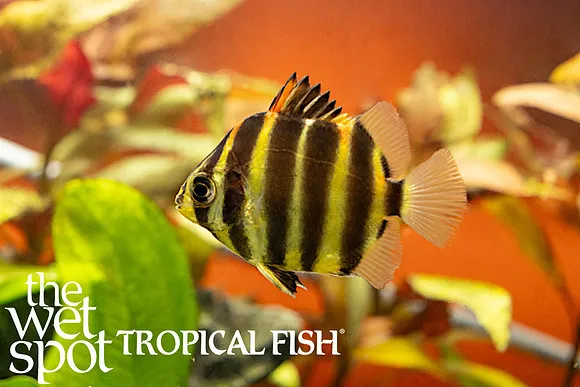 11.8 in (30 cm)159 gal (600 L)73–82°F (23–28°C)
African tiger scat
Scatophagus tetracanthus
11.8 in (30 cm) · 159 gal (600 L)
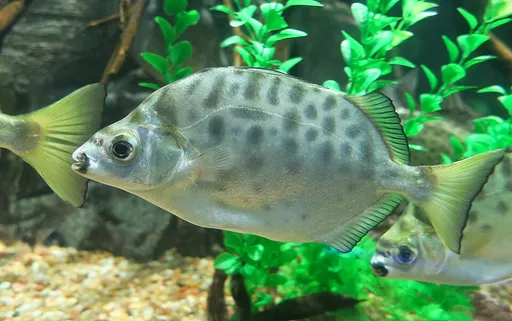 11.8 in (30 cm)119 gal (450 L)72–82°F (22–28°C)
Silver scat
Selenotoca multifasciata
11.8 in (30 cm) · 119 gal (450 L)
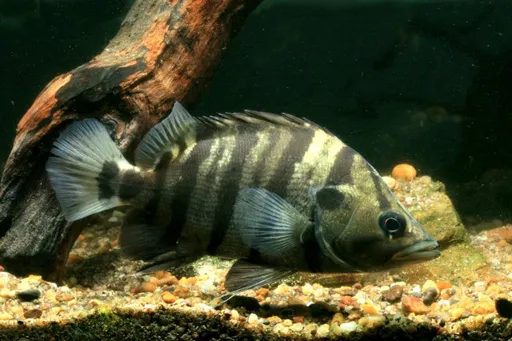 11.8 in (30 cm)79 gal (300 L)75–82°F (24–28°C)
Silver tiger perch
Datnioides polota
11.8 in (30 cm) · 79 gal (300 L)
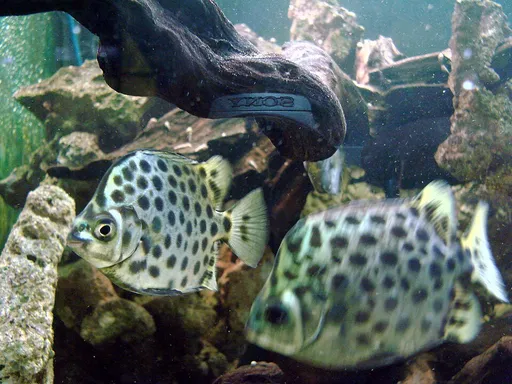 11.8 in (30 cm)119 gal (450 L)72–82°F (22–28°C)
Spotted scat
Scatophagus argus
11.8 in (30 cm) · 119 gal (450 L)