One species · 1 variety
Blue acara
Andinoacara pulcher
FreshwaterFish
Care at a glance
- Temperature
- 72–82°F
- 22–28°C
- pH
- 6.5–8.0
- Adult size
- 5.9 in
- 15 cm
- Minimum tank
- 42 gal
- 160 L
- Temperament
- Mostly peaceful
- Social behavior
- Social
- Swim level
- Middle
- Difficulty
- Medium
- Breeding
- Medium
- Rarity
- Common
- Family
- Cichlidae
- Origin
- Trinidad and Tobago, Venezuela
Pick a variety
One setup covers every line on this page: care is the species' care.
Overview
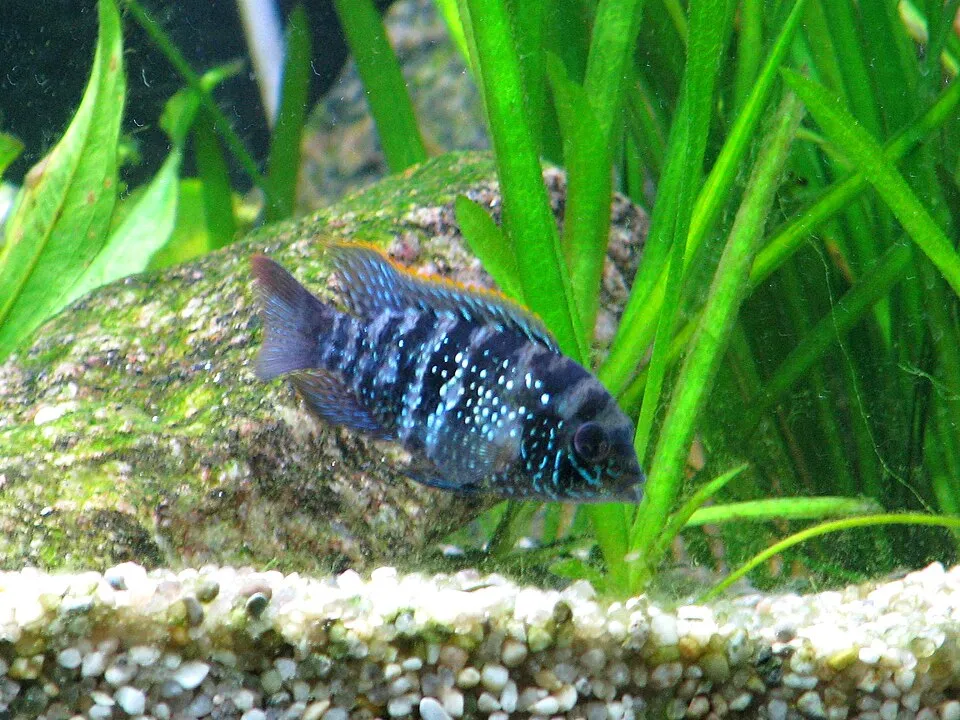
Plan on a tank of around 160 liters, more for a pair plus tankmates. They're mostly peaceful for a cichlid and work in a community with similarly sized, sturdy fish, though they get territorial when breeding. Keep the water in the mid to high 20s C with a pH from slightly acidic up to alkaline. Feed quality pellets, frozen foods like bloodworms, and the odd bit of vegetable matter; they'll also dig, so anchor plants well.
In the wild
Blue acaras live in slow streams, pools, and rivers across Trinidad, Tobago, and northern Venezuela, often over sand and leaf litter with wood and rock for cover. The water ranges from soft and acidic to harder and neutral, which is part of why they adapt so easily. Give them a tank with open swimming space, some flat stones for spawning, and a few hiding spots.
Good to know
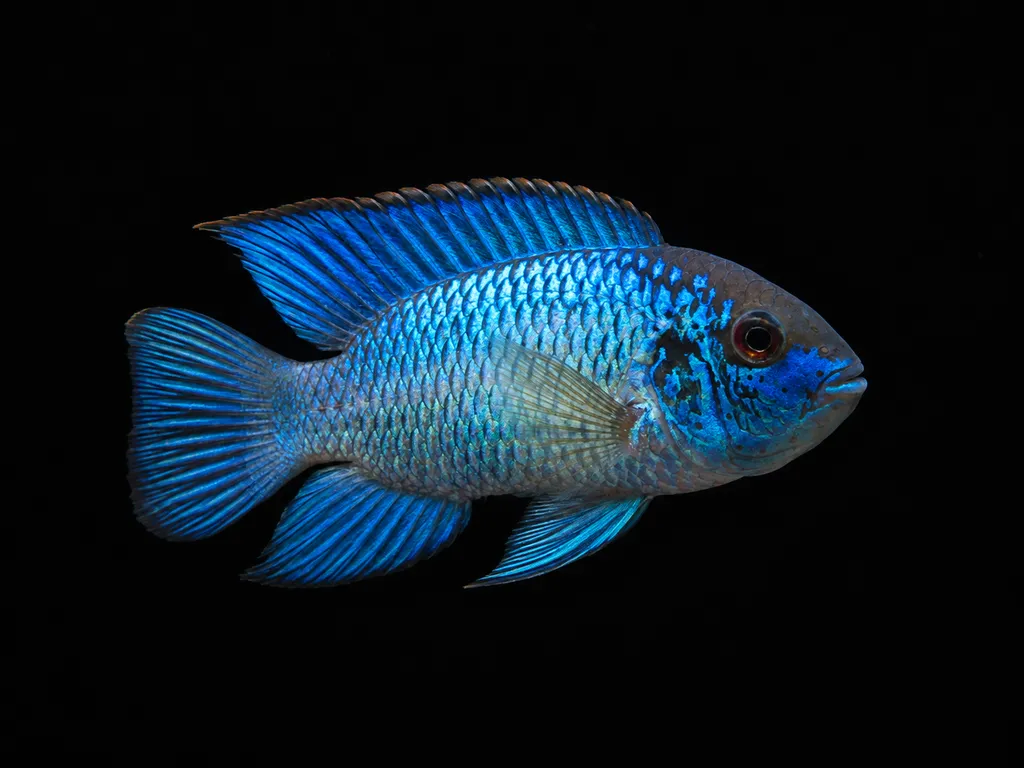
This is a cichlid in the family Cichlidae, reaching about 15 cm, with a stocky blue-green body covered in iridescent flecks. Pairs are monogamous and spawn on flat surfaces, with both parents tending the eggs and fry. They are fairly long-lived for a mid-sized cichlid. The species is not considered threatened.
Did you know
Blue acaras are good first cichlids because they pair off and raise young readily, even for newcomers. A bonded pair will clean a flat rock, lay eggs, and then guard and shepherd the fry together, giving you the full cichlid parenting display without a hard-to-keep species.
Other named lines
The blue lines sold under this species are line-bred aquarium forms, not separate fish.
- Neon blue
- electric blue with a darker mask and back
Weekly picks
Tank mates
Every variety on this page wants the same water, so one set of picks fits them all. These picks match on water type, temperature, pH, size and temperament.
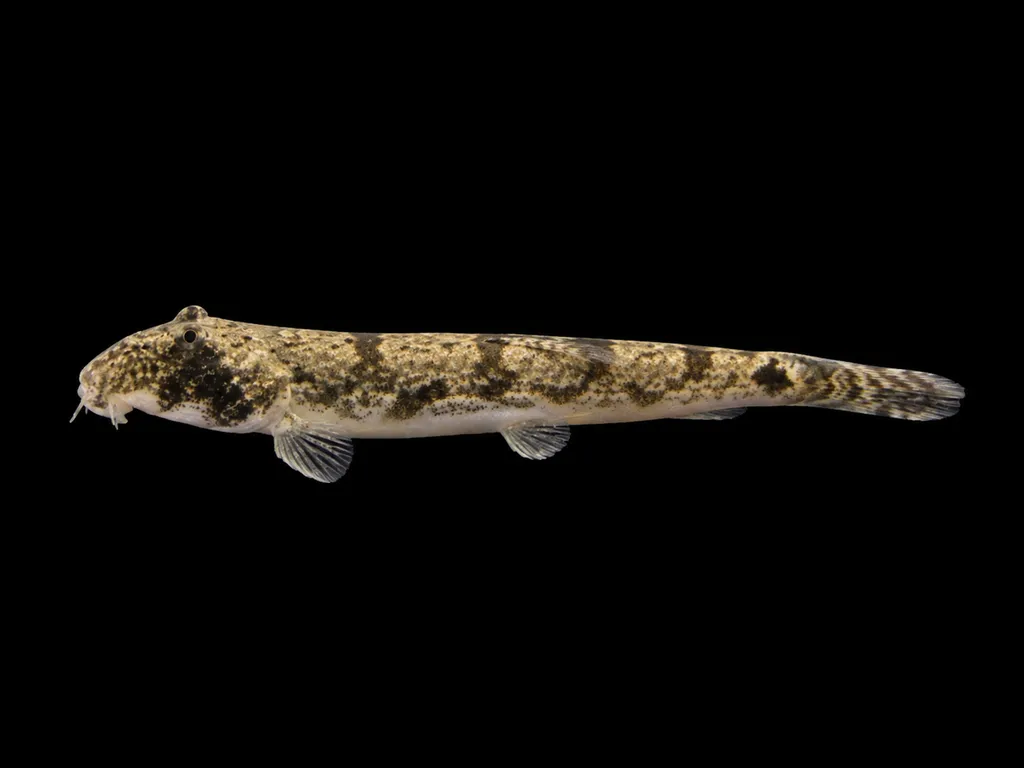
Gongota loach
Canthophrys gongota
Freshwater5.1 in (13 cm) · 42 gal (160 L)70–81°F (21–27°C)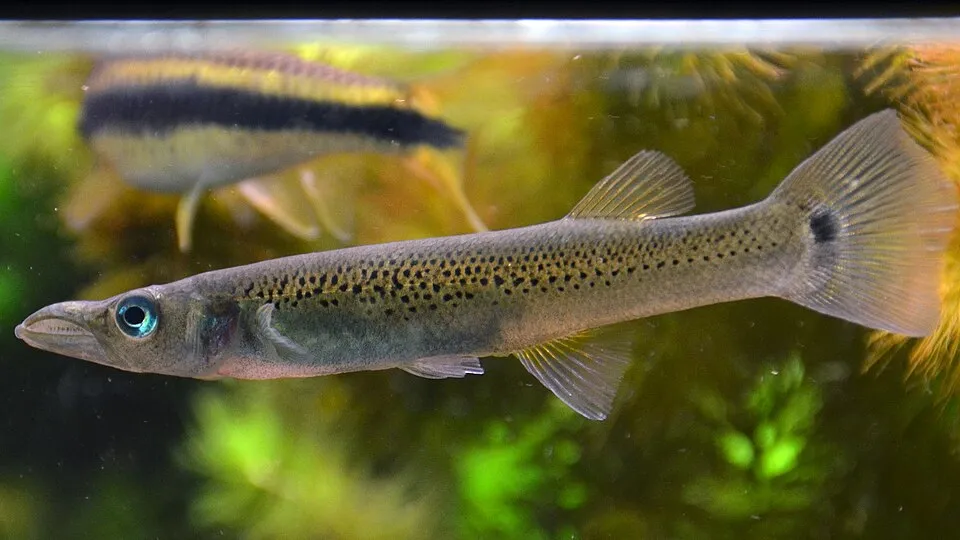
Pike topminnow
Belonesox belizanus
Freshwater7.9 in (20 cm) · 44 gal (165 L)73–82°F (23–28°C)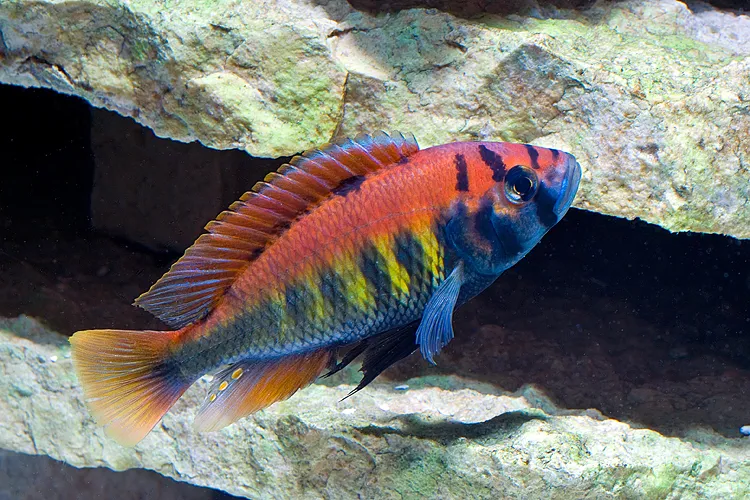
Flameback cichlid
Pundamilia nyererei
Freshwater3.5 in (9 cm) · 42 gal (160 L)73–81°F (23–27°C)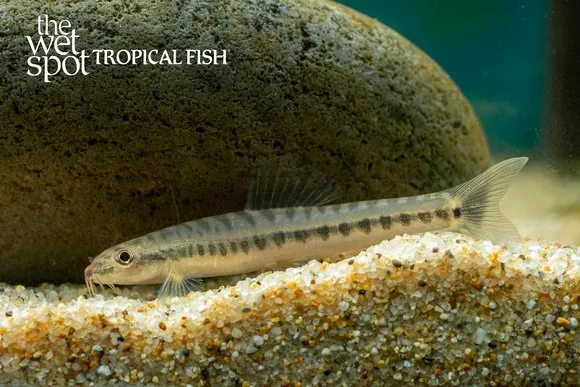
Arrow loach
Nemacheilus masyae
Freshwater6.3 in (16 cm) · 42 gal (160 L)72–81°F (22–27°C)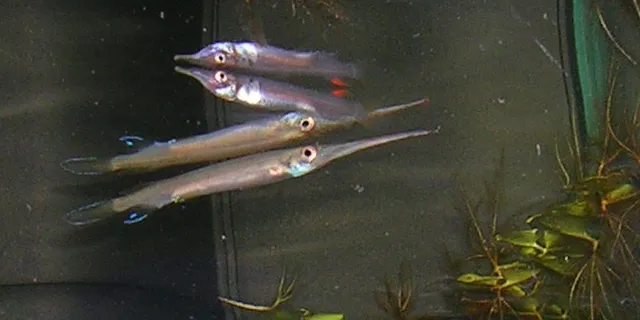
Forest halfbeak
Hemirhamphodon pogonognathus
Freshwater3.5 in (9 cm) · 34 gal (130 L)75–82°F (24–28°C)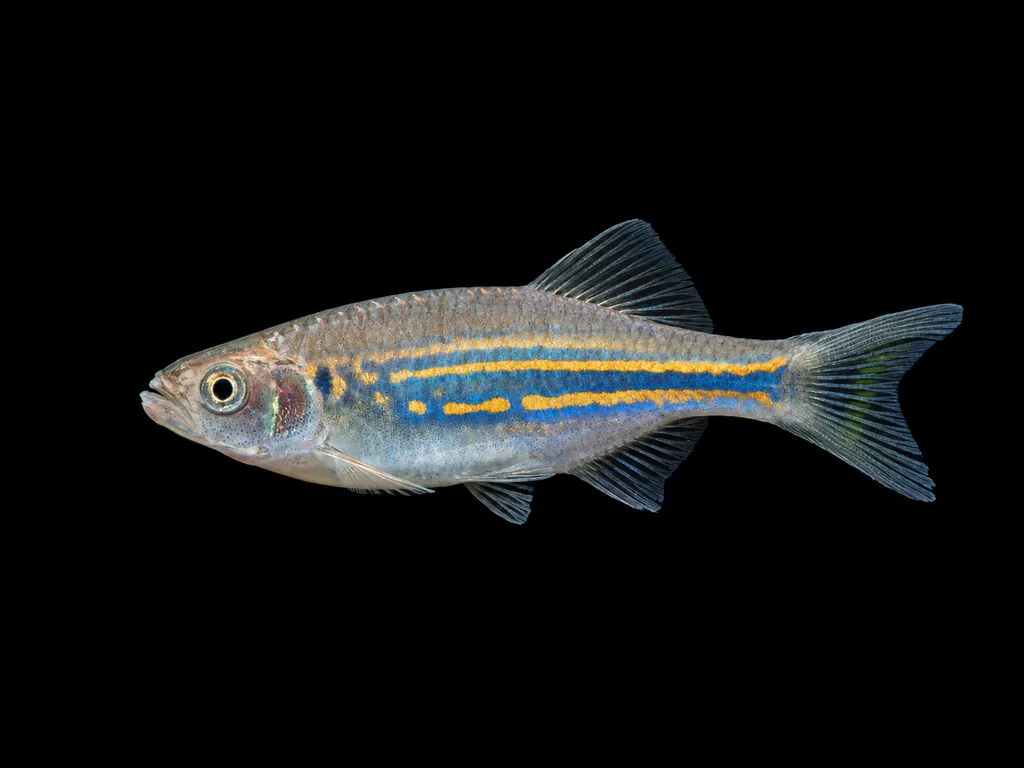
Laos giant danio
Devario acrostomus
Freshwater4.4 in (11.3 cm) · 42 gal (160 L)72–81°F (22–27°C)
Common questions
What size tank does a Blue acara need?
A Blue acara needs at least 42 gal (160 L). It spends most of its time in the middle.
What temperature and pH does a Blue acara need?
A Blue acara is comfortable at 72–82°F (22–28°C) with a pH of 6.5–8.0.
How big does a Blue acara get?
An adult Blue acara reaches about 5.9 in (15 cm).
Related species
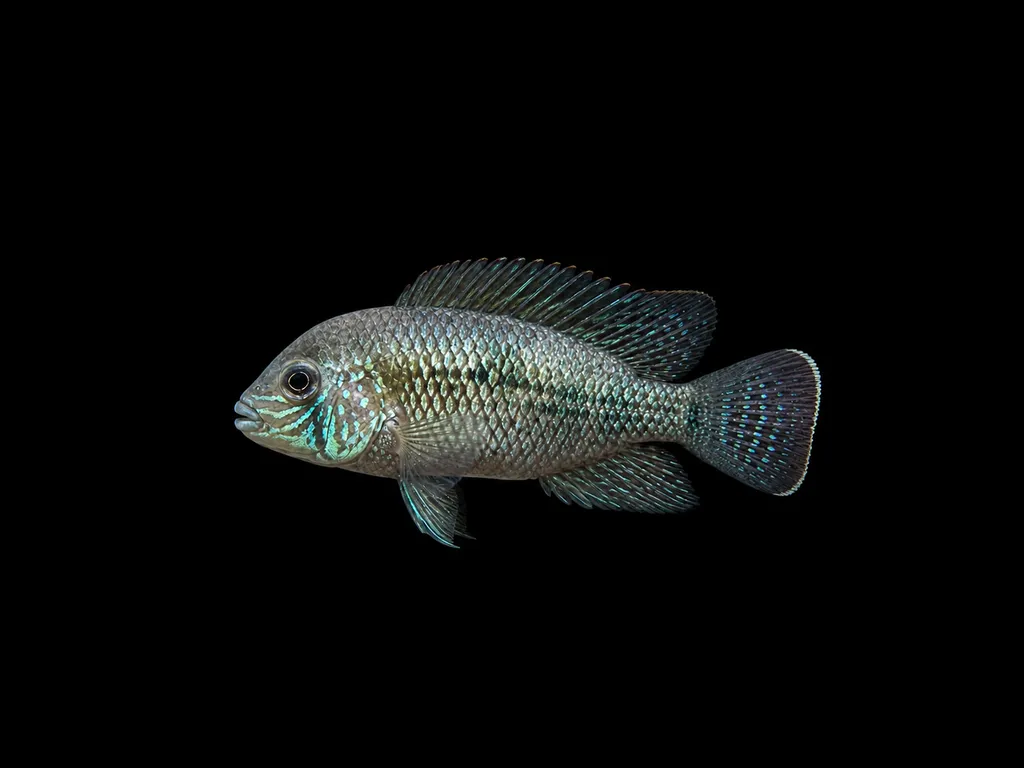 7.9 in (20 cm)74 gal (280 L)68–79°F (20–26°C)
Silver saum
Andinoacara stalsbergi
7.9 in (20 cm) · 74 gal (280 L)
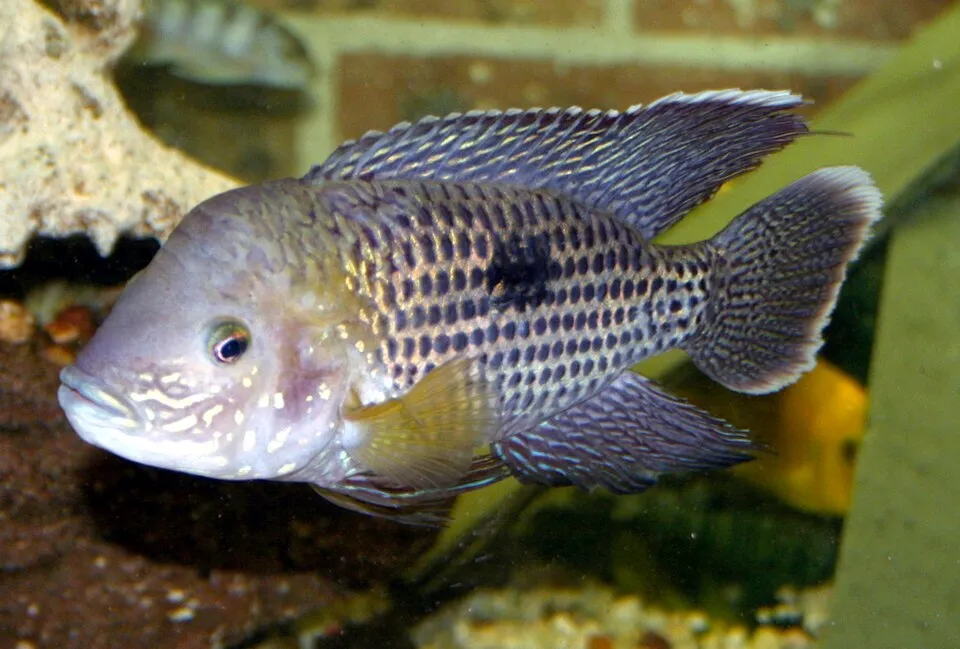 11.8 in (30 cm)75 gal (285 L)68–75°F (20–24°C)
Gold saum
Andinoacara rivulatus
11.8 in (30 cm) · 75 gal (285 L)
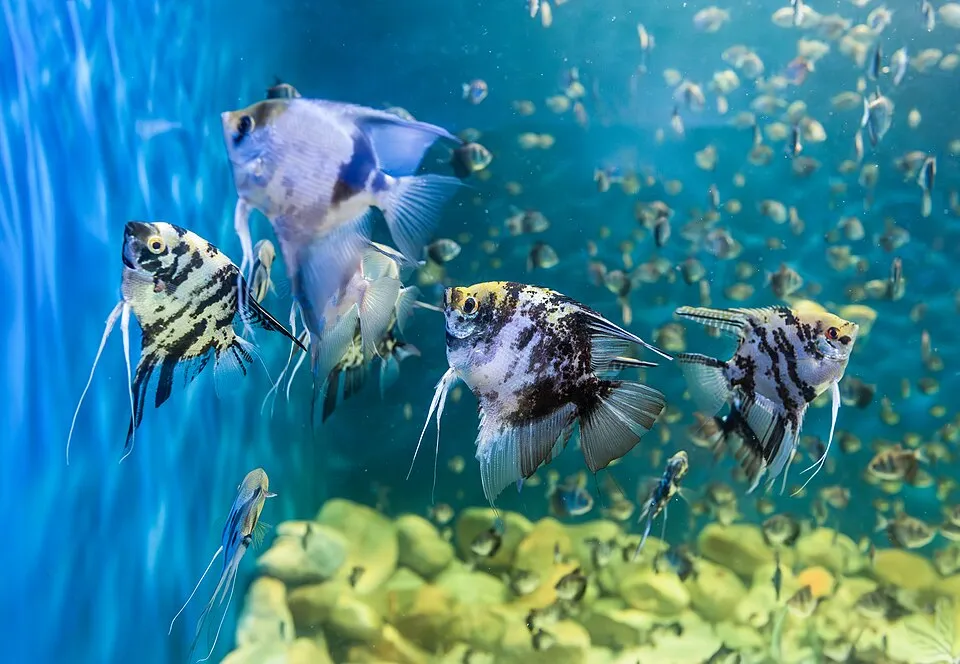 5.9 in (15 cm)30 gal (115 L)75–86°F (24–30°C)
Angelfish
Pterophyllum scalare
5.9 in (15 cm) · 30 gal (115 L)
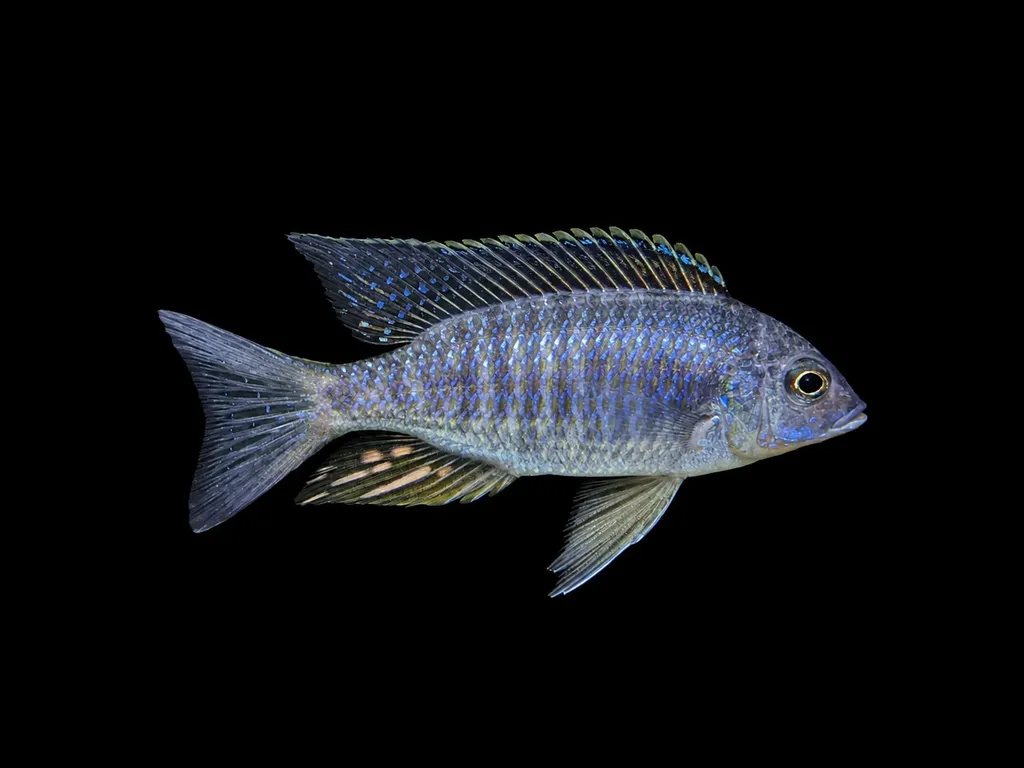 5.9 in (15 cm)70 gal (265 L)75–82°F (24–28°C)
Atripinnis hap
Copadichromis atripinnis
5.9 in (15 cm) · 70 gal (265 L)
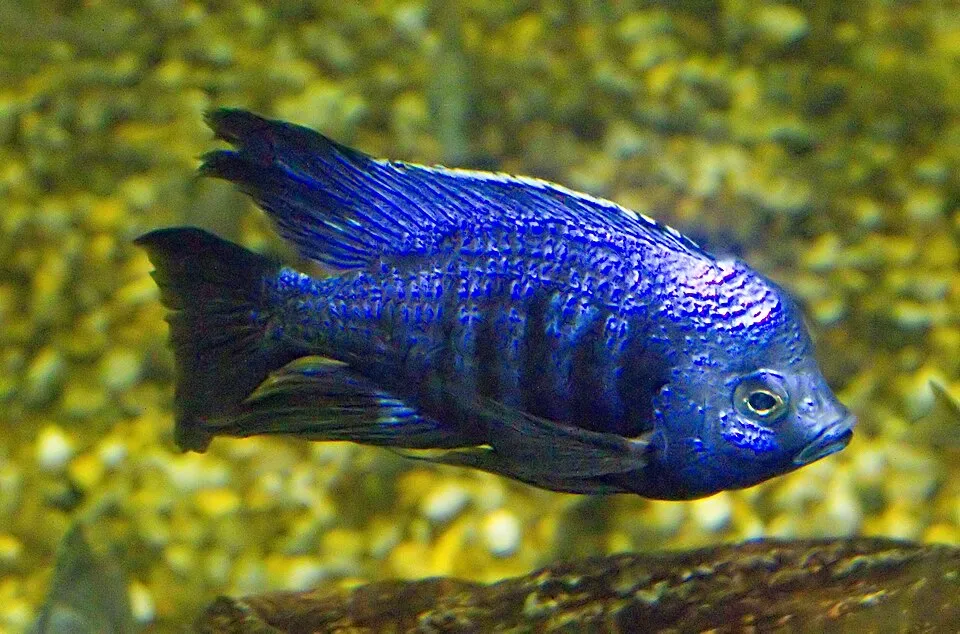 5.9 in (15 cm)79 gal (300 L)77–82°F (25–28°C)
Azureus
Copadichromis azureus
5.9 in (15 cm) · 79 gal (300 L)
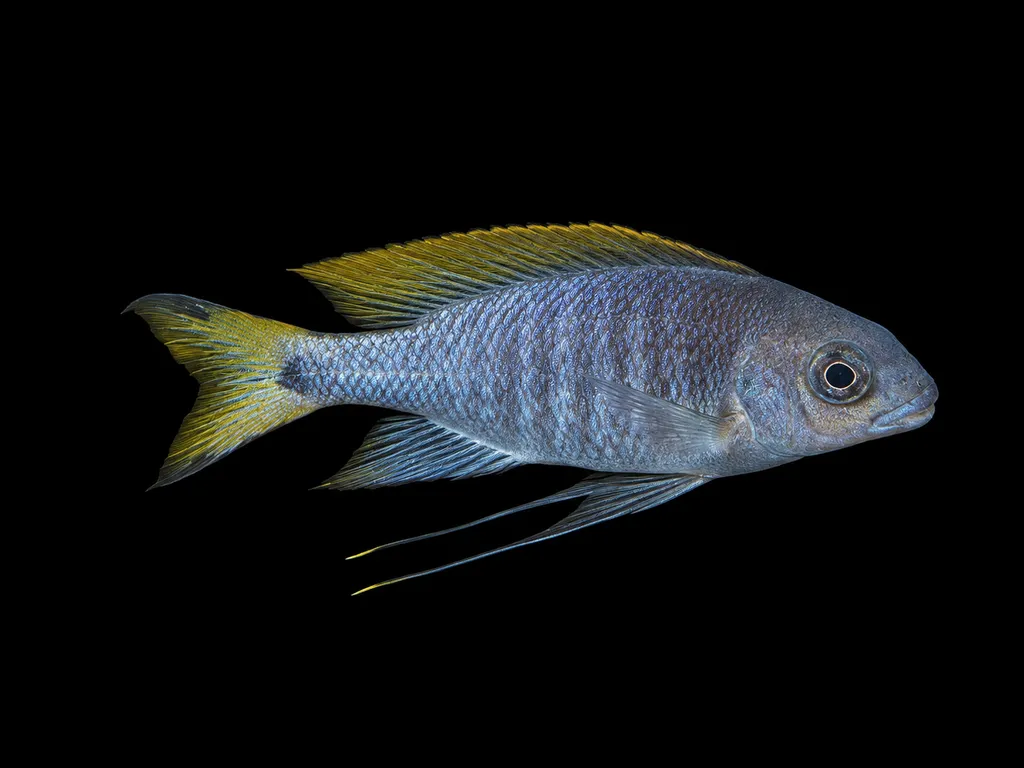 5.9 in (15 cm)106 gal (400 L)75–81°F (24–27°C)
Boops featherfin
Ophthalmotilapia boops
5.9 in (15 cm) · 106 gal (400 L)