Boops featherfin
Ophthalmotilapia boops
Also known as Big-eye featherfin
FreshwaterFish
Care at a glance
- Temperature
- 75–81°F
- 24–27°C
- pH
- 8.0–9.0
- Adult size
- 5.9 in
- 15 cm
- Minimum tank
- 46 gal
- 175 L
- Temperament
- Mostly peaceful
- Social behavior
- Social
- Swim level
- Middle
- Difficulty
- Difficult
- Breeding
- Mouthbrooder · Hard
- Rarity
- Rare
- Family
- Cichlidae
- Origin
- Lake Tanganyika, Tanzanian coast
Overview
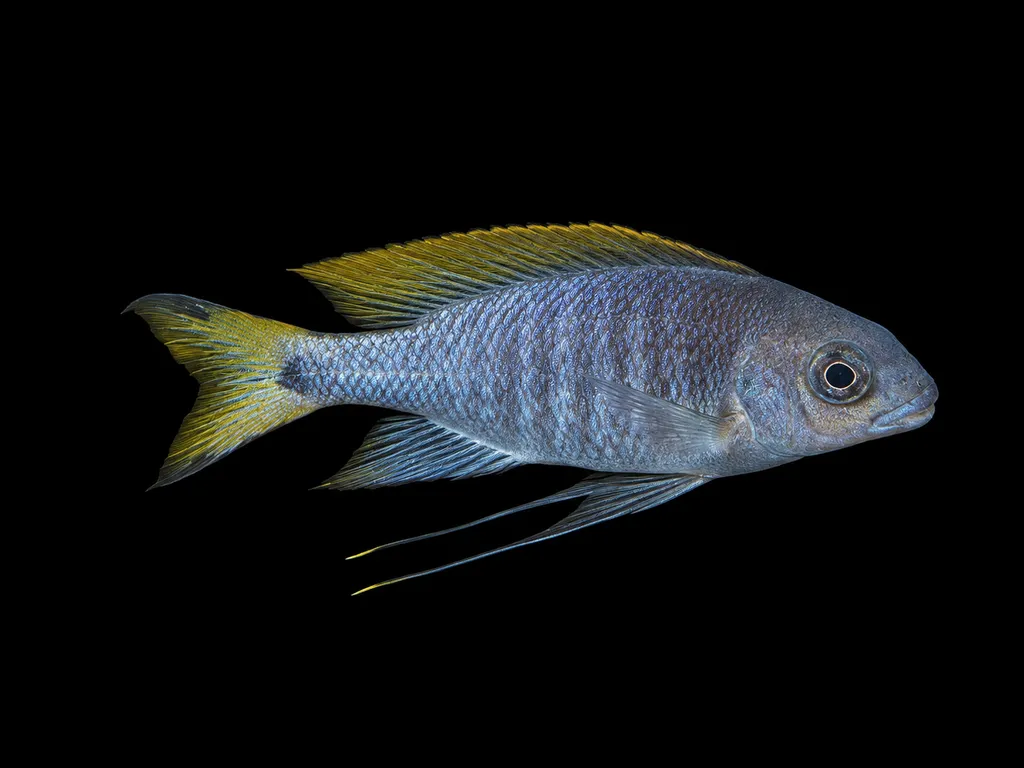
The Boops featherfin is a slender, elegant cichlid from Lake Tanganyika for a large, mature tank. It is best left to experienced keepers.
Did you know
A female Boops featherfin snaps at the bright tips of a breeding male's fins, mistaking them for eggs. That draws her close, so he can fertilize the clutch she already holds in her mouth.
Caring for the Boops featherfin
Keep Boops featherfins as a harem, one male with a group of females, in a mature tank. A tall, long tank of at least 46 gal (175 L) suits a colony and gives it height and open water. Back broad open sand with rock structure, so a male has room to build his nest.
Keep the water very hard and alkaline, at 75 to 81°F (24 to 27°C) and a pH of 8.0 to 9.0. Run strong filtration and bright light. It feeds on plankton and fine foods, so offer small frozen foods such as cyclops and mysis with quality flake and small pellets.
The Boops featherfin is peaceful toward other species, so pair it with calm Tanganyikans. Males spar with each other, so keep a single male unless the tank is very large.
Males build and defend sand nests while the females hold above them. Breeding males grow long, trailing pelvic fin filaments tipped with yellow. It is a maternal mouthbrooder, and breeding it is hard.
Good to know
Ophthalmotilapia boops belongs to the cichlid family, Cichlidae. The name boops is Greek for ox-eyed, a term Homer used to compliment the goddess Hera. Here the name goes to a big-eyed plankton feeder from the rocky coast of Lake Tanganyika.
In the wild
Ophthalmotilapia boops lives along Lake Tanganyika's Tanzanian coast, where rock meets open sand in clear, sunlit water. The lake there is very hard, alkaline and warm.
Weekly picks
Tank mates
The Boops featherfin is a mostly peaceful, social species that keeps to the middle. These picks share a community profile with it, are safe together in both directions, and overlap on water type, temperature and pH.
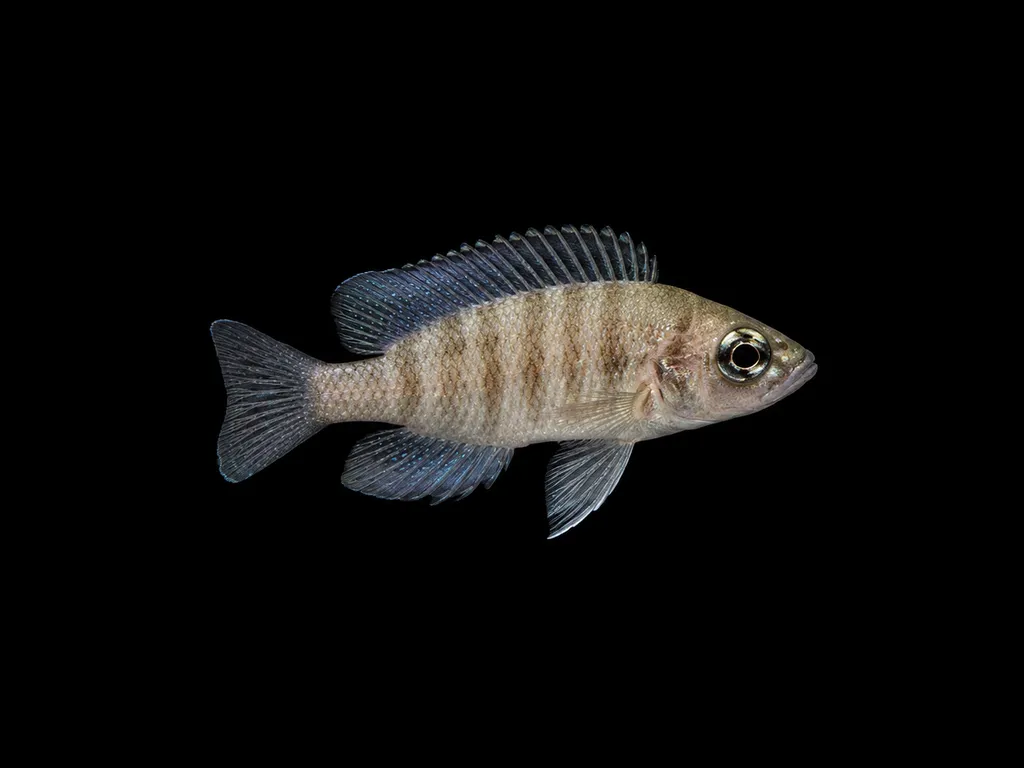
Toa cichlid
Neolamprologus toae
Freshwater4.7 in (12 cm) · 53 gal (200 L)75–81°F (24–27°C)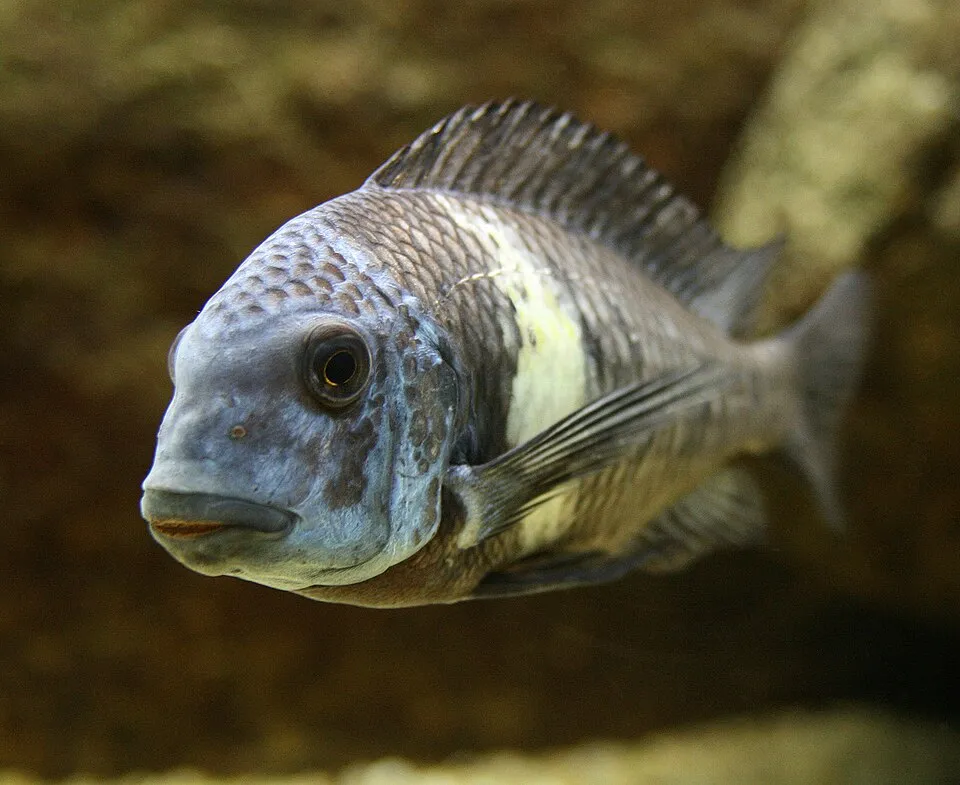
White-spotted cichlid
Tropheus duboisi
Freshwater4.7 in (12 cm) · 29 gal (110 L)73–82°F (23–28°C)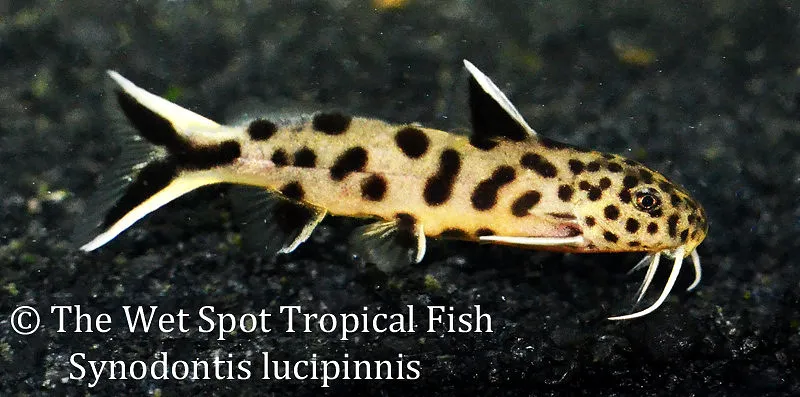
Dwarf petricola
Synodontis lucipinnis
Freshwater3.9 in (10 cm) · 30 gal (114 L)73–81°F (23–27°C)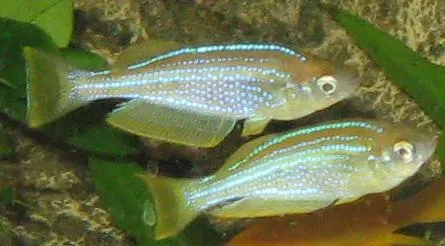
Tanganyika killifish
Lamprichthys tanganicanus
Freshwater5.5 in (14 cm) · 40 gal (150 L)73–77°F (23–25°C)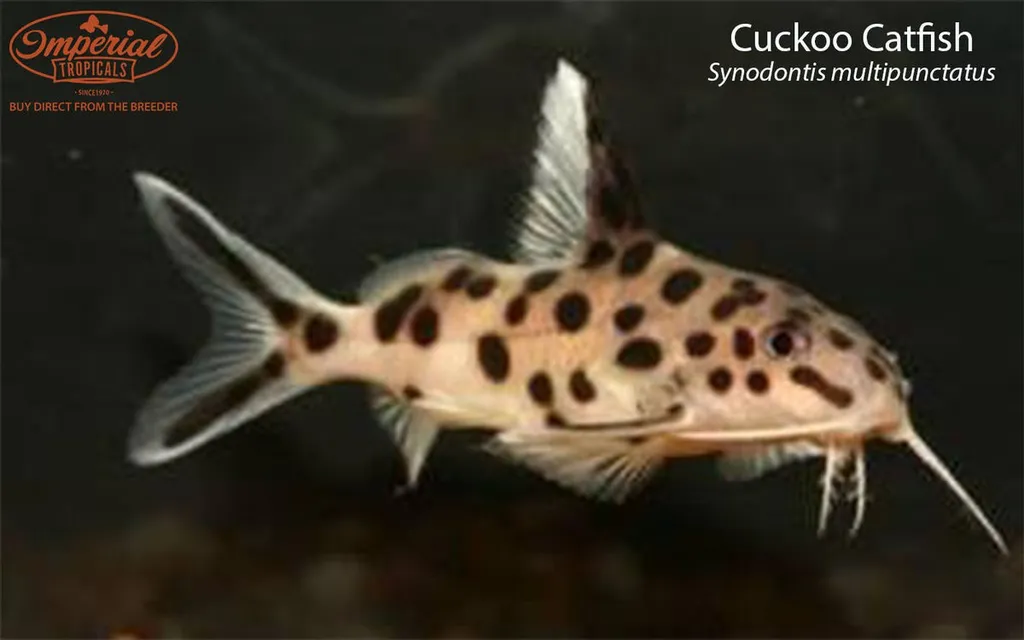
Cuckoo squeaker
Synodontis multipunctatus
Freshwater7.1 in (18 cm) · 29 gal (110 L)75–82°F (24–28°C)
Common questions
What size tank does a Boops featherfin need?
A Boops featherfin needs at least 46 gal (175 L). It spends most of its time in the middle.
What temperature and pH does a Boops featherfin need?
A Boops featherfin is comfortable at 75–81°F (24–27°C) with a pH of 8.0–9.0.
What does a Boops featherfin eat?
A Boops featherfin feeds on plankton and fine foods. Offer it small frozen foods such as cyclops and mysis, with quality flake and small pellets.
How big does a Boops featherfin get?
An adult Boops featherfin reaches about 5.9 in (15 cm).
How can you tell a male Boops featherfin from a female?
Males grow long, trailing pelvic fin filaments tipped with yellow when they breed.
How does a Boops featherfin breed?
A Boops featherfin is a maternal mouthbrooder. Males build and defend sand nests while the females hold above, and breeding is hard.
Related species
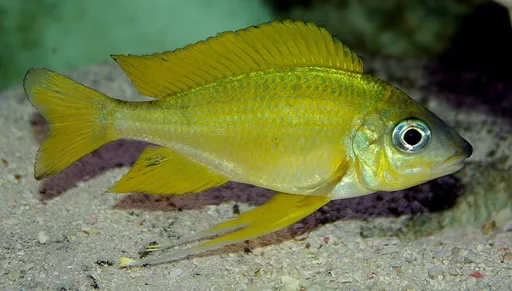 7.1 in (18 cm)79 gal (300 L)75–81°F (24–27°C)
Nasuta featherfin
Ophthalmotilapia nasuta
7.1 in (18 cm) · 79 gal (300 L)
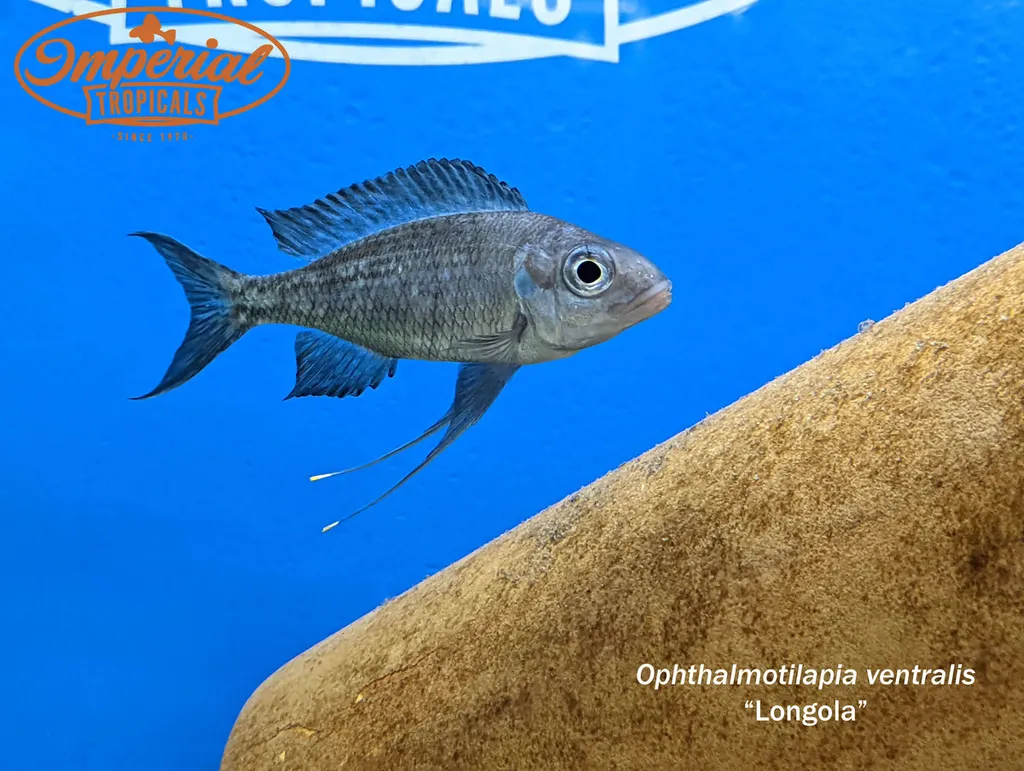 5.9 in (15 cm)61 gal (230 L)73–81°F (23–27°C)
Ventralis featherfin cichlid
Ophthalmotilapia ventralis
5.9 in (15 cm) · 61 gal (230 L)
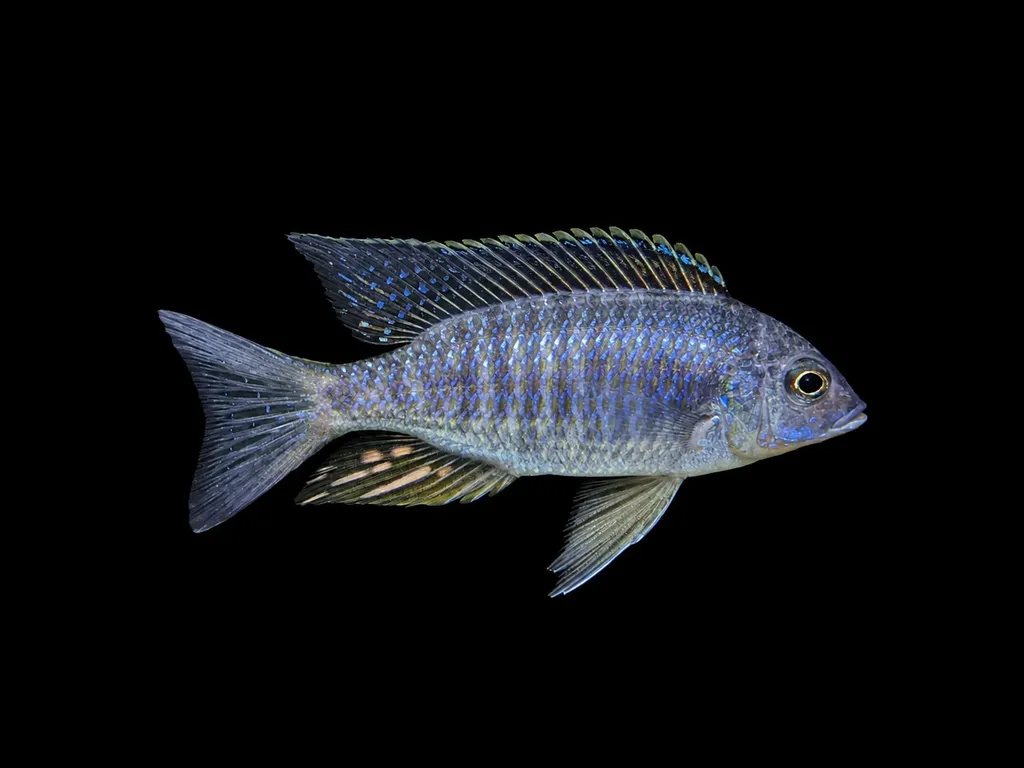 5.9 in (15 cm)70 gal (265 L)75–82°F (24–28°C)
Atripinnis hap
Copadichromis atripinnis
5.9 in (15 cm) · 70 gal (265 L)
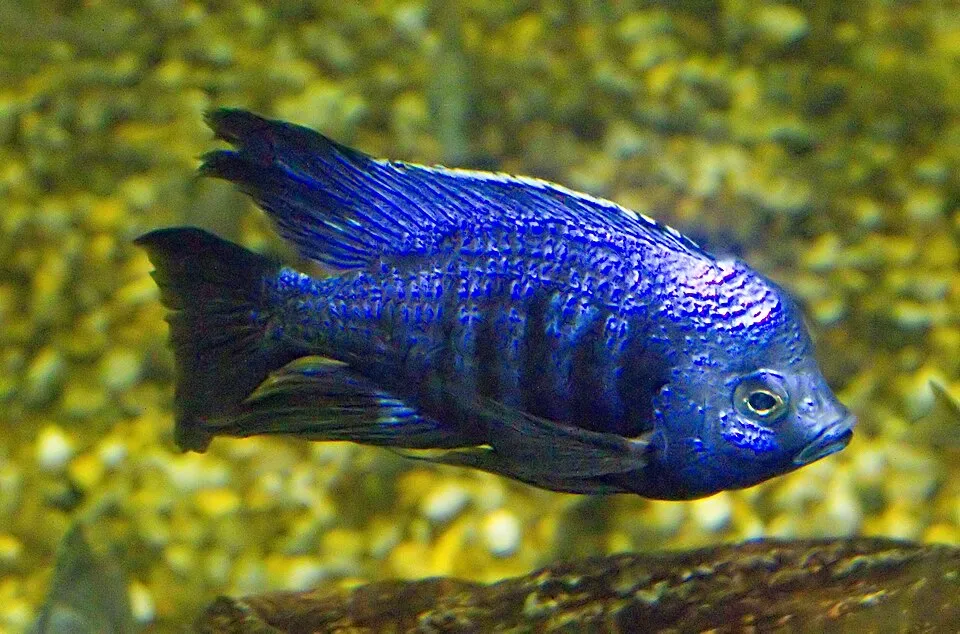 5.9 in (15 cm)79 gal (300 L)77–82°F (25–28°C)
Azureus
Copadichromis azureus
5.9 in (15 cm) · 79 gal (300 L)
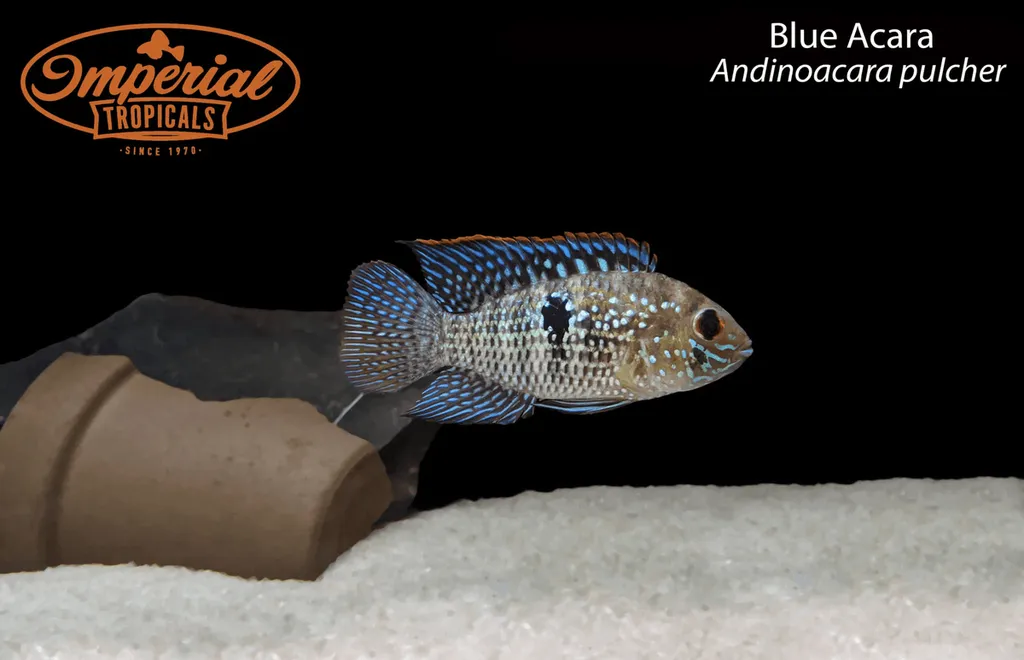 5.9 in (15 cm)42 gal (160 L)72–82°F (22–28°C)
Blue acara
Andinoacara pulcher
5.9 in (15 cm) · 42 gal (160 L)
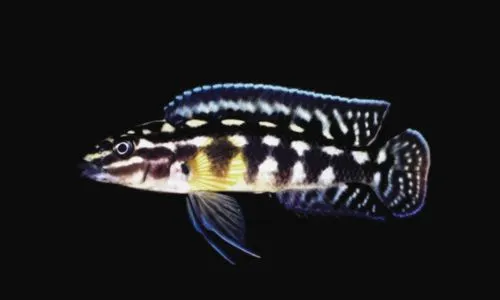 5.9 in (15 cm)29 gal (110 L)73–81°F (23–27°C)
Marlier's julie
Julidochromis marlieri
5.9 in (15 cm) · 29 gal (110 L)