Nasuta featherfin
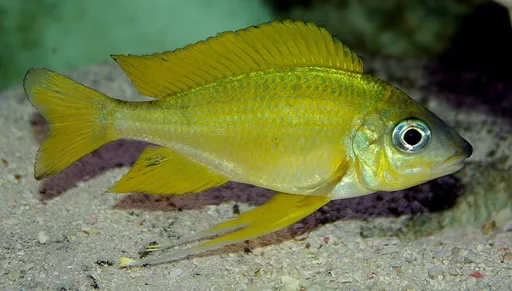
Ophthalmotilapia nasuta
Also known as Featherfin cichlid, Nasuta, Gold nasuta
FreshwaterFish
Care at a glance
- Temperature
- 75–81°F
- 24–27°C
- pH
- 7.8–9.0
- Adult size
- 7.1 in
- 18 cm
- Minimum tank
- 79 gal
- 300 L
- Temperament
- Mostly peaceful
- Social behavior
- Social
- Swim level
- Middle
- Difficulty
- Medium
- Breeding
- Hard
- Rarity
- Rare
- Family
- Cichlidae
- Origin
- Rocky shallows of Lake Tanganyika in East Africa, near the edge of open water.
Overview
Keep one male with several females in a tank of at least 300 liters with rock, open sand and lots of swimming room. Water should be hard and alkaline at 24 to 27 C, pH 7.8 to 9.0. Males fight each other, so give a dominant male his own space and enough females. Feed a mix of algae based foods and fine frozen foods like cyclops and brine shrimp.
In the wild
The nasuta featherfin lives along rocky shorelines in Lake Tanganyika, feeding on plankton and algae just off the rocks. Males build shallow sand nests to court females. Long trailing pelvic fins tipped with yellow pads are the trademark of the featherfins.
Good to know
Ophthalmotilapia nasuta is a maternal mouthbrooder in which the male's pelvic fins end in bright yellow tabs that mimic eggs. The female snaps at these tabs while the male fertilizes the eggs she is already holding in her mouth. Males are far more colorful and finnier than the plain females.
Did you know
The glowing yellow tips on the male's long pelvic fins act as fake eggs, a lure that helps him fertilize the real eggs in the female's mouth.
Weekly picks
Tank mates
Nasuta featherfin is a mostly peaceful, social species that keeps to the middle. These picks share a community profile with it, are safe together in both directions, and overlap on water type, temperature and pH.
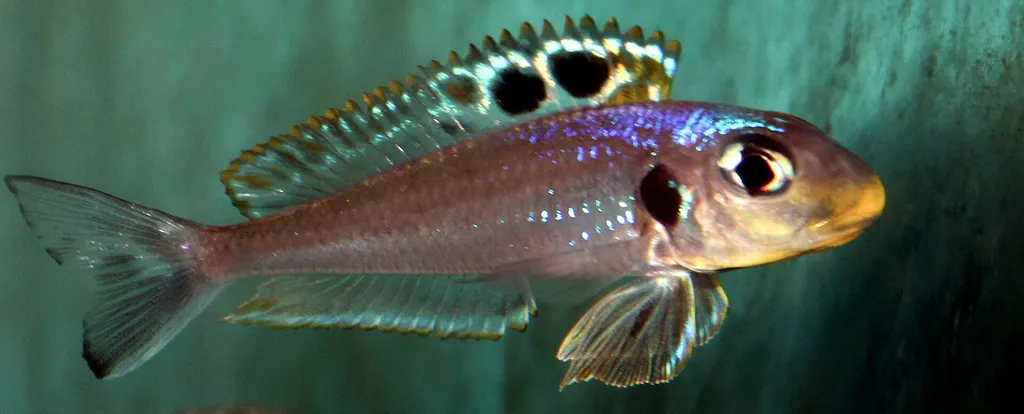
Deepwater xenotilapia
Xenotilapia bathyphila
Freshwater4.1 in (10.5 cm) · 66 gal (250 L)75–81°F (24–27°C)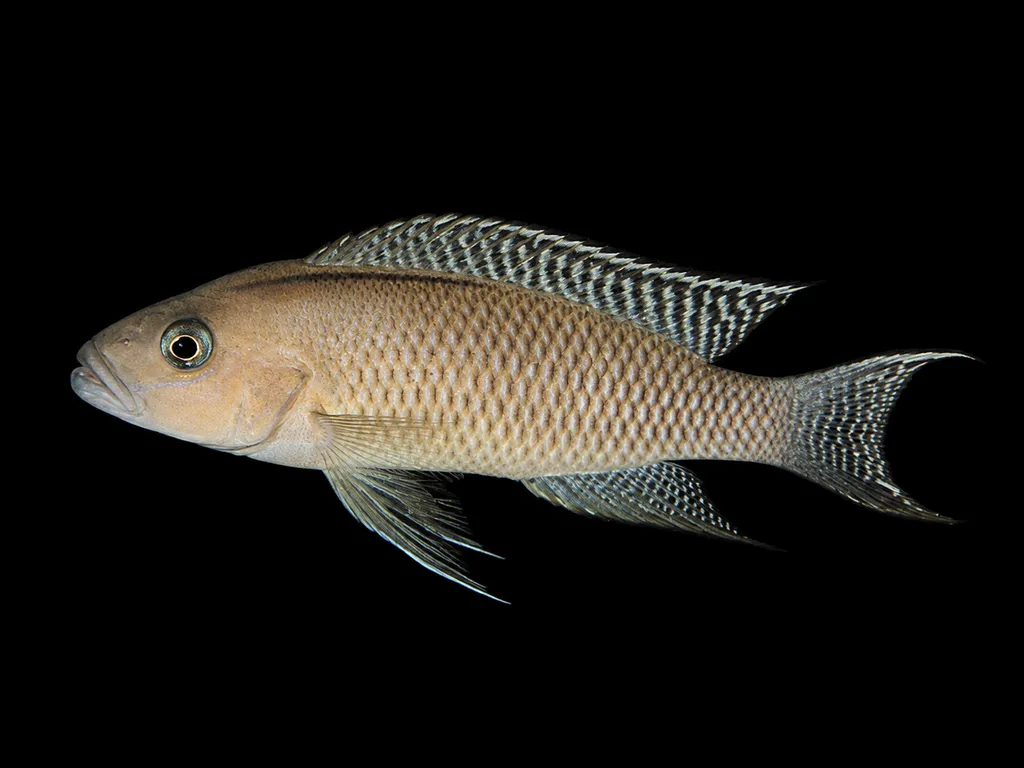
Falcicula cichlid
Neolamprologus falcicula
Freshwater3.1 in (8 cm) · 42 gal (160 L)75–81°F (24–27°C)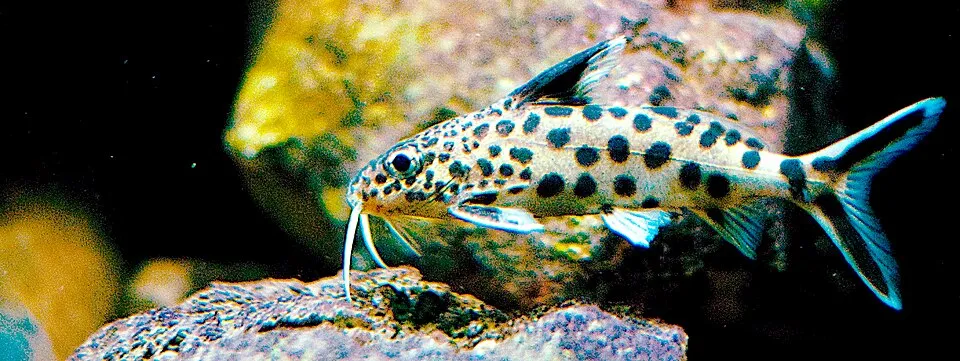
Cuckoo squeaker
Synodontis multipunctatus
Freshwater9.8 in (25 cm) · 50 gal (190 L)75–82°F (24–28°C)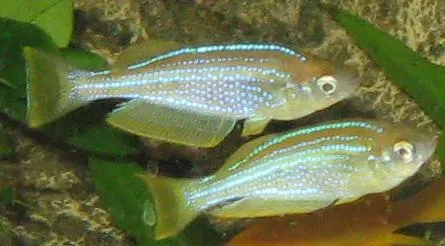
Tanganyika killifish
Lamprichthys tanganicanus
Freshwater5.5 in (14 cm) · 40 gal (150 L)73–77°F (23–25°C)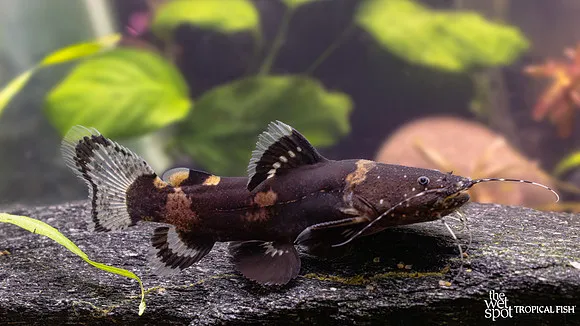
Poll's synodontis
Synodontis polli
Freshwater7.1 in (18 cm) · 50 gal (190 L)72–79°F (22–26°C)
Common questions
What size tank does a Nasuta featherfin need?
A Nasuta featherfin needs at least 79 gal (300 L). It spends most of its time in the middle.
What temperature and pH does a Nasuta featherfin need?
A Nasuta featherfin is comfortable at 75–81°F (24–27°C) with a pH of 7.8–9.0.
How big does a Nasuta featherfin get?
An adult Nasuta featherfin reaches about 7.1 in (18 cm).
Related species
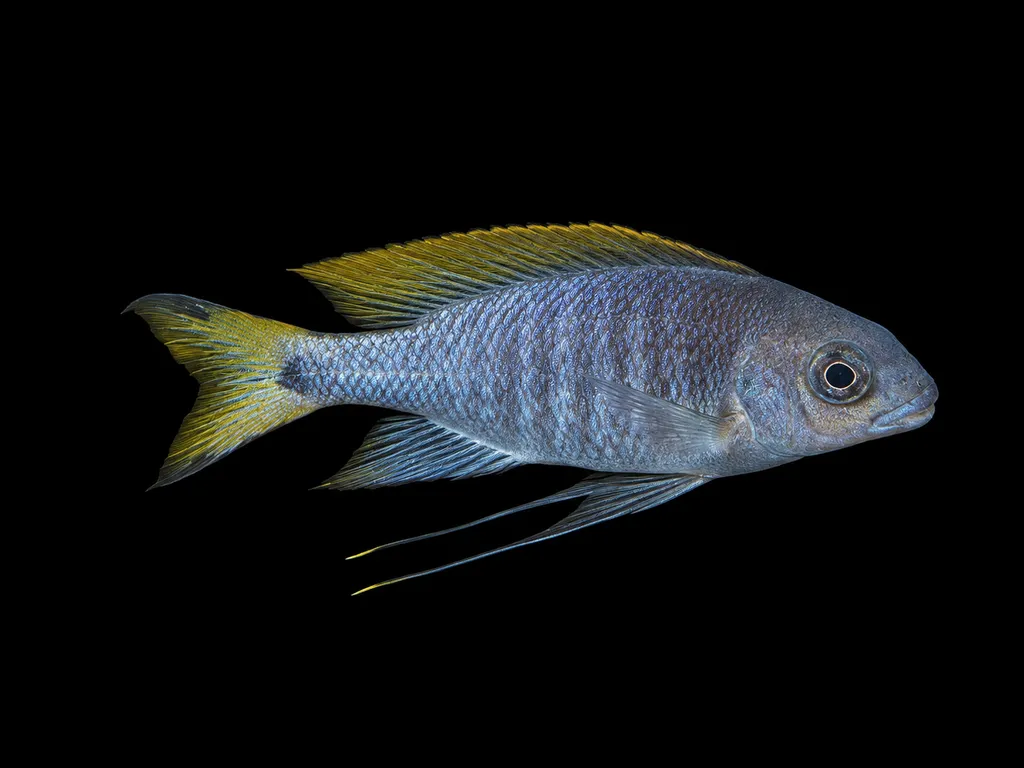 5.9 in (15 cm)106 gal (400 L)75–81°F (24–27°C)
Boops featherfin
Ophthalmotilapia boops
5.9 in (15 cm) · 106 gal (400 L)
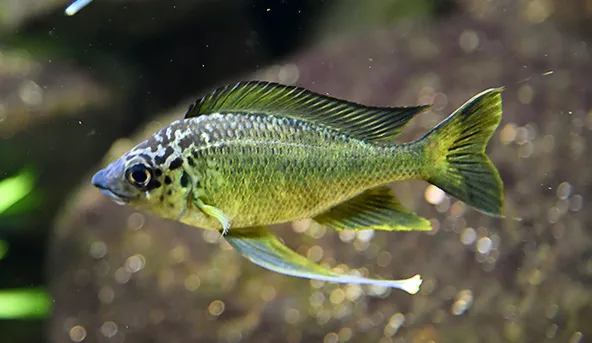 5.9 in (15 cm)61 gal (230 L)73–81°F (23–27°C)
Ventralis featherfin cichlid
Ophthalmotilapia ventralis
5.9 in (15 cm) · 61 gal (230 L)
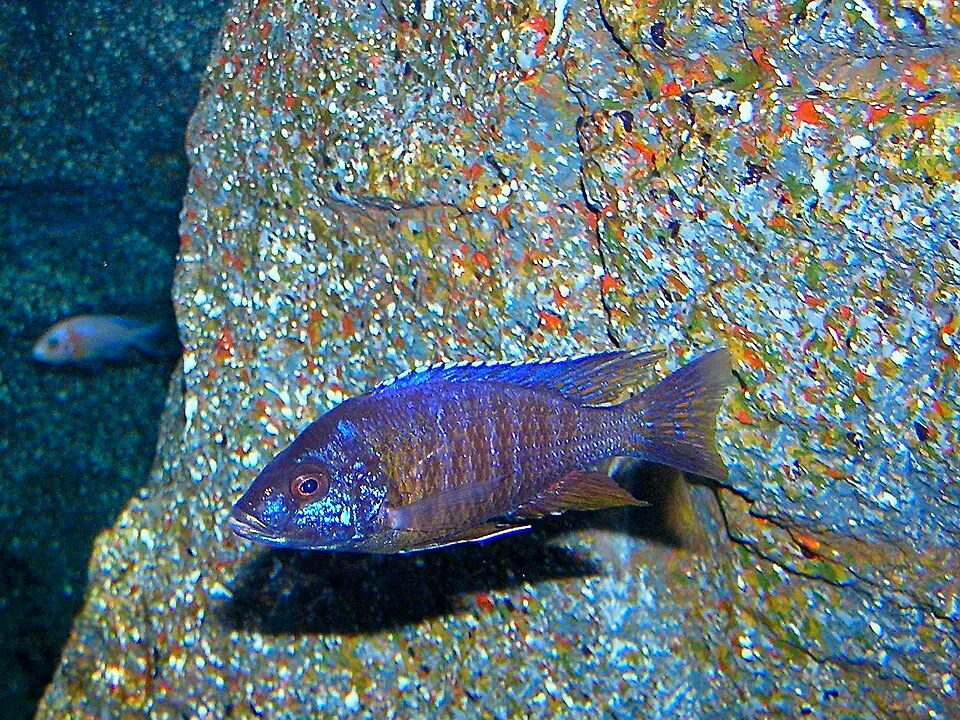 7.1 in (18 cm)66 gal (250 L)75–82°F (24–28°C)
Electric blue hap
Sciaenochromis fryeri
7.1 in (18 cm) · 66 gal (250 L)
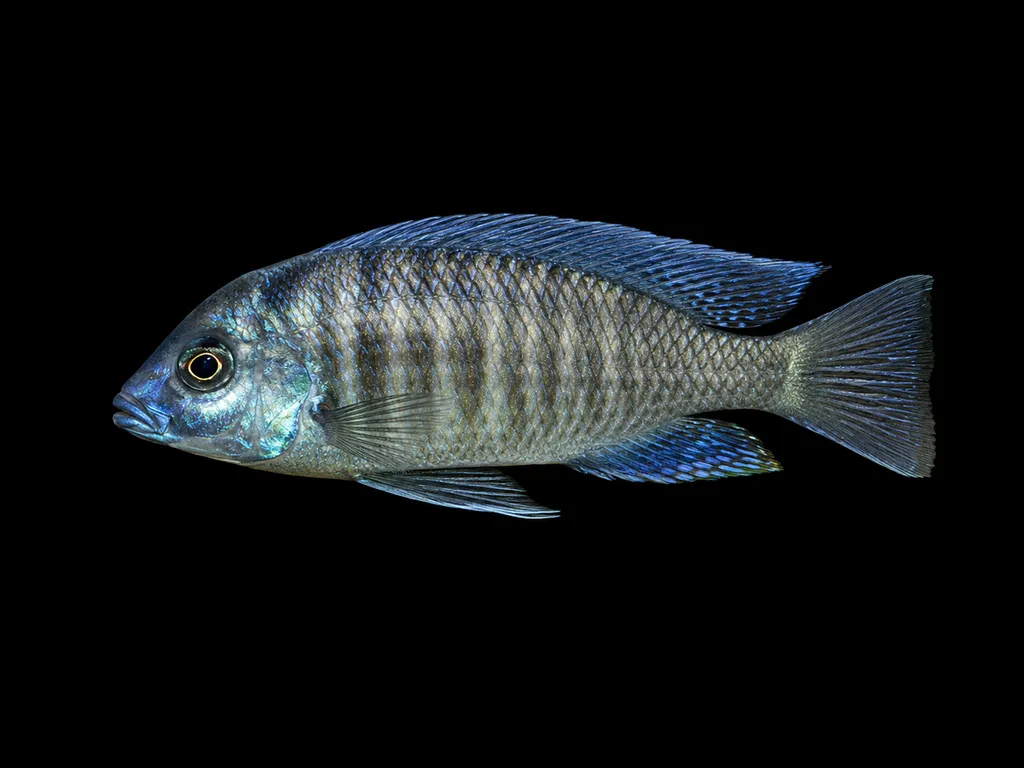 7.1 in (18 cm)79 gal (300 L)75–81°F (24–27°C)
Jackson's utaka
Copadichromis jacksoni
7.1 in (18 cm) · 79 gal (300 L)
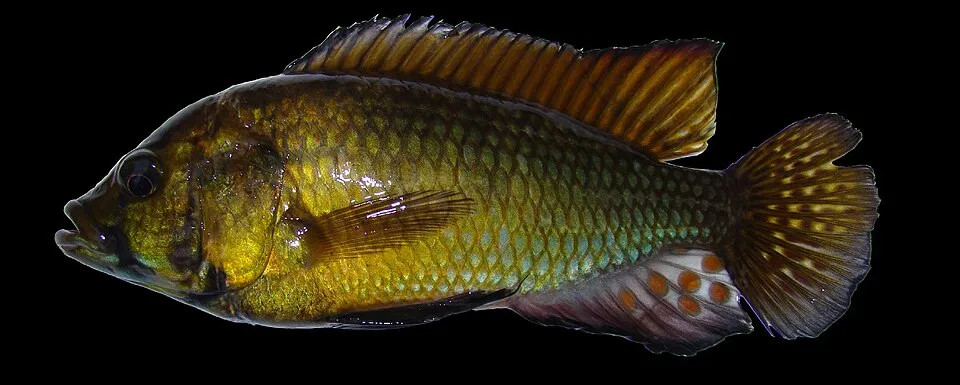 7.5 in (19 cm)55 gal (210 L)73–82°F (23–28°C)
Alluaud's haplo
Astatoreochromis alluaudi
7.5 in (19 cm) · 55 gal (210 L)
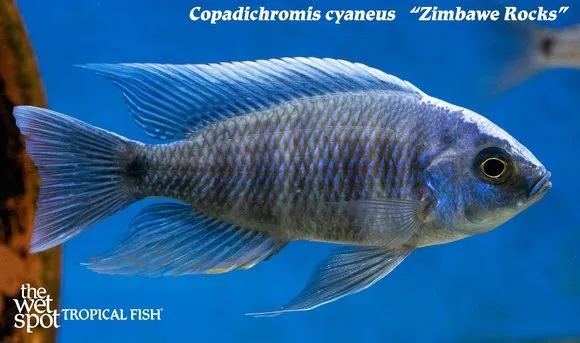 7.5 in (19 cm)79 gal (300 L)75–81°F (24–27°C)
Blue utaka
Copadichromis cyaneus
7.5 in (19 cm) · 79 gal (300 L)