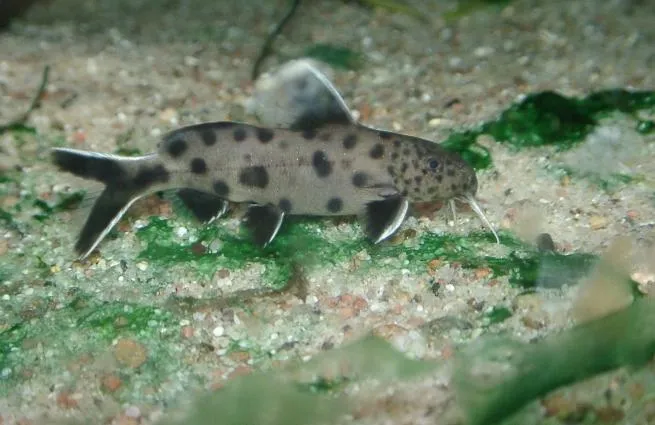
Even-Spotted squeaker
Synodontis petricola
Also known as Even-spotted synodontis
FreshwaterFish
Care at a glance
- Temperature
- 75–82°F
- 24–28°C
- pH
- 7.5–8.5
- Adult size
- 4.7 in
- 12 cm
- Minimum tank
- 45 gal
- 170 L
- Temperament
- Peaceful
- Social behavior
- Shoaling
- Swim level
- Bottom
- Difficulty
- Medium
- Breeding
- Hard
- Rarity
- Rare
- Family
- Mochokidae
- Origin
- Lake Tanganyika
Overview
The even-spotted squeaker is a small, peaceful rift-lake catfish that is happiest in a group of four or more, where it schools and forages actively over rock and sand in daylight as well as at night. Its modest size and calm nature make it an excellent companion for Tanganyikan and other hard-water cichlids. Feed a mixed diet of sinking pellets, frozen bloodworms, and algae-based foods, all of which it takes readily. Build the tank from stacked rocks and caves over sand with clear swimming space, and aim for around 170 liters or larger.
In the wild
Synodontis petricola is endemic to Lake Tanganyika, where its name refers to living among the rocks of the shoreline. The lake water is hard, alkaline, and very stable, so target a pH of 7.5 to 8.5 and a temperature between 24 and 28 degrees C with high mineral content. Recreate the rocky littoral zone with plenty of stacked stone forming caves and crevices over a sandy floor, and back it with strong filtration and good oxygenation to hold conditions steady.
Good to know
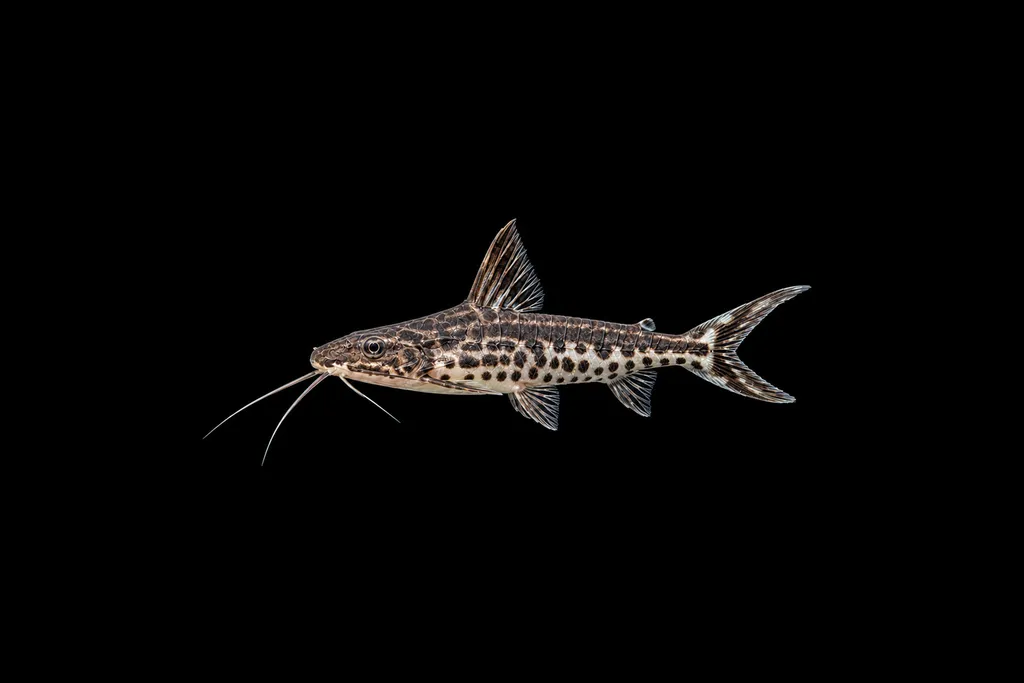
A dwarf squeaker in the family Mochokidae, Synodontis petricola stays around 12 centimeters, one of the smaller members of the genus. It has the group's bony head shield, lockable spines, and neat dark spots on a pale body. It can breed by scattering eggs and is also a facultative brood parasite of mouthbrooding cichlids, so aquarium spawning is possible but rated hard, often done in a separate tank with the flowerpot method.
Did you know
The even-spotted squeaker is often confused with the cuckoo catfish and can use the same trick, slipping its eggs among a mouthbrooding cichlid's clutch. It also spawns more conventionally by scattering eggs, which makes it easier to raise than its full-time cuckoo cousin.
Weekly picks
Tank mates
Even-Spotted squeaker is a peaceful, shoaling species that keeps to the bottom. These picks share a community profile with it, are safe together in both directions, and overlap on water type, temperature and pH.
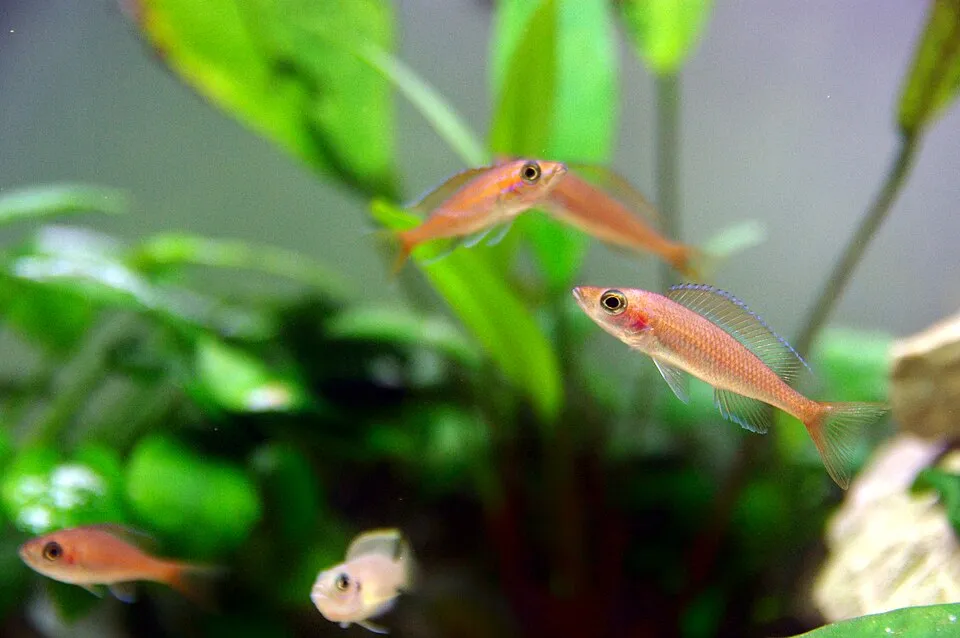
Blue neon cichlid
Paracyprichromis nigripinnis
Freshwater4.3 in (11 cm) · 48 gal (180 L)75–81°F (24–27°C)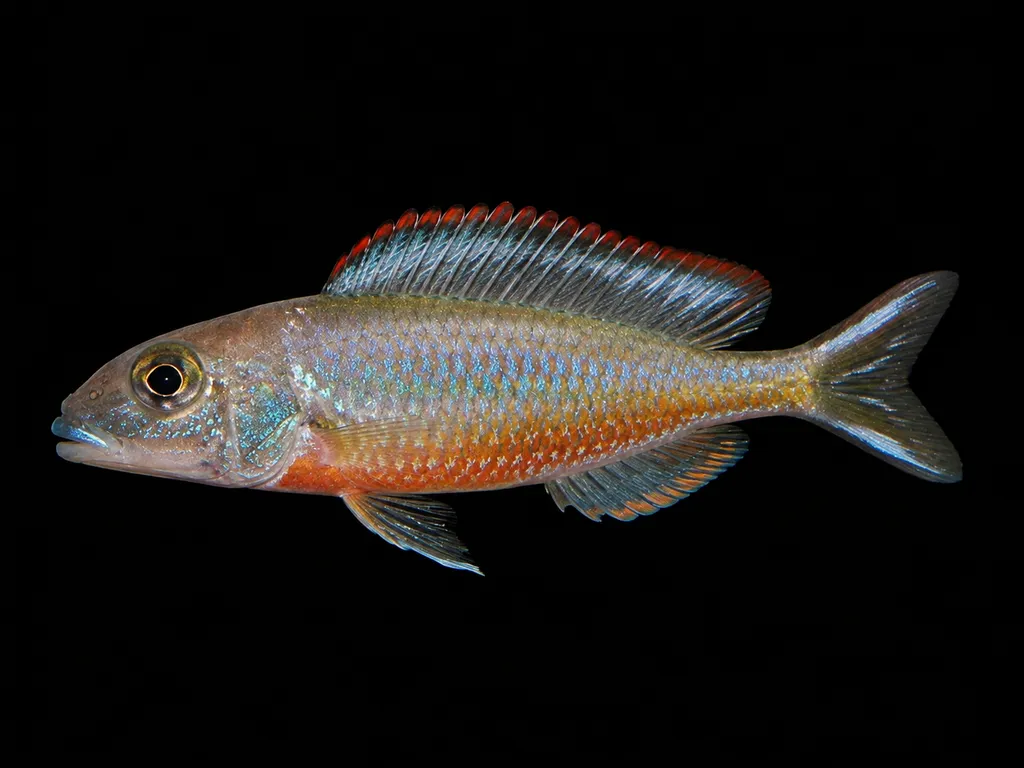
Flame callochromis
Callochromis pleurospilus
Freshwater3.9 in (10 cm) · 66 gal (250 L)75–81°F (24–27°C)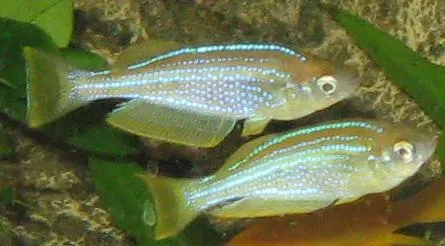
Tanganyika killifish
Lamprichthys tanganicanus
Freshwater5.5 in (14 cm) · 40 gal (150 L)73–77°F (23–25°C)
Common questions
What size tank does an Even-Spotted squeaker need?
An Even-Spotted squeaker needs at least 45 gal (170 L). It spends most of its time in the bottom.
What temperature and pH does an Even-Spotted squeaker need?
An Even-Spotted squeaker is comfortable at 75–82°F (24–28°C) with a pH of 7.5–8.5.
How big does an Even-Spotted squeaker get?
An adult Even-Spotted squeaker reaches about 4.7 in (12 cm).
Does an Even-Spotted squeaker need a group?
Yes. An Even-Spotted squeaker is a shoaling species and should be kept in a group, not singly.
Related species
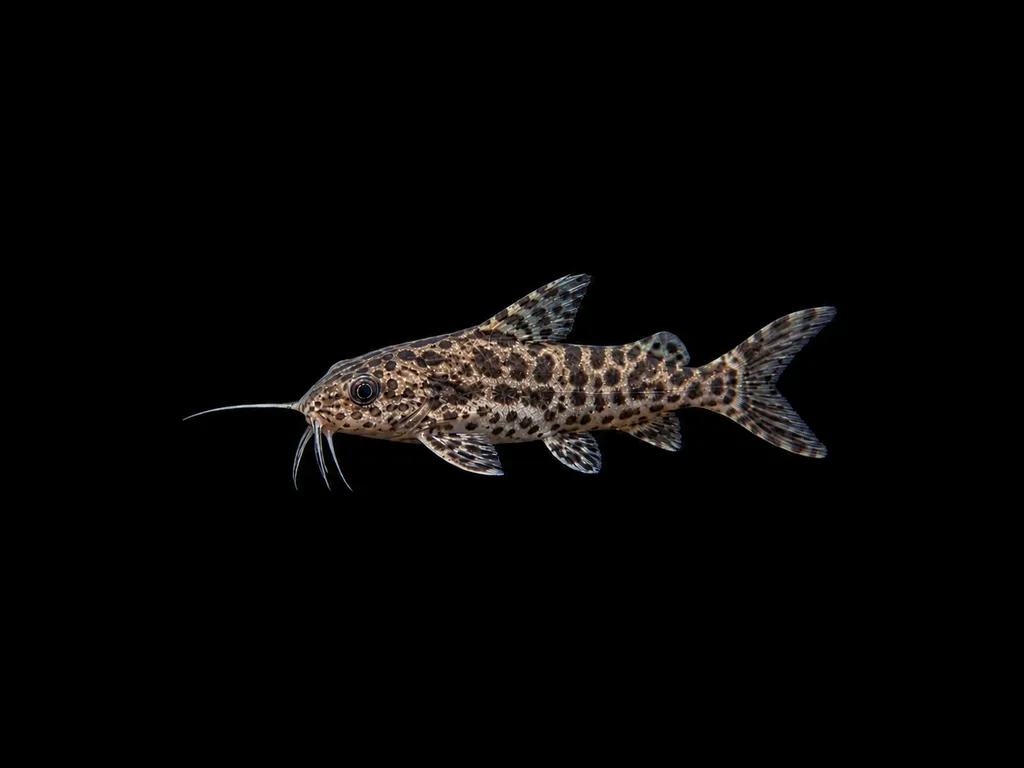 3.9 in (10 cm)30 gal (114 L)72–79°F (22–26°C)
Bugeye squeaker
Synodontis contractus
3.9 in (10 cm) · 30 gal (114 L)
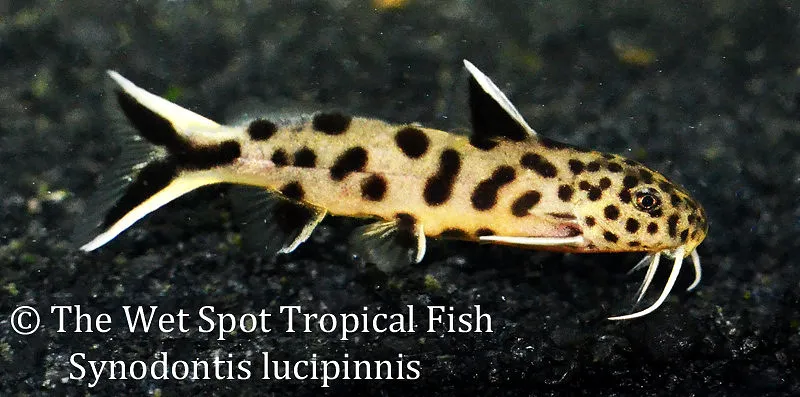 3.9 in (10 cm)30 gal (114 L)73–81°F (23–27°C)
Dwarf petricola
Synodontis lucipinnis
3.9 in (10 cm) · 30 gal (114 L)
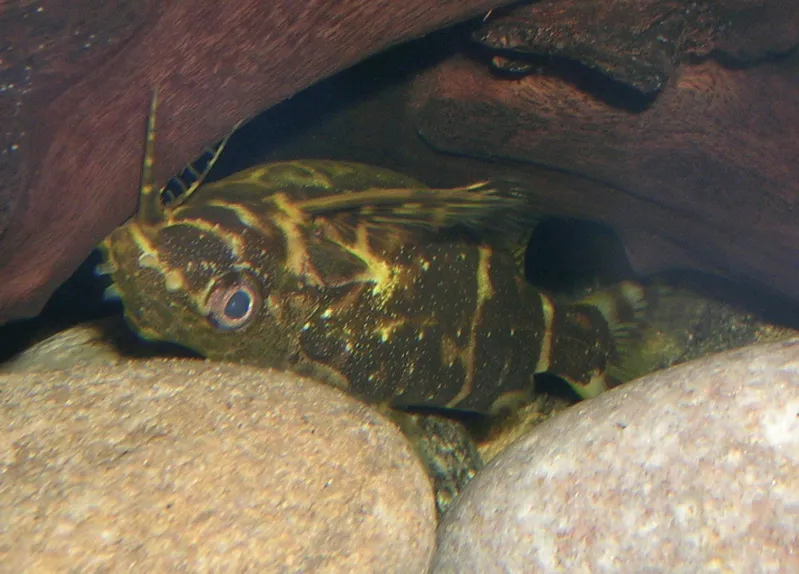 3.9 in (10 cm)30 gal (115 L)75–82°F (24–28°C)
Upside-down catfish
Synodontis nigriventris
3.9 in (10 cm) · 30 gal (115 L)
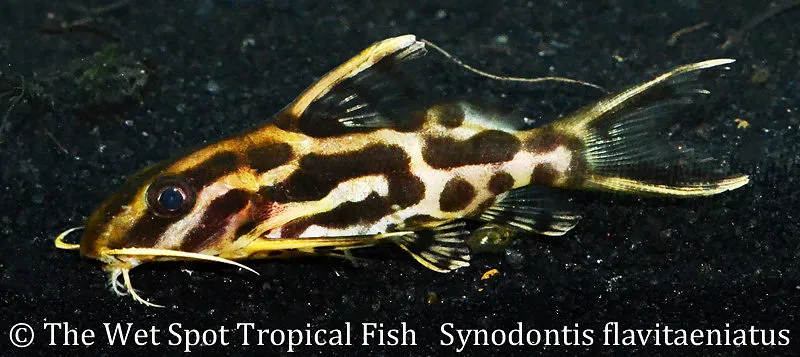 7.1 in (18 cm)53 gal (200 L)75–81°F (24–27°C)
Pyjama synodontis
Synodontis flavitaeniatus
7.1 in (18 cm) · 53 gal (200 L)
 4.9 in (12.5 cm)53 gal (200 L)73–81°F (23–27°C)
Serpentis squeaker
Synodontis serpentis
4.9 in (12.5 cm) · 53 gal (200 L)
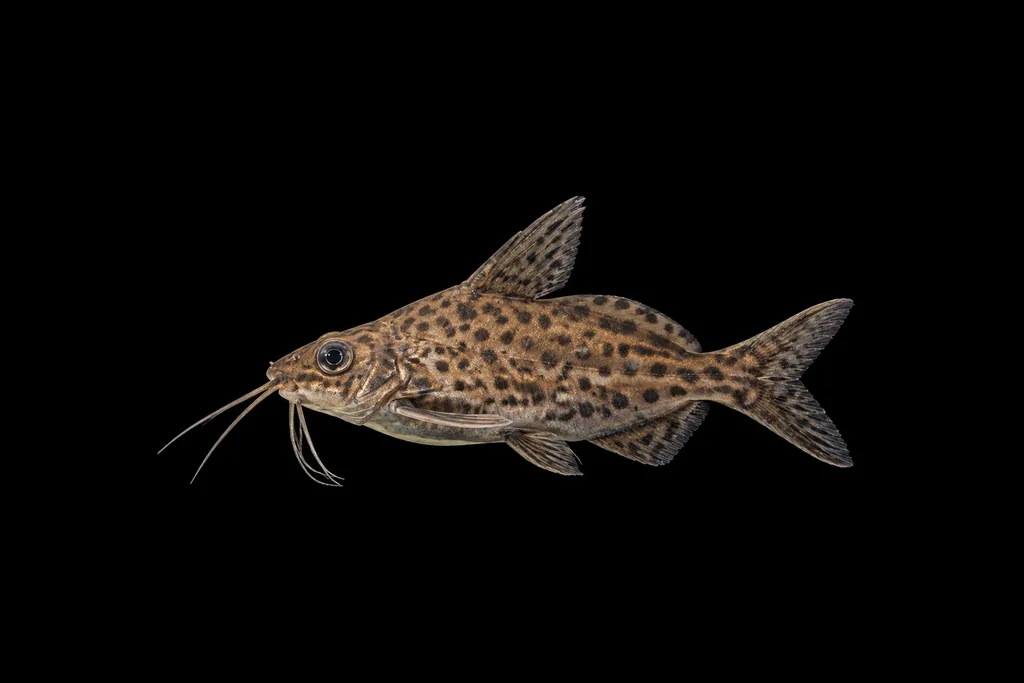 4.3 in (11 cm)42 gal (160 L)73–81°F (23–27°C)
Orientalis squeaker
Synodontis orientalis
4.3 in (11 cm) · 42 gal (160 L)