Ventralis featherfin cichlid
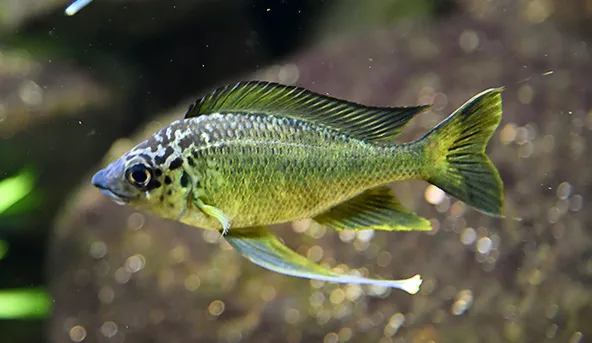
Ophthalmotilapia ventralis
Also known as Featherfin cichlid
FreshwaterFish
Care at a glance
- Temperature
- 73–81°F
- 23–27°C
- pH
- 7.8–9.0
- Adult size
- 5.9 in
- 15 cm
- Minimum tank
- 61 gal
- 230 L
- Temperament
- Aggressive
- Social behavior
- Social
- Own kind
- One male per tank
- Tankmates
- With caution
- Swim level
- Middle
- Difficulty
- Medium
- Breeding
- Hard
- Rarity
- Rare
- Family
- Cichlidae
- Origin
- Lake Tanganyika
Overview
This is a territorial cichlid, especially at breeding time, so give it a big tank of around 230 liters or more with open sand for nest building. Keep one male with several females to spread out his attention. In the wild they graze on small invertebrates and plankton, so feed quality cichlid pellets plus frozen brine shrimp and daphnia. Choose tankmates carefully, since males defend their nests hard.
In the wild
Featherfins live along the rocky shores of Lake Tanganyika in East Africa, over sandy patches between rocks at depths of roughly 5 to 30 meters. Males clear sand and build nests there. The lake water is hard and very alkaline. Match it with a sand bottom, scattered rock, hard water from pH 7.8 to 9, and warm temperatures in the mid 20s C. Stable water chemistry matters with Tanganyikans.
Good to know
Ophthalmotilapia ventralis is a cichlid in the family Cichlidae, reaching about 15 cm. It shows strong sexual dimorphism. Breeding males turn bright with long, flowing ventral fins tipped with yellow tabs, while females stay plain. It is a maternal mouthbrooder. The species is not considered endangered, though local populations can be affected by habitat change and collection.
Did you know
The yellow tips on a male's long ventral fins are egg dummies. During spawning the female tries to gather these fake eggs into her mouth, and as she does the male releases sperm, fertilizing the real eggs she is already holding. It is a clever trick that keeps fertilization tight even in open water.
Common questions
What size tank does a Ventralis featherfin cichlid need?
A Ventralis featherfin cichlid needs at least 61 gal (230 L). It spends most of its time in the middle.
What temperature and pH does a Ventralis featherfin cichlid need?
A Ventralis featherfin cichlid is comfortable at 73–81°F (23–27°C) with a pH of 7.8–9.0.
How big does a Ventralis featherfin cichlid get?
An adult Ventralis featherfin cichlid reaches about 5.9 in (15 cm).
Related species
 5.9 in (15 cm)106 gal (400 L)75–81°F (24–27°C)
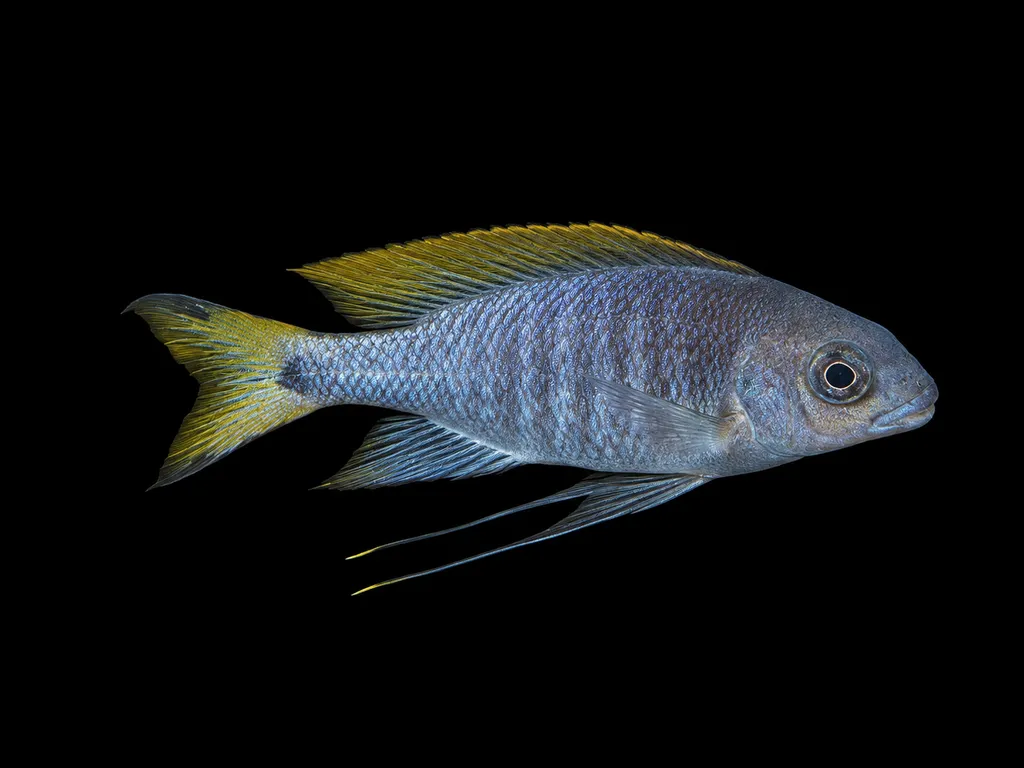
Boops featherfin
Ophthalmotilapia boops
5.9 in (15 cm) · 106 gal (400 L)
 7.1 in (18 cm)79 gal (300 L)75–81°F (24–27°C)
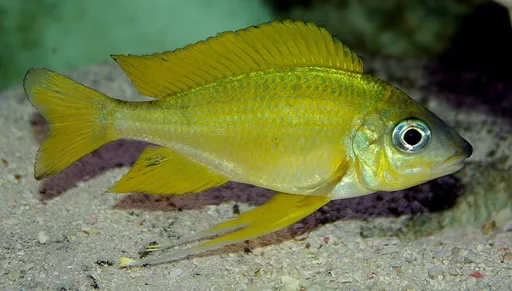
Nasuta featherfin
Ophthalmotilapia nasuta
7.1 in (18 cm) · 79 gal (300 L)
 5.9 in (15 cm)53 gal (200 L)75–82°F (24–28°C)
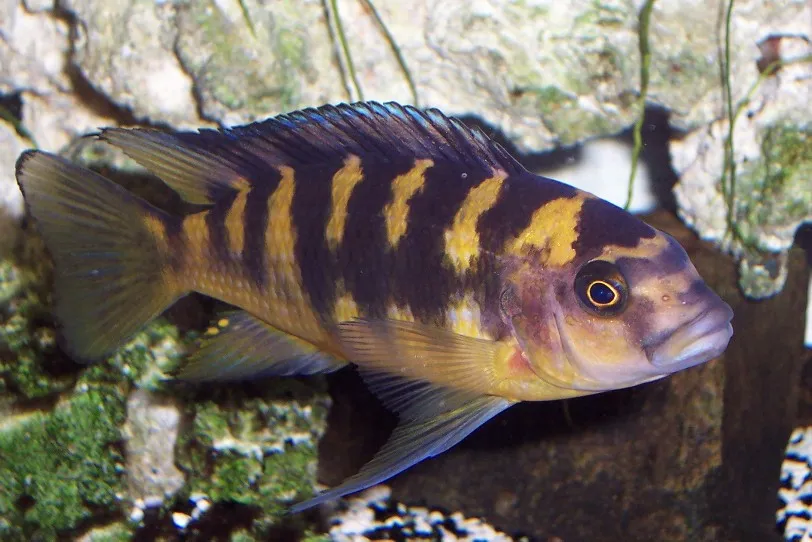
Bumblebee cichlid
Pseudotropheus crabro
5.9 in (15 cm) · 53 gal (200 L)
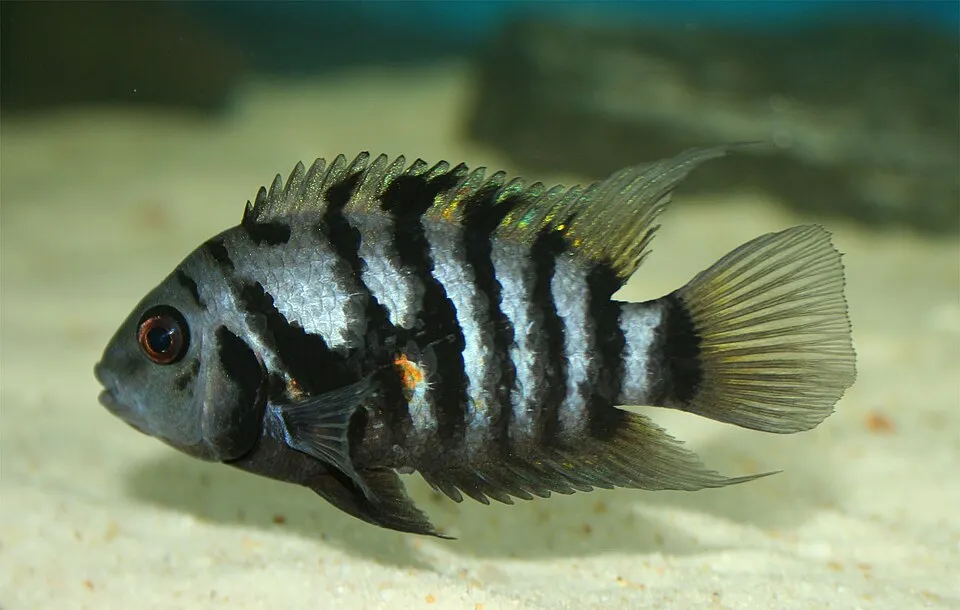 5.9 in (15 cm)25 gal (95 L)75–82°F (24–28°C)
Convict cichlid
Amatitlania nigrofasciata
5.9 in (15 cm) · 25 gal (95 L)
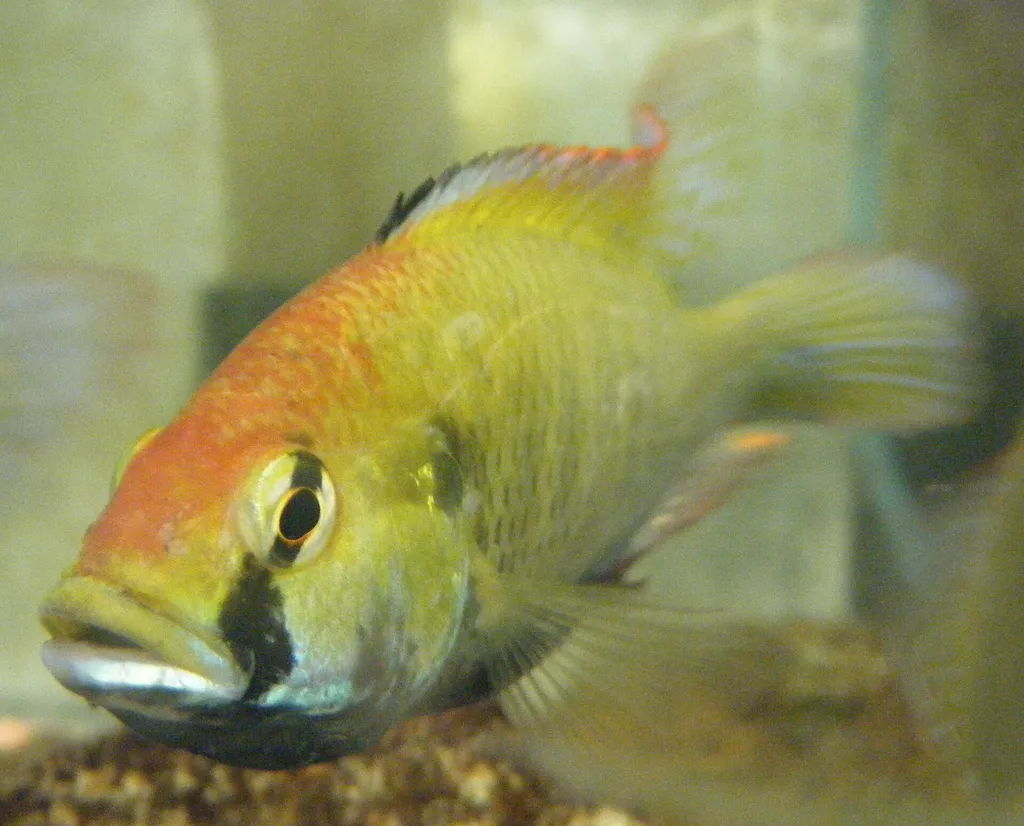 5.9 in (15 cm)66 gal (250 L)73–82°F (23–28°C)
Eastern happy
Astatotilapia calliptera
5.9 in (15 cm) · 66 gal (250 L)
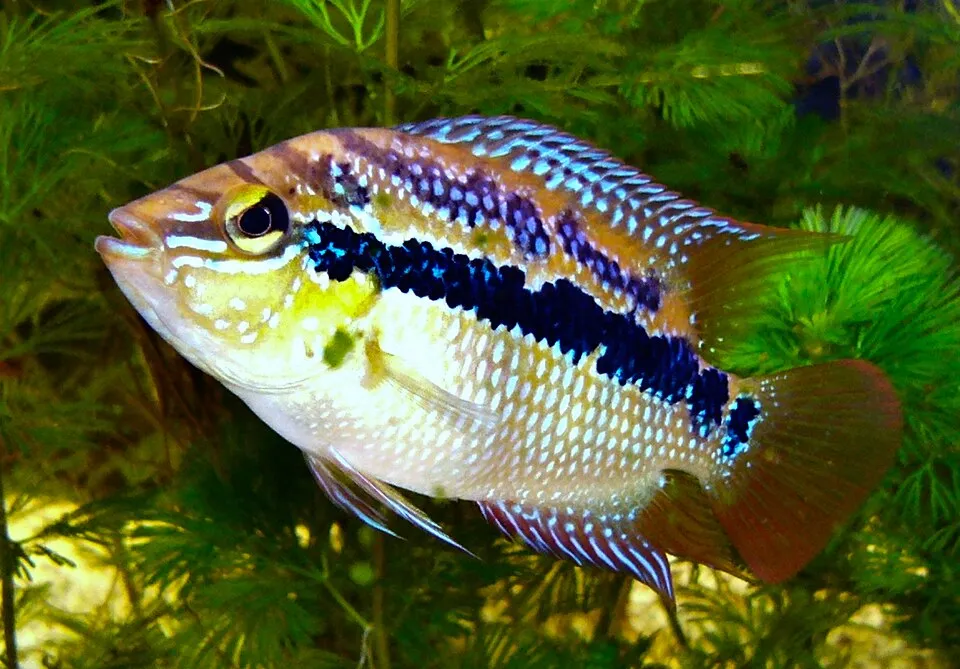 5.9 in (15 cm)26 gal (100 L)72–79°F (22–26°C)
Salvin's cichlid
Trichromis salvini
5.9 in (15 cm) · 26 gal (100 L)