Eastern happy
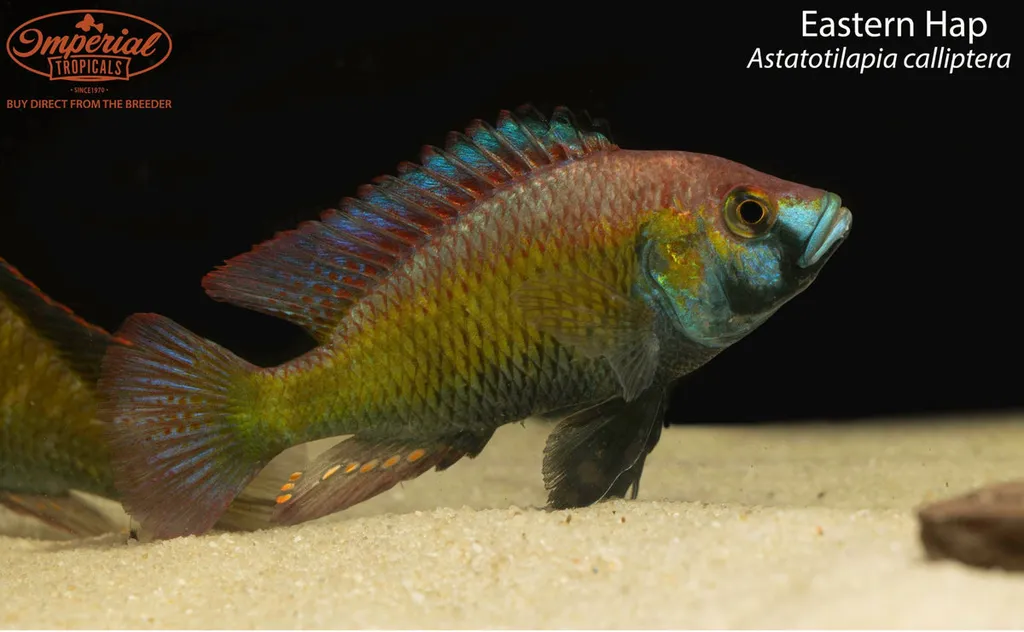
Astatotilapia calliptera
Also known as Eastern river bream, Haplochromis callipterus
FreshwaterFish
Care at a glance
- Temperature
- 73–82°F
- 23–28°C
- pH
- 7.2–8.5
- Adult size
- 5.9 in
- 15 cm
- Minimum tank
- 66 gal
- 250 L
- Temperament
- Aggressive
- Social behavior
- Solitary
- Tankmates
- With caution
- Swim level
- Middle
- Difficulty
- Easy
- Breeding
- Mouthbrooder · Easy
- Rarity
- Rare
- Family
- Cichlidae
- Origin
- Lake Malawi margins and East African rivers
Overview
The eastern happy is a tough, adaptable cichlid for the middle and lower water of a rocky, planted tank. It is an easy fish to keep.
Did you know
The eastern happy sits very close to the ancestor of Lake Malawi's huge cichlid species flock, according to whole-genome studies. A plain, adaptable river fish much like it is thought to have seeded that radiation of hundreds of species. The humble prototype still swims in those rivers today.
Caring for the eastern happy
The eastern happy is unfussy about its surroundings, so a mix of rock, hardy plants and open sand suits it. Give it at least 66 gal (250 L) with open swimming room. Add cover and broken sightlines so females and smaller fish can escape trouble.
Keep the water hard and alkaline, at 73 to 82°F (23 to 28°C) and a pH of 7.2 to 8.5. This generalist forgives a fairly wide range as long as conditions stay clean and stable. It eats almost anything, so feed a broad diet of quality pellets, flake and frozen foods.
Keep a single fish or a pair. If you want to raise fry, keep one male with a few females rather than rival males, which fight. It is quick to claim a patch of the tank, and males are pushy, so choose sturdy, similarly robust tank mates.
Males flash egg-spot markings on the anal fin during courtship. The eastern happy is an easy maternal mouthbrooder that breeds almost on its own. The female carries the eggs and fry in her mouth.
Good to know
The eastern happy, Astatotilapia calliptera, is a haplochromine in the family Cichlidae. It is famous in science as well as the hobby.
In the wild
The eastern happy ranges widely around the Lake Malawi basin and its feeder rivers. It lives in weedy lake margins, sluggish rivers and swamps.
Common questions
What size tank does an eastern happy need?
An eastern happy needs at least 66 gal (250 L). It spends most of its time in the middle.
What temperature and pH does an eastern happy need?
An eastern happy is comfortable at 73–82°F (23–28°C) with a pH of 7.2–8.5.
What does an eastern happy eat?
An eastern happy eats almost anything. A broad diet of quality pellets, flake and frozen foods suits it.
How big does an eastern happy get?
An adult eastern happy reaches about 5.9 in (15 cm).
How can you tell a male eastern happy from a female?
Males are the ones that flash egg-spot markings on the anal fin during courtship.
How does an eastern happy breed?
The eastern happy breeds readily, almost on its own. The female is a mouthbrooder and carries the eggs and fry in her mouth. To raise fry, keep one male with a few females.
Related species
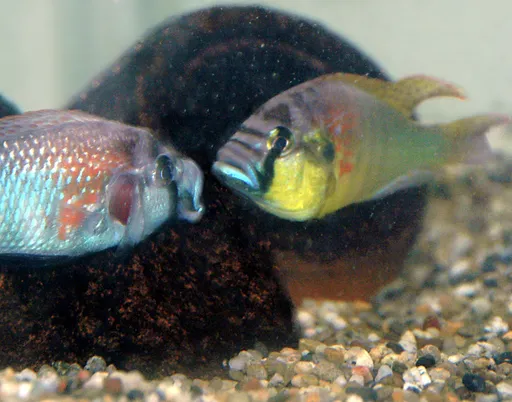 5.1 in (13 cm)53 gal (200 L)75–82°F (24–28°C)
Burton's mouthbrooder
Astatotilapia burtoni
5.1 in (13 cm) · 53 gal (200 L)
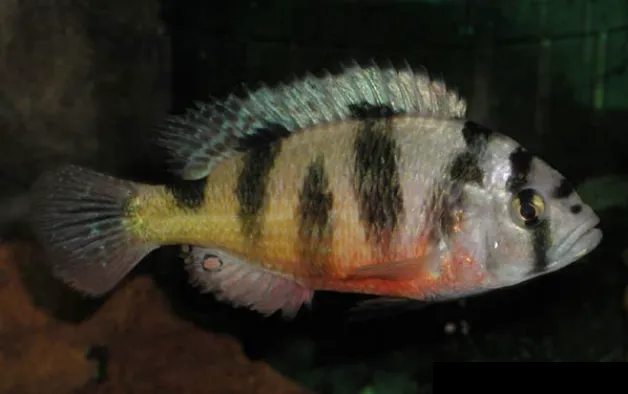 4.9 in (12.5 cm)30 gal (115 L)73–82°F (23–28°C)
Zebra obliquidens
Astatotilapia latifasciata
4.9 in (12.5 cm) · 30 gal (115 L)
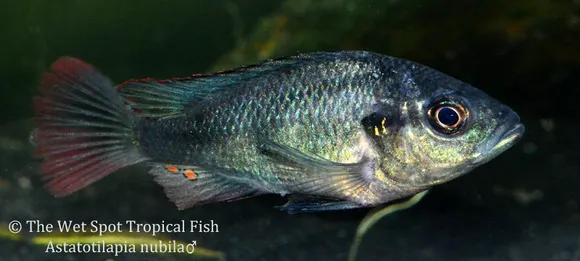 4.3 in (11 cm)53 gal (200 L)73–81°F (23–27°C)
Blue Victoria mouthbrooder
Astatotilapia nubila
4.3 in (11 cm) · 53 gal (200 L)
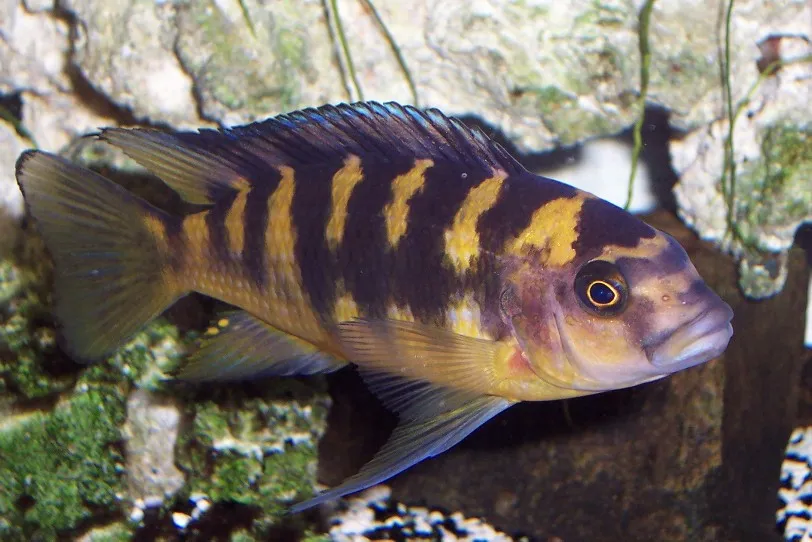 5.9 in (15 cm)53 gal (200 L)75–82°F (24–28°C)
Bumblebee cichlid
Pseudotropheus crabro
5.9 in (15 cm) · 53 gal (200 L)
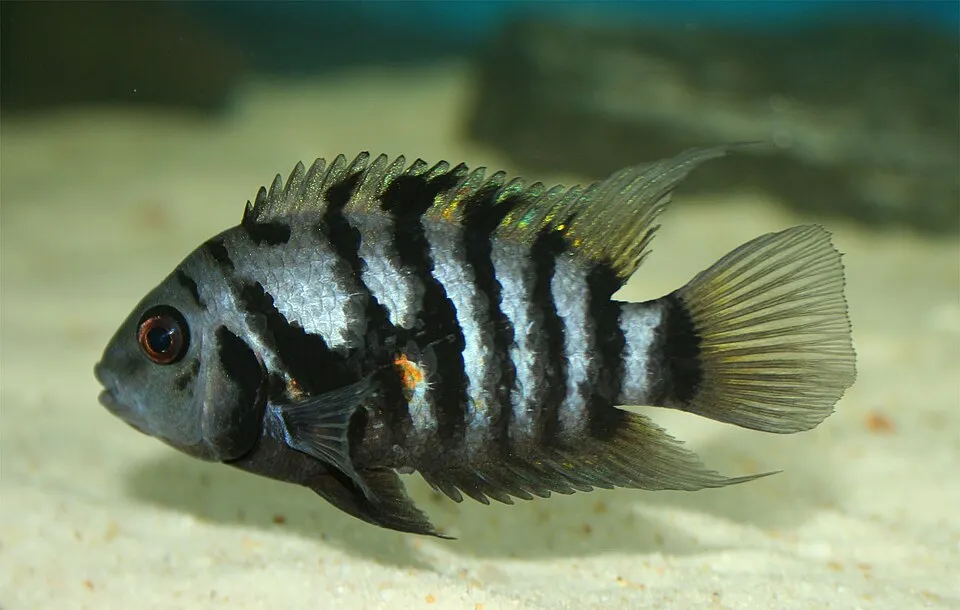 5.9 in (15 cm)25 gal (95 L)75–82°F (24–28°C)
Convict cichlid
Amatitlania nigrofasciata
5.9 in (15 cm) · 25 gal (95 L)
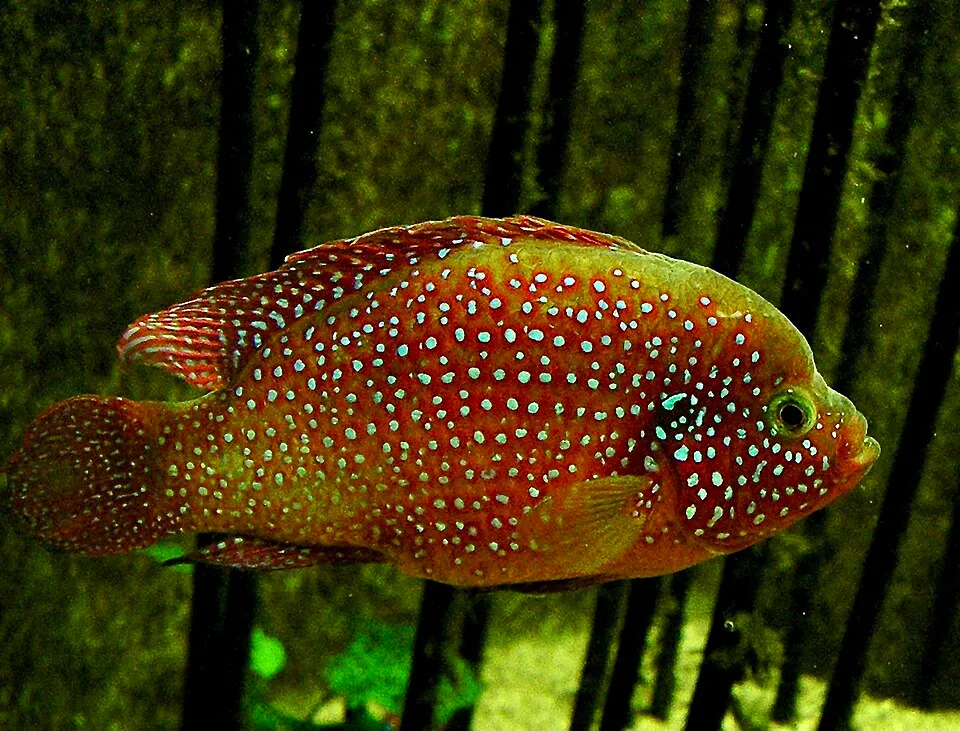 5.9 in (15 cm)30 gal (115 L)72–82°F (22–28°C)
Jewel cichlid
Rubricatochromis bimaculatus
5.9 in (15 cm) · 30 gal (115 L)