Jewel cichlid
Rubricatochromis bimaculatus
Also known as two-spotted jewel cichlid, Hemichromis bimaculatus
FreshwaterFish
Care at a glance
- Temperature
- 72–82°F
- 22–28°C
- pH
- 6.0–7.5
- Adult size
- 5.9 in
- 15 cm
- Minimum tank
- 30 gal
- 115 L
- Temperament
- Aggressive
- Social behavior
- Social
- Tankmates
- With caution
- Swim level
- Middle
- Difficulty
- Medium
- Breeding
- Substrate spawner
- Rarity
- Common
- Family
- Cichlidae
- Origin
- West Africa
Overview
The jewel cichlid is an aggressive cichlid from West Africa that uses the middle and lower water of the tank. It is moderately demanding to keep.
Did you know
When a jewel cichlid pair spawns, both fish flush a deeper, more intense red. They sometimes move the babies around the tank to keep them safe.
Caring for the jewel cichlid
Give a jewel cichlid at least 30 gal (115 L), with sand, some rockwork and flat stones for spawning. It likes to dig, so use sturdy or potted plants.
Keep the water at 72 to 82°F (22 to 28°C) and a pH of 6.0 to 7.5. Feed a quality cichlid pellet plus frozen or live bloodworms and brine shrimp.
The jewel cichlid is aggressive, especially around breeding, and it will claim and defend a territory. Plan for a pair in their own tank, or a setup with tough, similarly sized tank mates and lots of broken sightlines.
It is a substrate spawner. A pair lays its eggs on a cleaned flat surface, and both parents guard the eggs and fry hard. A bonded pair can be brutal toward anything that nears the nest.
Good to know
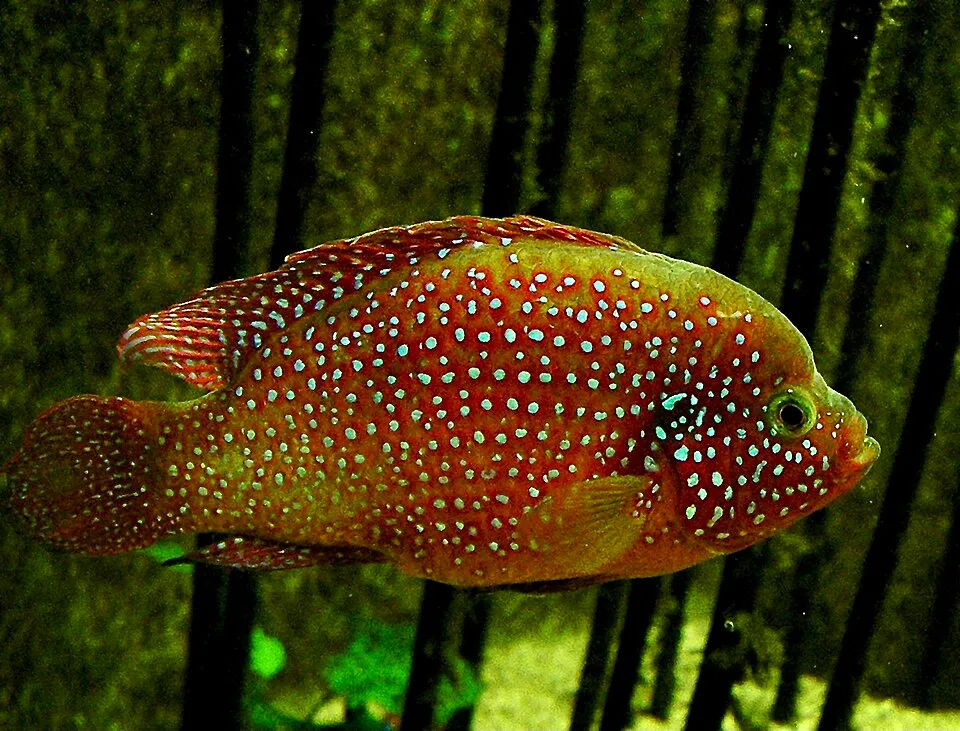
Rubricatochromis bimaculatus, long sold as Hemichromis bimaculatus, is a cichlid in the family Cichlidae. It is red-bodied and covered in light spangles, with dark spots along the side that give it its name. It is listed as Least Concern in the wild.
In the wild
The jewel cichlid lives in rivers and streams across West Africa, in slow water over sand or mud with plenty of plant cover. The water there is warm and runs from slightly acidic to neutral.
From published sources
Tank mates
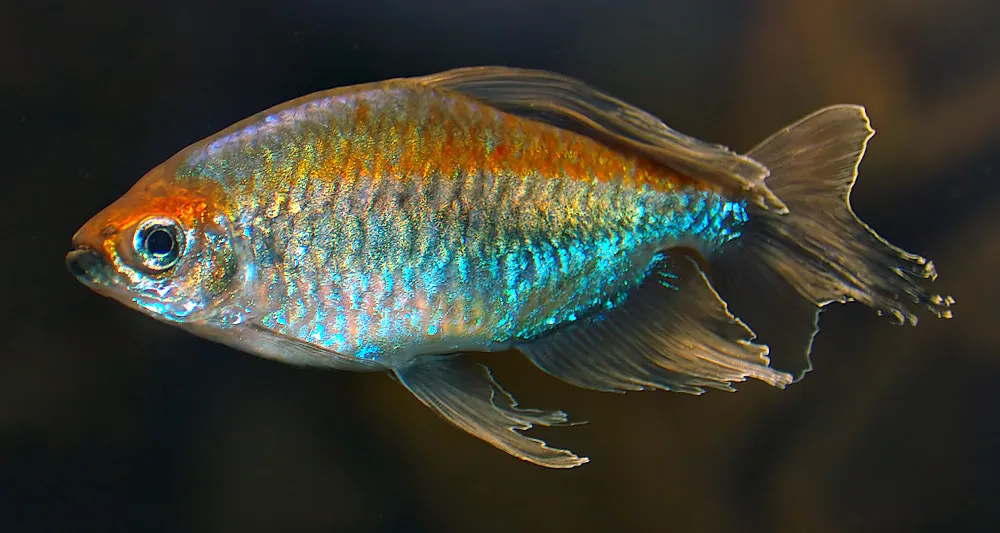
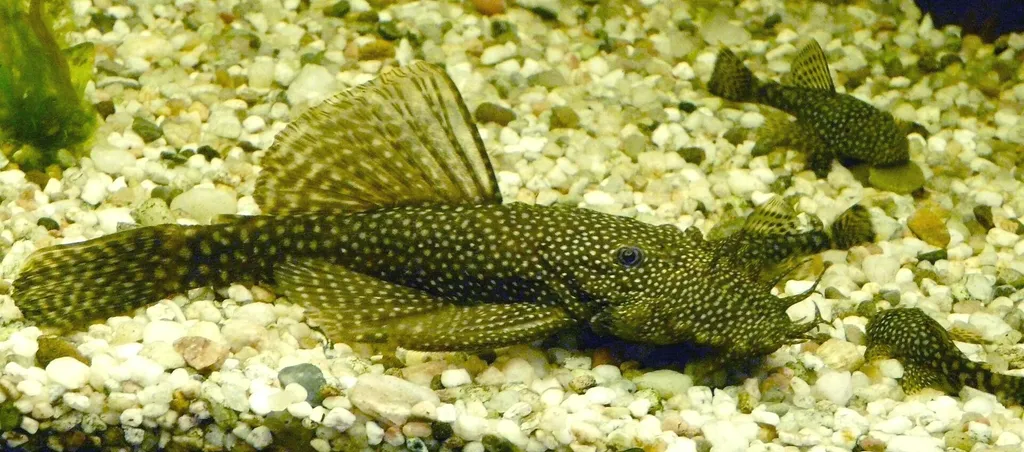
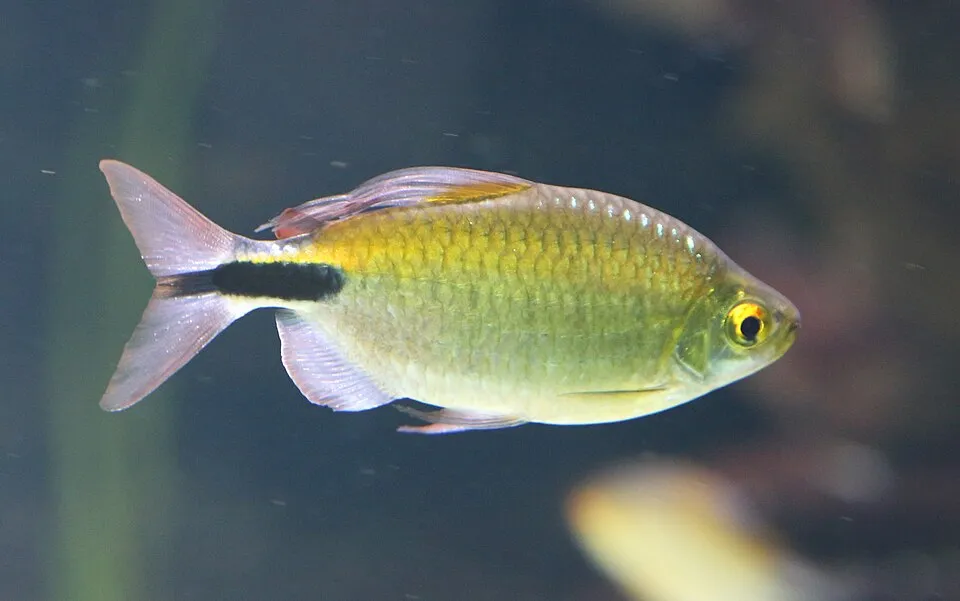
Each fish here is named as a tank mate for the jewel cichlid by at least two published care guides. Fishkeeping World, Aquarium Source and Fishkeeper (Maidenhead Aquatics) recommend keeping it on its own instead. A spawning pair turns on its tank mates, so be ready to move them.
Sources: Seriously Fish, Fishkeeper (Maidenhead Aquatics), Fishkeeping World.
Common questions
What size tank does a jewel cichlid need?
A jewel cichlid needs at least 30 gal (115 L). It spends most of its time in the middle.
What temperature and pH does a jewel cichlid need?
A jewel cichlid is comfortable at 72–82°F (22–28°C) with a pH of 6.0–7.5.
What does a jewel cichlid eat?
A jewel cichlid eats a quality cichlid pellet, plus frozen or live bloodworms and brine shrimp.
How big does a jewel cichlid get?
An adult jewel cichlid reaches about 5.9 in (15 cm).
How does a jewel cichlid breed?
A jewel cichlid pair lays its eggs on a cleaned flat surface. Both parents guard the eggs and fry hard, and a bonded pair can be brutal toward anything that nears the nest.
What fish can live with the jewel cichlid?
Published care guides name Congo tetra, bristlenose pleco and long-fin tetra. A spawning pair turns on its tank mates, so be ready to move them.
Related species
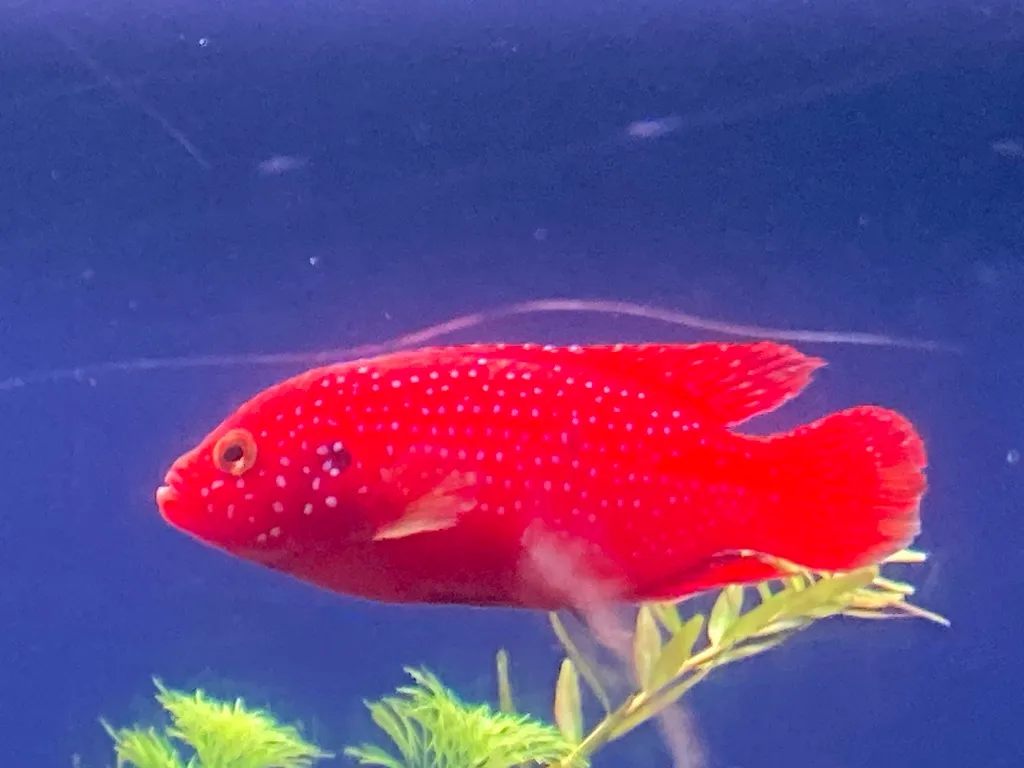 5.5 in (14 cm)66 gal (250 L)73–81°F (23–27°C)
Common jewel cichlid
Rubricatochromis guttatus
5.5 in (14 cm) · 66 gal (250 L)
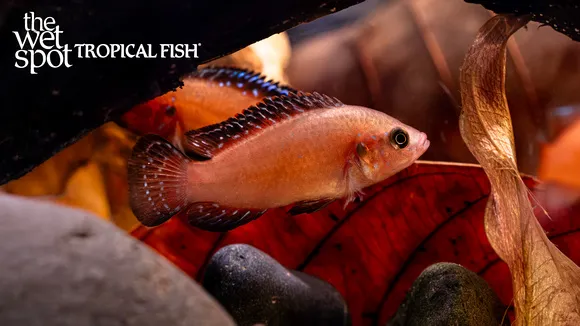 5.5 in (14 cm)66 gal (250 L)73–81°F (23–27°C)
Turkana jewel cichlid
Rubricatochromis guttatus
5.5 in (14 cm) · 66 gal (250 L)
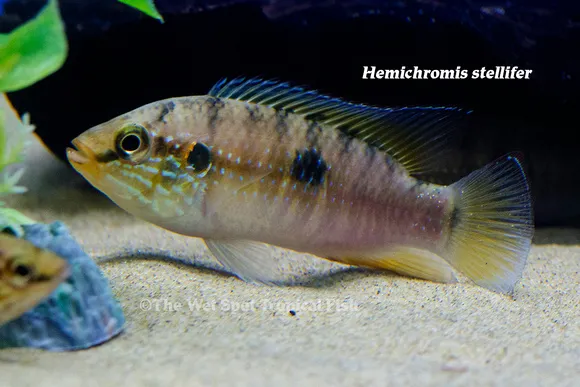 4.7 in (12 cm)18 gal (70 L)73–81°F (23–27°C)
Star jewel cichlid
Rubricatochromis stellifer
4.7 in (12 cm) · 18 gal (70 L)
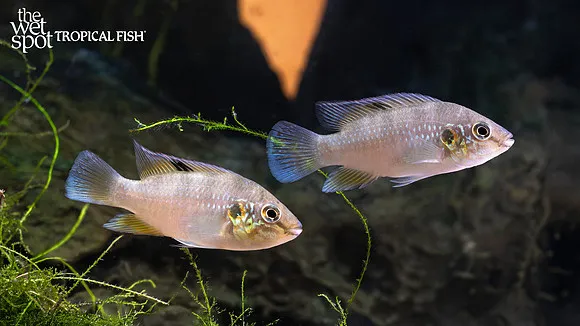 3.5 in (9 cm)53 gal (200 L)73–81°F (23–27°C)
Cherry-belly jewel cichlid
Rubricatochromis cerasogaster
3.5 in (9 cm) · 53 gal (200 L)
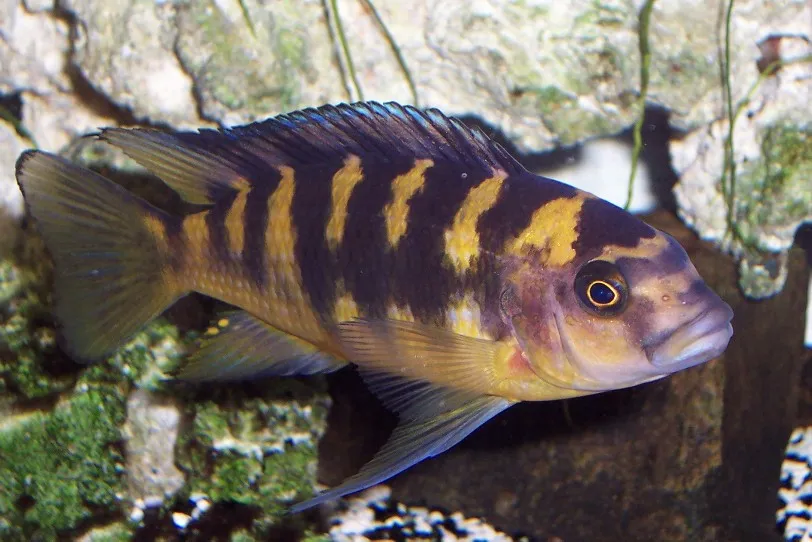 5.9 in (15 cm)53 gal (200 L)75–82°F (24–28°C)
Bumblebee cichlid
Pseudotropheus crabro
5.9 in (15 cm) · 53 gal (200 L)
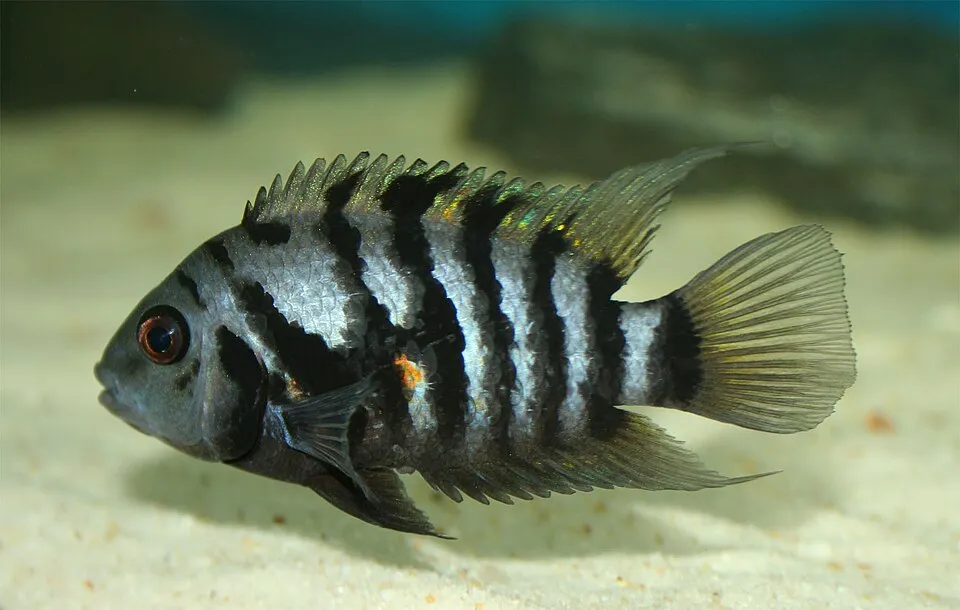 5.9 in (15 cm)25 gal (95 L)75–82°F (24–28°C)
Convict cichlid
Amatitlania nigrofasciata
5.9 in (15 cm) · 25 gal (95 L)