One species · 1 form
Star jewel cichlid
Rubricatochromis stellifer
Also known as Hemichromis stellifer, Nioki jewel
FreshwaterFish
Care at a glance
- Temperature
- 73–81°F
- 23–27°C
- pH
- 6.0–7.5
- Adult size
- 4.7 in
- 12 cm
- Minimum tank
- 18 gal
- 70 L
- Temperament
- Aggressive
- Social behavior
- Solitary
- Tankmates
- With caution
- Swim level
- Bottom
- Difficulty
- Medium
- Breeding
- Substrate spawner · Medium
- Rarity
- Rare
- Family
- Cichlidae
- Origin
- Central Congo basin
Pick a form
One setup covers the star jewel and its blood-red form, since they are one species.

Overview
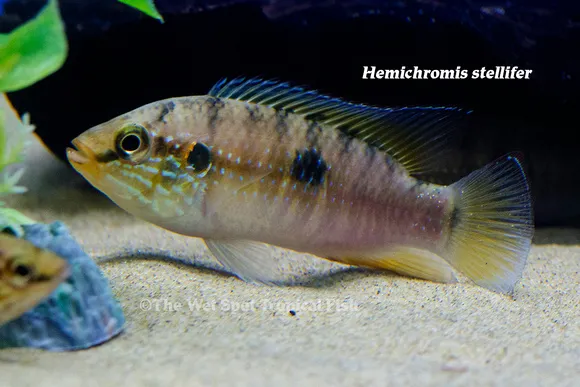
The star jewel cichlid is a territorial red jewel cichlid from the Congo basin, best kept as a pair. It suits a keeper with a little experience.
Did you know
The star jewel cichlid's species name, stellifer, means star-bearing. Each flank is dusted with iridescent blue-green flecks over a deep wine-red ground. A bonded, breeding pair looks like a patch of night sky laid over red.
Caring for the star jewel cichlid
Keep star jewel cichlids as a single bonded pair in at least 18 gal (70 L), and more space eases their temper. They spend their time near the bottom around cover. Give them a dark floor, roots, leaf litter and some planting, with flat stones and caves for spawning.
Soft water from acidic to about neutral suits them, at 73 to 81°F (23 to 27°C) and a pH of 6.0 to 7.5. Feed a varied diet of frozen and prepared foods.
The star jewel cichlid turns intensely territorial, especially when spawning. A pair will hold a Congo tank against much larger fish, so choose only robust tank mates or keep the pair on its own.
Star jewel cichlids are pair-bonding substrate spawners, and both parents share the brood care. Breeding them is of medium difficulty.
The blood-red jewel was sold for decades as Hemichromis lifalili, a species described in 1979. It is now treated as the same species as the star jewel cichlid, Rubricatochromis stellifer. Shops still use both names, so a fish sold as lifalili is this species.
Good to know
The star jewel cichlid belongs to the family Cichlidae. It was recently moved out of Hemichromis into Rubricatochromis, the new genus of red jewel cichlids.
In the wild
The star jewel cichlid comes from backwaters and forest streams of the central Congo basin. The water there is warm and soft.
Common questions
What size tank does a star jewel cichlid need?
A star jewel cichlid needs at least 18 gal (70 L). It spends most of its time in the bottom.
What temperature and pH does a star jewel cichlid need?
A star jewel cichlid is comfortable at 73–81°F (23–27°C) with a pH of 6.0–7.5.
What does a star jewel cichlid eat?
A star jewel cichlid eats a varied diet of frozen and prepared foods.
How big does a star jewel cichlid get?
An adult star jewel cichlid reaches about 4.7 in (12 cm).
How does a star jewel cichlid breed?
Star jewel cichlids form pairs and spawn on a substrate, with both parents sharing the brood care. Breeding them is of medium difficulty.
Related species
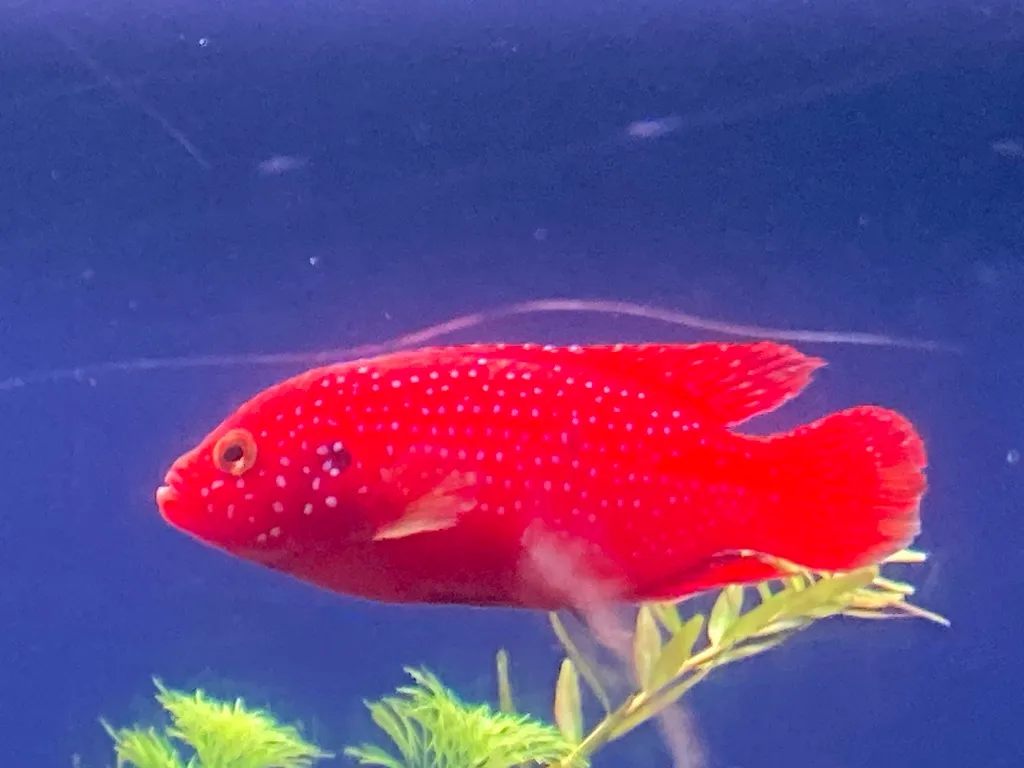 5.5 in (14 cm)66 gal (250 L)73–81°F (23–27°C)
Common jewel cichlid
Rubricatochromis guttatus
5.5 in (14 cm) · 66 gal (250 L)
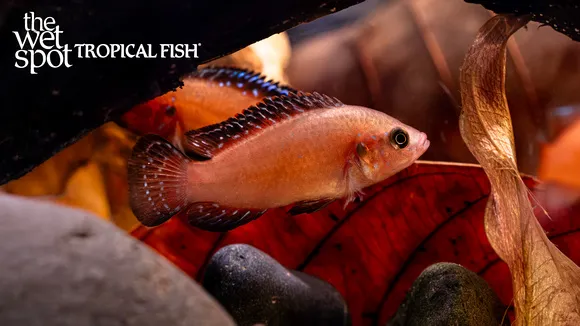 5.5 in (14 cm)66 gal (250 L)73–81°F (23–27°C)
Turkana jewel cichlid
Rubricatochromis guttatus
5.5 in (14 cm) · 66 gal (250 L)
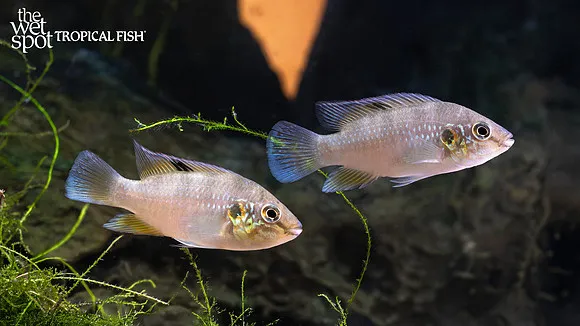 3.5 in (9 cm)53 gal (200 L)73–81°F (23–27°C)
Cherry-belly jewel cichlid
Rubricatochromis cerasogaster
3.5 in (9 cm) · 53 gal (200 L)
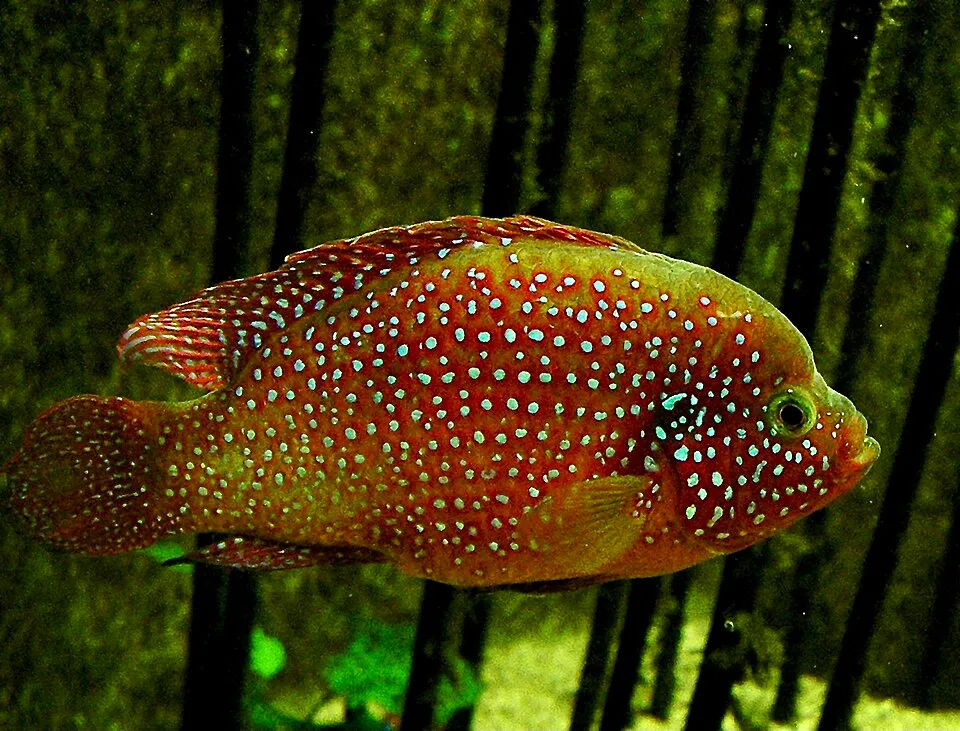 5.9 in (15 cm)30 gal (115 L)72–82°F (22–28°C)
Jewel cichlid
Rubricatochromis bimaculatus
5.9 in (15 cm) · 30 gal (115 L)
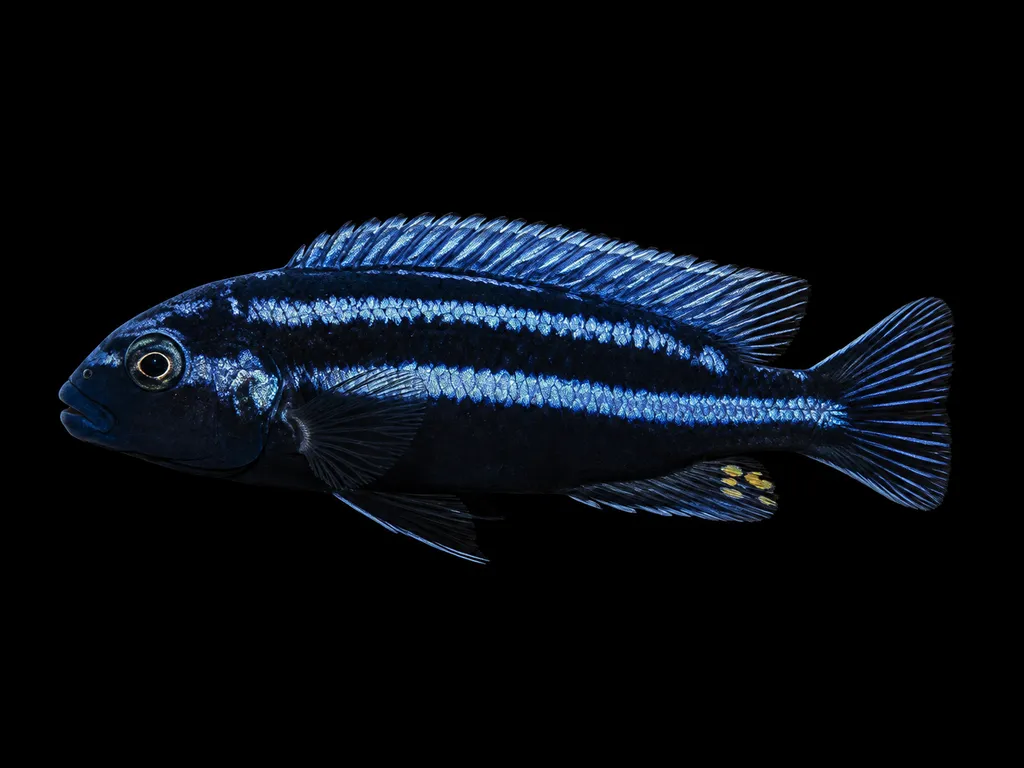 4.7 in (12 cm)66 gal (250 L)75–82°F (24–28°C)
Deepwater melanochromis
Melanochromis heterochromis
4.7 in (12 cm) · 66 gal (250 L)
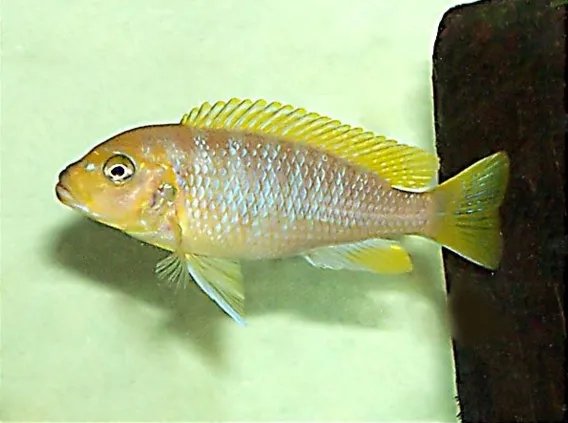 4.7 in (12 cm)66 gal (250 L)75–82°F (24–28°C)
Mayland's zebra
Maylandia hajomaylandi
4.7 in (12 cm) · 66 gal (250 L)