One species · 1 form
Common jewel cichlid
Rubricatochromis guttatus
Also known as Hemichromis guttatus, Red jewel cichlid guttatus
FreshwaterFish
Care at a glance
- Temperature
- 73–81°F
- 23–27°C
- pH
- 6.5–7.8
- Adult size
- 5.5 in
- 14 cm
- Minimum tank
- 66 gal
- 250 L
- Temperament
- Aggressive
- Social behavior
- Solitary
- Tankmates
- With caution
- Swim level
- Bottom
- Diet
- Omnivore
- Difficulty
- Medium
- Breeding
- Substrate spawner · Medium
- Rarity
- Rare
- Family
- Cichlidae
- Origin
- Coastal West Africa
Pick a form
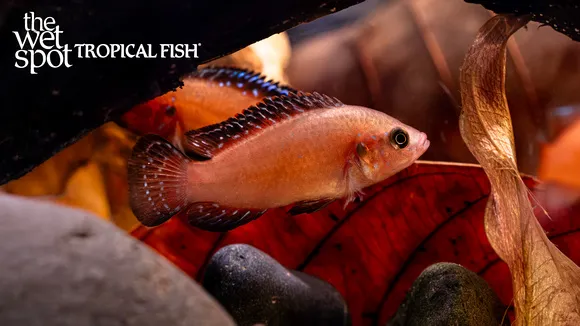
One setup covers both, except that the Turkana form comes from alkaline water and wants a pH of 7.0 to 8.5.
Overview
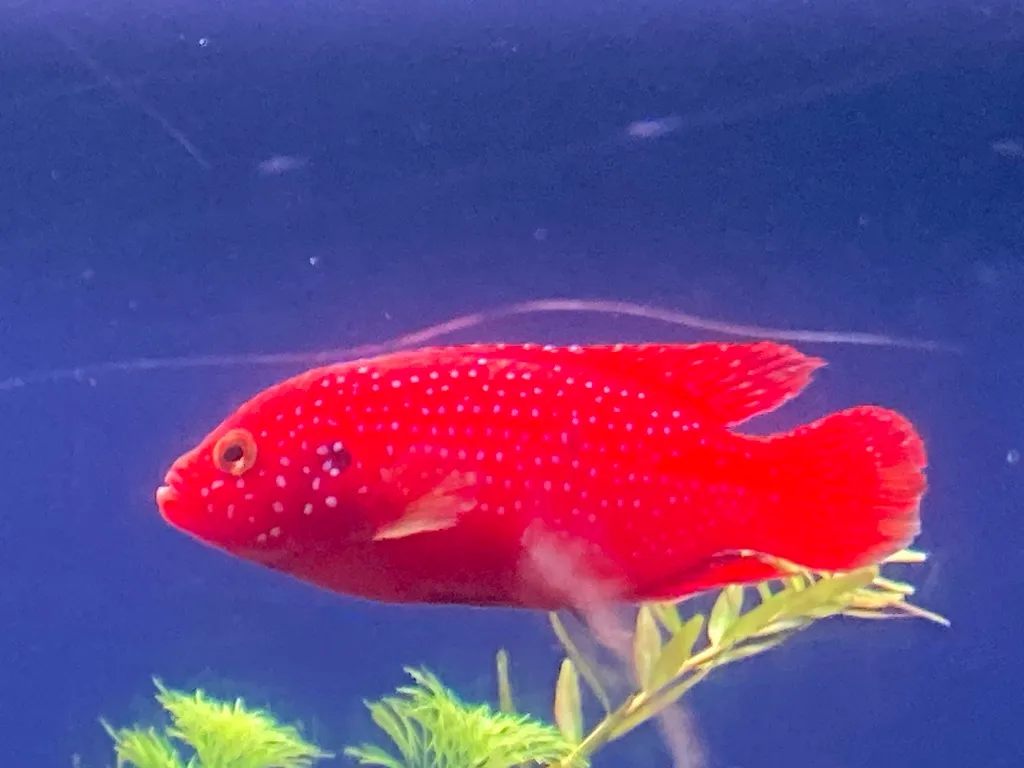
The common jewel cichlid is the familiar red jewel, tough, brightly colored and famously bad-tempered. It lives near the bottom and suits a keeper with some experience.
Did you know
Most jewel cichlids in the trade were sold as Hemichromis bimaculatus for over a century, but the true bimaculatus is rare in aquariums. The everyday red jewel that generations of keepers have owned is almost always this species, guttatus, wearing a borrowed name.
Caring for the common jewel cichlid
Give a pair of common jewel cichlids at least 66 gal (250 L), with a sandy floor they can dig. Add driftwood and rock for cover and flat stones as spawning sites, arranged to break up territory. Use robust plants attached to wood, since a working pair tends to uproot loose or delicate plants.
It is not fussy about water chemistry. Keep it at 73 to 81°F (23 to 27°C) with a pH of 6.5 to 7.8. Feed meaty frozen foods and pellets, with a little vegetable matter.
Keep a single fish or a bonded pair. It is especially bad-tempered once it pairs off and breeds, and the pair will claim and defend a large part of the bottom. It digs pits and rearranges things as it goes. It is too aggressive for most community fish, so choose tank mates with real care or keep a species-only pair.
It is a substrate spawner, and both parents guard the eggs and fry. Breeding it is moderately hard.
The Turkana jewel was described as a species of its own in 1933 and was long listed as Hemichromis exsul. It is now treated as a population of the common jewel cichlid that lives in Lake Turkana, a warm soda lake in northern Kenya. The fish look and behave like the West African jewels, but they come from much harder, more alkaline water.
Good to know
The common jewel cichlid, Rubricatochromis guttatus, belongs to the family Cichlidae. The species name guttatus means spotted or speckled, for the fine iridescent blue dots scattered over its red body. A 2022 revision moved the jewel cichlids from Hemichromis into Rubricatochromis.
In the wild
The common jewel cichlid ranges across the lowland waters of coastal West Africa. It is famously adaptable and turns up in a wide range of conditions.
Common questions
What size tank does a common jewel cichlid need?
A common jewel cichlid needs at least 66 gal (250 L). It spends most of its time in the bottom.
What temperature and pH does a common jewel cichlid need?
A common jewel cichlid is comfortable at 73–81°F (23–27°C) with a pH of 6.5–7.8.
What does a common jewel cichlid eat?
A common jewel cichlid eats meaty frozen foods and pellets, with a little vegetable matter.
How big does a common jewel cichlid get?
An adult common jewel cichlid reaches about 5.5 in (14 cm).
How does a common jewel cichlid breed?
A common jewel cichlid is a substrate spawner that uses flat stones as spawning sites. Both parents guard the eggs and fry. Breeding it is moderately hard.
Related species
 4.7 in (12 cm)18 gal (70 L)73–81°F (23–27°C)
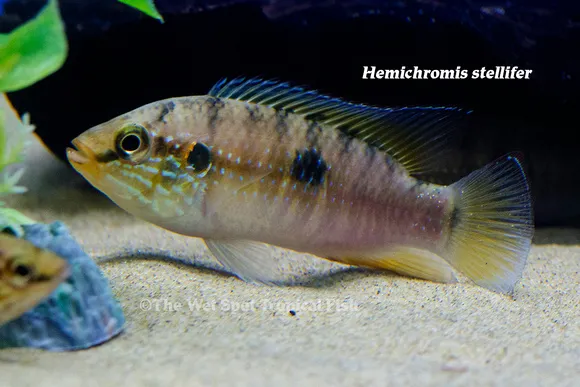
Star jewel cichlid
Rubricatochromis stellifer
4.7 in (12 cm) · 18 gal (70 L)
 3.5 in (9 cm)53 gal (200 L)73–81°F (23–27°C)
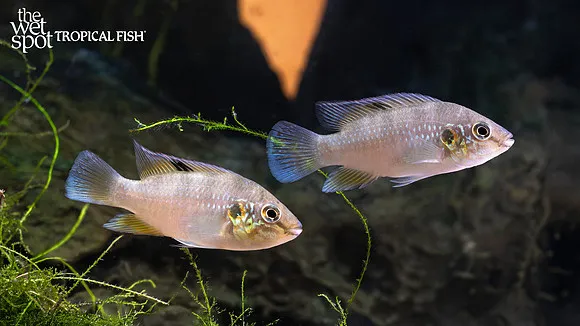
Cherry-belly jewel cichlid
Rubricatochromis cerasogaster
3.5 in (9 cm) · 53 gal (200 L)
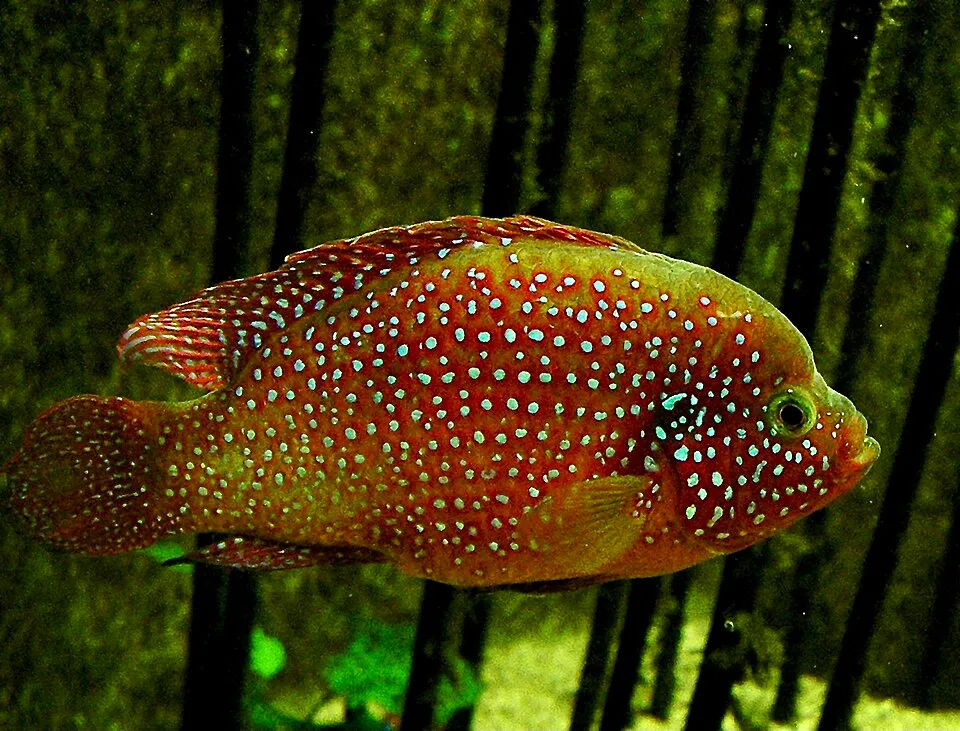 5.9 in (15 cm)30 gal (115 L)72–82°F (22–28°C)
Jewel cichlid
Rubricatochromis bimaculatus
5.9 in (15 cm) · 30 gal (115 L)
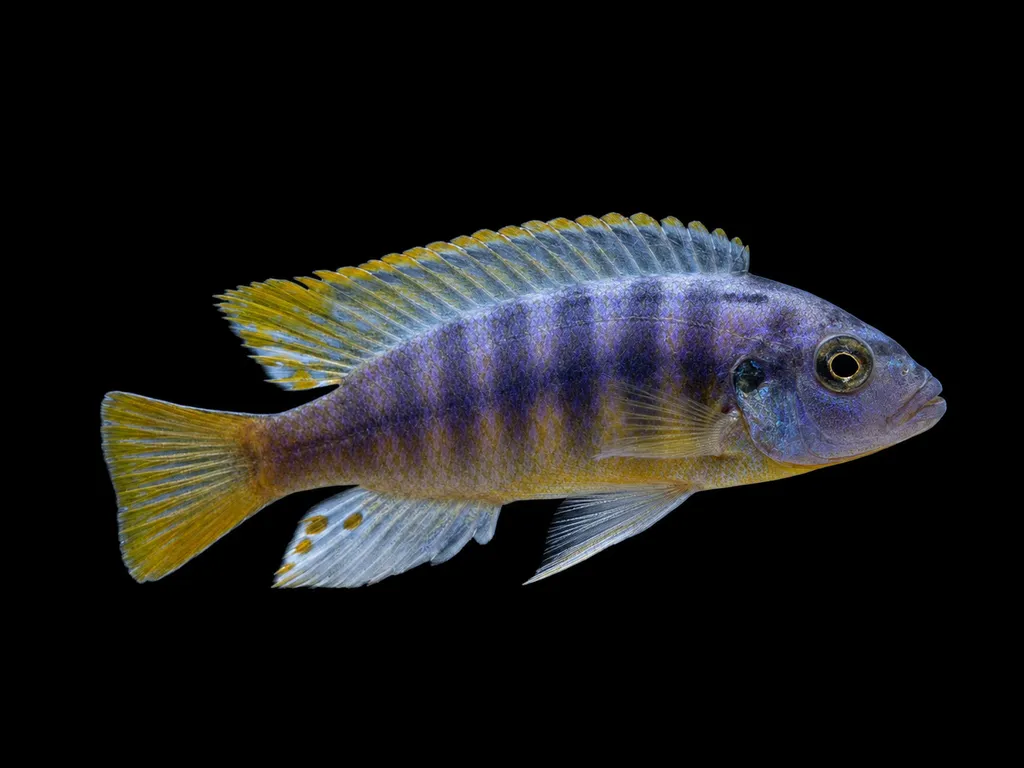 5.5 in (14 cm)79 gal (300 L)75–82°F (24–28°C)
Dwarf petrotilapia
Petrotilapia microgalana
5.5 in (14 cm) · 79 gal (300 L)
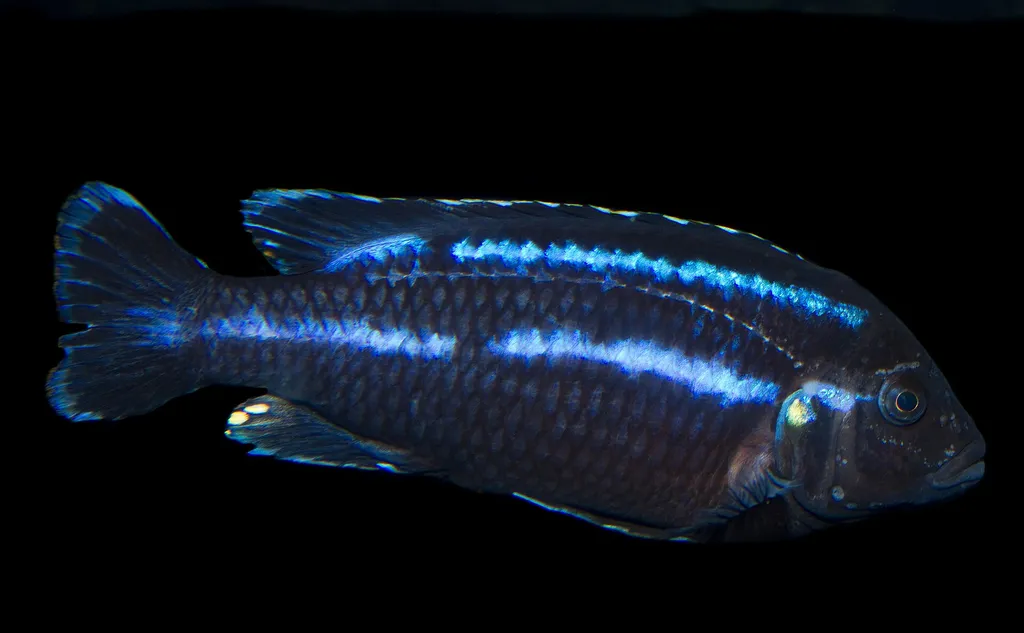 5.5 in (14 cm)66 gal (250 L)75–82°F (24–28°C)
Loria's melanochromis
Melanochromis loriae
5.5 in (14 cm) · 66 gal (250 L)
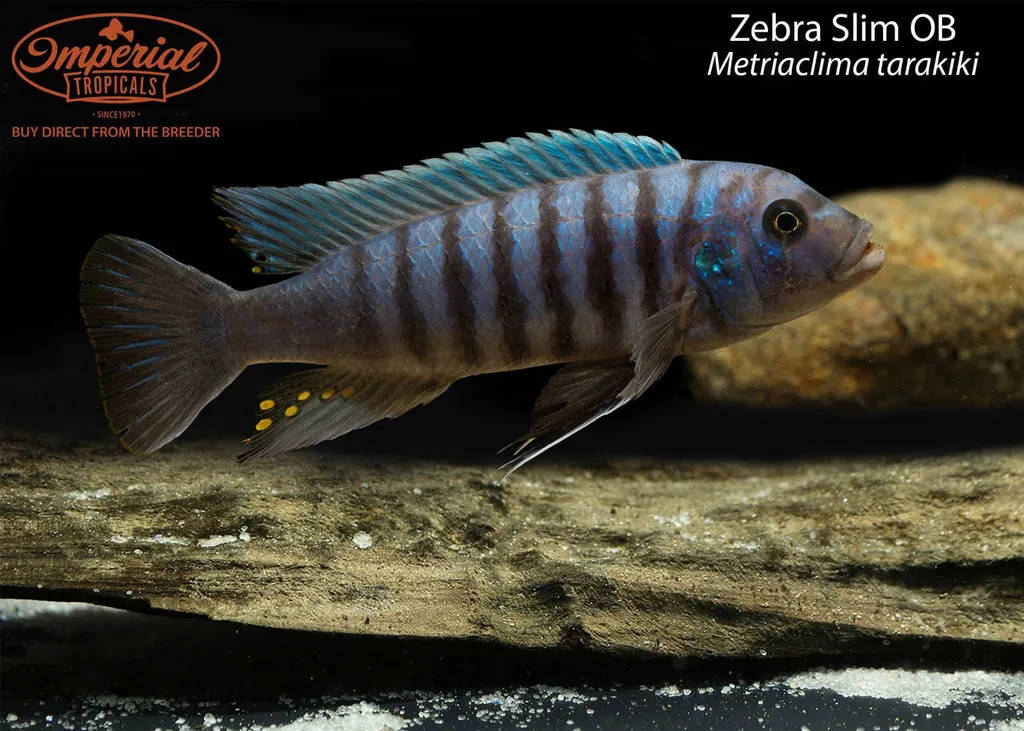 5.5 in (14 cm)66 gal (250 L)75–82°F (24–28°C)
Slim zebra
Maylandia tarakiki
5.5 in (14 cm) · 66 gal (250 L)