Form of Common jewel cichlid
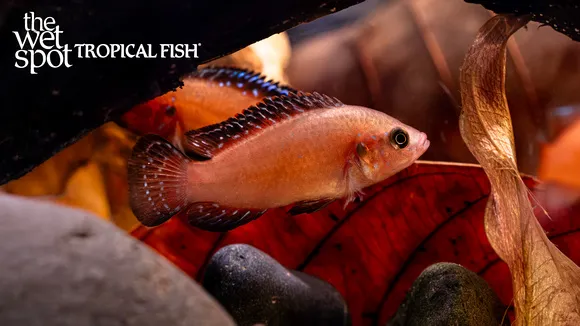
Turkana jewel cichlid
Rubricatochromis guttatus
The named form of Rubricatochromis guttatus · See the species →
Also known as Hemichromis exsul, Lake Turkana jewel, Rubricatochromis exsul, Pelmatochromis exsul
FreshwaterFish
Care at a glance
- Temperature
- 73–81°F
- 23–27°C
- pH
- 7.0–8.5
- Adult size
- 5.5 in
- 14 cm
- Minimum tank
- 66 gal
- 250 L
- Temperament
- Aggressive
- Social behavior
- Solitary
- Tankmates
- With caution
- Swim level
- Bottom
- Diet
- Omnivore
- Difficulty
- Medium
- Breeding
- Substrate spawner · Medium
- Rarity
- Common
- Family
- Cichlidae
- Origin
- Lake Turkana, Kenya
Overview
The Turkana jewel cichlid suits hard, alkaline water, which is unusual for a jewel cichlid. It is a step up from the easiest fish.
Did you know
Lake Turkana has no outlet, so the Turkana jewel cichlid lives there as an isolated colony in the world's largest desert lake.
Caring for the Turkana jewel cichlid
Keep a pair of Turkana jewel cichlids in at least 66 gal (250 L), with caves, wood and clear territory lines. Give the tank enough footprint to have a far corner. Add a sandy floor they can dig, flat stones as spawning sites, and robust plants attached to wood.
Keep the water hard and alkaline, at 73 to 81°F (23 to 27°C) and a pH of 7.0 to 8.5. That is harder and more alkaline than the West African jewels most keepers know. Feed frozen and prepared meaty foods with some vegetable content.
Like other jewels, they are civil until they spawn, then hold a large perimeter aggressively. Choose tank mates that can stand up for themselves. A working pair digs pits, rearranges things and tends to uproot loose or delicate plants.
It is a substrate spawner and a committed parent, and both parents guard the eggs and fry. Breeding takes a little experience.
Good to know
The Turkana jewel cichlid was described as a species of its own in 1933 and was long listed as Hemichromis exsul. It is now treated as a population of the common jewel cichlid, Rubricatochromis guttatus. It carries the red body and blue spangling of the jewel cichlids. The old name exsul means the exile, for a jewel isolated in a soda lake far from the West African jewels.
In the wild
The Turkana jewel cichlid lives in Lake Turkana in northern Kenya, and in the rivers feeding it. The lake is warm, alkaline and turbid.
Common questions
Is a Turkana jewel cichlid a different species from the common jewel cichlid?
No. A Turkana jewel cichlid is a form of the common jewel cichlid, Rubricatochromis guttatus. It is kept the same way apart from pH.
What size tank does a Turkana jewel cichlid need?
A Turkana jewel cichlid needs at least 66 gal (250 L). It spends most of its time in the bottom.
What does a Turkana jewel cichlid eat?
A Turkana jewel cichlid eats frozen and prepared meaty foods with some vegetable content.
How big does a Turkana jewel cichlid get?
An adult Turkana jewel cichlid reaches about 5.5 in (14 cm).
How does a Turkana jewel cichlid breed?
A Turkana jewel cichlid is a substrate spawner and a committed parent. Both parents guard the eggs and fry. Breeding takes a little experience.
Related species
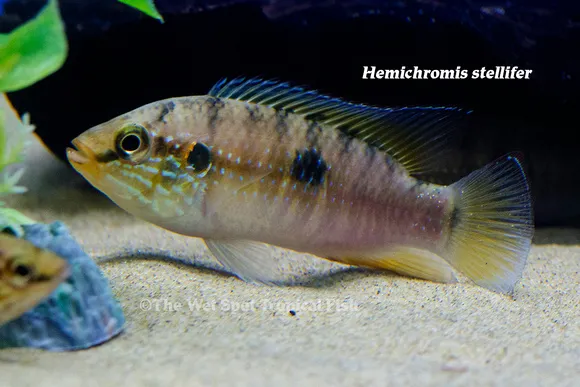 4.7 in (12 cm)18 gal (70 L)73–81°F (23–27°C)
Star jewel cichlid
Rubricatochromis stellifer
4.7 in (12 cm) · 18 gal (70 L)
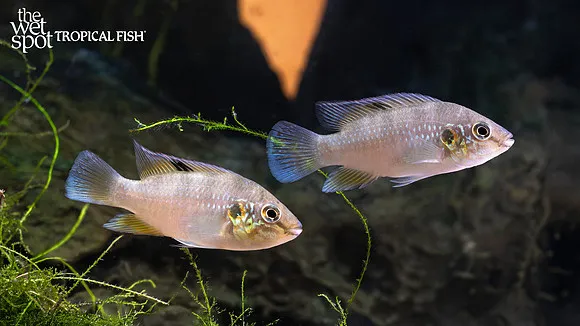 3.5 in (9 cm)53 gal (200 L)73–81°F (23–27°C)
Cherry-belly jewel cichlid
Rubricatochromis cerasogaster
3.5 in (9 cm) · 53 gal (200 L)
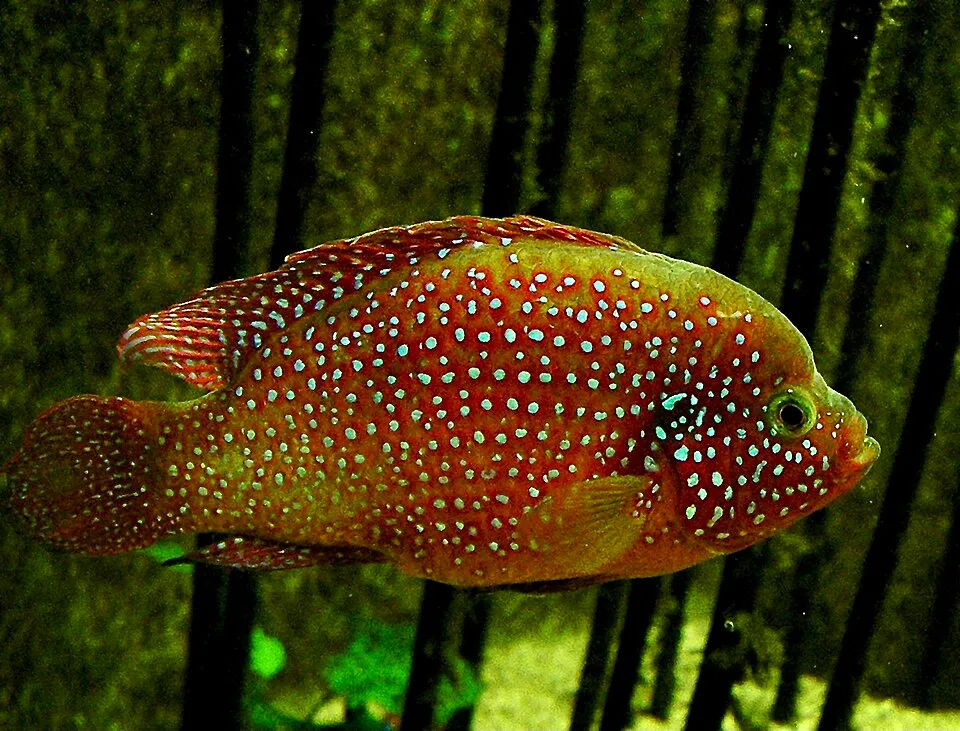 5.9 in (15 cm)30 gal (115 L)72–82°F (22–28°C)
Jewel cichlid
Rubricatochromis bimaculatus
5.9 in (15 cm) · 30 gal (115 L)
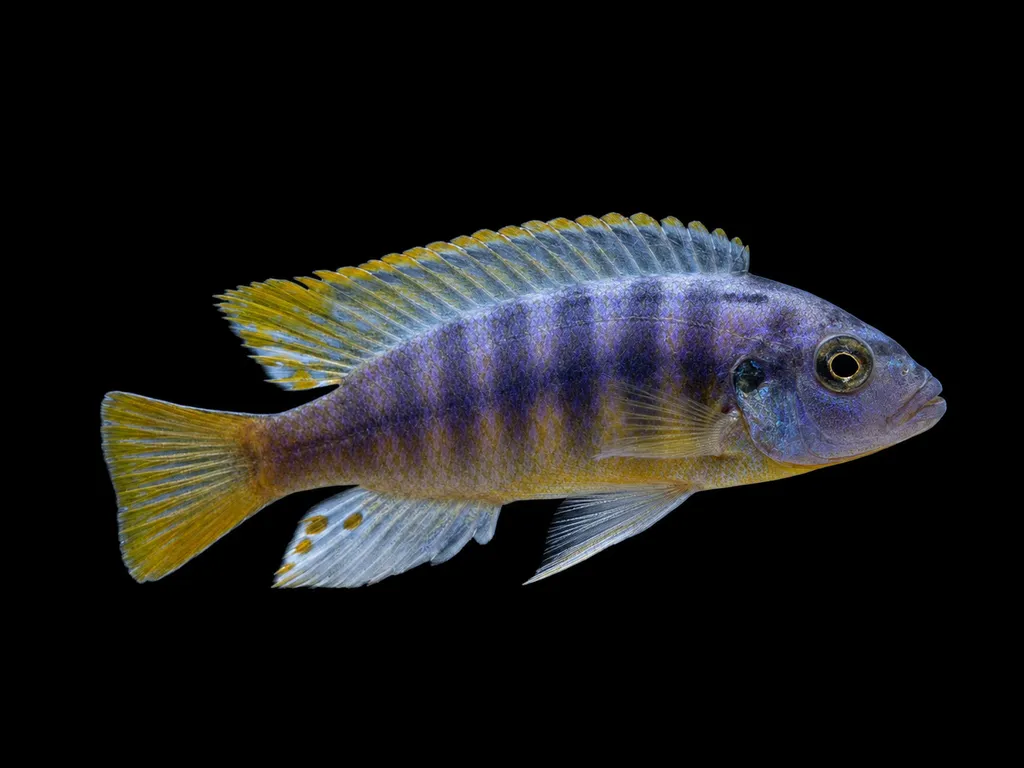 5.5 in (14 cm)79 gal (300 L)75–82°F (24–28°C)
Dwarf petrotilapia
Petrotilapia microgalana
5.5 in (14 cm) · 79 gal (300 L)
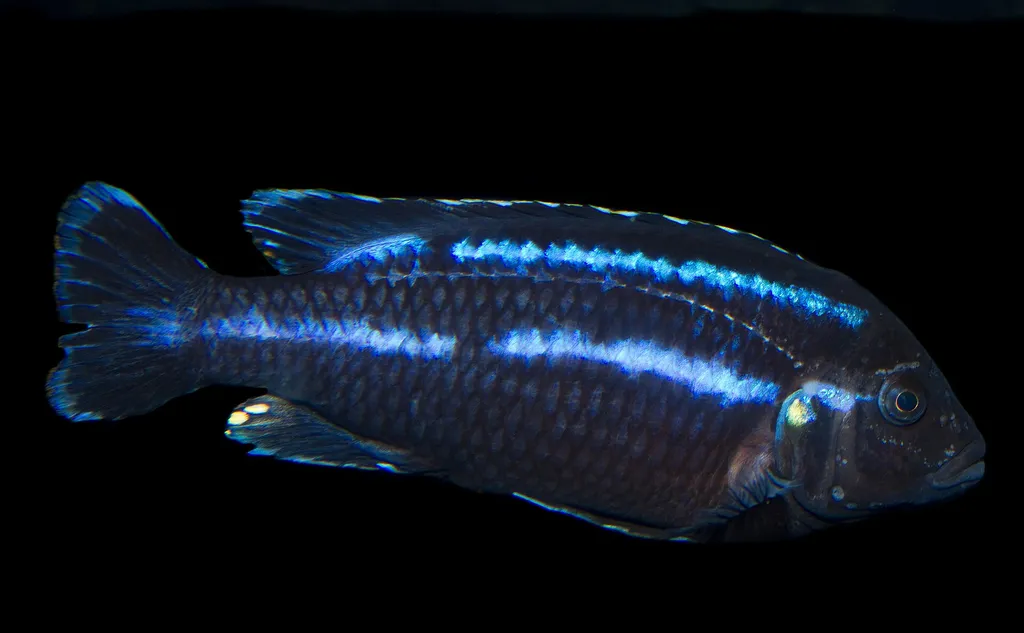 5.5 in (14 cm)66 gal (250 L)75–82°F (24–28°C)
Loria's melanochromis
Melanochromis loriae
5.5 in (14 cm) · 66 gal (250 L)
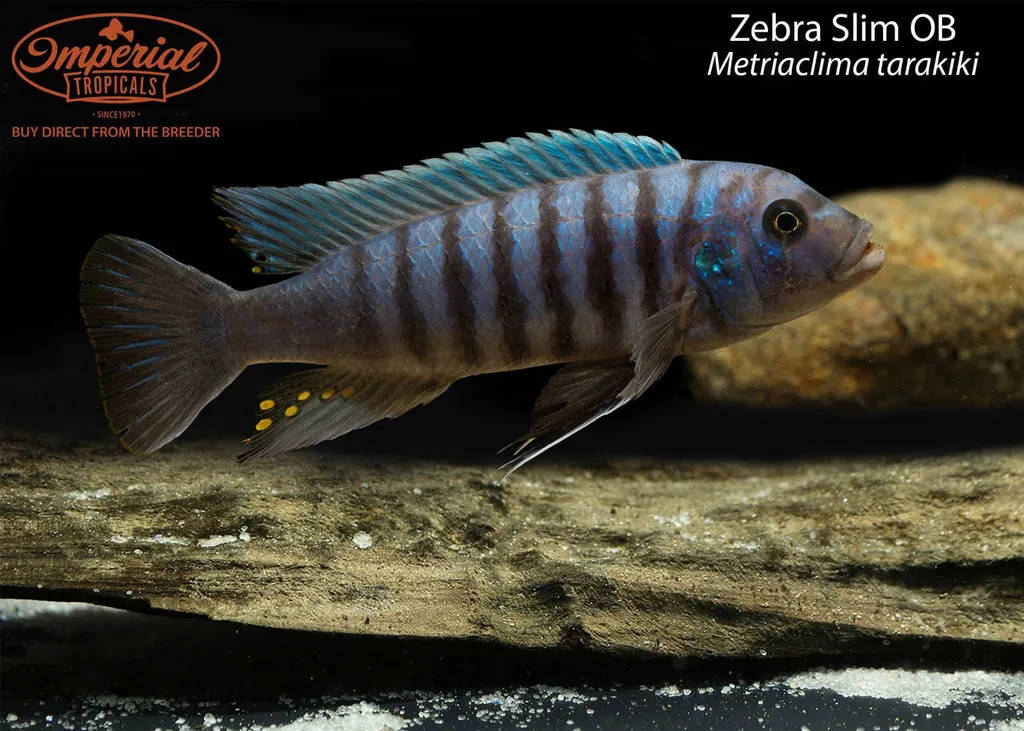 5.5 in (14 cm)66 gal (250 L)75–82°F (24–28°C)
Slim zebra
Maylandia tarakiki
5.5 in (14 cm) · 66 gal (250 L)